The Big Three
Understanding your scope and how to properly set it up and use it will make your shooting experience more successful and pleasant. First, let’s clarify what the big three are.
Windage and elevation are imperative to being able to zero a scope. Windage, of course, meaning the lateral movements left and right of center, while elevation is the vertical adjustment up and down.

The third adjustment that is often overlooked is called parallax and is often disguised as a focus feature. If you’ve ever wondered why your focus adjustment has number labels on it, today we will discuss why.
Parallax and Focus
When I say focus, many people think of the adjustable diopter on the very back of the ocular (back) end of the scope. While this is important for proper shooting, we don’t often consider it part of the big three. But since it is important, we’ll address it here.
Related: Scope Choices – Magnification, Focal Plane, and Parallax
The adjustable diopter is there to focus the eyepiece on the reticle inside the scope. You can turn it to better clarify the reticle clarity, and this is best done with the scope pointing at nothing but empty sky. For the most part, it only helps the sharpness of the reticle, but not the target you’re aiming at downrange.
What is Parallax?
Webster’s defines parallax as the “difference in the apparent position of an object when viewed along two different lines of sight.” If you point at a distant object with your finger, and switch from the right to left eye, you will see that your finger moves depending on which eye you use.

When viewing a target through a riflescope, we encounter the same problem. Before your eye there are basically two objects: the target and the reticle. But they are nowhere near each other.
If we go back to our finger-pointing exercise, try and focus on both your finger, and whatever downrange thing you are pointing at. You’ll find it very hard to focus on both at the same time. This is the conundrum of parallax.
Adjusting for Parallax
Modern riflescopes have incorporated technology to correct for this problem, allowing you to internally adjust the focus of the reticle until it matches the same plane as your target. This is also why parallax adjustment is often focus, because really you are doing both things.
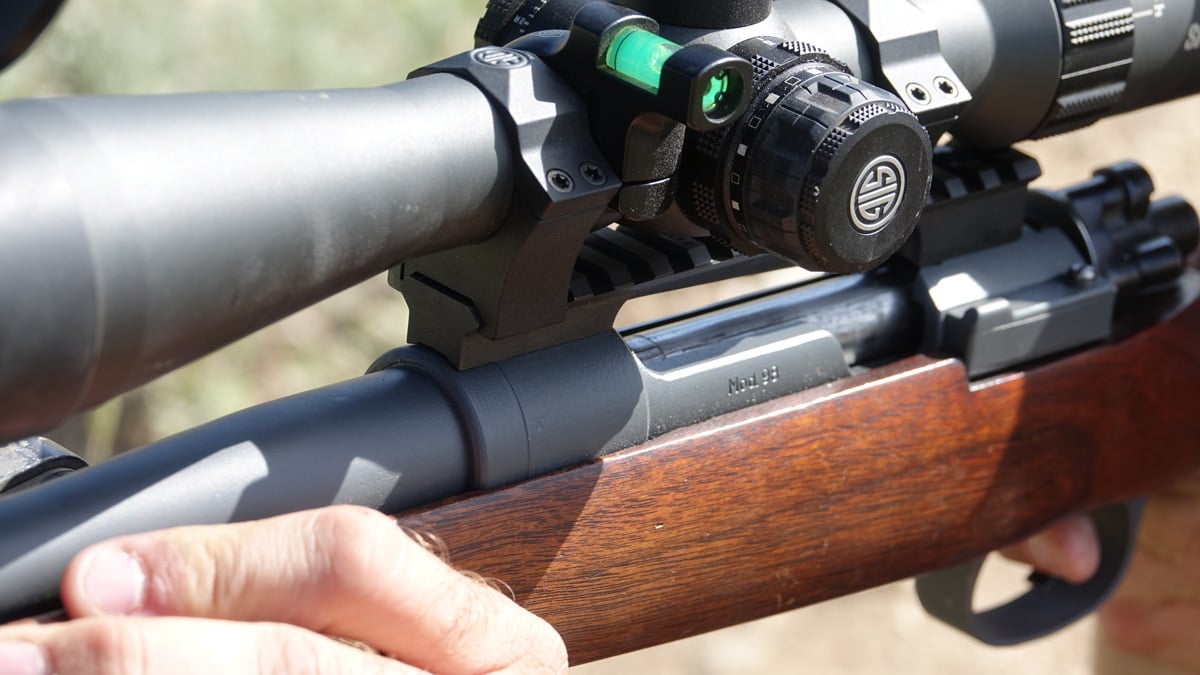
Adjusting the parallax in your scope prior to shooting is particularly important when shooting long-range, which is also why many low-power scopes (like your typical 3x9 hunting scope and LPVOs) do not have adjustable parallax. Those scopes typically come with the parallax fixed at a point the manufacturer deemed proper.
Long-range scopes almost always have adjustable parallax, because it is so crucial to making a good shot at distance. Older riflescopes often used an adjustable objective lens to correct for this issue. More modern scopes typically have it in a side-focus knob on the side of the erector housing.
Windage
Windage is the horizontal adjustment of the reticle within the scope. Inside your riflescope, the reticle is mounted in an erector assembly. It has a strong spring on one side, and a screw-adjustable turret on the opposite side. The spring keeps the erector pressed tight against the turret base, and as you screw the turret either in or out, the reticle is moved right or left.
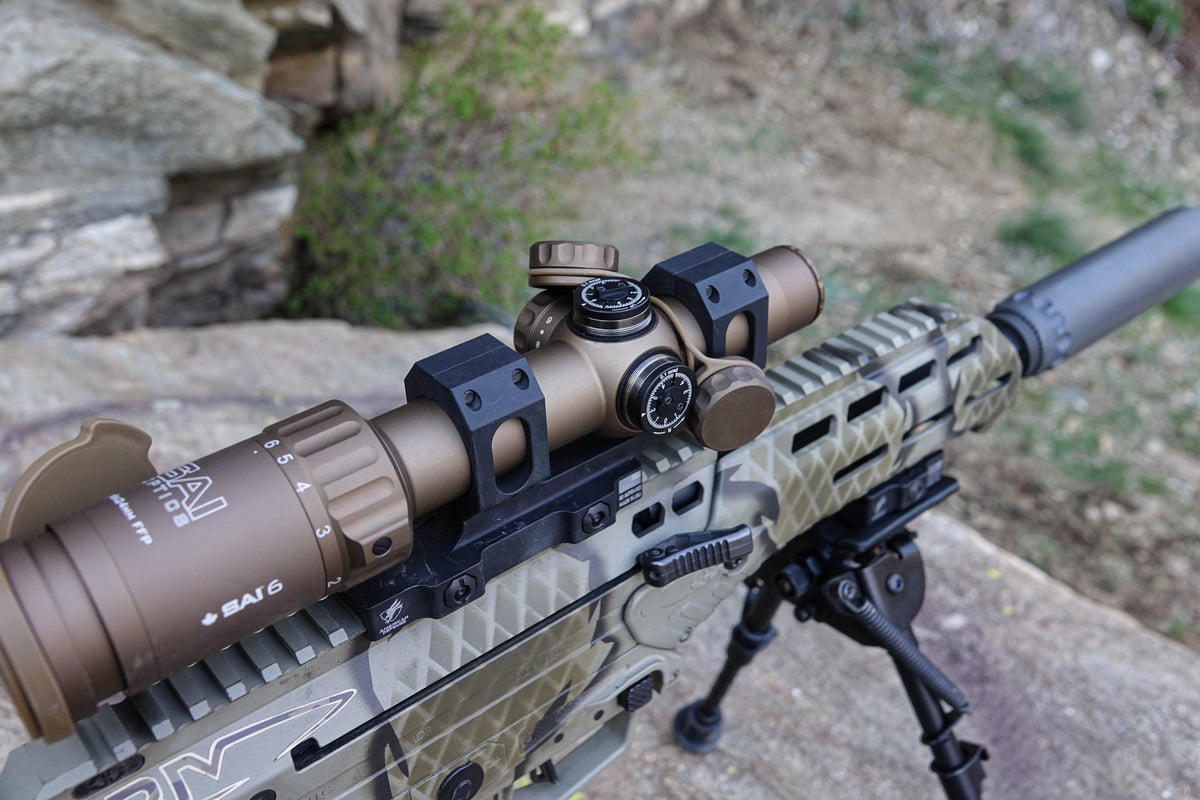
For riflescopes with exposed target turrets, like those on tactical and competitive scopes, you can use these for everyday shooting adjustments. On traditional hunting riflescopes, these controls are usually covered by a threaded cap and aren’t typically used beyond zeroing the rifle.
Elevation
Elevation is the vertical movement of the reticle inside the scope. Just like the windage adjustment, the elevation is adjusted by a threaded turret that pushes the erector down. The spring pressure pushes it up when the turret is turned the opposite direction.
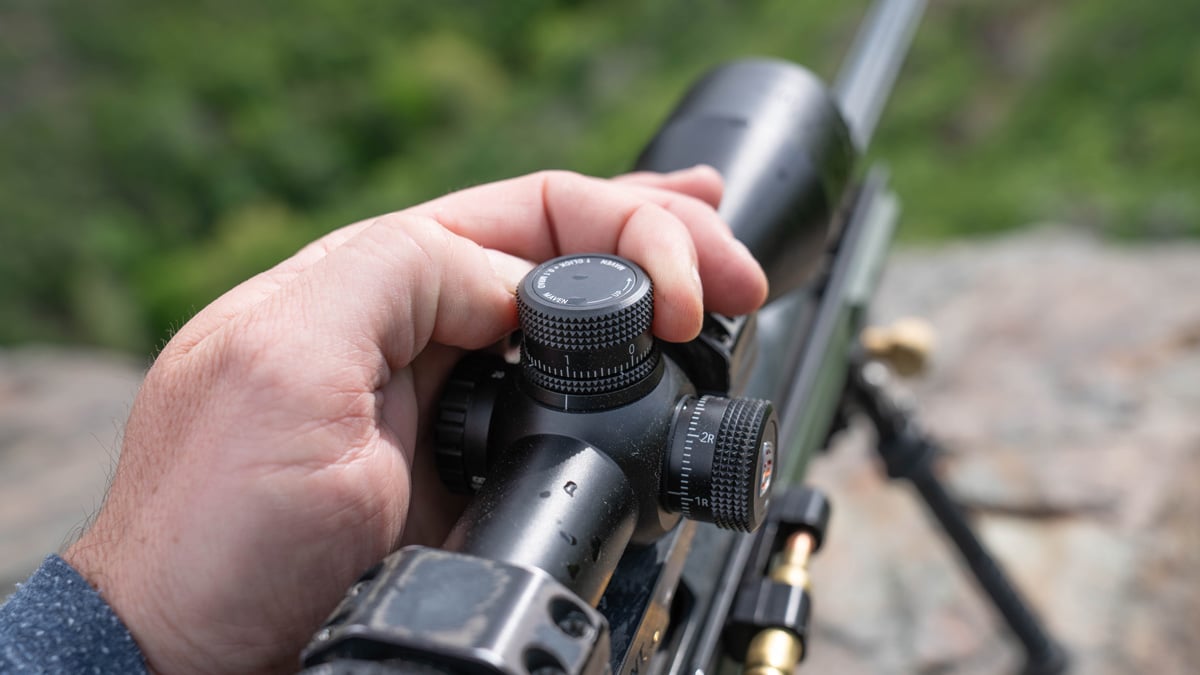
The significant difference between the windage and elevation turrets is the range of motion. Most windage turrets have a limited amount of movement right or left. Elevation turrets, particularly those designed for long-range shooting, will have significantly more range of motion.
For example, most windage turrets only give you 5 to 10 MRAD of left or right movement, while in the same scope, you will likely find 16-21 MRAD of up-and-down movement. This is obviously because when shooting long-range, you need more elevation correction for farther distances than you typically need to zero the windage.
Putting it all into practice
Now that we have everything explained, let talk about how to use this knowledge. Most of us can get a scope zeroed to the rifle so that we are hitting center of our point of aim. But let’s say for some reason you have to change ammunition to loads that will have a different point of impact.
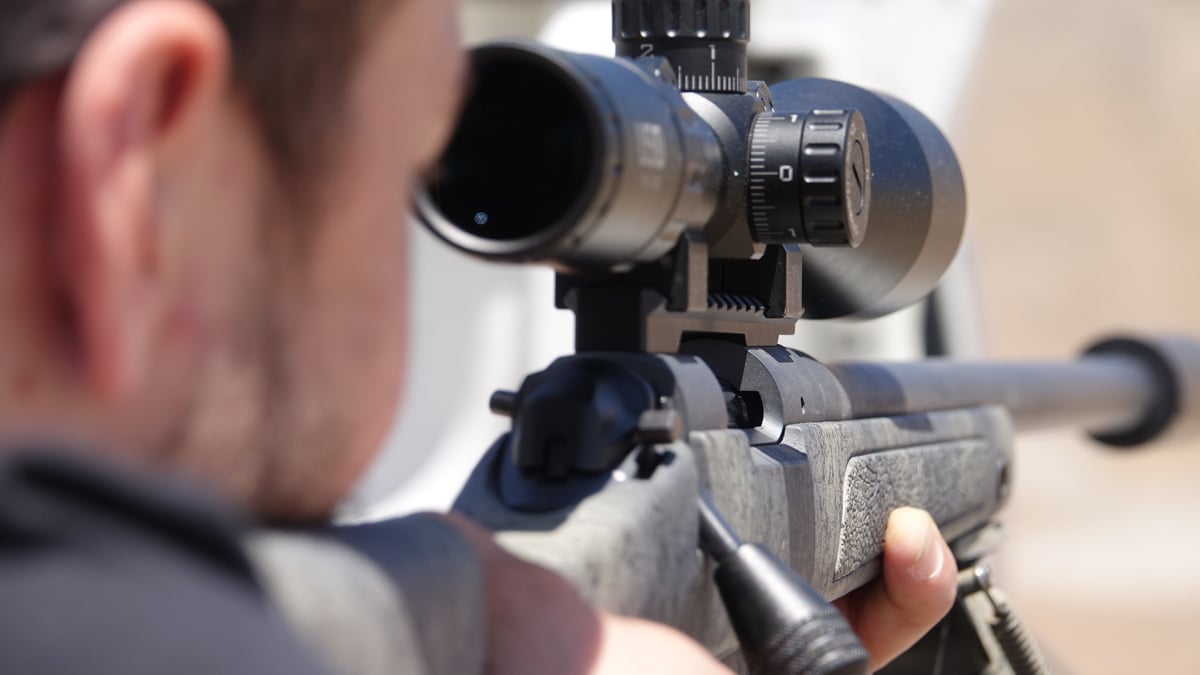
Using your elevation and windage adjustments, you can re-zero your scope for this new ammunition supply. And if you write down the change, you can easily move your scope back should you need to.
Shooting long-range will give your scope a workout. The elevation and windage turrets are valuable for correcting for distance, wind, and even leading targets. Let’s say you have a target off in the distance, 768 yards away. With a drop chart for your ammunition, or even better, one made by a ballistic-solving application on your phone, you can find out how much of an elevation correction you need. Using the elevation adjustment of your scope to match the drop of the bullet will allow you to aim dead on the target even at that distance.
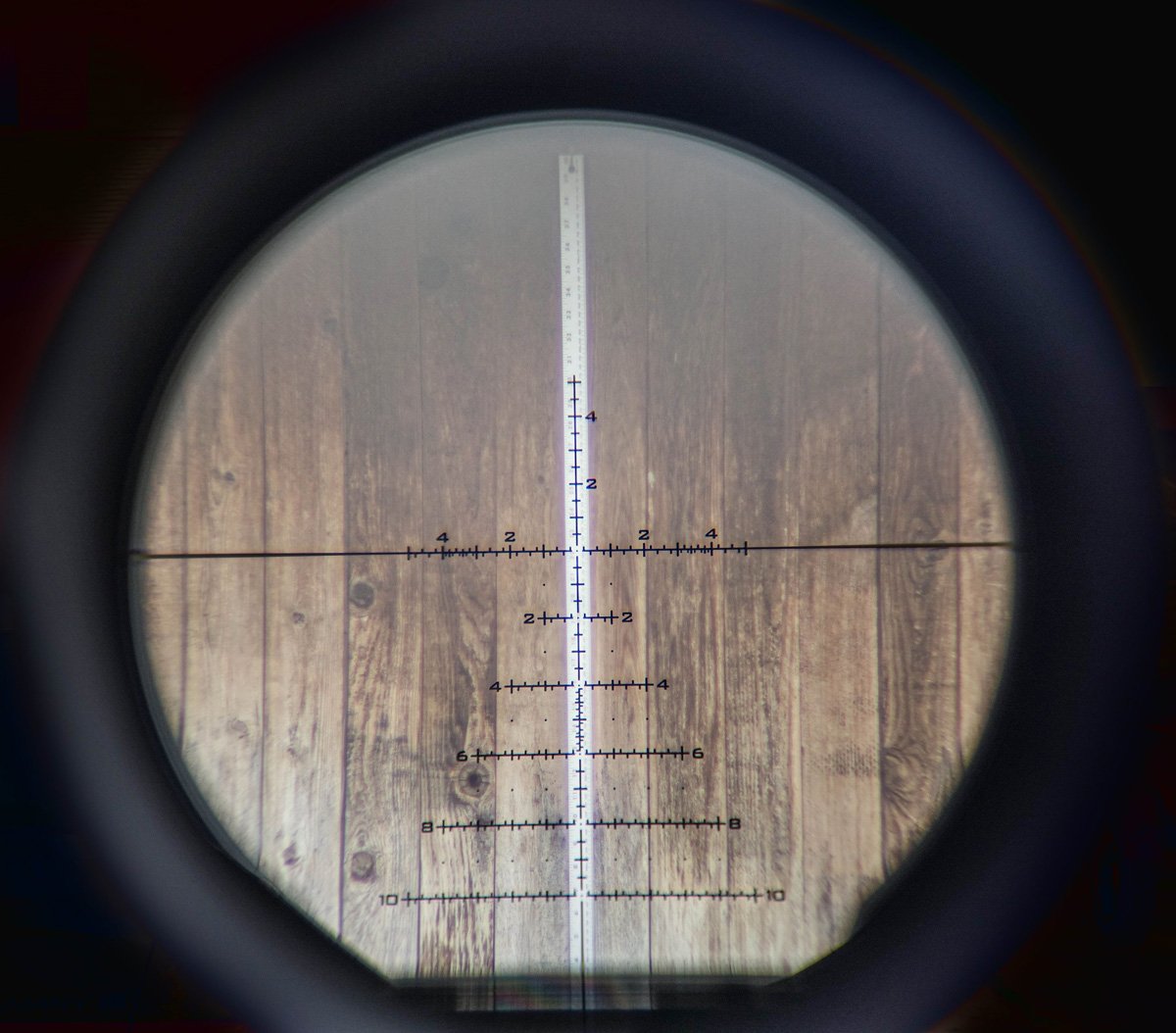
Before taking the shot, of course, you should adjust the parallax in your scope to make sure you can see your reticle clearly on the target. Moving your eye slightly to either side of the field of view will let you know if your parallax is good. The less movement you see of the reticle over the target, the better. Once you’ve done that, you press the trigger and watch for the impact.
Related: Scope Choices – Understanding Reticles and How to Choose One
You may or may not have noticed the wind blowing across the distant plain. The flow of air over the ground has carried your bullet left, impacting a foot left of your desired impact point. Now, you could just hold the difference right of center on the target, or you could adjust for the equivalent windage on your scope’s turret.
In Closing
Hopefully this explanation has helped identify and show how the big three adjustments of your riflescope can be used. As explained above, you likely won’t need most of these adjustments unless shooting very far.
Outside of zeroing the scope on the rifle, most short-range riflescopes won’t require changes, but it is still important to understand what they are and how to use them.