America’s highest court on Monday dodged a legal challenge to New York’s 2022 restrictions on concealed carry rights based on broad and ill-defined “moral character” and “sensitive location” criteria.
The decision sends the case back to the lower courts for further consideration, if any. It’s a move that comes after the Empire State thumbed its nose at a previous high court decision in the case of New York State Rifle & Pistol Association v. Bruen.
A 6-3 majority ruling by SCOTUS in that 2022 case struck down New York’s may-issue law that required would-be concealed carriers to show “proper cause” when applying for a state carry license.
“In 2022, after the Supreme Court decided to overturn New York's century-old concealed carry laws, I fought to pass new legislation to keep our streets and subways safe from gun violence,” said New York Gov. Kathleen Hochul in a statement on Monday’s ruling. “Today, the Supreme Court has officially rejected an attempt to block this critical legislation, ensuring the core tenets of the law I signed in 2022 will remain in effect.”
At the heart of the court’s earlier decision was a much narrower question: "Whether the Second Amendment allows the government to prohibit ordinary law-abiding citizens from carrying handguns outside the home for self-defense."
The highest court determined that the state did not have that power and more.
Writing for the majority opinion, Justice Clarence Thomas highlighted another constitutional violation inherent in the state’s restrictions: "New York’s proper-cause requirement violates the Fourteenth Amendment in that it prevents law-abiding citizens with ordinary self-defense needs from exercising their right to keep and bear arms."
Related: New York Sued Over Out-of-State 'No Carry' Restrictions
Effectively, the court determined that the old restrictions made the state’s residents unequal under the law. In response, New York’s legislature just eight days later rushed through new measures that made its Second Amendment restrictions more universal.
The flurry of new legislation defined – in broad strokes – new standards for “good moral character.” This legislation was promptly signed into law by then-unelected Gov. Hochul, who assumed the reins after the volatile exit of Gov. Andrew Cuomo in August 2021.
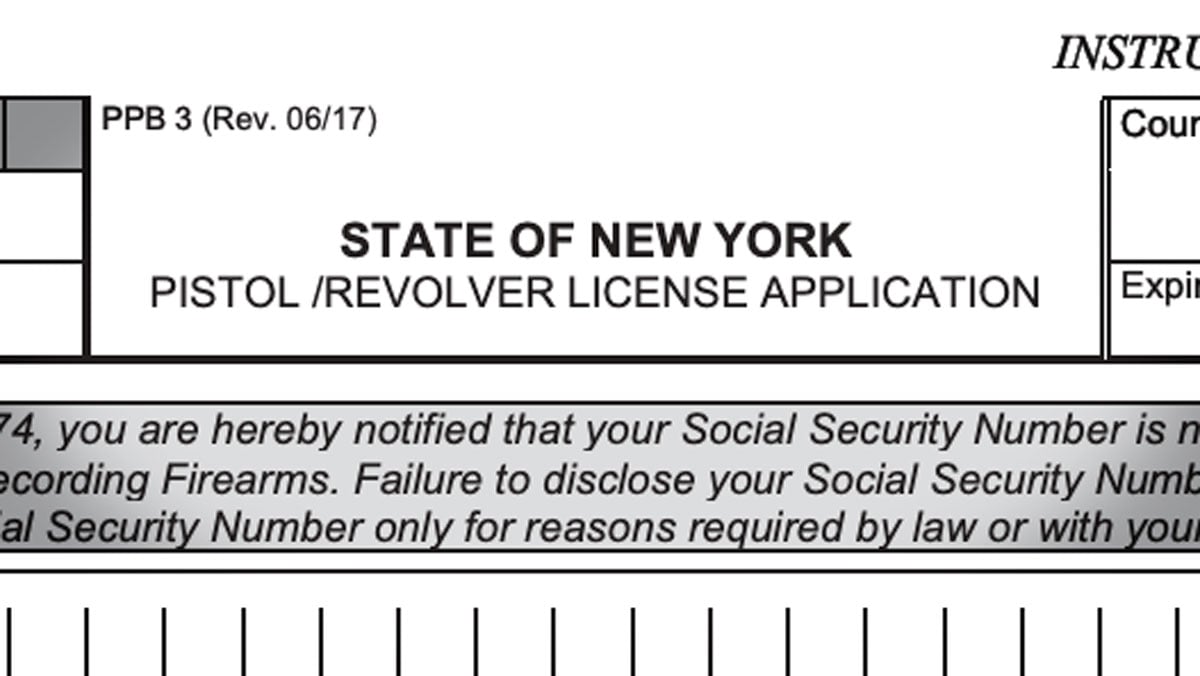
The removal of “good cause” in favor of “moral character” hardly hammered out a clearer picture of how New Yorkers could exercise their 2A rights. Instead, the new legislation opted for a definition that “shall mean having the essential character, temperament, and judgment necessary to be entrusted with a weapon.”
Related: Despite Court, NYPD & LAPD Are Slow Rolling Carry Permits
Additionally, the new legislation crafted an enormously burdensome list of “sensitive locations” that effectively barred any would-be permit holder from reasonable free movement throughout the state.
Such sensitive sites included:
- Federal, state, or local government buildings, including courts.
- Places providing health or medical care, such as hospitals, nursing homes, domestic violence shelters, medical campuses, behavioral health facilities, and chemical dependency facilities.
- Houses of worship.
- Places where children gather, including schools, libraries, daycare centers, playgrounds, parks, and zoos.
- State-regulated facilities under OCFS, OPWDD, OASAS, OMH, and OTDA.
- Public transportation facilities.
- Establishments where alcohol or cannabis is consumed.
- Locations being used as polling places.
- Educational institutions, including schools and colleges.
- Theaters, stadiums, arenas, racetracks, museums, amusement parks, performance venues, casinos, and venues for athletic games or contests.
- Any public sidewalk restricted from access for a permitted special event.
- Any gathering of individuals who are collectively expressing First Amendment rights of protest or assembly.
- And Times Square in Manhattan.
With the court’s decision, New York’s draconian restrictions will continue to make the lawful concealed carry of a firearm no more than a mirage on the horizon for the average citizen.