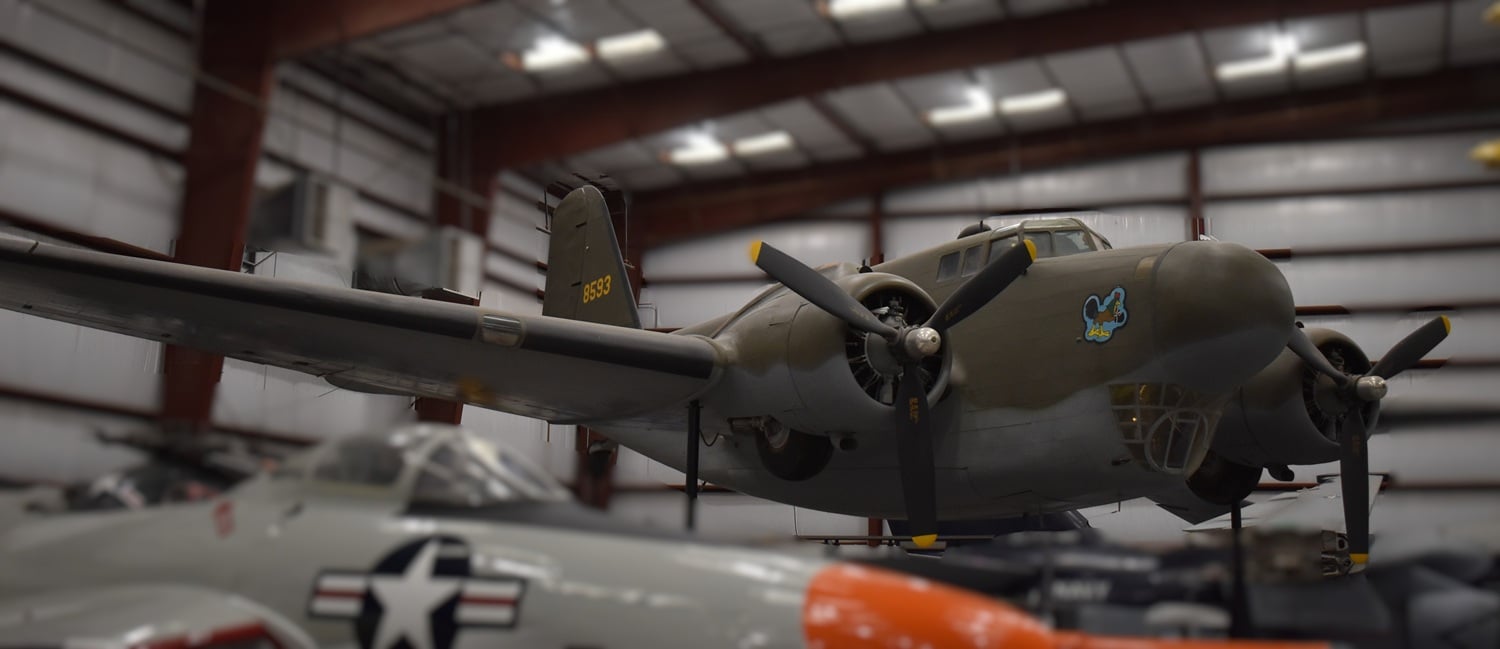
The Douglas B-18 Bolo was advanced compared to the bomber it replaced, and its defensive machine gun armament was almost laughable compared to the later B-17 Flying Fortress, but the plane was an important footnote in history.
Developed in the 1930s from the twin-engine 14-passenger Douglas DC-2 airliner, the B-18 was a replacement in the Army Air Corps for the Martin B-10 bomber. With an 89-foot wingspan and two 850 Wright R-1820 engines, they could make a blistering 215 mph in the air and carry 2,000 pounds of bombs. By 1940, most of the Air Corps bomber units were equipped with the Bolo.
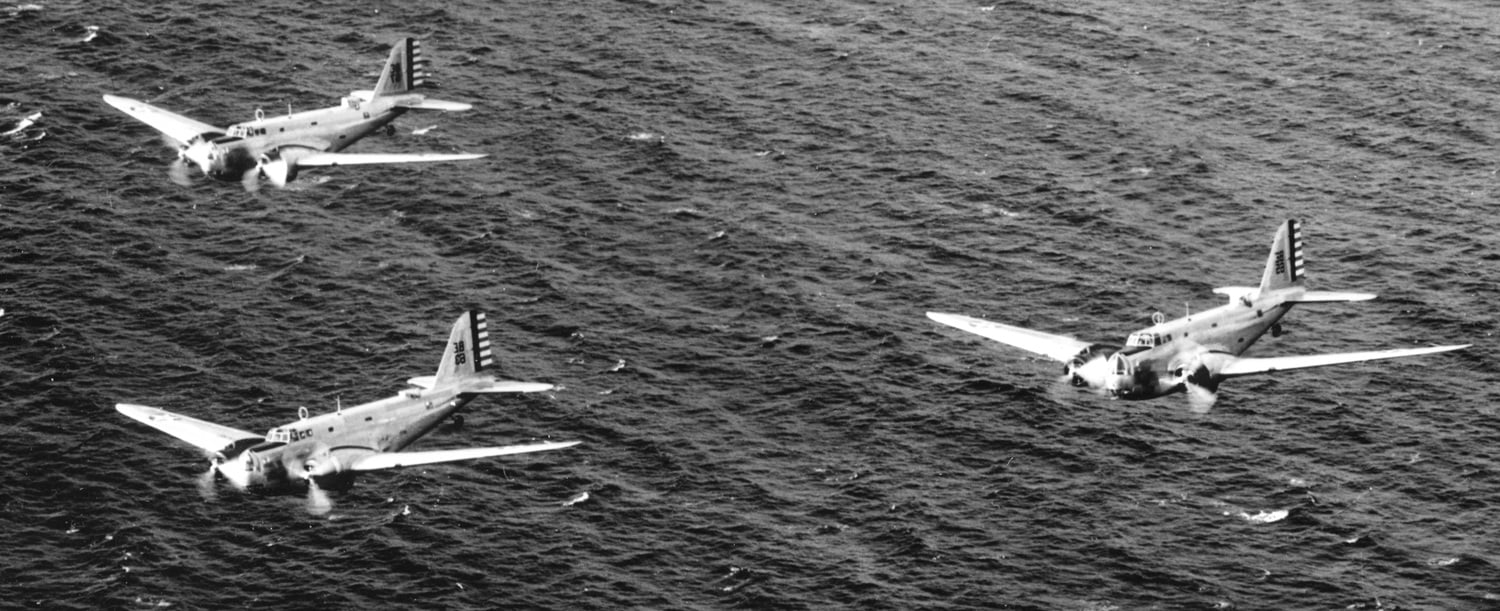
Self-defense armament to ward off enemy fighters was slim – just three .30-06-caliber Browning light machine guns arranged one each in the nose, belly (ventral), and over the top (dorsal) of the aircraft.
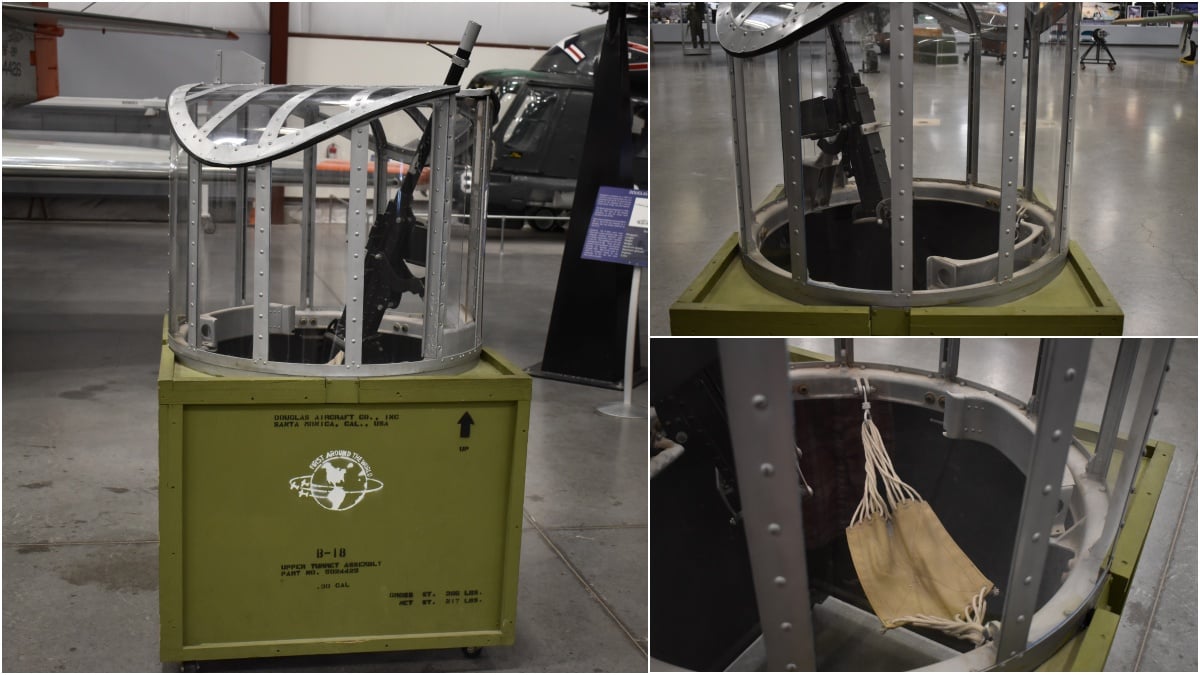
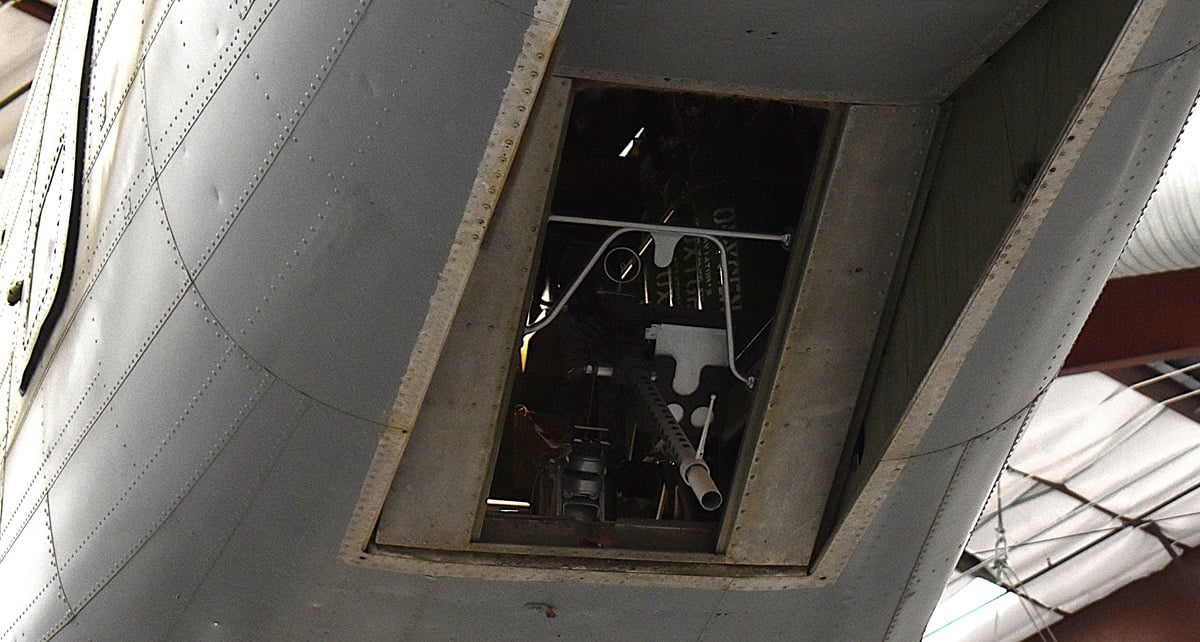
Compare this to as many as 13 .50-caliber Browning heavy machine guns in the B-17G that came along just a few years later, and you see the disparity.
While the Army soon shifted gears to the more capable B-17 and B-24 medium bombers in the lead-up to America's entry into World War II, some Bolos did see some action early in the war. Of the 33 B-18s on hand at Pearl Harbor on December 7, 1941, two-thirds were destroyed or seriously damaged on the ground in the attack there by the Japanese. Another squadron of 12 aircraft, based in the Philippines, was also destroyed.
The Bolo went on to continue to serve for a time in anti-submarine patrols, being credited with sinking two German submarines in late 1942 off the coast of South America, U-654 in August and U-512 in October.
Where the Bolo proved an interesting test bed, however, was in its use by the Army's Parachute Test Platoon, whose 48 volunteers made their first jump from the doors of converted B-18s on Aug. 16, 1940, some 85 years ago this week.
That jump is regarded as the beginning of U.S. airborne forces, and Aug. 16 is celebrated today as National Airborne Day.
We would like to thank the Pima Air & Space Museum outside of Tucson, Arizona, home to one of the last few B-18s in existence. If you are ever in the area, please carve out some time and visit with some of the aircraft on display and find out more about the brave aviators who flew them.
Video by Ben Philippi.