The enduring Second Amendment story of the year continues to have legs as the number of suppressors and short-barreled firearms skyrockets into "common use" territory.
The American Suppressor Association recently noted that, according to updated ATF data, as of June 8, there were 6,439,813 suppressors and 1,384,410 short-barreled firearms in the National Firearms Registration and Transfer Record, or NFRTR.
And keep in mind those figures are over 30 days old, while federal regulators logged 166,677 NFA transfers last month alone, a 177 percent jump from the same month in 2025.
"For perspective, the Supreme Court previously ruled that approximately 200,000 stun guns constituted 'common use,'" noted Knox Williams, ASA President. "It's safe to say suppressors and short-barreled firearms have long since crossed that threshold."
This bodes well, as the nation's high court could soon be forced to take up a split between the federal circuits on the question over suppressors are protected "arms" under the Second Amendment.
The tremendous growth in the sale of suppressors and short-barreled firearms this year is no doubt fueled by the zeroing out of the antiquated circa 1934 taxes on those NFA items under 2025's H.R. 1, which President Trump signed last July 4.
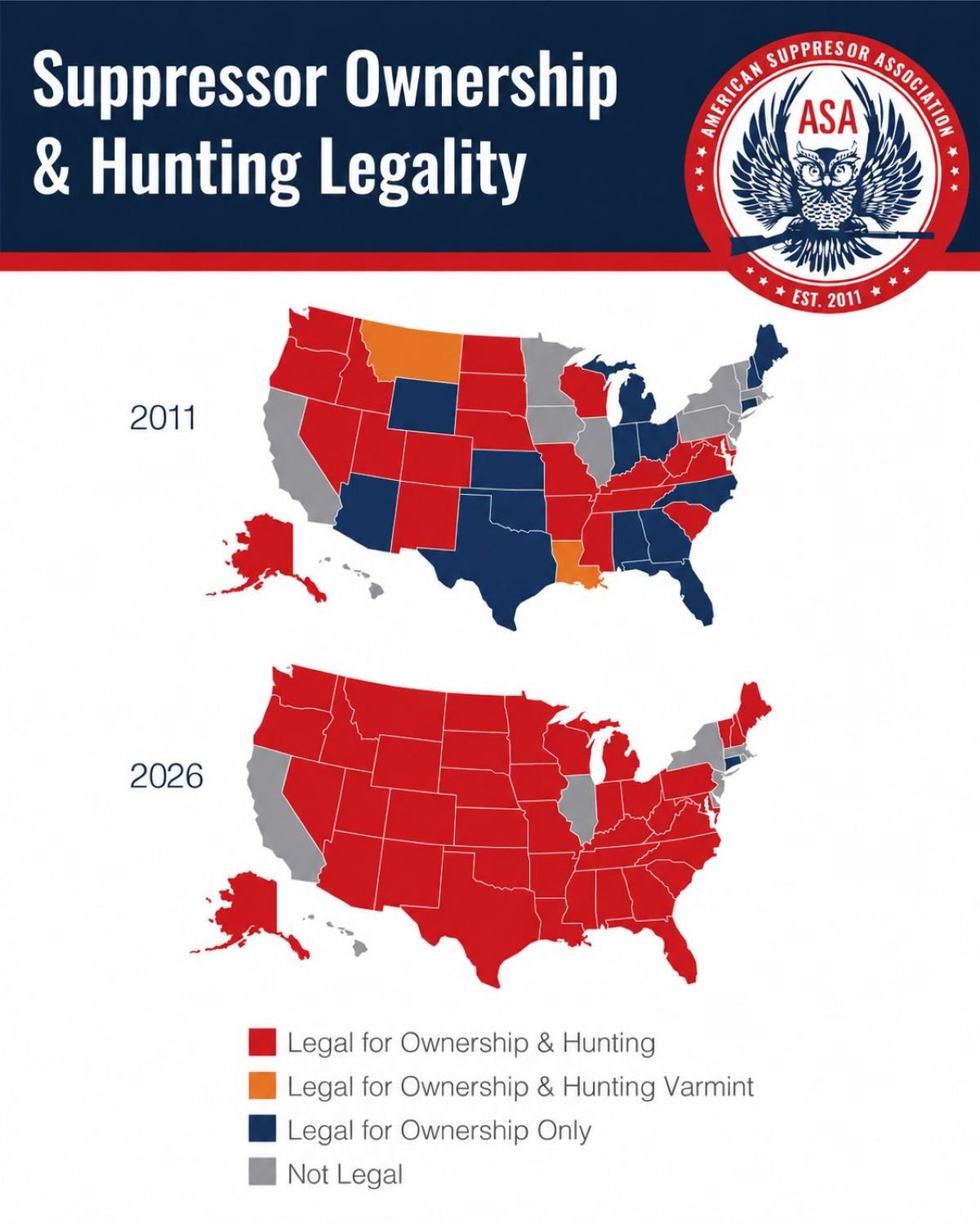
Further, suppressors have gained in popularity over the past 15 years due in part to increased advocacy of the devices.
In 2011, only 22 states allowed hunters to use suppressors. Today, it’s 41. In that same period, the number of suppressors in circulation has grown by more than 2,158 percent, with just 285,087 "silencers" on the NFRTR as of December 2010.
Banner image: A custom backcountry hunting SBR with Leupold glass and a SilencerCo Scythe Ti .30 caliber can. (Photo: Chris Eger/Guns.com)


Chris Eger
Chris Eger is an NRA-certified firearms instructor in multiple disciplines with a background in law enforcement and as a security contractor to the federal government. He has been writing badly since 2006 and has a number of poorly-received books in print.
View All Articles by Chris Eger