1. Support Bags

Shooting a hard rifle off a hard barricade creates wobble because the rifle can rock on the support and bounce when fired. A soft item in between the surfaces helps mitigate these effects. Support bags are versatile tools that help stabilize the rifle. Bags can be used to support the front of the rifle, the back of the rifle, and the shooter’s body itself. Of course, these are just bags, so building one yourself is a very easy DIY project.
Snipers once used socks filled with sand and then tapped them up. For my own big bags, I stuffed cheap throw-pillow inserts into an old duffel bag. There are also cheap bag options today. The one I got came stuffed too full but with no way to remove the filling, so I just cut a hole in it and dumped out some of the sand and taped it back up.
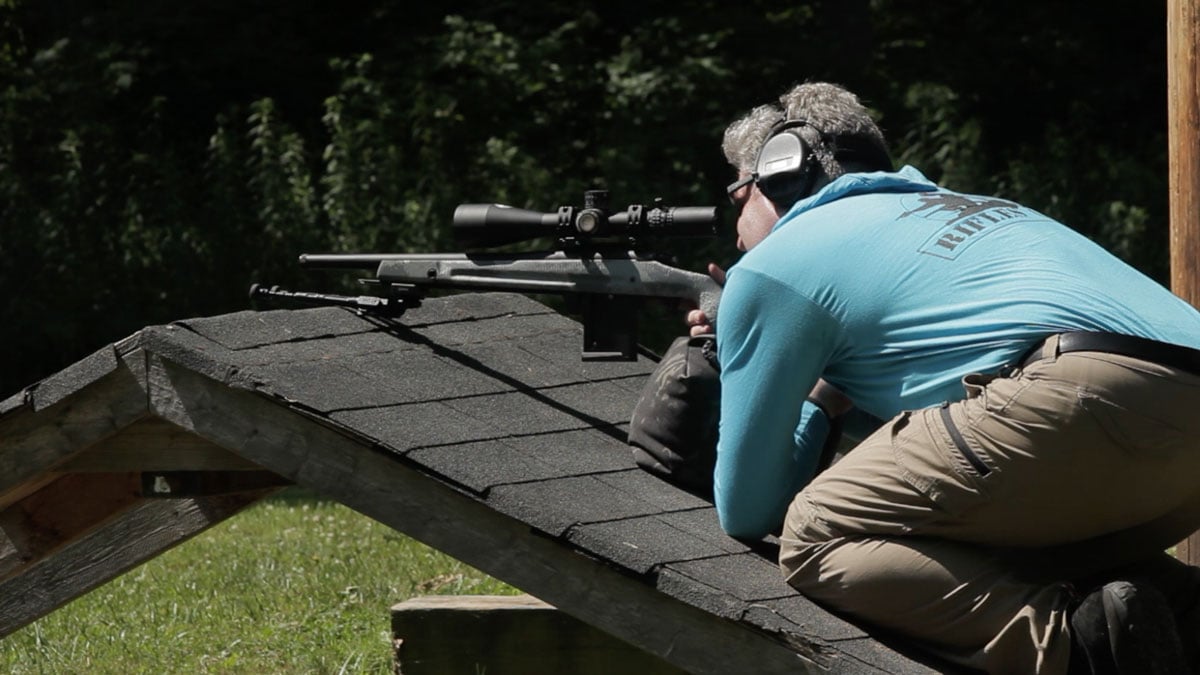
All these hacks worked to some extent. But after years of dealing with the drawbacks, I bit the bullet and bought purpose-built bags. They just work better, and I’ll never go back. Regardless of your choice, there are a few different aspects of these bags you should consider.
Shooting Bag Size Choices

Bags come in all shapes and sizes. It’s useful to look at them in general as small, medium, and large. The most versatile are the medium sizes. Their most common use is as front rifle support on barricades or obstacles. But they can also be used as rear support in prone positions or even body support in particularly unorthodox positions.
The newest trend is the mini sizes of the medium bags. These are larger than the small bags but smaller than the medium sizes. These are often the most used bags in a competitor’s arsenal and the ‘go-to’ bag if a stage limits your number of bags to just one.
Small bags are usually used as rear support in the prone position, but competitors found they also had a place when obstacles had opening that were too small for the rifle and the medium bag to fit.
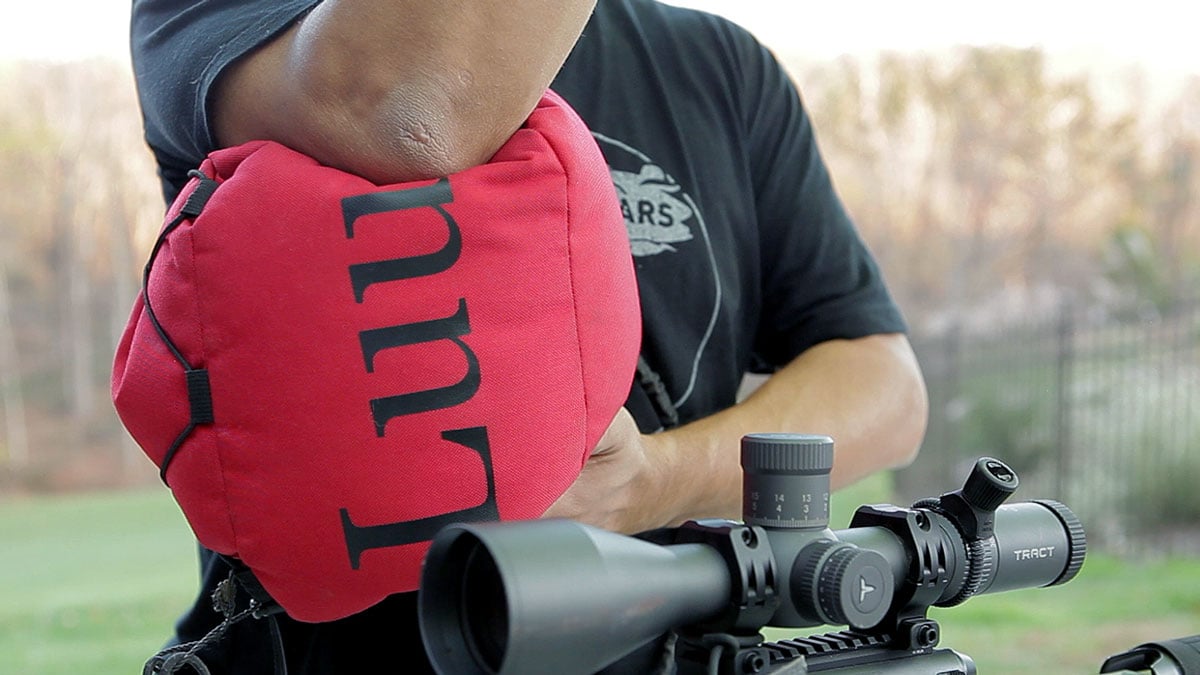
Large bags are primarily used to reinforce body structure in improvised positions. For instance, when in a high reverse-kneeling position, a bag can be put in between a shooter’s elbow and thigh to fill the gap and provide additional stability. Large bags are also usually filled with light material to make them quick to move.
Bag Materials

Most bags were traditionally made of a nylon material such as Cordura. It’s durable, flexible, and fade resistant. Nylon works fine, but the new trend has been waxed canvas. This cotton material is more pliable and conforms to the shape of both the barricade and the bottom of the rifle better than Cordura. Because they mold to shapes better, they provide more stability and just feel better in the hand.
The drawbacks are that they are theoretically a little less durable, have a break-in period, and require more maintenance. However, if you keep them waxed, they should last for years.
What Kind of Fill to Use
Traditionally, sand was used to fill support bags. These were then replaced by synthetic beads to lighten the weight. But these beads did not conform to obstacles as well as sand. Today, new fill material such as Git-Lite are almost as good as sand but without the weight. However, many still choose heavy fill, which is uniform silica sand. It really does work the best. For the large bags, a lightweight fill is used because packing giant bags with sand would make them impossible to transport.
Remember, bags will come overstuffed. You don’t have to use it this way. Most newer bags have a way to remove or add fill. I recommend removing some until you are happy with the feel of the bag. I usually take out one-third of the fill for most of my bags so they will better conform to barricades. Just remember to keep the filling so you can add it back if needed.
Best Bags?
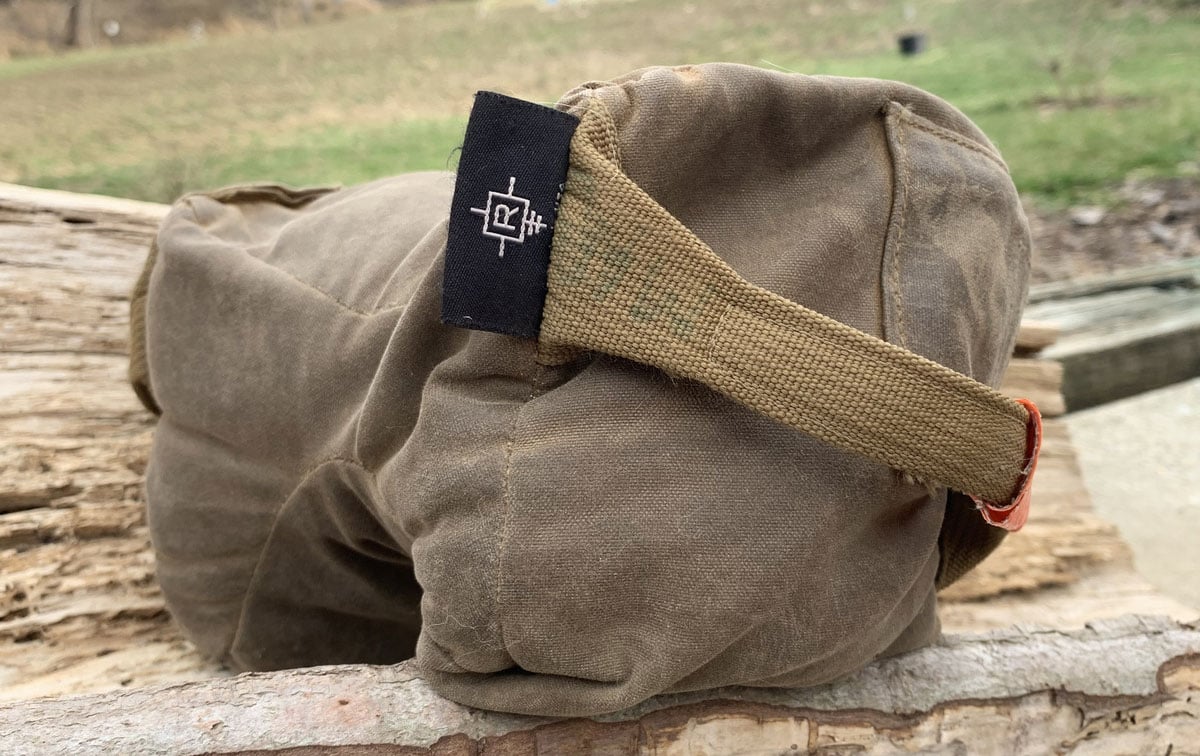
The most popular support bag used today is the Armageddon Gear Game Changer, but other common bag companies are Wiebad, Warhorse Development, and the Cole-Tac. They’re all good. Personally, my new favorite bag (update from the video) is the Armageddon Gear Shmedium, which is a waxed-canvas, heavy-fill, mid-sized bag. I pair that with several options for weight, size, and space requirements.
2. Data Cards
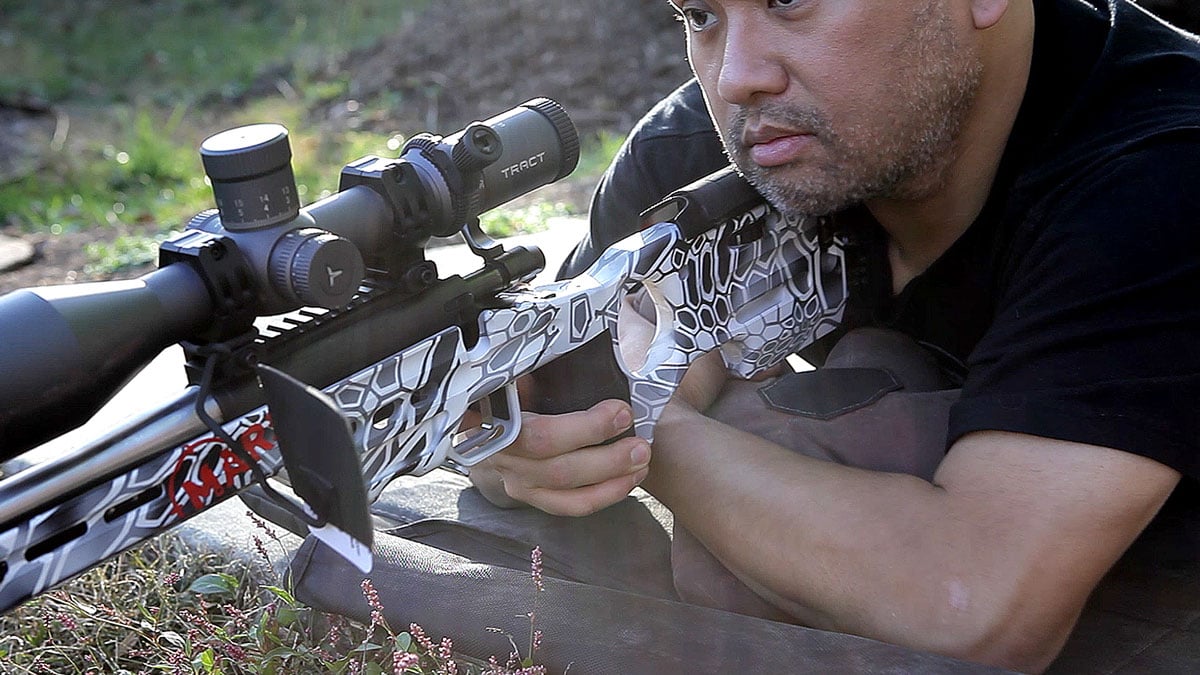
Another highly recommended item is some way to write down your rifle trajectory data, also known as DOPE – data on previous engagement. In a stage with multiple targets at different distances, it can get confusing to remember that you need to dial 1.8 mils for 105 yards, 3.5 mils for 143 yards, etc. You could write it all in a notebook, but that can get cumbersome to carry around during a stage.
Writing it on your hand works, and I have done it, but you’ll start running out of space if you have many stages to shoot. The simplest solution, other than just remembering, is sticking a piece of masking tape on your arm and writing everything down with a sharpie.
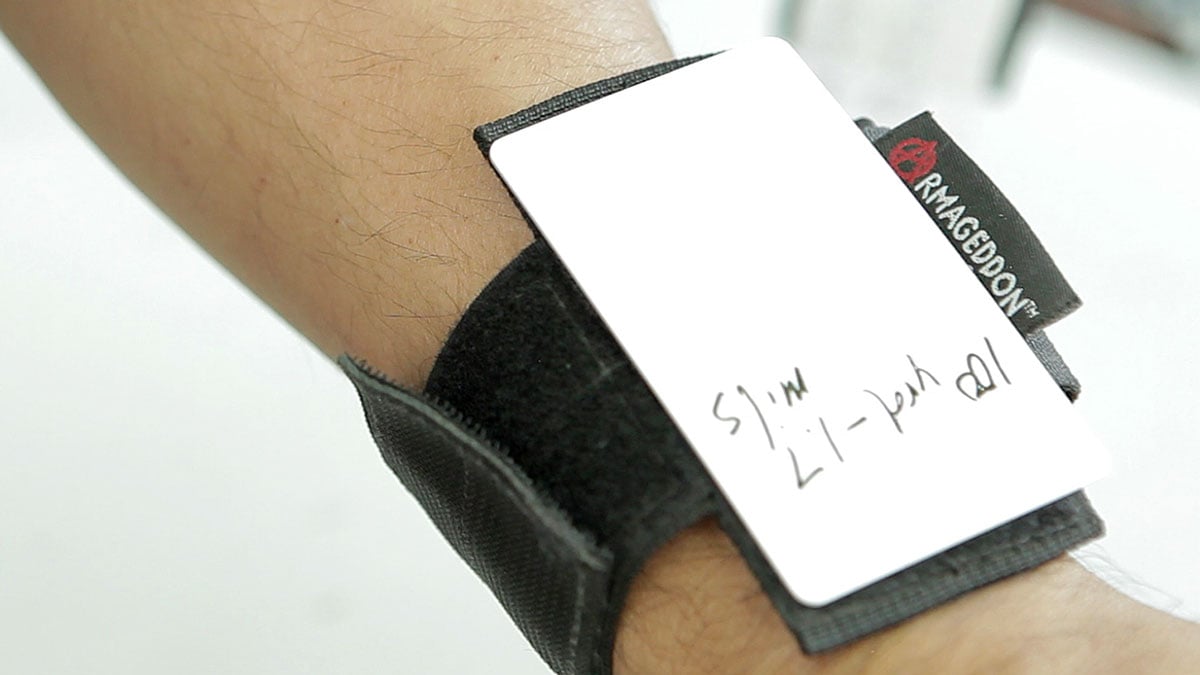

The more elegant solutions are football wrist coaches. Now there are ones that are specifically designed for shooting. I have an Armageddon Gear Competition Data Armband that is basically a whiteboard for your wrist. It works well.
But my first choice is a data holder that attaches to the rifle. They are usually positioned in a way that puts the data right in front of your face for quick reference. Plus, you’ll never forget it because it’s attached to your rifle. These can get fancy and expensive. There are electronic models such as the Kestrel Ballistics HUD, which is a head-up display that ties directly into a ballistics calculator.
However, I like to keep things simple. My go-to data card holder is the Python by Sidewinder Industry. It’s simply a clear plastic business card sleeve that connects to the rifle with a flexible rubber twist tie. I write dope down on old business cards and slide it into the sleeve. Since it’s so flexible, it never really gets in the way or gets caught on anything.
3. Finally, Knee Pads
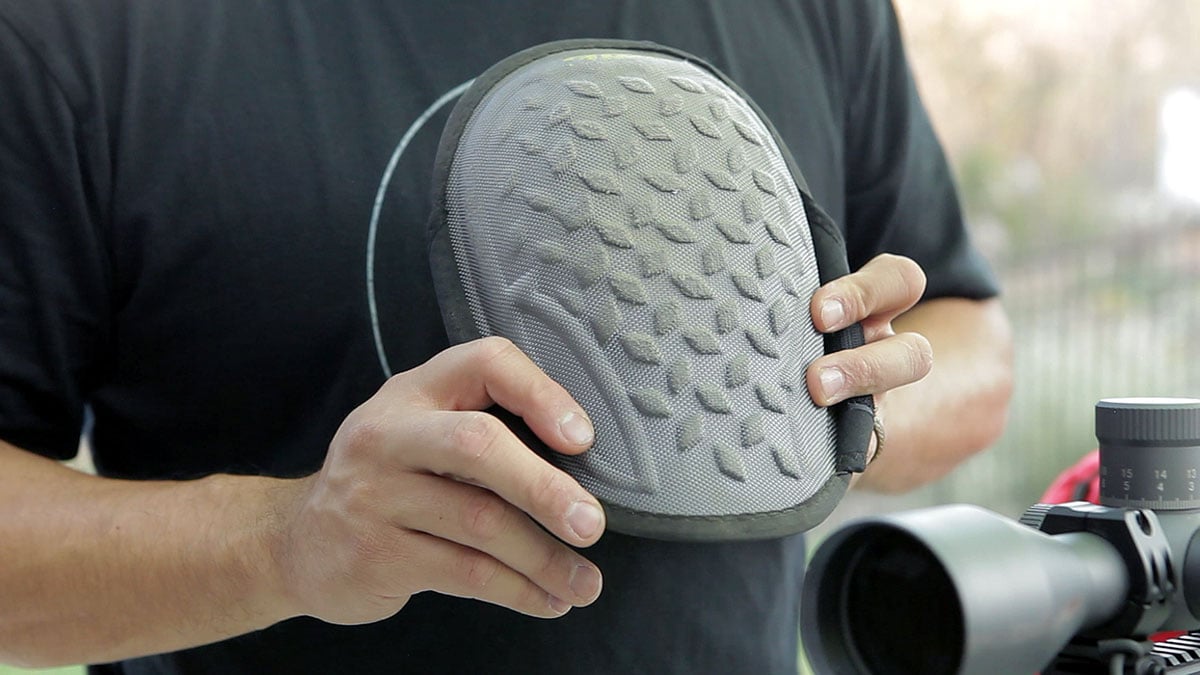
My final recommendation is to get knee pads. Rifle shooters often kneel on hard surfaces such as concrete or gravel. That tears up soft knees and clothing. Having some padding is very helpful. Don’t overthink it. There are lots of expensive tactical knee pads that I think are overkill. Mine are $25 Lowes knee pads. My only word of caution is don’t get ones with a hard outer shell. Those can slip around on hard surfaces like stone.
Hope this helps.