Visiting The Best Helicopter Gunship Collection in the World
We recently hit the road in southwest Alabama and visited the U.S. Army Aviation Museum, one of the largest military helicopter collections in the world.
Located at Fort Novosel (formerly Fort Rucker), the sprawling 60,000-acre complex has been home to all Army helicopter training since 1959 and all aviation training since 1973. The Museum has over 250 aircraft in its inventory – some incredibly rare.
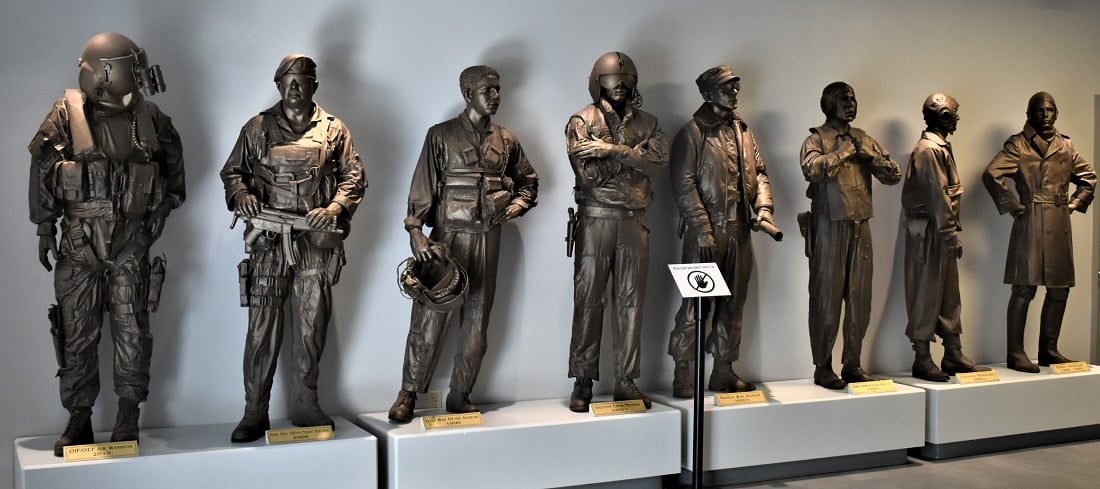
On entry, there is a superbly detailed life-sized line of Army aviation personnel statues ranging from the Great War to Iraq and Afghanistan. (All photos except noted: Chris Eger/Guns.com)
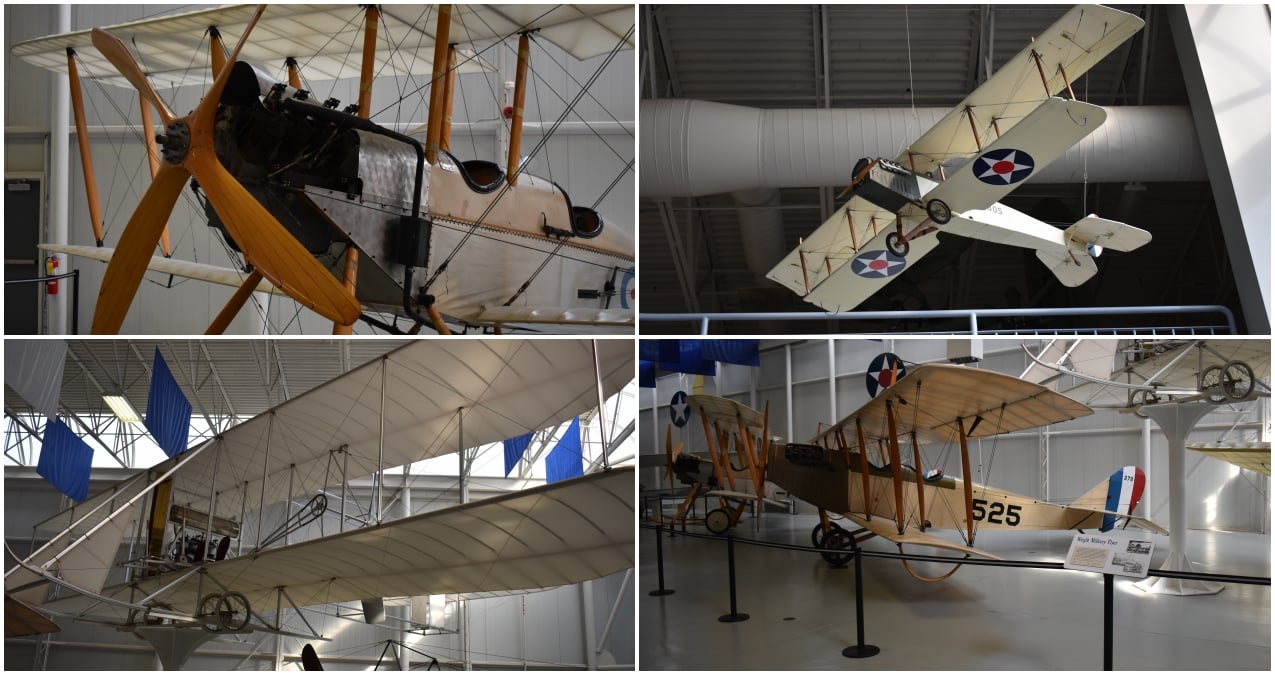
Then, the early years of the Army Air Corps are detailed, including a Wright Military Flyer, Bleriot XI, S.E.5a, JN-4D Jenny, and others.
The story of Great War machine guns is detailed in a Spandau MG08/15 as well as a Vickers Colt MG.
Note the extensive lightening in the water-cooled jacket of the German Spandau to allow for air cooling.
The Vickers Colt is less ventilated but no less important.
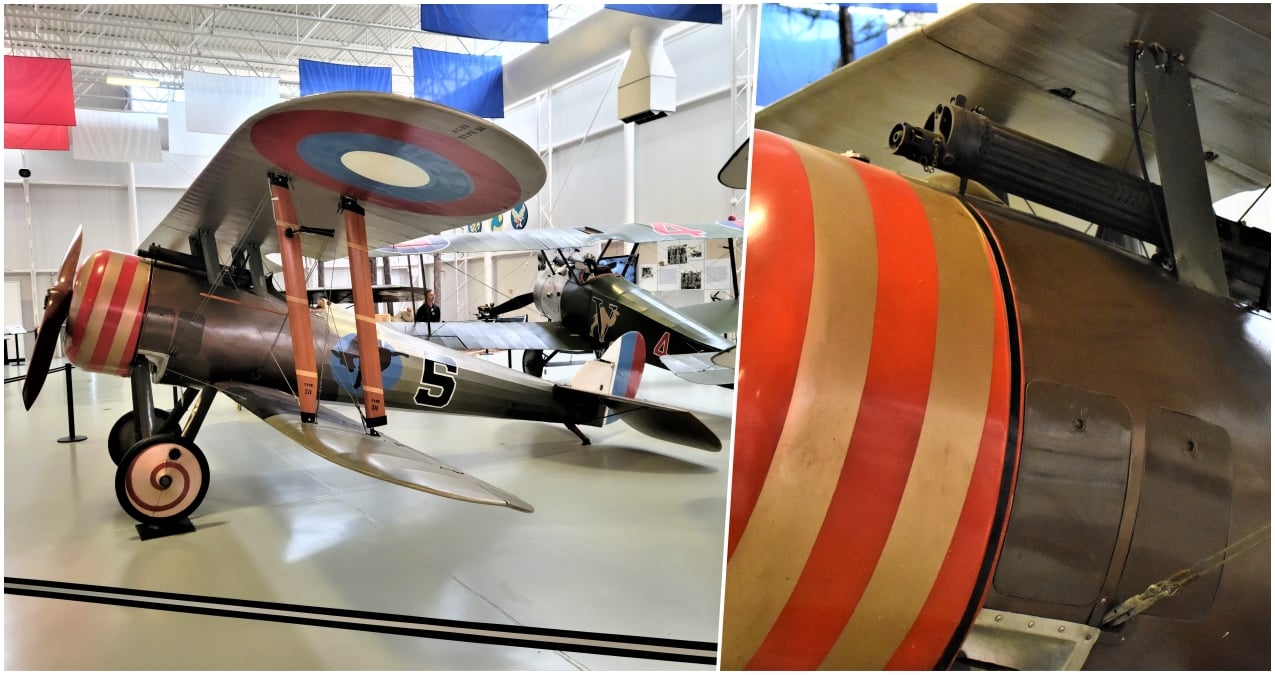
A 1918 Nieuport 28C-1, complete with Vickers.
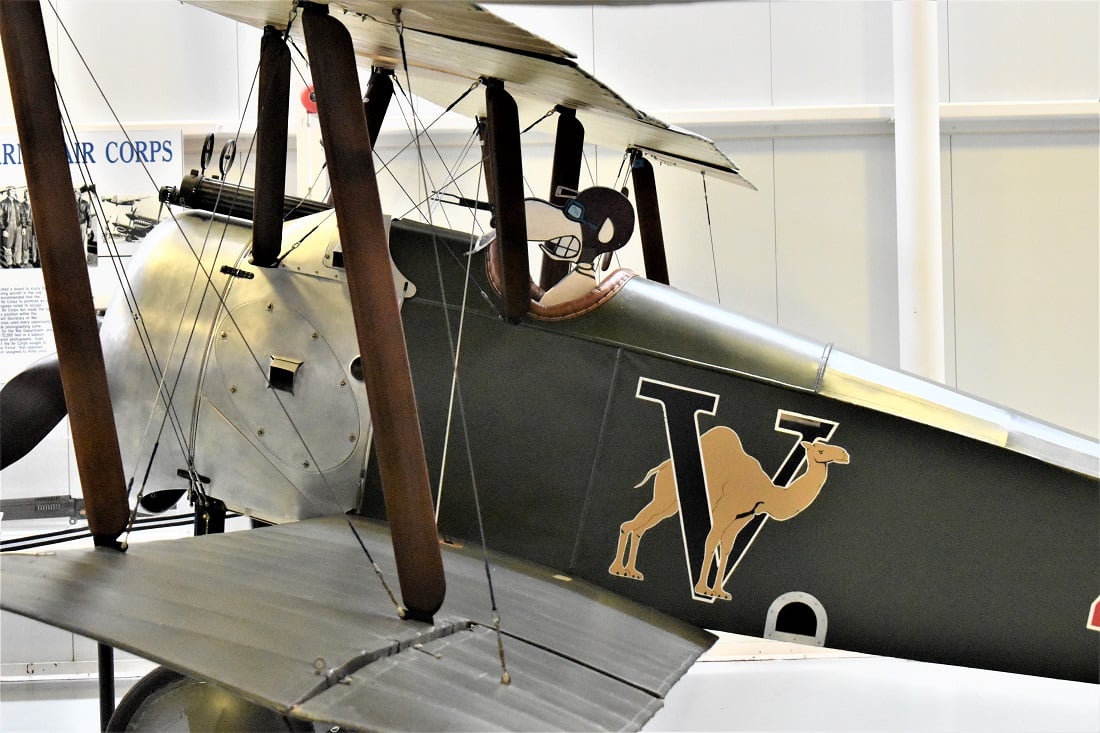
Their Sopwith F.1 Camel is piloted by perhaps the most famous WWI flying ace outside of Eddie Rickenbacker and the Red Baron.
Then comes the main gallery, filled with everything from light spotter planes and drones to helicopters. And we do mean a ton of helicopters.
Hanging overhead is an early OH-13E Sioux, a type made famous in the TV show MASH, complete with a skid-mounted M1919 .30-06 machine gun – one of the Army's first helicopter gunships. The Army had also experimented with an OH-13 complete with a compartment-mounted Stoner 63 LMG.
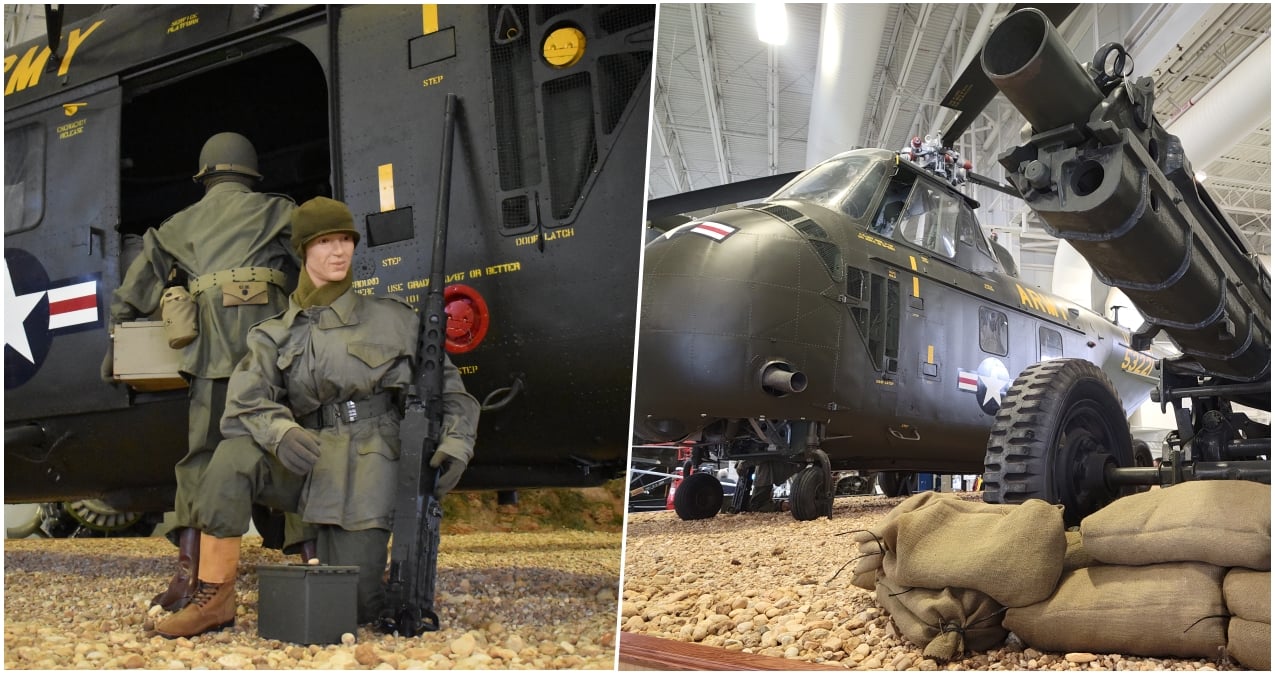
A CH-34 Choctaw is flanked by a pack howitzer and dismounted M2 Browning .50 cal.
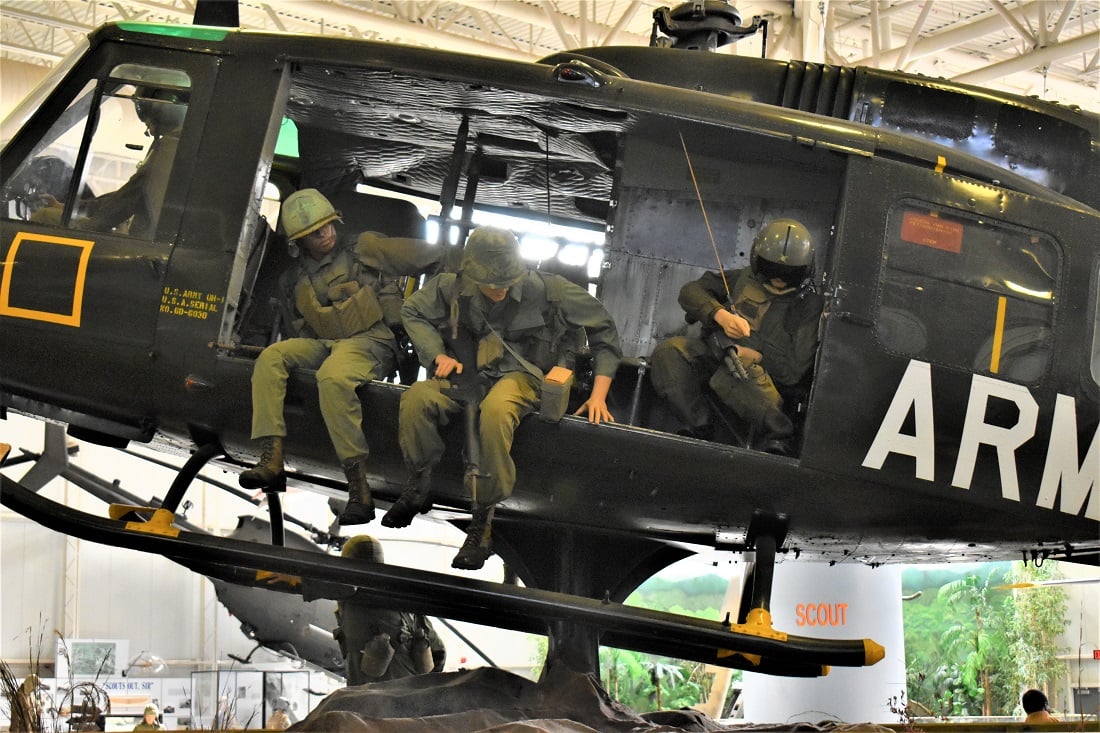
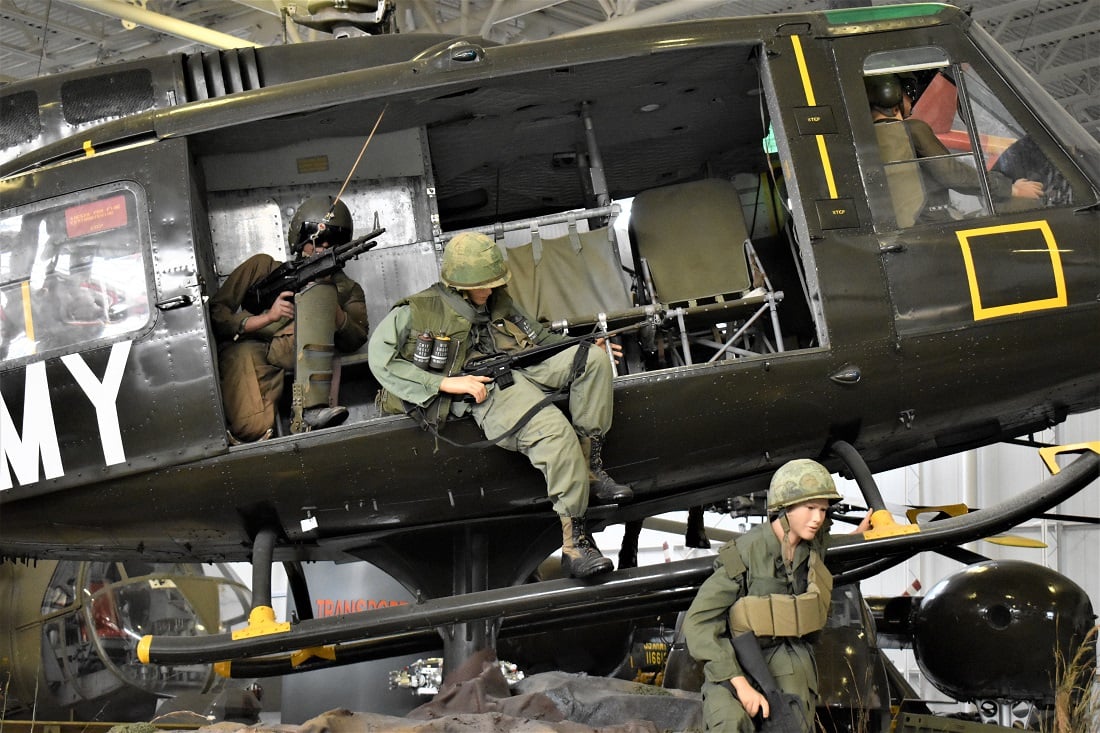
The museum has more than 15 assorted UH-1s in its collection. Here one is shown depicting an air assault landing of the “Bravo Blues”, 1st of the 9th Cavalry, of the famed 1st Air Cavalry Division, in Vietnam.
According to the Vietnam Helicopter Pilots Association, no less than 6,994 "Hueys" served in the Vietnam War – almost all with the U.S. Army, totaling 10,693,902 flight hours between October 1966 and the end of 1975.
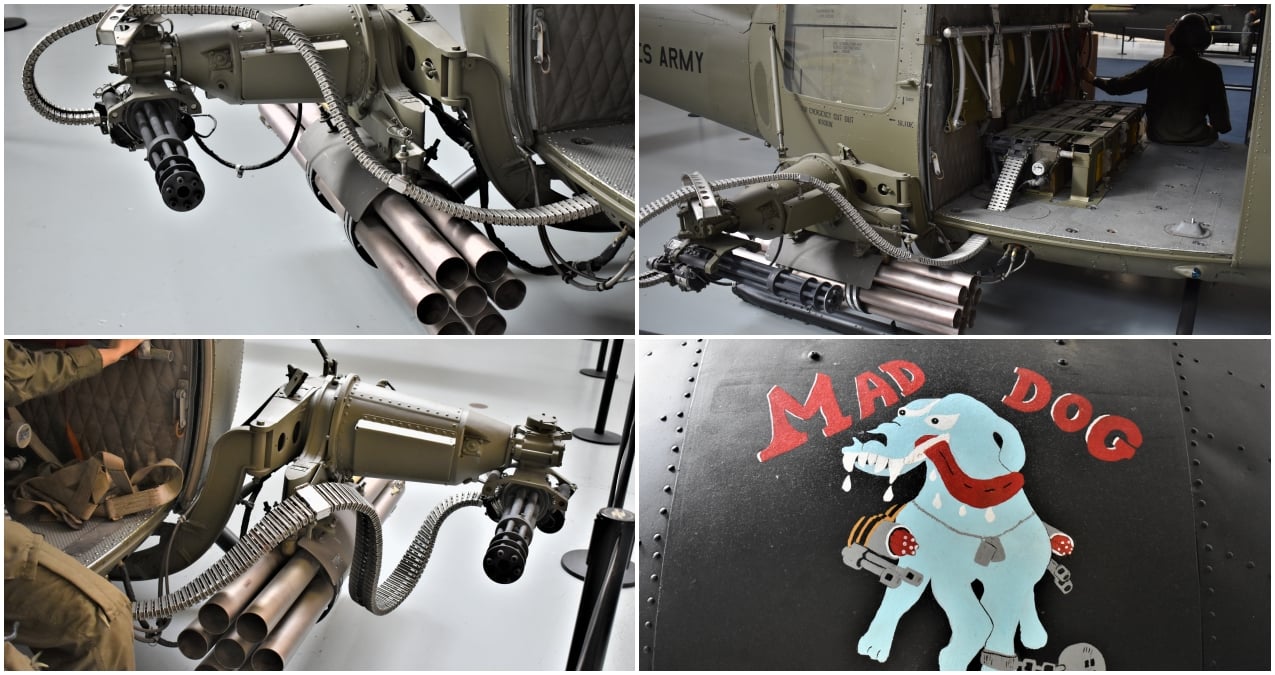
UH-1s often served as gunships, such as "Mad Dog," a famed UH-1C of the "Greyhound" of the 240th AHC. It is shown complete with an early M21 armament system that consisted of twin Mini Guns and two 7-cell Mk 40 rocket pods. The 'Dog, flown by WO1 Morris, would put it to good use.
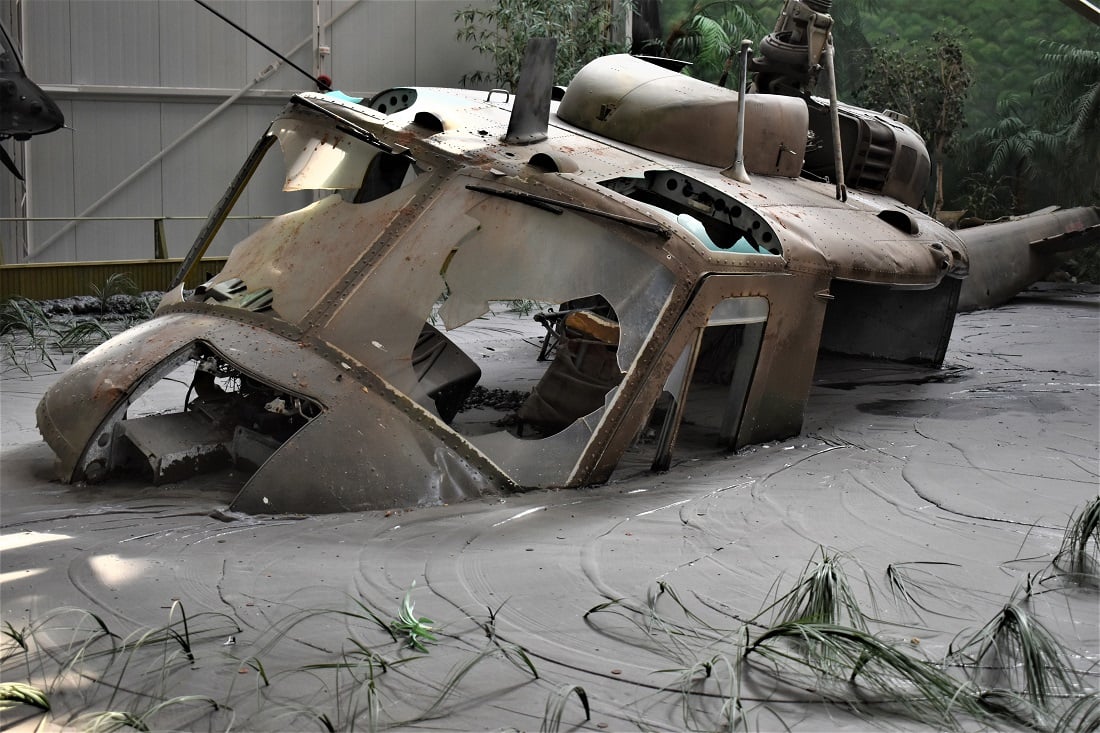
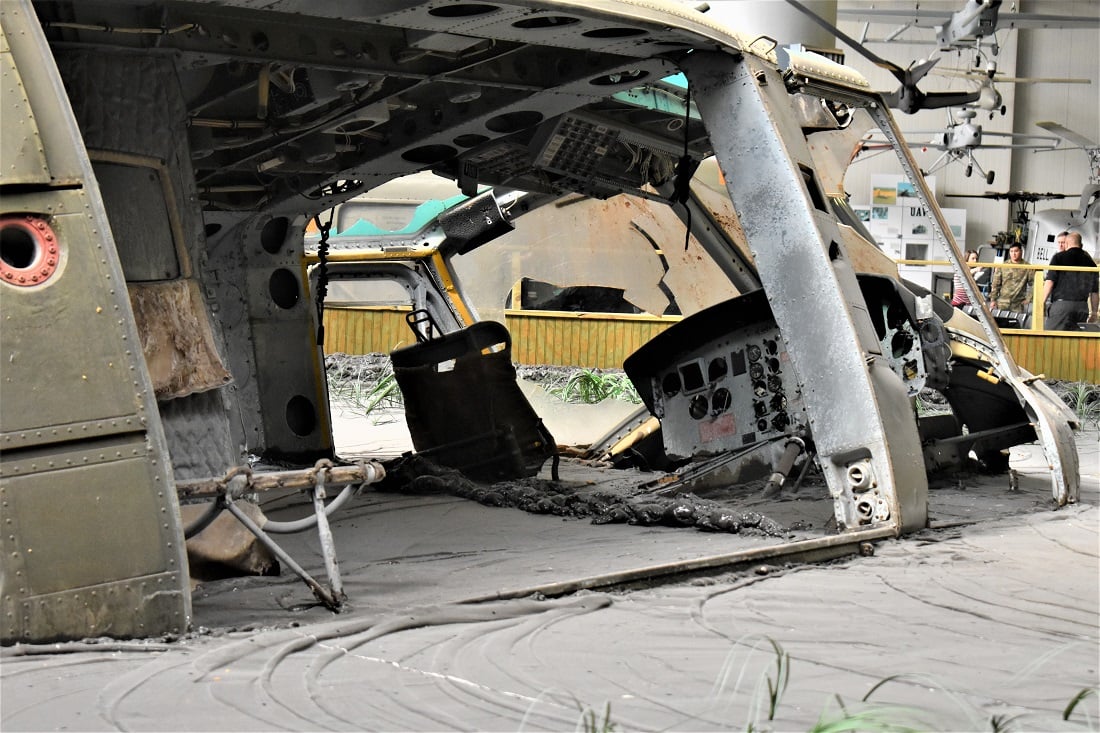
In a sobering display, a downed Huey is shown in the center of the museum's main gallery. Fort Rucker earlier this year was named in honor of Army CWO Michael J. Novosel, a UH-1 medevac pilot who evacuated an amazing 5,589 wounded personnel while in Vietnam, earning a well-deserved Medal of Honor.
The Vietnam Helicopter Pilots Association estimates over 3,300 UH-1 models were lost either due to combat or accidents during the war.
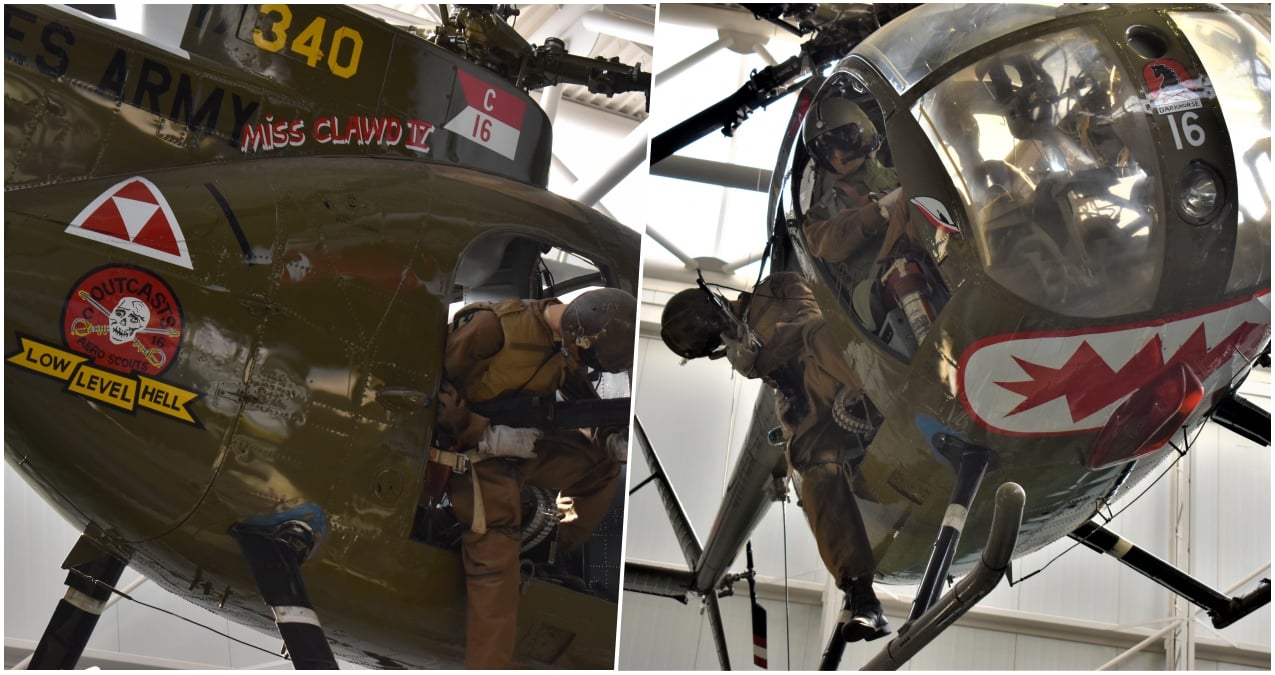
Over the downed Huey is "Miss Clawd IV," a Hughes OH-6A Cayuse that had been flown by Capt. Hugh Mills in Vietnam in 1972. The OH-6A was nicknamed the "Loach" from the initials LOH of Light Observation Helicopter. Mills, who earned three Silver Stars in Vietnam, was shot down 15 times while flying the OH-6 and later co-wrote the book "Low-Level Hell" about his experiences.
Also on display, next to a CH-47, were relics of the Vietnam-era Guns A Go Go project, which saw the big Chinook helicopter turned into a gunship. Just three ACH-47As were converted.
The museum also has no less than nine AH-1 Cobras in its collection, including "Playboys" – an AH-1G complete with a M134 7.62 NATO Mini Gun in the chin. Over 800 G model Cobras flew in Vietnam, with 303 lost while chalking up over 1.3 million hours in theatre.
Another AH-1G converted to AH-1S standard graces the museum's entrance, complete with an M28 gun system with an M134 Mini Gun and a 40mm grenade launcher.
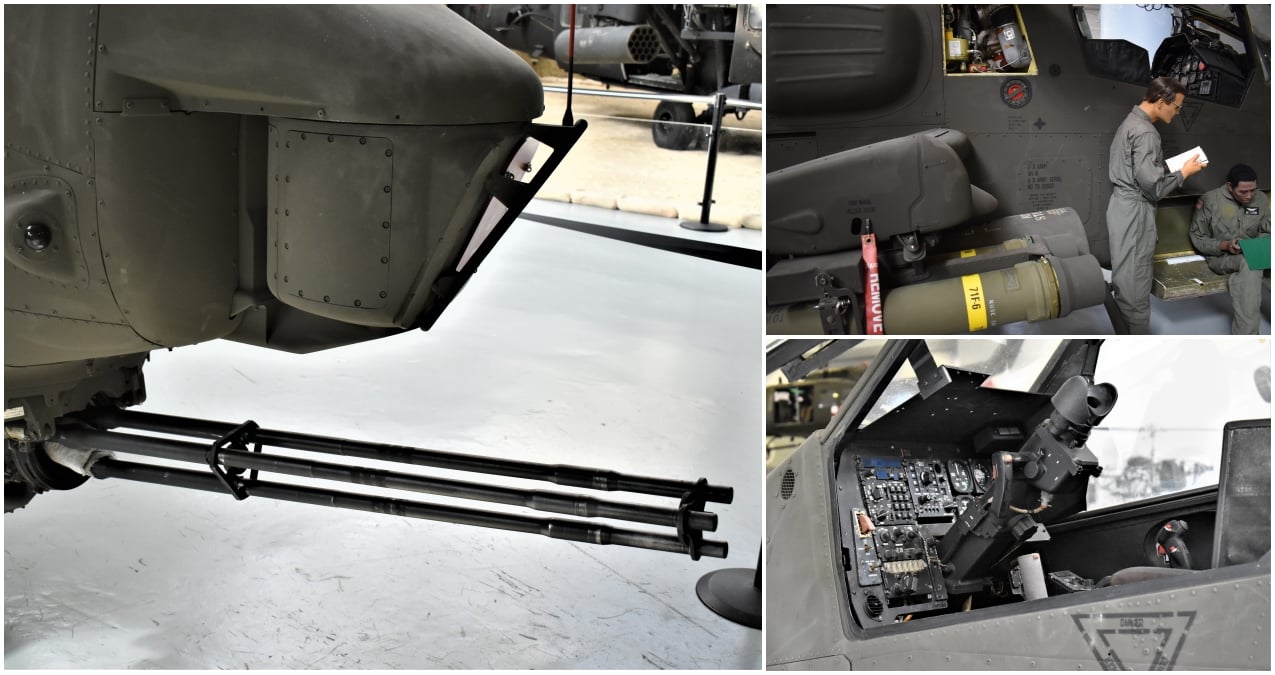
And this beautiful post-Vietnam AH-1S model, complete with a three-barreled M197 20mm cannon.
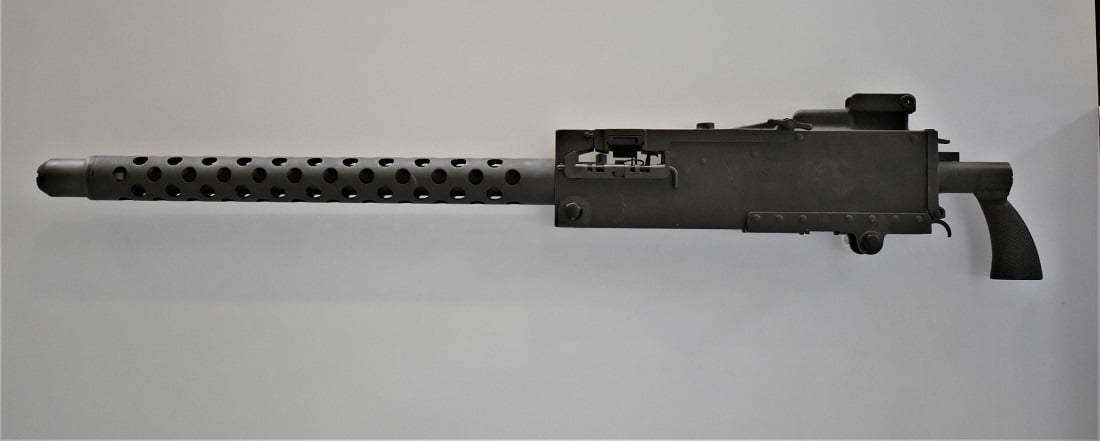
The Browning M1919 served as a flexible and fixed mount on several of the Army's early helicopters.
Along with assorted missiles and rockets...
...a well-traveled M134 is on display.
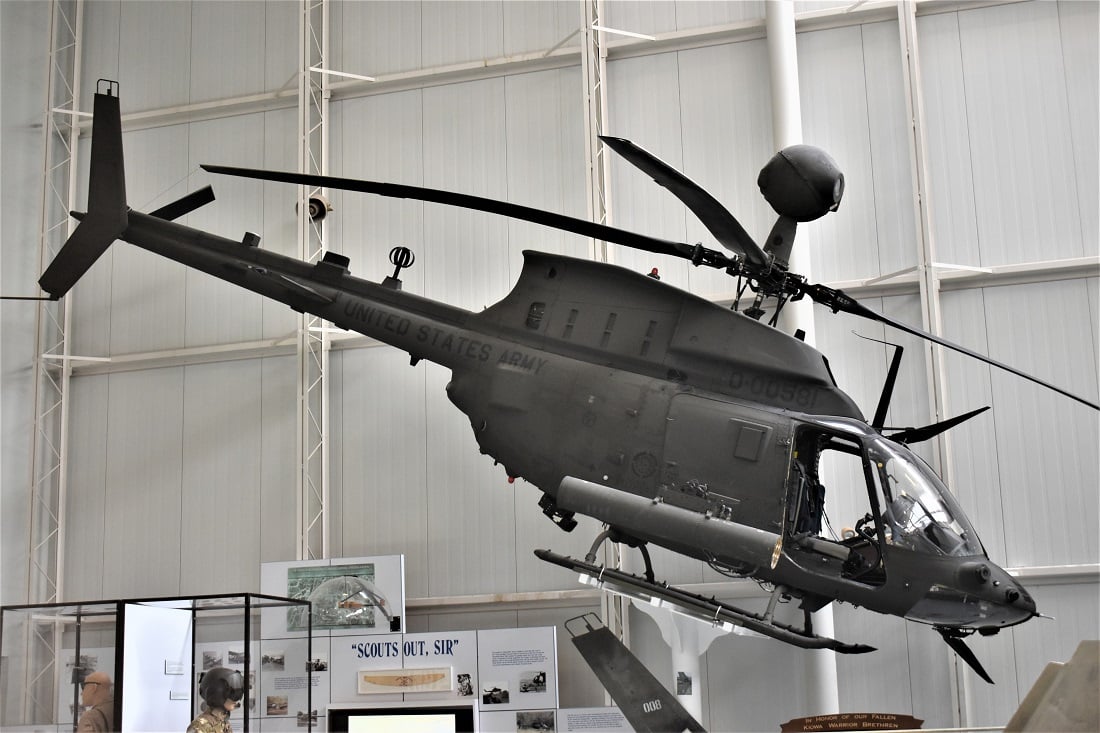
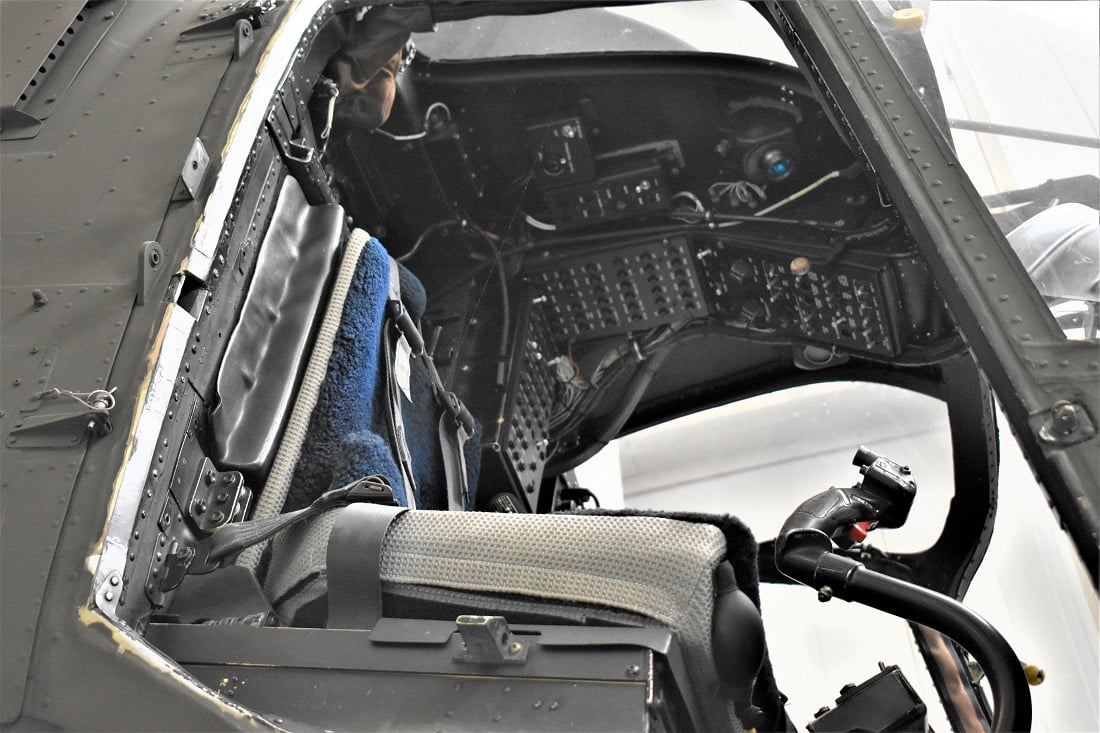
An OH-58D Kiowa Warrior.
The primary scout helicopter from 2001 through 2010, the OH-58D accounted for nearly half of all Army reconnaissance and attack missions in Iraq and Afghanistan, the highest usage rate of any Army aircraft. Sadly, the Kiowa was retired in 2015.
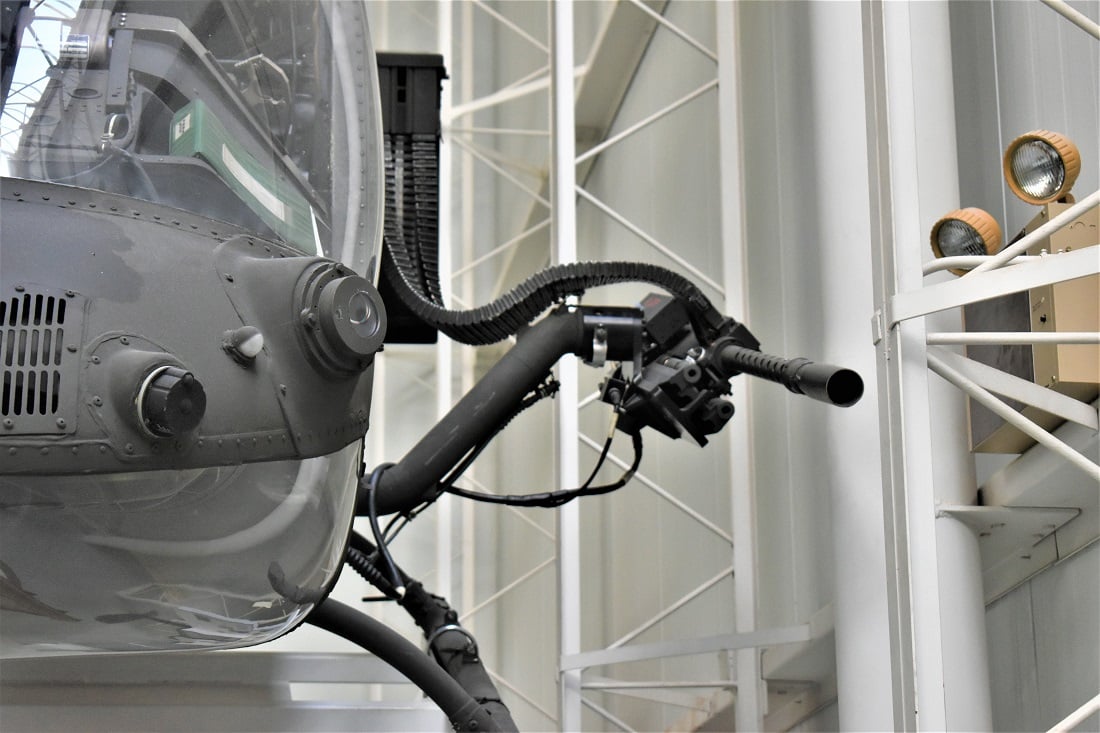
The OH-58D typically carried an FN M3 .50-caliber mount on the port skid.
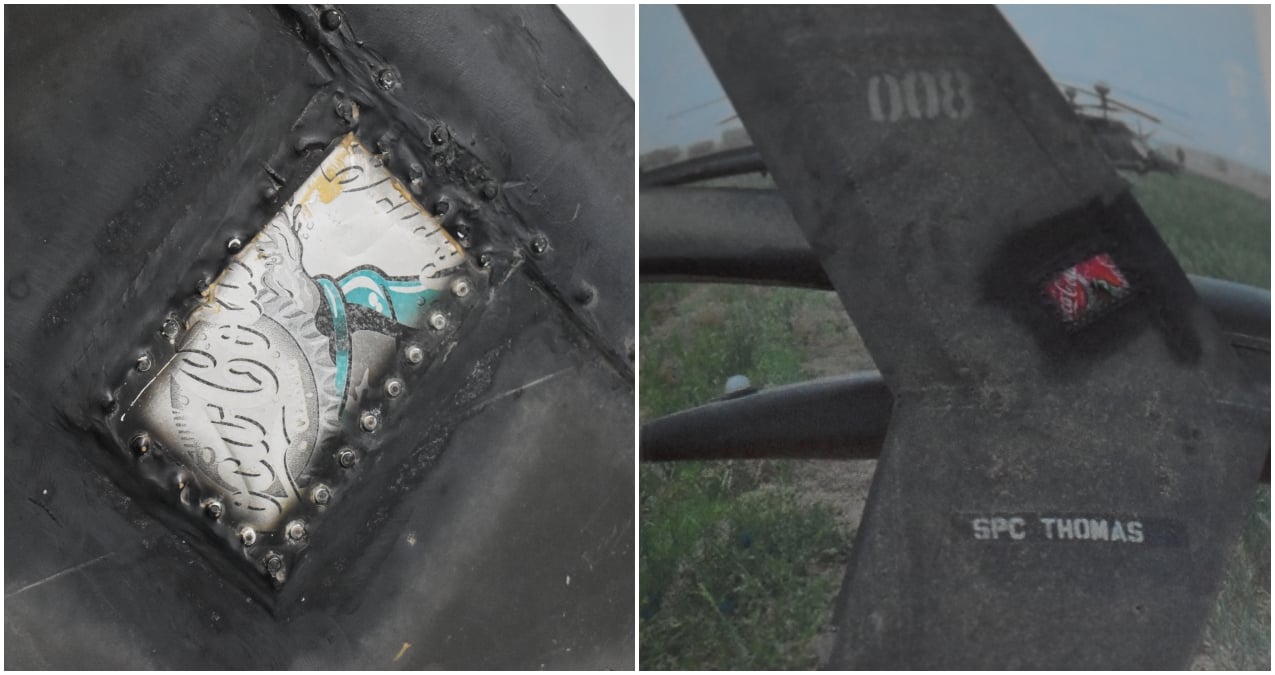
A pop-can field patch job n an OH-58 is on display at the museum.
One gem in the museum's collection is "Razor's Edge," a UH-60L Direct Action Penetrator that spent its entire 23-year career with the Army's elite 160th Special Operations Aviation Regiment. During Operation Gothic Serpent in 1993, the aircraft was "Super 68," one of the three helicopters shot down during the Battle of Mogadishu, immortalized in "Black Hawk Down."
Retired in 2013, Razor's Edge is shown in its later IDAP gunship configuration, which included a 19-shot rocket pod, 30mm cannon, and twin forward-firing 7.62mm M134 Mini Guns.
Besides its gun armament, Razor's Edge could – and did – also carry Hellfire and Stinger missiles for special moments.
The hidden warehouse
We also met with the museum's director, Robert D. Mitchell, who knows these aircraft firsthand as a retired gunship pilot with experience in Cobras and Apaches. He showed us some interesting artifacts that were in storage being prepped for display when the center's new building is completed later this year.
The three-barreled G.E. XM188 30mm cannon was designed to be mounted to the nose of the Bell YAH-63. The aircraft competed against the Hughes YAH-64 in the 1970s for the Army's new helicopter gunship program. Only three YAH-63s were made and the museum has one.
Some of the early gunships waiting to go on display include more rare Cobras, a Boeing–Sikorsky RAH-66 Comanche, an early YAH-64A Apache, and a Lockheed YAH-56 Cheyenne.
Just 10 huge YAH-56A Cheyenne prototypes were built in the 1960s, and the museum has two.
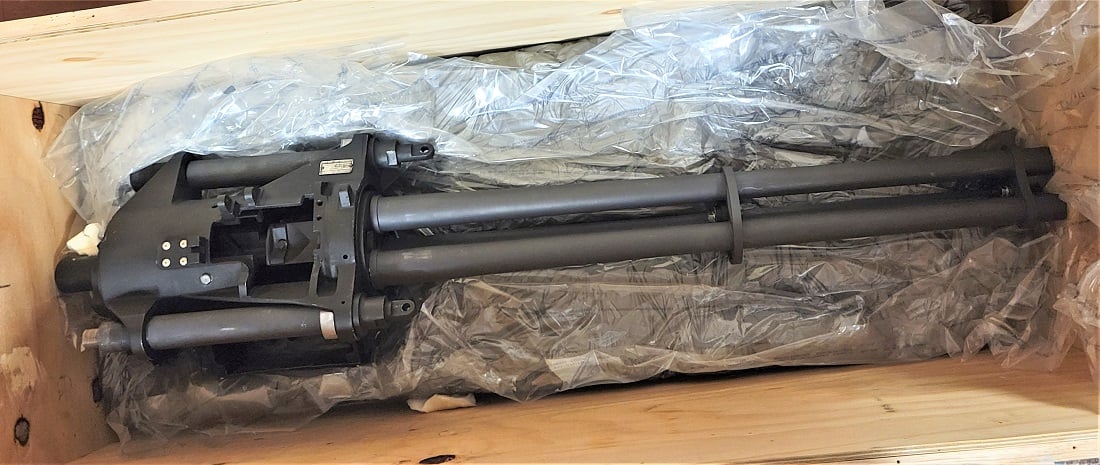
Likewise, both prototype airframes for the 1990s RAH-66 Comanche gunship are in the museum's collection, including the type's rare 20mm XM301 three-barrel rotary cannon, the lightest such gun ever produced at just 80 pounds.
Just one Bell 207 Sioux Scout was constructed in 1963, and the museum has it, complete with its twin Emerson Electric M60 machine gun chin mount.
The Fox Model OH-58F Kiowa Warrior, the canceled last of its kind, alongside an experimental Bell 209, a retractible skid prototype of the AH-1 Cobra
A UH-1C/M gunship, complete with a Vietnam-era M5 40mm flexible grenade launcher turret.
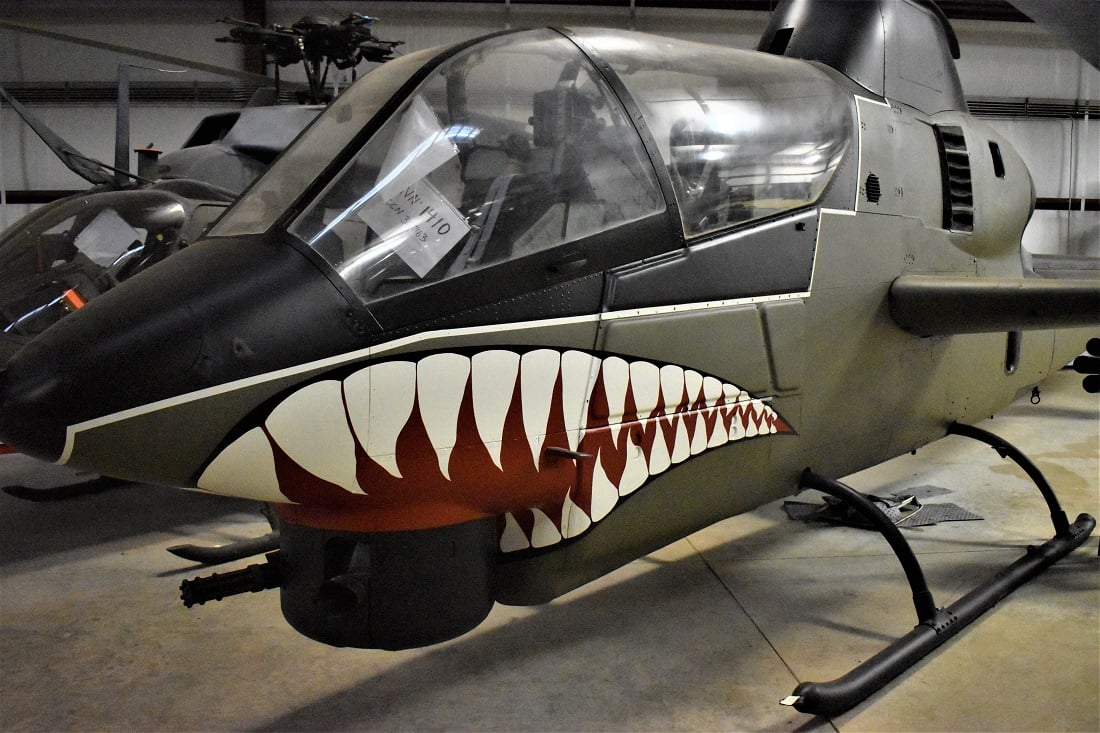
One of nine AH-1 Cobras. This toothy G-model had served with the Spanish Navy in the 1980s and was recently returned to the U.S.
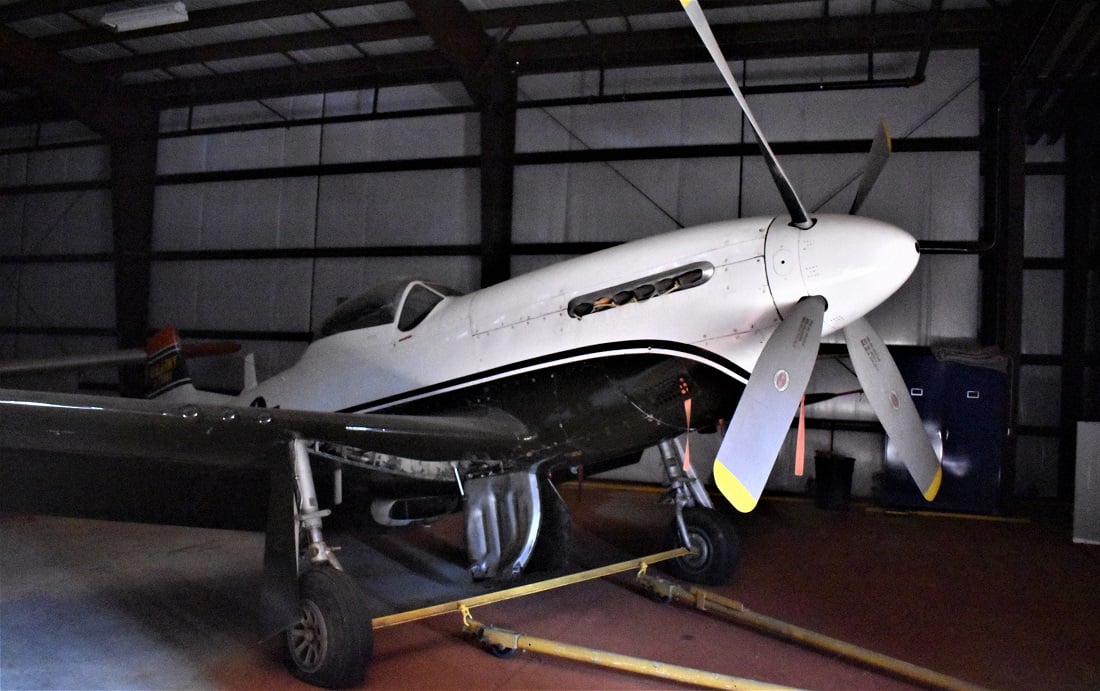
Also stored for future display is a circa-1944 P-51D Mustang that was converted to a Cavalier F-51 Mustang II in the 1960s. It was used as a chase aircraft for fast helicopter prototypes like the Cheyenne.
If you ever find yourself in southwest Alabama near the U.S. Army Aviation Museum, it is well worth your time to stop in, especially with the new additions set to open.
We thank the U.S. Army Aviation Museum for their assistance with this piece.