The Question
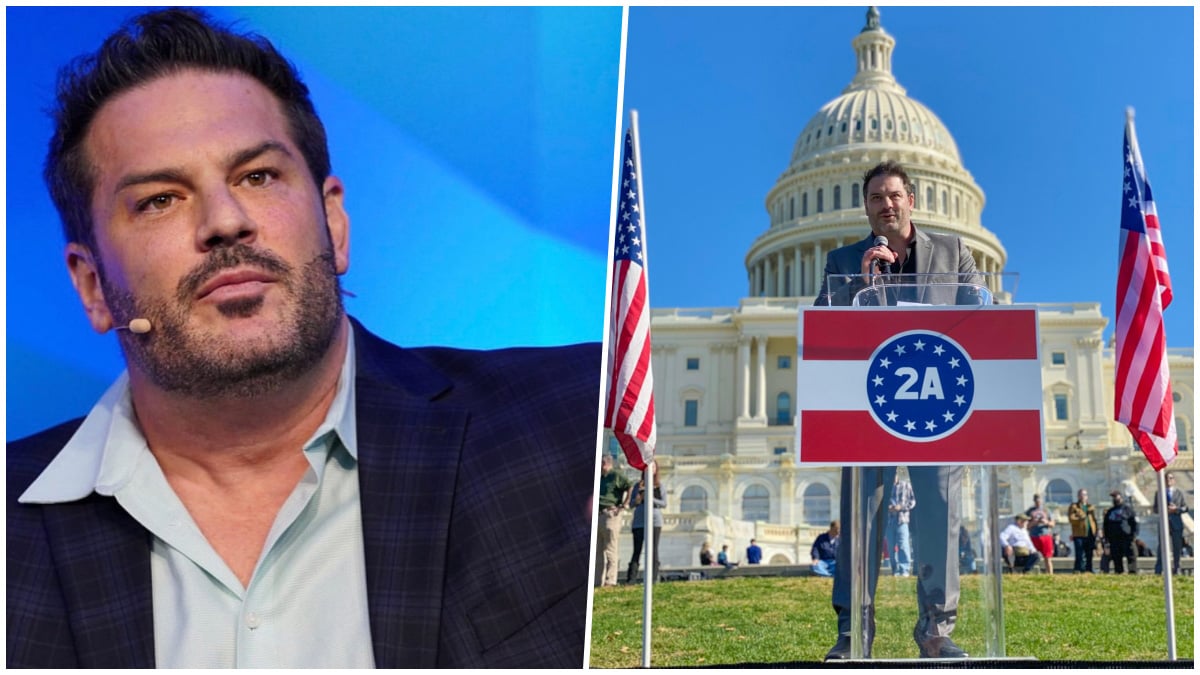
Sodini and his National Sales Manager at the time had just landed a big deal in the Big Easy and were having a couple of cocktails to celebrate while they waited to be seated for dinner. Upon returning from the restroom, Sodini found his partner chatting with the woman next to him about the book she was reading. They had struck up a good conversation, and riding the tail of a good sale, Sodini invited her to sit with them at dinner.
At the time, he worked for his family’s company, Eagle Imports, which imported guns like Bersa, Grand Power, and Llama from 1988 to 2020. The woman, who wasn’t a gun owner, had lots of questions about the industry. Eventually, the topic of mass shootings came up. She asked Sodini why mass shootings happen and what can be done about them. His response cued up her next question, which would change the outcome of his life.
“Well, whenever there is a mass shooting, the media blames gun owners, and gun owners blame mental health, and nothing ever gets done,” Sodini told her.
And then the question.
“Well, how do you as an industry work with mental health if you have identified the problem?
It would make sense that the two industries work hand in hand.”
It was like a bolt of lightning shot through the roof of the restaurant and struck Sodini in the head.
What are we doing? The answer, at the time, was "nothing." He knew he had to be the person to change that. He became focused on the idea of connecting the right people in the gun industry to the right people in the mental health profession. It was an almost immediate obsession, prompting the stranger to comment on his state of mind as they left dinner.
“You’re really going to do something about this whole mental health thing, aren’t you?” she asked.
“Yeah, I absolutely am,” he said with conviction. When she left for the evening, the impact of this chance encounter was just starting to be felt, but it would resonate for the rest of Sodini’s life.
Finding the Needle in the Haystack vs Fixing the Haystack

Now, as the CEO of WTTA, Sodini has uniquely positioned himself at the intersection of guns and mental health, and he travels the country talking about these subjects to sold-out audiences. But the question has changed.
“Who here has heard of the Mirage/Route 91 mass shooting in Las Vegas where 58 people died? The largest mass shooting in history.”
Inevitably, everyone raises a hand.
“Seventy-two people take their lives every day with a firearm. We have a mass shooting every day in this country right now due to suicide by firearm, and it’s totally unreported.”
When Sodini was just starting to imagine WTTA, he thought he would solve this mental health crisis by stopping the next mass shooter. When he started speaking with professionals in the mental health industry, he found that approach was like trying to find a needle in a haystack. The bigger issue at play is suicide by firearm. If he could help address that issue, he could potentially stop the next “mass shooting" from happening.
While WTTA is committed to elevating awareness and discussion of mental health in the gun community, Sodini knows that the tip of the spear is suicide. It needs to be addressed and can’t be a stigmatized issue among gun owners anymore.

“There's a huge stigma around it because of being on the defense, right? For years, you're told that you're bad people because you own a gun and this is all your fault and you have blood on your hands. Whether it's from suicide or a drive-by shooting, somehow people equate that to you. I think naturally we've kind of shelled up and got defensive, [and] I don't blame people,” Sodini told Guns.com.
Generationally, there is also stigma surrounding mental health in general. Sodini told an amusing story of what he imagined his grandfather’s reaction would be if he told him that he had anxiety. Many of our grandfathers and great-grandfathers didn’t acknowledge that kind of stuff, and that attitude surrounding mental health has been handed down through generations. It’s only by talking about mental health that we’ll be able to break the stigma.
Elevating the talk is at the core of the mission for WTTA:
“Walk the Talk America is dedicated to bridging the gap between mental health and responsible gun ownership. Our mission is to enhance the perception of mental health among gun owners while elevating the standard of mental health care within this community. Walk the Talk America is uniquely positioned as an organization that integrates the wisdom of gun-owning mental health professionals, offering innovative solutions derived from real-world experiences.”
What is important in that statement is not only the focus on curing the gun community from within but doing the same with the mental health community. Refocusing how each community speaks to each other is key in helping foster a productive relationship between the two. This is no small task, but WTTA has specific plans to get started and succeed long-term.
Changing the Medical Narrative About Gun Owners

For far too long, people in the gun community have been skeptical of speaking with mental health advisors because they fear losing rights and/or finding themselves on a government list. To be fair, there is some validity to this depending on the state laws where you live.
WTTA is addressing these issues in two ways. First, it is building a network of mental health clinicians who have taken at least the first level of WTTA's Cultural Competence class that educates them about better helping gun owners. This would give a distinct advantage to gun owners who have a hard time going to a typical clinician, many of whom are decidedly anti-gun. Being able to talk with a mental health clinician who is possibly a gun owner themselves and understands the unique needs and perspectives of gun owners can yield big advantages for someone in need.
The network just launched but has 13 clinicians signed up and more expected. But building a national network of clinicians that support gun rights and are licensed mental health advocates is slogging, tough work. The easier answer was offering Continuing Education Units (CEU) to already-licensed clinicians.
“We are training mental health clinicians, which we've been doing for a while. We are giving them CEU credits that come through our course… We bill it like for clinicians. We've had just regular doctors come through. It's open to everybody,” Sodini explained. “It's free on our website, but there's no guarantee that your licensing board is going to accept it. We don't know every state.”
But it goes further than just offering CEUs to mental health clinicians. Even if the clinician lives in a state whose regulatory board doesn’t recognize the course, they typically learn something about gun owners and the community.
“I've actually watched mental health clinicians have this look of shock when they're like, ‘I don't even know how I could take someone's guns, and I didn't know gun people were afraid to come talk to me because of that,’” Sodini told us.
The hope is that when the mental health clinician’s perception of gun owners changes, more gun owners will seek out mental health help. Even so, more can be done within the gun community to promote the idea of mental wellness and seeking help when needed.
Changing the Attitude of the Gun Community
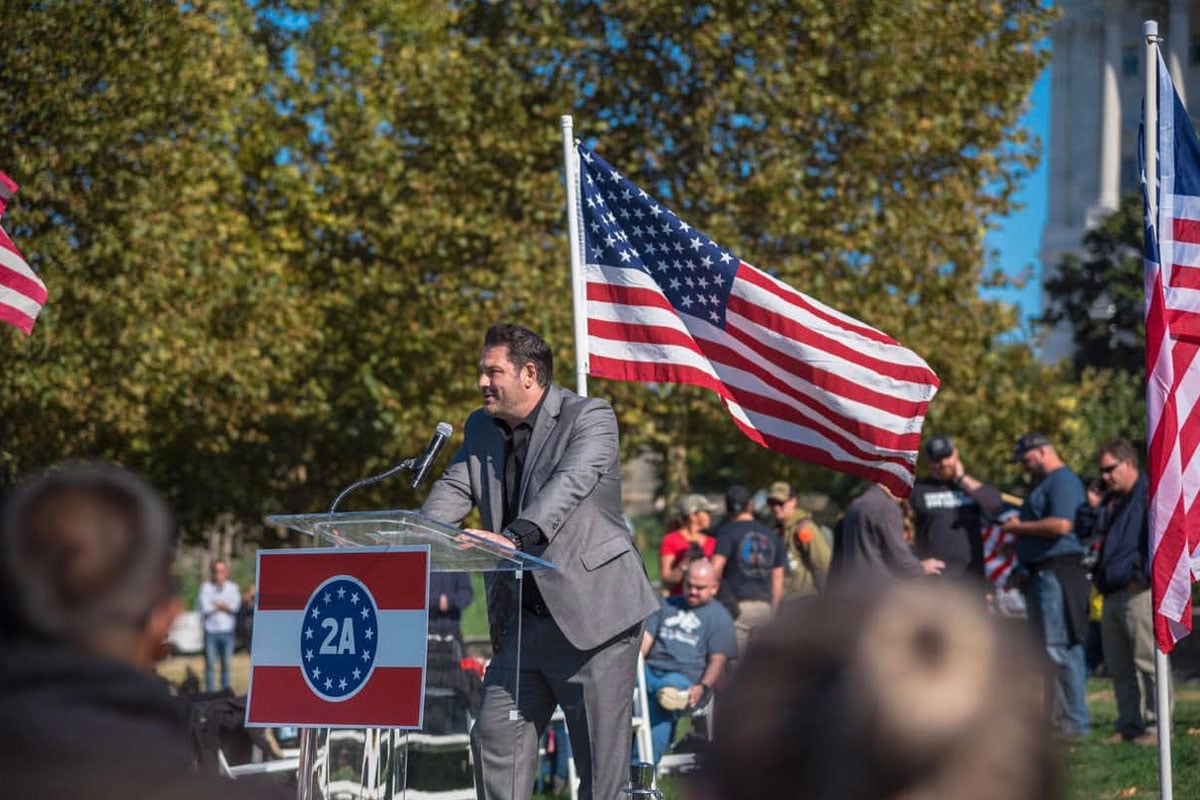
Changing the attitude of the mental health community is needed, but there is also a lot of self-healing and self-reflection that the gun community can do on its own. The best way to do this, according to Sodini, is to address mental wellbeing head-on and early.
“We're saying, ‘Look, stay on top of your mental health. You own a firearm. This is part of the responsibility,’” Sodini said.
He argues that education on mental health should be folded in early when teaching someone about proper gun ownership. Let’s call it a fifth universal safety rule: “Stay on top of your mental health.” But individual gun owners and those involved with WTTA can’t be the only ones getting the word out. Organizations and manufacturers can amplify the message.
“It starts with the organizations and the manufacturers saying, ‘It's okay to address this.’ I think in the industry, we couldn't talk about it for so long, it was used against us. It really was. And we didn't know how to fit in,” Sodini said.
WTTA currently tackles this issue in a couple of ways. Thanks to WTTA’s efforts, every new Ruger and Bersa firearm includes a card for a free and anonymous mental health screening. Those companies are telling gun owners, “Hey, look at this – it’s important.” WTTA hopes to add more manufacturers and retailers every day, but the message can also be taught in the classroom.
The group has partnered with the USCCA to include a slide for instructors to use when teaching a concealed carry class. While it’s not required curriculum for the instructors, a great deal of instructors participate in the program. For those instructors, these slides are seen as just as crucial as learning about the rules of gun safety.
Finally, WTTA offers free and anonymous online tests for everything from depression and anxiety to eating disorders and PTSD. The results are not meant to be a diagnosis, but rather guide the user toward help, should the test results be a warning sign. It’s all in the name of making the conversation around mental health easier and more transparent.
Next Steps and What You Can Do
WTTA has grown every year since Sodini founded the organization in 2018, and he doesn’t see any slowing down. He feels like he’s found his life’s mission, and supporting gun owners while opening up about mental health is what he was put here to do. You can help him on this mission by making mental health part of the conversation around guns in your life. Check in on yourself regularly, not just during times of crisis. Take a mental health screening quarterly to ensure you are doing well. You can also support the effort by donating to WTTA or simply telling friends and family about it.
As a responsible gun owner, take the same energy used in preparing to defend yourself and your loved ones and use it to prepare for mental health crises. Don't wait for a crisis to hit. Start preparing now.