At the turn of the 20th Century, the U.S. Army fielded an impressive array of "disappearing" guns along the American seacoast and few remain. Guns.com recently caught up to one of these scarce historical pieces.
We present to you, a 6-inch rapid-fire rifled gun, Model of 1905, Serial No. 30, on Disappearing Carriage, Model of 1903, located at Battery Cooper near Fort Pickens on Santa Rosa Island in West Florida, just a few miles off Pensacola Beach. Once common, it is one of just two still in existence in the country in its original format.

What is a Disappearing Gun?
Responsible for coastal defense going back to the first days of the Republic, the Army built and maintained several generations of coastal forts, artillery batteries, and defensive floating minefields until the late 1940s. The best known of these were the 42 so-called Third System of brick forts built between 1816 and 1867, many of which still haunt the coastline, typically near America's largest ports.
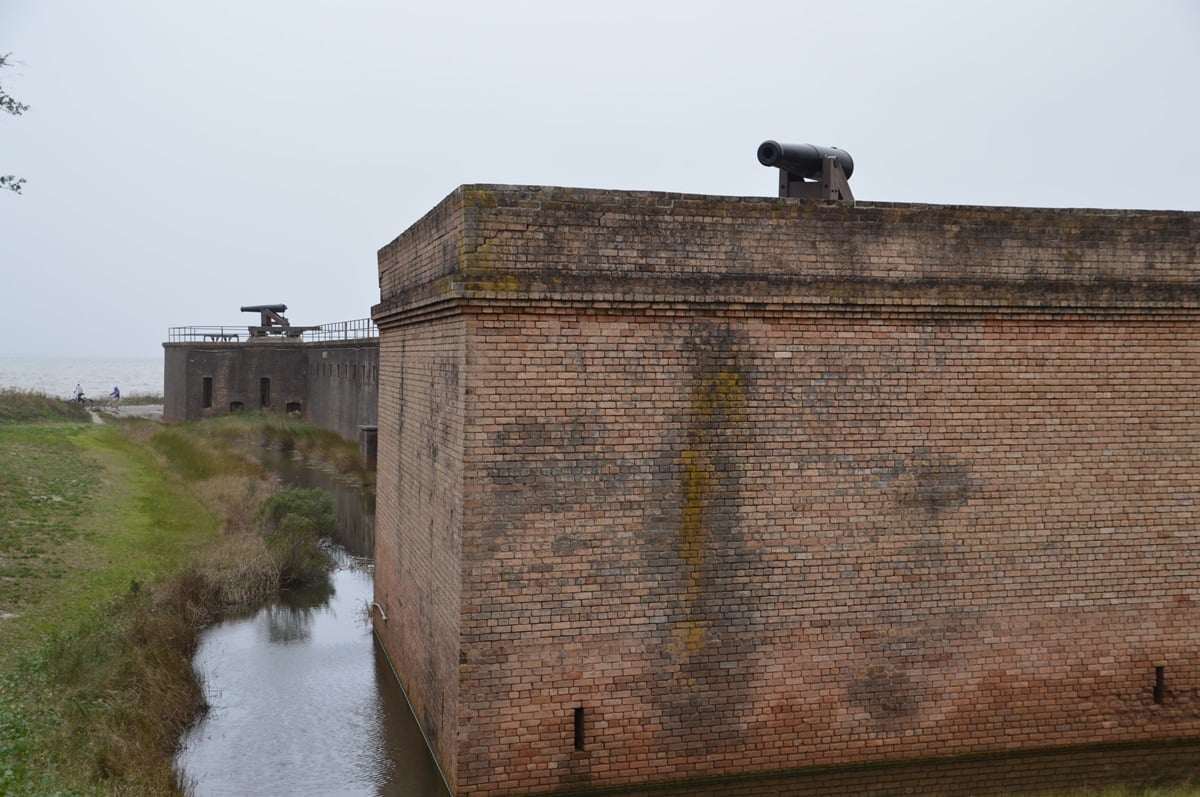
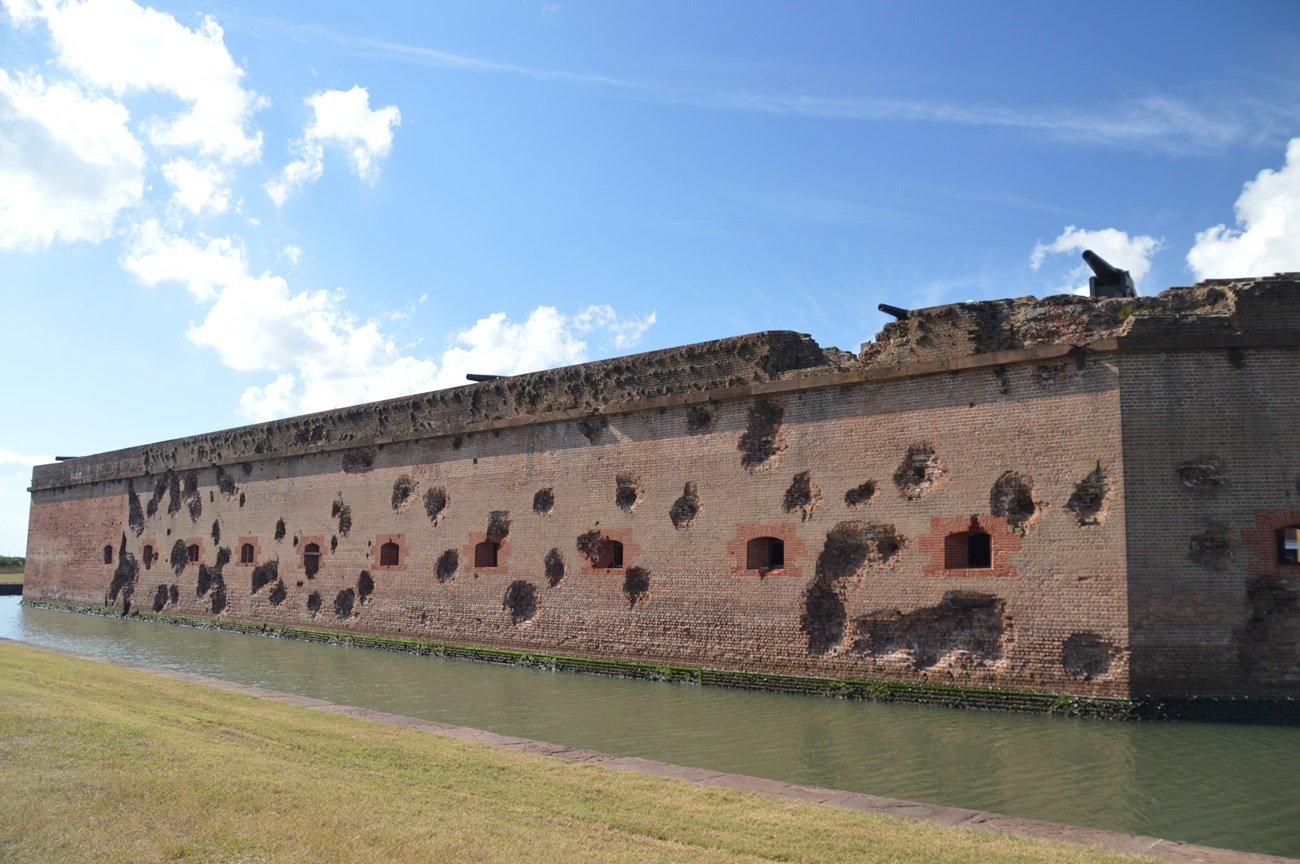
Following the Endicott Board reforms of 1885, many of these then-obsolete masonry forts were updated with more modern batteries constructed of reinforced concrete, sometimes placed directly atop the old brickworks.
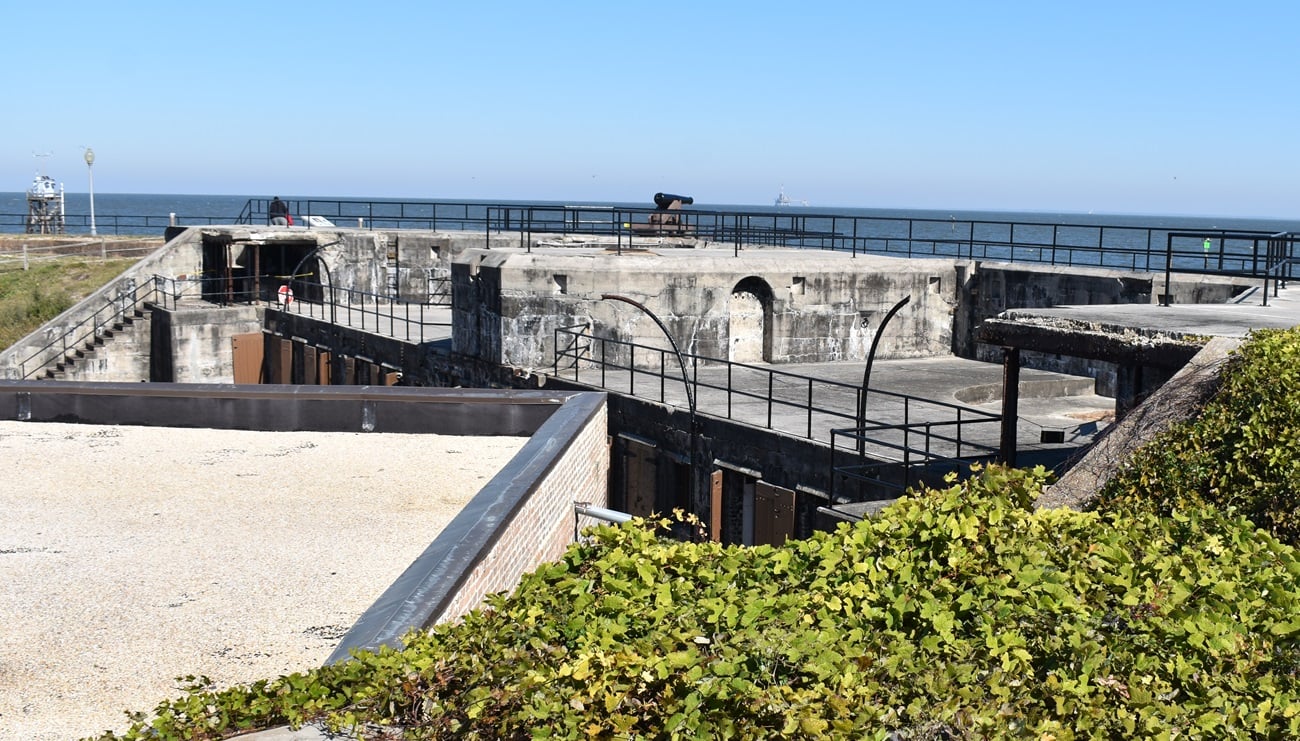
Arming these new batteries, rather than black-powder muzzle-loading iron cannons with a range of about 3 miles, were rifled steel breechloading artillery pieces that could both fire faster and much farther – some as far as 17 miles – than the guns of the Civil War era.
To help give these batteries the upper hand against enemy warships offshore, they were often equipped with "disappearing" guns, which were loaded behind the camouflage cover and concealment of the battery's shore-side ramparts and then, via a counterweight, would rise over the top, fire at their target, and be pushed back down by the force of the gun's recoil.

In all, the Army would order some 75 "super heavy" 12-inch disappearing guns, 128 slightly smaller 10-inch guns on similar mounts, 64 8-inch disappearing guns, and the most common type: 152 assorted 6-inch models.
A Look at No. 30


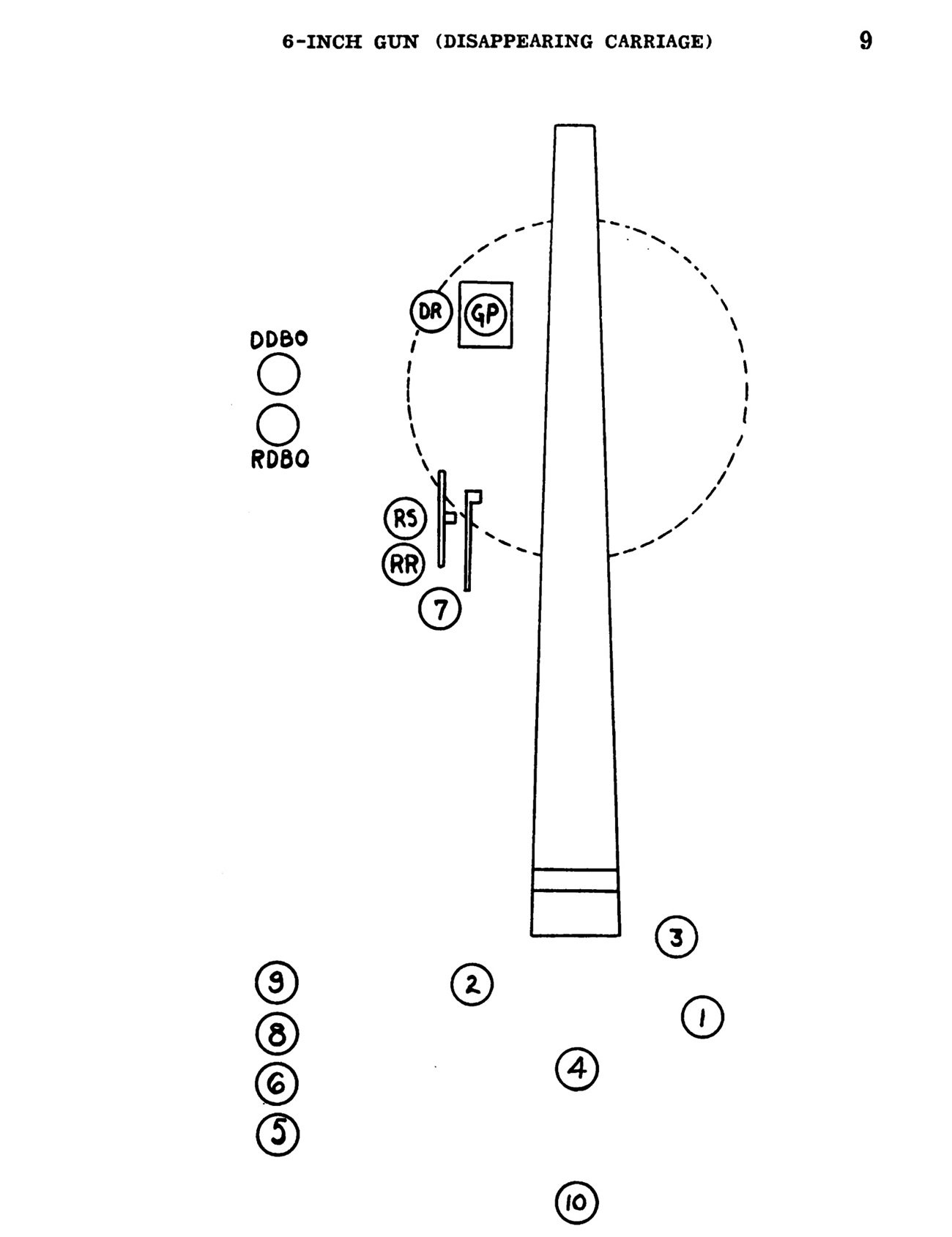


How No. 30 got to its current home
Battery Cooper gave up its original 6-inch disappearing guns in 1917, withdrawn for use during the Great War in France, and lost to time. The gun that inhabits the battery only arrived in 1976.
Made obsolete by aerial bombing and observation which could easily pick out the hidden guns, the military retired most of its stateside disappearing mounts by the 1930s with the guns either being scrapped or, in some cases, repurposed.
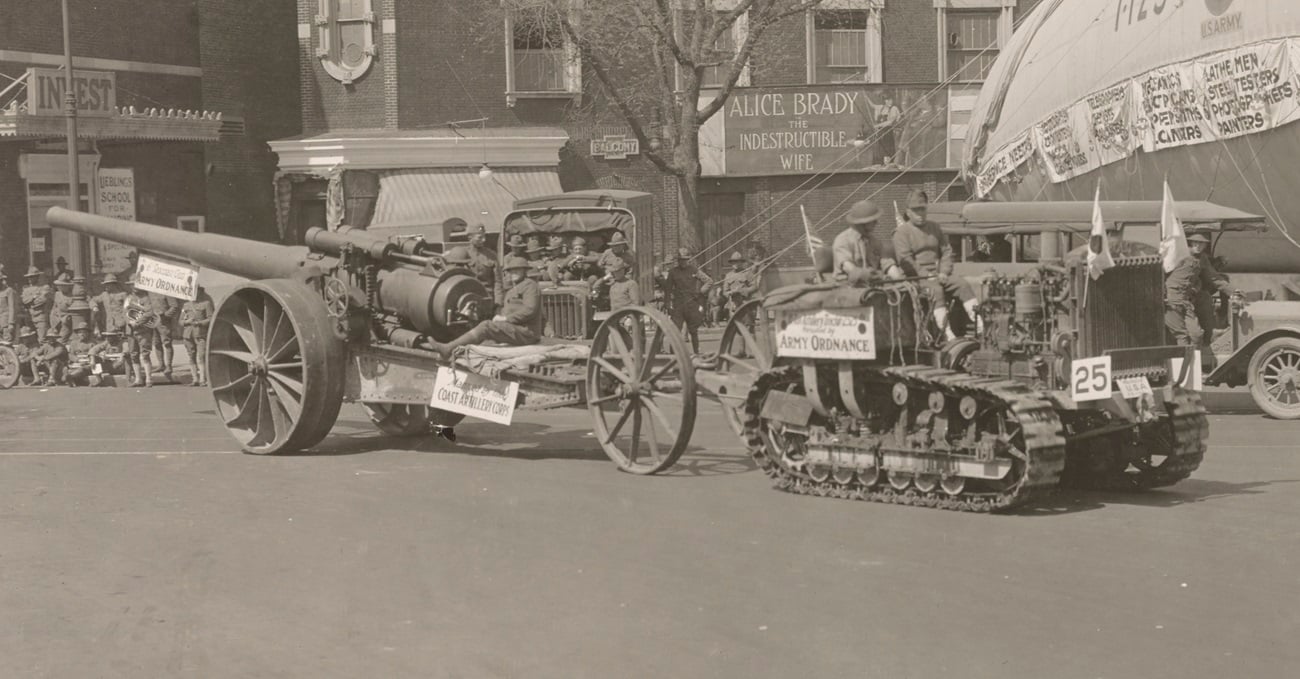
Once America entered World War I in 1917, the Army hit upon an idea to recycle its antiquated disappearing guns and removed several from their batteries, installed them on new ersatz mobile carriages pulled by tractors, and sent them to France to fight the Germans on the Western Front. When it came to the 6-inch guns, 74 were mounted on expedient wheeled M1917 carriages constructed by the Morgan Engineering Company of Alliance, Ohio, and 68 were completed and shipped to France but arrived too late to see service.
The 20,845-pound 6-inch gun, removed from its disappearing mount and with its trunnions sheered, was installed on a steel carriage with two 72-inch solid wheels, resulting in an M1917 artillery piece that weighed 43,455 pounds, or roughly 10 times the curb weight of today's Ford F-150. It had an on-gun elevating mechanism and a recoil system installed on the top of the breech. The guns were sent overseas with 90-pound Mark II Common shells, which could be fired some 18,000 yards, a decent range for the era and a significant gain from its prior range as a fixed piece.

After the war, the M1917 carriages were disposed of, and the gun tubes were placed in storage.
Most of the former 6-inch disappearing guns converted into M1917 mobile guns were later used in fixed steel-shielded coastal artillery batteries constructed along the coast during World War II.
Of the Army's mixed bag of 419 disappearing guns in various sizes, just four survive in the U.S. today still mounted on disappearing carriages. Two 10-inch guns are currently located at Battery Worth at Fort Casey on Whidbey Island, Washington, and a pair of remaining 6-inch "sister" guns are installed at two locations 2,200 miles apart – one at Battery Chamberlin on the Presidio in San Francisco and the other at Battery Cooper on Fort Pickens near Pensacola, Florida.
Constructed by Watervliet Arsenal in New York, both enduring 6-inch disappearing guns were originally emplaced in 1907 at Battery Schofield, an educational battery installed at Trophy Point on West Point to be used for training by the cadets at the U.S. Military Academy. Keep in mind that guns of this type and caliber were the most commonly encountered in the Coastal Artillery of the era, a branch in which many of West Point's future officers would serve. A group of six to eight officers from that branch were typically on hand as part of the Academy's faculty and would serve as instructors for the hands-on training.
The guns included SN# 30 in Emplacement 1 and SN# 9 in Emplacement 2 and were only fired a few times each summer.


By the 1930s, the disappearing guns of Battery Schofield had become quaint and anachronistic, a pair of coastal artillery pieces mounted well inland from the ocean of a type that had long since been withdrawn from service. As they were exposed to less salt air than seacoast guns and had been fired less while probably maintained to a far higher degree than guns left in some remote emplacement – remember the cadets using these were under the supervision of several Coast Artillery branch officers who no doubt wanted the pieces to look fantastic – these survivors were in great shape for their age.
They were then carefully dismounted and put into storage, while the battery itself was raised and by 1937 was the foundation for the Trophy Point Amphitheater, home to the West Point Band.
Earmarked after 1960 for a planned National Armed Forces Museum to be built by the Smithsonian, the two retired guns languished for years at the institution's cavernous warehouse complex in Silver Hill, Maryland until the NAFM project was shelved following the Vietnam War.
Eventually, the National Park Service, which maintains several Endicott-era batteries along the coasts, almost all without period weapons, caught wind of the low-mileage 6-inch disappearing guns and thought they would be a great fit for installation at Battery Gadsden. The concrete coastal gun emplacement on Fort Moultrie in South Carolina had four similar guns mounted between 1906 and 1920.
However, the Moultrie plan fell through, and it was eventually decided in 1976 to ship SN# 9 to the Presidio in San Franciso (where Battery Chamberlin had guns No. 26, 27, 28 and 52 of the same model when in service between 1904 and 1917) and SN# 30 to Fort Pickens outside of Pensacola (where Battery Cooper had mounted guns No. 42 and 53), where each was cleaned up, repainted, and mounted, sans breechblocks.
By 1987, exposed to the punishing salt air and abuse from thousands of visitors who often carved into the coats of paint with knives and coins to leave their initials and graffiti, SN# 30 was removed and sent to the Florida Research Laboratory in Tallahassee for a $53,000 three-year refurbishment.
Remounted in 1990, the gun, now displayed in its recoiled position to protect its muzzle and help curb damage from wind-carried sand, carried an incorrect gray coat of paint for several years.

Today, the gun has been recently repainted and, in line with the 1909 Army Field Manual on the gun, carries a uniform olive-green coat on both tube and carriage.
The Battery Cooper gun today is exceedingly rare, and, with Battery Chamberlin being off limits at the Presidio for some time now, is the only one of its type on public display in the U.S.