French Ingenuity
Around the office, there are quite a few jokes about how much I love French firearms history. While many make fun of the French and their military, it is easy to forget that they were involved in some of the fiercest fighting over the last 150 years. This constant state of war and struggle has forced the French to push themselves to the forefront of many military technologies.
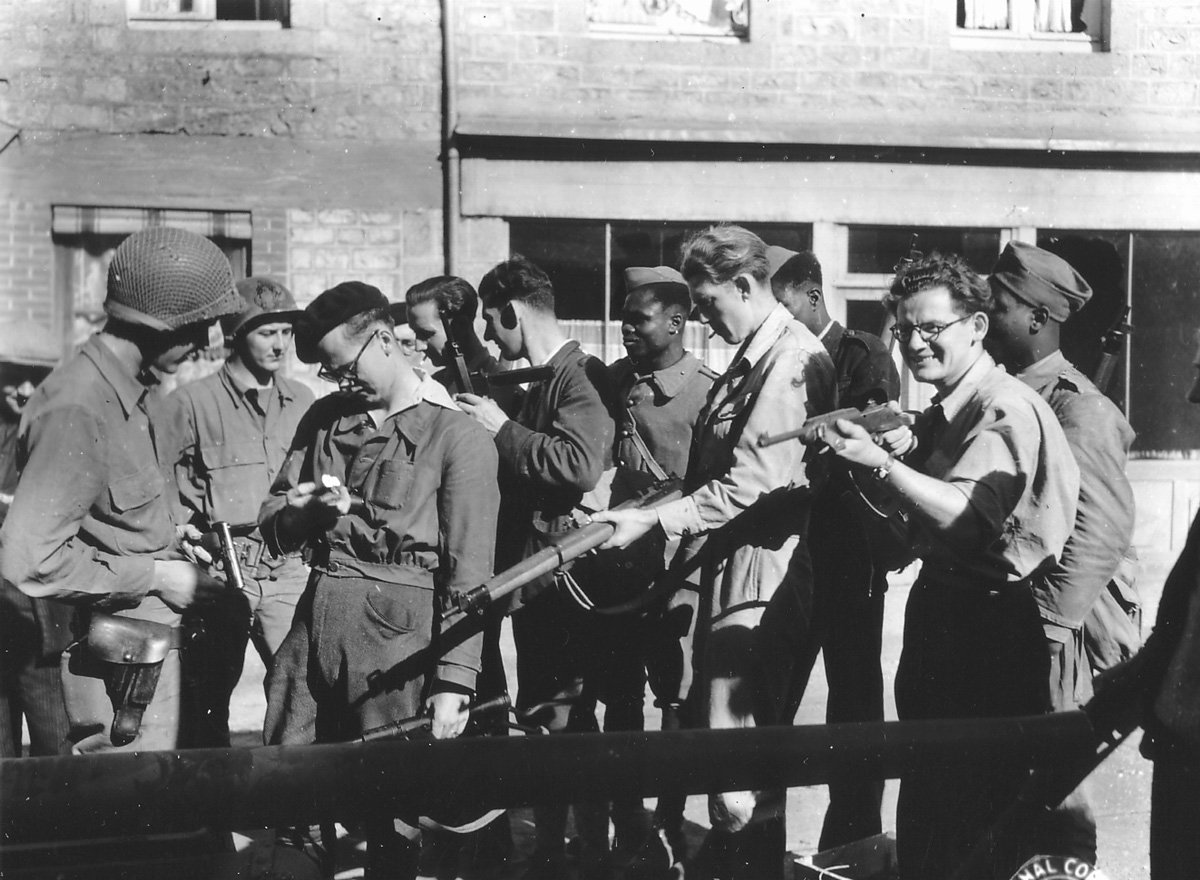
The French are responsible for the brass-cased cartridge. France was the first nation to adopt a smokeless powder round and rifle and the first nation to mass issue semi-automatic rifles to general infantry.
Related: MAS-36 & MAS-49 Rifles – Cutting-Edge French Military Firearms
While the French were at the forefront of many military advancements, they also found themselves ill-prepared many times, adopting certain firearms as stopgaps between something outdated and something better to come. Such is the story of the French Unique handgun.
Spanish Origins
In World War I, the French found themselves involved in one of the costliest conflicts in human history. In 1915, casualty counts were rising, not just among soldiers, but among French small arms as well.

Most of the French military was fielding the 1886 Lebel rifle and the Model 1892 revolver as a sidearm. This combination was not only outclassed in 1915, but thousands of firearms were being lost on the front every day. This realization forced the French to look for a solution of an upgraded firearm to replenish the affected inventory.
So, in 1915, the French turned to a Spanish manufacturing company by the name of Gabilondo. At the time, this Spanish company was producing a copy of the Colt 1903 Hammerless. This unlicensed .32 ACP-chambered handgun copy was dubbed the Spanish Ruby pistol.

The 1903 Hammerless was a modern semi-automatic design that was the brainchild of the great John Moses Browning. The Browning handgun design had a good reputation and provided a perfect upgrade for the French military. Ultimately, France had hundreds of thousands of Spanish Ruby pistols produced for use by the French Armed Forces during World War I.
Related Review: Spanish Astra 600 – Funky Retro Sci-Fi Pistol from WWII
French-Built
While many Ruby handguns were adopted and fielded by the French, there were some basic issues with the design. Gabilondo was unable to keep up with demand for the French military, and ultimately about 45 different manufacturers manufactured the handgun.

This led to fitment issues, lack of standardization and interchangeability, and issues with quality control. The French also saw .32 ACP as being less effective than some of the other contemporary cartridges available at the time.
Related: Browning’s .32 ACP – The Tiny Bullet That Changed Handgun History
Like many French firearm projects, the end of WWI encouraged the French to redesign their handgun in an effort to field something better. Also like many French firearms projects, the replacement program was not as fast and effective as hoped.
In 1937, the French adopted the Model 1935 French Automatic handgun. However, with slow development and production, the French also opened domestic manufacturing of the Spanish Ruby, rebranded as the French Model 17.

The French Model 17 competed against the Model 1935 but ultimately failed to secure military adoption. While disappointing, this failure did not prevent the domestically manufactured handgun from continuing production. In fact, with war looming again in 1939, the French Model 17 re-entered service to help outfit French soldiers.
A Handgun of Two Languages
Unfortunately, in June of 1940 the French fell to the invading German army and signed the Armistice agreement with the Nazis. While this turn of events would seemingly be crushing to the destiny of the French Model 17, the handgun continued production under German occupation. In fact, by 1943, the Germans had improved the design, designating the handgun the Kriegsmodell.

This particular French handgun is a Kriegsmodell manufactured under German occupation. The handgun features slide scroll etching of ‘7.65 COURT 9 COUPS “UNIQUE”’ – French military contract markings which translate to “.32 ACP 9-SHOT UNIQUE.” Underneath the scroll writing for the model, smaller scroll work reads “MANUFACTURE D'ARMES DES PYRENNEES HENDAYE," indicating the manufacturer. Made under occupation, this handgun also features German markings and model designations. The plastic grips read “7.65m/m 9 Schuss,” translating to “nine-shot .32 ACP,” repeating the slide scroll marks in German.


The rear of the frame features a Waffenamt factory code of WA251, further signifying the production under Nazi occupation. Once the slide is locked back, the barrel exposes a Waffenamt with the infamous "dirty bird" marking. What an interesting life, to have a handgun that features two different languages, serving on opposite sides of the bloodiest conflict that the world has ever seen.

Although records are rather scarce on the number of handguns made under occupation, it appears that the Germans only produced this handgun for less than two years. In 1944, the Allies invaded France and eventually freed the occupied firearms factories. After the war, the Unique remained in limited production and service.
Unrecognized Workhorse
It’s not documented exactly how many Spanish manufactured Rubies and French-built Uniques were manufactured for service. Furthermore, it is unclear how long the handgun remained in service; however, there are some indications that the handgun served through the French Indochina Wars, as well as the Algerian campaign. That would put its service into the 1960s.

While the French Unique was never officially adopted as the permanent service handgun of the French military, its stopgap role kept it in service for longer than almost any other French handgun. Small, unique, and forgotten, this handgun represents a time during some of the biggest conflicts in human history. It just goes to show that even the smallest, seemingly insignificant things can make the biggest splashes in record books.