One peculiar thing that has endured from the ages of the Red Baron through today is the custom of pilots and aircrews carrying so-called "bail-out guns" to be used on the ground should they lose their main ride.
The first instance of opposing aircraft encountering each other while over the battlefield is thought to have occurred when high-flying American soldiers of fortune Dean Ivan Lamb and Phil Rader, each at the controls of early fabric-covered biplanes, fired pistols at each other in the first "dogfight." The action while flying for rival sides during the Mexican Revolution in November 1913 was bloodless, but the habit of Yankee flying birdmen carrying hog legs with them aloft persisted.
Two Guys One Gun Podcast, Episode 29: Air Combat with Captain Albert Reville
During the Great War, while Americans flew more advanced British- and French-made fighters against the Germans, the pilots often carried their M1917 Colt and S&W .45 ACP revolvers and M1911 pistols with them, even while Vickers and Lewis machine guns were their primary weapons.
Not just a preux chevalier throwback, the handguns became mandatory to a degree, part of the survival kit with the plane – often for good reason.
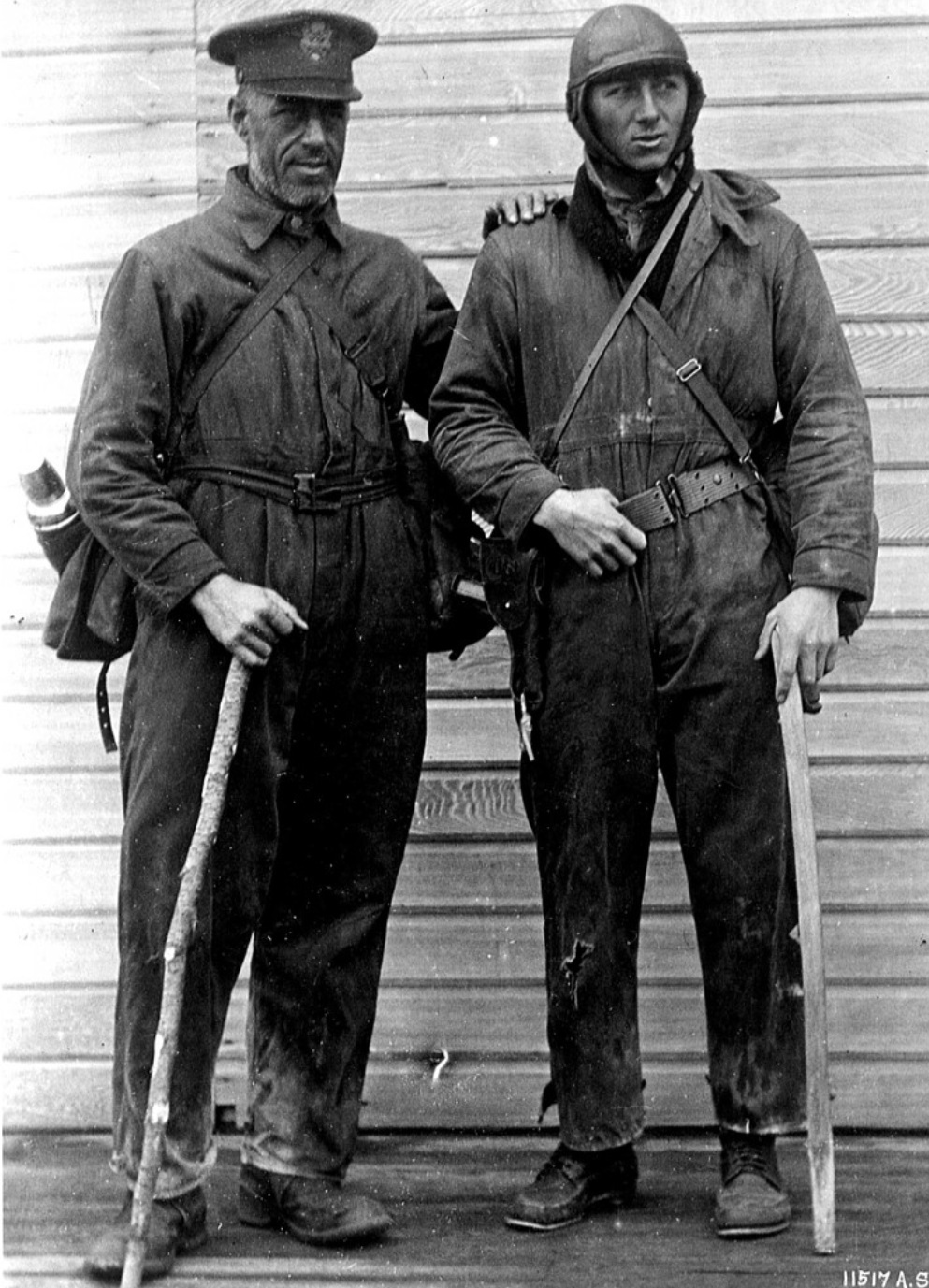
In 1924, during the famed "First Around the World Flight," Army pilot Maj. Frederick Martin and his mechanic, Sgt. Alva Harvey, were forced to walk for 10 days across Alaska to civilization after their plane crashed into the side of a mountain in the fog.
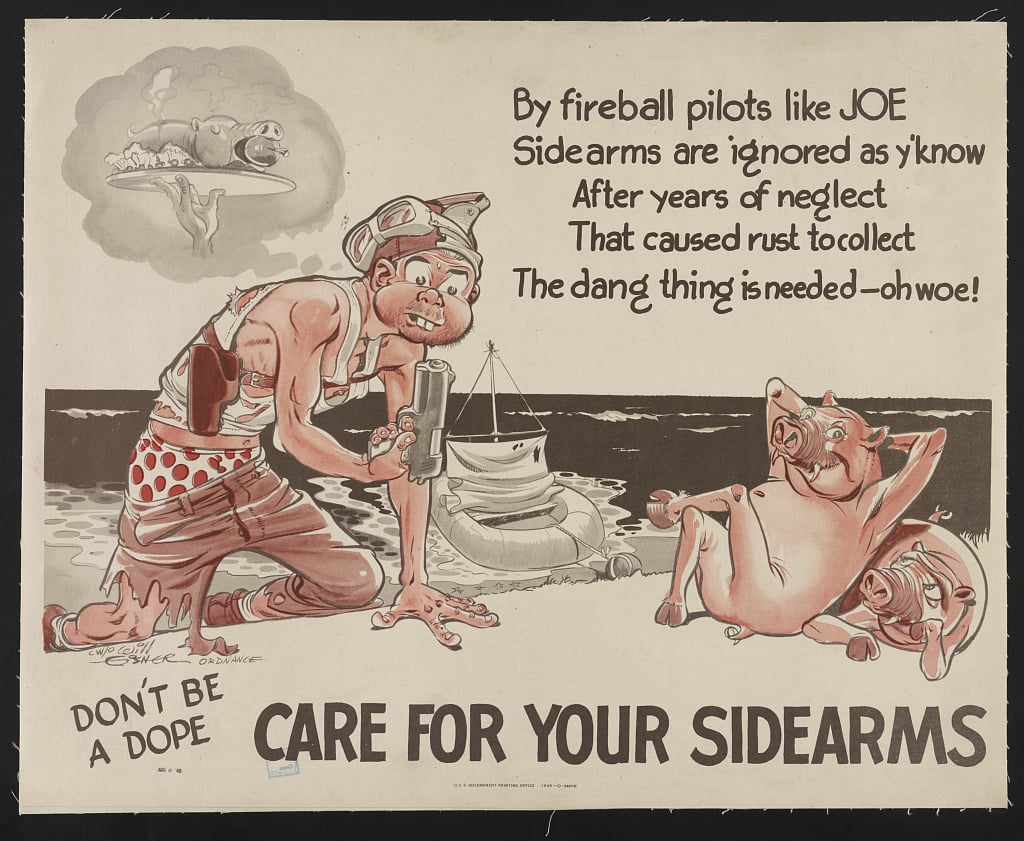
By World War II, the most common sidearm for most American aircrews soon became the S&W Victory .38, a basic K-frame. The concept of carrying a revolver rather than the higher-capacity and harder-hitting M1911 semi-auto was based on the fact that the most common injury suffered by pilots "hitting the silk" was to arms and hands, leaving questionable the ability to rack the slide on the big Colt.
Famed Great War fighter pilot Eddie Rickenbacker, lost at sea in WWII for three weeks when the B-17 bomber he was riding in crashed into the Pacific, recalled how the raft-bound survivors counted two revolvers as part of their collective survival larder.
In his book about the saga, "Seven Came Through," Rickenbacker wrote of Captain William Cherry sitting for several days with a loaded revolver in his lap, "hoping to knock down a seagull." Although Cherry reportedly "broke the revolver open two or three times a day and rubbed the moving parts with oil from his nose and the back of his ears" in the hope of staving off salt water corrosion in the partially awash rubber raft, eventually it and the second wheel gun locked up and were dropped overboard.
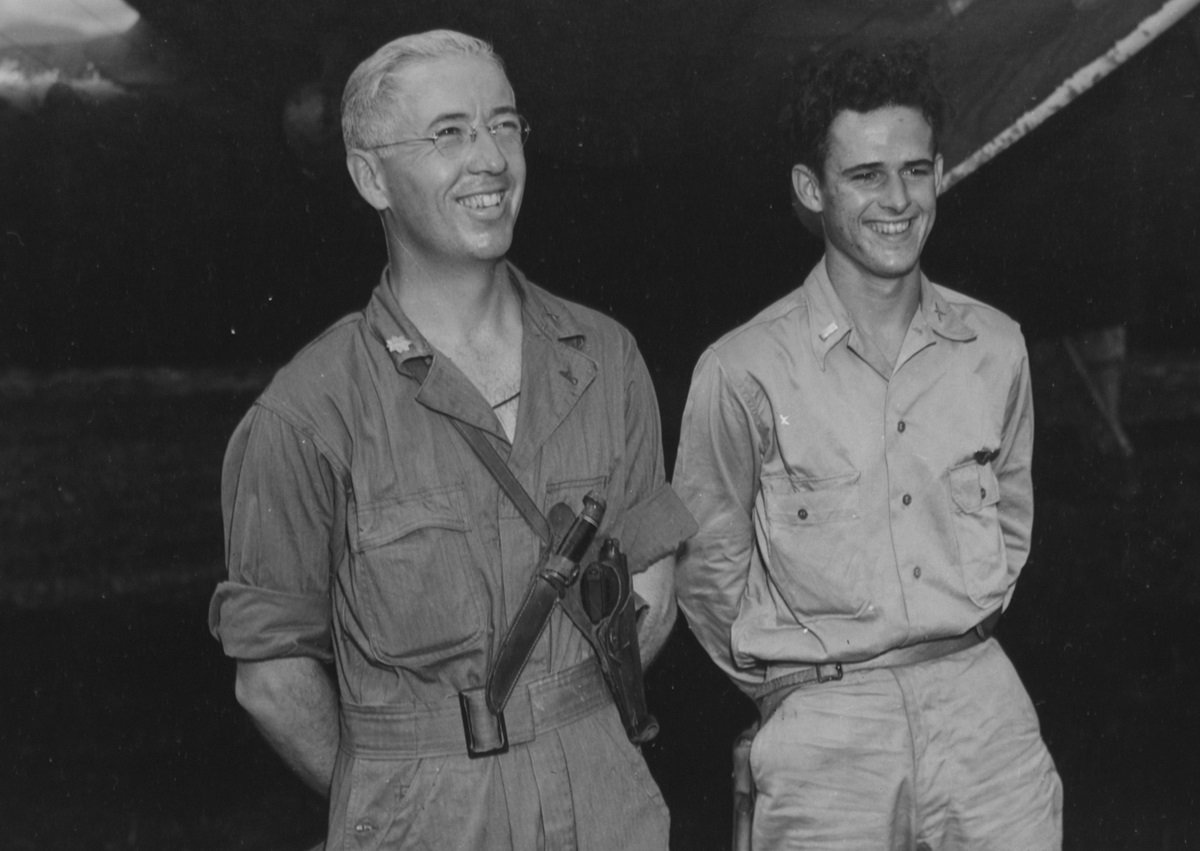
Navy Avenger pilot Lt. George HW Bush still had his .38 on him when, after ditching his flak-riddled plane off a Japanese-held island, he was fished out by an American submarine on lifeguard duty. As a token of thanks, he left the revolver behind with a crewman who "hot bunked" with him, and it eventually made it to a museum.
Many such Victory revolvers, kept by the daring young men who carried them, have endured as highly sought after collectibles today. A link from the Greatest Generation.
Related Article: What is the Ultimate Survival Gun?
Nonetheless, many aircrews opted for or were issued the M1911 anyway, often with extra mags and survival knives as well.
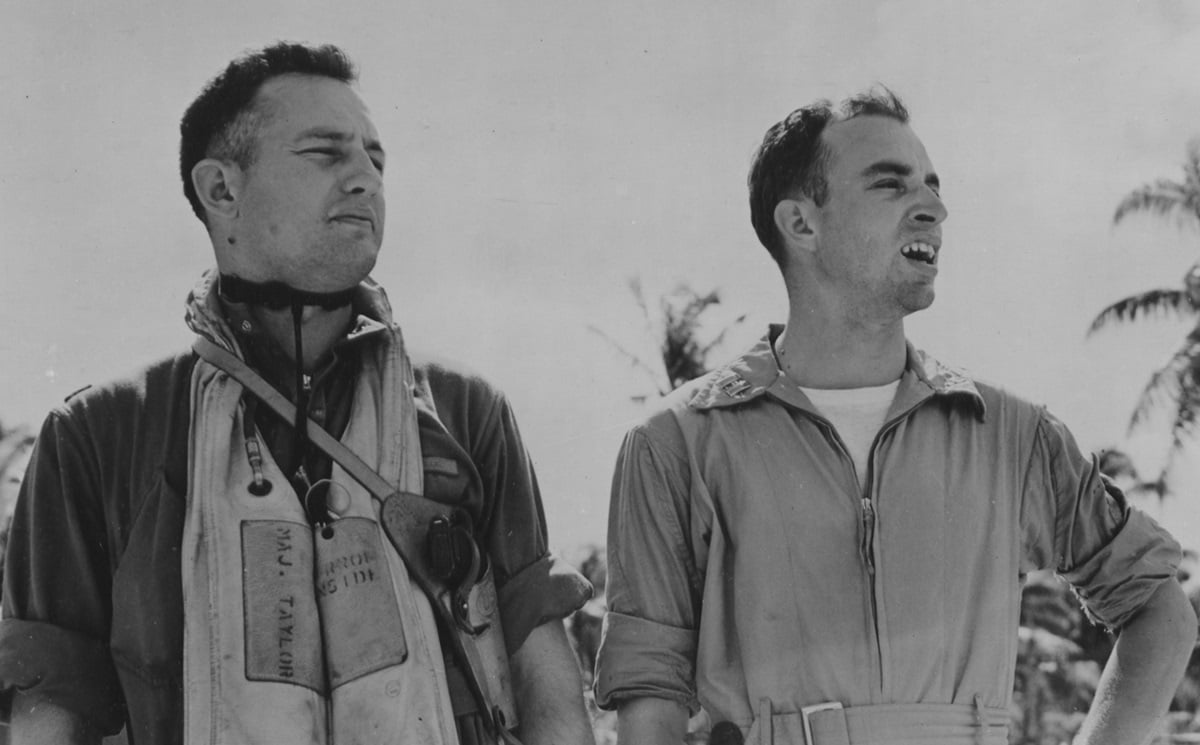


Korea, Vietnam, Desert Storm, and the like all continued to see pilots with revolvers. In an effort to keep the weight down, the Air Force even infamously tried snub guns made from mostly aluminum during the Atomic era.
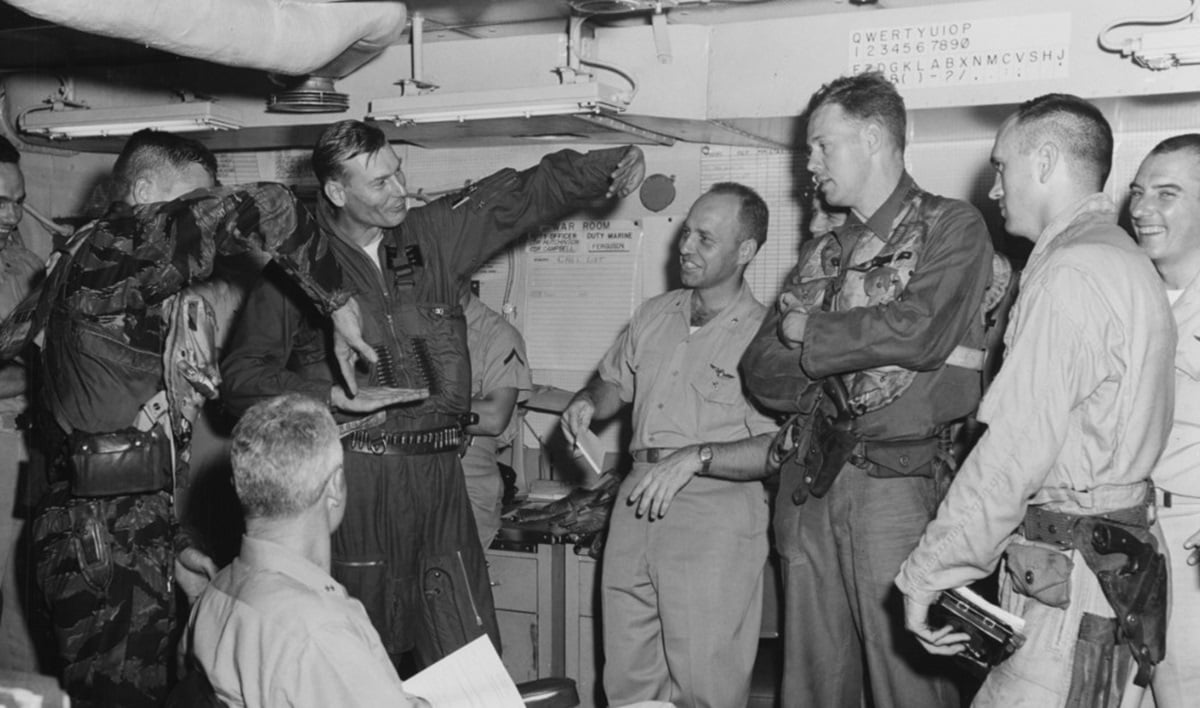

In probably the best book written on a real instance of a downed Vietnam-era pilot having to survive and evade capture, William Anderson's "BAT-21," based on the story of Lt. Col. Iceal Hambleton's 12 days behind enemy lines in 1972, Iceal's survival kit was detailed as containing:
(T)he first-aid kit; survival radio with extra batteries; tourniquet, which he hoped to God he wouldn't need; flares for helping the rescue choppers spot him; folding plastic water bag— empty; hunting knife; signal mirror; strobe light with infra-red capacity; .38 revolver with 20 rounds of ammo; mosquito netting; a compactly folded 2-foot-square rubber map of the country; a compass small enough to be shoved up his rectum in the event of capture; and insect repellant.
Of course, Hollywood changed this in 1988 to a Browning Hi-Power in the hands of Gene Hackman.

Sure, eventually the Beretta M9 started to make an appearance in the survival vest holsters of aircrews, the Air Force recently subjected the M17 MHS pistol to ejection seat tests and certification, and the GAU-5A Aircrew Self Defense Weapon in 5.56 is a thing, but you got to give it up to the guys who trusted a .38 or .45 should they had to "join the caterpillar club" back in the day.