.30-06 Springfield
The round I used to take my first whitetail so many decades ago too often gets left behind for rounds with Creedmoor or Magnum in the name. That’s not a knock on the latter rounds, but rather, a reminder that the now boring “06” remains a bread-and-butter performer. It makes a hearty one-rifle stable for most any North American game.
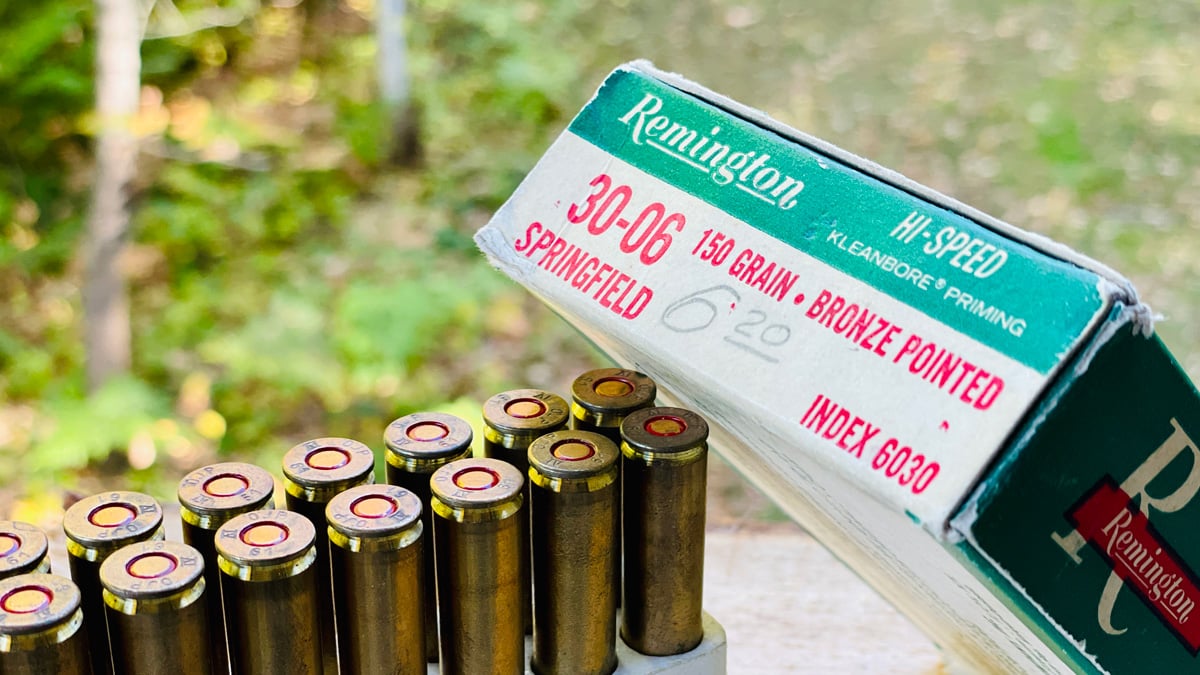
Ammo can be found in pretty much any gun store, from backwoods to big box. Those 150 and 165-grain projectiles sweep deer off their feet with the most attractive ballistics. Rifles abound, both used and new. The .30-06 Springfield doubles down from deer to much larger game – we even used it extensively on African safari, cleanly bagging even the largest plains game animals. What the round lacks today in marketing pizzazz, it not so quietly provides in the field.
.270 Winchester
When you hear the latest rifle launches and ammunition upgrades, seldom mentioned is the .270 Win. Yet, it – like the .30-06 above – is almost always on the list, albeit near the bottom. Rifles continue to be chambered with regularity and plenty of ammo loaded. Why? Because the round cruises along as a practical, manageable, and handy number without the glitz and glamor of newer introductions.
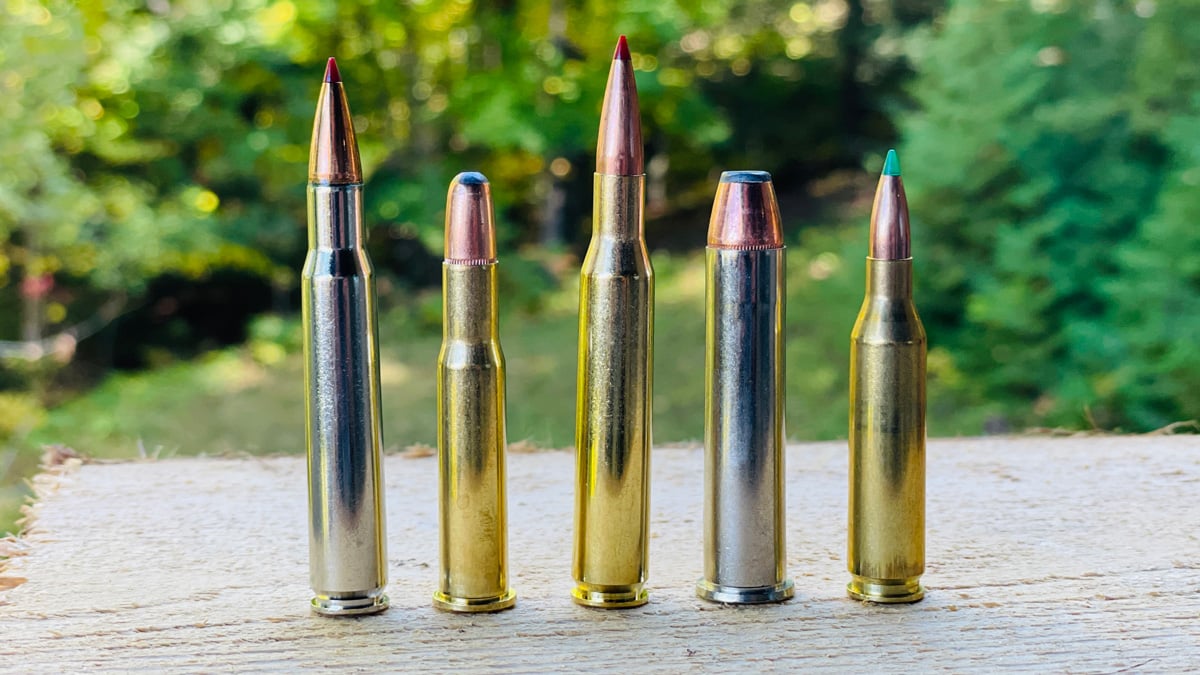
The .270 Win may be one of the finest all-around deer chamberings. It’s easier on the shoulder than many, and more than capable from close to even moderately longer ranges. And, like the ought-six above, the .270 easily does double duty on larger game. Its 130 and 140-grainers are pure devastation on the biggest deer, while .270 rifle and ammunition offerings abound.
.30-30 Winchester
Your granddad’s lever-action deer rifle was likely a .30-30, and if not, surely somebody in the family filled the freezer with one. It’s neither fast nor flat, but it was efficient then and it still is now. With the recent resurgence of lever actions encompassing brands from Henry and Marlin to Heritage and Rossi, traditional fans have countless options.
Related Review: Old & Slow But Still Kicking – All About the .30-30 Winchester

Used bolt actions along with single shots new and old make the most of the lowly .30-30. It may not get to the target the fastest nor reach across the beanfield the farthest, but on a typical Midwestern buck pursuit, the deer may as well hop willingly into the freezer.
.45-70 Government
This could fall in the dictionary category of overkill for deer, but so could rounds like the .300 Win Mag or 7mm Mag. I’ll take the .45-70 Government and its deep roots in American military history that have busted big woods bucks for nearly a century and a half. It’s a lever-action darling then and now, making a strong reprisal from Henry to Marlin and far beyond.

Related Review: Ultimate Big-Bore Combo – Henry .45-70 Rifle & Magnum Research BFR
.243 Winchester
On the opposite end of the spectrum from the thumping .45-70 sits a round too many deer hunters write off as too small. We call baloney. Yes, shot placement is “more” important, but to be clear, shot placement should ALWAYS be important with the goal being a cleanly harvested deer.

Related Review: .243 Winchester – Spicy Short-Action Cartridge with Staying Power
To that end, the .243 Win is a plenty useful round. Since the late 1950s, it has proven versatile on everything from varmints to whitetails. It’s low recoiling and easily accessible in most every platform from bolt to semi-auto, with equally available factory ammunition in wide range of bullet weights and types. My grandfather switched to a .243 in later years, bagging plenty of Midwest bucks, and I have toppled my own fair share. There are more powerful chamberings for bucks, but few match the easy shooting .243 Win.
Conclusion
None of these chamberings are flashy. They no longer garner media attention with dazzling product launches or discussions of superior ballistic coefficients. What they will do, if you’ll allow them, is fill freezers with meat, put taxidermy on walls, and feed the rifles that have defined generations.