What is a trust?
First, let’s look at what a trust is and how it differs from individual registration. When purchasing an NFA item, such as a short-barreled rifle, suppressor, or other NFA-classified firearm, the process includes registration of the item to the NFA. A trust is a legal document drafted by a lawyer or team of lawyers, in which an NFA item is registered, which includes a list of persons authorized for use and possession.

Instead of the registration and tax stamp being filed under an individual name (i.e. Alexander Reville), it would be registered to a trust (i.e. Reville Family Trust), along with the names of authorized parties who are allowed to legally posses and use the item.
Benefits of a trust
NFA items are highly regulated, requiring a federal tax stamp, fingerprints, and extensive paperwork for registration. Regulations governing use of the registered item are rigid. If an individual purchases and registers an NFA item, that item is not permitted for possession or use without the registered party present.

Furthermore, if the registered individual passes away, and proper steps have not been taken, the NFA item is subject to seizure by the ATF.
The major benefit of a trust is for folks who have multiple people who will be using the NFA item. A trust can have an unlimited number of listed responsible persons, so that each named individual would be allowed to possess and use the NFA item without having the purchasing individual present. The trust makes it easy and legal for family members, friends, and any other listed person as a responsible party for the NFA item.
This is opposite of an individual registration, which requires the registered individual to be present and “in control of” (loosely defined as in sight of) the NFA item when any other person has the item in use. A trust also allows for a seamless and hassle-free transition of an NFA item to another individual following the death of the purchaser of the NFA item.
Frequently Asked Questions
Can I have as many people on the trust as I want?
Yes. If everyone is of legal age and is not a restricted person (meaning able to legally own a firearm). In fact, responsible persons can be added or removed by a lawyer at any time to the trust, without having to make a new trust. Note: Every responsible person in your NFA Gun Trust is required to submit photo cards, fingerprint cards, and the responsible persons questionnaire.
Can I have multiple items in one trust?
Yes. You can have as many NFA items in one trust as you like. This can include a mix of items, including SBRs, SBSs, registered machine guns, and suppressors.
How much does a trust cost?
It depends. Some companies offer to set up a trust for free with the purchase of one of their suppressors. There are additional fees to add other items. Otherwise, the fee to have a lawyer draw up a trust varies.
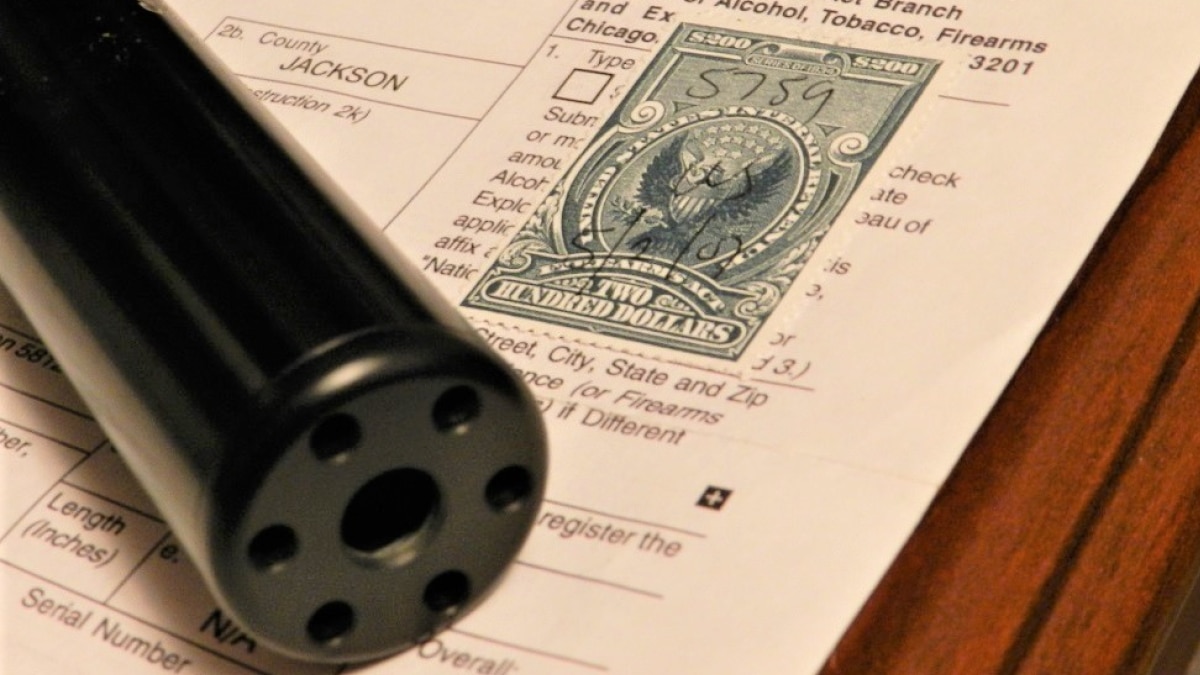
Does a trust mean I don’t have to pay the $200 tax stamp?
No. Each item entering a trust will still have a mandatory $200 tax stamp.
Does a trust eliminate the background check requirement for firearms?
No. All NFA firearms transfers require a background check for every responsible person in the gun trust. This includes the co-trustees on the NFA Gun Trust.
Can an item be removed from the trust?
Yes. However, it will cost a $200 tax stamp. As the item is being unregistered to the trust and re-registered to an individual, it is as if the item is being transferred and will require an NFA form 4 and the payment of a $200 tax stamp.
Does a trust need renewal?
No. A trust does not expire.