When a legendary gunmaker is in business for half a millennium, you would think they have some pretty cool guns on hand. You'd be right. 

We recently visited Beretta's headquarters in Gardone Val Trompia near Milan, Italy, to see what goes into making some of the most renowned firearms in the world. While we got a behind-the-scenes look at how the magic happens – including how their custom Pietro Beretta Selection guns are crafted – we would be remiss if we didn't mention the incredible collection of historic guns on display on the campus. 

Probably against their better judgment, they allowed the Guns.com crew access to the Beretta Private Collection for one golden hour. 
 

A Closer Look


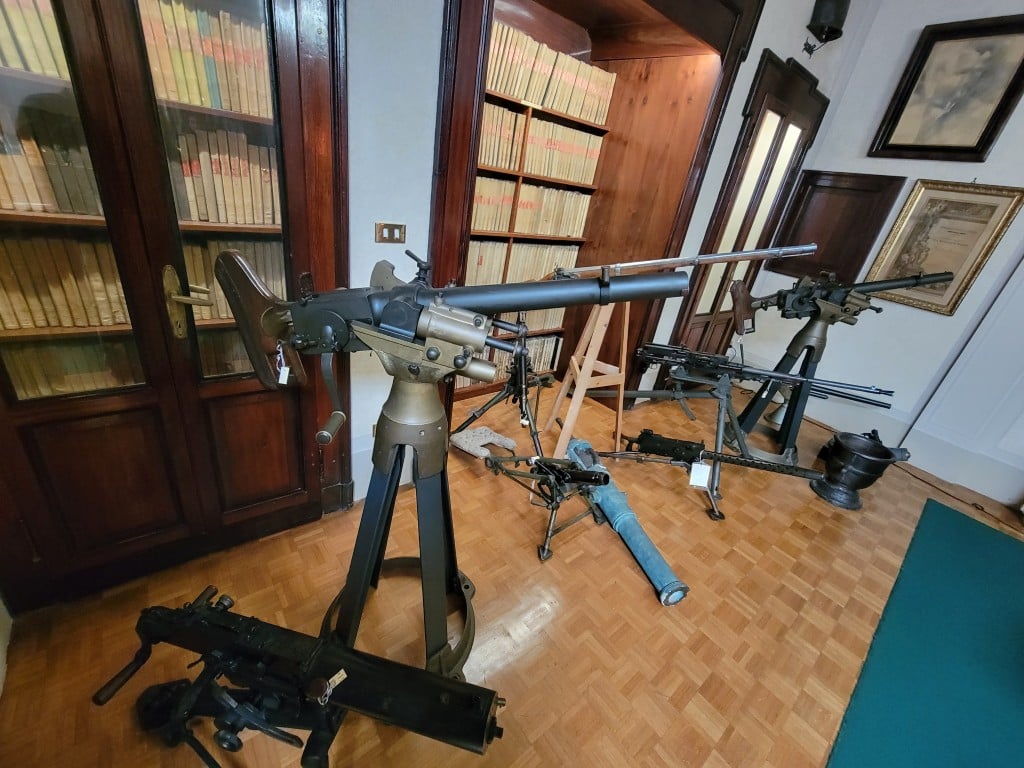
The Villa and grounds of the Beretta complex in Italy are filled with interesting pieces of ordnance from yesteryear. (All Photos: Guns.com)
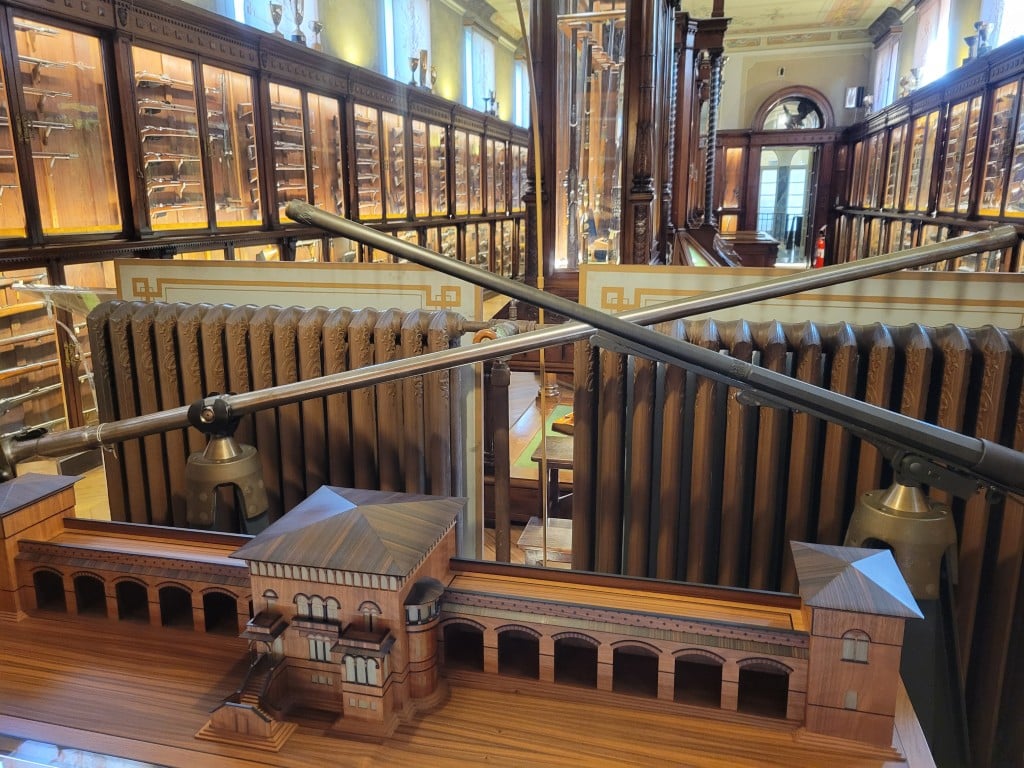
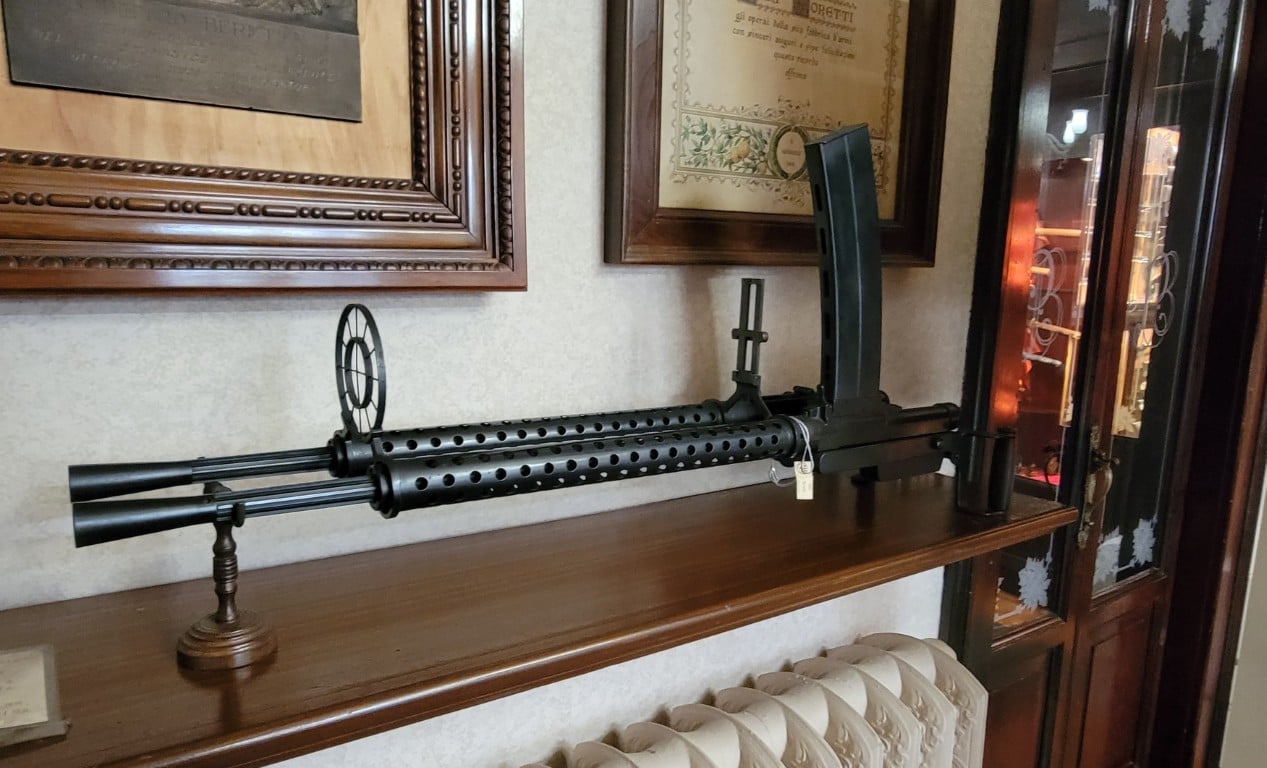
How about this Model 30 twin 6.5mm machine gun made by Beretta for the Royal Italian Navy? It was designed for use against low-flying aircraft. 
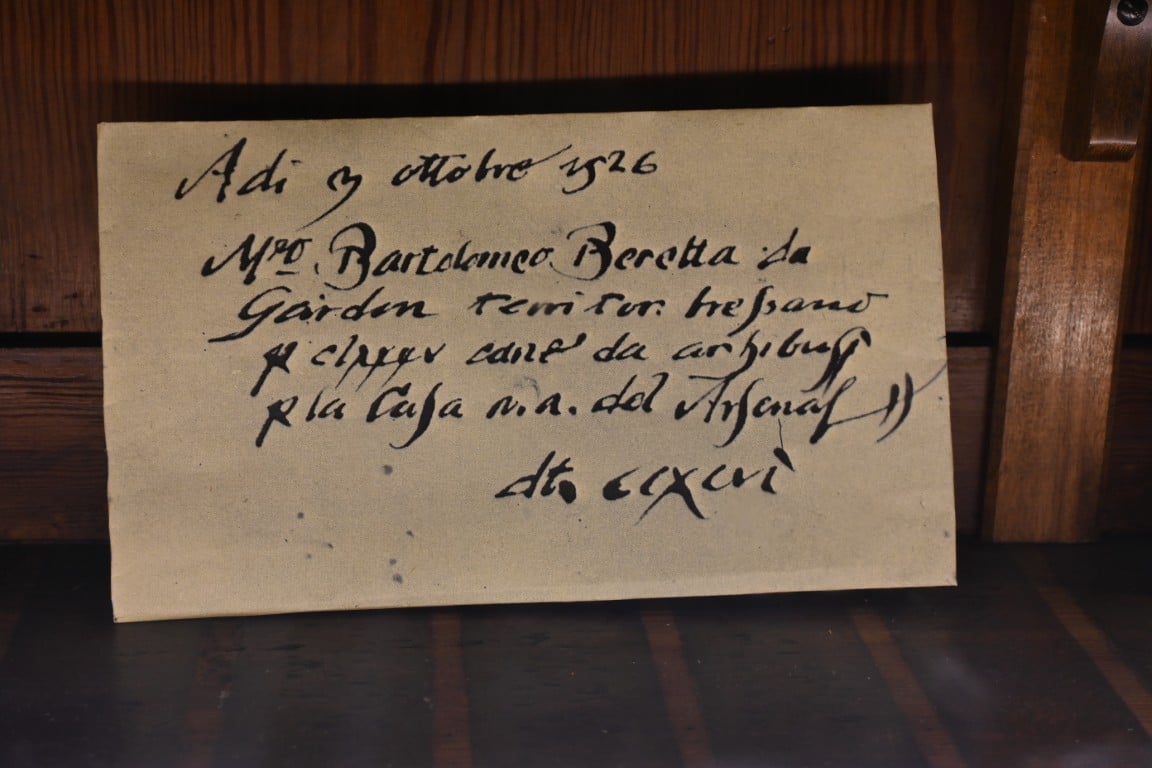
Beretta's first documented government contract, to the old Venetian Republic. "Adi 3 ottobre 1526, Mro Bartclomeo Beretta da Gardon teritor bresano x CLXXXV cane da archibısi x la Casa n.a. del Arsenal dt CCXCVI" or "October 3rd, 1526, Maestro Bartolomeo Beretta from Gardone, Brescia area, for 185 harquebus barrels for our Arsenal house, ducats 296."


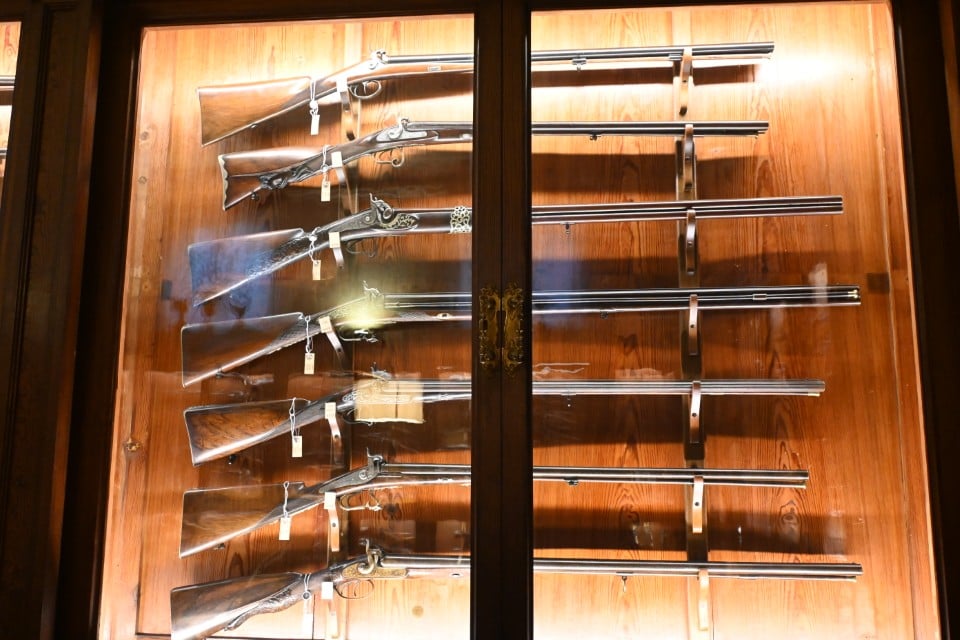
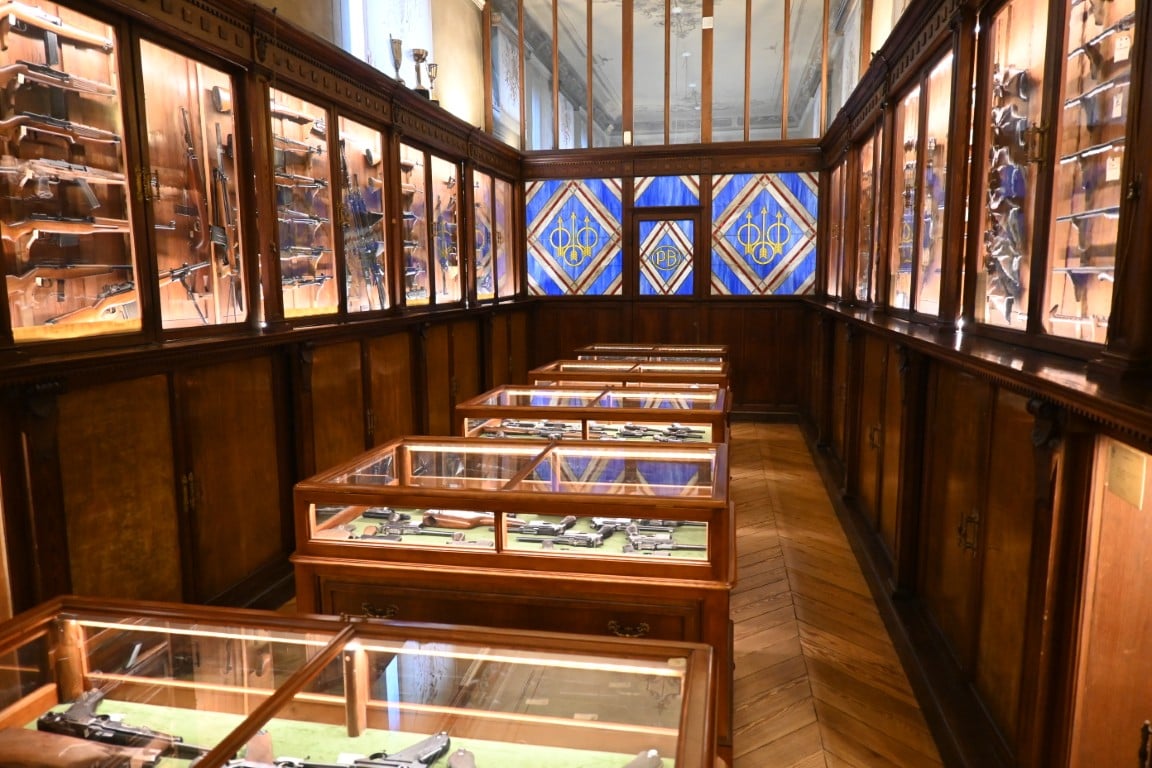
While Beretta's Private Collection has thousands of relics – it’s a family-owned business that dates back 15 generations after all – only about 1,500 of the nicest are on display. 

Thus:
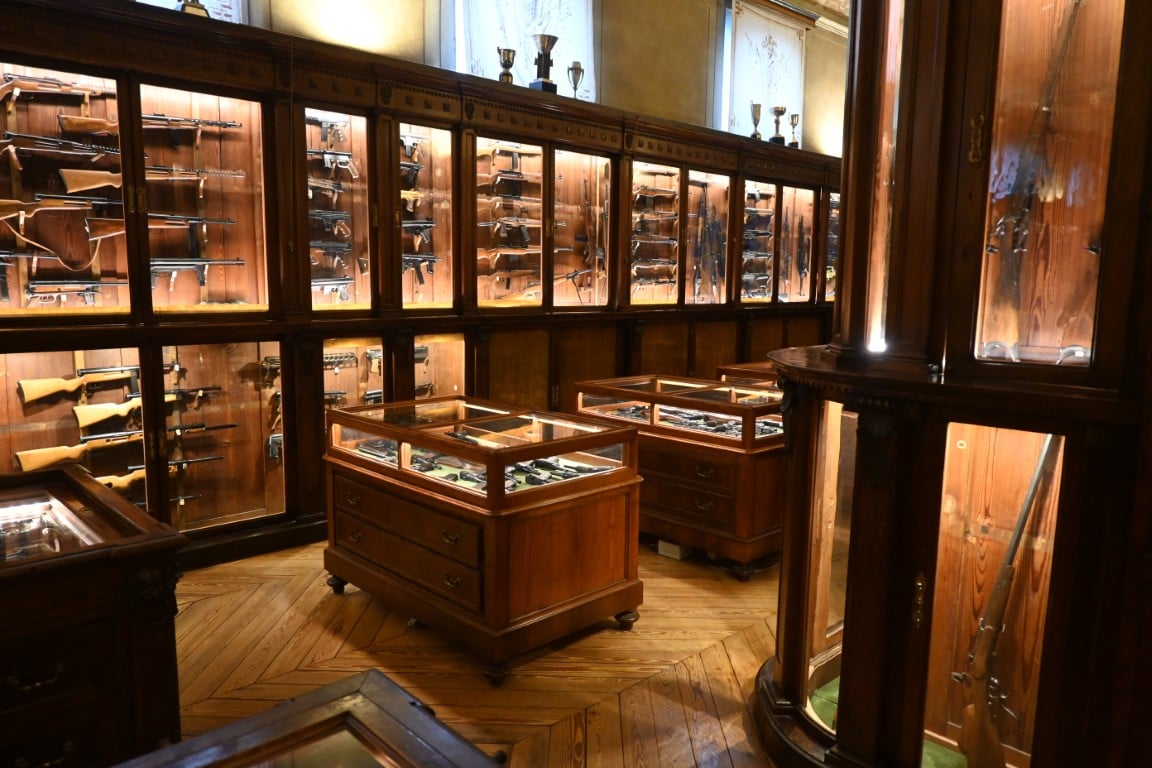
 

Talk about man cave.
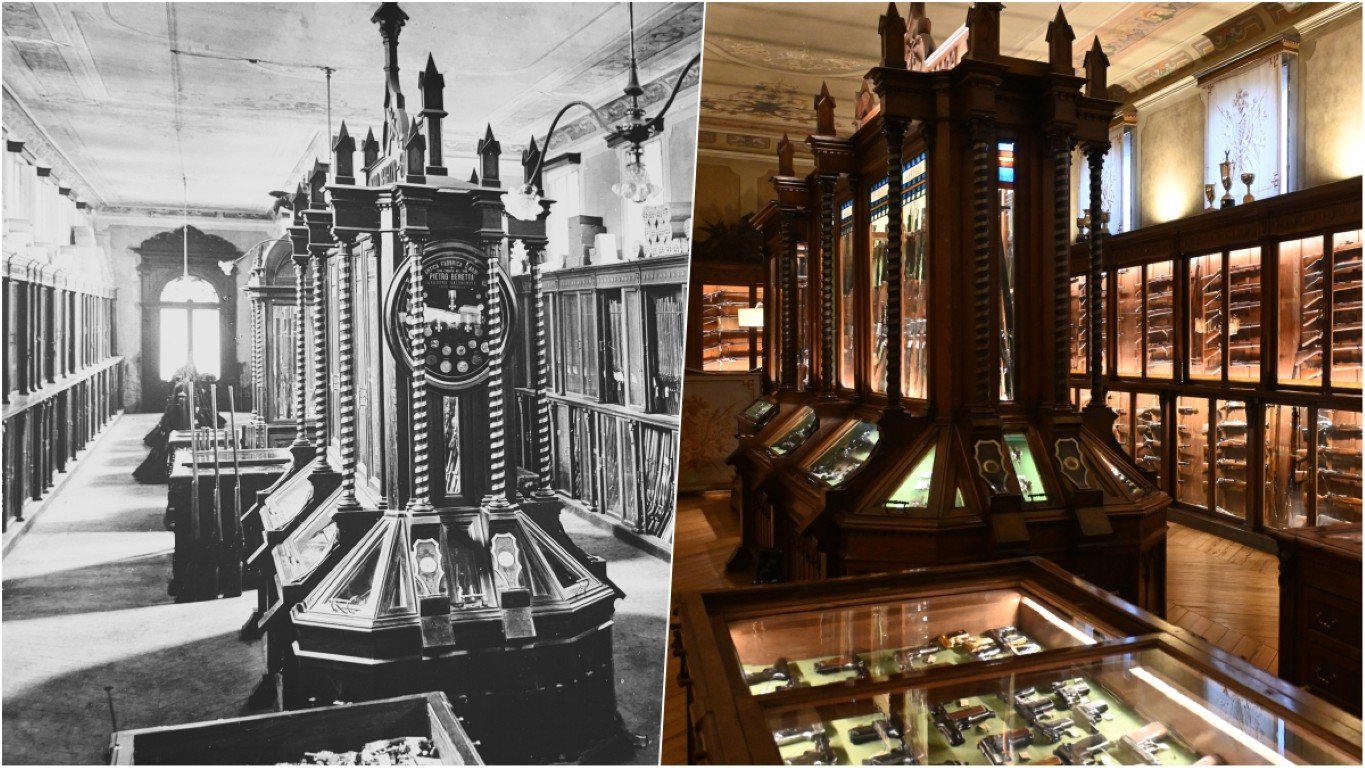
The Collection that is on display is housed in what was formerly Pietro Beretta's showroom from the 1900s. 


Let us take a closer look at some of these behind glass. 


Rifles
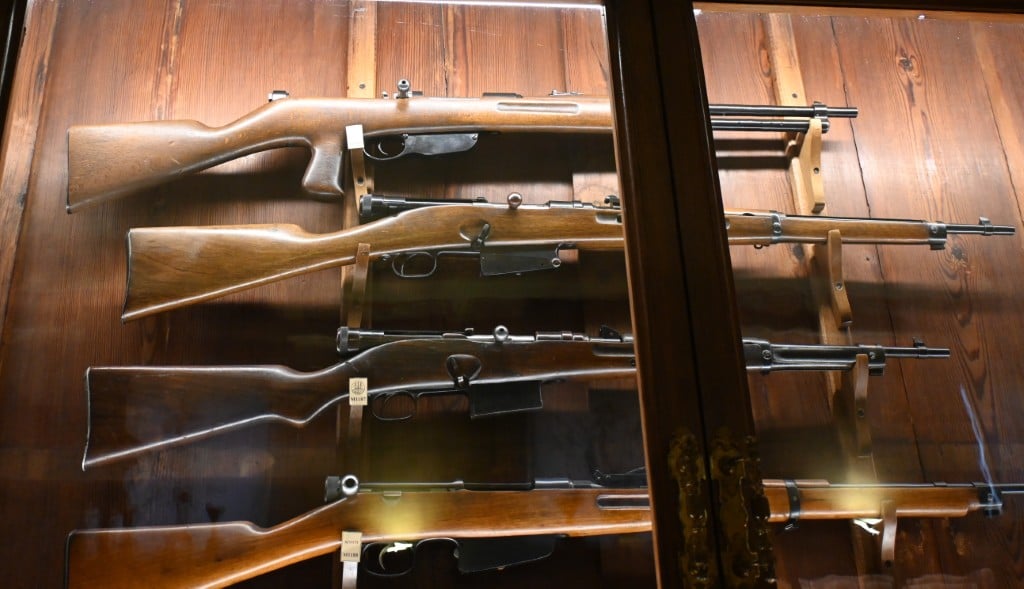
 

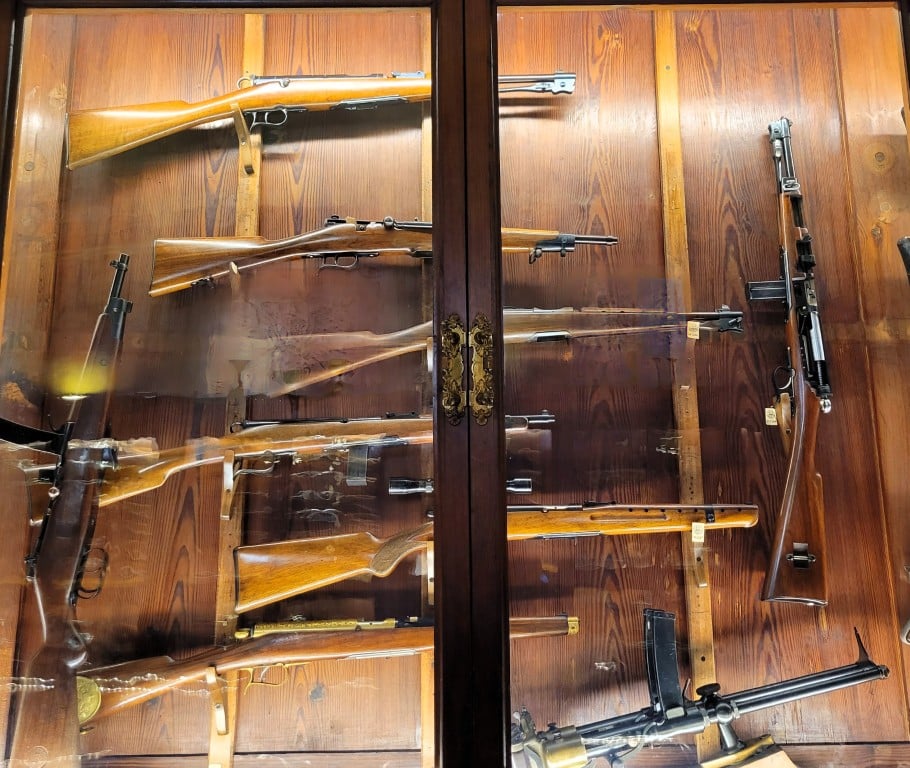
This interesting case has a circa-1939 Steyr M95 8mm style prototype in a curious pistol grip stock at the top with a pair of Beretta Model 1937 rifles in 6.5mm in the middle. The
bottom rifle is a Scotti prototype in 6.5. 
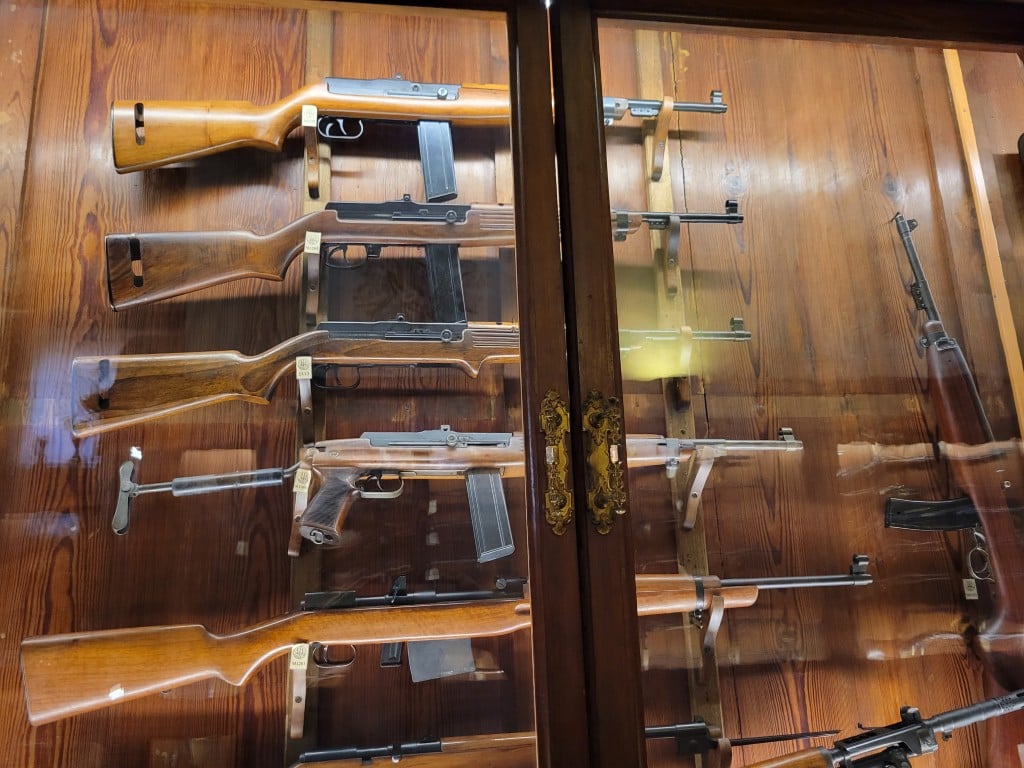
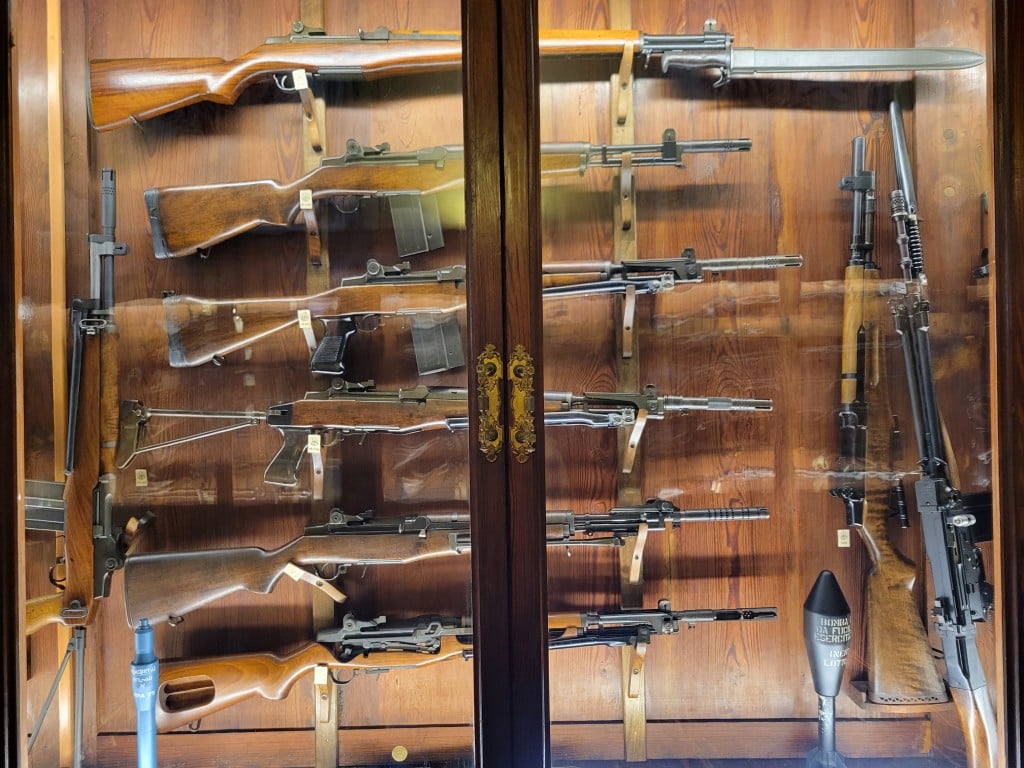
Just after WWII, Beretta was one of several Western European gunmakers tasked with refreshing stockpiles of American military small arms left on the continent for use in the Cold War. This gave the company enough of a knowledge base to upgrade the basic M1 Carbine and M1 Garand in the late 1950s into something with a more Beretta flare to it. These five carbines on the left are Beretta's Model 58 in .30 Carbine from the top with a .22 LR Beretta carbine, and Model 954 in 7.65 at the bottom. To the right is an American-made M2 select-fire carbine. 
Likewise, Beretta's Model 59 took the basic vanilla M1 Garand (with a Beretta-made .30-06 at the top) and updated it with a 7.62 NATO caliber, detachable magazine, folding stock, and other new features.
By the early 1960s, even with the BM59 well-liked and in production, Beretta was working on a lightweight new rifle series chambered in 5.56x45mm – even prior to its NATO standardization. This rifle, seen in early circa 1962, 1967, and 1965 prototypes at the top, would become the AR70. The LMG variant (a Beretta Model 70/78) is at the bottom. Yes, the rifle to the right is a Beretta/SIG-made Model 57 in Swiss 7.5mm – good eye!
And the follow-on Beretta AR70/90 with its distinctive carry handle. Besides Italian military and police contracts, these are in service with a dozen other countries from Malaysia to Mexico.
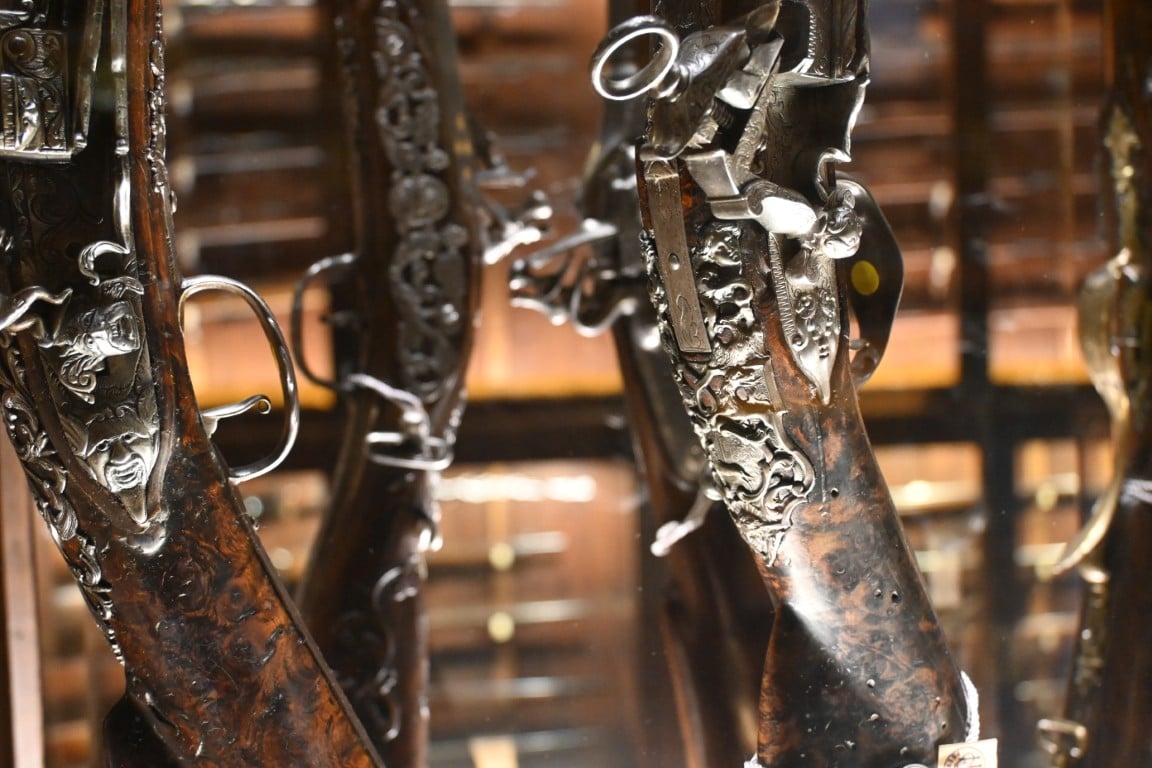
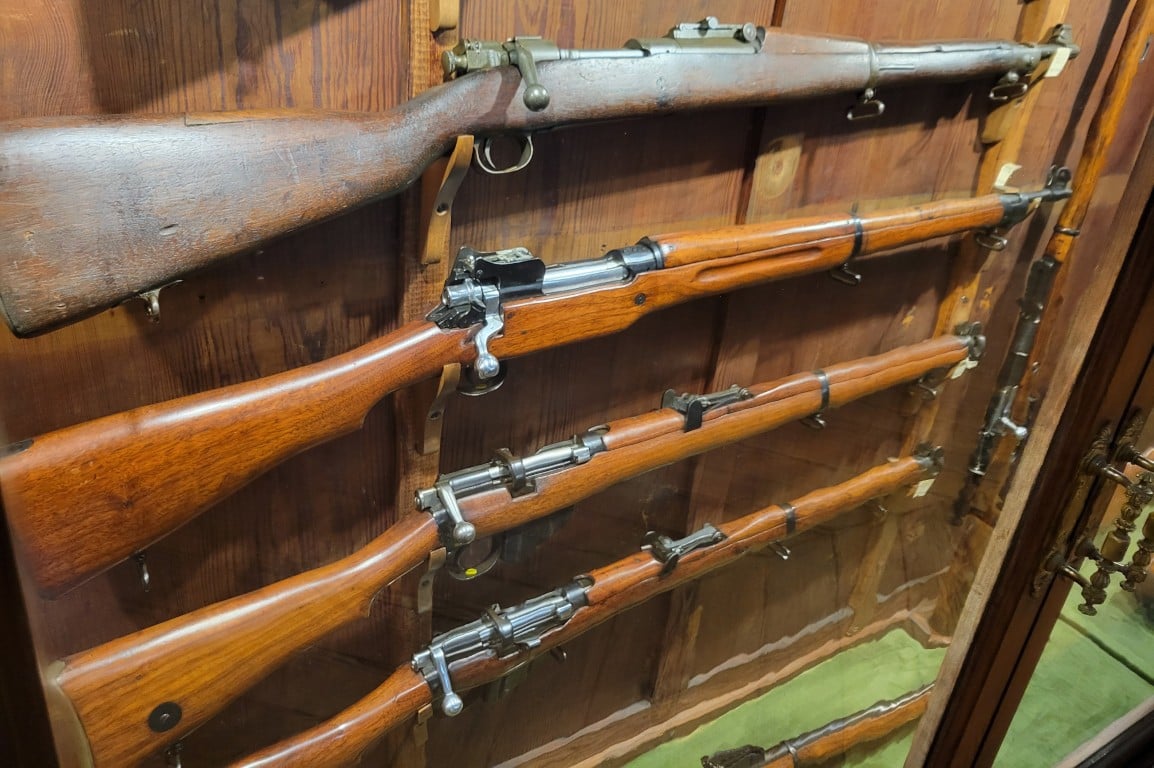
The collection also contains hundreds of classic reference designs from around the world. 
How many can you name? Also, keep in mind these are just some of the guns on display. 


Sub Guns


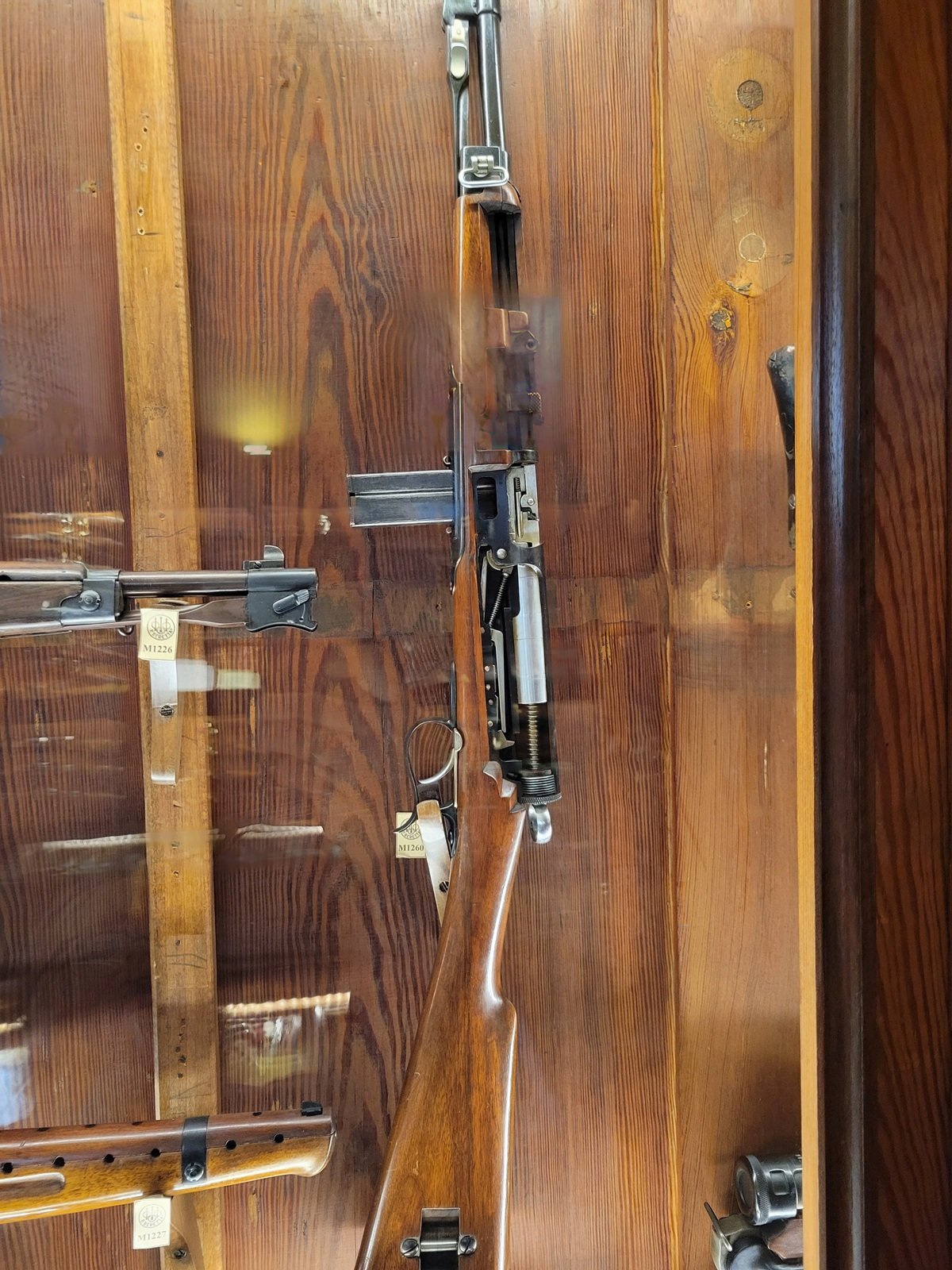
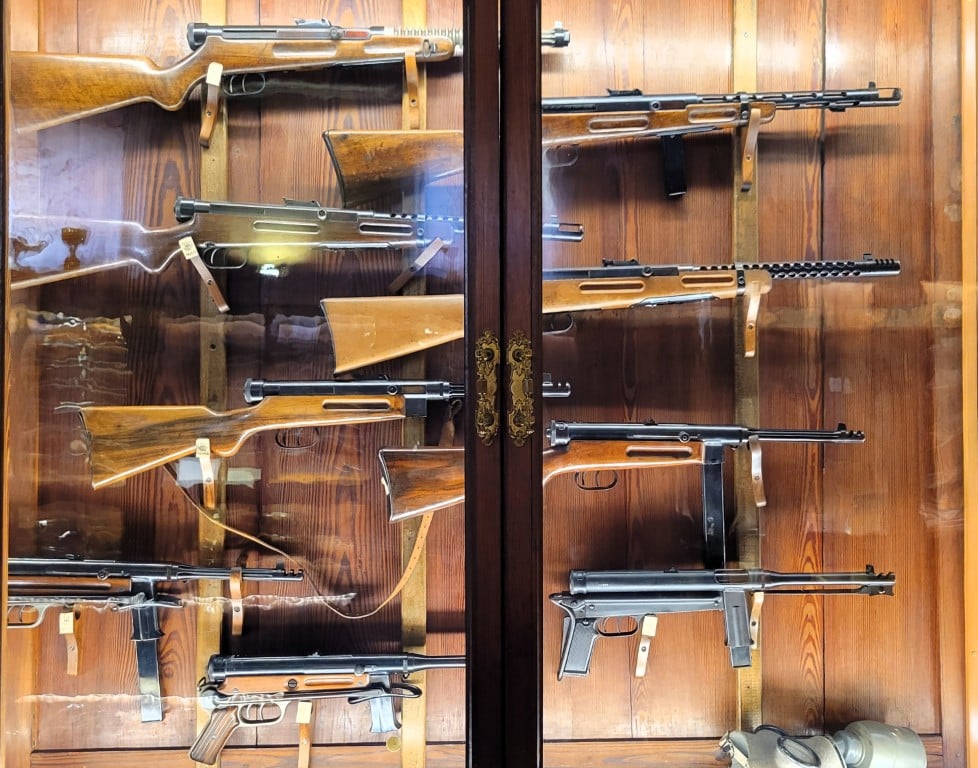
This case is full of a mix of Beretta Model 18 9mm automatic carbines from the tail end of World War I (top and left) while the fourth down is a one-of-a-kind prototype Model 18/30 from 1925 and a full on-production semi-auto 18/30 from 1930 at the bottom left. Then we have two more 18/30 semi-auto models followed by a select-fire prototype. Note the cutaway model to the right. At the bottom of the case is a rare Villar Perosa Mod. 15. 
A closer look at that sweet, sweet cutaway. Beretta ought to put these back in production, maybe with 92 series mags. Just saying.
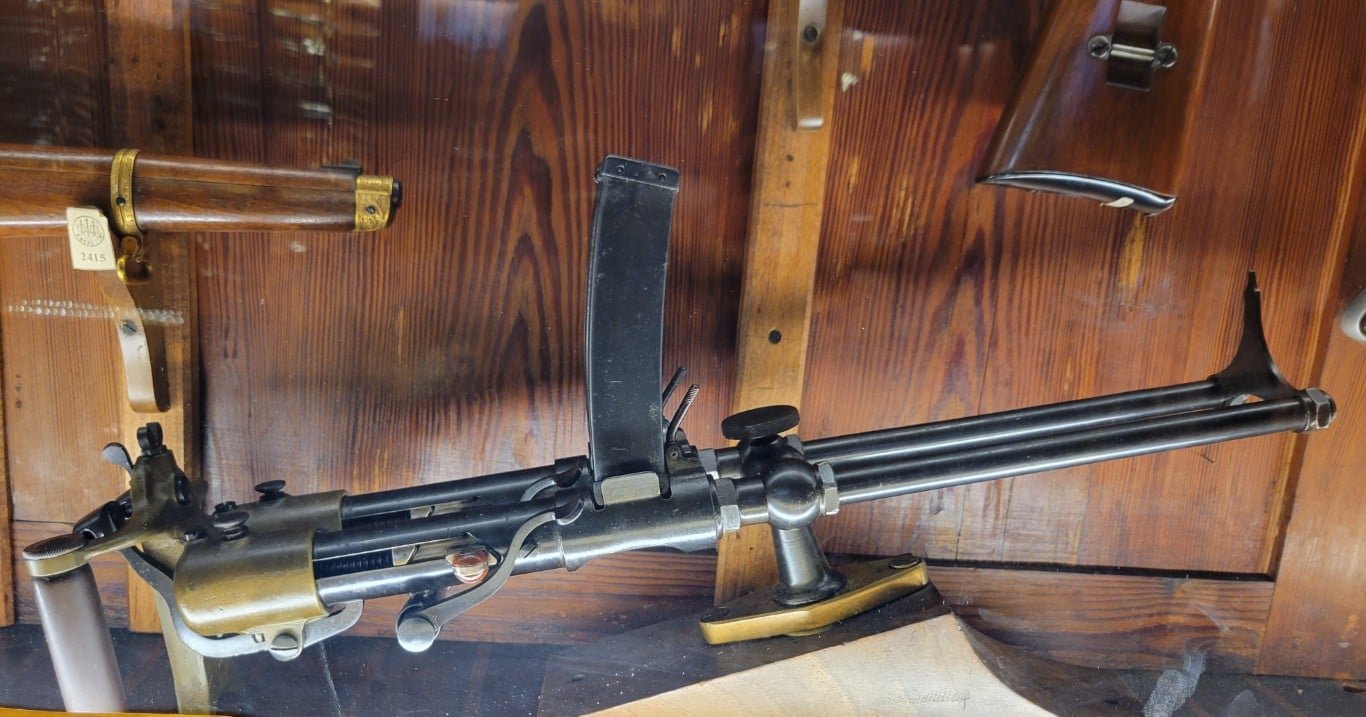
And it’s not every day you see a Villar Perosa. A weird pistol caliber (9mm Glisenti) machine gun, this twin-barreled delayed blowback buzzsaw fired at 1,500 rounds per minute, per barrel, and could empty its twin 25-round magazines in the blink of an eye. First fielded in 1915, it is sometimes regarded as the first SMG.
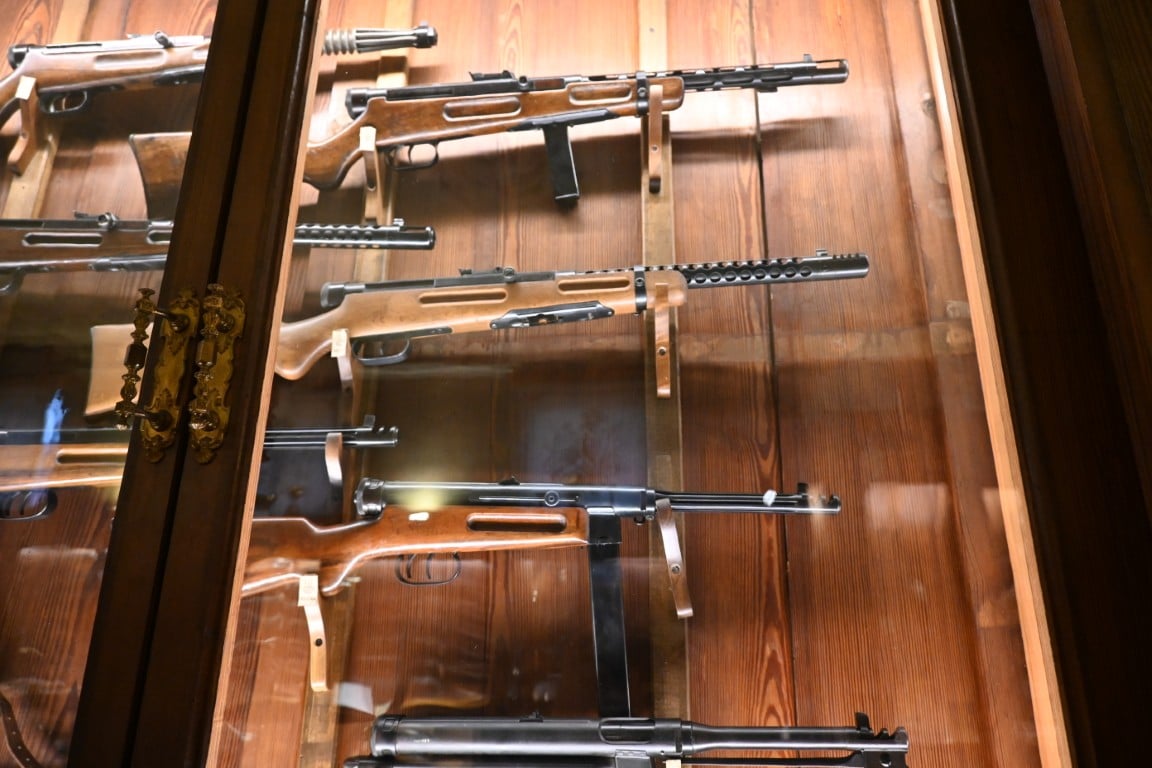
Beretta's Model 1938 submachine gun in 9mm Para was a big hit for the company and can still be found in limited service with the Italian military as well as around the world. This case is full of assorted Model 38s with early circa 1930s Model 38As to the left and more simplified Model 38/44s and 38/49s to the right. 
Same case, but drink in those almost Art Deco muzzle types. 
Shifting gears from the wood-stocked Model 38 SMGs in the 1950s, Beretta designed the Model 6 and Model 53, seen here in a circa-1950 prototype form at the top followed by 1954 production guns at the bottom. 
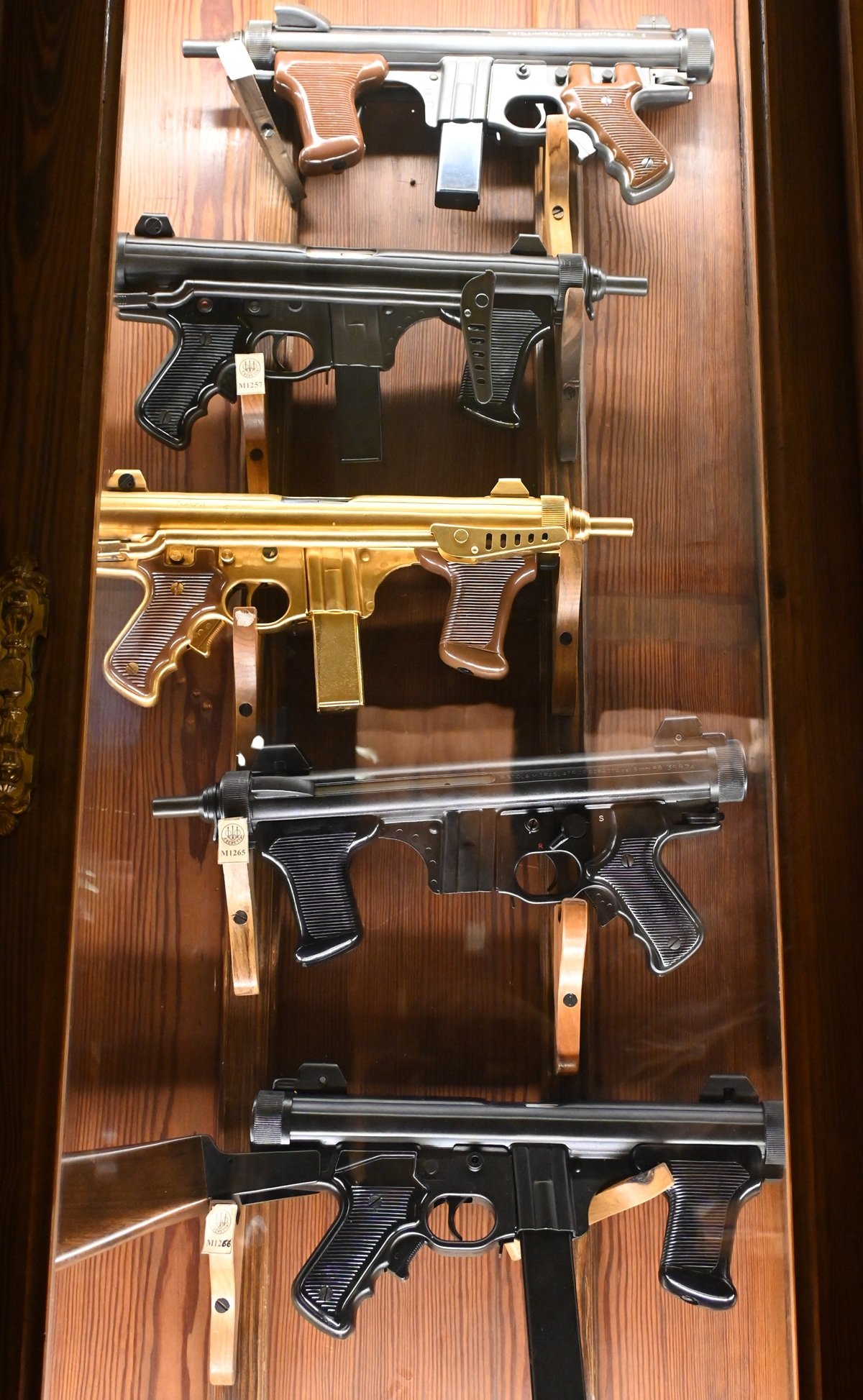
This led to the Model 12 or PM12, a tube-style SMG, in 1955 here seen in several examples. 
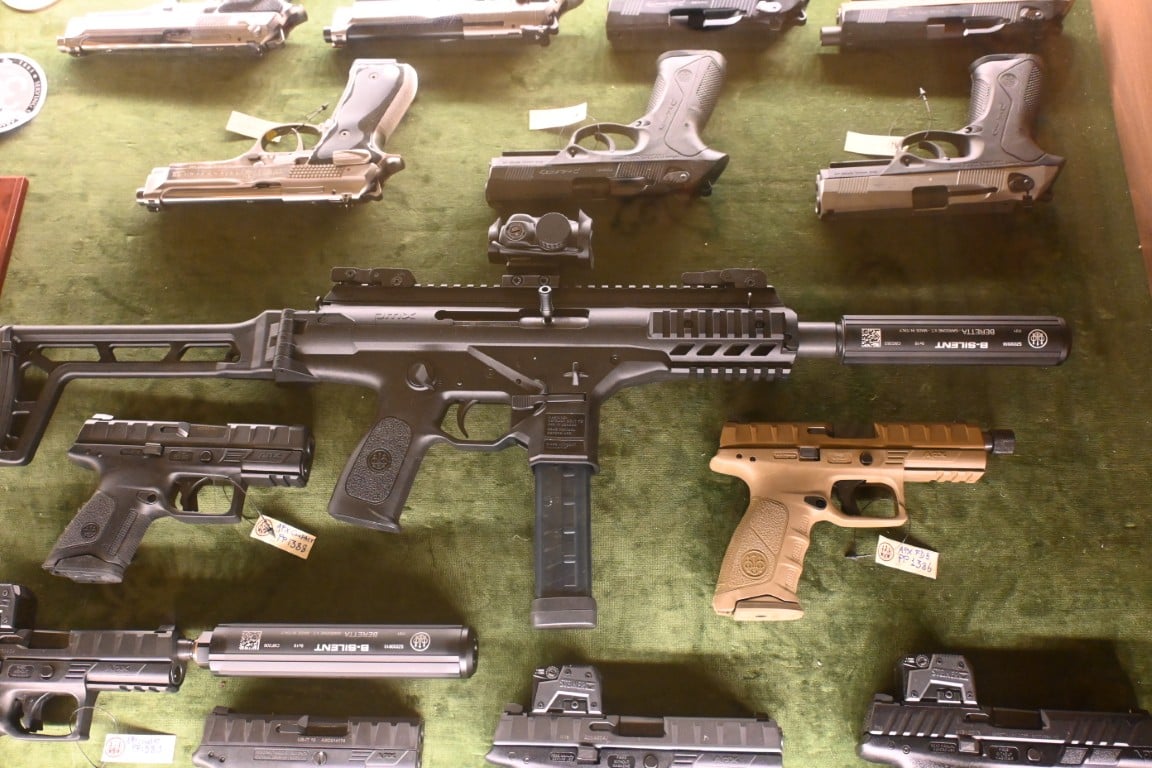
And breaking into the 21st Century with the PMX, seen center, surrounded by PX4 and APX pistols.


Pistols
 

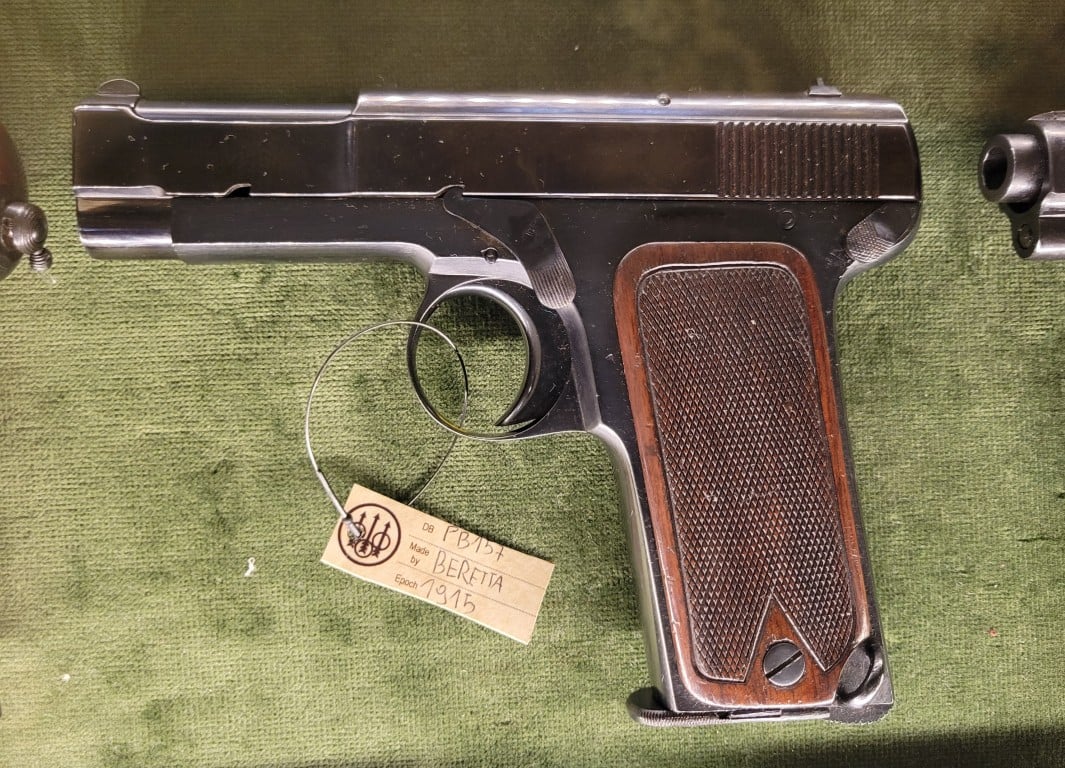
An early variant of the 9mm Glisenti-chambered pistol that would become the company's Model 1915, its first semi-automatic handgun. Designed by Tullio Marengoni for use by the Italian Army in World War I, it incorporated an open-slide format that can still be seen on the Beretta 80X and 92/96 series.
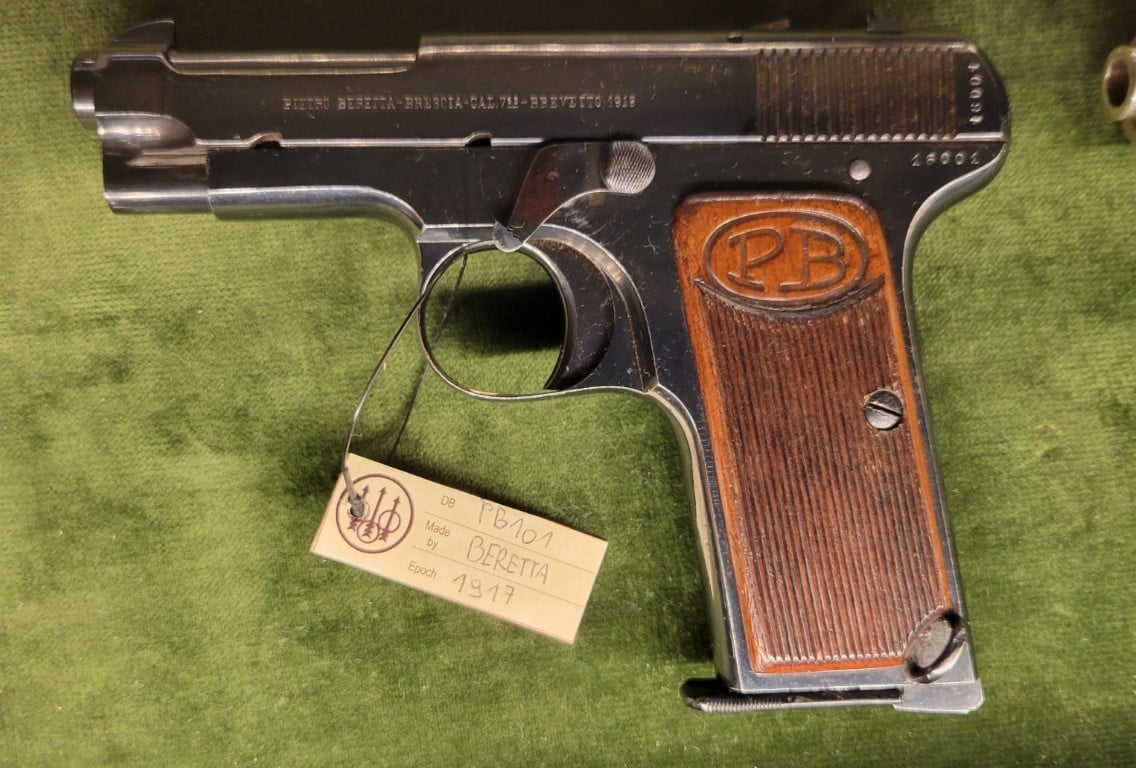
A 1917-produced Beretta Model 1915/17 in .32 ACP, a model used by the Royal Italian Navy for decades.
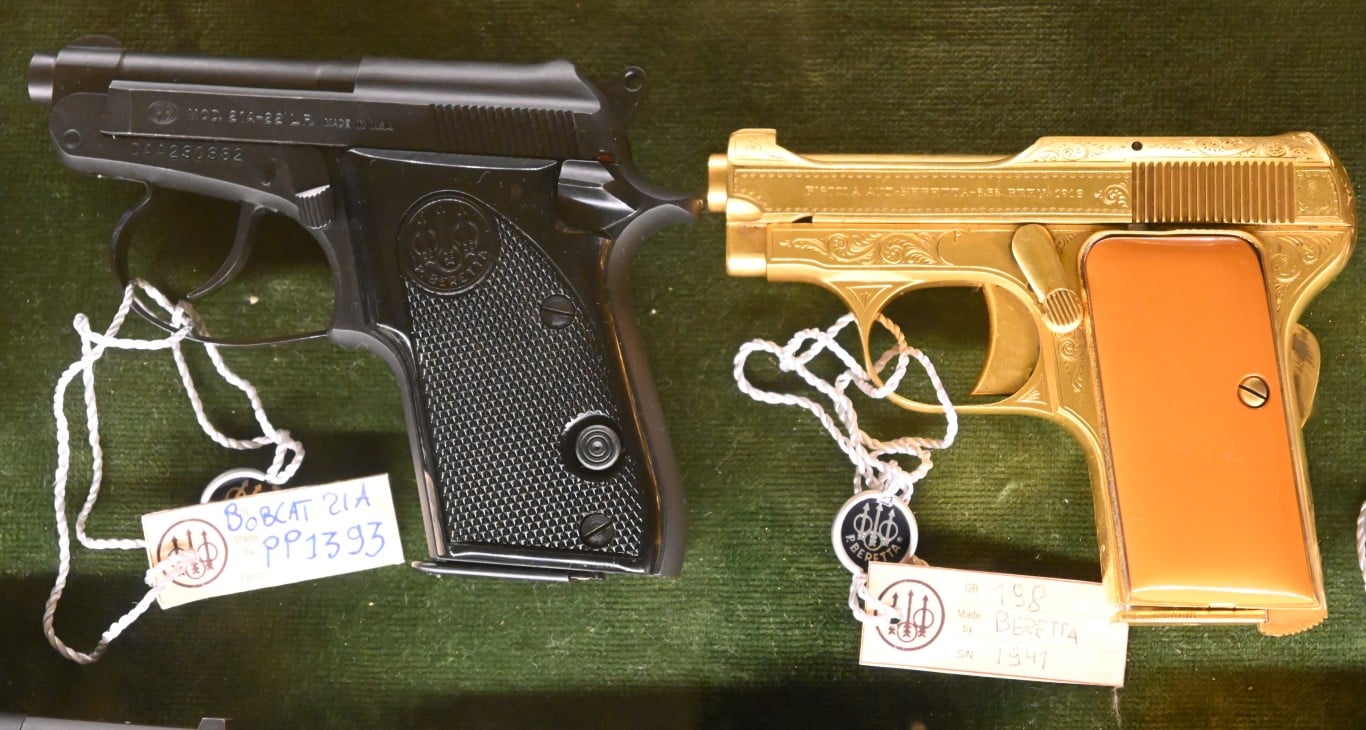
A late model circa-1947 presentation-grade Beretta Model 1919 in .25 ACP.
And note its size in comparison to a more modern Model 21A Bobcat in .22 LR. 
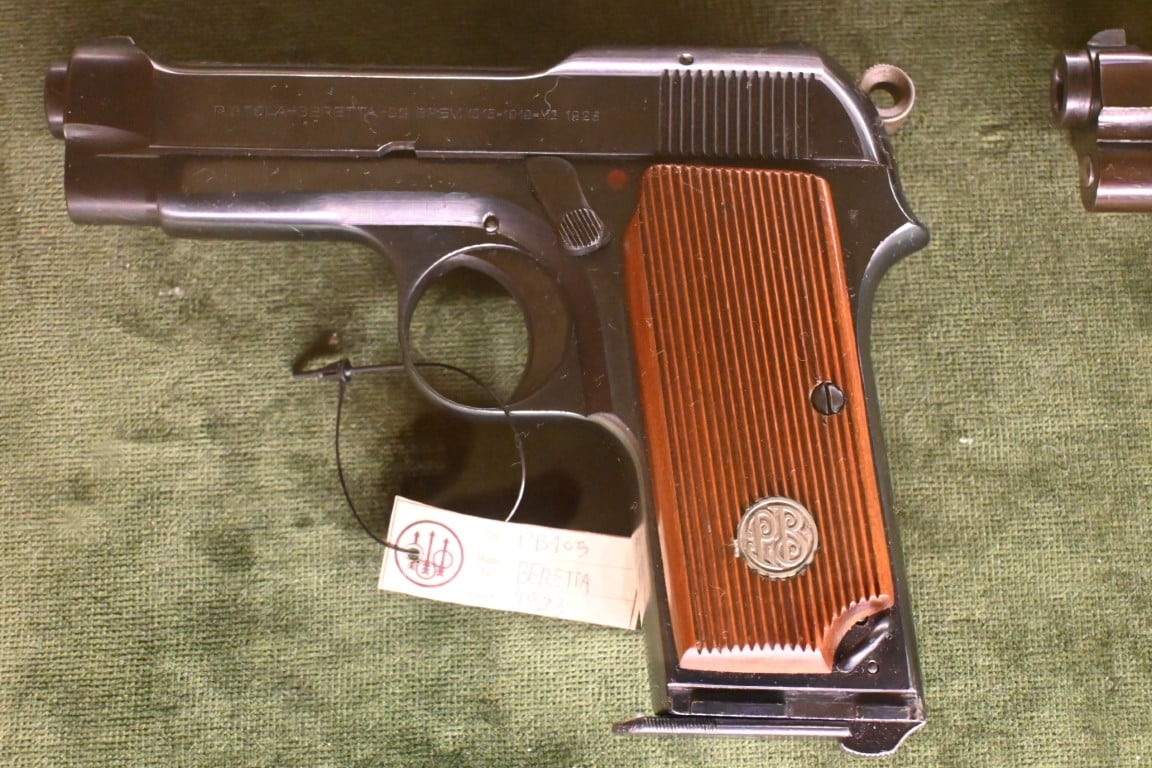
A Beretta 1923, again with the open slide format. Some feel the Walther P-38 pioneered that design, but here you can see it was already in use in Italy for over a before the Walther came out. These served not only in Italian service but also in the Bulgarian military, the Turkish navy, and in police contracts in Argentina.
How about this immaculate Model 1931, a pistol that predated the more commonly known M1934? 
A 1938-produced Beretta Model 1934. Note the "Tipo Alleggerito" stamp on the frame denoting it as a "lightweight type." Chambered in 9mm Corto (.380 ACP), this stumpy blowback was Beretta's most popular early handgun, with over 1 million made. After seeing much service in World War II, it is still often encountered around the globe, and surplus guns are still being imported from overseas to the States.
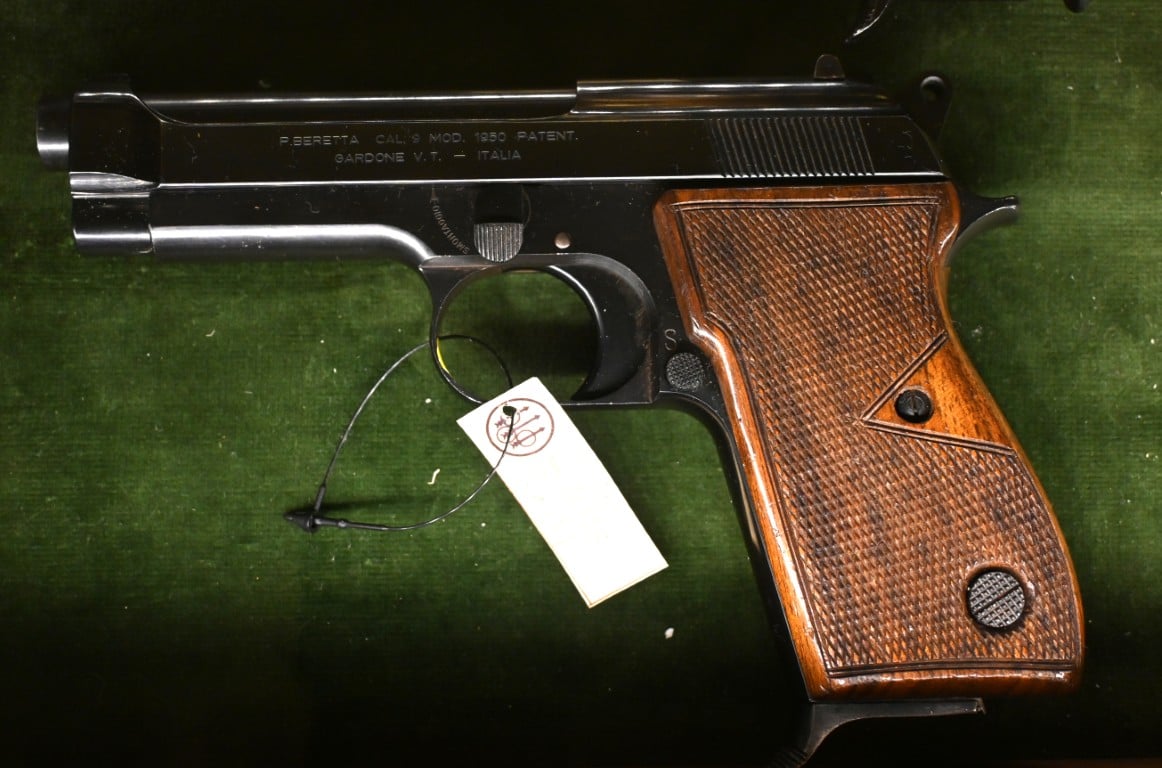
A circa-1950 pre-M1951. Two decades after this pistol was developed, it would be updated with a double-stack mag and other tweaks to become the Model 92.
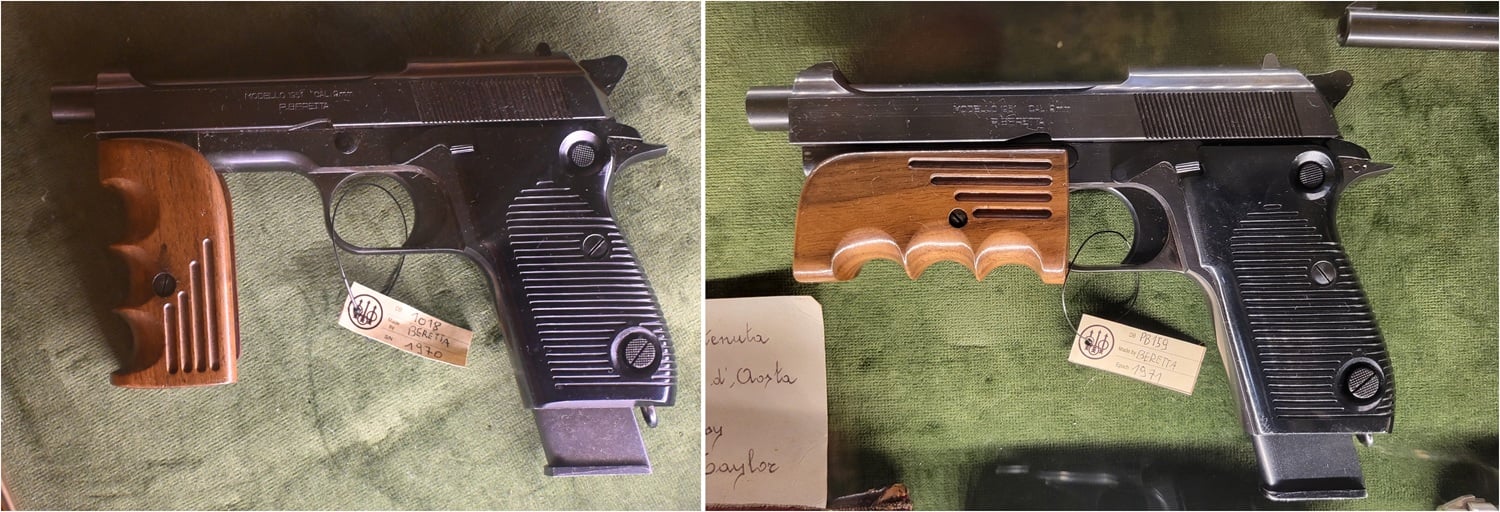
A Beretta M951R, a single-stack 9mm machine pistol from the 1950s, seen in two examples with the wooden foregrip deployed and stowed. 
The famed Beretta 93R. 
 
A circa-1960 Model 418 in .25 ACP. First entering production in the 1920s, these were extremely popular as pocket guns. By the 1950s, they were being imported to the U.S. as the Panther, among the first of Beretta's "cat" pistols on the American market.


How about this cute little fella? Dating from 1951, this early tip-up barrel micro compact was a forerunner of the Minx, Bobcat, and Tomcat. 
And a brighter version of the same. 
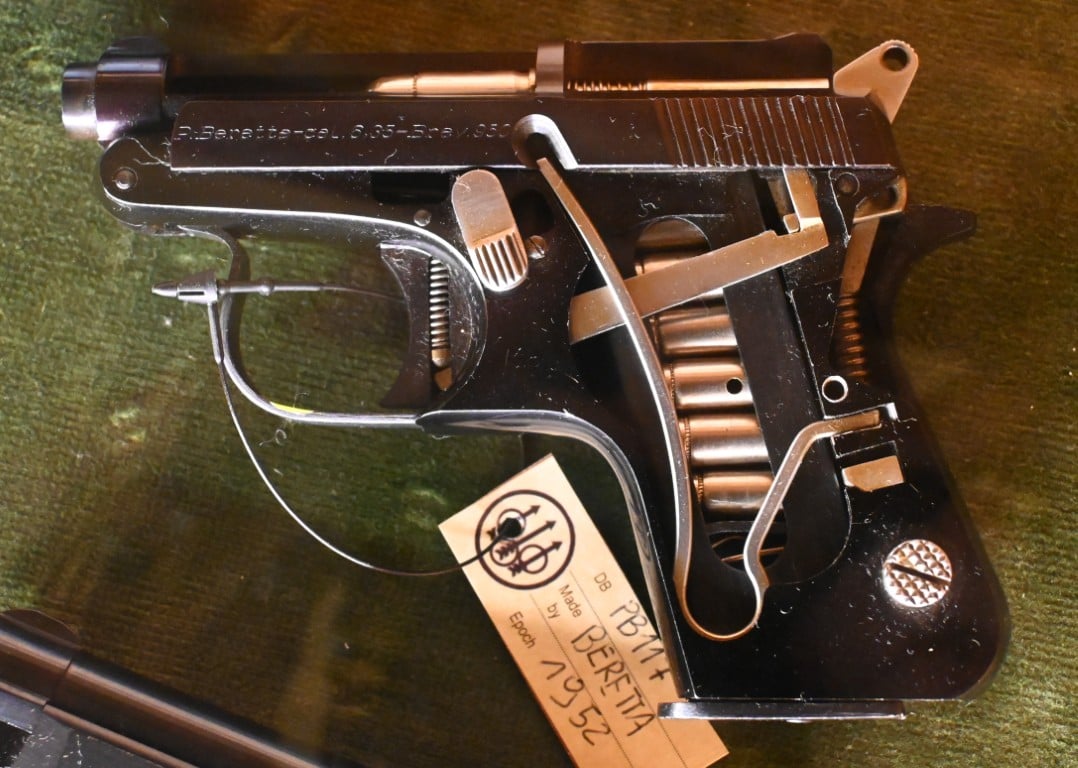
A cutaway Model 950.
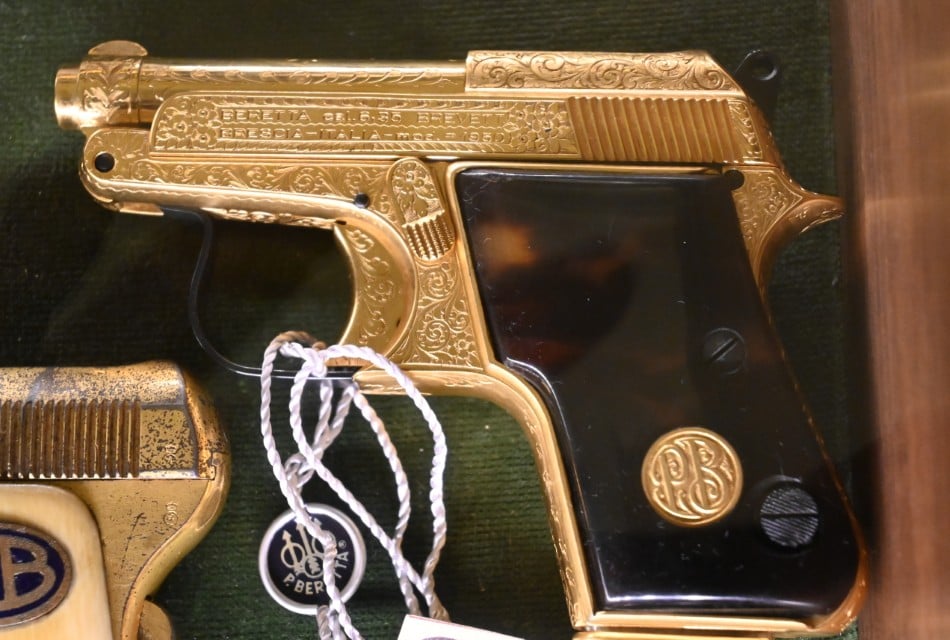
A highly embellished circa-1970 Model 950B in .25 ACP, among other pocket pistols. 
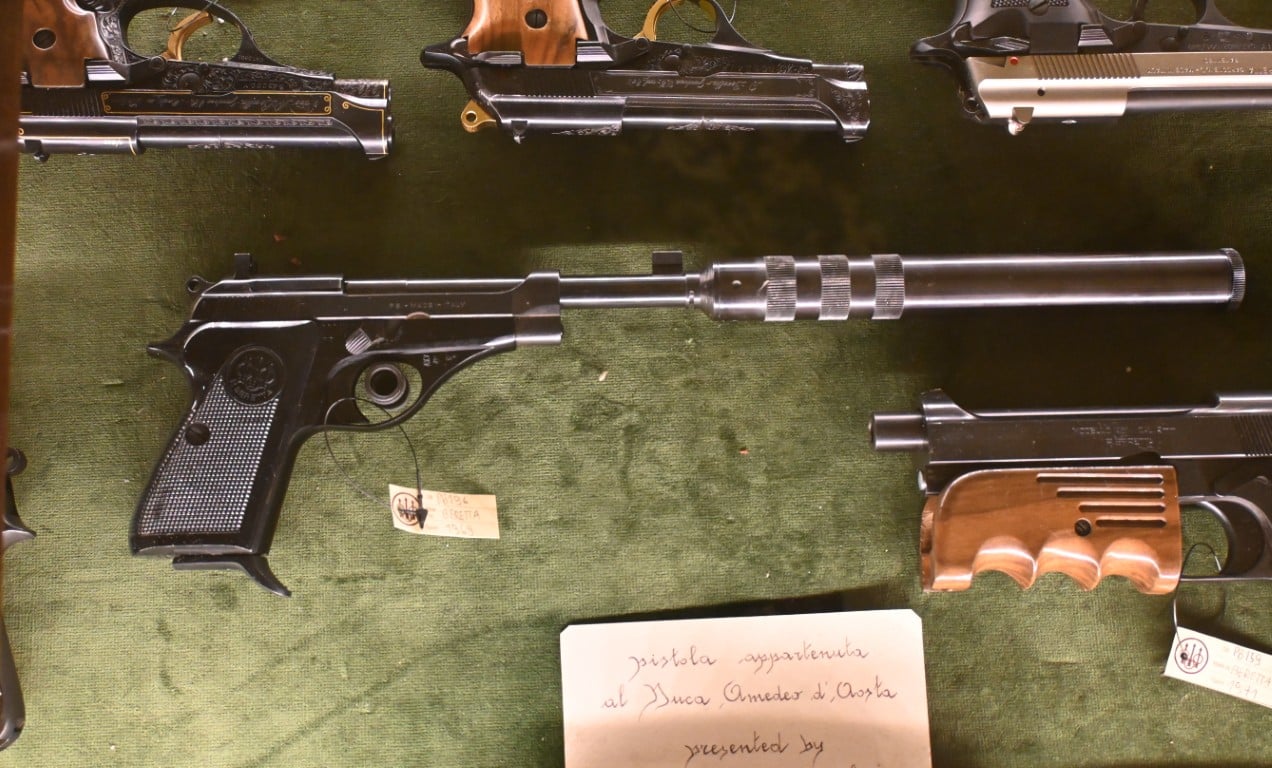
The Model 71, is often called the Jaguar in the States. It has a serious background with some very serious guys. 
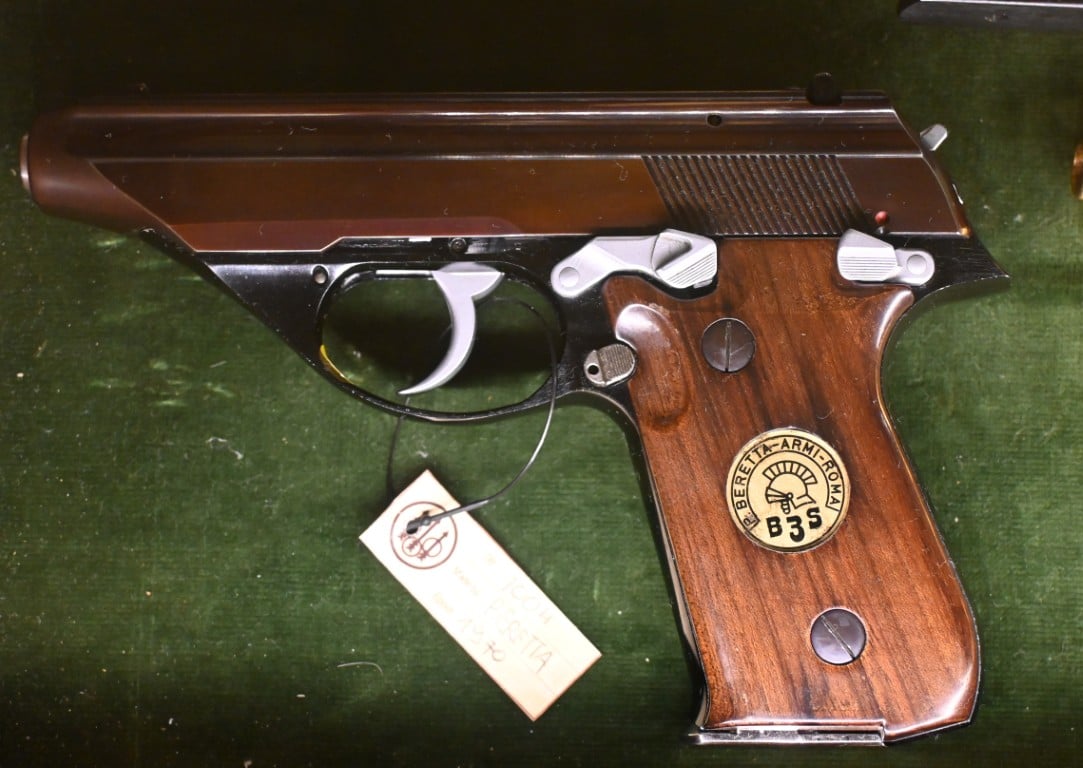
Nope, not a Walther PPK, but rather a Beretta B3S in 9x18mm Ultra from 1970. 
Understated
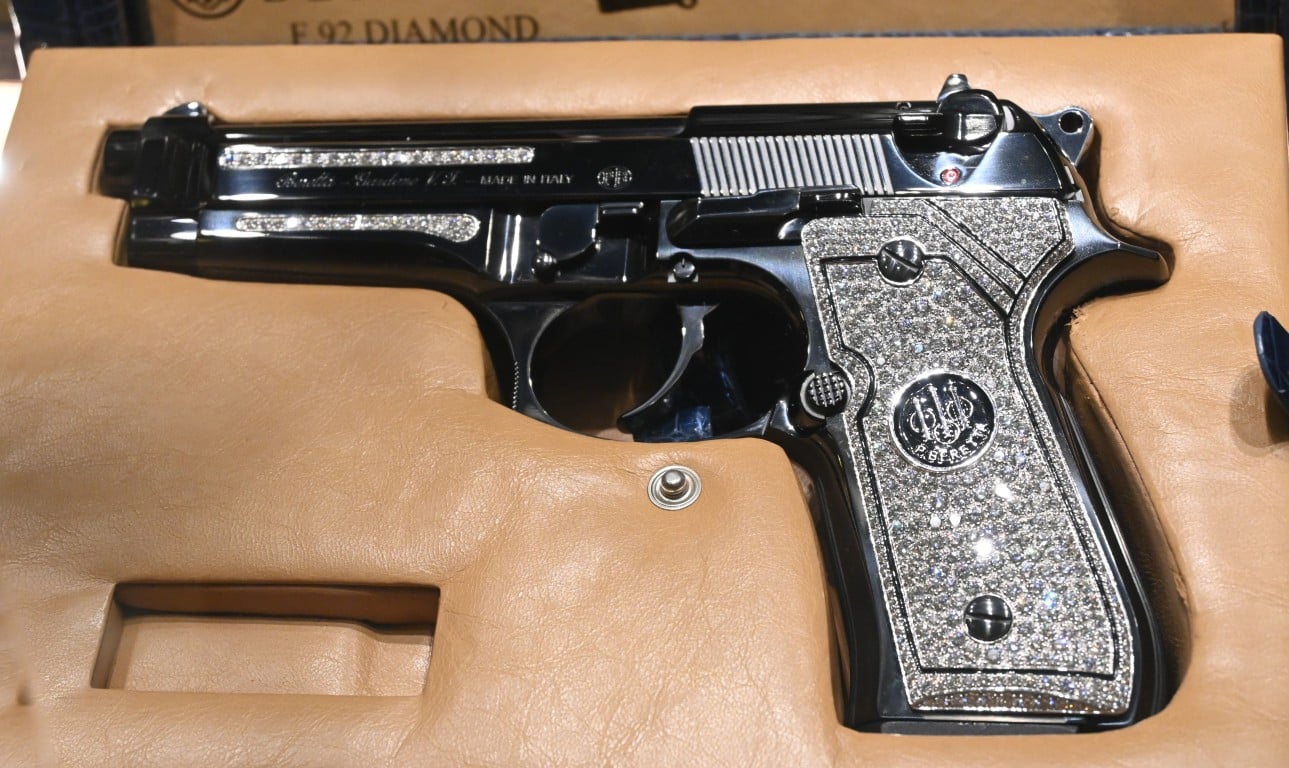
How about a 92? A diamond Beretta 92...
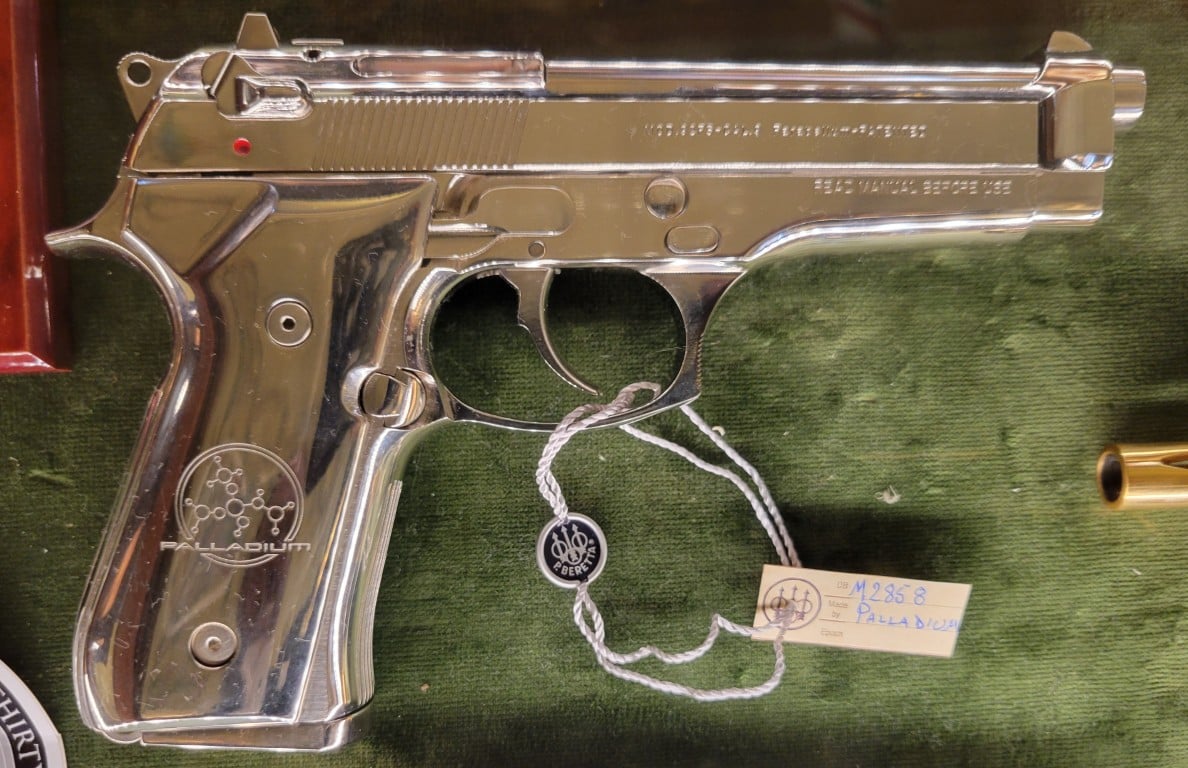
The Palladium 92
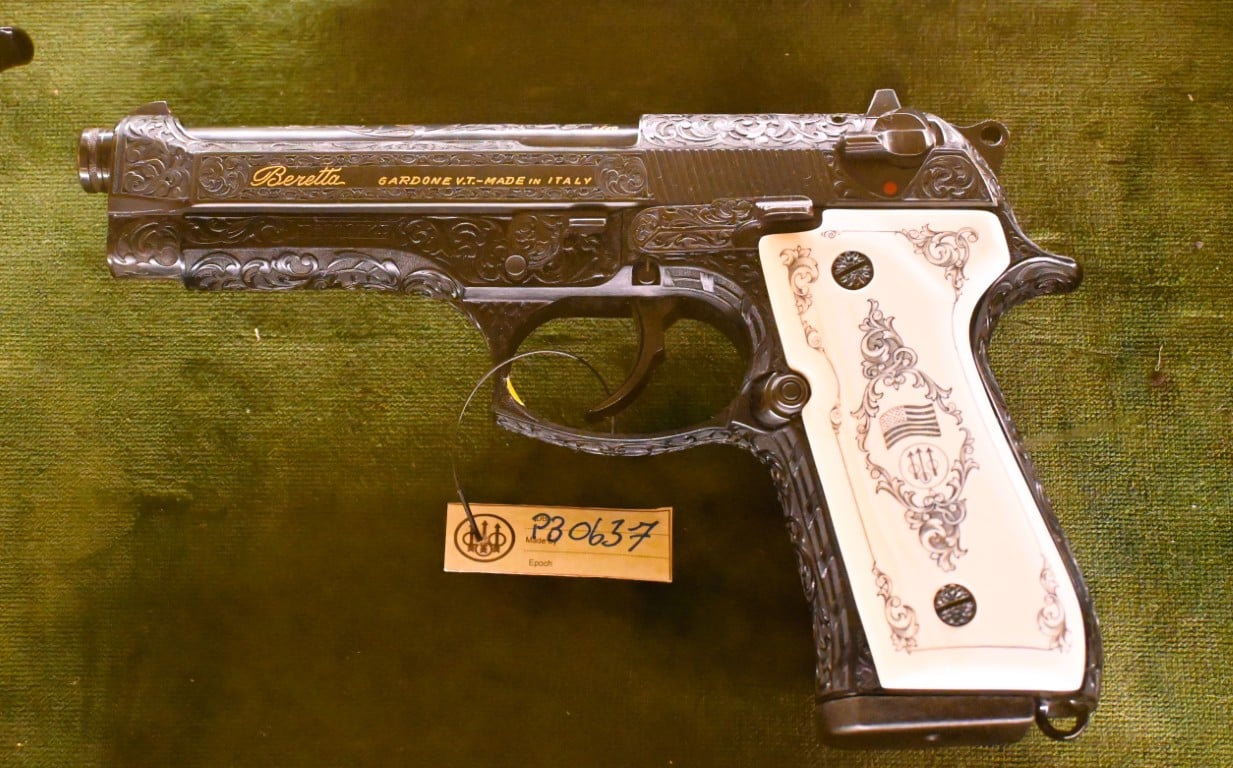
Talk about gorgeous
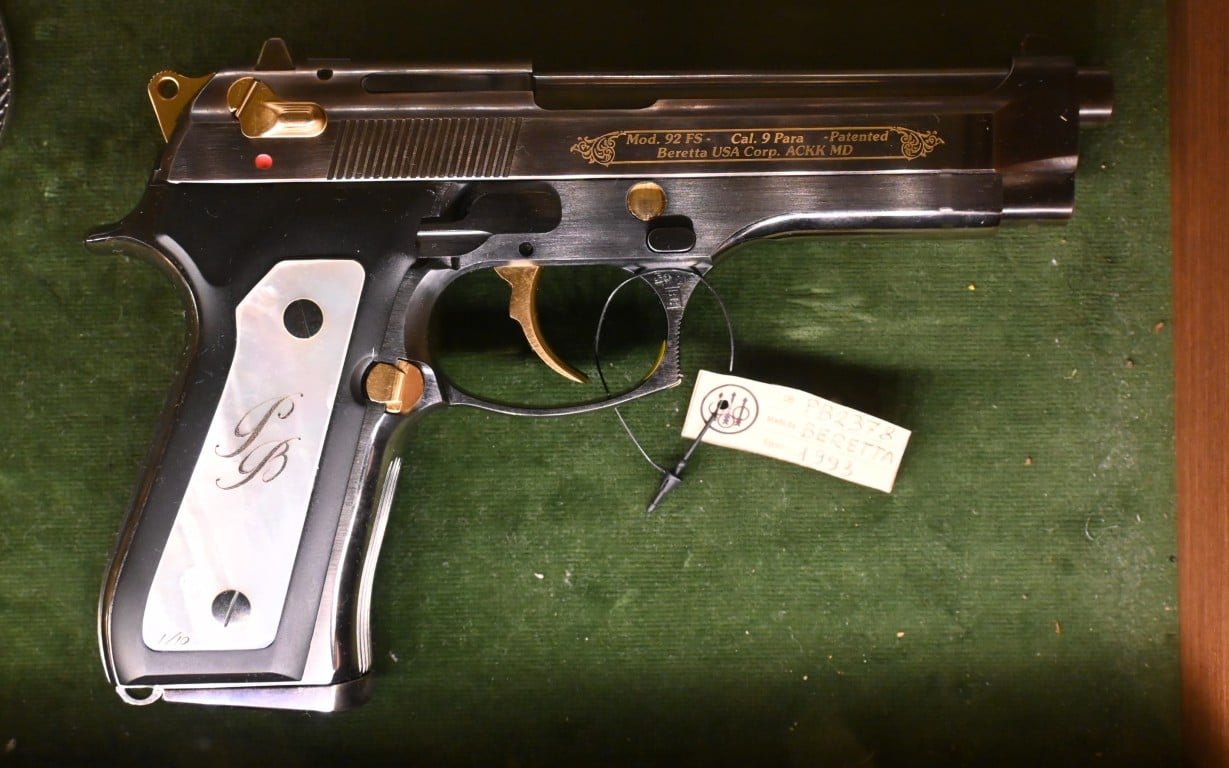
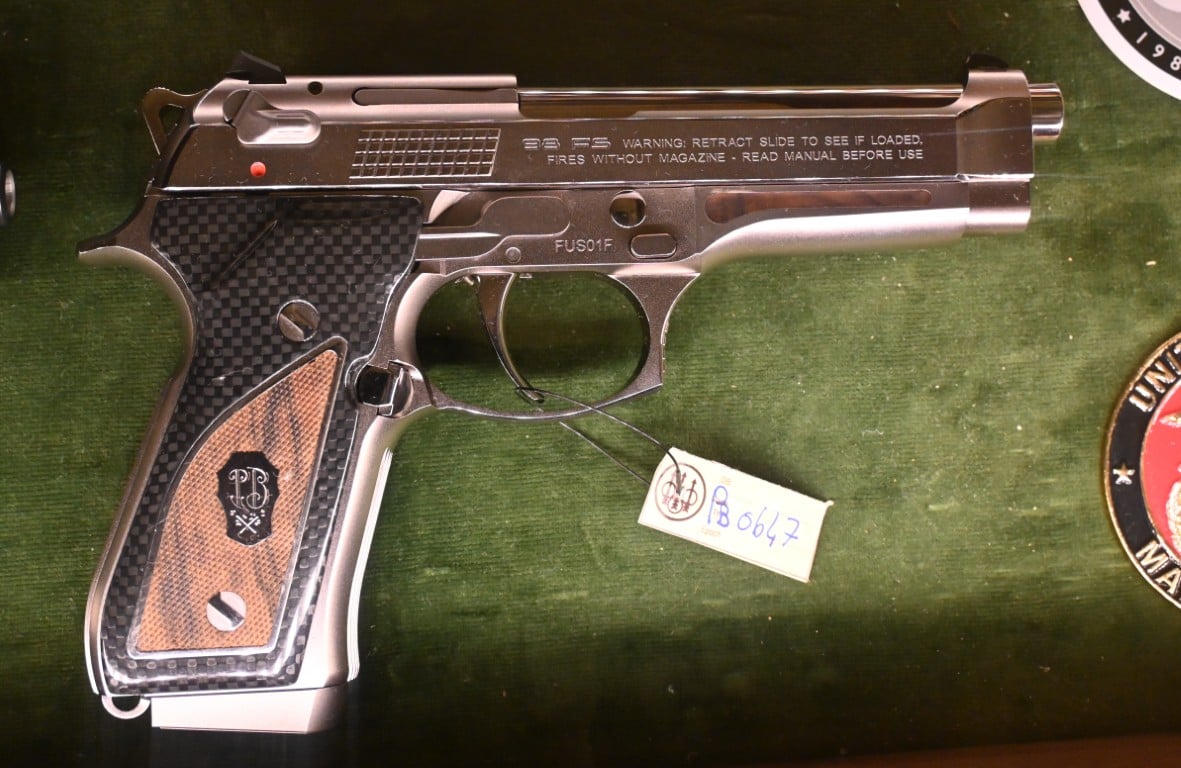
A special American made 92FS sent back to Italy
A Fusion model from the PB Selection program
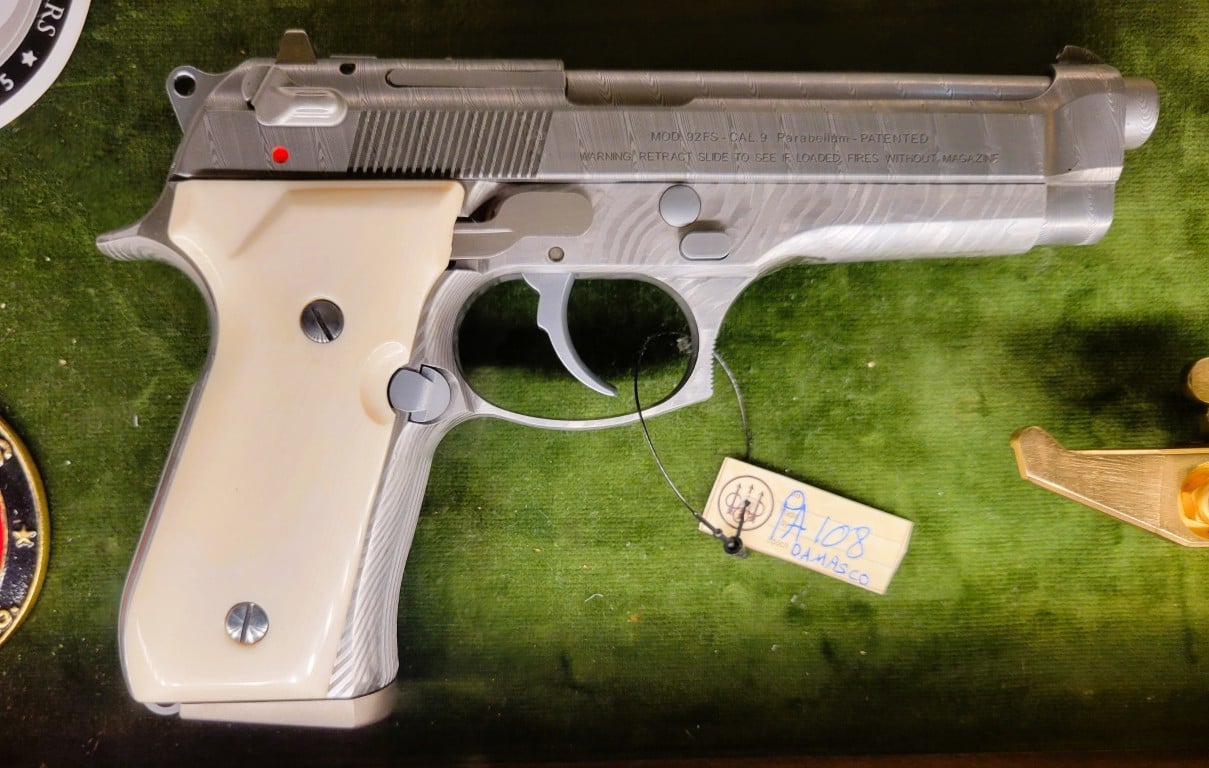
And for fans of Damascus...


We'd like to thank Beretta for the opportunity to tour their amazing Private Collection, and we look forward to the company's next several centuries of making history.

revolver barrel loading graphic

Loading