About the 7mm Backcountry
Of the plethora of 7mm hunting cartridges on the market, 7mm PRC reigns supreme, and Federal’s engineers set their sights on outdoing that round. The 7mm Backcountry is proof of their success, explained Mike Holm, Federal’s Director of Centerfire Rifle Ammunition.
“Due to its safe higher chamber pressures, a 7mm Backcountry 170-grain Terminal Ascent shot through a 24-inch barrel gives you a muzzle velocity of around 3,150 fps, whereas a 7mm PRC with the same bullet generates about 2,950 fps,” Holm said. “Through a 20-inch barrel, 7mm Backcountry shoots approximately 3,000 fps, while the 7mm PRC is only 2,850 fps.”
Many will argue the gains in velocity and downrange performance, although clear increases acrost the board, are not earth-shattering. But these numbers are likely just scratching the surface of potential advancements. To see how that’s possible, let’s investigate the design process and its implications.
Years in the Making
If good things come to those who wait, a half dozen years seems to be the sweet spot for something completely unexpected. That’s not only the 7mm Backcountry round, but more importantly, the revamped casing material.
Driven by the U.S. military’s need for improved performance ammunition, Federal tested many materials at high pressures to develop a one-piece case configuration that would be reliable and efficient to manufacture. Reaching those numbers required considerable R&D over the past six years in creating Peak Alloy casings, for now a product unique to Federal.
“Peak Alloy delivers everything we dreamed it would,” explained Federal’s Centerfire Rifle Ammunition Engineer Brad Abramowski. “It can be loaded at a maximum chamber pressure of 80,000 pounds per square inch and achieve 3,000 fps velocities with 170-grain class bullets out of 20-inch barrels.”
Understanding Peak Alloy Casings
One cannot create new chamberings like the 7mm Backcountry without first building a housing capable of handling increased pressures. Federal’s answer is the Peak Alloy casing. This patented, high-strength steel alloy used for the one-piece casing is advertised as being similar in nature to the steel alloys used in bank safes, race cars, and nuclear reactors.

The major factor is that Peak Alloy is stronger than the brass used in what we know today as traditional casings. That strength, in turn, theoretically allows it to safely handle higher chamber pressures – in this case confirmed with safety testing at 80,000 psi. One thing leads to another, and that safe allowance of higher pressures permits Federal to amp up velocities, and finally, downrange performance.
According to Abramowski, “results showed that brass cases loaded at pressures normal for brass cases created similar stress as high-strength steel alloy cases loaded at significantly higher chamber pressures. Peak Alloy allows Federal to safely increase chamber pressures far beyond the limits of brass case ammunition.”
That said, the door is open for creating more chamberings beyond the 7mm Backcountry or perhaps even potentially creating newer, hotter loads for those already existing. We constantly see wildcatters making minor adjustments and improvements in an attempt to wring the greatest potential. There’s potential for new and improved casings to greatly expand the world of metallic development and reloading, if the Peak Alloy and 7mm Backcountry proves itself worthy of the hype.
Just Another Steel Case?
We know what you’re thinking: steel cases have been around for decades and are nothing new. Federal is quick to note that compared to those “legacy” steel casings common on surplus and inexpensive ammunition, Peak Alloy is a completely different type of steel with superior mechanical properties. In addition, Peak Alloy casings are nickel-plated to guard against corrosion and rust, further allowing them to stand apart from those legacy types.
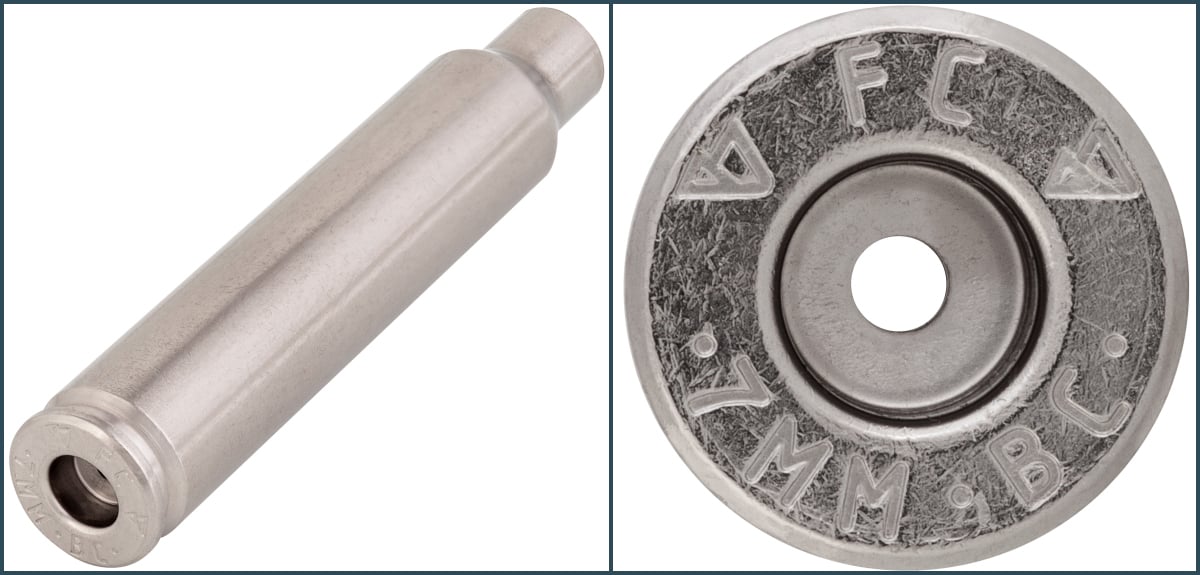
How the steel casings will hold up to repeated firing and reloading remains to be seen, though we’re confident both will be put to the test outside Federal oversight soon enough. The nickel-silvered casings show a 7mm BC headstamp, along with mountain detail around the “FC” representing Federal Cartridge’s latest offering.
Short Barrel Performer
Federal pushes three main numbers to define the reason behind the product launch: 20, 170, and 3,000. Through 20-inch barrels with 170-grain bullets, shooters can achieve 3,000 feet per second. Of course, velocity increases significantly from longer barrels, and even more so with other bullet weights.
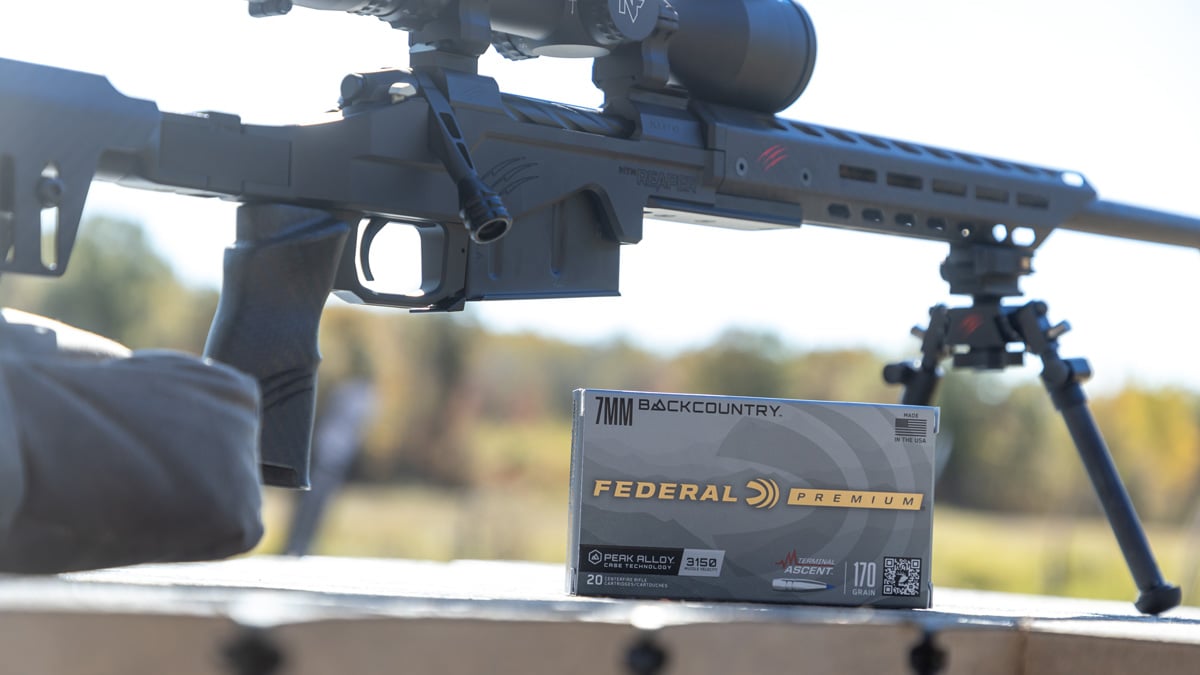
For example, Federal’s 155-grain Terminal Ascent bullet, the lightest bullet Federal will initially offer in 7mm Backcountry, has a spicy 24-inch barrel muzzle velocity of 3,300 fps. While the short barrel draw will appeal more to suppressor users than all hunters, it’s interesting to see where this technology leads.
Suppressor Time
There’s no denying the booming interest in suppressed hunting, with firearms moving to threaded, often shorter barrels for more practical use with an extended can. While the 7mm Backcountry was not designed specifically for use with a suppressor, that is where its numbers really excel.
“Installing an 8-inch suppressor on a 24-inch barrel results in an awkward and impractical platform,” Holm said. “To counter this, many shooters are selecting rifles chambered in cartridges like 7mm PRC with 20-inch barrels to make room for their suppressor. But, in the process, they lose the Magnum velocities, energy, and trajectories their cartridge supplied initially.”
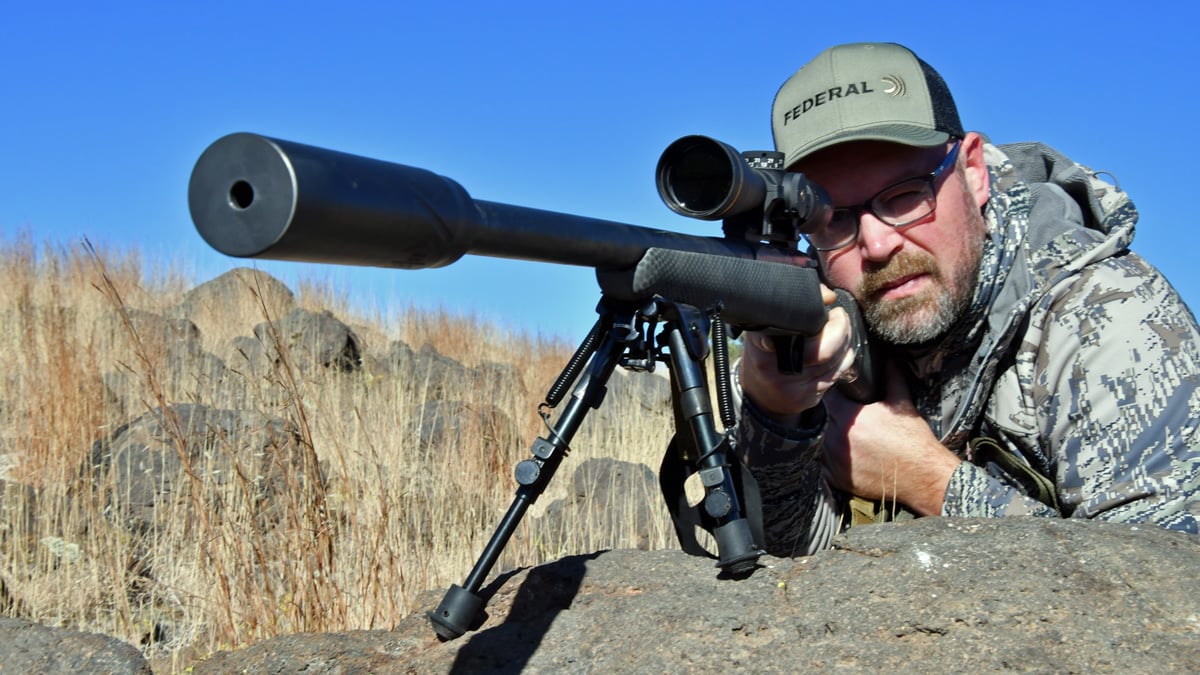
Federal’s answer is the 7mm Backcountry, brought to you courtesy of the Peak Alloy development. While most modern suppressors should handle the round, Federal notes in several areas that shooters should “consult other suppressor manufacturers to confirm compatibility.” Thanks to Federal’s ongoing partnership with Silencer Central, all SC cans are approved for 7mm Backcountry.
Pressure to Recoil?
With or without a suppressor, higher pressures and spicy performance usually come at a cost in two major areas: the shooter’s shoulder and the rifle. One has to wonder if a higher-pressure cartridge won’t equate to wicked recoil and harsh wear and tear on firearms.
Per Federal internal testing, the new 7mm Backcountry “produces a calculated recoil impulse, energy, and velocity that is comparable to cartridges including 7mm PRC, .300 Win. Magnum, and 7mm Rem. Magnum.” Further, in Federal’s testing, 7mm Backcountry caused no excessive wear beyond that caused by legacy ammunition, including to the barrel/throat and extractors. Still, shooters should “refer to firearm manufacturer resources for rifle-specific information.”
A Non-Magnum Magnum
Federal is clear that though its performance is comparable to Magnum rounds, the 7mm Backcountry is not a Magnum. In fact, by using a standard bolt face instead of the Magnum counterpart, the round also touts increased magazine capacity over similar Magnum equivalents.
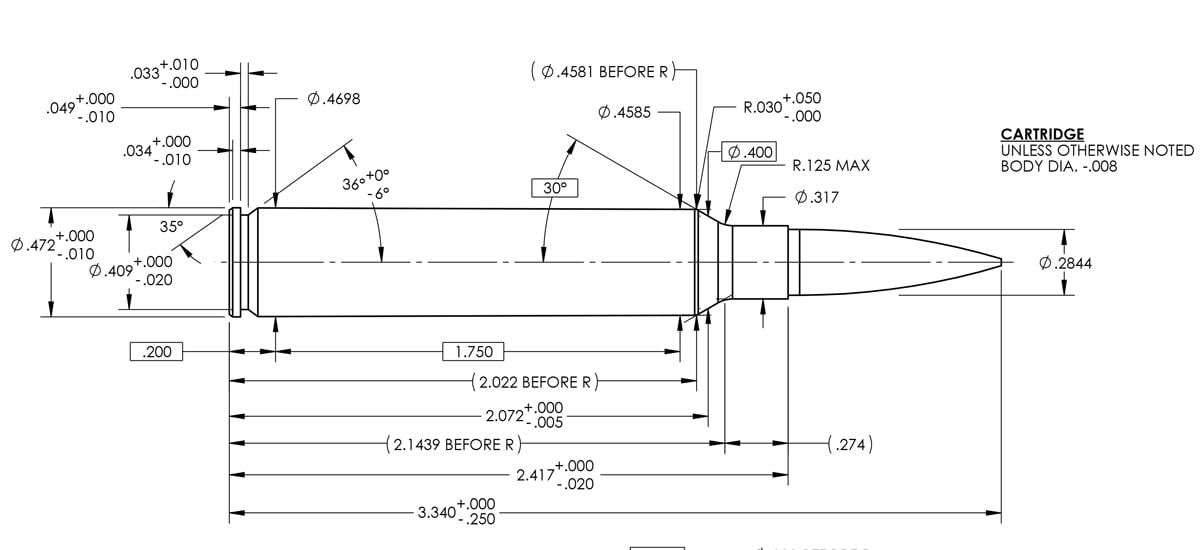
“We wanted it to operate in non-Magnum, standard long actions to keep room for round capacity," explained Federal's Centerfire Rifle Product Line Manager Eric Miller. "The result is a non-Magnum-looking cartridge with the same neck length as 7mm PRC, body taper and shoulder angle as 6.5 Creedmoor, and a cartridge size similar to .30-06 Springfield or .280 Ackley Improved. Yet it accepts heavy bullets with a long ogive.”
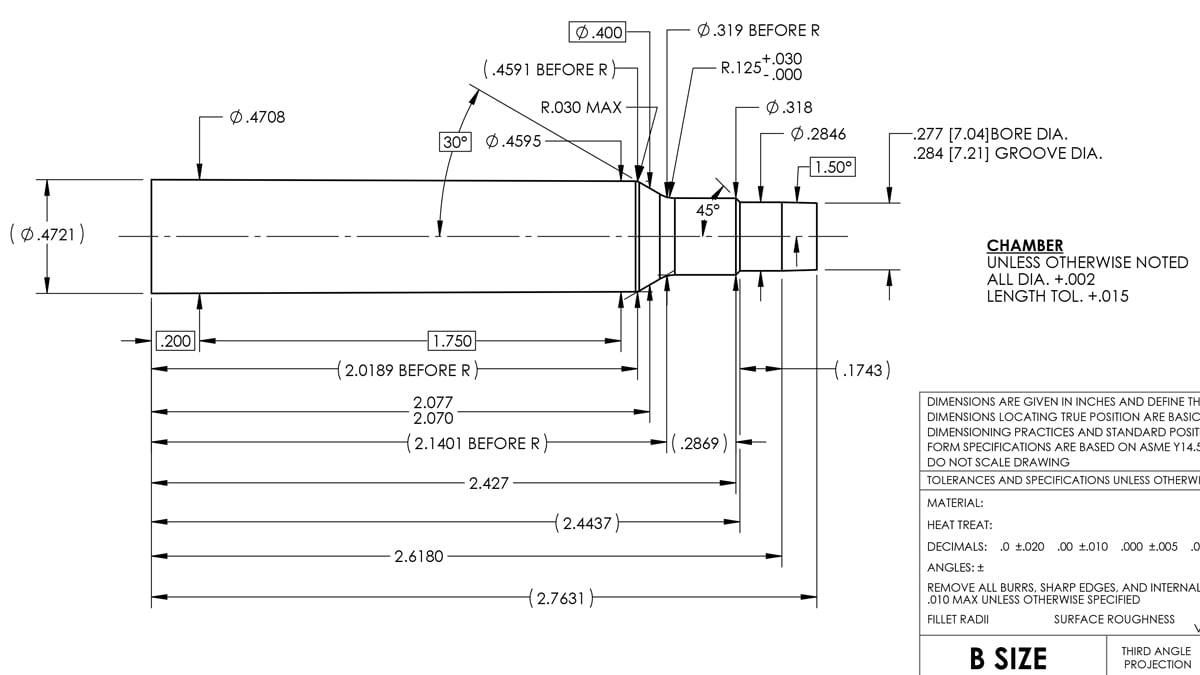
Using a standard long action, along with increased magazine capacity, and the impressive numbers from shorter barrels all work together to make the 7mm Backcountry and its Peak Alloy home instantly appealing to many hunters, especially mountain hunters. So, what exactly could you hunt with the round? That answer lies with the types of projectiles already showing this early in the launch.
Bullet Breakdown
Federal Ammunition will offer 7mm Backcountry in several product lines, with a healthy variety of projectile types and weights for different hunting medium and big game goals. Here’s a snapshot of each available at launch. Like the rifles, the ammo should be shipping early in 2025.

Terminal Ascent 155-gr and 170-grain: The round was designed with this ammunition in mind. “Terminal Ascent is our flagship all-range big game bullet that extracts the utmost performance from the 7mm Backcountry cartridge,” Miller said. “Its bonded construction penetrates deep on close targets, while the patented Slipstream polymer tip initiates expansion at extreme long range. The 155-grain load is the fastest 7mm on the market with 3,150 fps out of a 20-inch barrel, while the 170-grain achieves 3,000 fps out of 20-inch barrels.”
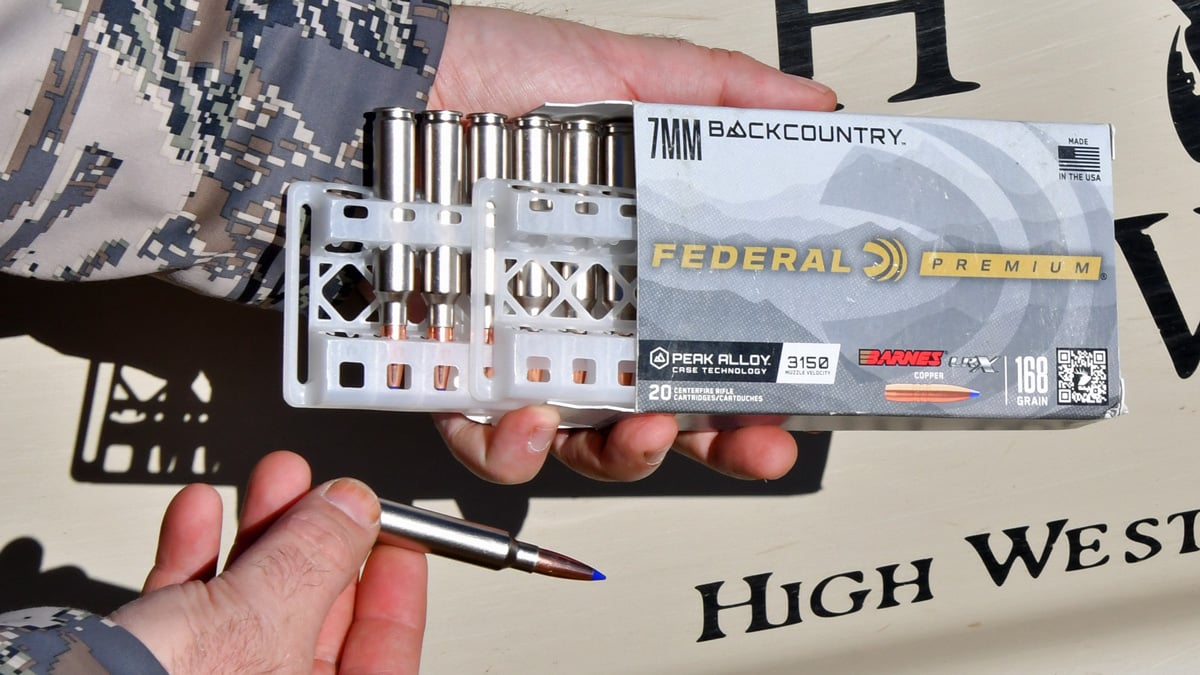
Barnes LRX Copper 168-grain: This one will please those seeking an all-copper bullet, here with a high BC, polymer tip, and proven LRX design for big game. This 168-grain bullet achieves 3,000 fps from a 20-inch barrel and has a G1 BC of .513.
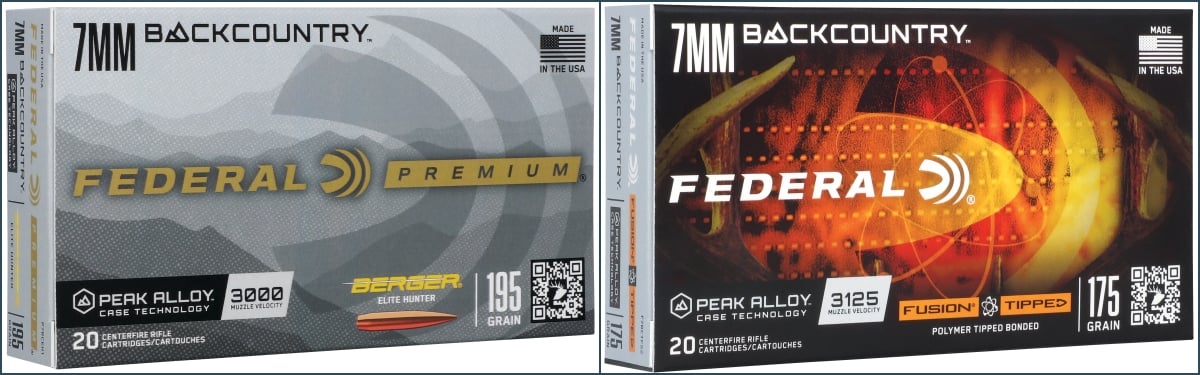
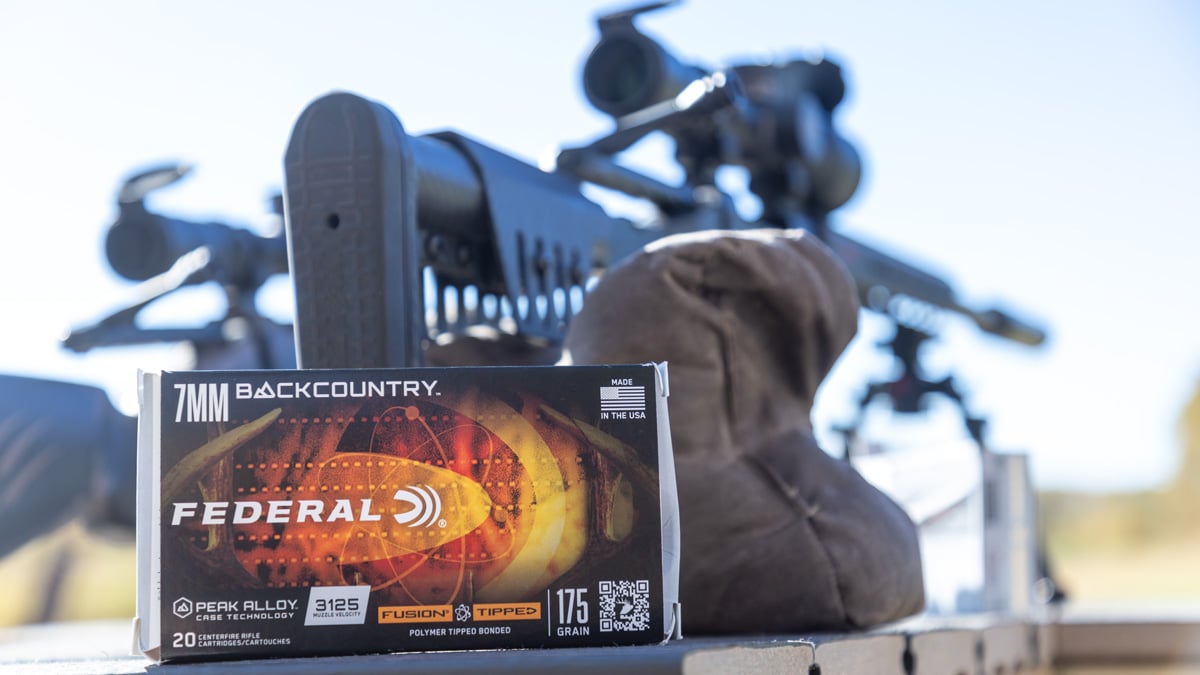
Fusion Tipped 175-grain: Federal’s Fusion line is one of its most affordable, so the Fusion Tipped will be the least expensive of these 7mm BC options. While exact costs hadn’t been revealed at this writing, it sounds like 7mm Backcountry loads will be priced similarly to 7mm PRC offerings with comparable bullets. This 175-grain bullet achieves 2,975 fps from a 20-inch barrel and has a G1 BC of .575.
Berger Elite Hunter 195-grain: As you can see, Federal is leveraging its relationships with multiple bullet brands. In this case, the Berger Elite Hunter marks the highest ballistic coefficient among hunting bullets. “We specifically designed all the dimensions of this new cartridge to be able to accept the longest, heaviest bullets the current marketplace has to offer,” said Miller. This 195-grainer clocked at 2,850 fps out of a 20-inch barrel with a G1 BC of .755.
Available Rifles
A growing contingent of rifle builders is jumping aboard the 7mm Backcountry train. While many would be considered precision or semi-custom builders, there are also some more familiar names: Christensen Arms, Gunwerks, Seekins Precision, Fierce Firearms, AllTerra Arms, Savage Arms, Weatherby, Geissele Automatics, Proof Research, Horizon Firearms, and Pure Precision.

The only rifles we’ve seen so far have been bolt actions, but the inclusion of Geissele on the list has us just as curious as you for what’s yet to come. One factor that should remain constant across the 7mm Backcountry firearms is the rifling. Federal shows that all available bullet weights of 7mm Backcountry are compatible with 1:8 twist barrels, and that’s what we’ve seen thus far on all the production rigs.
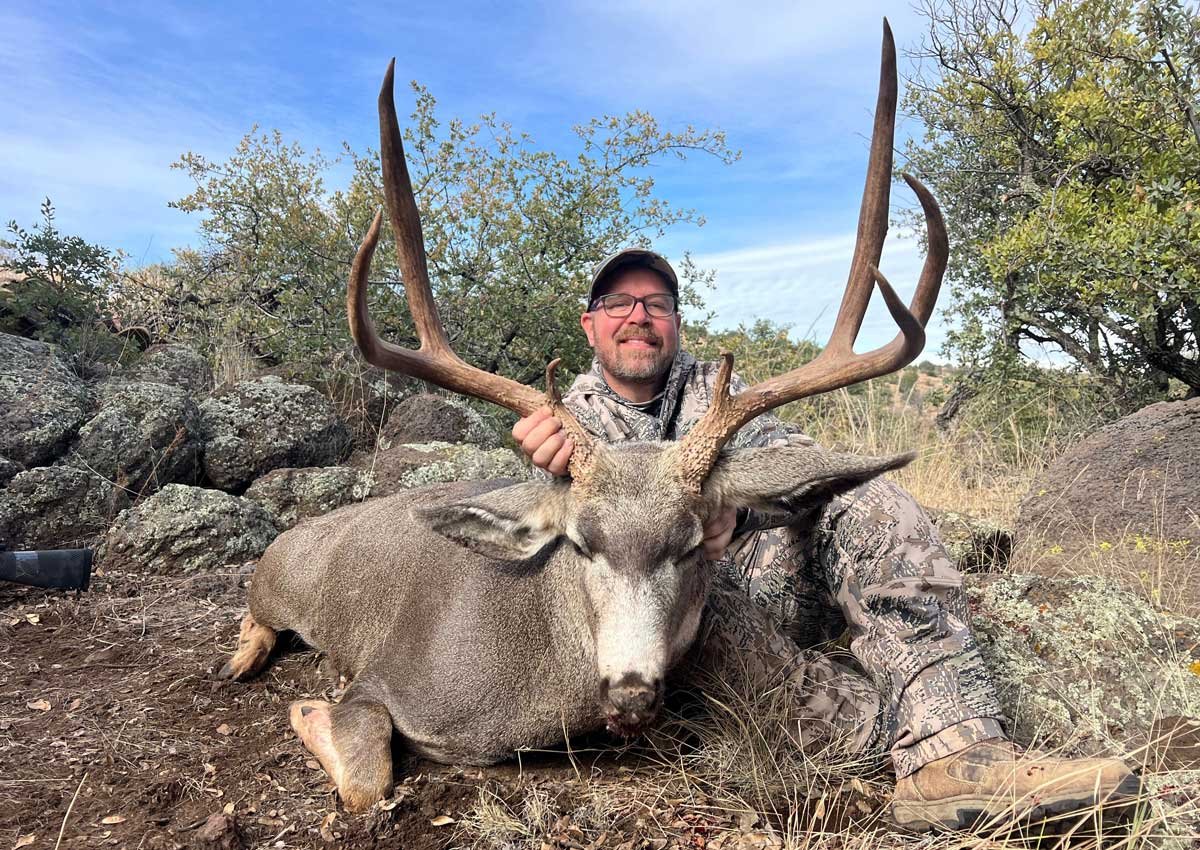
Federal’s Senior Media Relations Manager JJ Reich used a Proof Research Glacier bolt-action rifle chambered in 7mm Backcountry on two hunts as part of the round’s testing and development. He harvested both a West Texas aoudad and a New Mexico mule deer buck with clean ease using the yet-unannounced round. Hunts with the possibility for longer shots exemplify where the newbie will excel.
Final Thoughts
Whether you love the idea, hate change, or sit back in curiosity, one thing is certain: Federal is making hunters, shooters, and reloaders reconsider the potential of ammunition. Perhaps the 7mm Backcountry’s ballistic gains paired with Peak Alloy casing advancements won’t appeal to the average hunter, and that’s understandable.
What excites us most is the potential for further advancements that will push the limits of what it means to be faster, flatter, and more potent. For now, though, we’ll spend more time getting to know the 7mm Backcountry, sending some rounds downrange, and putting those new cases to the test in the field.