By 1944, the U.S. Army Air Forces had fielded a bomber that included computer-assisted remote gunnery for self-defense.
We've talked about the Army's top-of-the-line bomber in 1938, the B-18 Bolo, which had three .30-06 caliber Browning light machine guns for self-defense. We also talked about the famous B-17G Flying Fortress, which was a Master of the Air over Europe, and its 13 .50 caliber BMG Browning heavy machine guns.
But by May 1944, the B-29 Superfortress was on the scene, and while its 11 M2 .50 cals seem like a downgrade in numbers from the B-17, the way they worked was much more advanced.

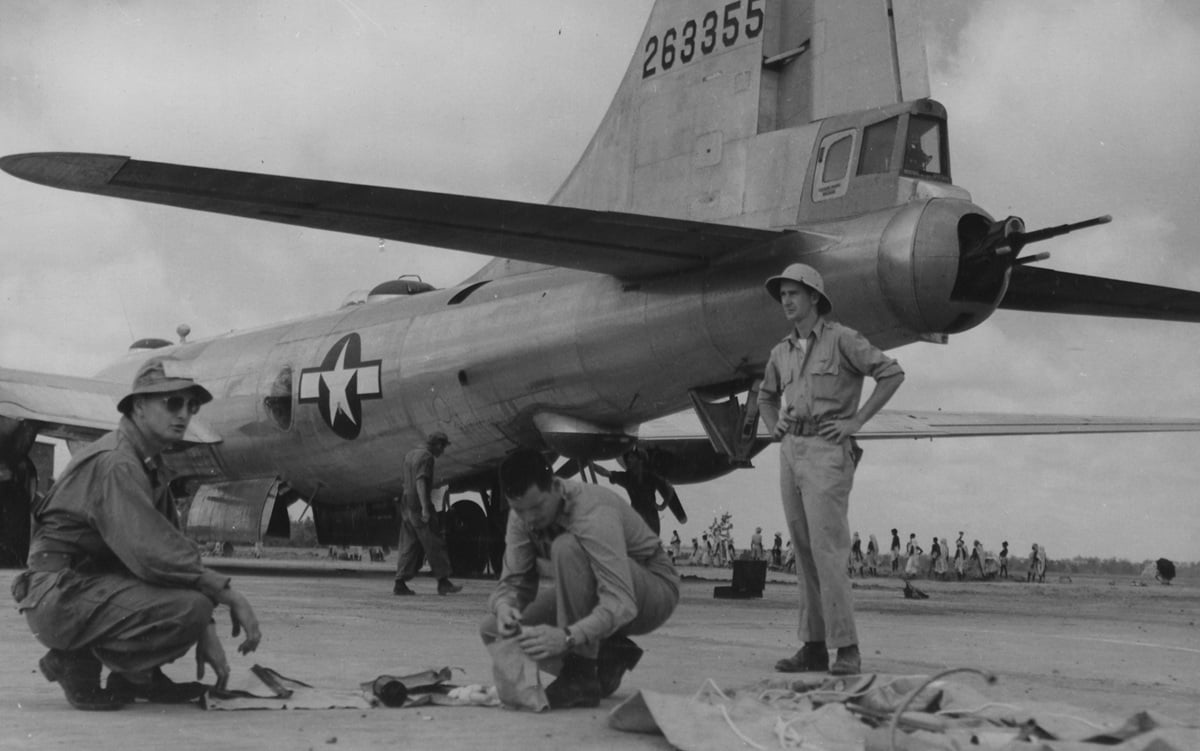
The five full-time and two part-time (bombardier and navigator) gunners of the B-17G laid hands on their guns’ spade grips and directed them via eyeballs, learning their trade in a six-week "Flexible Gunnery" school. On the B-29, three of the full-time and one part-time (bombardier) gunner remotely controlled four streamlined gun turrets from inside a pressurized cabin while sitting in "barber chairs" at sighting stations behind an analog computer fire control system, while the tail gunner's job was virtually unchanged.
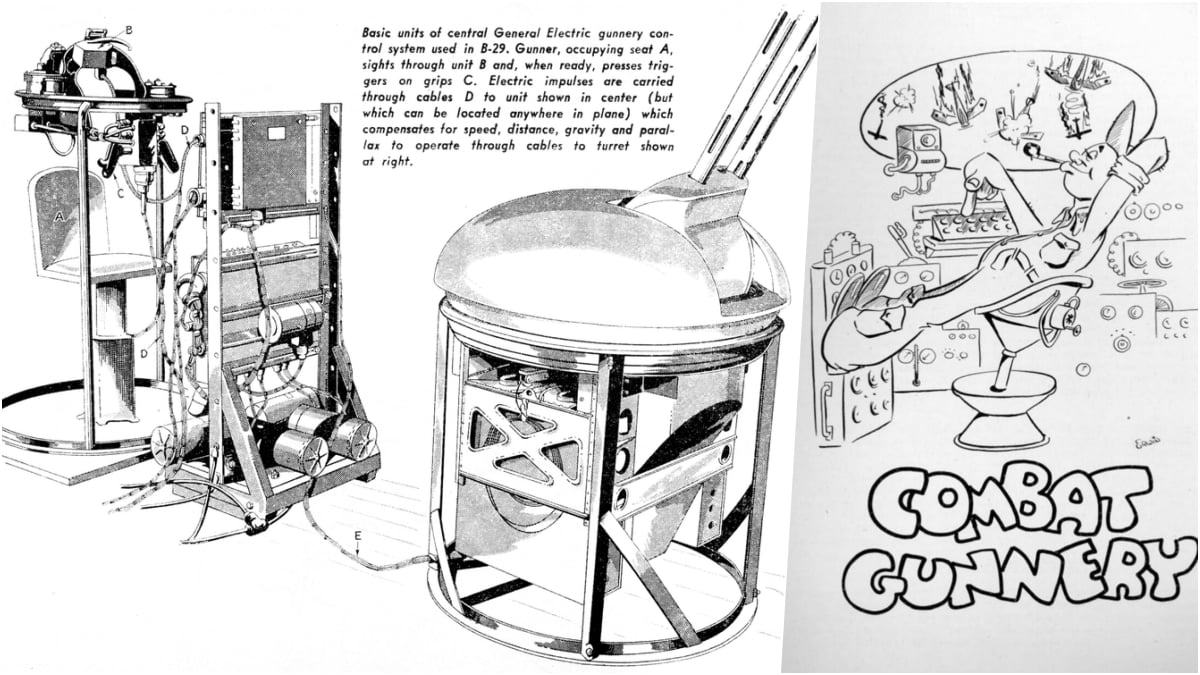

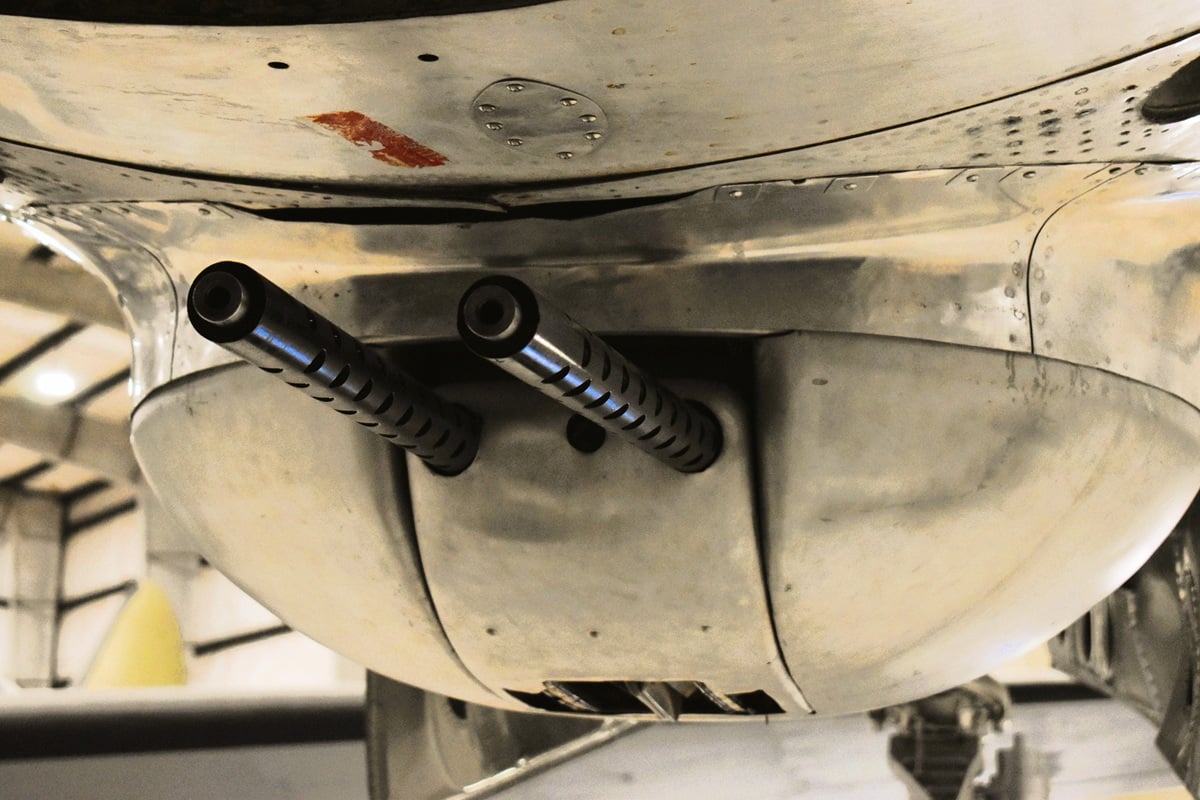

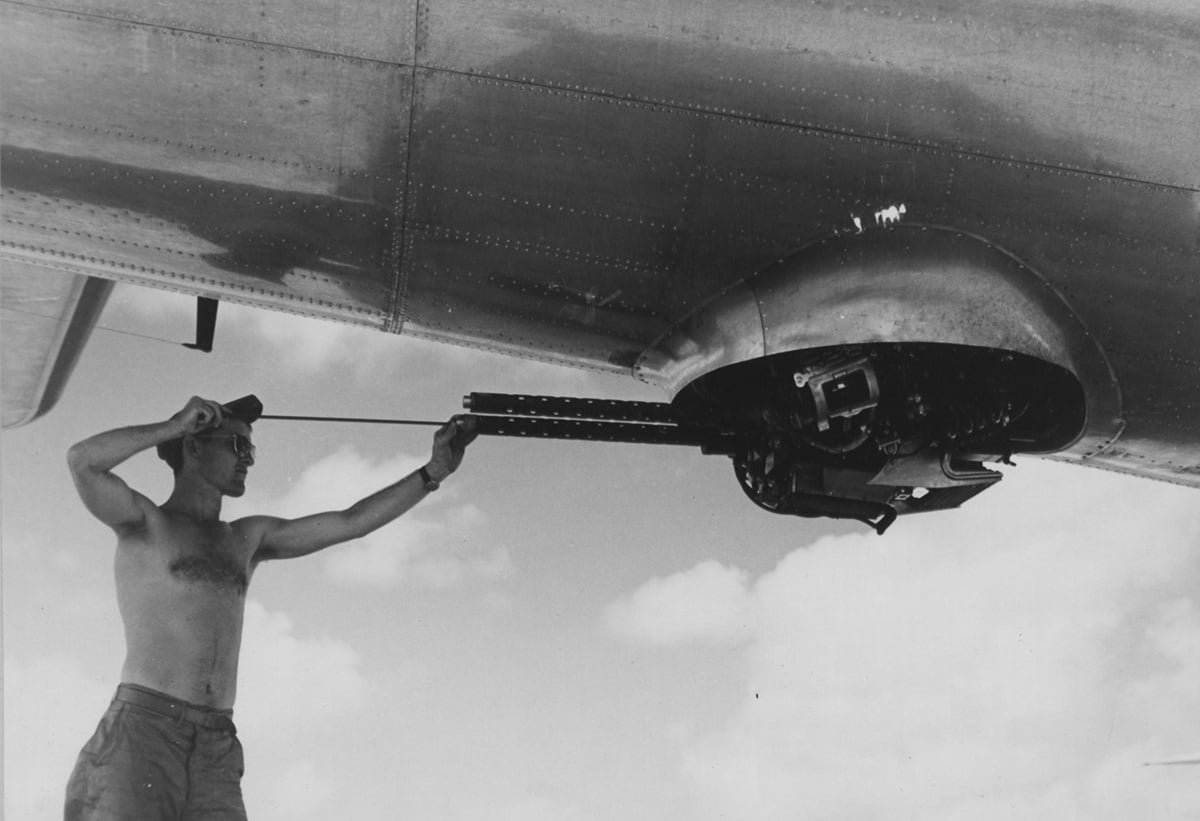
The early computer used by B-29 gunners calculated ballistic solutions to correct for gravity, drift, and atmospheric conditions. All they had to do was peer out of Plexiglas blisters, find a target such as an incoming enemy fighter, track it with the projected reticle of a yoke-mounted GE Retiflector sight, and press the trigger buttons with their thumbs to actuate the solenoids. The reticle size could be changed via a manual range wheel on the side of the sight. The system was set up to accept the altitude, outside air temperature, and airspeed from a manual control via the bomber's navigator to account for those variables.
The increase in technology from the old flexible hands-on .50 cals meant B-29 gunners had to spend 12 weeks in school, learning the subtle art of judging the size and speed of enemy aircraft at distance to manually adjust to the correct reticle size to make sure "Joe Computer" was able to have the right offset and deflection to make the bullets intersect the plane that was being tracked.
Heady stuff for an age when electronics had vacuum tubes and the electromechanical calculator used to help with the math for the Manhattan Project's atomic bombs weighed 5 tons and was powered by a 50-foot drive shaft.
Of course, this is all an oversimplification, and the sights/controls were finicky and took a lot of time to get a "feel" for, but you get the idea.
Still, the gun systems proved effective, and USAAF B-29 crews claimed a whopping 914 Japanese fighters shot down by their gunners during the last two years of World War II, and another 27 aircraft during the Korean War in the 1950s. Out of over 3,000 B-29s built, only 87 were shot down by Japanese aircraft.
The guns used to protect the fictional Millennium Falcon in the Tie Fighter attack in Star Wars were clearly based on the B-29's. Incidentally, the Falcon's cockpit design came from the B-29 as well.
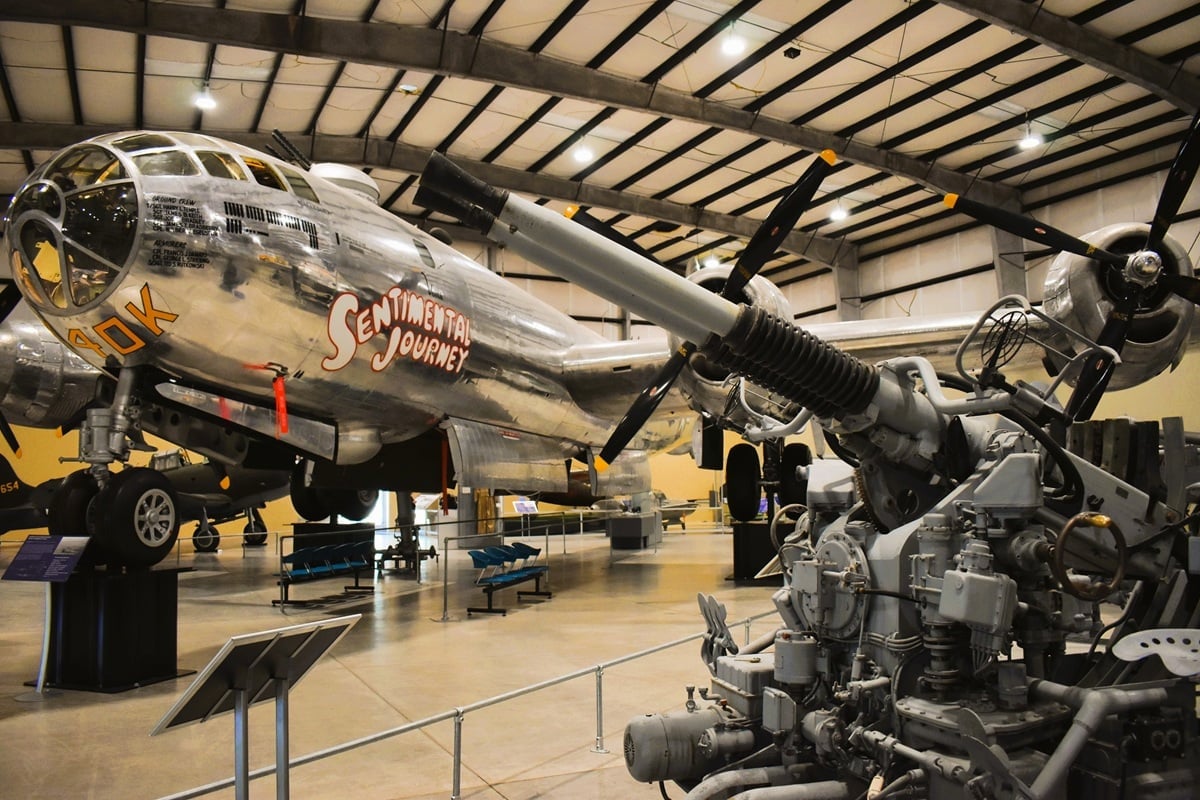
We would like to thank the Pima Air & Space Museum outside of Tucson, Arizona, home to the circa 1944 B-29 shown in the above video, "Sentimental Journey." If you are ever in the area, please carve out some time to visit some of the aircraft on display and find out more about the brave aviators who flew them.
Video by Ben Philippi.