Ballistic Performance
The shape of a bullet is designed to be aerodynamic and cut through the air with as little resistance as possible. Much like the fairing on a motorcycle or the front of your car, bullets are designed to reduce drag so they can retain energy and avoid deflection.
Ballisticians have come up with a mathematical formula to assign a score to a bullet’s ability to cheat this drag and deflection. This score is called a ballistic coefficient, there are a few different models for this numerical grade. Mainly, folks use either the G1 or G7 drag models. That may be deeper than you wish to look, so let’s stick to the G7, as it seems most popular.
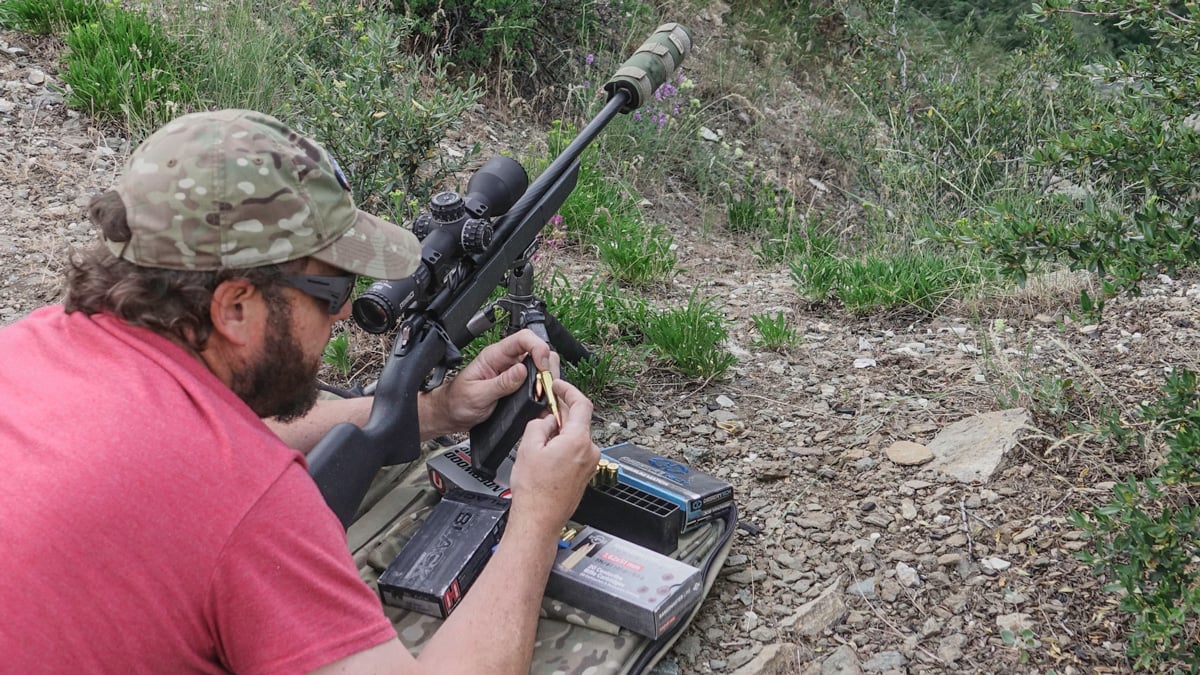
The ballistic coefficient (BC) is shown as a decimal. An easy way to understand it is that a 1.00 BC is significantly better than a .500 BC, and the .500 BC is still better than a .300 BC. Most bullet manufacturers produce a BC for each bullet they manufacture. For the most part, you can use the manufacturer’s BC with confidence to calculate and theorize a trajectory. Many offer a stepped BC for different velocity ranges.
Perfect Proportions
Based on the design of most high-performance bullets, there seems to be set of perfect proportions. If you put high-BC bullets of various calibers together, you’ll start to see a pattern. They are typically long, have slender points with uniform tips, and almost always have a boattail at the back.

Whether you are shooting a .223 or a .300 Winchester, there are bullets out there with higher performance. The question is: can you shoot them?
Stabilizing Bullets
Barrel rifling is of the greatest developments in firearms. The grooves cut into a barrel are done with a specified twist rate to spin the bullet as it exits the muzzle. Spinning bullets stay far more stable than non-spinning ones. Much like a football, when you throw it right, it will fly much farther and land closer to your point of aim. But when thrown without the characteristic stabilizing spin, it is bound to fly more unexpectedly.
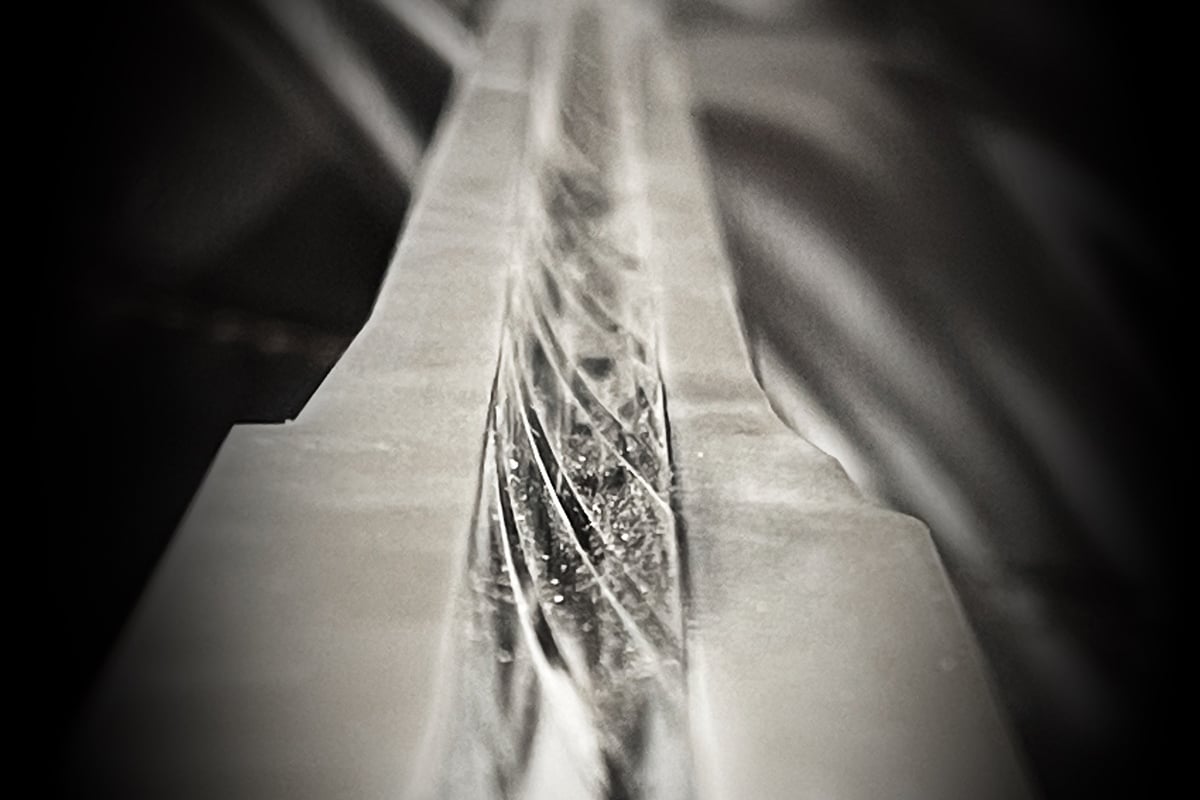
Barrel twists are depicted in a “one rotation in XX inches” format, and written as 1:12, meaning one rotation in 12 inches of barrel travel.
High-BC bullets, as I mentioned, are usually longer than a typical for-caliber bullet. For example, a popular .30-06 Springfield bullet might weigh between 165 and 180 grains, but you could load the same cartridge with something like a Berger 210-grain VLD bullet that has a much higher BC than your typical .30-06 bullets.
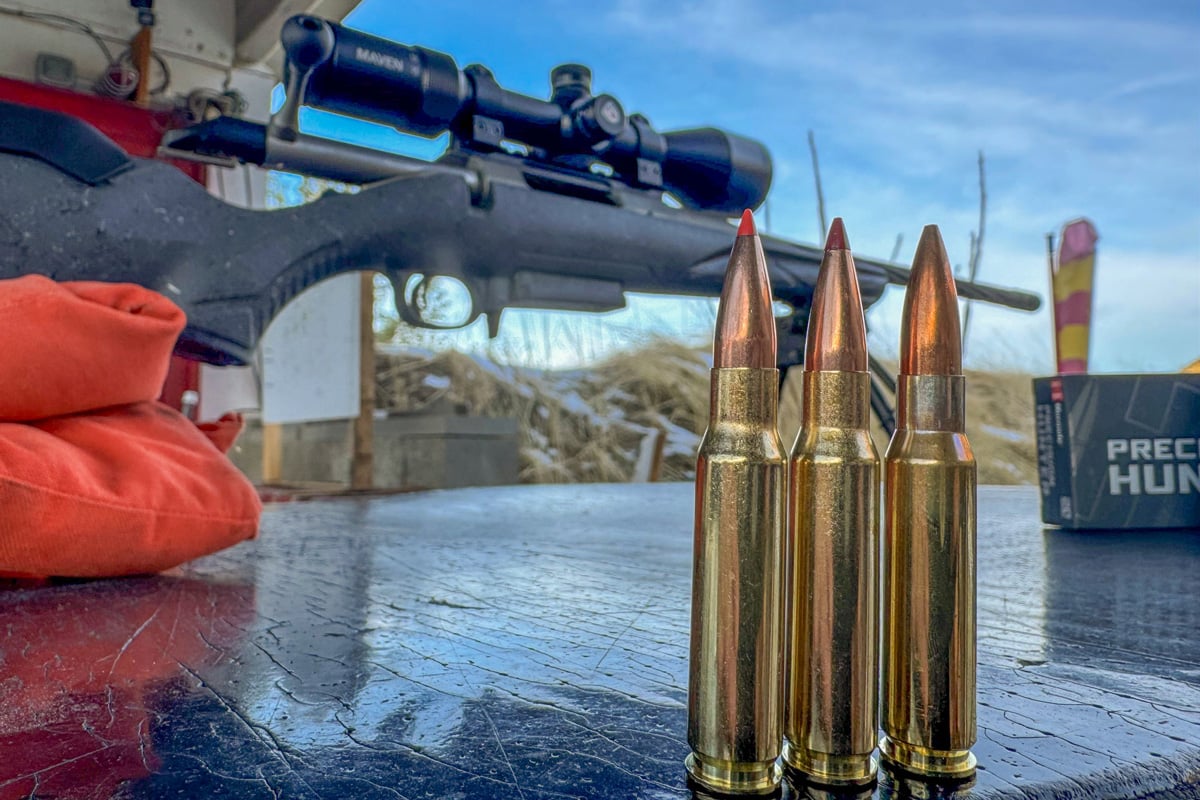
Most 165 to 180-grain bullets on the market today would shoot acceptably from a barrel with a twist between 1:12 and 1:10. But the longer 210-grain bullet I mentioned needs at least a 1:10 twist to stabilize, and might do even better in a 1:9 twist barrel.
So, How do I Pick a Bullet Already?
You may know it already, but if you can figure out the twist of your rifle’s barrel, you can evaluate the bullets that will stabilize best through it. Once you have that figured out, you can decide which bullet might give the best velocity.
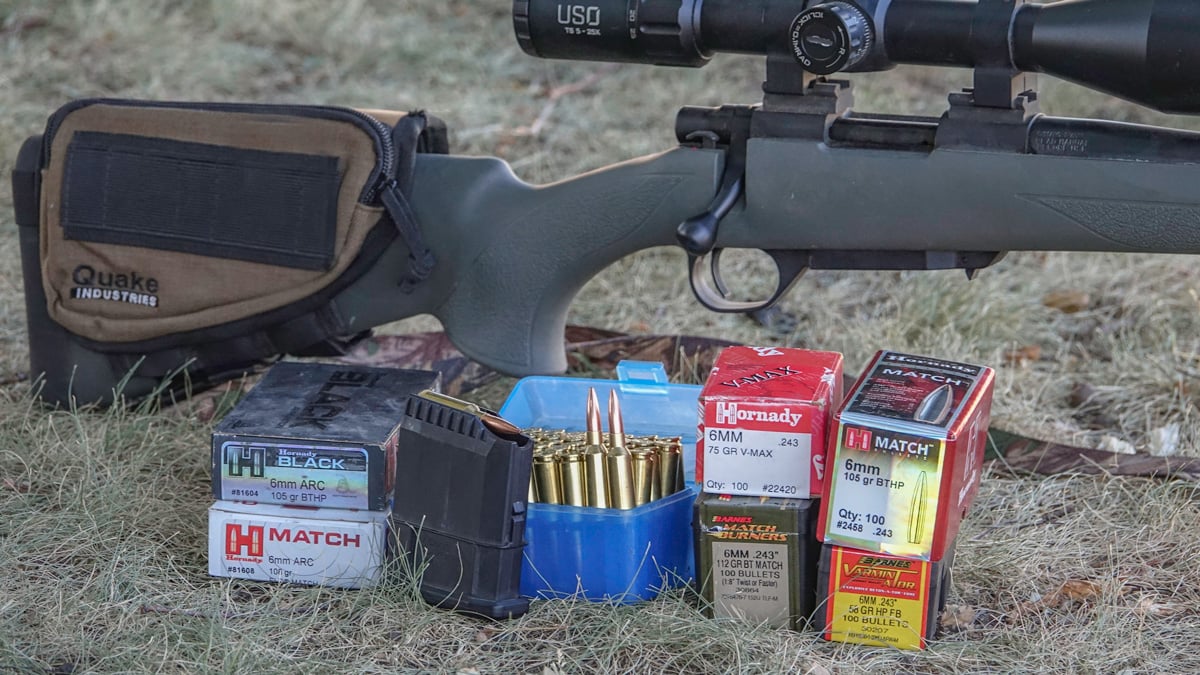
Speed isn’t everything. If you start two bullets at the same speed and measure the speed again 500 yards downrange, the one with the higher BC will be faster. So, the only thing better than a higher BC bullet is a high-BC bullet going even faster.
The secret: picking a bullet that will stabilize in your barrel twist, has the highest BC, and allows you to get the best velocity from your given chambering. If you still aren’t seeing the performance you desire either on paper or on the range, you might need to step up to bigger cartridges or a faster twist for better bullets.
A Walk Through the Process
For an example, let’s look at a real-world scenario. Let’s say you have a bone stock .30-06 that you inherited from Grandpa, something from the ’60s or ’70s maybe. Typical ammunition sold for a rifle like that would have been something like Hornady American Whitetail 150-grain, which uses the Hornady 150-grain Interlock fired at 2,910 fps in the company’s testing.
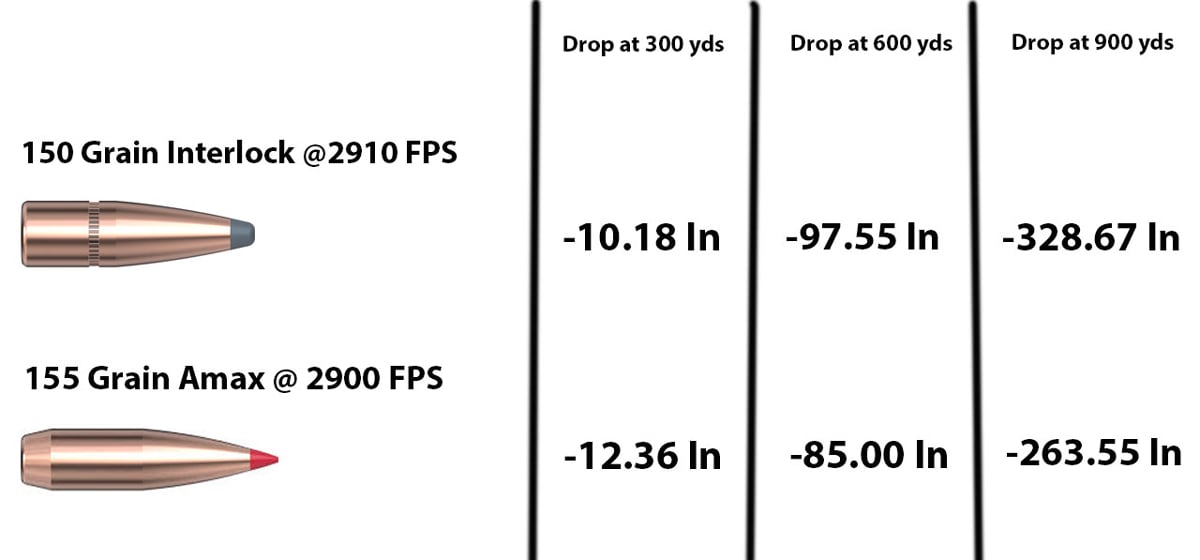
Without much change in bullet weight, you can improve the performance. The 155 Amax bullet has a .435 BC compared to the .338 BC of the 150 Interlock. When both bullets are fired at roughly the same velocity (2,900 fps), there is a minor 2-inch difference at 300 yds.
Farther out at the 600-yard line, the 155 has a full foot less drop. At the 900-yard line, it is over 5 feet of drop difference. This is just a small example, but stepping up higher than the 155 bullet could make the numbers even more impressive.
In the Field
Another example I’ll share involves a 7 PRC we are preparing for elk season. Shooting a 175-grain Interlock from any 7mm seems like good elk medicine, but using the process outlined above showed a better option. I compared the Hornady 162 ELDM to the 175-grain Interlock, both fired from the 7 PRC at 2,900 fps with interesting results.

At 300 yards, the 162 ELDM was 300 fps faster, and 400 foot-pounds more. It continues the farther out you go: at 600 yards, the 162 is 500 fps faster and 800 foot-pounds ahead. All this because it is a more efficient design than the older fashioned Interlock.
Additionally, because of the lighter weight of the 162 ELDM, you could probably shoot it much faster than the 175, making an even more disparate performance between the two.
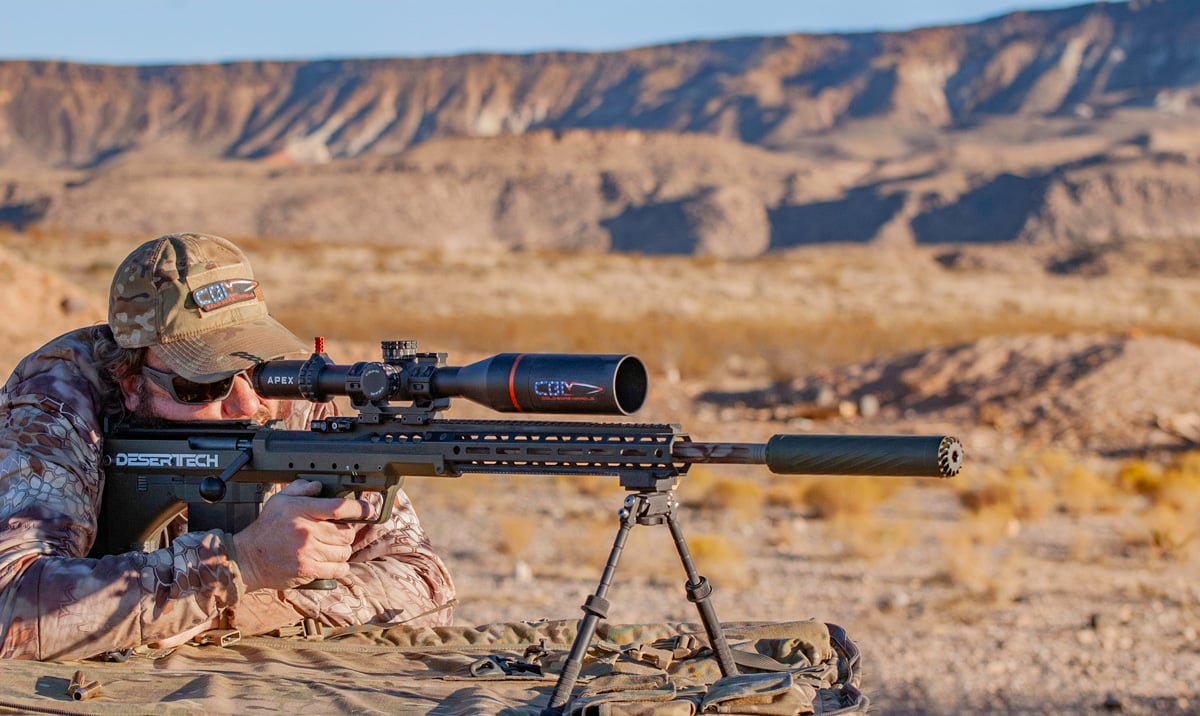
Whether you are shooting long-range targets or hunting, you can see how this could benefit you. More energy on target, less wind deflection – and the faster bullet will get there sooner, giving the wind less time to work against it.
Final Thoughts
Extending your limits doesn’t require a new gun or even a new barrel. With a little research and load development of your own, I expect you can increase your envelope using these ideas. Have a look at your options and see if you might be able to squeeze more out of what you have. (If nothing else, it will give you the justification to propose buying a new gun to your significant other.)