Minutes after the Senate confirmed a firearms industry-endorsed ATF Director, the Justice Department announced a series of almost three dozen largely pro-gun reforms.
On Wednesday, the Senate confirmed Deputy ATF Director Robert Cekada to become the agency's boss in a bipartisan vote of 59-39. Among his supporters were seven senators from the Democratic Caucus.
A career law enforcement officer, Cekada was not with ATF during the 1992 Ruby Ridge standoff or 1993 Branch Davidians siege in Waco, unlike some past nominees, or working in the part of the country where the Project Gunrunner/Fast and Furious "gun walking" scandal occurred. Further, he had been backed in the confirmation process by a host of gun industry groups, including the American Suppressor Association and the National Shooting Sports Foundation.
While he is the ninth confirmed ATF Director in the agency's history, Cekada is the first to be confirmed after being nominated by a Republican president.
Reforms
Just an hour after the confirmation, the Justice Department rolled out 34 regulatory reforms designed to "reduce burdens on law-abiding gun owners and businesses," with Acting U.S. Attorney General Todd Blanche publicly signing the package before a crowd of firearms industry leaders and Second Amendment advocates.
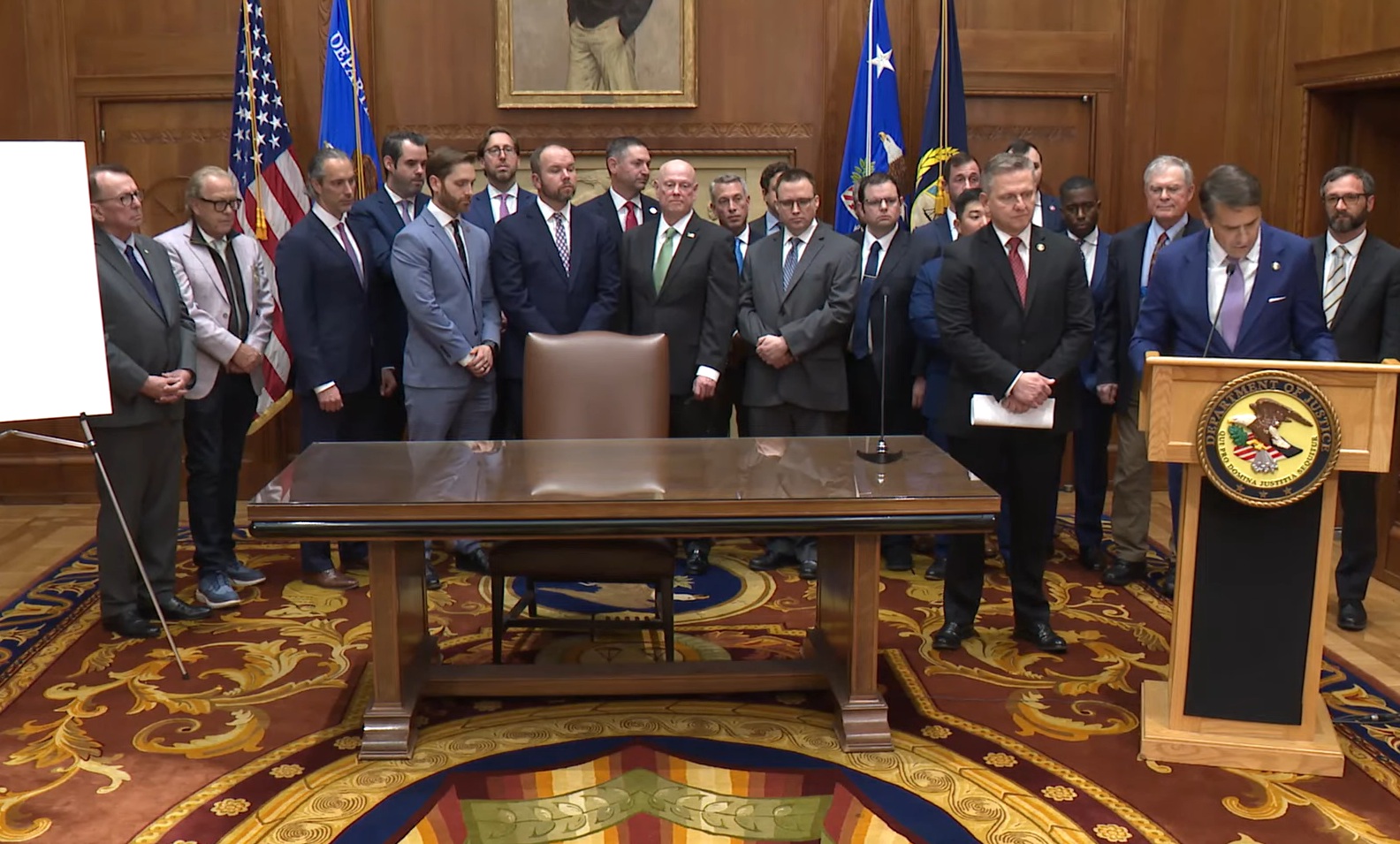
As noted by the DOJ in a release:
The resulting rules are an effort to reduce unnecessary burdens on law-abiding citizens and businesses while modernizing regulatory frameworks that no longer reflect current law, agency practice, or court precedent. The aim is simpler, clearer regulations that do not compromise ATF's ability to perform its critical missions to protect American communities from violent crime.
Blanche said that ATF Assistant Director and Chief Counsel Robert Leider had "poured his heart and soul" into the nearly three dozen reforms. Leider, before coming to ATF last March, has been a noted legal professor and Second Amendment scholar that had written extensively on the subject of Constitutional rights, and, in particular, gun rights.
Among the proposed changes would be a repeal of the Biden pistol brace rule, changing the "engaged in the business" rule, and tweaking the federal definition of "machine guns" by removing bump stock language. Other changes would affect how the ATF looks at straw purchasing and "willful" violations of regulations.
FFLs would see a host of changes, including removing the mandate to post Clinton-era Youth Handgun Safety Act information, increasing the time that NICS checks remain valid, and shifting the forever requirement to retain 4473 gun transfer forms to a more specific 20-30 year period. The 4473 form will also be simplified. FFLs would also be able to move more forms and books into digital formats rather than keeping paper documents.
NFA reforms would include ditching the CLEO notification requirement, allowing those converting existing guns into NFA items, such as short-barreled rifles, to use the item's already engraved serial number rather than engraving a new one, scrubbing the mandatory ATF notification required when briefly transporting NFA items across state lines, and allowing married couples to jointly register NFA items.
Importers stand to gain from allowing the import of "dual-use" frames, receivers, and barrels, which means many more intact parts in more parts kits. Further, the list of embargoed countries from where guns and ammo can be imported would be shortened, with many former Soviet countries removed from the list. The latter could see such now-rare items as surplus 5.45 ammo and warehouses of Cold War combloc small arms return to the market at good prices.
"ATF's mission is to protect public safety and enforce the law – and these reforms reflect our commitment to doing that through regulations that are clear, legally sound, and narrowly tailored to that purpose," said Cekada in a statement, his first as the agency's confirmed Director. "Our enforcement focus from here on out is on willful violators and criminal actors, not inadvertent compliance issues by responsible owners and licensees."
A one-sheeter of the changes:

Industry reaction
The move was welcomed by the firearms industry.
"This is more than turning the page on the weaponization of government against a lawful industry that provides the means for citizens to exercise their Second Amendment rights," said Lawrence G. Keane, NSSF Senior Vice President & General Counsel, who was on hand for Acting AG Blanche’s signing ceremony. "This is the dawning of a new era. NSSF is tremendously grateful to President Trump, Acting Attorney General Blanche, and Director Cekada for their fair application of the law and true respect for Second Amendment rights."
The proposed rule changes will be published in the Federal Register and will generally be open for public comments for 90 days from the date of publication. "The agency is committed to reviewing input in a timely manner and ensuring consideration of significant feedback into the final rules," says ATF.
The DOJ also advised that these 34 regulatory reforms are only the first batch of incoming changes that the administration has planned.


Chris Eger
Chris Eger is an NRA-certified firearms instructor in multiple disciplines with a background in law enforcement and as a security contractor to the federal government. He has been writing badly since 2006 and has a number of poorly-received books in print.
View All Articles by Chris Eger