Federal's new Peak Case technology has caught the Army's eye, and the military has inked an agreement for 40 million cartridge cases as a starter.
Minnesota-based Federal debuted the patent Peak Case tech to the public last January with the new 7mm Backcountry cartridge. The case on that blisteringly fast round is fundamentally different from standard brass casings, instead using a proprietary steel alloy similar to those used in manufacturing nuclear reactors, safes, and in other high-strength applications.
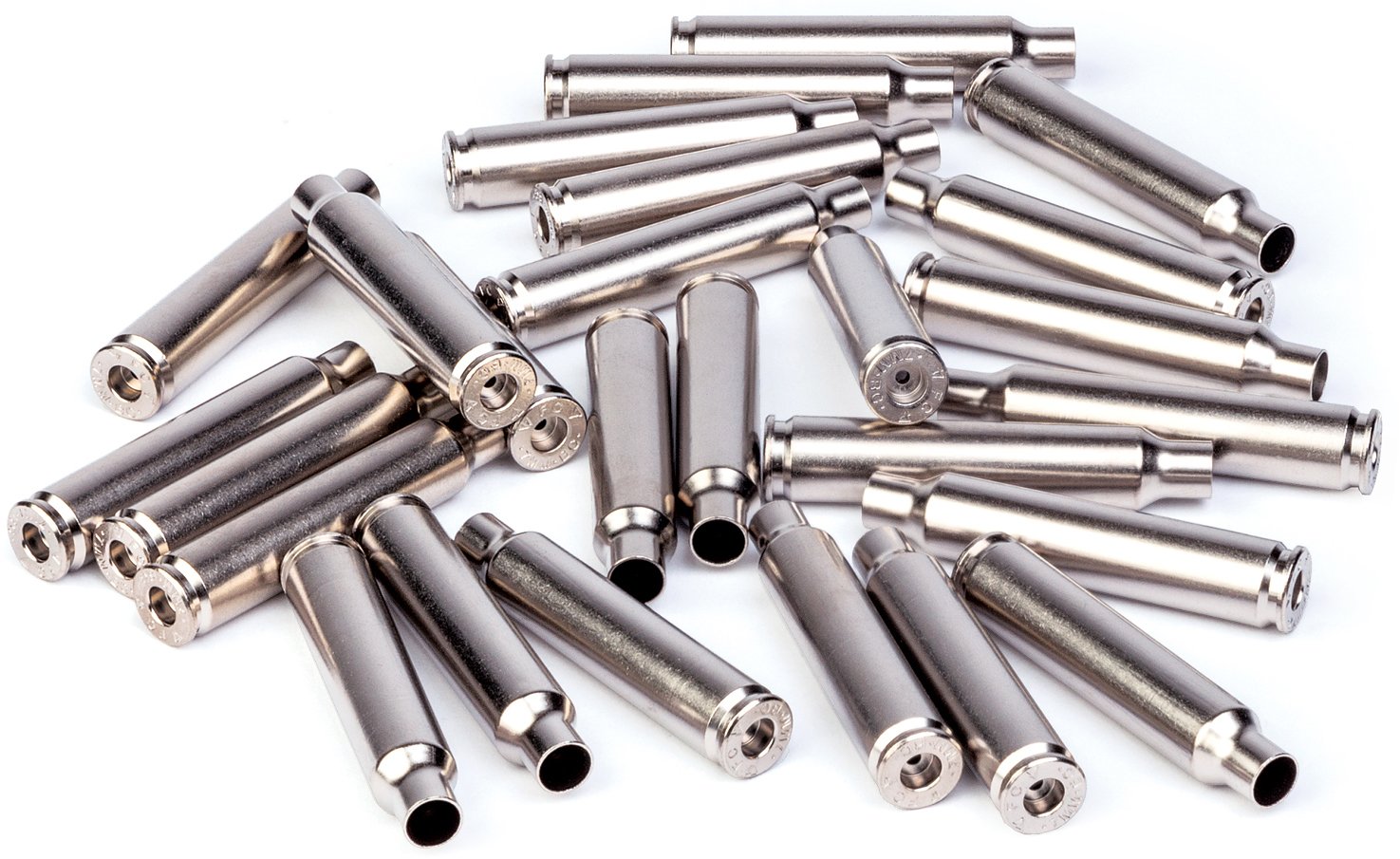
The takeaway is that Peak Case tech allows significantly higher chamber pressure, in excess of 80,000 PSI, which is far and away safer than traditional brass cases. This allows for higher velocities in smaller, lighter, shorter-barreled rifles typically configured for suppressors.
Which is why the Army is cueing in on it.
The new agreement between the Pentagon and Federal allows Government Purpose Rights to use the tech on a variety of small arms ammunition under .50 caliber BMG, and outlines the delivery of 40 million cases featuring technology.
"This is a historic agreement between the United States military and Federal Ammunition," says company Chairman and CEO Jason Vanderbrink. "As a 104-year-old American company, it further demonstrates our unwavering commitment to innovation."
NGSW Connection?
While not directly mentioned by Federal or the Army, the service is currently moving to a new 6.8x51mm Common Cartridge for its Next Generation Squad Weapon platforms. Developed by SIG, the round uses a hybrid bi-metallic steel/brass case to allow the pressure to go from the traditional ~68,000 psi of an all-brass case to the region of 120,000 psi without any failure, while still using conventional primers and powder. This translates to a 350-feet-per-second boost in velocity. Alternatively, this also allows for 16-inch-barrel-level velocities from an 8-inch barrel or a 24-inch-barrel-level velocity from a 14-inch barrel.
The Army is building a new 450,000-square-foot facility on the campus of the Lake City Army Ammunition Plant in Missouri, to make the new 6.8 in-house.
Banner image: Kristin Alberts/Guns.com


Chris Eger
Chris Eger is an NRA-certified firearms instructor in multiple disciplines with a background in law enforcement and as a security contractor to the federal government. He has been writing badly since 2006 and has a number of poorly-received books in print.
View All Articles by Chris Eger