PURPOSE
First and foremost, you need to establish what purpose the rifle will serve. The AR platform is one of, if not the most, versatile platforms available today.

Are you going to use it for hunting? Home protection? Simply as a range companion? If you answered yes to any of those questions, or even have a different intended use for an AR-15, you’re in luck. There are enough calibers, barrel lengths, and accessories to make a dedicated rifle for any of them.
It's up to you. Figure out the purpose, then figure out the amount of money you’re comfortable or able to spend.
Related: How the AR-15 Became America’s Rifle
PRICE
BARREL LENGTH AND TYPE
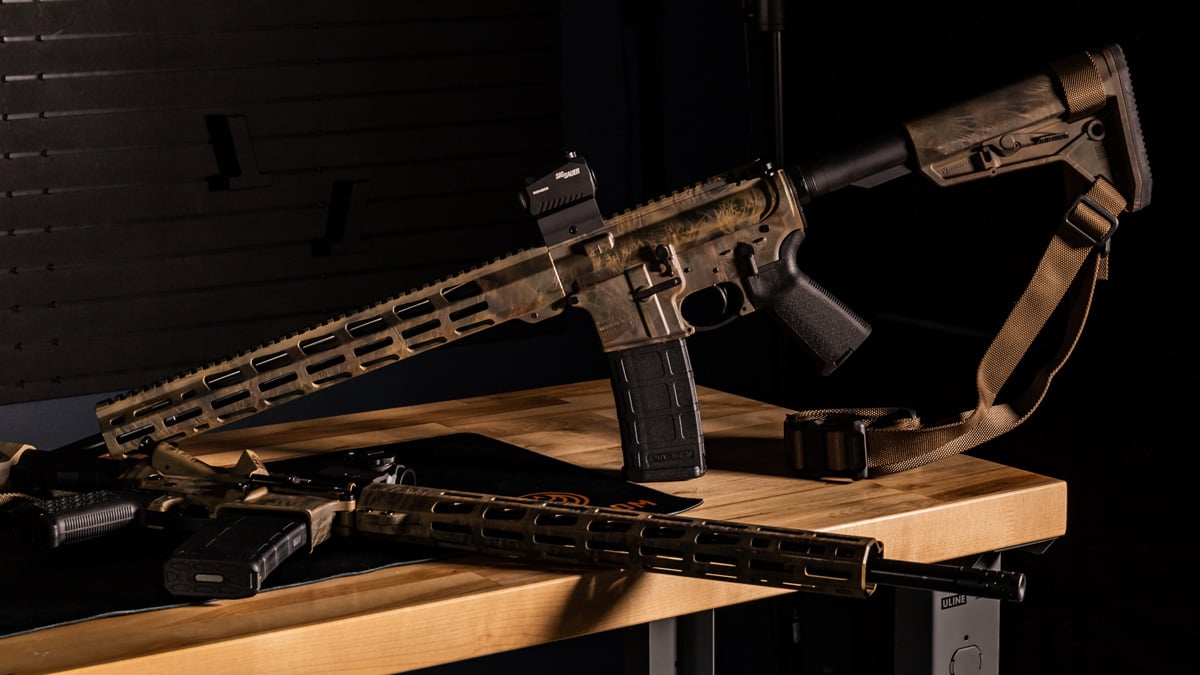
With your rifle’s intended purpose in mind, the first component you’ll want to think about is barrel length. As a general rule, the longer the barrel, the better performance you can expect at longer distances.

If long-range is your game, consider a barrel length in the 20-inch range, or if close-quarters is more your style, a 14.5-inch barrel may be the route for you. For a general-purpose rifle that can do it all, a 16-to-18-inch barrel will handle almost any scenario well enough.
In addition to the length of the barrel, the type of barrel can play a part in performance. Pencil barrels can shave ounces off of your close-quarters setup, while heavier barrels can aid in long-distance accuracy.


Many of the standard ARs at reasonable price points offer a barrel made out of 4140 chrome-moly steel, which is perfectly fine. An average shooter probably wouldn’t notice a difference and won’t ever put enough rounds through it to have it be an issue. Look for one that is chrome-lined or nitride, though, as it will hold up a bit longer. Once you head into premium rifle territory, you may see higher-end steels such as 4150 or 410 stainless.
You probably thought we were done with the barrel talk, but there is one more thing I’d like to mention.
TWIST RATE?
The twist rate is often overlooked, as it’s frequently misunderstood. It’s the measurement of the spin of the bullet as it passes through the barrel. For example, a 1:8 twist rate would mean the bullet completes a complete revolution every 8 inches. You’ll more often see twist rates between 1:7 and 1:9.
Typically, a heavier bullet will perform better through a barrel with a tighter twist rate, and the opposite is true for a lighter bullet. So, consider your rifle’s purpose and the type of ammo you plan to shoot on average, and then go with a twist rate that makes the most sense.
LOWER AND UPPER CONSTRUCTION
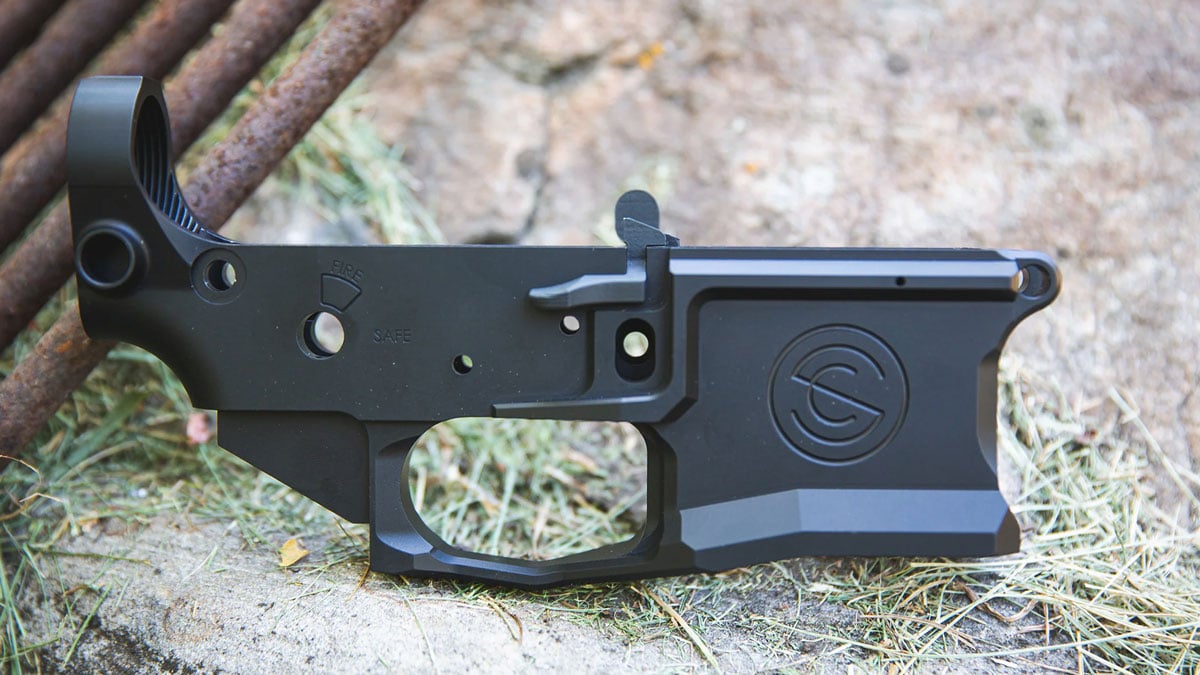
Without an upper and lower receiver to contain all of your rifle components, there would be no rifle. Typically, you want to look for a receiver made of forged (heated and shaped) or billet (single piece of CNC-milled) aluminum. They are often made from 6061 aluminum or 7075 aluminum, if you’re spending a bit more money. There are polymer receivers out there, but if you want to rest easy before and after putting your rifle through some hard use, I’d stick with aluminum.

Luckily, if you are the type of person to change your mind often, mixing and matching uppers and lowers is common and easy. Only the lower receiver is serialized, meaning you can buy various upper receivers without the hassle of going through an FFL. If you upgraded your trigger and controls just how you like them but want to go with a longer barrel setup, you can simply swap the upper receivers and hit the range.
Related: How to Build an AR-15 – 10 Easy Steps
Bolt Carrier Group
Then there are the nuts and bolts – bolt carrier group (BCG), that is! Think of the BCG as the heart of the gun, the thing that makes it tick. They come in a vast range of materials from 8620 steel, to Carpenter 158 steel, up to grade 5 titanium.

In my opinion, it’s more important to focus on the quality of the manufacturing and testing of the BCG than the actual steel used. BCGs are extremely easy to swap out and replace, so unless you’re planning on the zombie apocalypse happening and keeping you from ordering another BCG, I wouldn’t spend half of your budget on a titanium one!

Instead, make sure that it is high-pressure tested (HPT), magnetic particle inspected (MPI), and that it is properly shot peened and staked. An average Carpenter 158 BCG should do the trick if all those boxes are checked.
RAIL SYSTEMS

Handguards have come a long way from the A2-style plastic handguards of the past. Those still make for a cool retro build but aren’t nearly as functional as some of the new options on the market.

The rail system you choose can make a HUGE difference in your final build. Quad-rail handguards, M-LOK handguards, and KeyMod handguards all come in varying lengths. Typically, they are free-floating with a Picatinny top rail. The end result is the option to mount as few or as many accessories as you’d like, from optics to lights to foregrips.

I’ve found myself preferring M-LOK handguards most recently due to weight and comfort, but there are pros and cons to each style.
TRIGGERS

Last but certainly not least, pay attention to the trigger. On most entry to mid-level ARs, you’ll find a mil-spec trigger or a slightly upgraded and lighter pull-weight flat trigger. With training, you can be very accurate and successful with a basic mil-spec trigger.

I would not suggest making the trigger a make-or-break feature when looking for your next AR, as it’s another easy replacement. There are plenty of trigger manufacturers to help you get your trigger to exactly what you want. Take a look at some of the offerings from Geissele, CMC, or HiperFire for some ideas.
COMPLIANCE
It pains me to have to include this section, but it’s the world we live in currently. Depending on where you reside, you may find it extremely difficult to build or buy the exact AR-15 that you want. To add to the frustration, the rules and regulations are always changing, so by the time this article is published, many of them may change again.
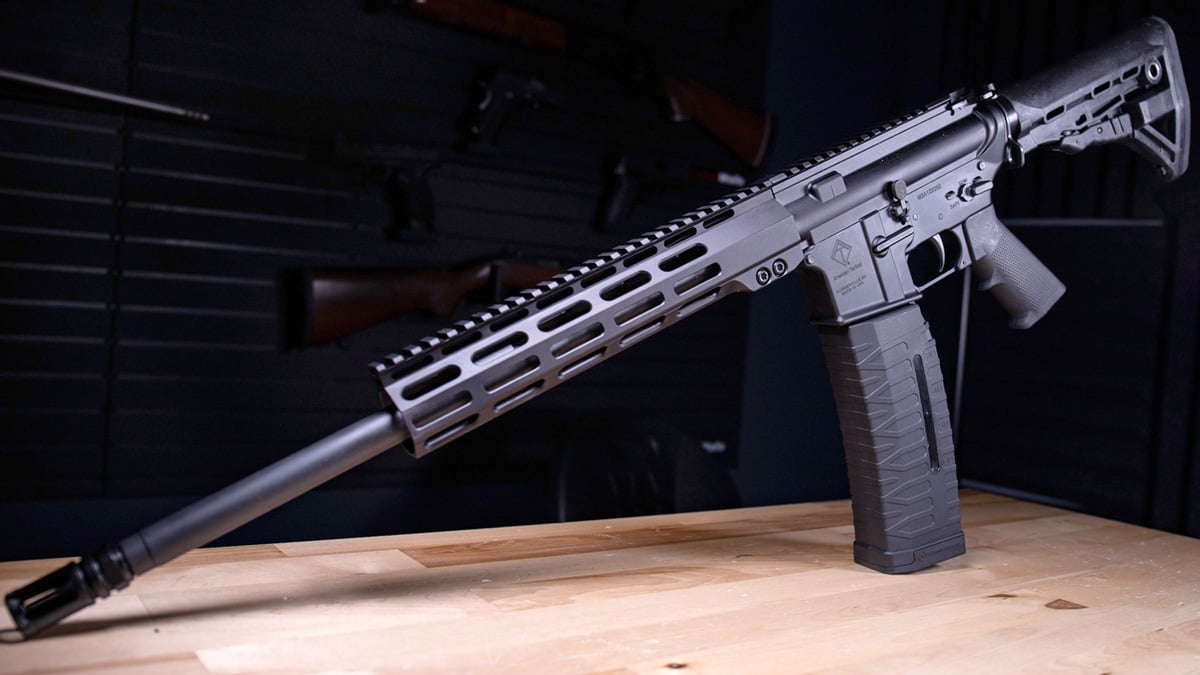
Make sure to research your local jurisdiction's rules and regulations regarding everything from barrel lengths to buttstocks, and everything in between. Also, pay attention to magazine capacities and the types of grips allowed, to name a few others.
Long story short: if you’re unsure, just double-check.
IN CLOSING
There you have it. A high-level guide to help you start the process of selecting your first or next AR-15. To recap: define your rifle's purpose, set a budget, and start comparing features. Oh yeah, and make sure it’s “compliant.”
There are a ton of great articles out there diving into the details of all the above-mentioned parts to take you as granular as you want to go. Regardless which AR-15 you pick, get to know it like the back of your hand and take care of it. You never know when you’ll need those skills and rifles!
As always, stay safe, train hard, and have fun.