Accuracy Test Video
Testing Outline
We set up our test for two shooters to ensure that our results were not simply the product of one shooter’s skills with a specific rifle. We then pulled a top-shelf TTI x V Seven Harbinger AR-10 and an everyman’s Great Lakes AR-10 from the Guns.com Certified Used Vault for our test.
I broke out the important details for both guns in the sections below.

For the test itself, we placed two targets at 100 yards from our shooting bench. Both shooters used the same ammo, optics, and gear. Just as importantly, neither shooter was a precision expert, so the test could better reflect what a standard shooter would experience.
Here’s a list of what we had on hand for our test.
- Vortex Strike Eagle 3-18x44 scope (zeroed and mounted on both guns)
- Garmin Zero C1 Pro Chronograph
- 175-grain Federal Gold Medal match ammo
-
Vortex Crossfire HD 20-60x80 spotting scope
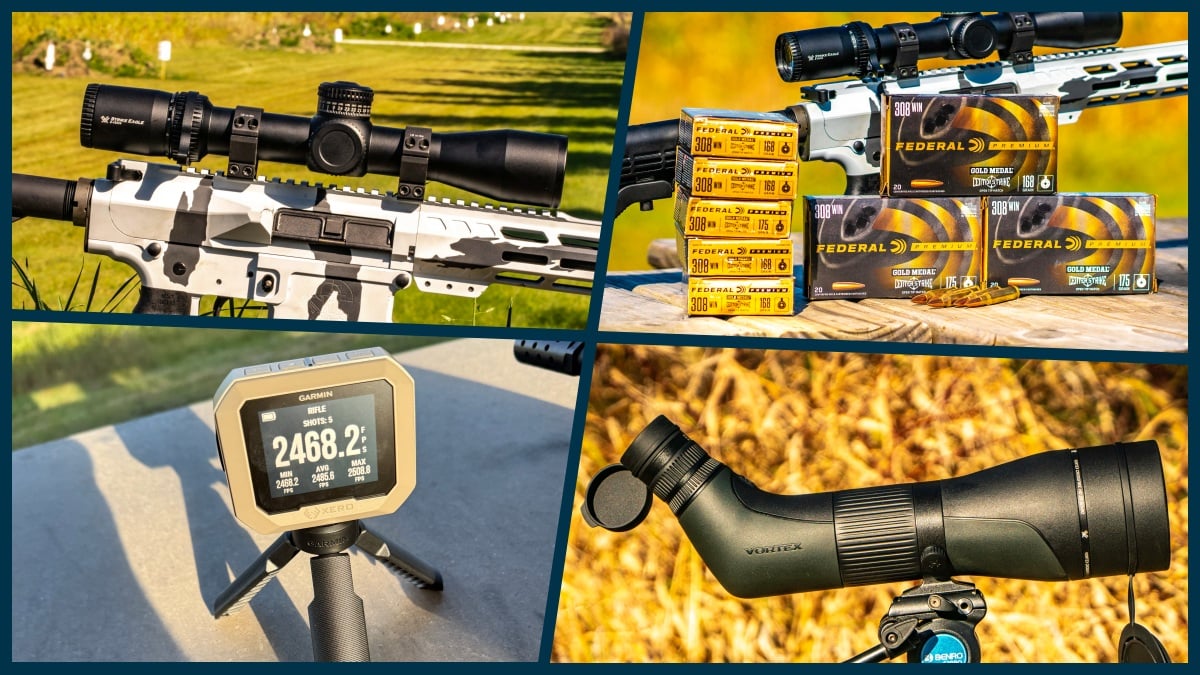
We broke our test into two sections.
First, each shooter fired a three-shot group with each rifle using the same box of 175-grain Federal Gold Medal match ammo. We mounted and zeroed our Vortex Strike Eagle 3-18x44 scopes on both guns just before running our 100-yard accuracy test.
Second, each shooter used whatever platform they performed best with to see just how far out they could hit steel targets on our 1,000-yard range. We used our Garmin Zero C1 Pro Chronograph to get the ballistic data for each gun with our Federal ammo.
We plugged this into GeoBallistics to get our proper adjustments. Shooters took turns manning the spotting scope to assist with adjustments. Three misses in a row marked the end of their long-range performance portion of the test.
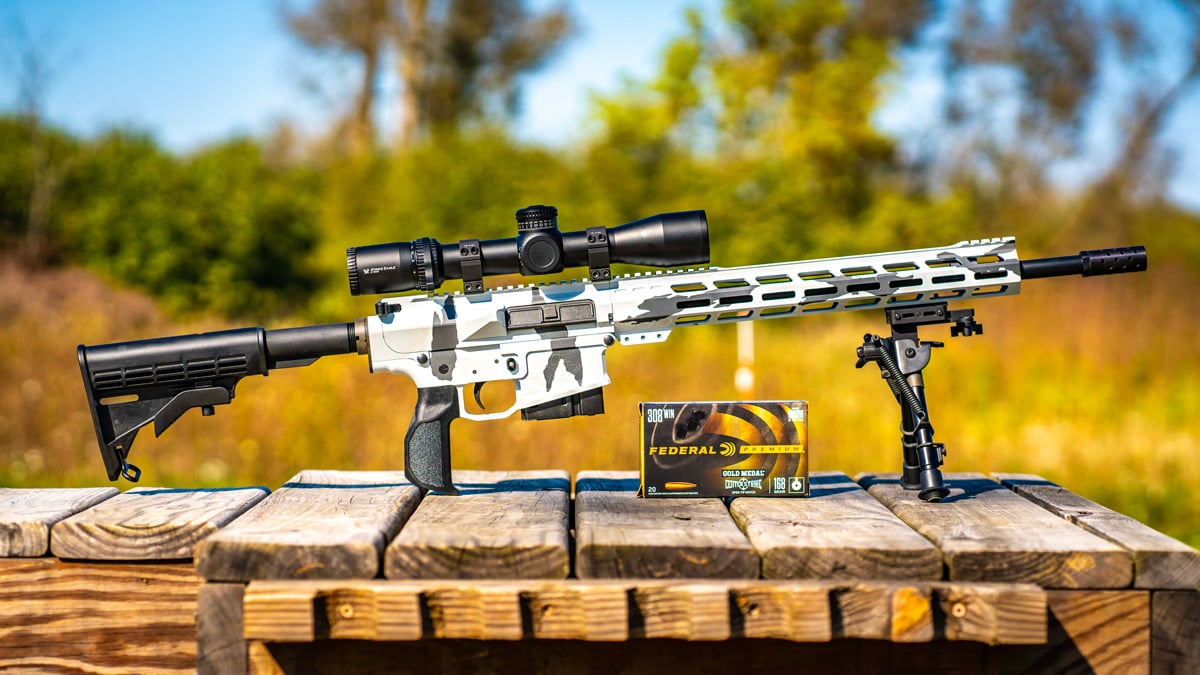
Budget Gun: Great Lakes AR-10
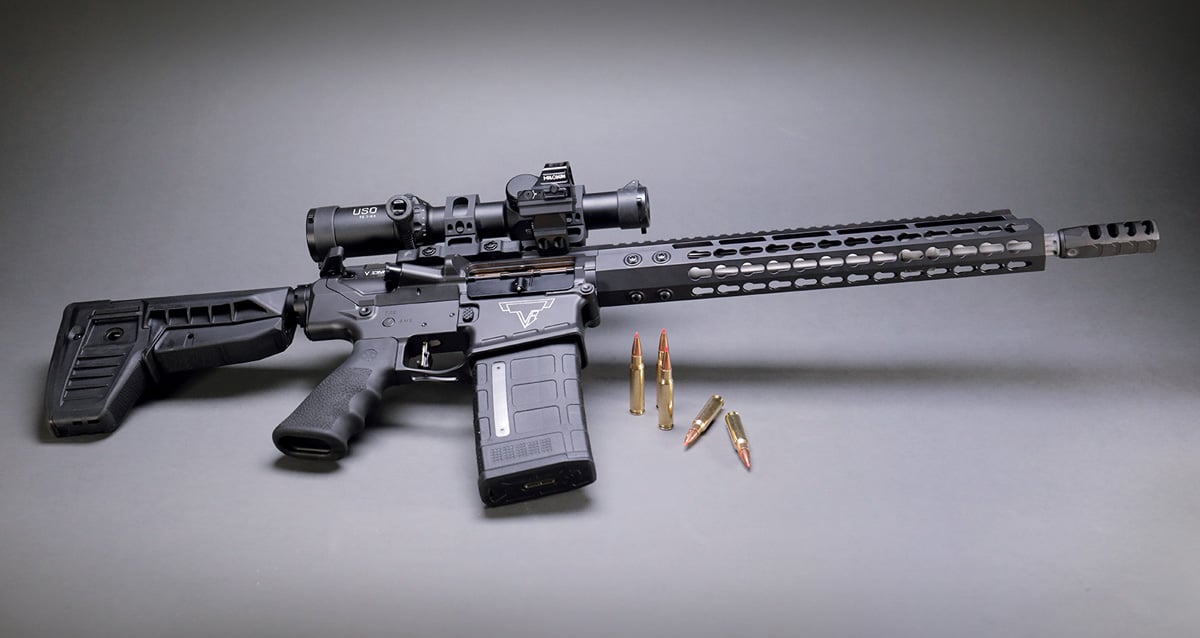
Our high-end gun was the product of a collaboration between Taran Tactical Innovations and V Seven Weapon Systems. That puts it in a totally different category from our budget rifle, with these guns costing anywhere from around $4,000 used to a listed new MSRP of $6,999.99.
You get a lot of upgrades for that money, including a refined Hiperfire Hipertouch Eclipse trigger, Hogue grips, TTI x KynShot T1000 buffer, ultra-light 2099 lithium-aluminum M-LOK handguard, low-mass steel BCG in bronze, and a 14.5-inch stainless, fluted match barrel.
The barrel wears a TTI AR10 Interceptor compensator, which is pinned and welded to give the gun a total barrel length of 16 inches.
Perhaps most notably, the Hipertouch trigger offers a crisp 2.5-pound pull that is miles ahead of the mil-spec Great Lakes trigger. On top of that, the fancy build materials and barrel fluting cut the total weight to under 7 pounds.
Results
In a surprise split for the first half of our test, we found that each shooter performed differently with both guns. Our first shooter, Seth Rodgers, did better with the V Seven AR-10. His 100-yard groups are below.
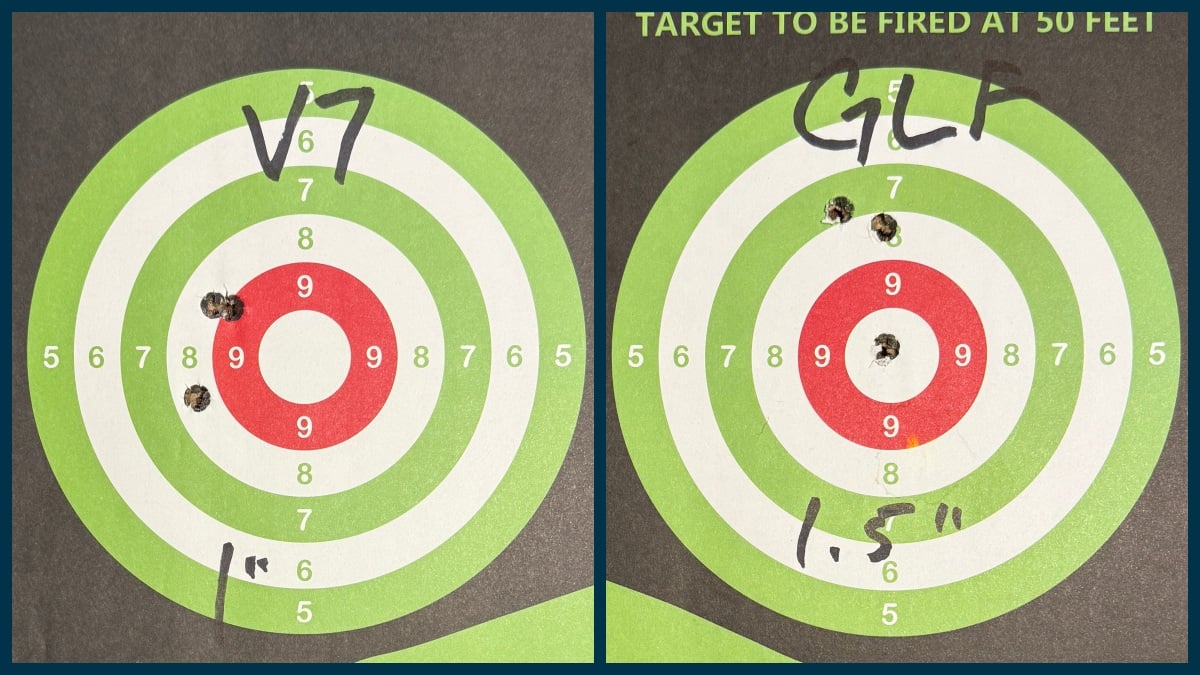
Meanwhile, my performance was the opposite. Here are the targets from my 100-yard testing.
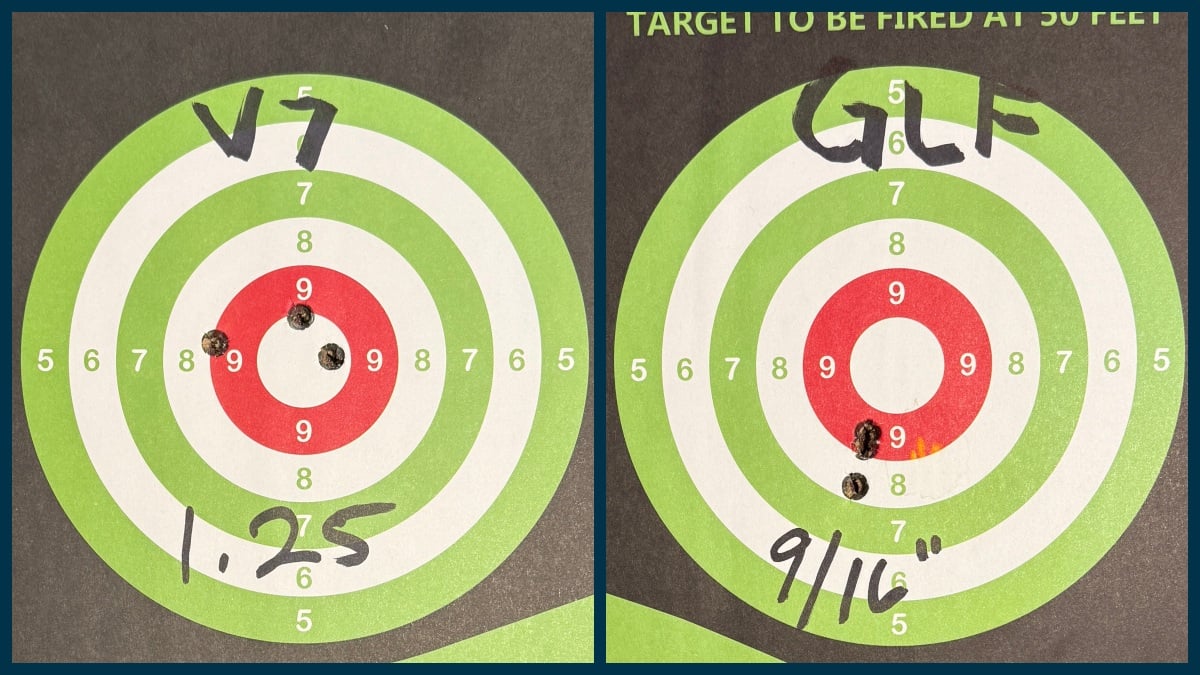
Digging a bit deeper into these results, there is a noticeable shooter preference that played out on the range. Rodgers tends to lean toward higher-end guns with refined triggers. I lean toward budget guns, and I have far more experience with mil-spec triggers than lightweight competition triggers.
That showed in the end targets.
When we went to reach for truly long-distance shots, Rodgers was able to stay on steel out to 600 yards with the high-end V Seven. I reached out to 700 yards with the Great Lakes AR-10 before dropping three shots and ending the long-range challenge.
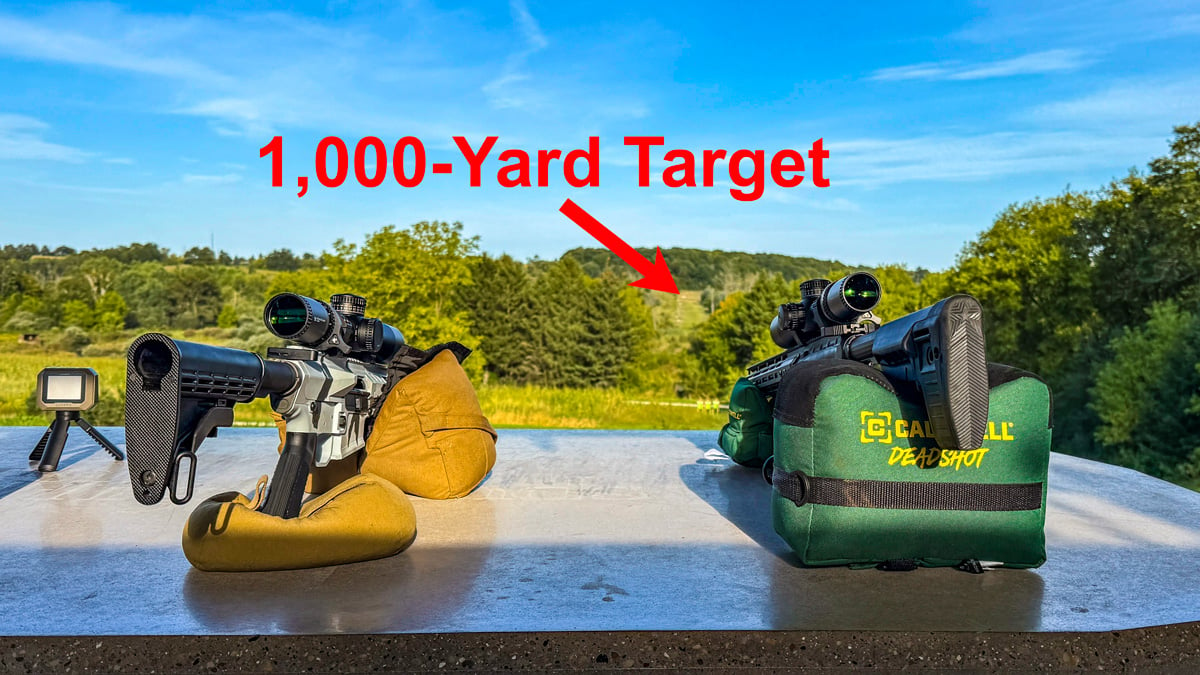
We dialed our optics for 1,000 yards – just for fun – and only the Great Lakes AR-10 managed to clap the 1,000-yard gong in three shots. Some of this may come down to the difference in barrel lengths or each gun’s preferred ammo.
I don’t doubt we could have gotten the V Seven on target at 1,000 yards, too. However, with daylight running out and three misses, we called it just before final shooting light. This is another one of the challenges when you jump into a high-end gun. There’s often a learning curve to adapt from what you are already used to.
Yet, the clear takeaway for me is that expensive doesn’t guarantee a gun is more accurate for an individual shooter. That’s especially true for shooters who are not necessarily at a skill level to take full advantage of expensive upgrades.
Final Thoughts
In the end, there was certainly an element of personal preference that played into each gun. However, there is no denying that you do not necessarily have to pay more to get sub-MOA performance out of a quality, affordable AR-10.
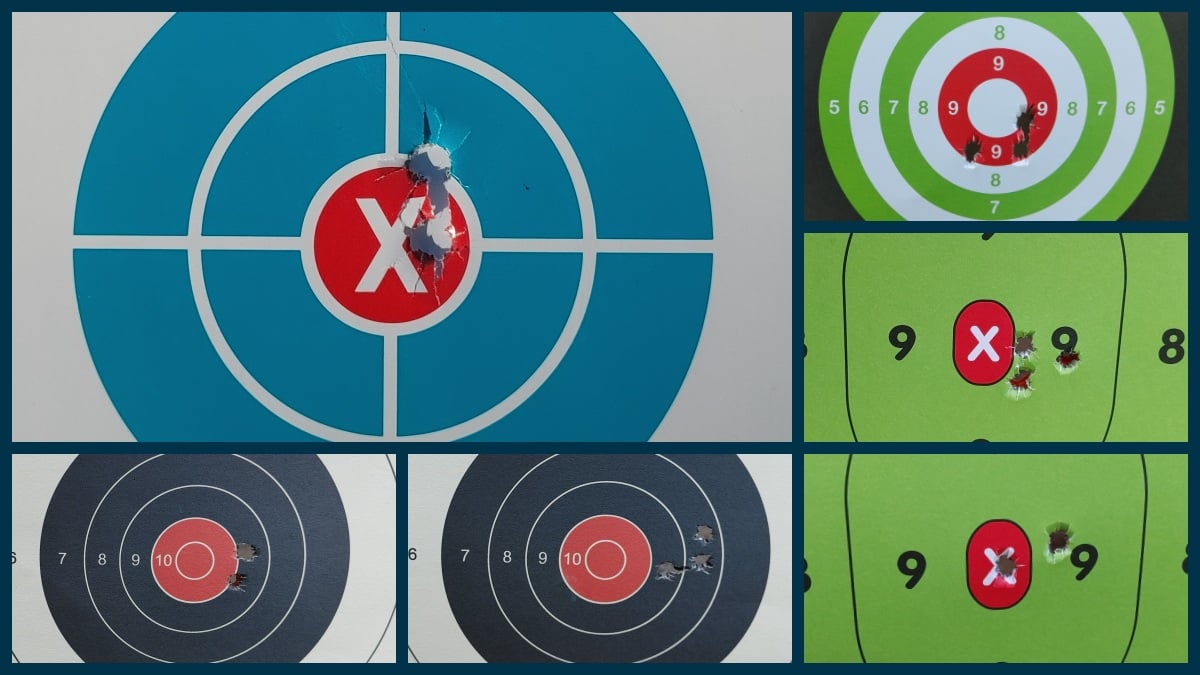
In further testing, I also found that the Great Lakes AR-10 was very predictable for me. Here are several follow-up targets I shot at 100 yards.
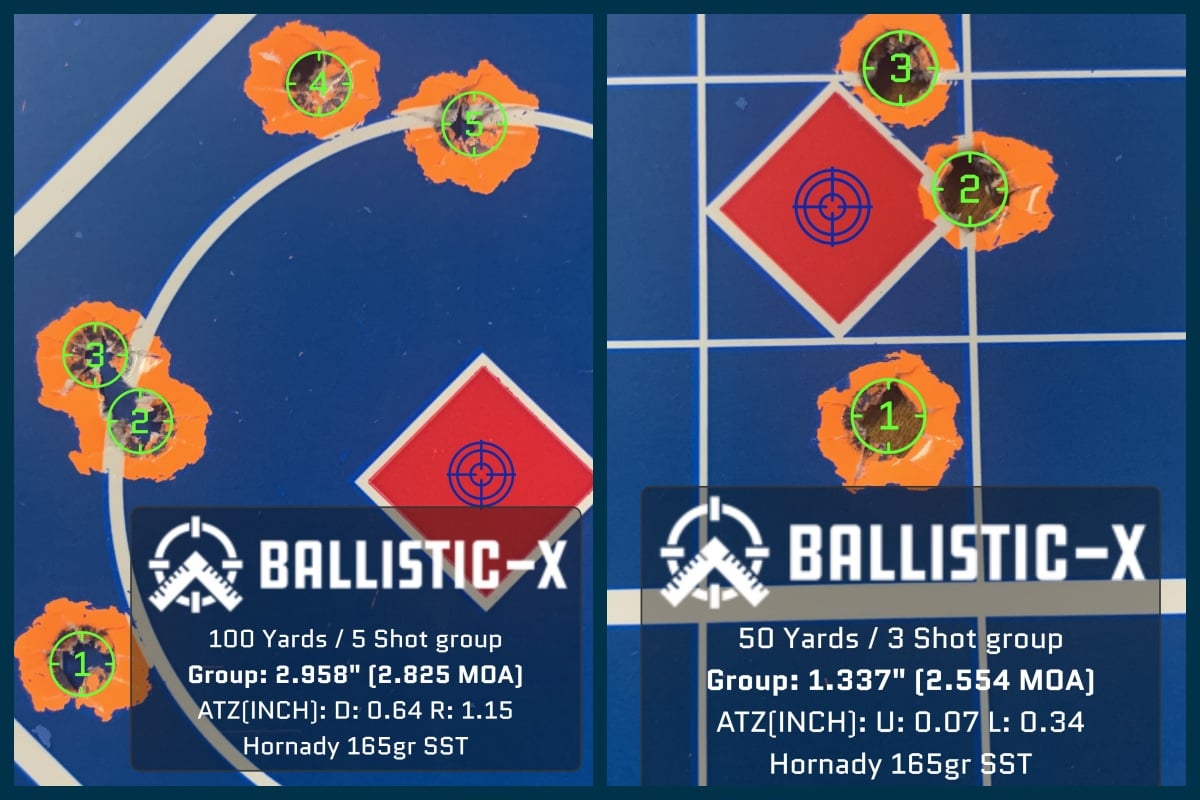
The V Seven also had some additional performance metrics. Here is what another reviewer, Dave Luu, got when he took the V Seven out to 100 yards.
While I shot the Great Lakes AR-10 better than the lightweight V Seven, I would also point out that I would not want to carry the heavier Great Lakes rifle very far. It is chunky and somewhat hard to maneuver in tight spaces or rough terrain. The V Seven, on the other hand, is great for that type of use.
The V Seven is also an investment platform. I would take the Great Lakes if all I wanted to do was shoot well from a bench. The V Seven would be an investment path, whereby I would need to train more over time to take advantage of the upgrades.