What’s in a Name?
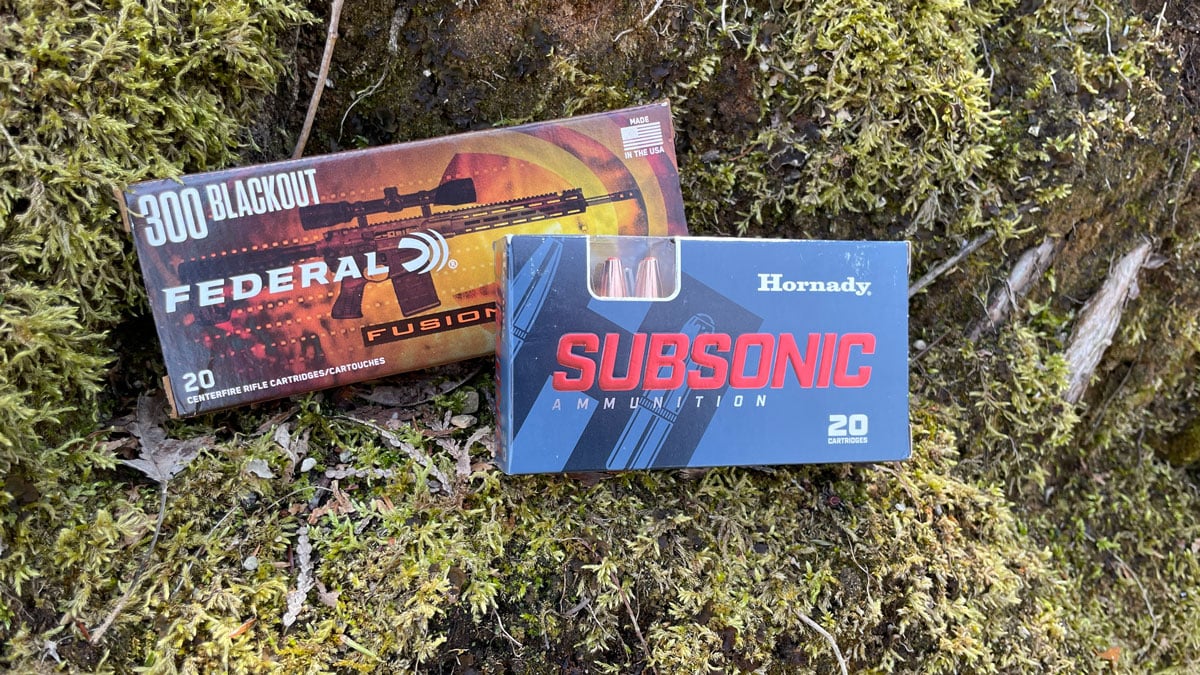
You’ve heard it called by many names: .300 Blackout, .300 Advanced Armament Cartridge, .300 AAC – even 7.62x35mm. The technical moniker for what we’ve come to know as .300 Blackout is actually .300 AAC Blackout, indicating ties to the Advanced Armament designer of the round. The approved abbreviation of the cartridge is .300 BLK. No matter the name, the compact little .30-cal offers more than meets the eye.

The .300 Blackout spins off from another aptly named suppressor-friendly round: the .300 Whisper. Like the Whisper, itself a trademarked name, the Blackout was intended to perform from shorter barrels with heavier projectiles. Stepping back even further, the .300 Blackout (and the .300 Whisper) drew heavily from the earlier .300 Fireball (.300/.221 Fireball), which spun off Remington’s classic .221 Fireball.
Related Review: All About That Brass – The 8.6 Blackout Is Built for Stealth
Bullet Weights
This is an area where the .300 AAC Blackout excels. Its short, bulky casing packed with faster-burning powders is receptive to a wide range of projectile weights and types, especially given its .30-caliber metrics. You’ll find everything from 110 to over 230-grainers, with the former supersonic and the latter heavier thumpers keeping the round subsonic.

Therein lies perhaps the greatest allure of the .300 Blackout. The AR-15 friendly .30-caliber bridged the divide between lightweight supersonic loads and heavy-bullet subsonic, suppressor-ready options. On the range, we’ve long found the .300 Blackout a pleasure to fire from a modern sporting rifle. A suppressed Henry LASR further solidified the round’s reputation for low recoil and incredibly minimal report.
AR Ties
There’s no doubt the 300 Blackout was built specifically for use in modern sporting rifles. Its barrel, or upper, fits perfectly onto a standard AR-15 lower chambered for .223 Rem/5.56 NATO.
In fact, the round has been holding second place in popularity to the .223/5.56 for years now. What’s more, the round allows full capacity use of a standard AR-style 30-round magazine. The bolt face and magazine interchanges with standard 5.56 NATO platforms, making it a simple swap for owners of ARs.
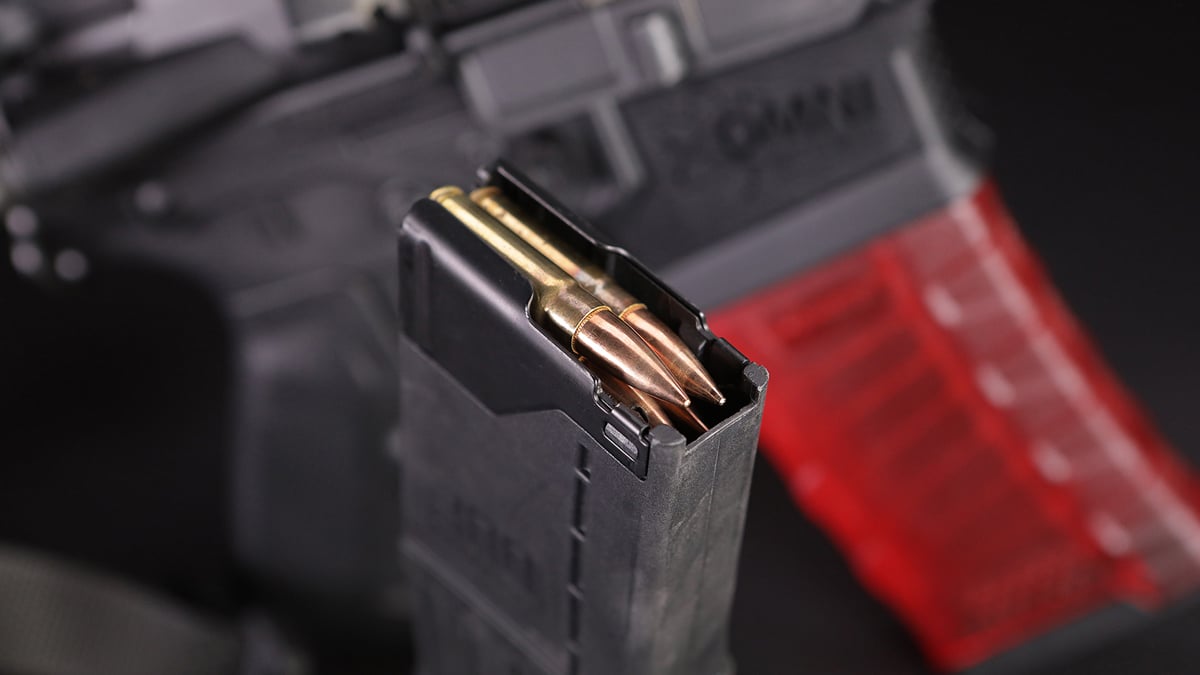
With its penchant for AR-platform rifles, the .300 Blackout naturally excels in the defense and CQB markets for which it was built. The round is somewhat limited due to an effective range inside 300 yards – and often less given barrel length and ammunition selection – but certainly practical for plenty of purposes. With .300 BLK now finding its way onto different firearm action types, more hunters, beginning shooters, and plinkers are taking interest.
Firearm Choices
Short, lightweight firearms pair well with the .300 Blackout, making it handy for a wider variety of pursuits than first meets the eye. For AR owners, buying or building an upper is often the most inexpensive way into the chambering, but standalone firearms are plentiful and relatively easy to find at a variety of price points.

Whether seeking a standard sporting rifle, short-barreled rifle, AR-style pistol, break-action single-shot rifle, lever action, or bolt action, the .300 Blackout is well represented. The round has expanded its home range to firearms like Henry’s Lever Action Supreme, Rossi’s single-shot Brawler handgun, and the hottest bolt guns from the likes of Bergara, Christensen Arms, Mossberg, Ruger, and Savage, to name a few.
Subsonic Sweetheart
The availability of relatively affordable full metal jacket rounds has helped secure lasting success for the .300 Blackout, but what really drives the round’s appeal is more premium ammo offerings. Paired with a proper suppressor and subsonic ammunition, the .300 Blackout becomes immediately more interesting to a wider market than just AR shooters or practical defense.
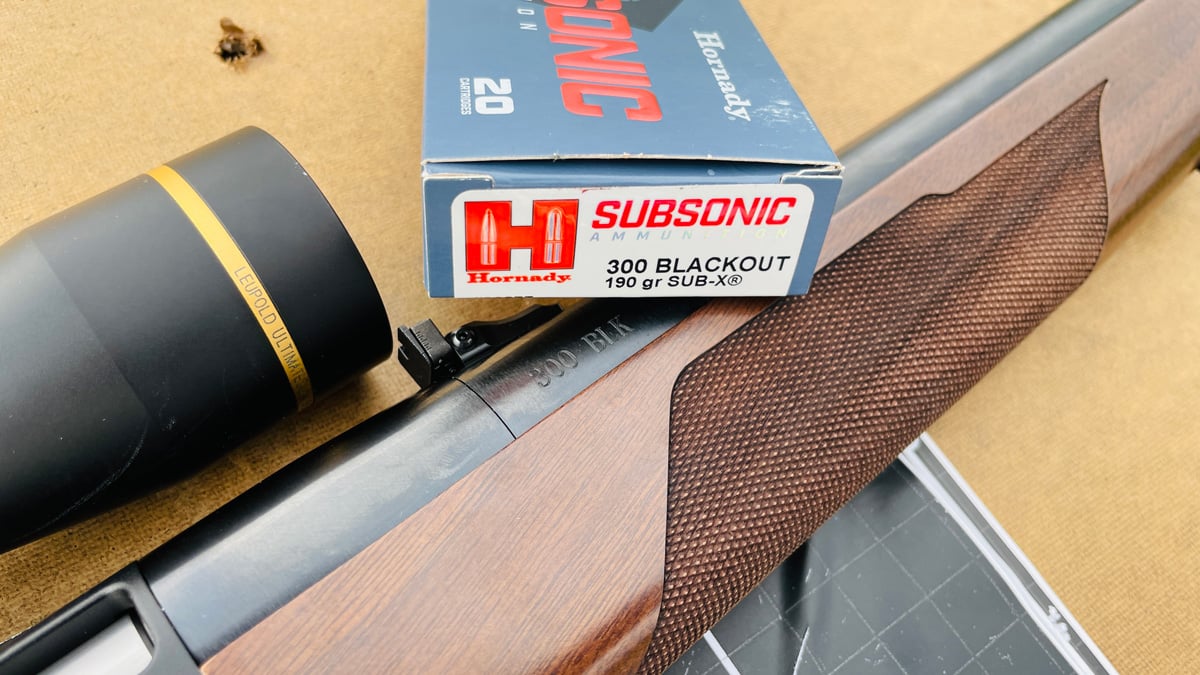
For our more hunting-oriented purposes, subsonic rounds make the most sense for the .300 Blackout. A few good options are Hornady Subsonic 190-grain FTX, Winchester Super Suppressed 200-grain, Nosler Match Grade 220-grain HPBT, and Remington UMC 220-grain JHP. That said, several companies offer quality hunting rounds. Look to options like Federal Power Shok 150-grain JSP, Barnes Vor-Tx 120-grain Tipped, Remington Core Lokt Copper 120-grain SHP, or Hornady Custom 135-grain FTX.
Lastly, let’s not forget the affordable spectrum of .300 Blackout rounds. While it will never overtake the cost savings, popularity, and availability of 5.56 NATO, owners of .300 Blackout firearms can feed those guns with relative savings using full metal jackets the likes of Hornady Frontier 125-grain FMJ, and Federal American Eagle 150-grain FMJ.

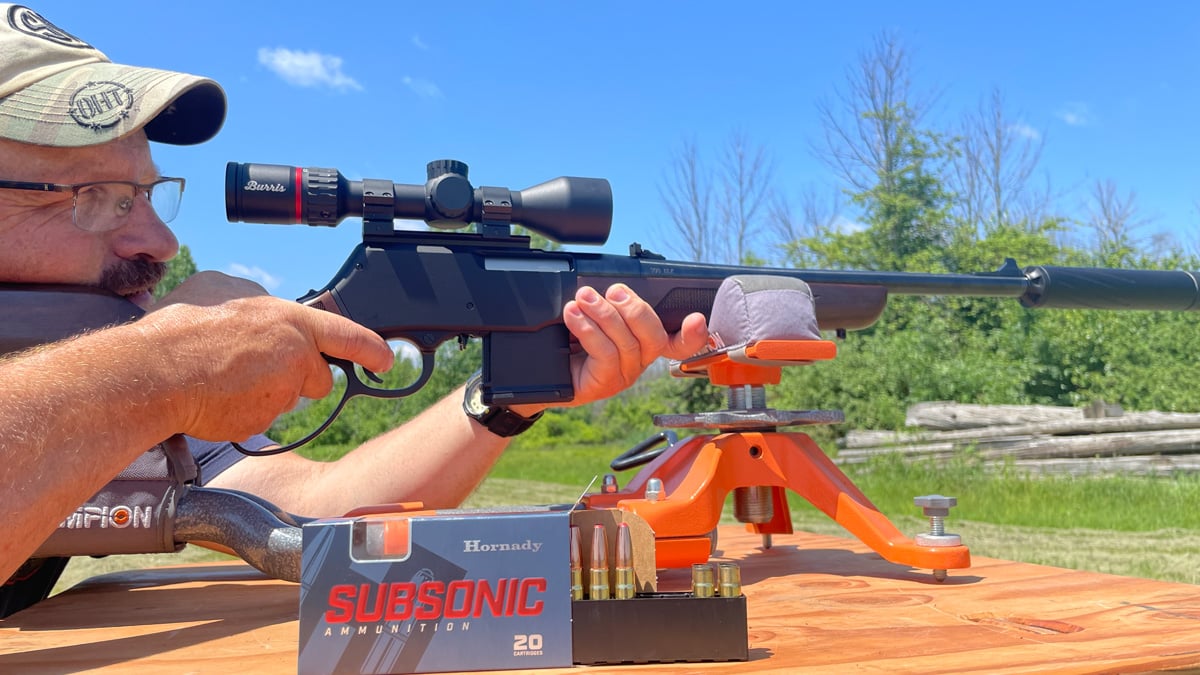
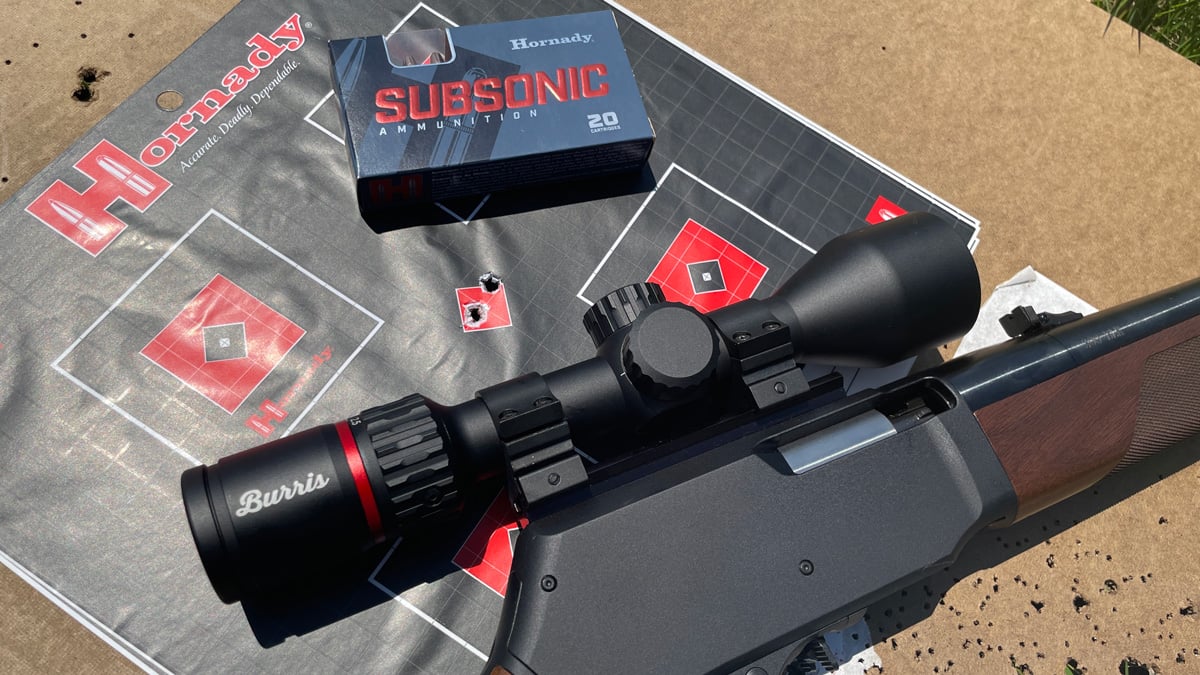
We paired our rifles with a direct-thread Banish 30 suppressor and Hornady Subsonic ammunition. In addition to impressive accuracy, the more stunning result was near whisper-quiet shots against minimal recoil.
To Hunt or Not?
At its heart, the .300 AAC Blackout hits the spot as a serious upgrade to AR-15/M4 platforms, offering a reliable .30-caliber option for modern sporting rifles. Whether seeking the quick swap of a barrel, upper, or a specialized semi-automatic carbine or AR pistol, the .300 BLK is tailor-made for AR-style firearms. That’s far from the only use for the round, however.
There are far more common and useful .30-caliber cartridges than the .300 Blackout for all-around hunting. But for hunters seeking a quiet, easily suppressed round, the .300 BLK is capable on everything from hogs to deer, and even smaller bears at modest ranges given the appropriate ammunition and projectile selection.
Recoil is gentle. Guns are generally light, easily carried afield, and handy in blinds. Buyers seeking one gun for soft plinking, casual hunting, and even home defense can certainly do much worse. For AR aficionados, the round carries much higher appeal for its defensive characteristics and modularity on the platform.
Conclusion