A Deep Dive on the New Glock Gen 6 Models (G17, G19, and G45)
We traveled to the Glock Mothership in Georgia to get the scoop on the company's new Sixth Generation guns and have all the juicy information.
Summary: The new Gen 6 Glocks look much like the previous five generations (even fitting most existing holsters), but address a lot of issues that people have asked for on an upgrade. The guns are direct-milled optics-ready, have a new flat-faced trigger while keeping many of the same internals, the ergonomics are much improved, and they still accept legacy magazines and sights. All for the same asking price as Gen 5 MOS models. Rumors of a modular fire control system are false.
The new Gen 6s at first will be all 9mm, with the G19, G17, and G45 at launch and the G49 available overseas. We are advised that other models are inbound.
Field NotesBy Chris Eger
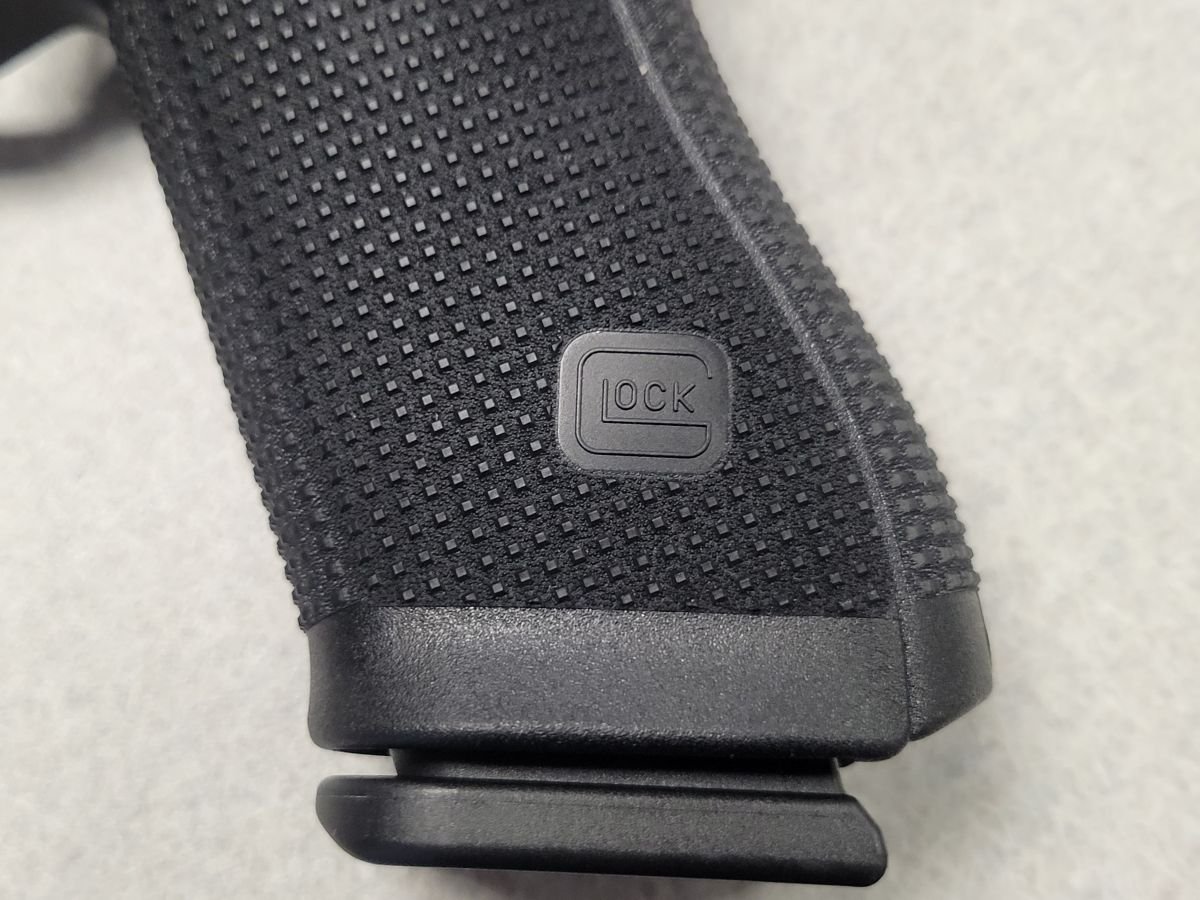
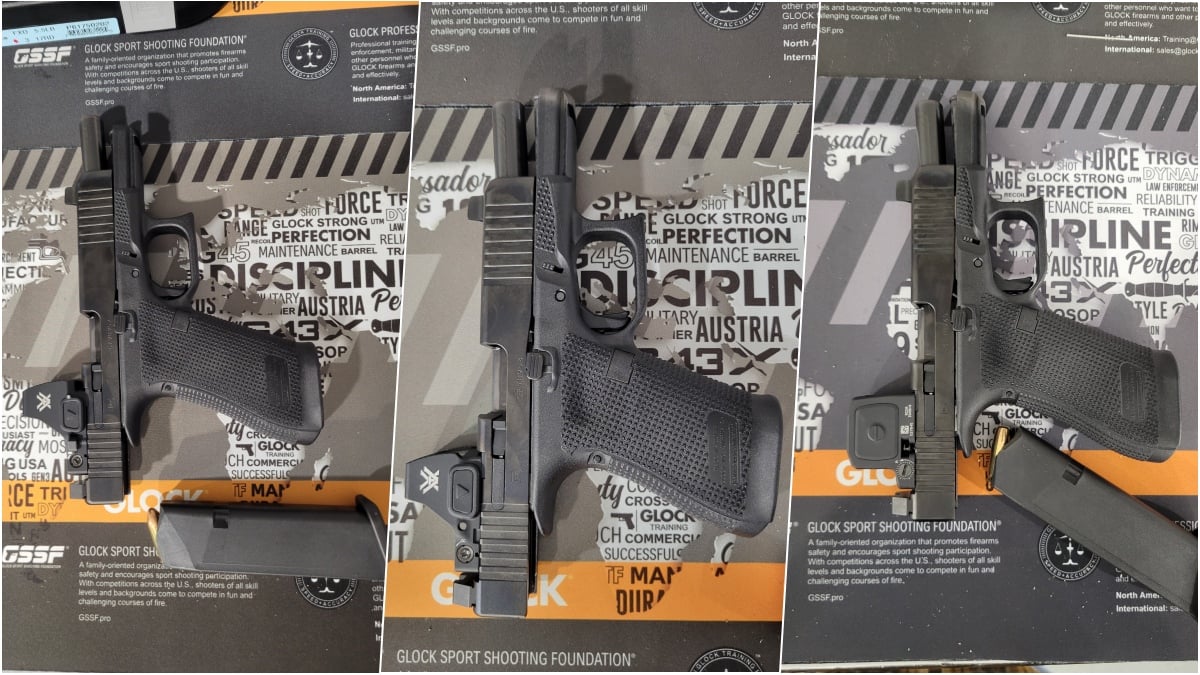
"Comparing the Gen 6 G19, G45, and G17, the ergonomic shift is immediately apparent. Beyond the new flat-faced trigger shoe, pay attention to the integrated palmswell and the evolved RTF6 texturing. The addition of the dedicated thumb pad—essentially a factory 'gas pedal'—is a game changer for recoil management that users previously had to seek in the aftermarket."
Photo: Chris Eger/Guns.com
Field NotesBy Chris Eger
"The production Gen 6 G17 remains the standard-bearer for a duty pistol. What stands out on this new iteration is the full-length 1913 Picatinny rail. By moving away from the universal Glock rail to a true MIL-STD-1913, you get a much more robust mounting surface for heavy-duty lights like the Surefire X300 or Streamlight TLR-1 HL without the need for adapter keys."
Photo: Chris Eger/Guns.comClick to View G17 Inventory
Field NotesBy Chris Eger
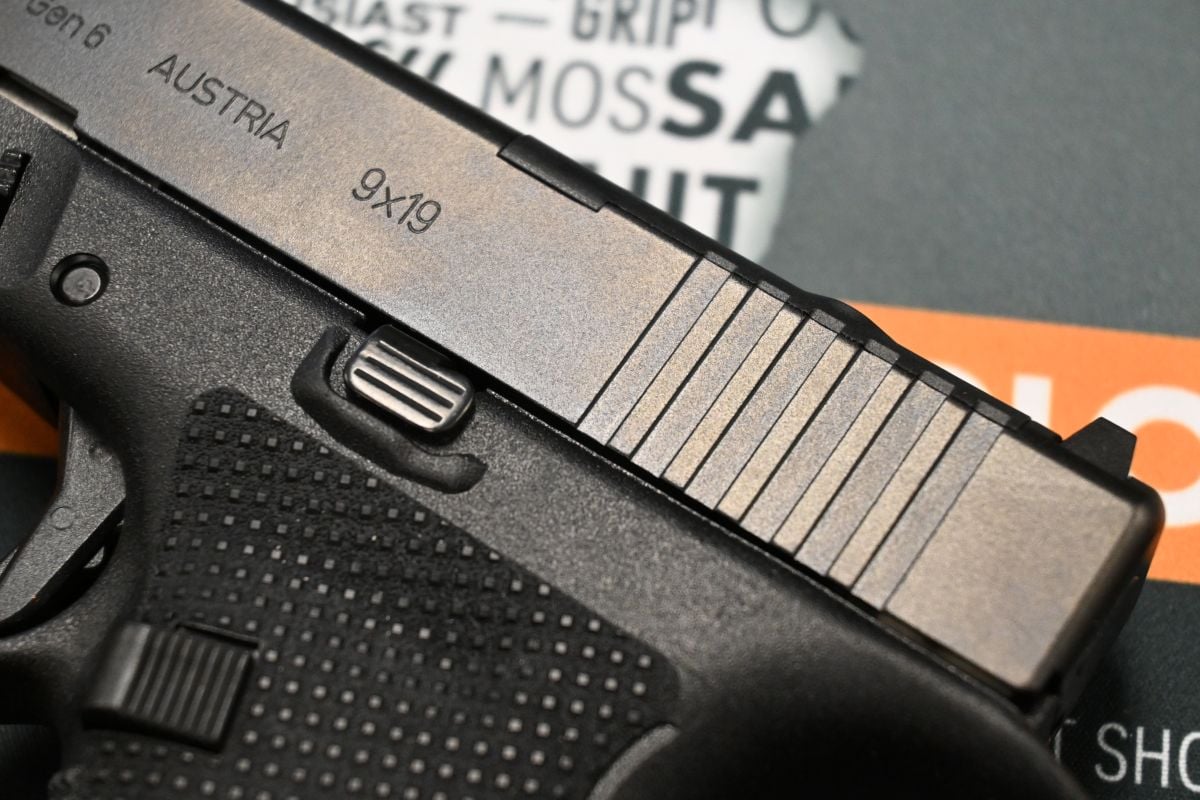
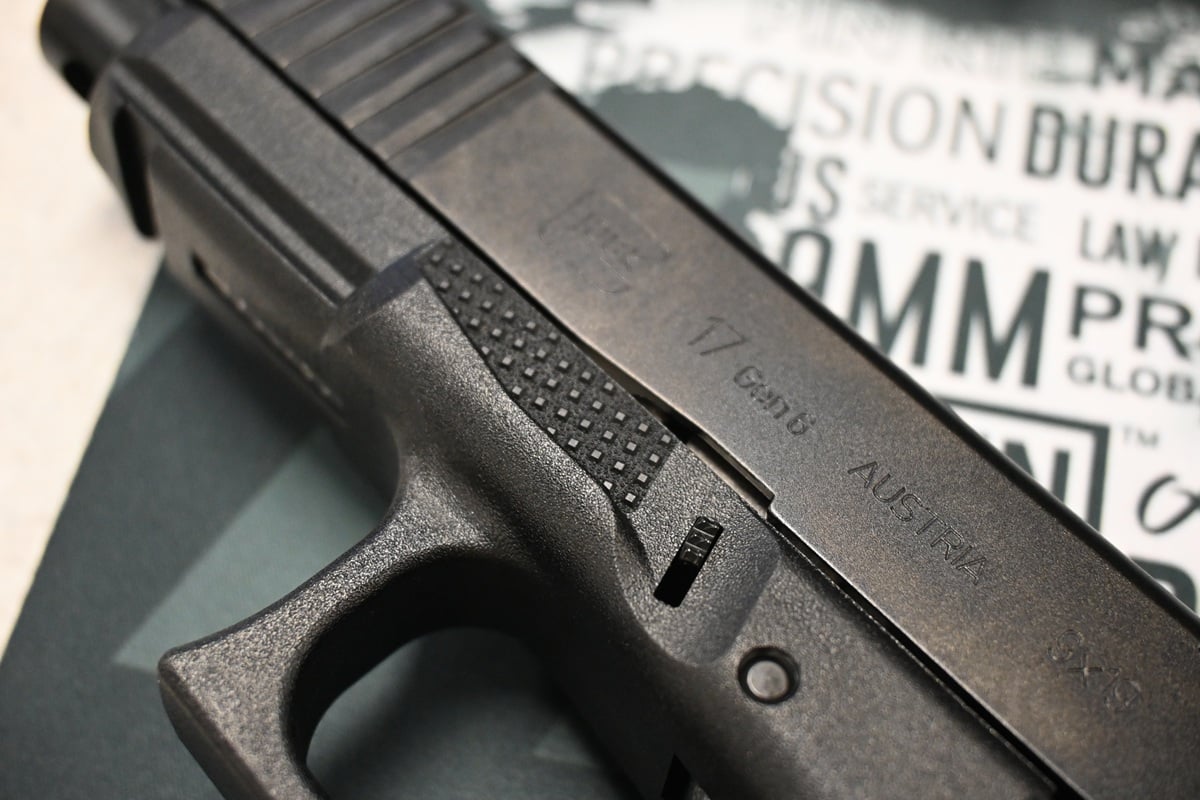
"The ambidextrous slide catch lever on the Gen 6 has been slightly enlarged and reprofiled for a more positive 'shelf' without adding bulk that snags on holsters. Combined with the new ORS (Optic Ready System) visible here, which moves away from adapter plates in favor of a direct-mount interface, the Gen 6 is clearly optimized for modern duty use where speed and red-dot reliability are non-negotiable."
The Glock generations from 1 through 6 look very (very) similar when stacked side-by-side, and there is a reason for that: consistency. Anyone who had a Gen 1 in 1986 could be transported to 2026 and pick up a brand-new Gen 6 and figure it out in about three seconds.
Field NotesBy Chris Eger
"Seeing every generation side-by-side really puts the Gen 6 upgrades into perspective. We’ve moved from the 'pebble' texture of the 1980s Gen 1 to the highly engineered RTF6 grip of today. While the Gen 3 introduced the rail and the Gen 5 brought back the smooth front strap, the Gen 6 feels like a 'Greatest Hits' compilation—bringing back the best ergonomic features of the past 40 years while finally perfecting the optic mounting system."
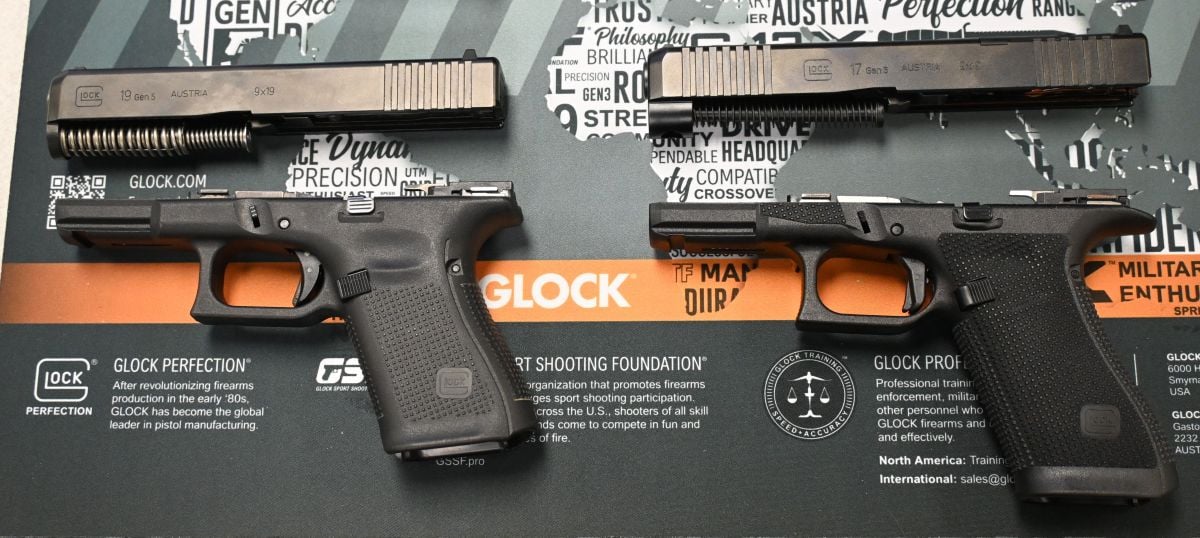
"Side-by-side, the evolution is stark. While the Gen 5 G19 (left) was a return to form with the removal of finger grooves, the Gen 6 G17 (right) takes it further with the flat-faced trigger and expanded RTF6 texturing that wraps higher up the frame. Internally, the Gen 6 has moved away from the dual-spring assembly seen here on the legacy model toward a new proprietary 'linear-rate' guide rod designed to soften the impulse of higher-pressure 9mm +P duty loads."
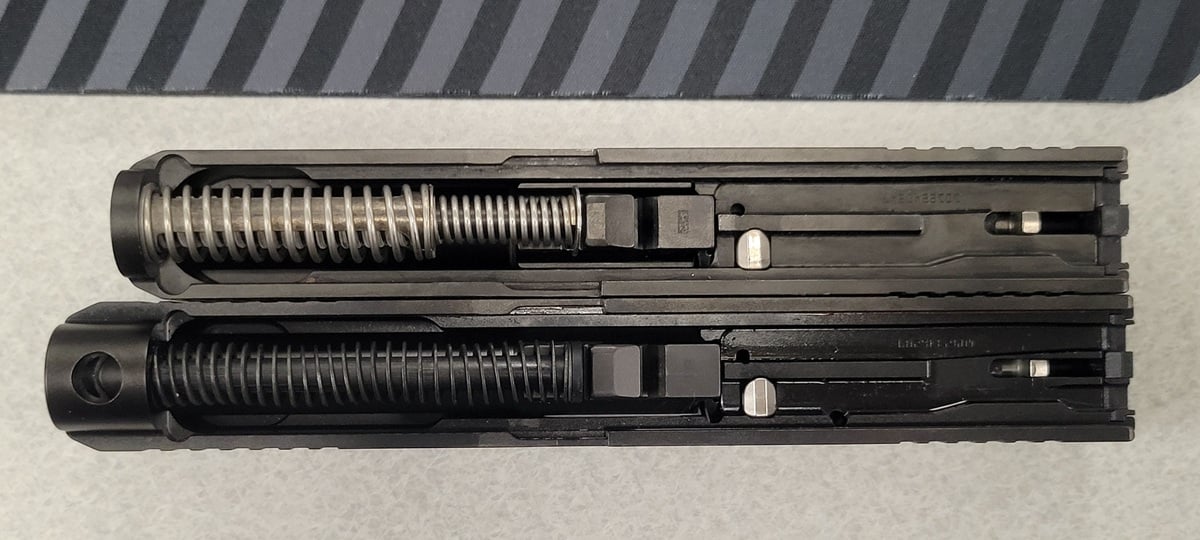
"One of the best 'hidden' upgrades is visible here in the slide internals. Glock has finally sealed the extractor channel. In previous generations, excess thread lock from mounting an optic could seep into the slide internals, potentially causing light strikes or extraction failures. This simple design change makes the Gen 6 significantly more 'user-proof' for those of us mounting our own red dots."
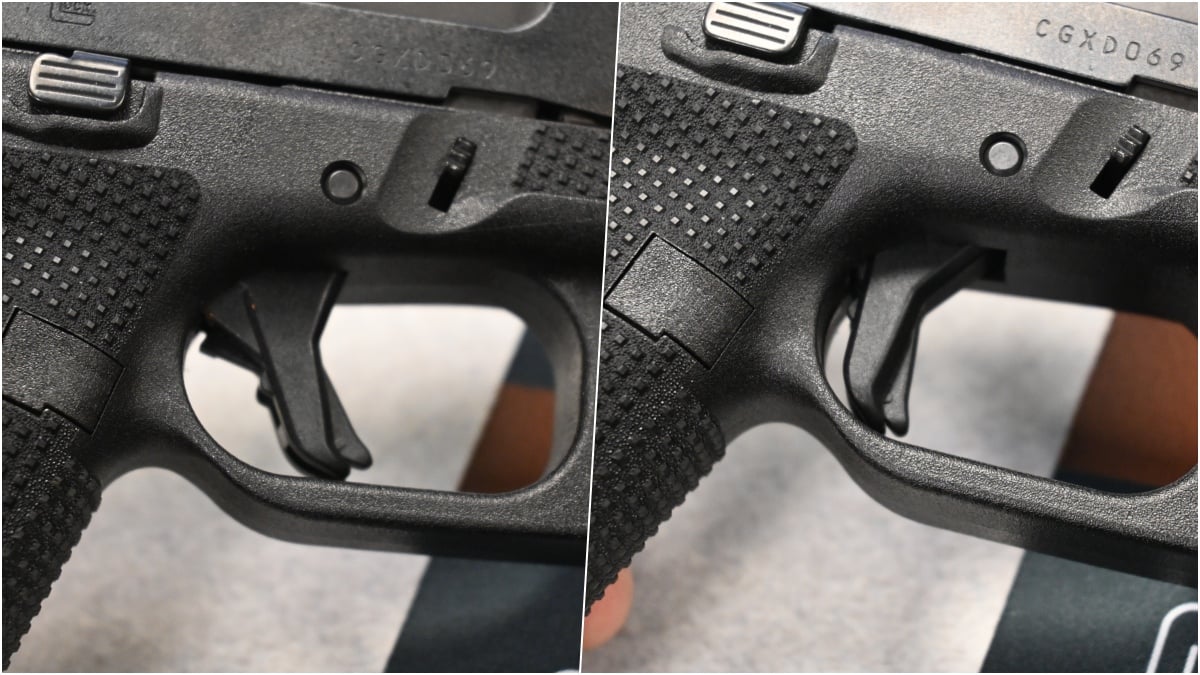
"The frames compared at the action, with the Gen 6 on the left and Gen 5 on the right. The layout is the same, but the geometry is a little bit different."
"The frames compared at the action, with the Gen 6 on the left and Gen 5 on the right. The layout is the same, but the geometry is a little bit different."
"Looking at the frames side-by-side (Gen 6 on the left, Gen 5 on the right), the layout remains familiar, but the geometry has shifted to accommodate the new flat-faced trigger system. The connector angle is slightly more aggressive, and the trigger housing seat is reinforced. This refined geometry is what gives the Gen 6 that distinct, 'glass-rod' break that many shooters previously spent hundreds of dollars in aftermarket parts to achieve."
The Gen6 may look remarkably like previous generations, by design, but it is quite different when it comes to ergonomics, optics mounting, and parts. For instance, it has a new trigger, a new slide, and mostly new internals.
Legacy parts that will work besides the magazines, backstraps, and sights are the locking block, mag release, firing pin and spring, slide lock/spring, trigger pin/housing, trigger bar, recoil spring assembly, and connector. Almost everything else is Gen 6 only.
The differences are so substantial that Glock's Training division told us that, moving forward, the traditional Glock Armorer's Course, which has long been one day covering all generations, will now just cover the Gen 5s and 6s, with a separate one-day course dedicated to "Classic" Gen 1-4 Glocks.
Field NotesBy Chris Eger
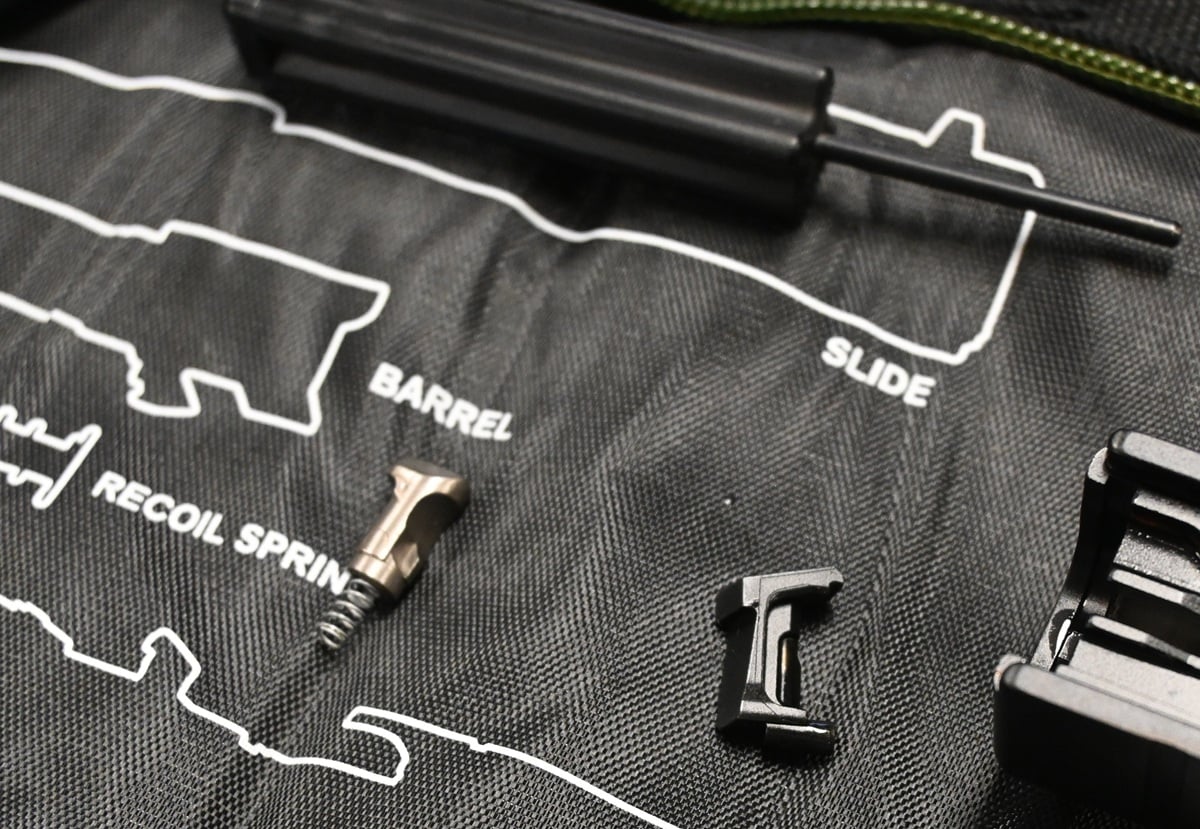
"The redesigned extractor package—comprising the pressure piece, frame, and spring—is a masterclass in space-saving engineering. By downsizing these components, Glock carved out the necessary real estate for the deeper-seated Optics Ready System (ORS). The best part for home armorers? Despite the proprietary new geometry, you still only need a standard Glock armorer tool for a full detail strip."
Glock's Scotty Banks, Training Manager of Glock Professional Training, took us through the removal of a legacy (Gen 5) striker and extractor, then compared it to the new method needed, in the video below.
Field NotesBy Chris Eger
"On the topic of user comfort, the new palmswell comes from scanning hundreds of Glock users to produce a cross median that provides a more optimal fit."
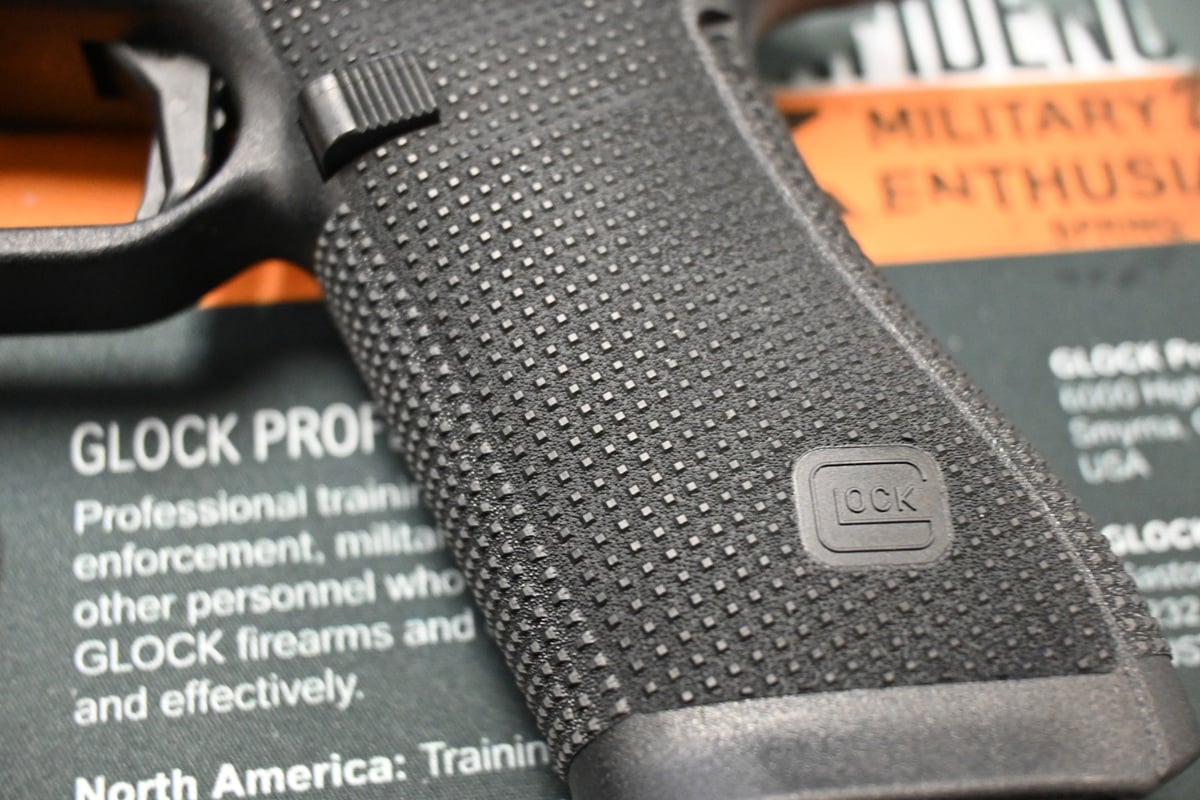
"The new RTF6 grip texture combines the old-school RTF2 substrate with the RTF 4 polymids to create something altogether different. Further, the grip texture has been expanded to reach higher on the frame and onto the thumb rest to give the user more grip purchase opportunities."
"The enlarged, frame-mounted beavertail encourages a higher grip while still avoiding slide bite. It ships with two interchangeable backstraps (2mm and 3mm) and is compatible with Gen 5 straps."
"The flat-face trigger has an advertised pull weight of 5.5 pounds, and we noted it to have a good reset. It keeps the traditional trio of Glock "Safe Action" internal safeties, including the trigger shoe pivot, firing pin safety, and drop safety. The trigger in action. We found it to break a bit better than the company's previous packs: "
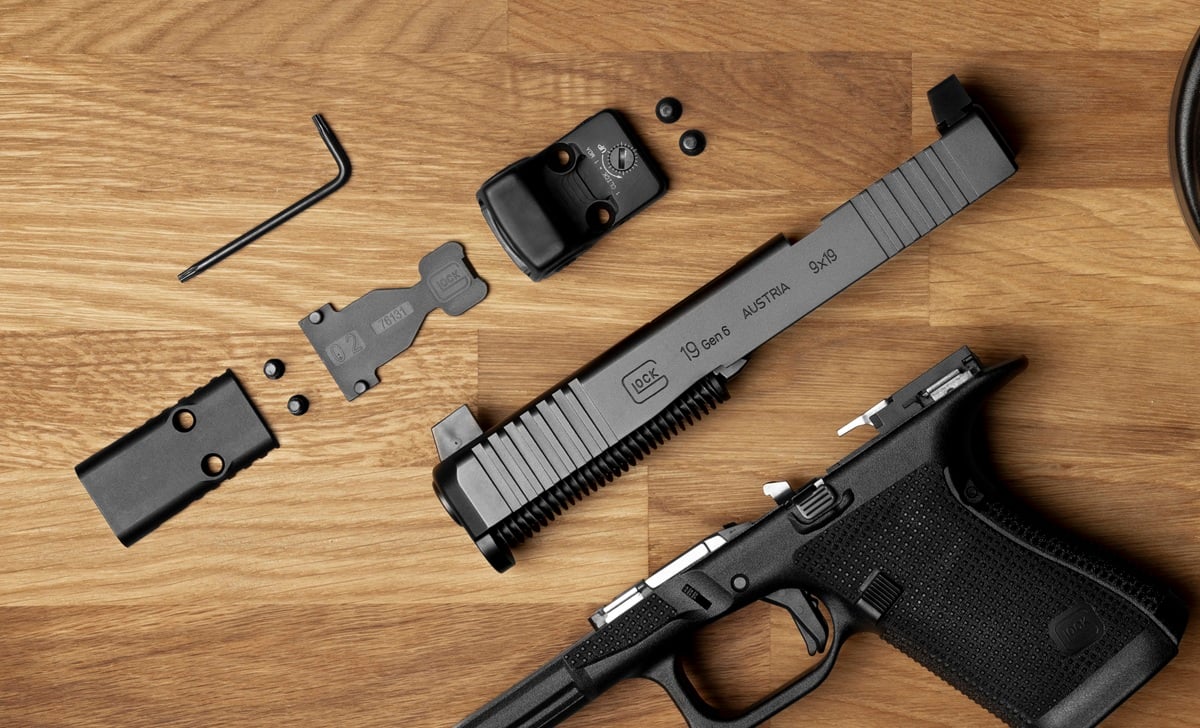
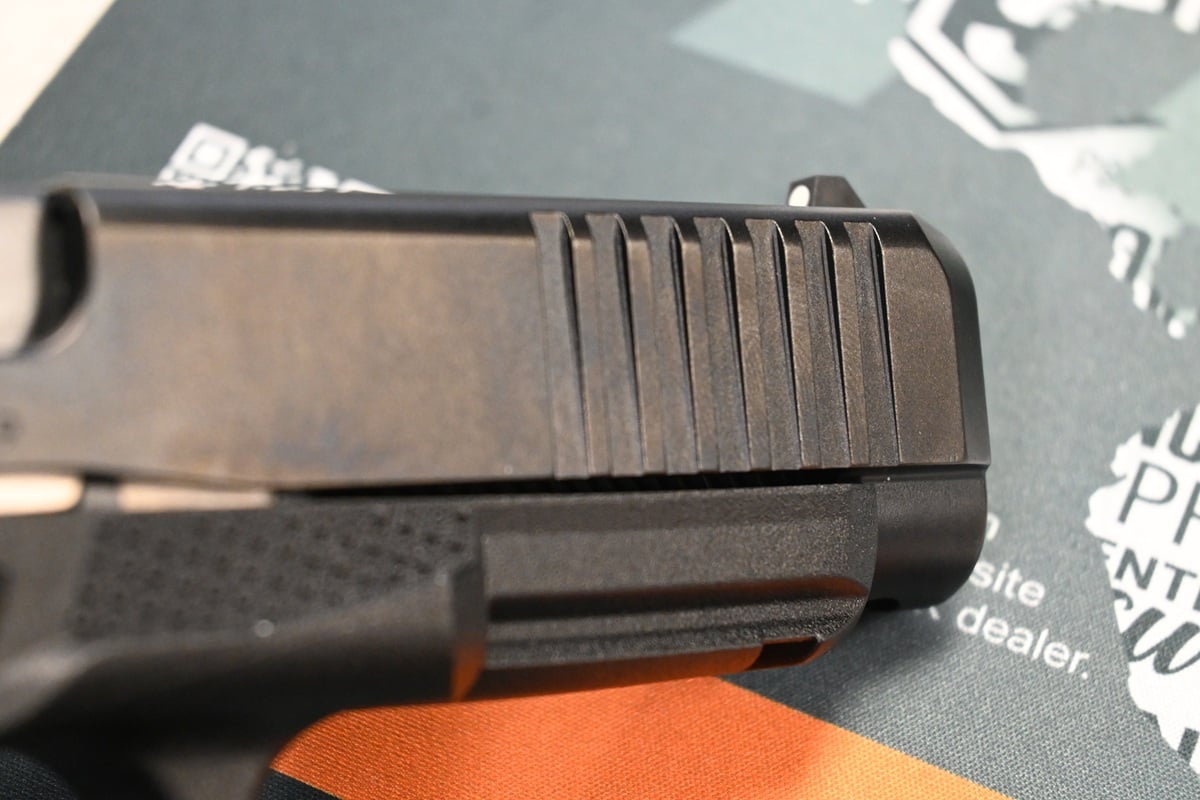
All standard frame Gen6 Glocks will be optics-ready, and it isn't the old MOS system (which is gone) or the new A-Cut COA system. It uses a plate system (don't freak out, keep reading) on a slide that has been redesigned so that the optic bed sits deeper into the slide for a lower height over the bore axis. The three plates that it ships with support RMR, Shield/Delta Point/Holosun K, and C-More pattern footprints.
Field NotesBy Chris Eger
"The 3mm plate is polymer and is advertised as working as something of a shock absorber/crush washer that fits in a 3mm recess, while the optic screws directly into the slide, which has four screw holes, sort of a direct mount with a twist, if you will."
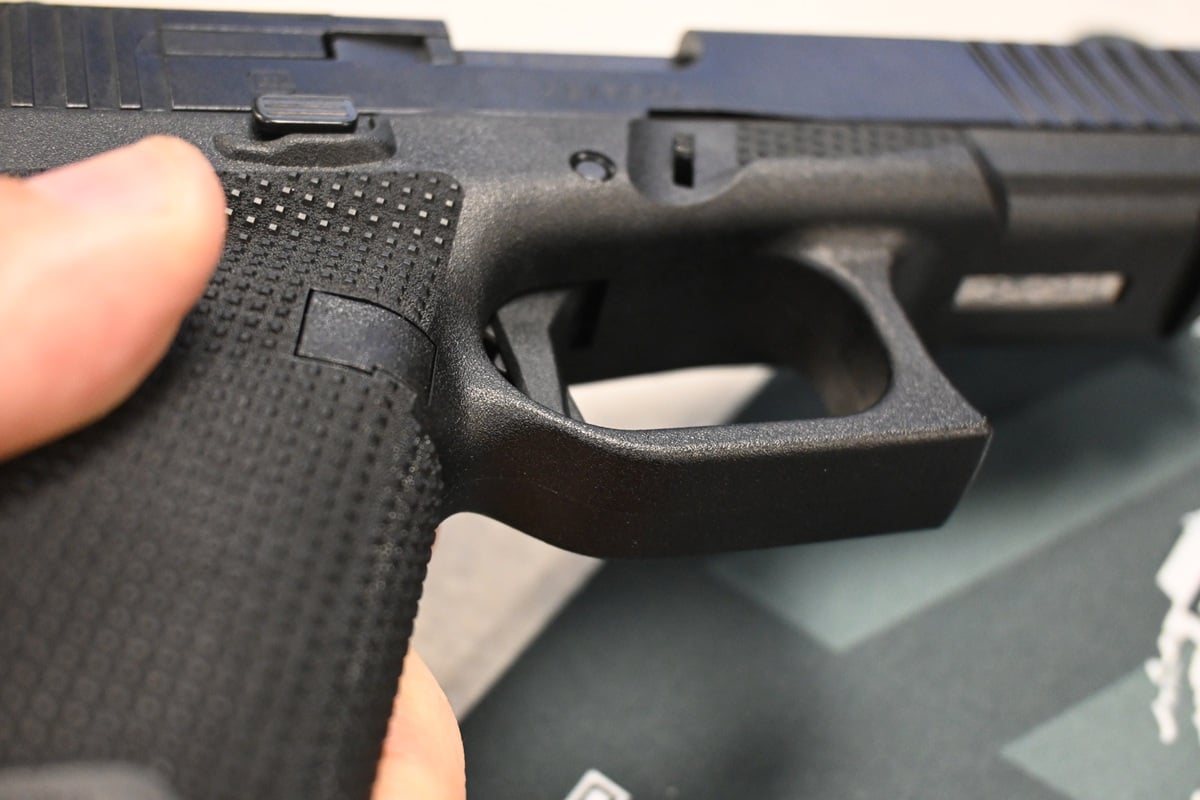
"The undercut trigger guard (finally, Glock) helps with a higher grip while keeping enough "beef" so that you don't risk frame cracking on duty holsters."
"Glock has finally added a thumb rest/gas pedal/thumb pad on each side of the gun. To make sure it would still fit legacy holsters, the frame internals on this section have been redesigned to allow the extra texture without making the pistol wider at this point."
"Looking at reliability, Glock – which has been working on the Gen 6 since 2022 – has had test guns survive 40,000 rounds of mixed ammo, ace salt fog/mud/sand tests, and meet all its other standard testing protocols. We fired all three production models on the range for a few hundred rounds and experienced no issues."
"The Gen 6s will start shipping to be "on dealer shelves" for a Jan. 20, 2026, official launch, with three magazines and three optics plates (RMR, Shield/Delta Point/Holosun K, and C-More footprints), as well as all the standard Glock stuff."
The MSRP on the new Gen 6 Glock models is $745, which is the same cataloged price as the Gen 5 MOS models. We have review models inbound, so expect more details in the coming weeks.
Glock Gen 6: Frequently Asked Questions
Will my Gen 5 holsters work with the Gen 6?
Most Gen 5 holsters are compatible. However, the Gen 6 features an integrated beavertail and a slightly wider ambidextrous slide stop. You should test the retention on precision-molded Kydex holsters to ensure a perfect fit.
What is the difference between MOS and the new ORS?
The Optic Ready System (ORS) replaces the older plate-based MOS. ORS allows for a deeper, direct-mount interface for popular red dots, resulting in a lower height-over-bore and eliminating the need for aftermarket adapter plates.
Are Glock Gen 5 magazines compatible with Gen 6?
Yes. Glock has maintained backward compatibility. Your existing double-stack 9mm magazines from Gen 3, Gen 4, and Gen 5 will function perfectly in the new Gen 6 models.
Is the Gen 6 trigger different from the Gen 5?
The Gen 6 comes factory-standard with a flat-faced trigger shoe. While the internal safeties remain similar, the flat-faced design provides a more consistent finger placement and a cleaner-feeling break compared to the curved Gen 5 shoe.
What is the MSRP for the Glock Gen 6?
The suggested retail price for the new G17, G19, and G45 Gen 6 models is $745. Prices may vary based on specific dealer configurations and optics packages.