Origins: Going Further & Faster
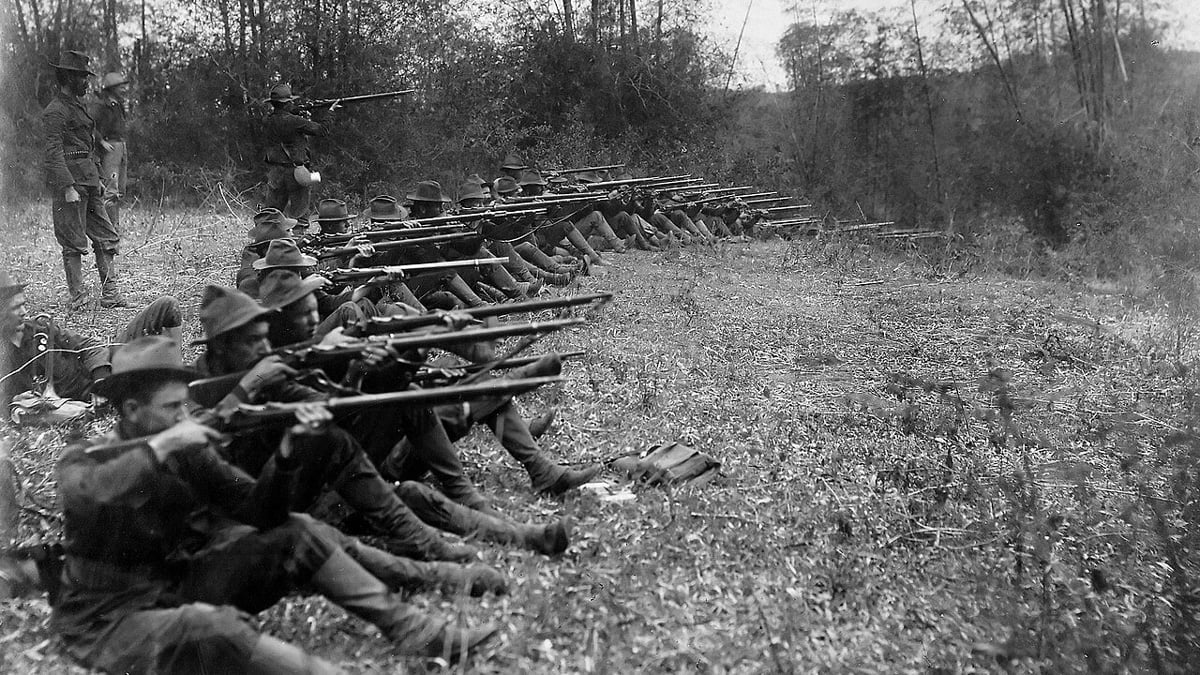
Ballistic coefficient is a scary word that, in plain English, means the length of the bullet relative to the bore diameter. Generally, the higher the coefficient, the better the chance for the bullet to reach its target with minimal wind drift and drop while holding onto its energy over distance.
Although it is a much-studied concept today, 19th-century arms makers had their own ideas. Along the line, they figured out that a heavier bullet of a smaller caliber could outperform larger-diameter bullets.
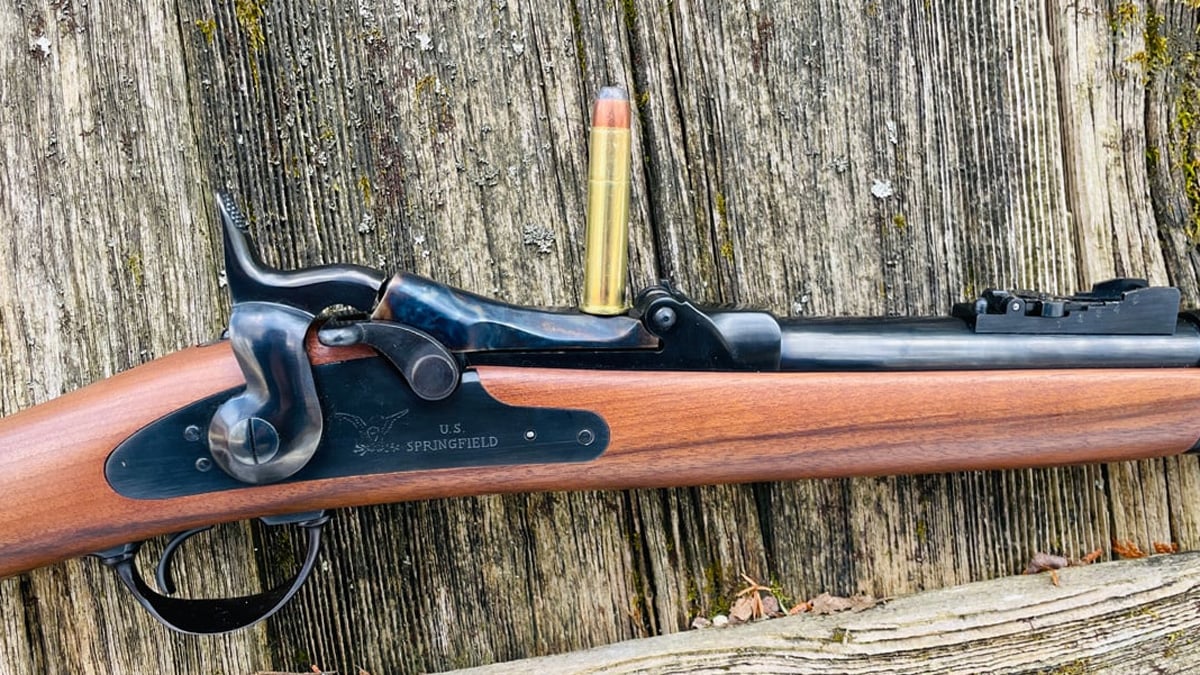
After the American Civil War, the U.S. Army fielded trapdoor-conversion rifled muskets chambered in .58 rimfire. A few years later, these were repurposed to use a centerfire .50-70 cartridge.
In 1873, the U.S. Army adopted its first brand-new cartridge-fed gun with the M1873 Trapdoor Springfield. It was little different from the converted guns, but it was brand new and chambered for the .45-70 Government cartridge.
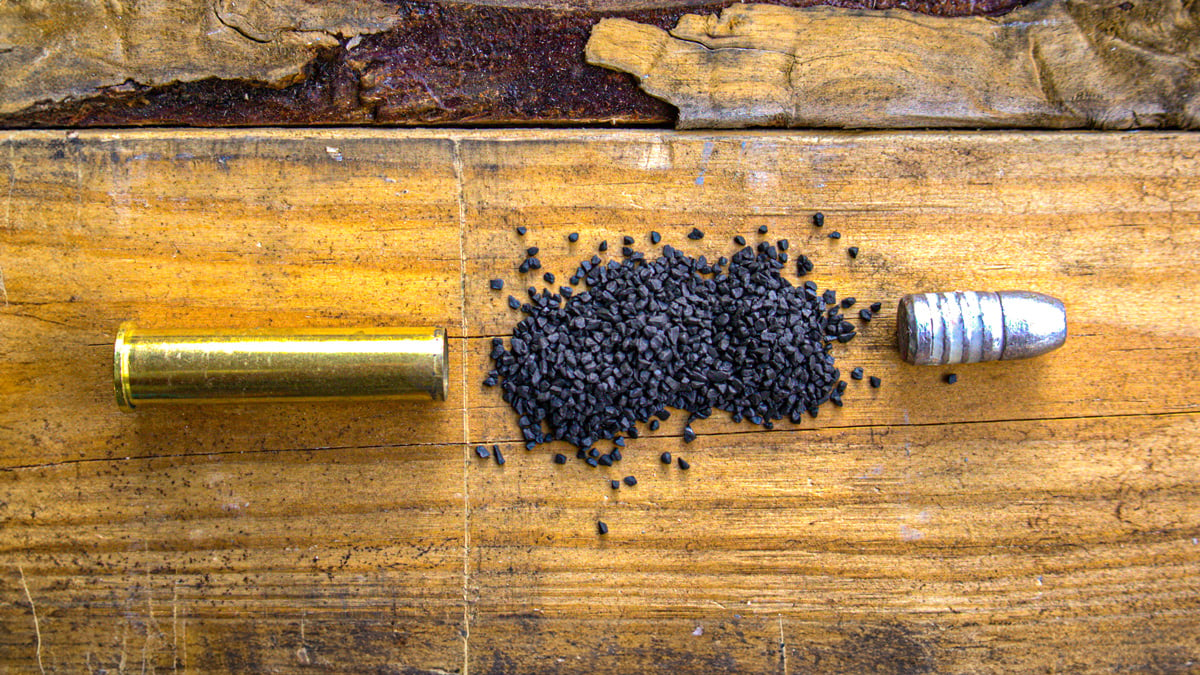
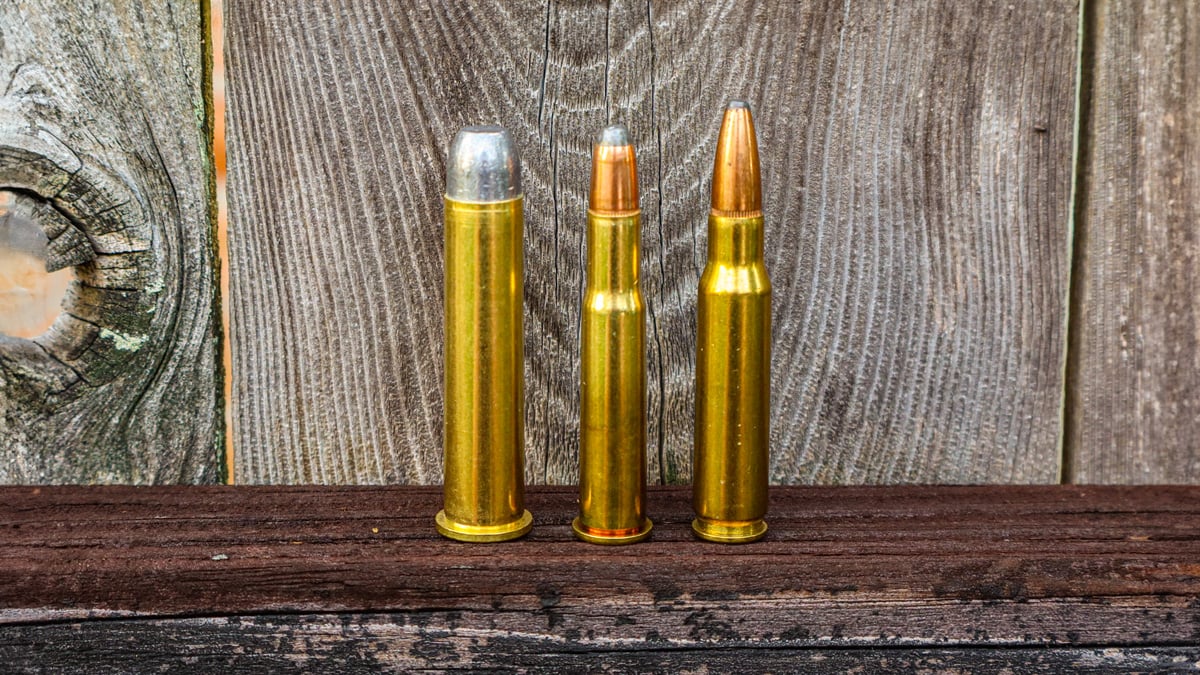
The original loading had a 405-grain bullet and 70 grains of black powder. This combination was more powerful and had a flatter trajectory than the old .50-70. In 1879, the rifle load was given a longer 500-grain bullet. A lower-recoiling carbine load kept the old 405-grain lead bullet but with a reduced 55-grain charge of powder.
This combination continued in service through the Indian Wars until its semi-retirement with the adoption of the smokeless powder .30-caliber Krag rifles and carbines in 1892.
Decline in Popularity: In the Doldrums
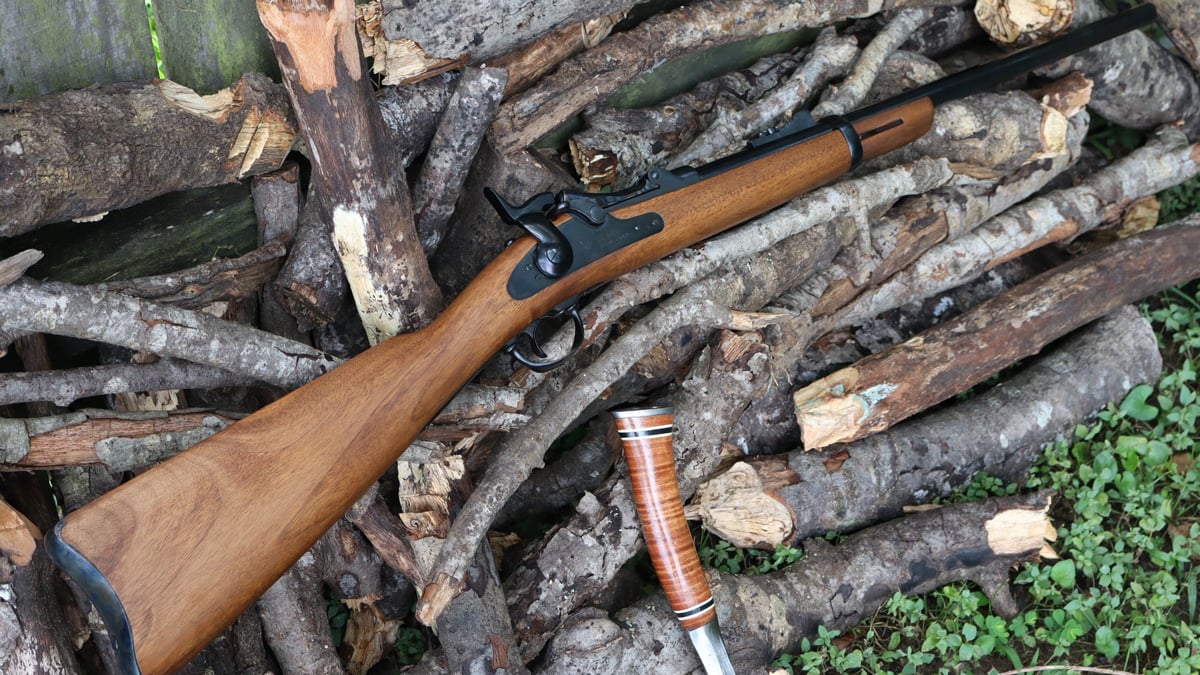
The .45-70 arrived on the civilian market just as the last great buffalo hunts ended. Despite that, it gained some traction, but it had to compete with longer-range cartridges like the .45-90. Its use in single-shot rifles also limited its popularity in the era of the .44-40 and the Winchester 73 lever action.
That did not stop John Browning from mating the .45-70 with a lever-action repeater when the Winchester Model 1886 debuted. Marlin later adapted the round for its Model 1895 rifle. After the Spanish-American War, the last Trapdoor Springfields were put on the surplus market. For a few dollars, a meat hunter could have a rifle capable of taking any manner of game in North America.
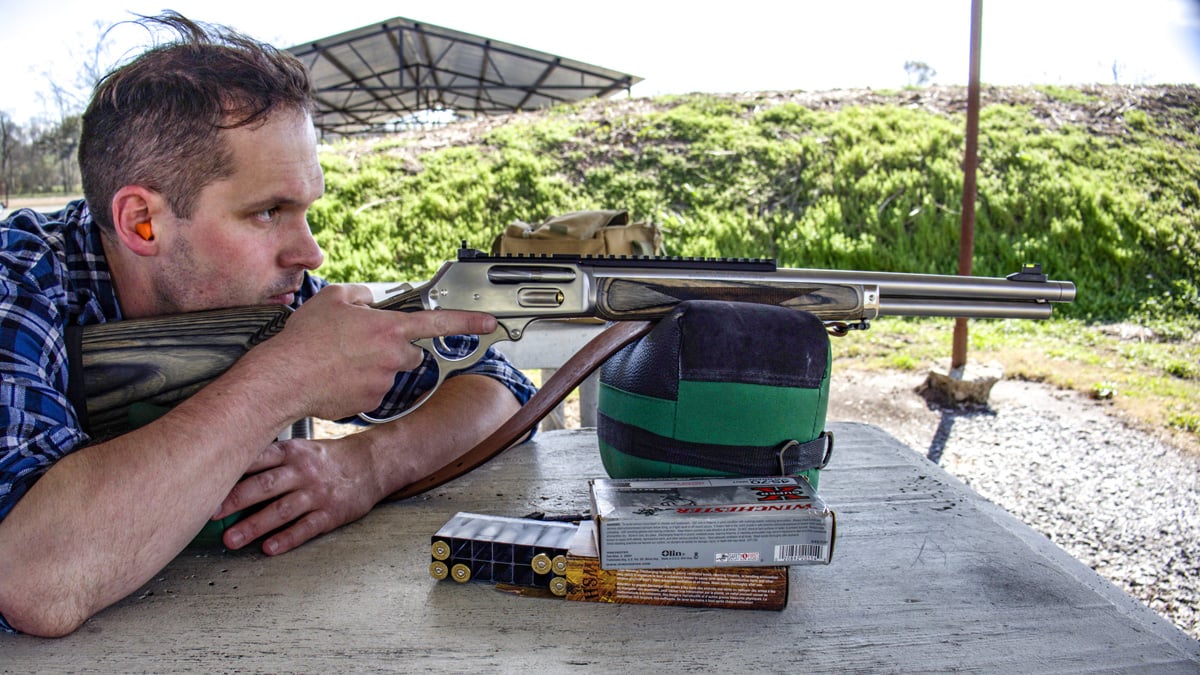
This gave the .45-70 lasting popularity, while new production rifles struggled in the marketplace as small-bore smokeless powder rifles became predominant. Marlin gave up production of the Model 1895 in 1917. In the depths of the Depression, Winchester ceased production of the Model 1886.
.45-70 Reborn
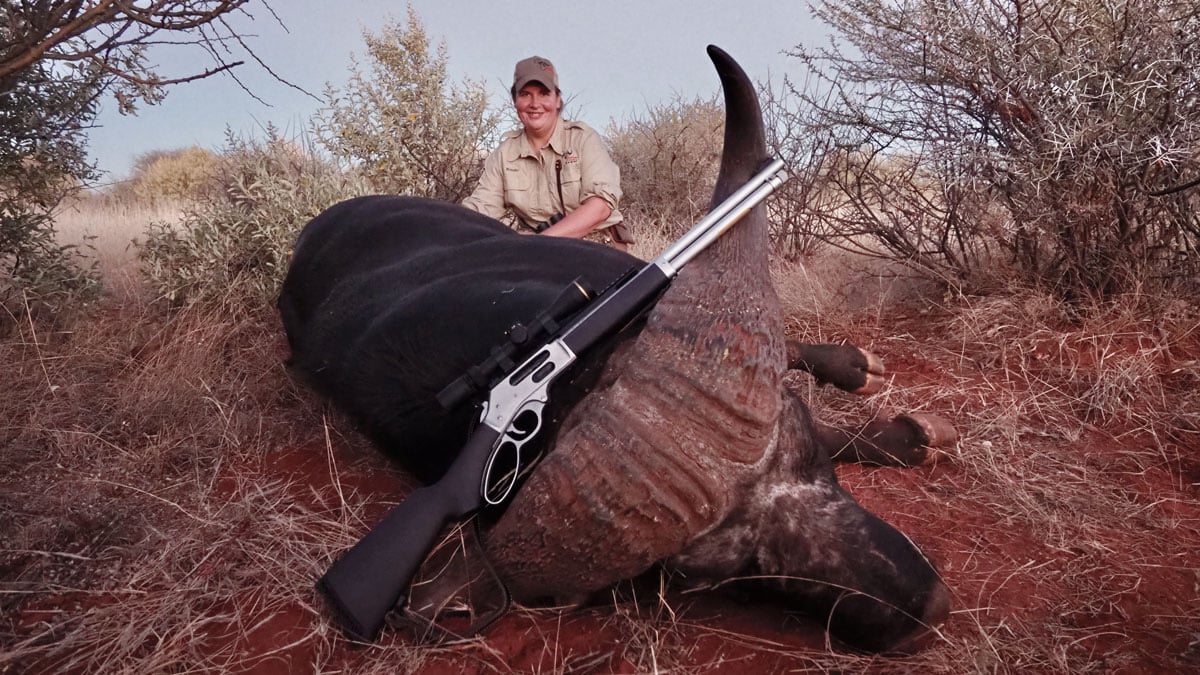
Hunters continued to make use of increasingly geriatric .45-70 rifles, but their reputation for big-bore power was overshadowed by the flatter trajectory of more modern cartridges. Still, the old Government’s effectiveness on tough and dangerous game in thick timber earned it a second chance at life when Marlin reintroduced the Model 1895 in 1972.
The .45-70, in the form of the Marlin Guide Gun, earned praise as an effective, quick-handling option among guides and hunters in bear country. The rise of cowboy action shooting in the 1980s fueled the fire even further. This led to the revival of old designs and the creation of new designs that could fully take advantage of the .45-70’s potential.
Ammo Innovations & New Rifles
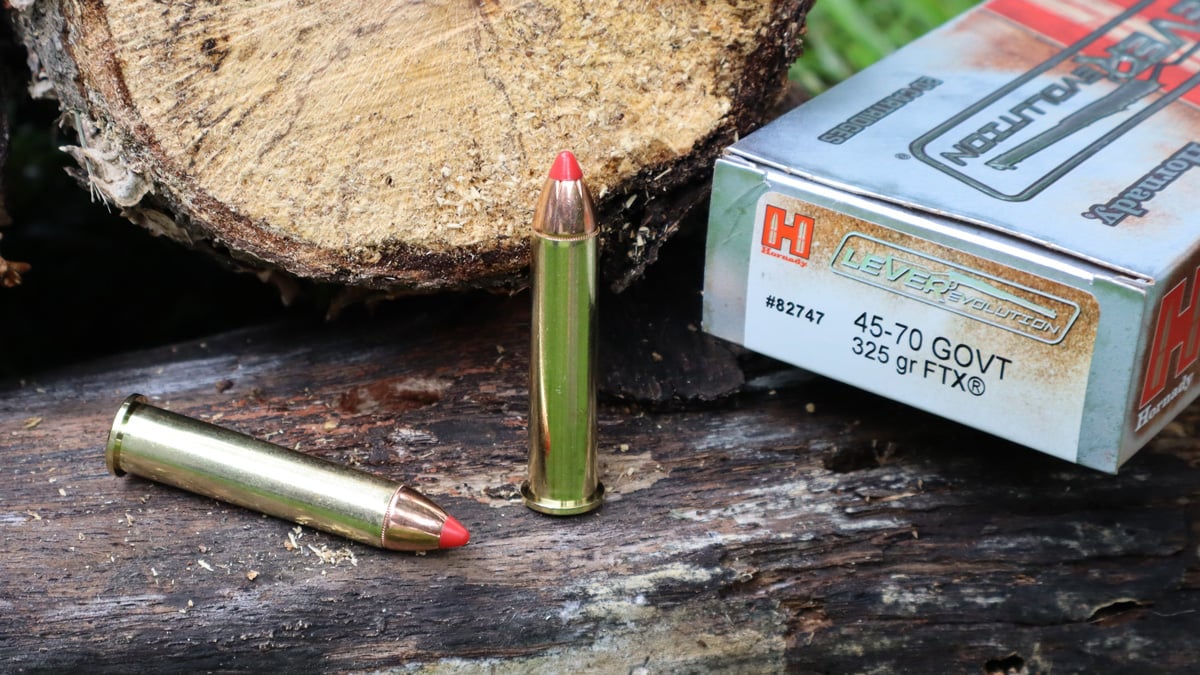
For decades, the Trapdoor Springfield was the most common firearm chambered in .45-70. Its relatively weak action prevented much experimentation with the cartridge, and factory ammunition was left to the lowest common denominator.
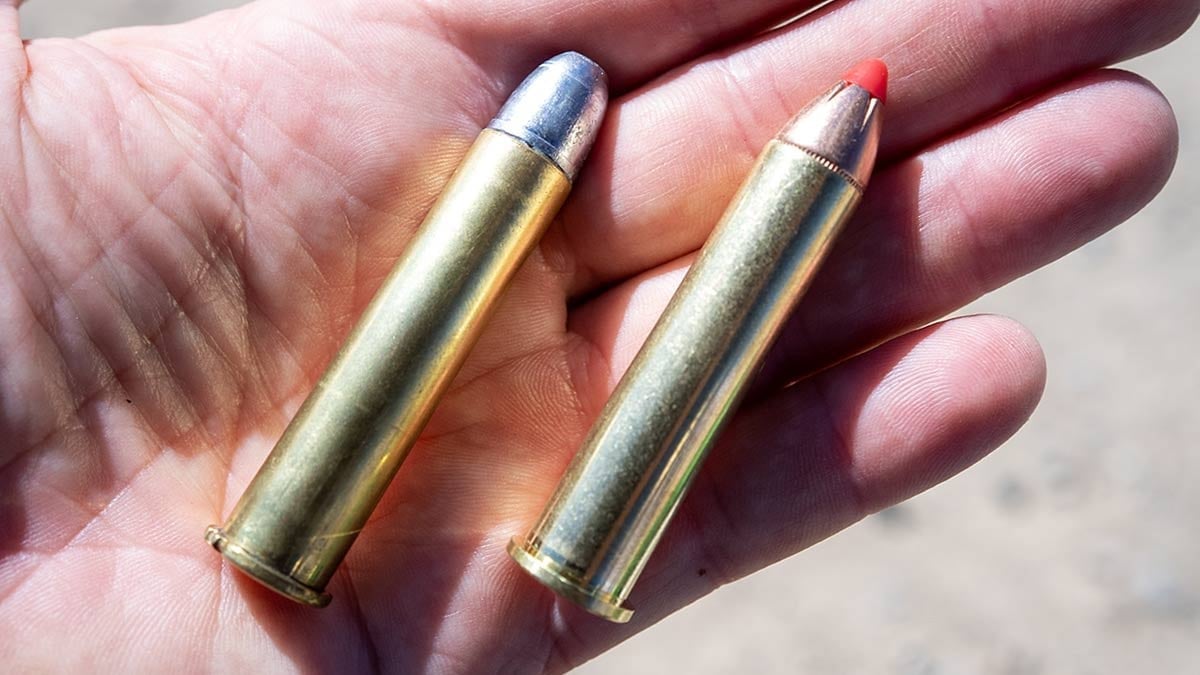
This entailed a traditional lead bullet loaded to a pressure of about 28,000 psi or below. Today, these loadings are classified as “trapdoor safe” and are loaded with either black powder or a light amount of smokeless poweder. They feature a 405- or 500-grain bullet moving at about 1,300 fps.
The action strength of the Model 1886 and, later, the Model 1895 Marlin was much greater. The action strength of modern single-shot rifles like the Ruger No. 1 and converted bolt actions like the Siamese Mauser was even better.
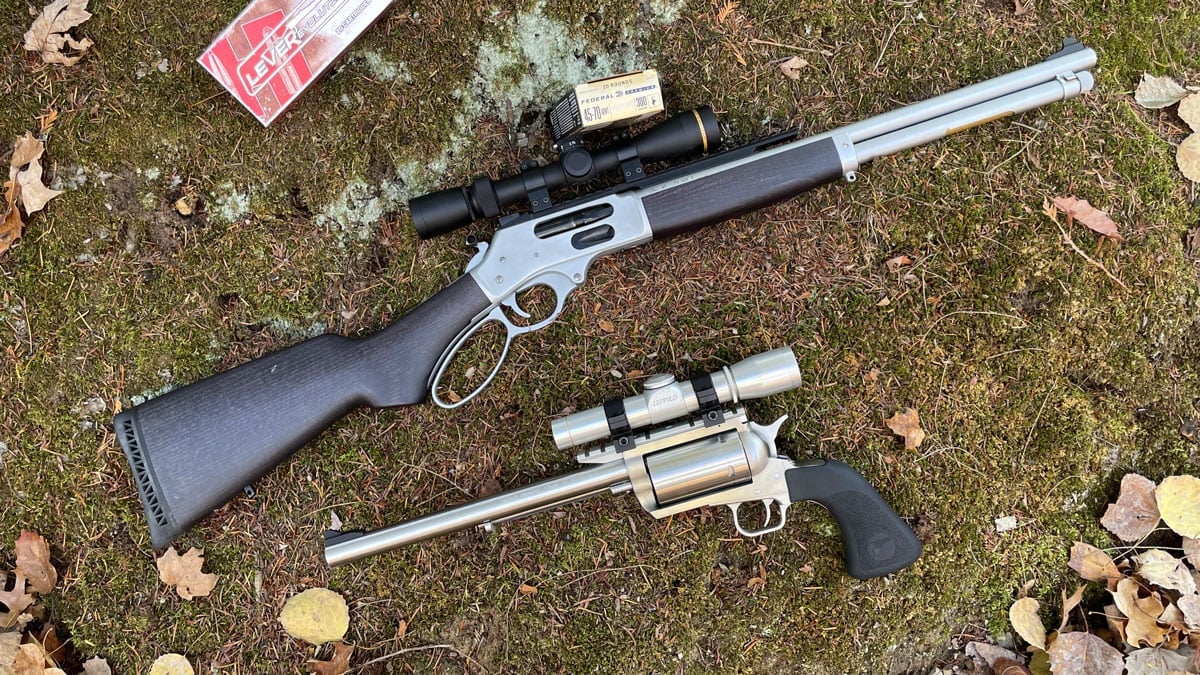
Modern lever actions like the Marlin 1895 and Henry Provider are generally capable of handling up to 40,000 psi in pressure and are well suited to modern high-speed loadings for the .45-70. These include rounds like the Underwood Xtreme Hunter and Hornady LeverEvolution, which feature nominal 300- to 325-grain bullets traveling at close to 2,000 fps.
Single-shot and bolt-action rifles can be pushed beyond that into the realm of 50,000 psi. This has previously been the bailiwick of handloaders, but that has not stopped firms like Buffalo Bore from offering single-shot-only, high-pressure rounds for use on dangerous game.
In the world of firearms, the .45-70 is primarily a lever-action and single-shot rifle cartridge. Among lever actions, the Winchester Model 1886 and Marlin 1895 remain in production. However, copies of these rifles made by Henry, Rossi, and Smith & Wesson provide additional options.
Single-shot rifles include historical reproductions of the Trapdoor, Rolling Block, and Sharps rifles from makers like Chiappa, CS Sharps, and Pedersoli. Ruger continues to produce runs of their No. 1 single shot. The most prevalent single shots are modern break-actions from the likes of CVA and Henry Repeating Arms.
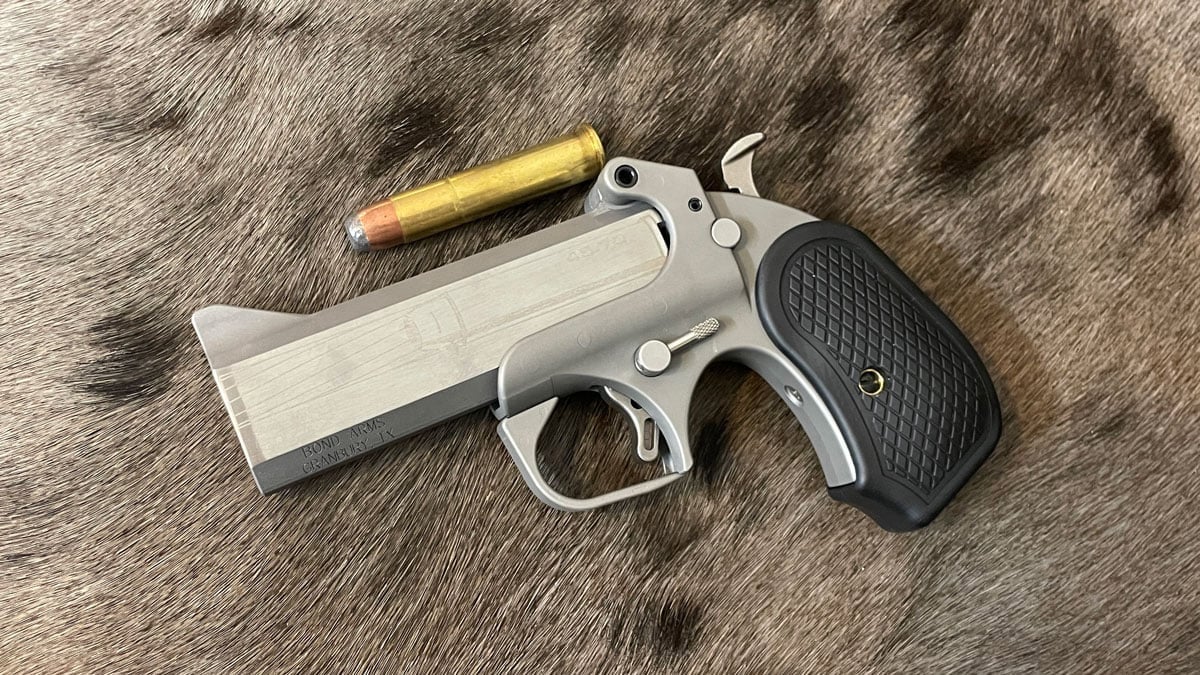
Although the .45-70 is primarily for rifles, that has not stopped Magnum Research and Bond Arms from chambering the monstrous round in their handguns, such as the BFR revolver and Cyclops derringer.
State Compliance: Straight-Wall Requirements
Bottom Line
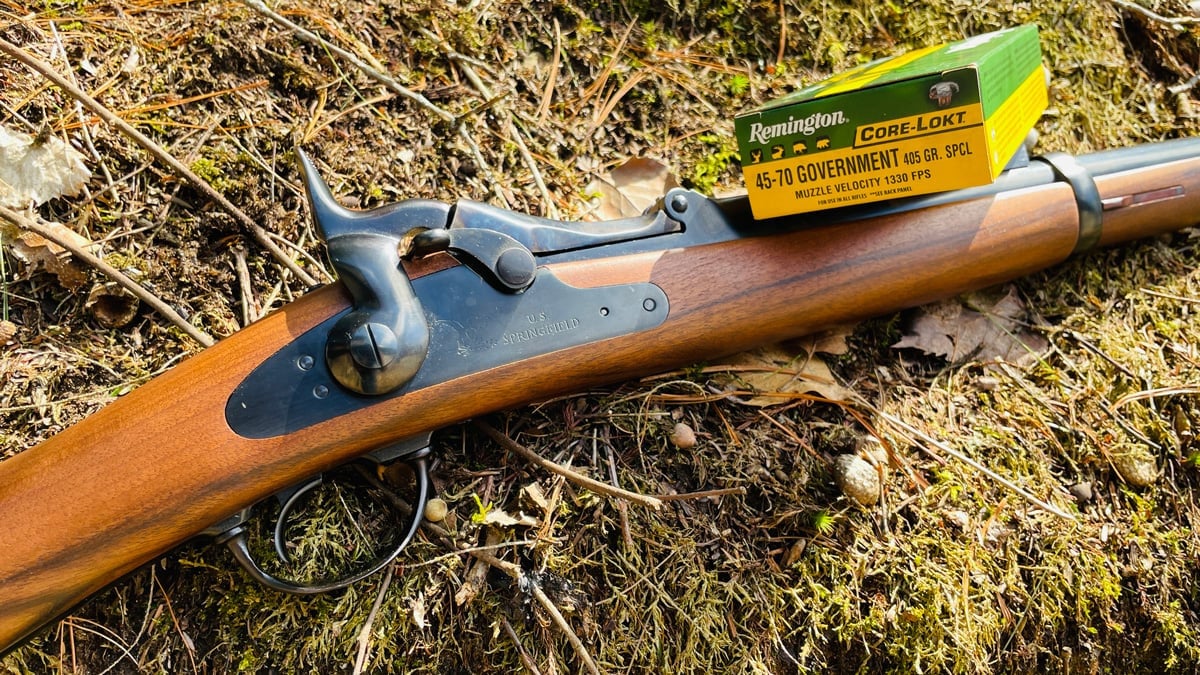
The guns and ammunition that share the .45-70 Government cartridge in common have evolved greatly since the pairing was first made with the Trapdoor Springfield in 1873. What was the U.S. Army’s first purpose-built cartridge and breech-loading rifle morphed into a meat hunter’s delight for decades after its service life.
This iconic cartridge of the West found new life, new loadings, and new rifles as the virtues of the big, heavy, and slow cartridge were rediscovered. Even at its best, the .45-70 is still big, heavy, and slow, but it punches big and deep holes like few others can. For that reason, if no other, the .45-70 will enjoy a modest future to come.
Terril James Hebert
Terril Hebert is the world's okayist historian and firearms journalist who occasionally moonlights as an NRA pistol instructor. In his spare time, he enjoys forensic accounting, waxing poetically about the efficiency of musket balls, and working on his latest fire-starting techniques.
View All Articles by Terril James Hebert