Brief History
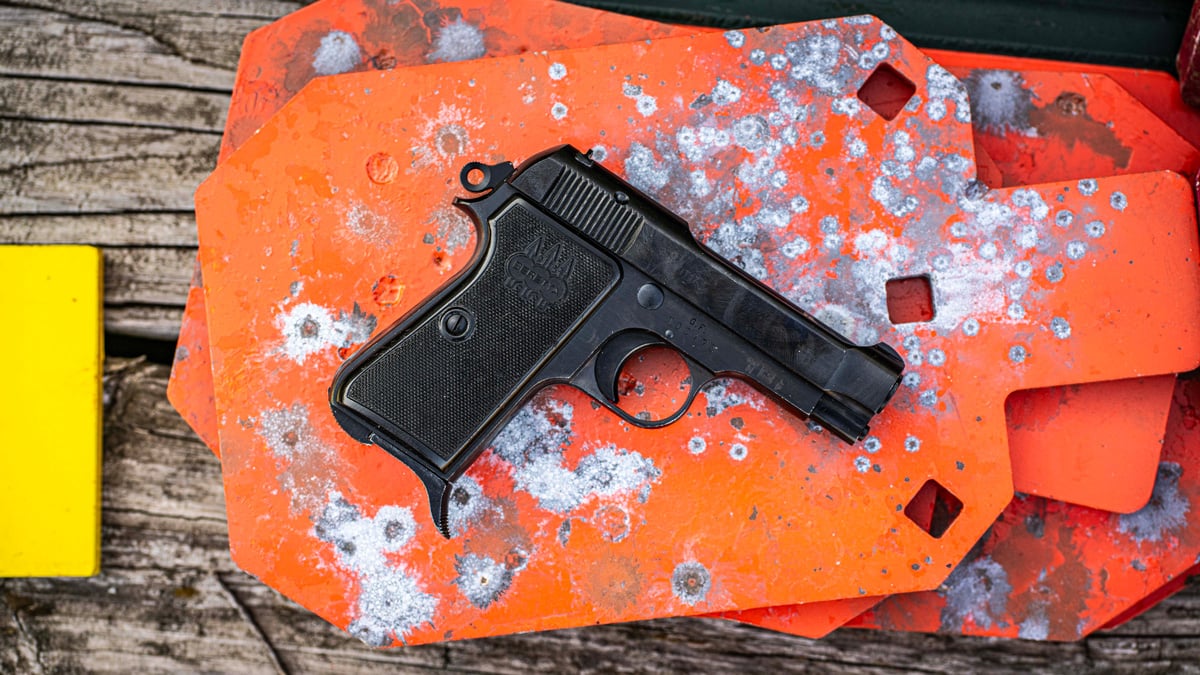
Beretta’s history of innovative designs is legendary. We should know, since we recently visited the company and its plant in Italy. The Model 1934 is a noteworthy part of the company’s handgun history in particular.
While Beretta has a firearms-making history that goes back to 1526, its work with pistols only dates to 1915 and the Model 1915 (.32 ACP). The M1915 itself went through a series of alterations in an evolution that ended with the Model 1934.
By the 1930s, Italy knew its military was packing a pistol with an outdated design and caliber.
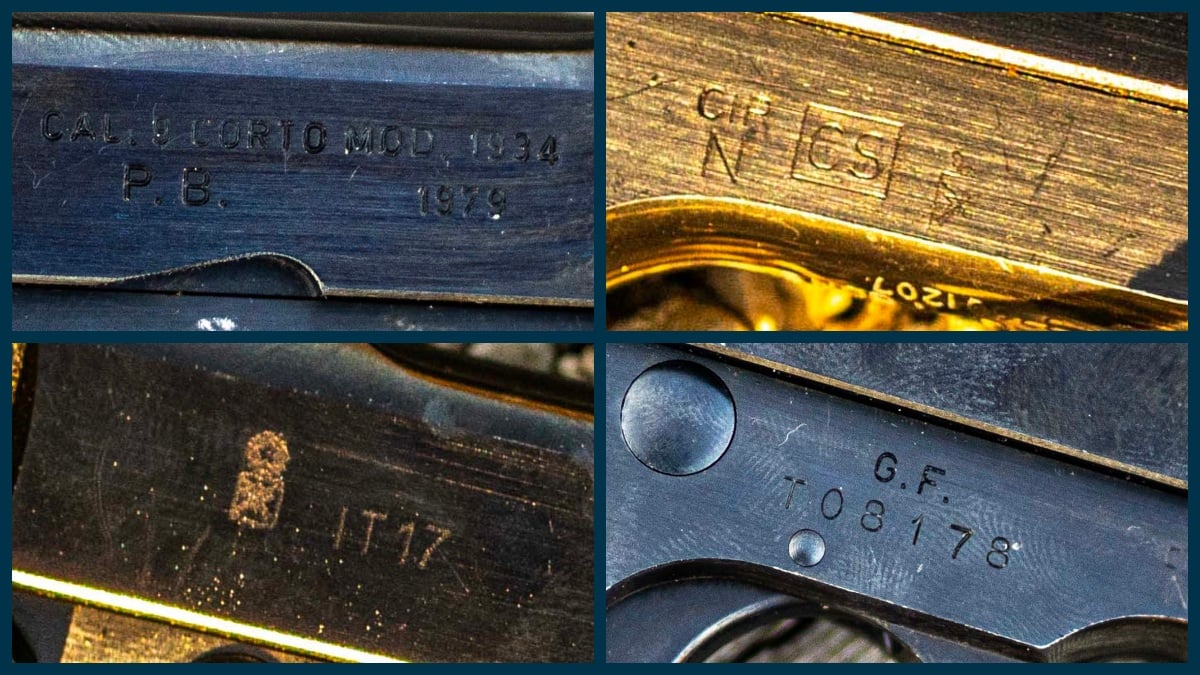
The Italian military turned back to Beretta for a more modern and powerful replacement. Beretta’s answer was the M1934, or Pistola Automatica Beretta modello 1934. This new handgun was incredibly simple in design and chambered for the more powerful .380 ACP, also known as 9mm Corto (short).
While still underpowered when compared to the German Army’s 9x19mm Luger/Parabellum, it was a notable step up over the M1915’s .32 ACP.
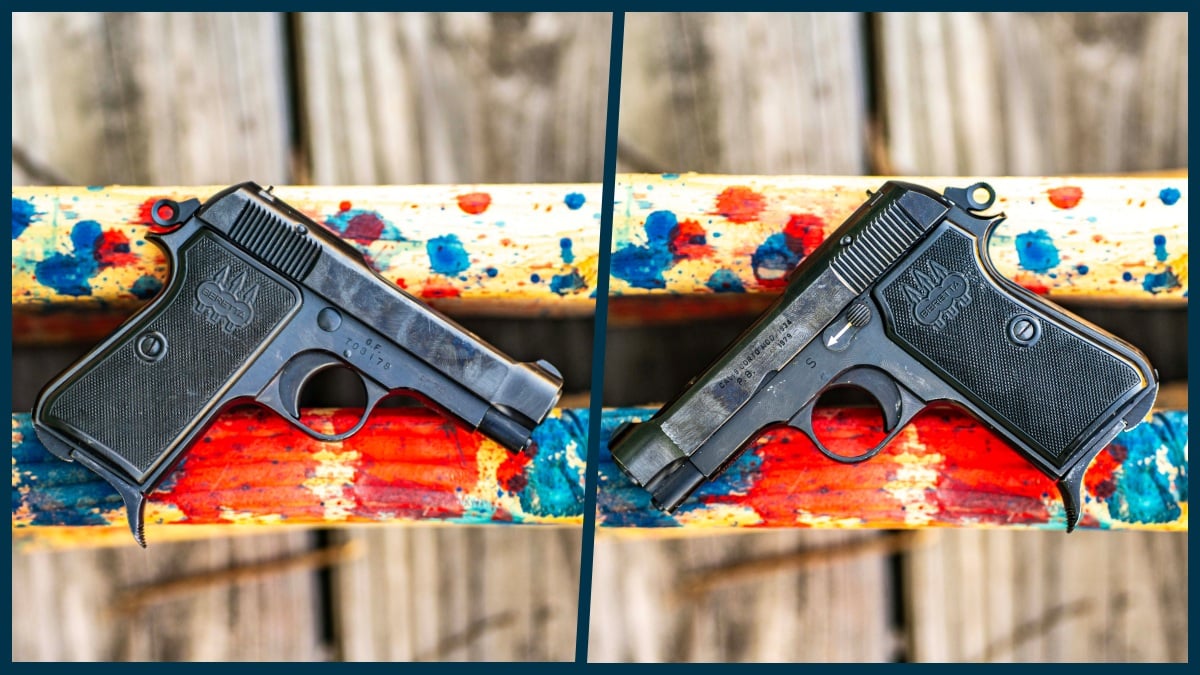
Production started in 1934, and the design proved to be a remarkably long-lasting one for Beretta. Model 1934 variants continued to come out of the company’s plants until 1991. In total, Beretta made north of 1 million M1934s in one variation or another.
However, the design remained essentially unchanged.
It was popular with Italian service members. So much so, in fact, the Italian Army was still issuing some M1934s through the 1980s.
Design & Features
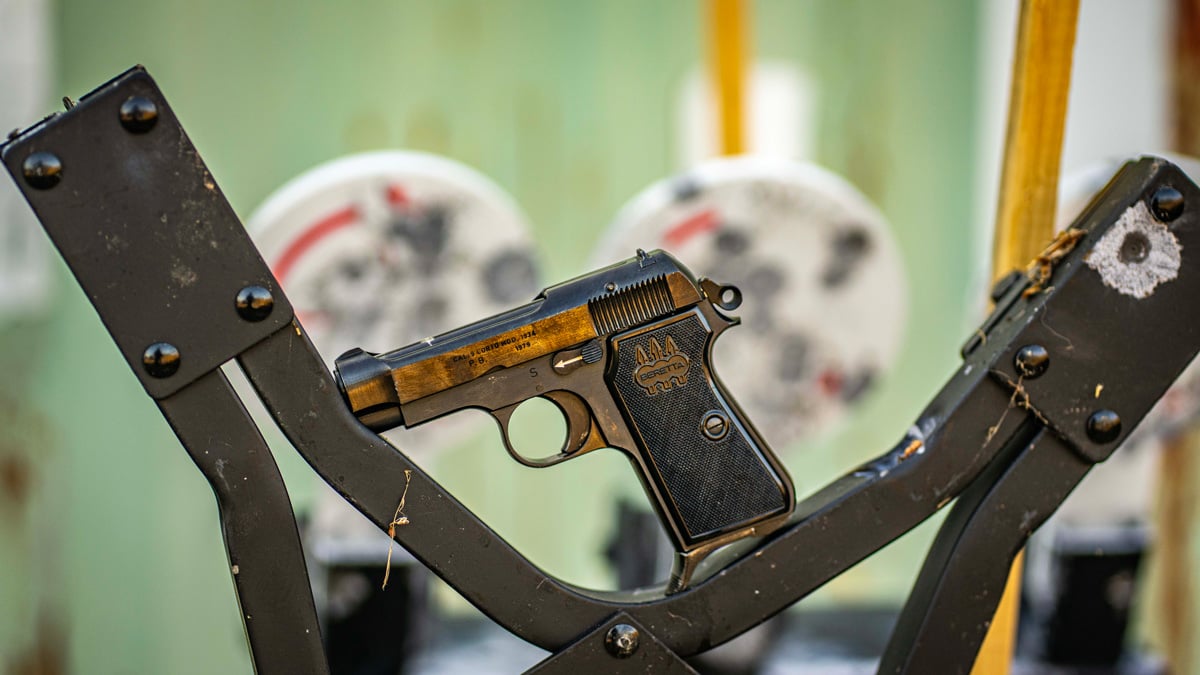
M1934 pistols were no-frills guns, even when compared to period competitors from the 1930s, like the Walther PPK. The M1934 uses a similar, simple blowback design. But it does so with an independent guide rod and recoil spring under a non-fixed barrel.
The design also competed with guns like the PPK (6+1) and offered a 7+1 capacity of .380 ACP in a compact package.

A carved-out slide is one of the gun’s most unique and distinguishing “Beretta” features. This cuts weight, sure, but it also makes for easier machining and reduces the chances of stove-pipe jams and ejection failures.
Unlike many other blowback designs of the era, the barrel is not technically fixed. It does not move backward during the firing process. However, it is simply held in place by tongues and grooves that connect with the frame. This makes disassembly especially unique.
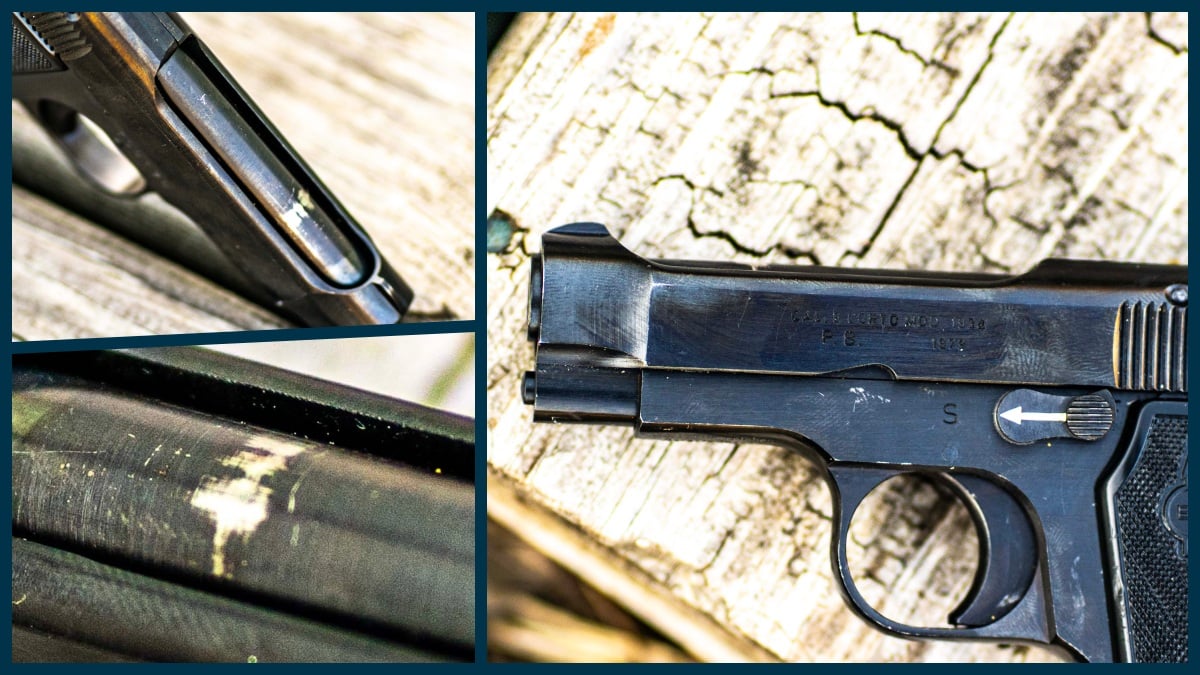
There is no takedown pin or lever for the M1934. The slide just locks to the rear with the aid of the safety. After that, you manually press or tap the barrel out of the gun and pull it through the slide cut. This allows the slide to come off the frame, and basic disassembly is complete after that.
That safety is another quirky feature. It functions as the gun’s safety and swings 180 degrees forward to place the pistol in the “fire” position. It also locks the slide to the rear when in the “safe” position, but this is only for disassembly.
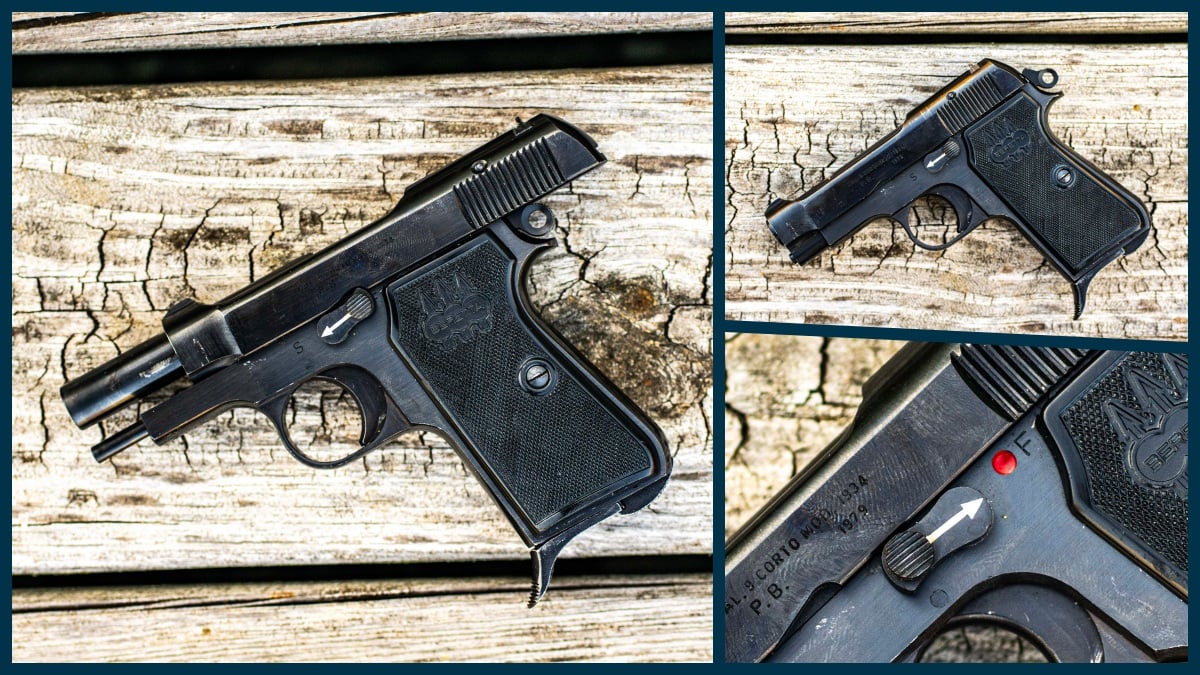
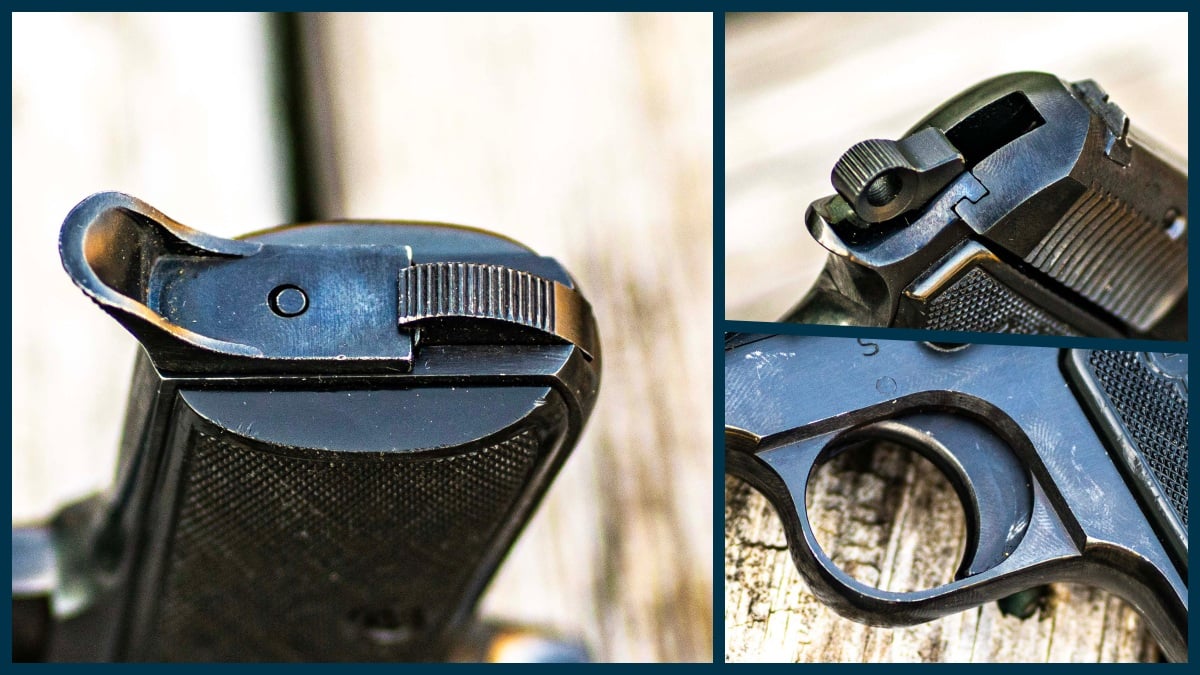
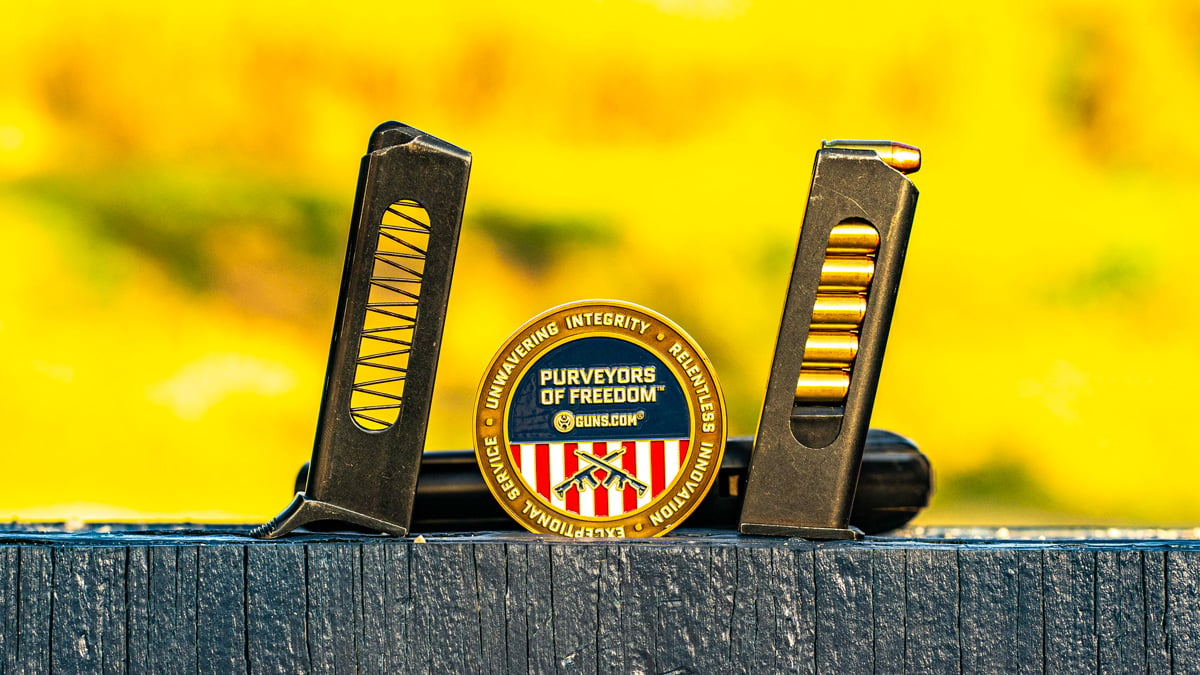
M1934 pistols feature a slide stop that is activated by the magazine, not the safety. That means the gun locks to the rear on the empty mag after the last round is fired. Removing the mag sends the slide forward again. So, users have to re-rack the slide after inserting a fresh magazine into the gun to chamber a new round.
It is a quirky process.
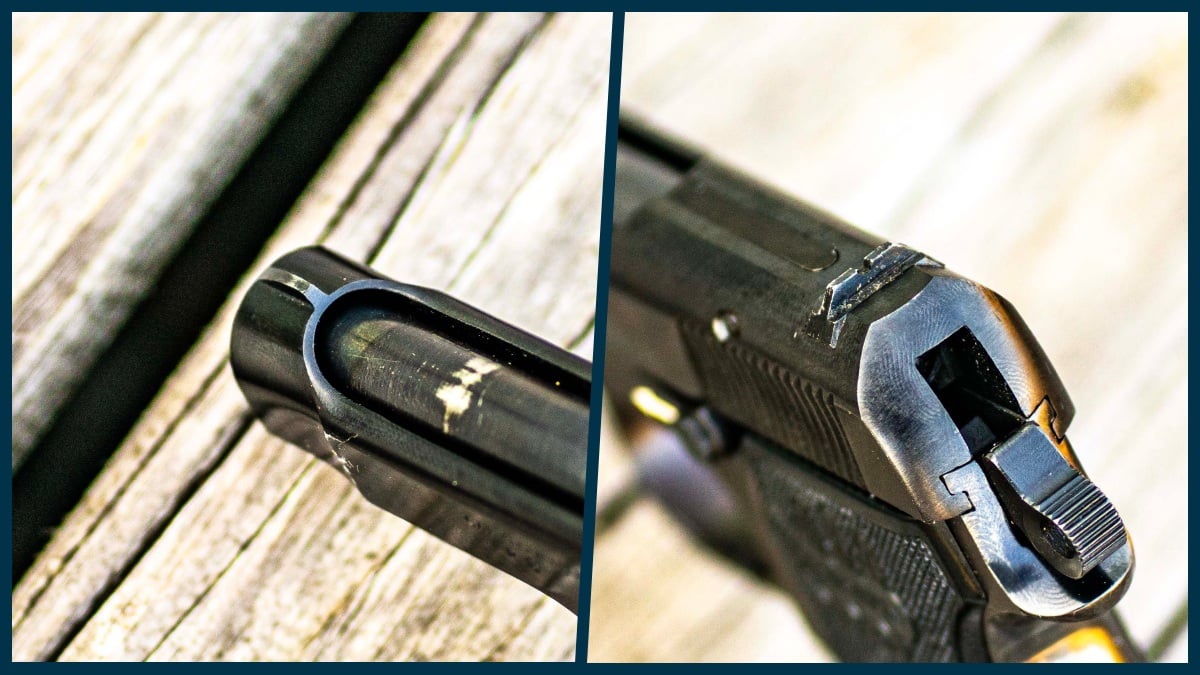
The 180-degree safety is also hard to use without adjusting your grip or rotating it with your support hand. Also, there is no firing-pin block, transfer bar safety, or inertia-based firing pin. The safety only locks the pistol’s trigger. That means the M1934 is not technically drop safe. There is no magazine disconnect, which is nice.
Another quirk – to American shooters anyway – is the oversized heel magazine release. I found this easy to use, but don’t expect any speed reloads with this gun.
Specifications
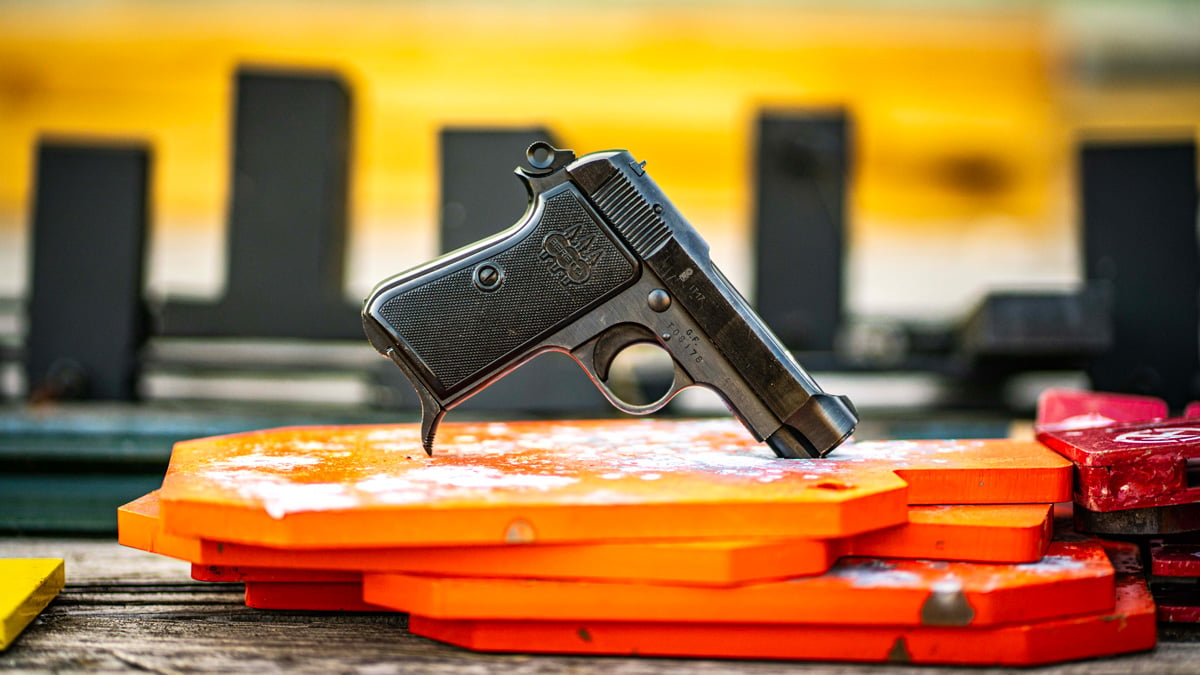
Here’s a quick breakdown of the basic specs for this gun. One small caveat is that this gun has a slightly shorter barrel than it did when it rolled off the factory. The end of the once-threaded barrel was cut off to meet import restrictions.
Weight: 1.47 pounds, with empty mag (originally 1.54 pounds)
Length: 5.67 inches (originally 6 inches)
Barrel Length: 3.19 inches (originally 3.5 inches)
Sight Radius: 4.2 inches
Height: 4.46 inches, no mag
Width (Frame): 0.97 inches (slide and safety)
Width (Grip): 1.19 inches, widest point (tapered design)
Capacity: 7+1
Chambering: .380 ACP
Trigger Pull: 6.46 pounds (10-pull average)
Accuracy & Reliability
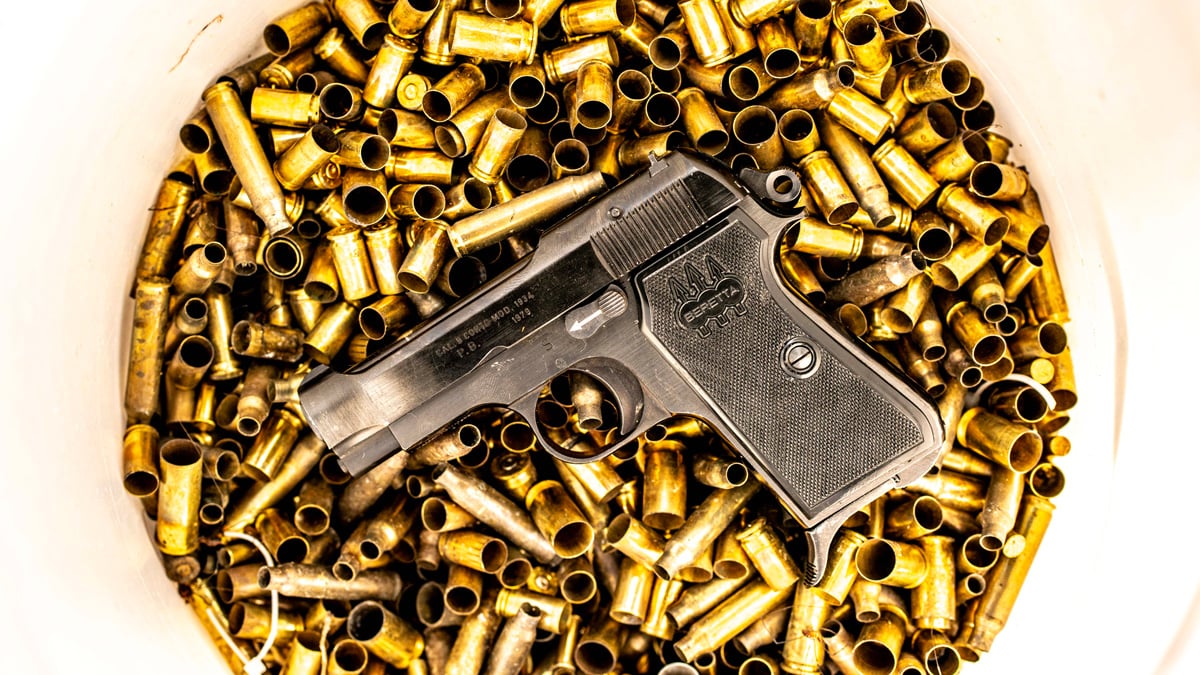
This may be an old gun, but I shoot it better than many modern .380 ACP pistols of the same size. Part of that is thanks to the weight. As an all-steel design, it is heavy and really eats up the recoil.
I find guns like the Walther PPK somewhat snappy. The M1934 is far less so, and it has a decent trigger. It has a bit of mush to it, yet the pull is short and predictable.
Here's how it performed for me in the accuracy department for my very first three magazines. I shot all of these with the standard magazine (no pinky extension) at 10 yards.
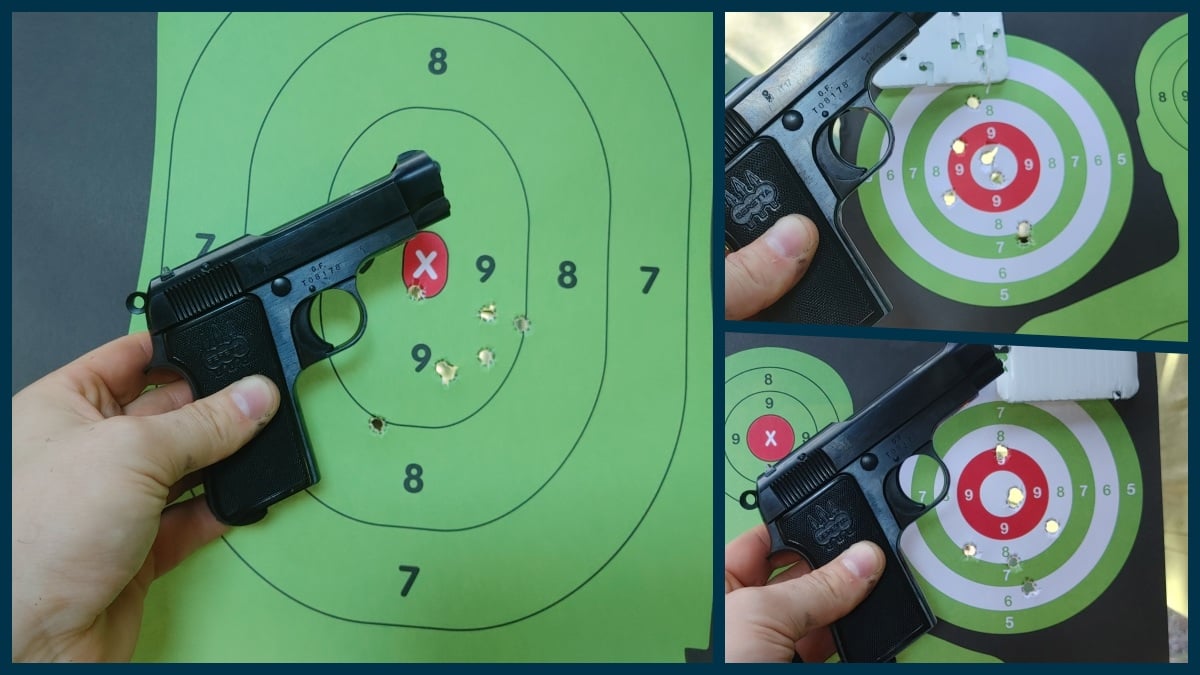
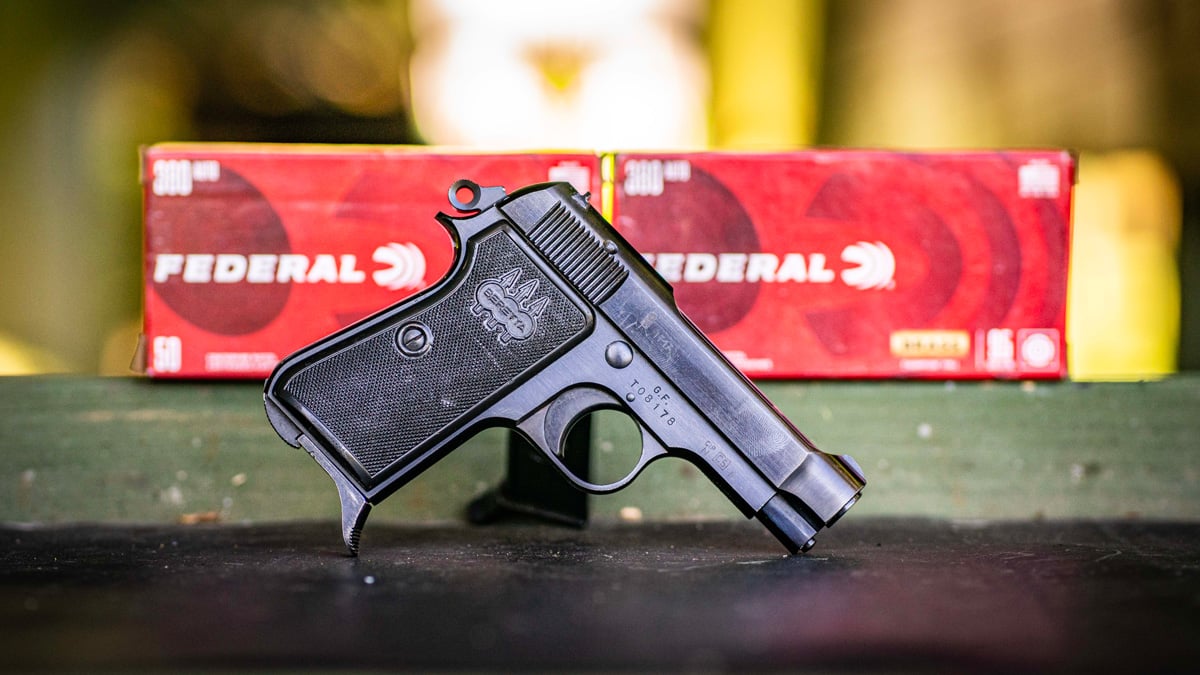
I did all my shooting with Federal 95-grain FMJ. Since this is a vintage gun, I saw no need to overly abuse it. I ran 100 rounds through it with no issues to report.
I don’t even mind the heel magazine release on such a small pistol. Reliability was also solid.
Pros & Cons
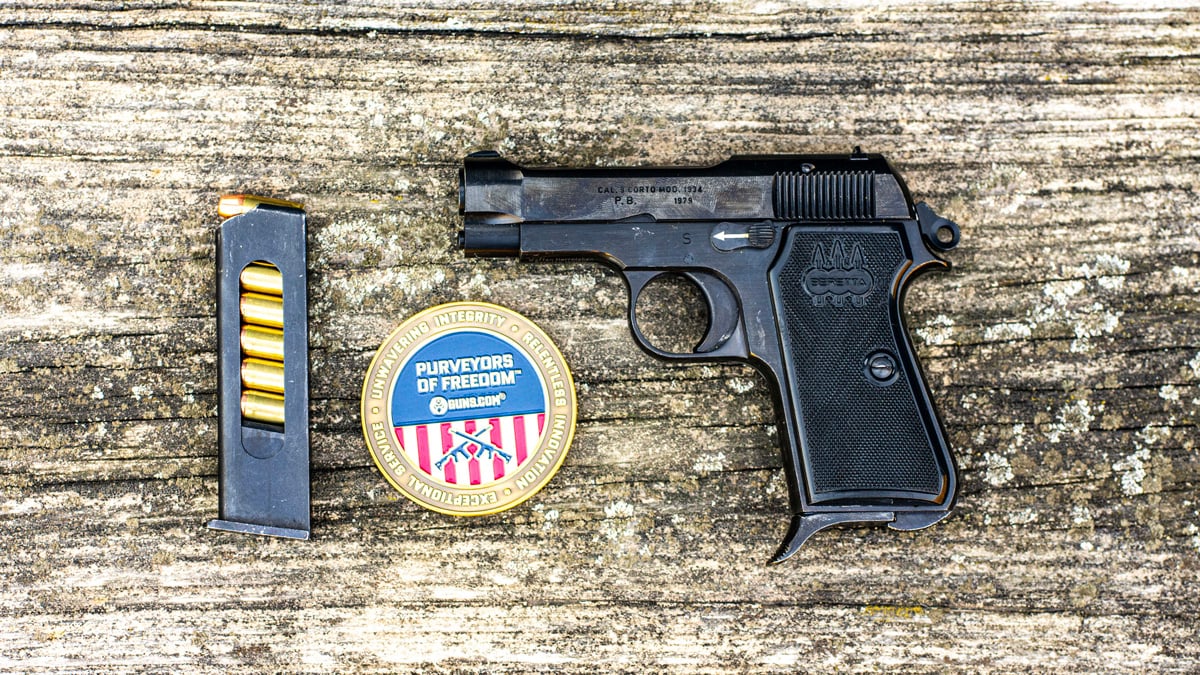
Here’s my shortlist of the top pros and cons of the old Beretta M1934:
Pros:
- Cool piece of history
- Feels nice in the hand
- Interesting design with good looks
- Accurate
- Reliable
- Compact
- Still affordable to buy
- All-metal design
Cons:
- Hefty for its size
- Not drop safe
- Safety is hard to use
-
Reloading requires racking the slide
Final Thoughts

The M1934 is a fascinating design and one of Beretta’s longest-running handgun models. It’s a fine gun to own just for collecting, but it will shoot well, too. I was quite pleased with my performance on just my first three magazines, but I have seen others shoot the M1934 much better with a bit of practice.
As far as military history goes, the M1934 is chock-full of it. Alas, quality surplus guns like this tend to come into the U.S. in huge quantities that offer cheap prices, at first. Once the supply dries up, the prices go up. For now, these can still be had at budget prices for new and experienced collectors and shooters alike.