Hypothesis
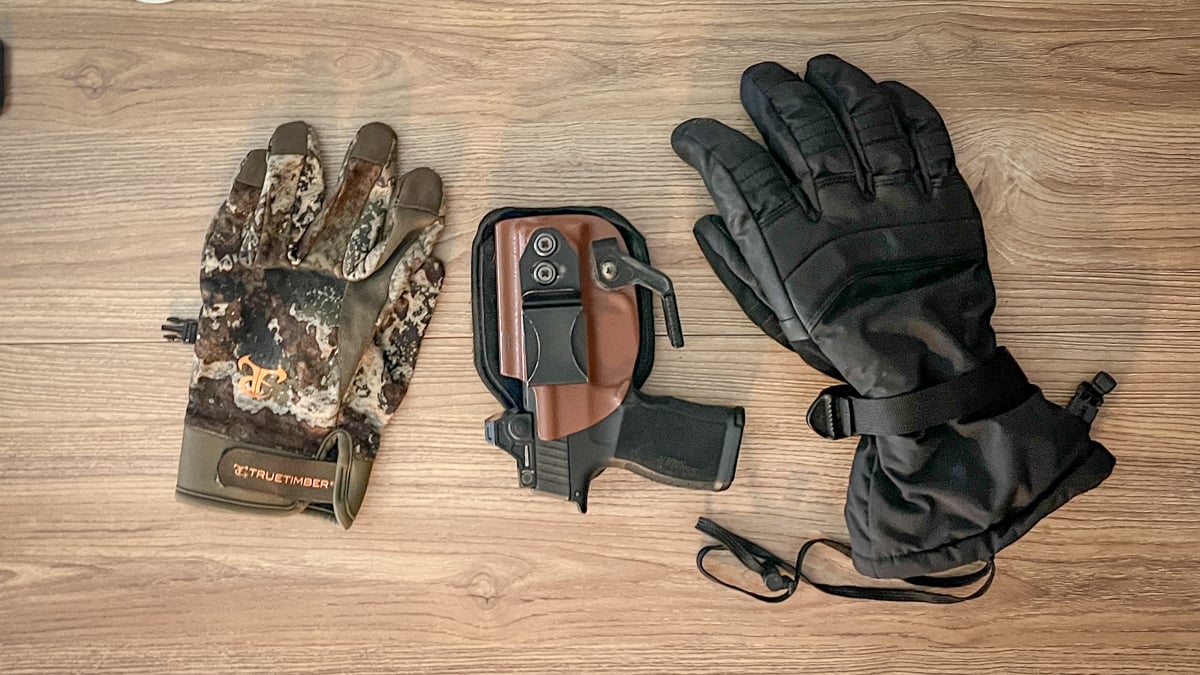
The hypothesis I had for finding the perfect pair of concealed carry gloves was rather simple: the thicker the glove, the less dexterity – therefore, the less control of the gun you will have. There was certainly some truth to that, but there were also some serious surprises. Materials played a large part in the outcome, along with construction of the gloves, which was just as important as the thickness of the glove when determining which gloves worked best.
I wore some of these gloves in terrible conditions during a polar vortex in Wisconsin, when temps got as low as -25 F. There is also something to be said for having gloves that keep your hands warm, since cold fingers don’t function nearly as well.
Intro to Range Time
Like millions of other average American gun owners, I train too little, and nearly all my training is done at the indoor range, shooting at a static target. The only chance I get to move off the line and draw from the holster, much less do any sort of dynamic movement, is at a range a few hours away. Needless to say, I only get there a few times a year to do any significant training.
That said, it made sense to practice with the gloves at the indoor for a couple of reasons. One is that I can comfortably shoot and take notes on the gloves, something that would be difficult while exposed to the elements outside. Two, it allowed me to really focus on the gun and how it interacted with the glove.
Once the shooting started, things got interesting. While the general hypothesis held up – the thicker the glove, the tougher it was shoot – there were some surprises.
Baseline
Let’s start with the baseline to set the record straight. I shot two guns that I have carried over the past three years. I carry my SIG P365X the most, simply because it’s comfortable. The gun I own that I shoot the best, though, is my Walther PDP. I carry it occasionally as well, mostly when the temperature drops.
Related Review: Why I (Still) Think the Sig Sauer P365X is a Perfect Carry Gun
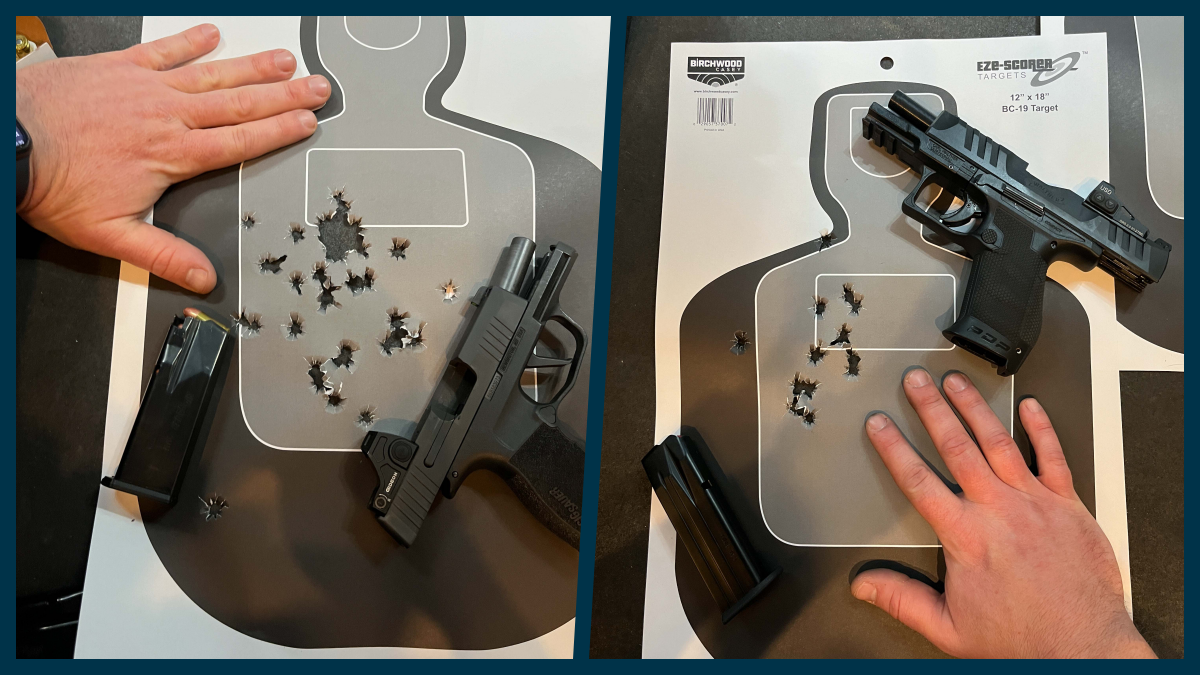
There are two main reasons I wanted to test with both guns. I carry them both, so it makes sense to test with both. Secondly, the PDP has a larger trigger guard than the P365X, so I wanted to know how much of a difference that would make when comparing gloves. As it turns out, it made a difference, but maybe not in the way you would expect.
Related Review: Walther PDP: Thick in Size, Superb in Performance
Thin Gloves
Before we dive into the thicker gloves, I wanted to talk about the thinner gloves. I tried four pairs: three from 5.11 and one from True Timber. It’s true that the thinner gloves gave a greater dexterity to the gun, but there was one set of gloves that really threw me for a loop.
I was initially very excited to get theHalon FR gloves, but once I got to the range, I soured on them a bit. Sure, they have a very stylish look, but the goatskin leather palms didn’t do a great job of giving me the dexterity I would have liked. Perhaps it’s just me, but the leather wasn’t nearly as controllable as the other materials. They are great gloves that would pair well with a suit, but the results for me were less than ideal compared to the other thin gloves.
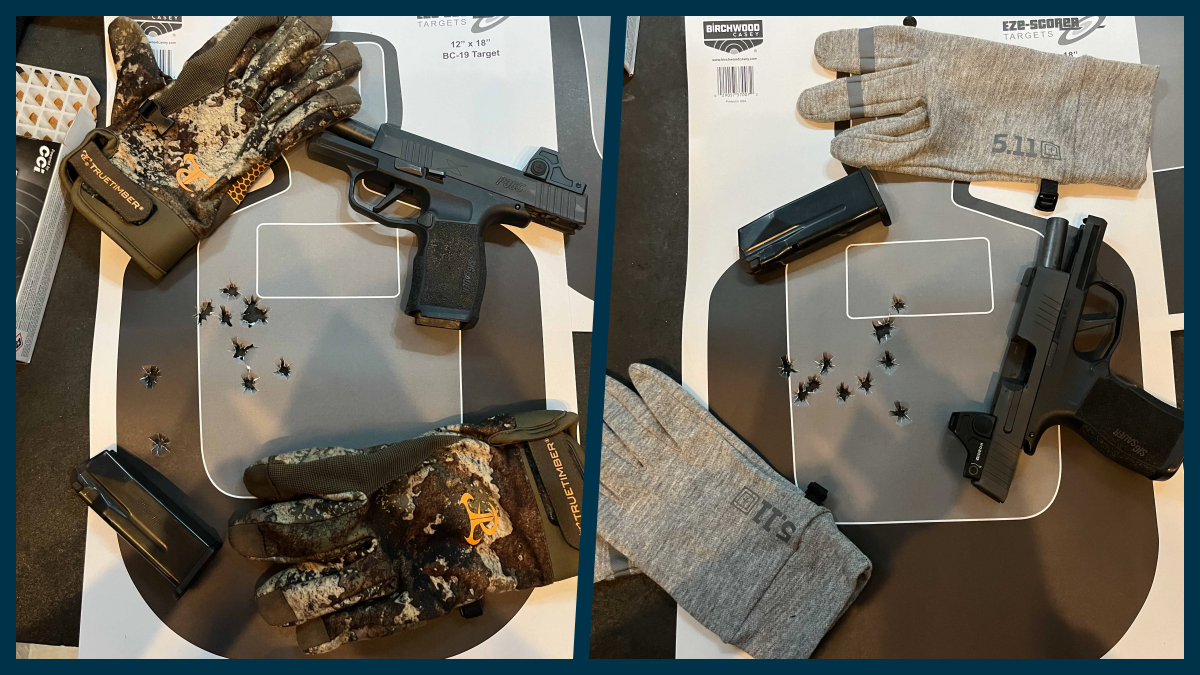
There are two sets of gloves that I liked best and found myself consistently wearing: the Handtech True Timber gloves and the Competition Primaloft Insulated gloves from 5.11. I’ve worn the Handtech gloves for years, but they are very thin and have started to fall apart a bit.
None of these gloves are ideal for temps below freezing, but in terms of warmth, the Competition Primaloft gloves were the best of the bunch. It’s true that they are the only insulated gloves on the list of thinner gloves, but the insulation is thin and allows me to manipulate the firearm the same way that all the others do.
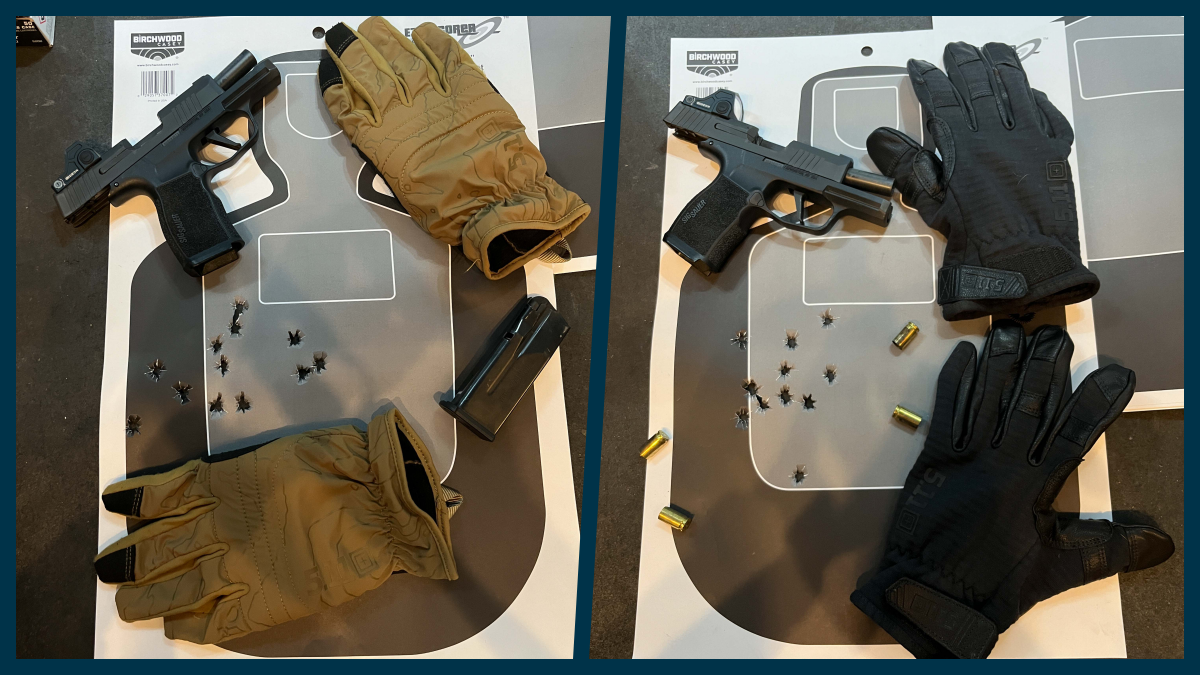
These were the only gloves I wore when the temps dipped below the freezing mark. While they do work for temps between 20-32 degrees, you’ll start to feel the cold in your hands after about 30-40 minutes at these temperatures. All the other gloves were better than nothing but didn’t do much to combat the cold – something to keep in mind as we move forward.
Thick Gloves
I also tested four pairs of thick gloves. I had two from 5.11: the Adiron Primasoft Insulated and URSA 3-in-1 Primaloft Insulated gloves. The latter actually comes with two sets of gloves designed to work together, but for the purposes of this article I split them apart and included the membrane gloves in the thin gloves section. The two others I had were an old pair of Icebreaker gloves from Fleet & Farm and a pair of heated gloves from Action Heat that I received for Christmas a few years back.
Shooting with the thicker gloves started to show the limitations of the P365X and the smaller trigger guard, although it was interesting how the thicker gloves interacted with this smaller guard. Three of the four gloves had relatively the same thickness, while the URSA gloves were the thickest. The Adiron gloves seemed to have an inner liner that was separate from the outer glove part, which made it tough to get fingers back in sometimes.
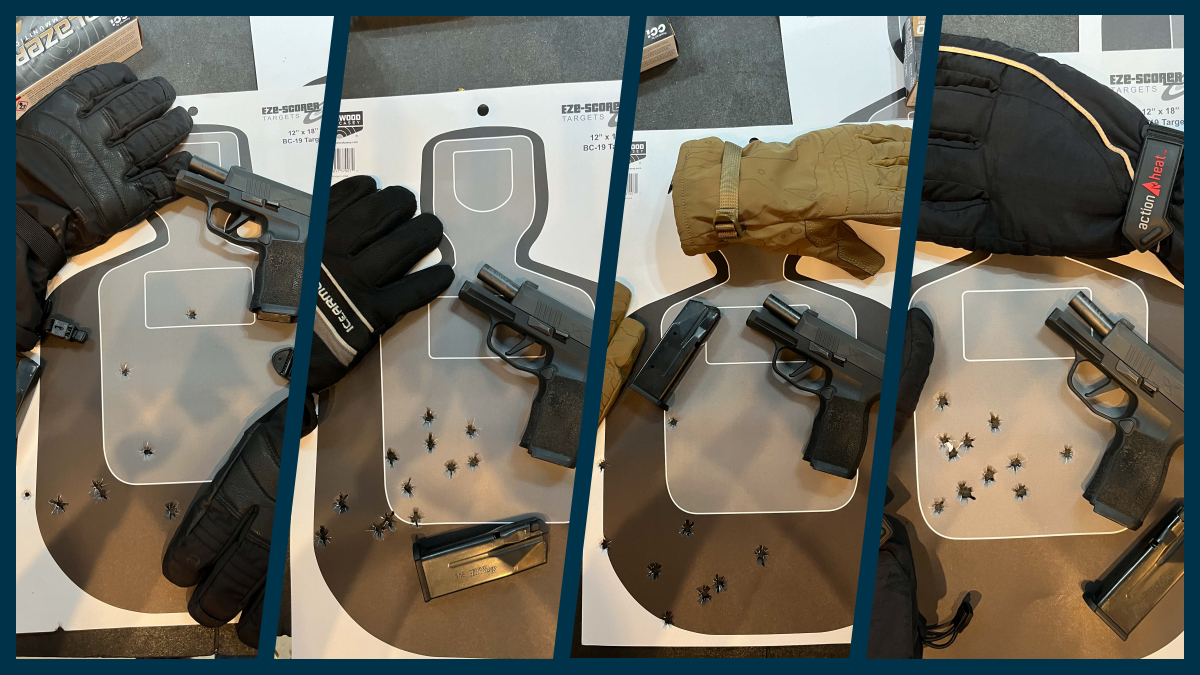
With the thicker gloves, I had to make a concerted effort to get the trigger finger on the trigger of the smaller P365X. While that may have proven trouble in a real self-defense scenario, the real problem was on the reset. Only the Action Heat gloves allowed for an easy enough reset to get good follow-up shots. The rest of the gloves would hang up the reset to the point that, again, it would take a concerted effort to let the trigger reset.
While I was trying to let the trigger reset, my attention was taken off the target and focused on my finger. Eventually, all the gloves allowed the trigger to reset, but the worst offender in this category was the Adiron gloves. These resulted in my worst groups. The Action Heat gloves, on the other hand, were surprising in both the functionality of the trigger and reset, which showed in having the best groups of the bunch of thicker gloves.
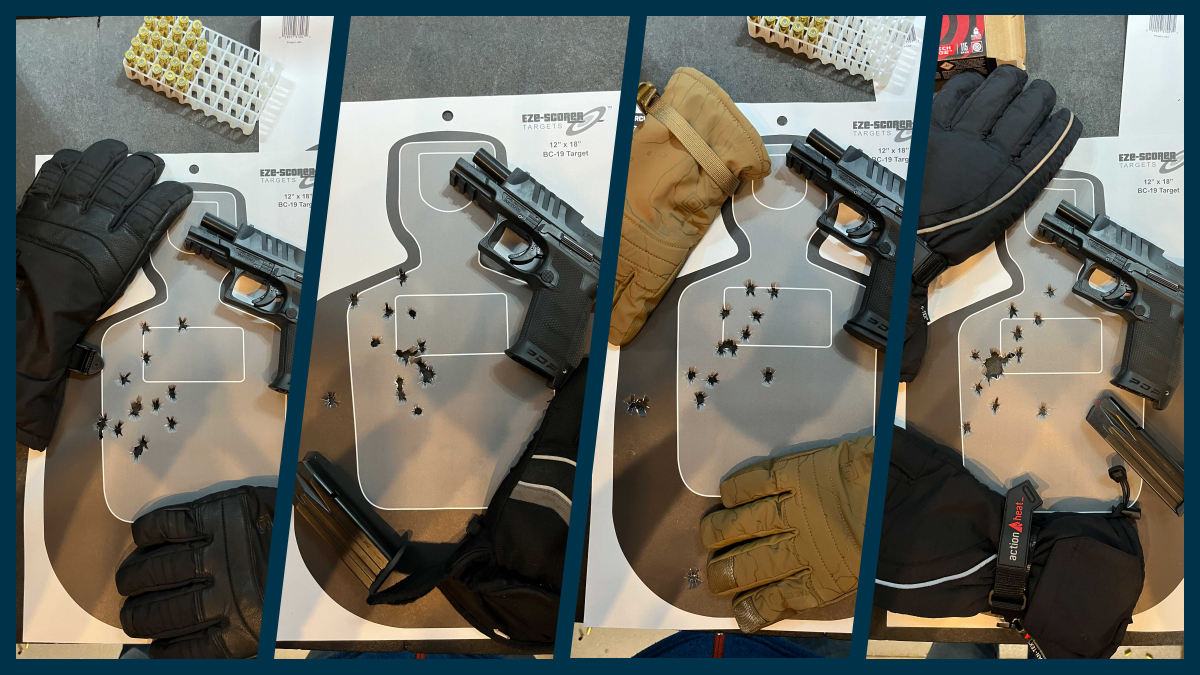
It should also be noted that all gloves allowed manipulation of the slide stop and magazine release without any issues. The one issue that I ran into with all the gloves (except the Icebreakers) was that they stopped the mags from dropping free. I had to manually extract the mags with my off hand.
Draw Time
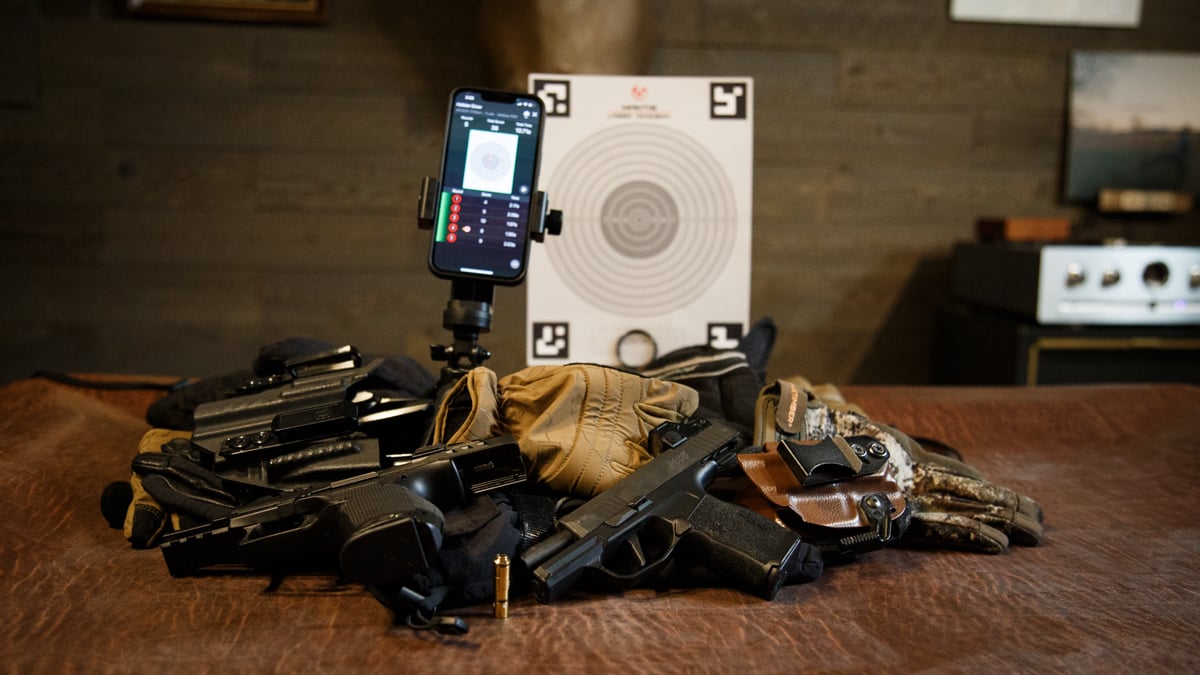
Handling and shooting the gun with gloves on are only one part of the equation, as wearing gloves will also alter your draw and ability to get on target. Lucky for me, I didn’t have to stand outside to test this theory, thanks to the Mantis Laser Academy the drills it provides. From the comfort of my basement, I was able to get real data on how each set of gloves affected my ability to draw my gun and get on target.
Related Review: Mantis Laser Academy Delivers Dry-Fire Fun and Results
I’ll save you the trouble of going through all my splits and just highlight some of the best times and worst parts of drawing with gloves on. I wore a 5.11 Adventure Primaloft insulated Jacket and a hoodie for my testing – a typical winter outfit for me that keeps me warm in temps down to 15-20 degrees.
Since I did the draw time comparisons after I went to the live-fire range, I already knew that thick gloves didn’t work with the P365X. I decided to only test the thin gloves on the P365X and the thicker gloves on the PDP. All testing was done from approximately 5 yards (about as far as I can get in my basement), and I gave myself three rounds of five draws for each glove.
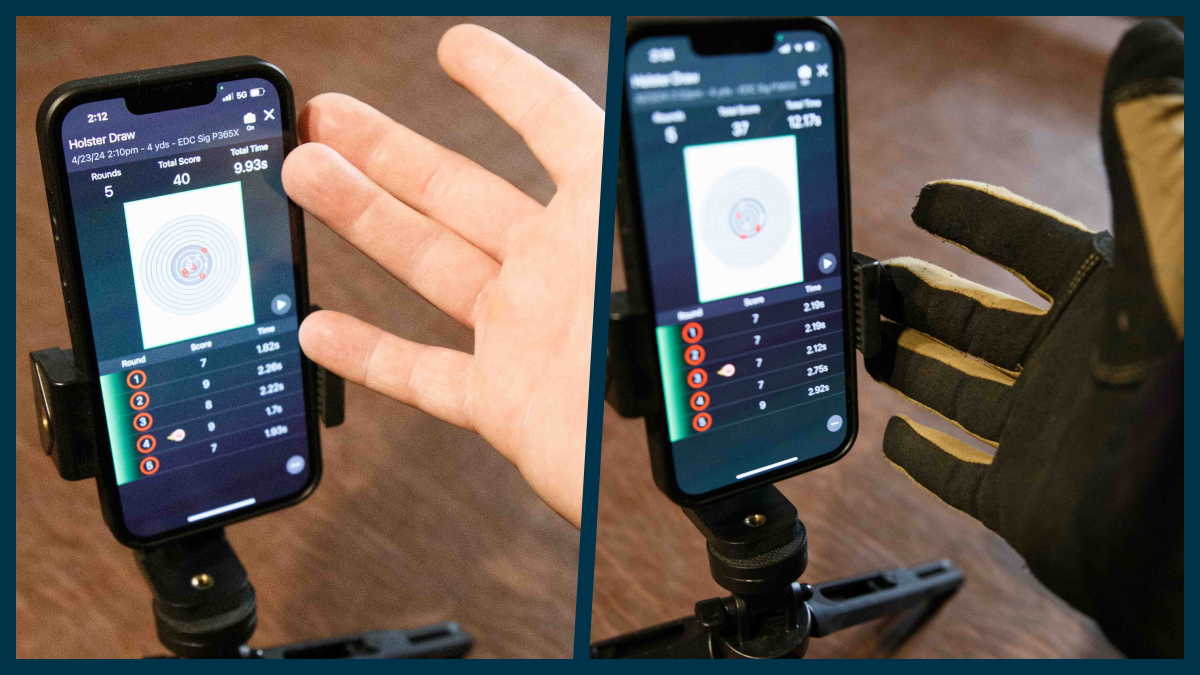
Of the thin gloves, the Competition gloves again seemed to be the best, giving me an average of 32.66 (out of 50) and an average draw time of 2.37 seconds. Two things became apparent to me when starting this exercise. I need to practice my draw with these garments more, and gloves, even the thin ones, make it more difficult to get a proper grip upon drawing the gun.
That became even more apparent when dealing with the thicker gloves. While the initial grab was still difficult, the PDP seems to have made up for it with the larger trigger guard and better trigger, as the thicker gloves scored much better. The top score went to the Action Heat gloves, with an average score of 39 (out of 50) and average draw time of 2.58 seconds. The URSA 3-in-1 gloves were actually faster than the Competition gloves with the P365X, with an average draw time of 2.36 seconds while maintaining a respectable 36 average score.
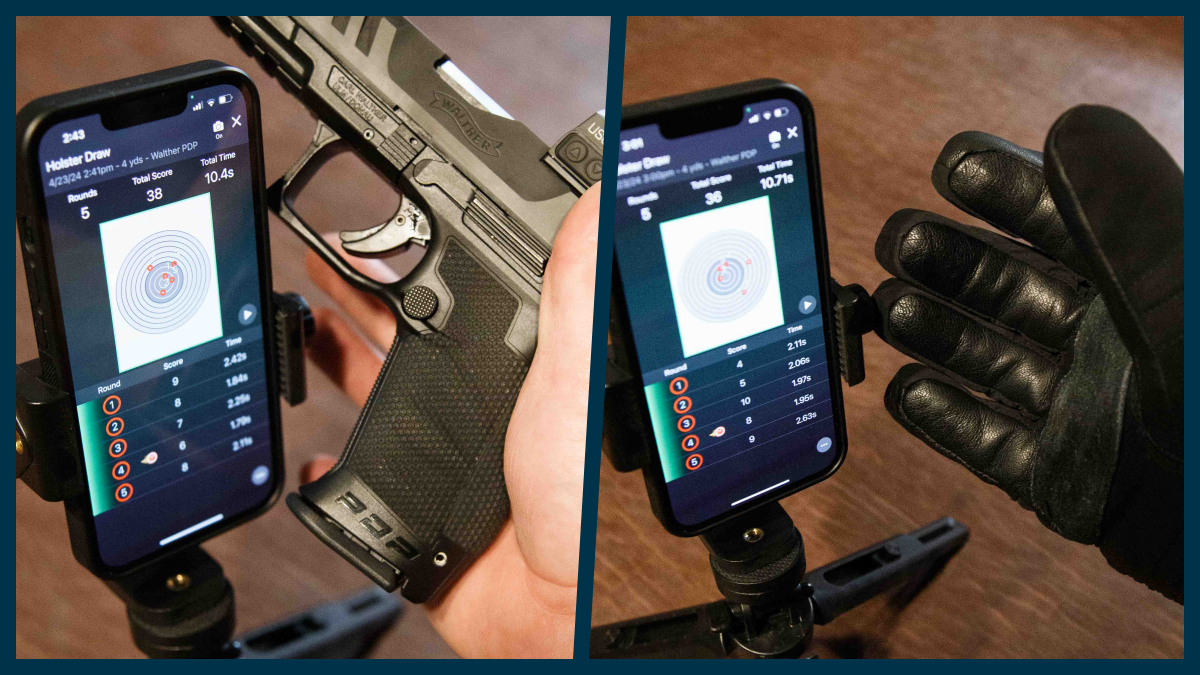
The Adiron gloves gave two malfunctions, both resulting in the gun firing at an unexpected time. These also required the most effort to get my finger into the trigger guard.
The URSA 3-in-1 gloves had one malfunction of the trigger safety failing to activate, but these gloves also took a concerted effort to draw and get my finger on the trigger.
External Factors and Other Considerations
I never got the chance the test these outside during the cold season, so there is something to be said about how they would function in real-world conditions. I’m not sure how much it would change the results, though. The other thing I couldn’t do was test fire a gun after my bare hands had been exposed to the cold.
I’m not sure about you, but when my hands and fingers get really cold, my dexterity diminishes, and my hands hurt more when I hit them on something. For these reasons, I don’t think no gloves is a great answer, either. It’s worth considering, but I also know that I probably wouldn’t leave the house without gloves when the temperature drops under freezing.
Pros and Cons
If you’re still reading, you might be wondering about the what’s good and bad about each type of glove. I’ll quickly run through the pros and cons of each here, going from thinnest to thickest.
5.11 3-in-1 Liner Gloves
Pros
- Great dexterity
- Touchscreen compatible
- Nondescript look
Cons
- Hardly any warmth
True Timber Handtech
Pros
- Tactile feel
- Great to pair for hunting with camo look
- Most affordable on the list
Cons
- Very little warmth
- Chintzy construction means they are falling apart after four years of use
- Not touchscreen compatible
5.11 Halon FR Glove
Pros
- Stylish, would pair well with a suit
- Touchsceen compatible
- Great fit
Cons
- Worst shooting groups of the thin gloves
- Would be nice if they were a bit thicker
5.11 Competition Primaloft Insulated Glove
Pros
- Very warm for how thin they are
- Incredible tactile feel and grip
- Best shooting groups
- Great construction
Cons
- If it’s really cold (below 15 degrees), these aren’t quite thick enough for spending significant time outside
Icebreakers
Pros
- I’ve had these for years (wife says I should throw them away) but I know there is another use
- Used to provide great warmth before the holes developed and the strap stopped working
- Affordable buy from Fleet/Farm
- Surprisingly good groups from the thicker gloves
Cons
- Only had strong hand glove for range testing
- Should probably be thrown away
5.11 Adiron Primloft Insulated
Pros
- Very warm
- Touchscreen compatible
- Cinch strap allows for tight fit
Cons
- Worst shooting groups of any gloves
- Inside liner tended to reverse itself, making it difficult to get fingers back in, personal pet peeve
- Worst trigger reset functionality of any of the gloves tested on P365X
Action Heat
Pros
- Battery-charged heating element gets gloves HOT
- Second warmest gloves without the pack turned off, warmest with it on
- Best shooting groups and dexterity of the thick gloves
Cons
- Bulky battery pack won’t go under most jacket sleeves
- Very difficult to operate small battery pack switch with gloves on
- Gloves almost get too hot with battery pack on
- Goes through four AA batteries per glove very quickly
5.11 URSA 3-in-1 Primaloft Insulated
Pros
- Warmest of all the gloves, wore them in -20-degree weather while walking the dog, sometimes as long as 30 minutes, and hands held up well
- Waterproof and breathable membrane
- The liner gloves are included with purchase
- Thumb nose-wipe panel – 5.11 advertises this, and I have to say, it was a pleasant nose wipe
Cons
- The wrist loops kind of flop around and can get caught on things
- Tough to have much dexterity since they are so thick
Conclusion
If I had to only choose one pair of gloves from the list above, it would undoubtedly be the 5.11 Competition Primaloft Insulated Glove. I wore these in temperatures down to 20 degrees, although anything over an hour outside at the temp would have gotten pretty cold. They offered great versatility and warmth along with superb dexterity and manipulation of the firearm.
If this exercise has taught me anything, it’s that I should train more often in the clothes I wear every day. After all, knowing how to manipulate the garments I wear in relation to the draw and firing the gun is nearly as important as the gun itself. For example, I wouldn’t have known just how bad the reset was on the P365X with thicker gloves had I not done this. That experience has taught me to carry my PDP if I’m going to be wearing thicker gloves.
Bottom line: make sure to train with the firearm you carry. Put some rounds downrange with the gloves you plan to wear this winter – you may be surprised at the results.