About 9mm Punch
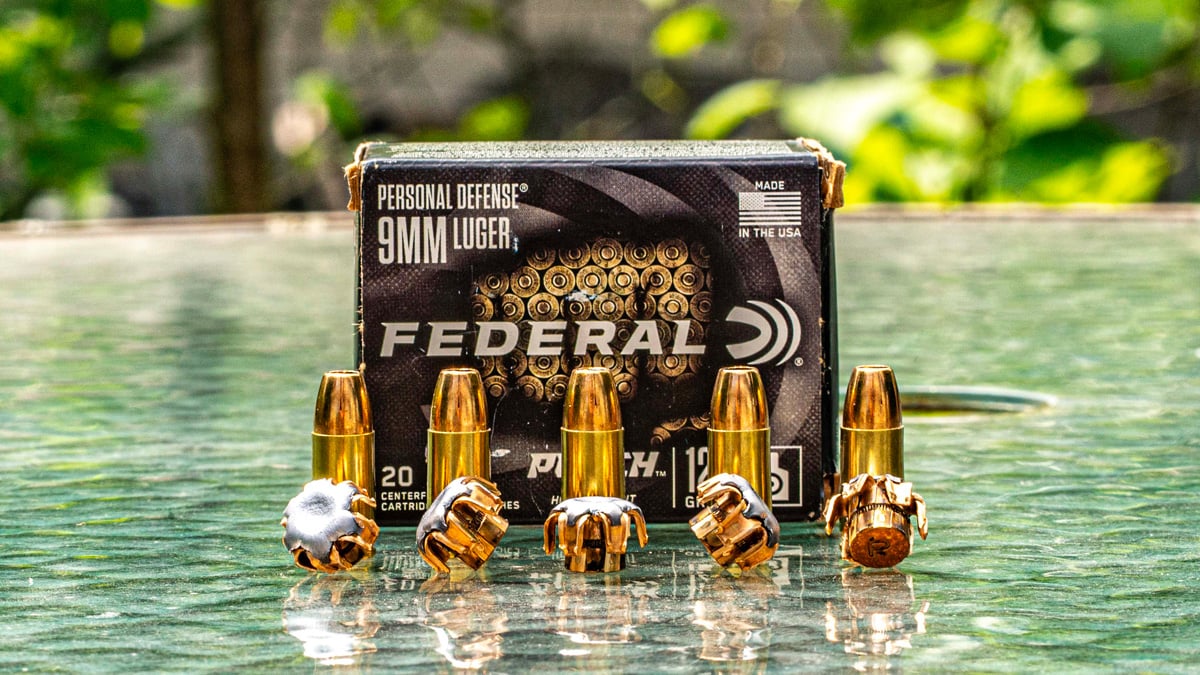
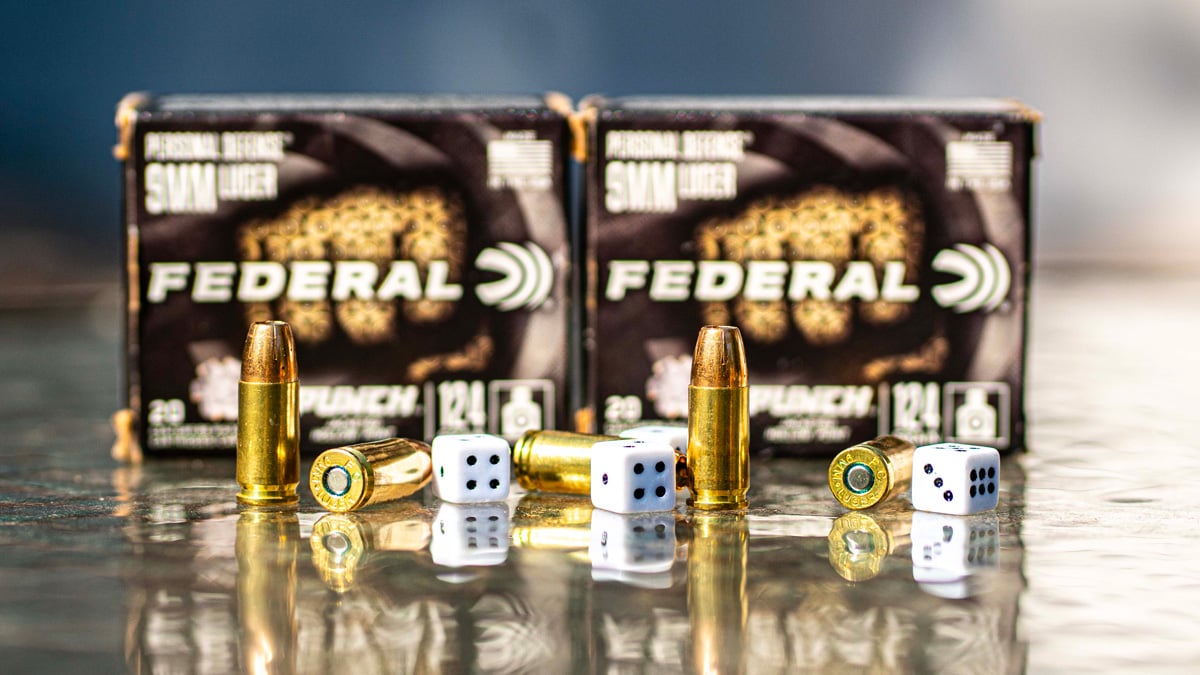
Introduced in 2020, Federal’s Punch ammo line is tailored for civilian self-defense needs. The line features sealed primers for more reliable ignition and customized loads for bullet type and weight.
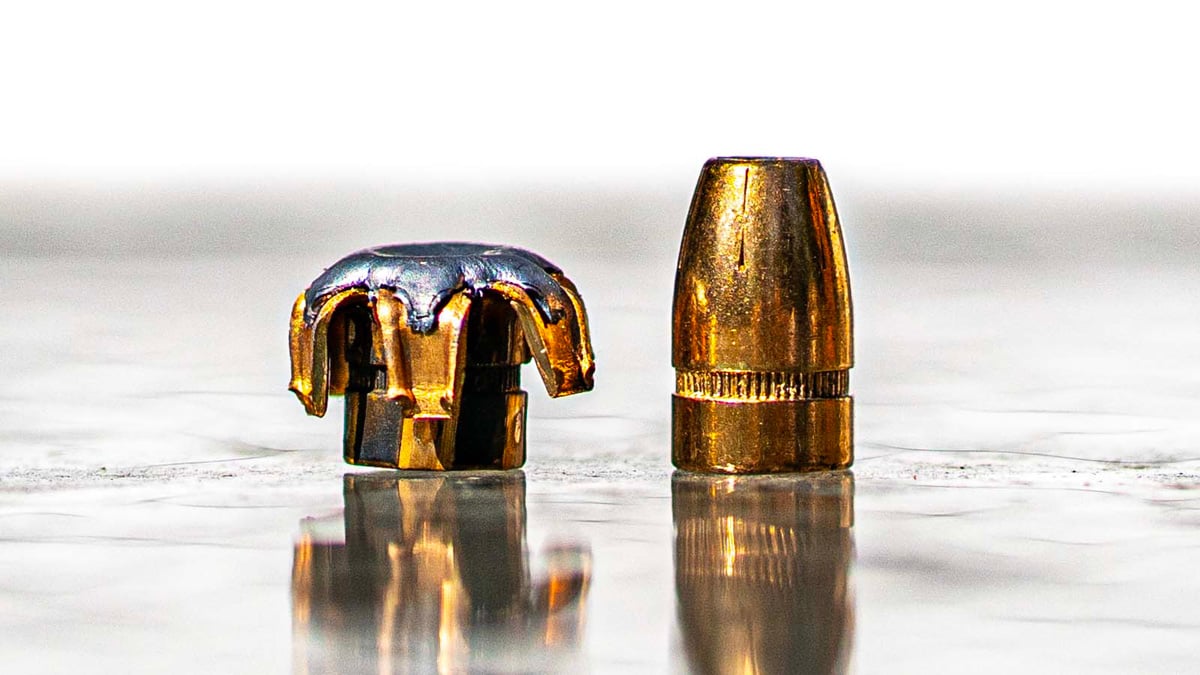
In the case of the 9mm Punch, the bullet is a 124-grain jacketed hollow-point projectile meant to run in a broad range of handgun designs and barrel lengths with predictable terminal performance on flesh targets.
This brass-cased ammo also falls into the reasonably priced category for the often burdensomely expensive self-defense ammo market.
That’s a huge advantage in my book. Every reputable self-defense class I’ve taken or heard about advocates that students test ammo in their guns before carrying them in the real world. It is easy to tell people they need to test their carry ammo. But when the big dollar signs show up on a box of 20 hollow-point rounds, it’s a lot harder to burn that cash at the range.
Punch helps with that, and I’ve run several boxes of 9mm Punch ammo through various test guns over the years. It has been a stellar performer for reliability. Now, let’s see how it stacks up for ballistics.
Velocity Testing
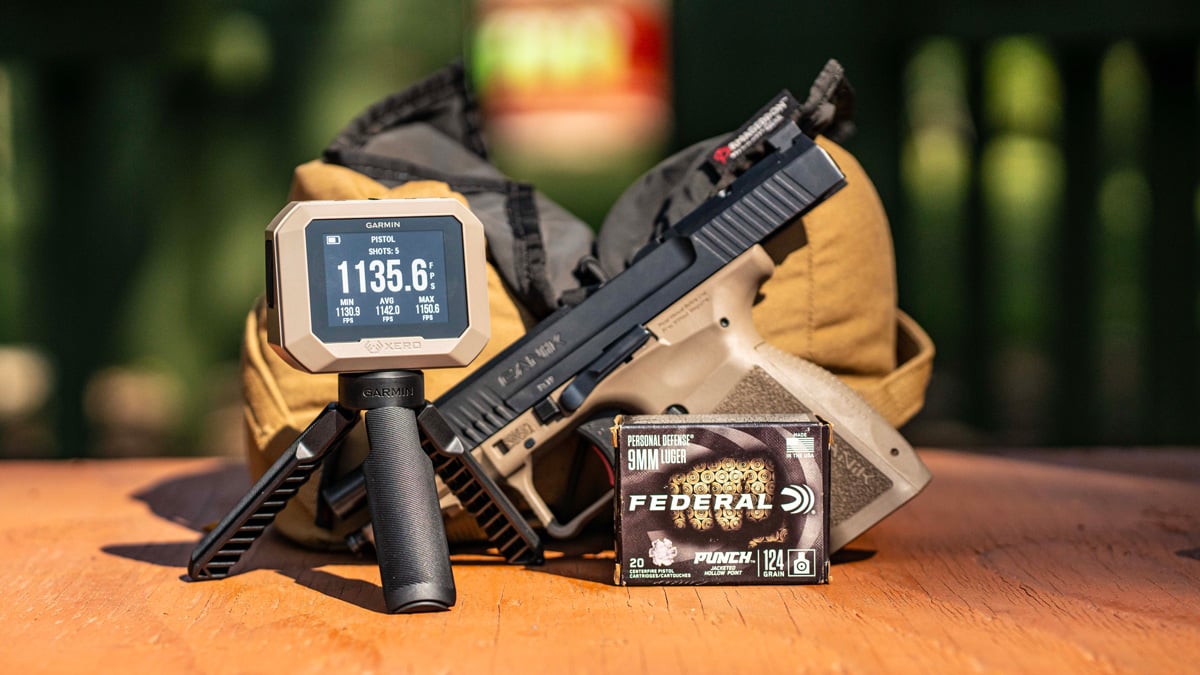
Out of the 4.46-inch barrel on my Canik Mete SFT, my five-shot average velocity was 1,135.6 fps at the muzzle. That comes to 354.99 foot-pounds of energy with the 124-grain projectile.
A lot can impact velocity measurements, including humidity, air pressure, load variation, barrel length, and chronograph variations. Still, we have a solid idea of what you can approximately expect with this five-shot test.
In fact, similar tests with guns sporting shorter barrels from other reviewers I follow have ended in lower velocities. Those averaged 1,061 fps and 1,098 fps from guns sporting 3.1-inch barrels. At a certain point, however, we’re playing with fractional differences, with this case showing a mere 3.42-percent difference.
Regardless, velocity matters for effective expansion and the foot-pounds of energy imparted on a target.

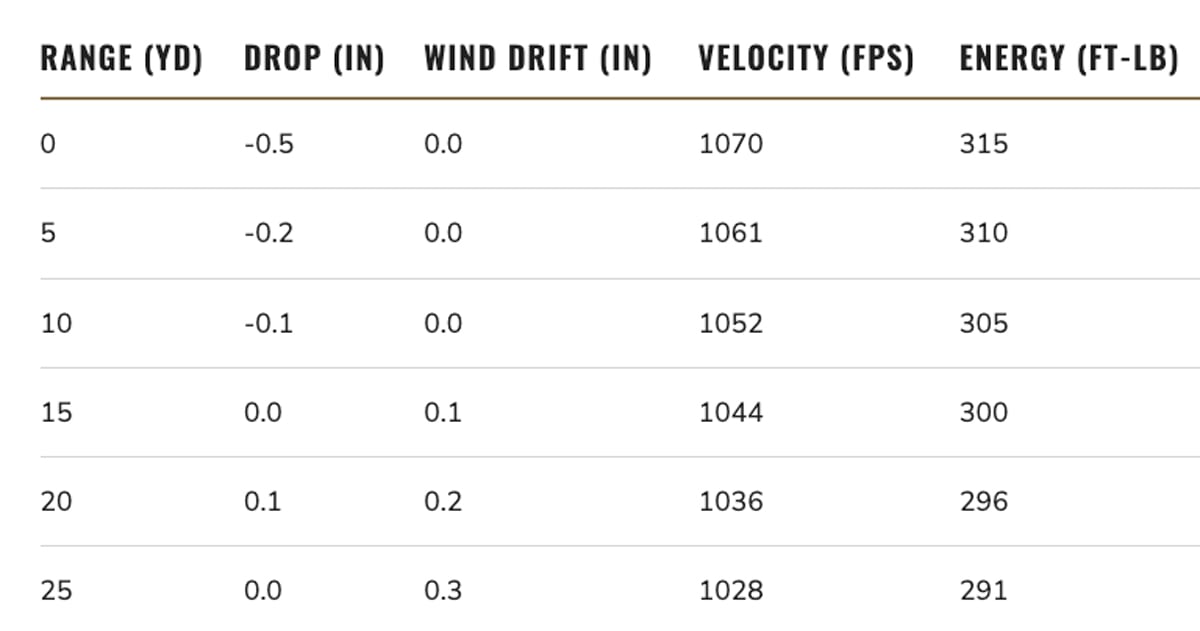
My practical takeaway is to expect velocities that at least approach 1,100 fps from compact-sized self-defense handguns. You'll get more with full-size guns. As you’ll see below, the resulting expansion and penetration are reliably consistent regardless of the exact speed values.
Ballistic Gel Testing
Shooting into a block of FBI 10-percent ballistic gel from 10 feet, here is what I got for penetration.
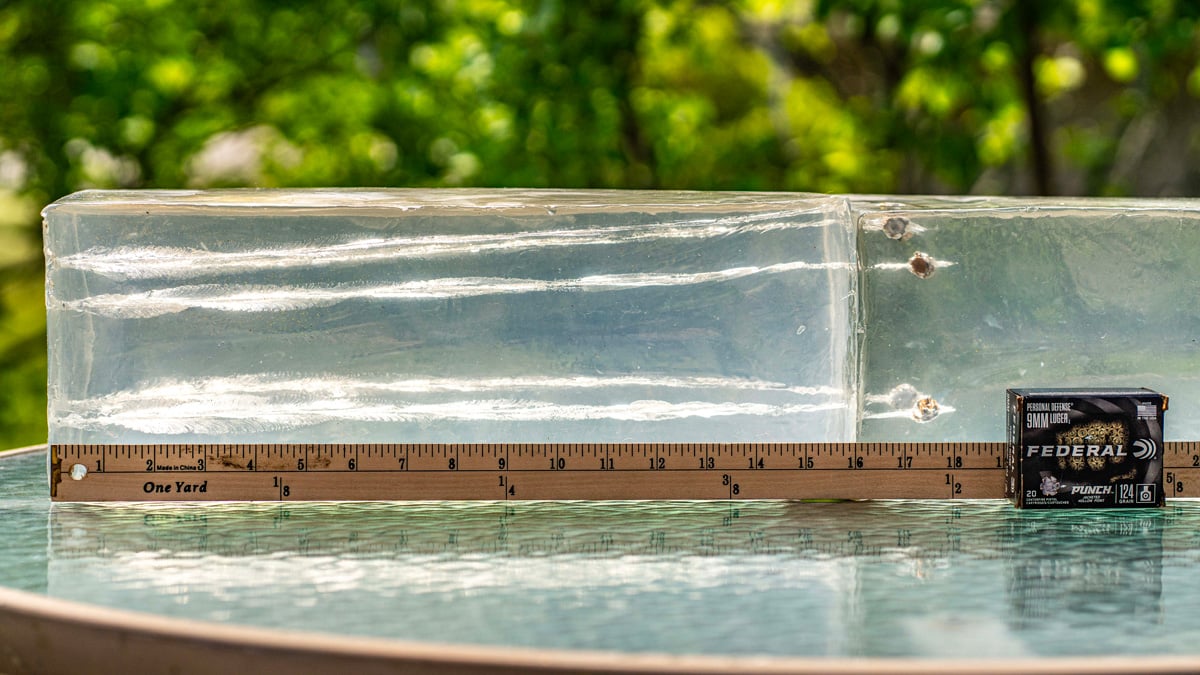
Attaining 17 to 18 inches of penetration is great. This was without a barrier, so you can expect slightly less penetration if the target has heavy fabric in front of it. Shooting through a thick fabric barrier will impact some penetration, but it also tends to ruin the gel block for future use, which is why it was skipped in this testing.
For clarity, even 1 to 3 inches of less penetration still falls well within the FBI’s recommended 12 to 18 inches of total penetration for stopping power without overpenetration. I also have not seen any reasonable clothing barrier result in that dramatic an impact.
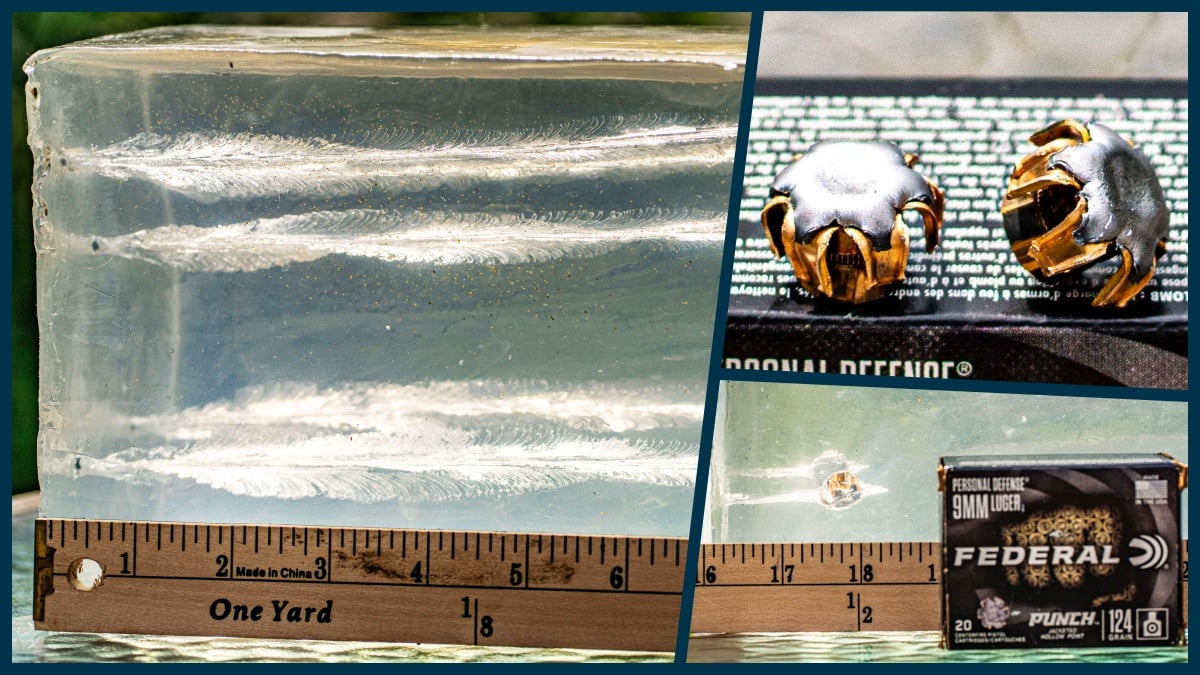
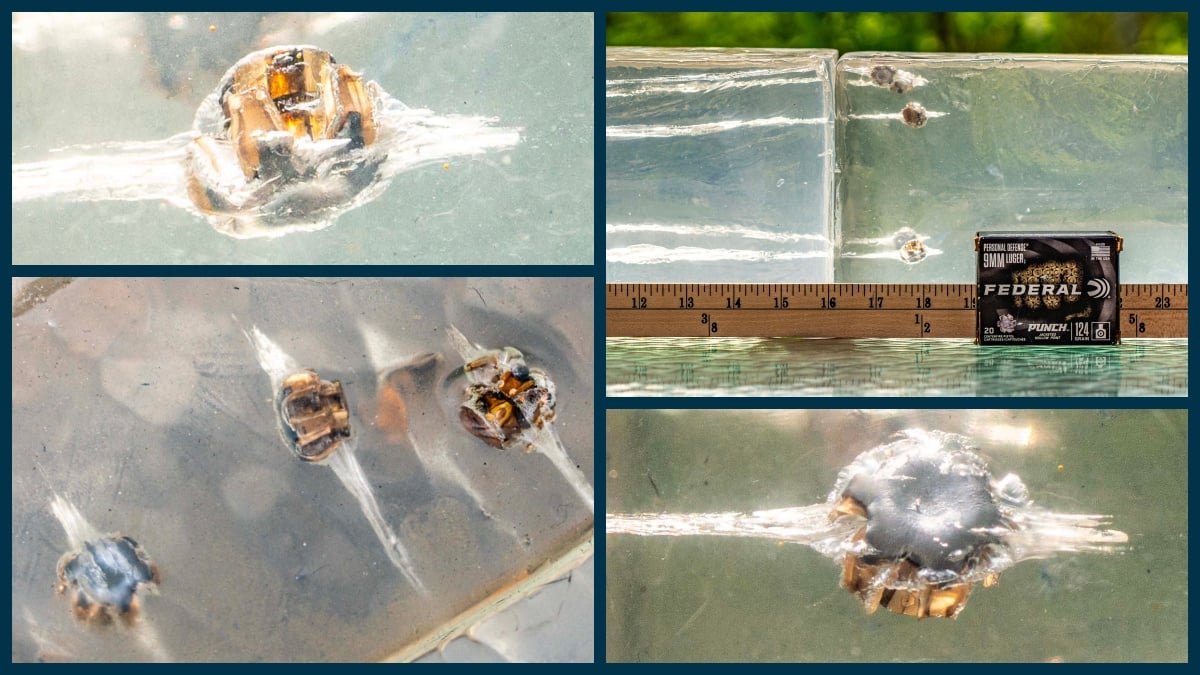
Overall, the bullet trajectories left a swirl of damage that bled away as they pushed into the second block. All came to rest at nearly the same point in the second block, which suggests similar performance in terms of total energy release and expansion.
Expansion Results
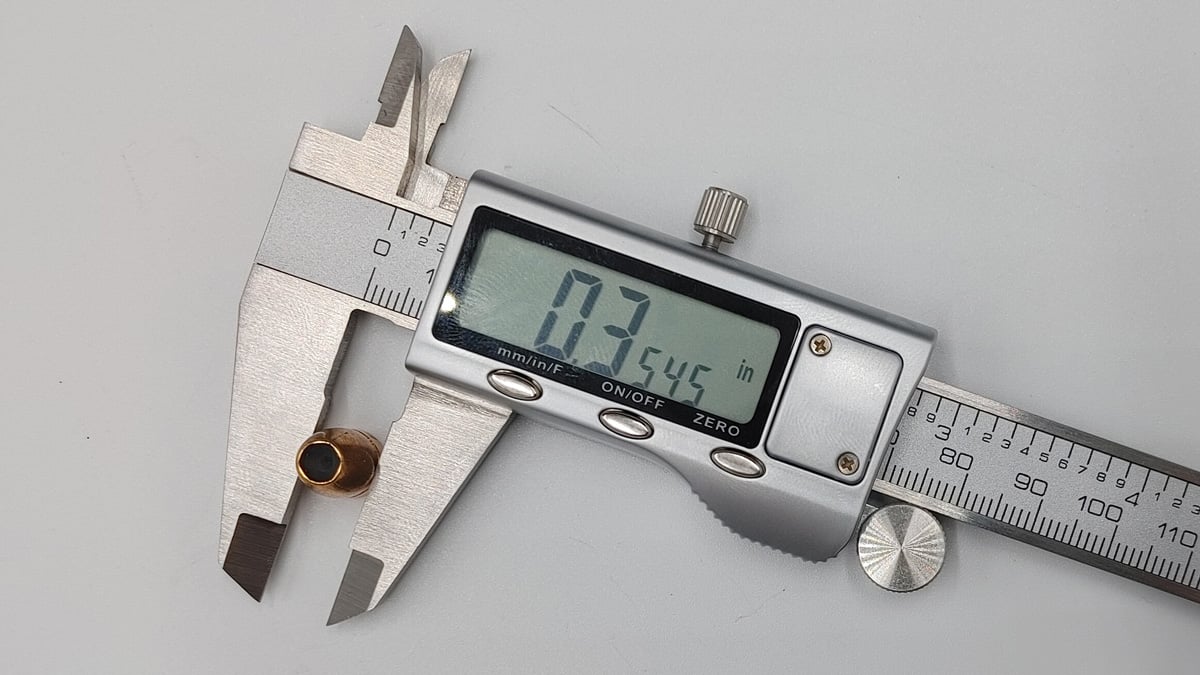
We’ll start with a basic measurement of our 9mm Punch bullet’s diameter, which came to 0.3545 inches. I’d use millimeters, but I’d rather stick to just one measurement system for this article. Besides, this is America, and inches are the measure of the land.
Here's a visual look at our before and after measurements for bullet diameters.
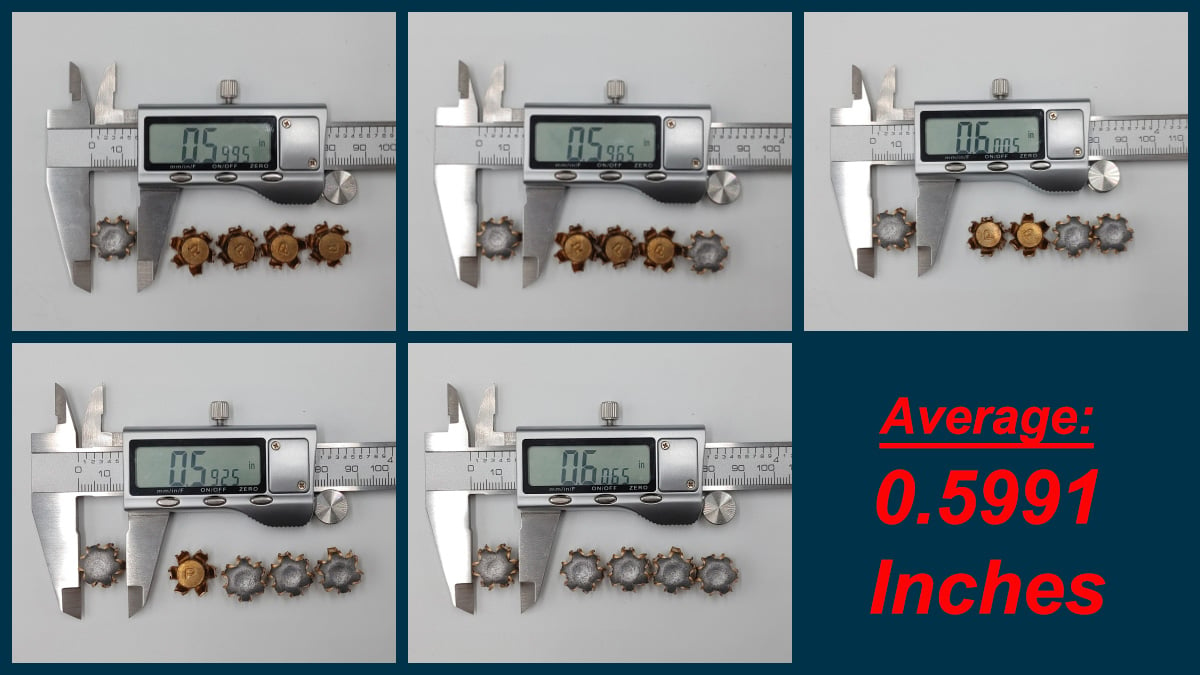
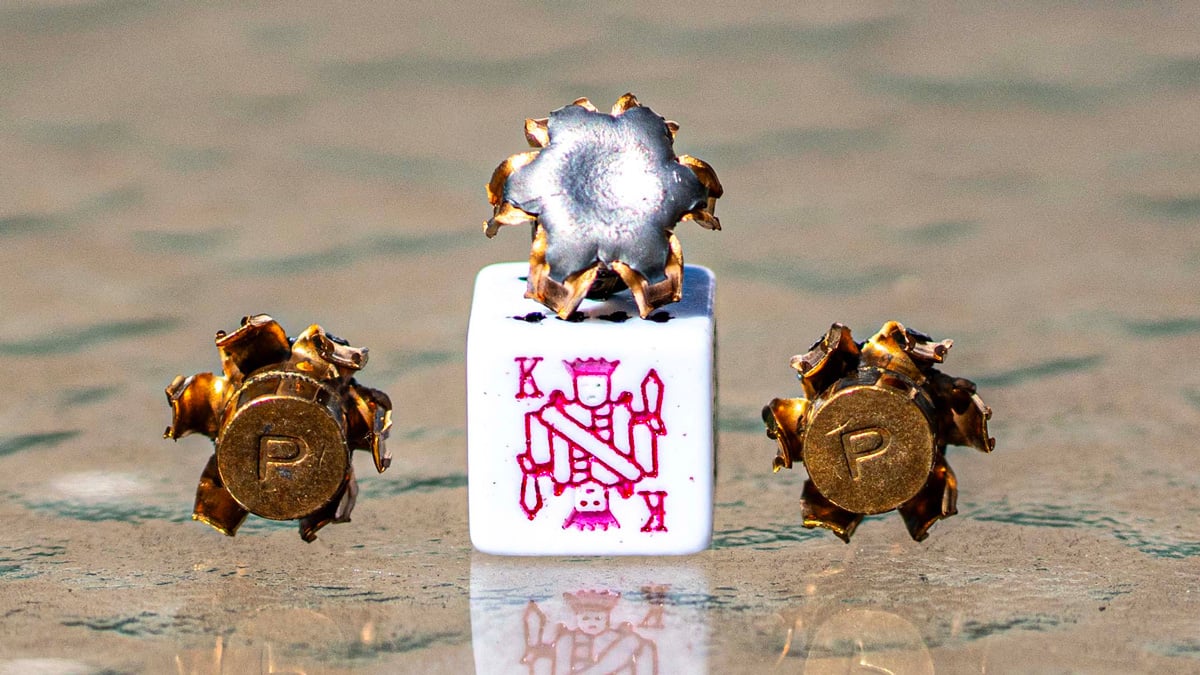
Averaging the expanded diameter of our five 9mm Punch bullets, we get a respectable 0.5991 inches. That is an average increase in total diameter of 68.999 percent. On top of that, no lost metal was seen or found in the gel block, even after cutting and remelting.

The difference between our widest and narrowest expansion across five bullets is just 0.0140 inches. In similar tests of other brands of hollow-point ammo, I have had as many as two out of five bullets fail to expand in any significant manner.
My takeaway from this is simple. The expansion of 9mm Punch is respectable and, just as importantly, reliable.
Reliability

I’ve personally put several boxes of 9mm Punch ammo through various handguns and pistol-caliber carbines every year since it came out in 2020. So far, I’m happy to say I have not had any malfunctions to report.
Velocities were predictable during my testing, and so was the total expansion. I’ve already covered the testing done on ballistic gel for this article, but that isn’t the only time I’ve gotten to pump 9mm Punch into gel blocks.
Here's a look at an ongoing test I have running that compares 9mm Punch to .380 Punch ammo.
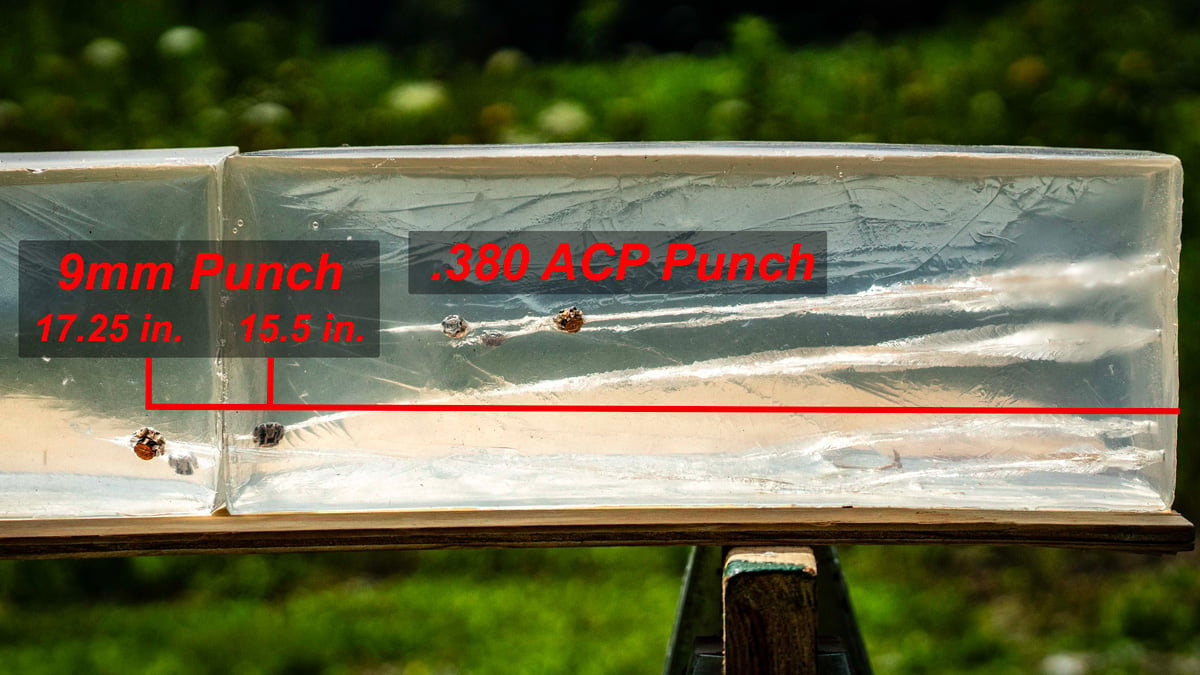
Except the one shot that took a deep dive and crossed the block at a sharp angle, we’re still getting just over 17 inches of penetration on the 10-percent gel block. Even the 15.5 inches covered by the angled bullet falls well within the FBI’s penetration standards of 12 to 18 inches.
Pros & Cons
Here are my top pros and cons for 9mm Punch hollow-point ammo.
Pros:
- Cost-effective for 9mm self-defense ammo
- Great terminal ballistics
- Reliable penetration and expansion
- Reliable performance in multiple firearms tested
- Solid energy levels without overpenetration
Cons:
-
Not designed for barrier penetration
Key Takeaways
As a cost-effective way to train with the same self-defense ammo you carry, Federal’s 9mm Punch hits a sweet spot for ordinary concealed carriers. It’s affordable enough to run a few boxes through your gun to feel confident that it will work reliably.
Yet, it is also optimized to penetrate and expand against a flesh-and-blood threat with surprising consistency. If you are looking for a duty round as a professional who needs to worry about barriers, Punch may not be for you.
For the rest of us, it is one of the best deals on the market that I have tested in recent years.