BLUF: Bottom Line Up Front

For a very pocket-friendly pistol, I think the polymer-framed FMK 9C1-G2 feels nice in the hand, points well, is comfortable to fire, and is more accurate than I expected. It has been solidly reliable with zero issues over the last 300 rounds of testing, but it didn’t start that way. Still, the gun has grown on me with a bit of patience.
Even though the FMK 9C1-G2 is based largely on the tested and proven Glock Gen 3 design, I did not find that it had that renowned Glock reliability right out of the box. The gun needed a break-in period from my testing, and it also needed a bit more attention from the shooter to keep it running reliably, at least at first.

The main issue that I noted was what seems like a slightly underpowered recoil spring and some friction points between the slide and the frame that benefit from occasional oiling. You want to drive this gun somewhat aggressively if you plan to shoot it fast. The trigger is also a bit mushy, but it performs in the accuracy department just fine.

Overall, it turned into a decent shooter in the end and will remain a backup firearm in my collection. It is a solid bug-out, range, or trunk gun for my needs.
FMK Background

Founded in 2006, FMK Firearms operates out of the not-so-gun-friendly state of California, and it does so with a bit of a chip on its shoulder. In fact, some of the company’s second-generation pistols even rolled out of the factory with the entire Bill of Rights engraved on the slide.
The company’s bread and butter is its affordable 9C1-G2 and newer G3 pistols, but it has dabbled in other gun designs over the years. It still produces affordable AR1 eXtreme polymer AR lowers along with aftermarket Glock-compatible frames.
Patriotism is a centerpiece of the brand, which proudly boasts that its guns are “100% American made by Americans.” To that end, it made several limited-edition patriot pistols, such as a 9C1-G2 Elite USMC Bulldog limited-edition handgun.
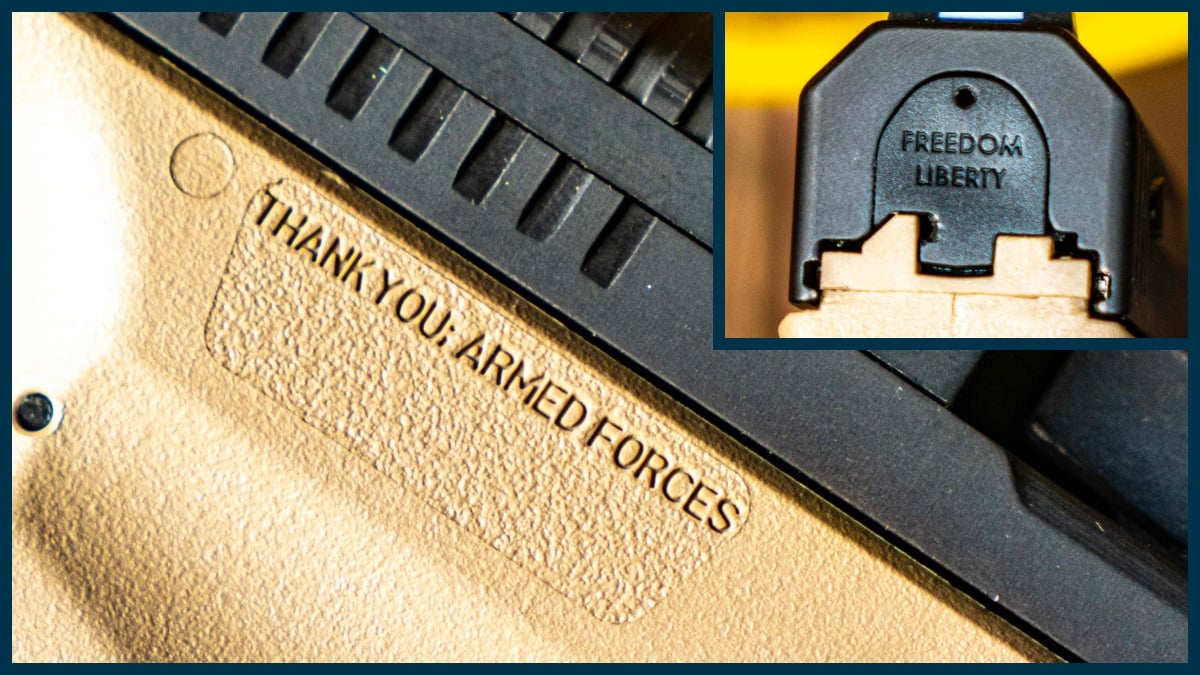
Even the run-of-the-mill 9C1-G2s still host unassuming but clearly readable patriotic markings, such as “Thank you armed forces” on the right side of the frame, with “Freedom” and “Liberty” marked on the slide’s back plate.
Specs & Features

The 9C1-G2 is a polymer-framed, double-stack semi-auto pistol that runs on a short recoil-operated, tilting-barrel, locked-breach system nearly identical to Glock pistols. That all makes perfect sense, given that the operating system is lifted almost entirely from the expired Glock Gen 3 patents.
It does have a few unique quirks. The grip sports a rubberized backstrap with a bulbous palm swell, grooved and textured side straps, and a finger-grooved front strap that’s textured with shallow vertical grooves. Overall, it’s a nice-feeling grip for a budget gun.
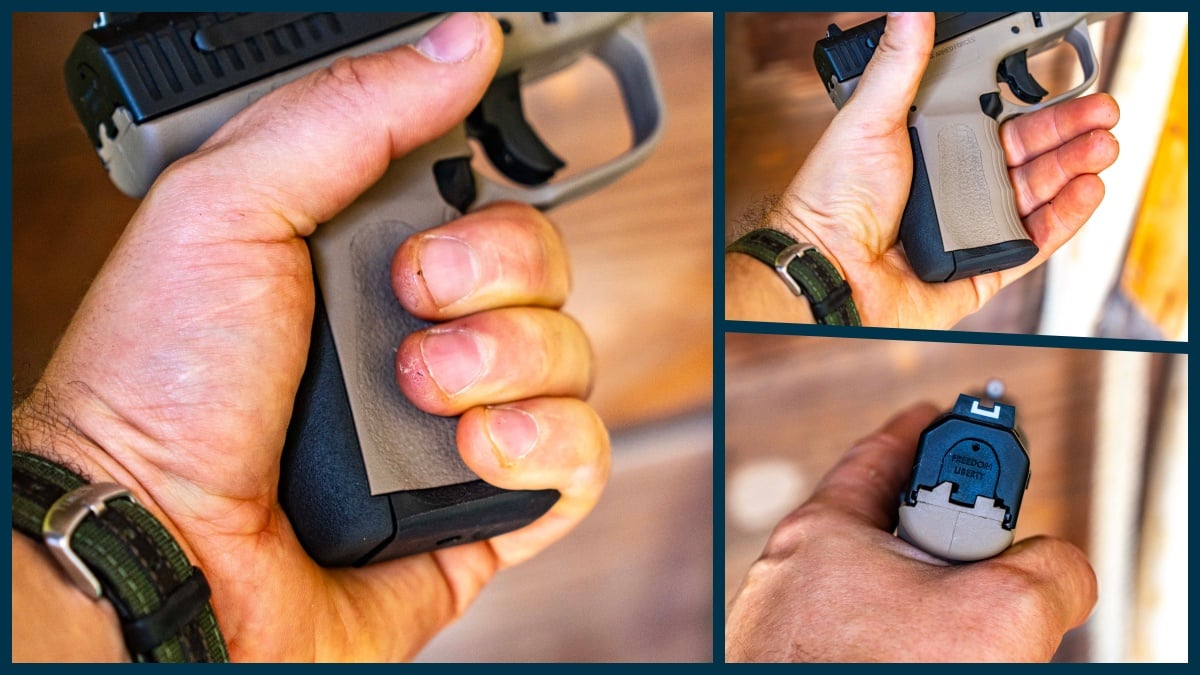


The metal magazine is another quirk, sporting 14 rounds instead of the 15 rounds found in a traditional polymer-covered Glock 19 mag. Disassembly is exactly the same as a Glock 19: drop the magazine, clear the chamber, pull back slightly on the slide, depress the disassembly tabs, pull the trigger, and pull the slide off.
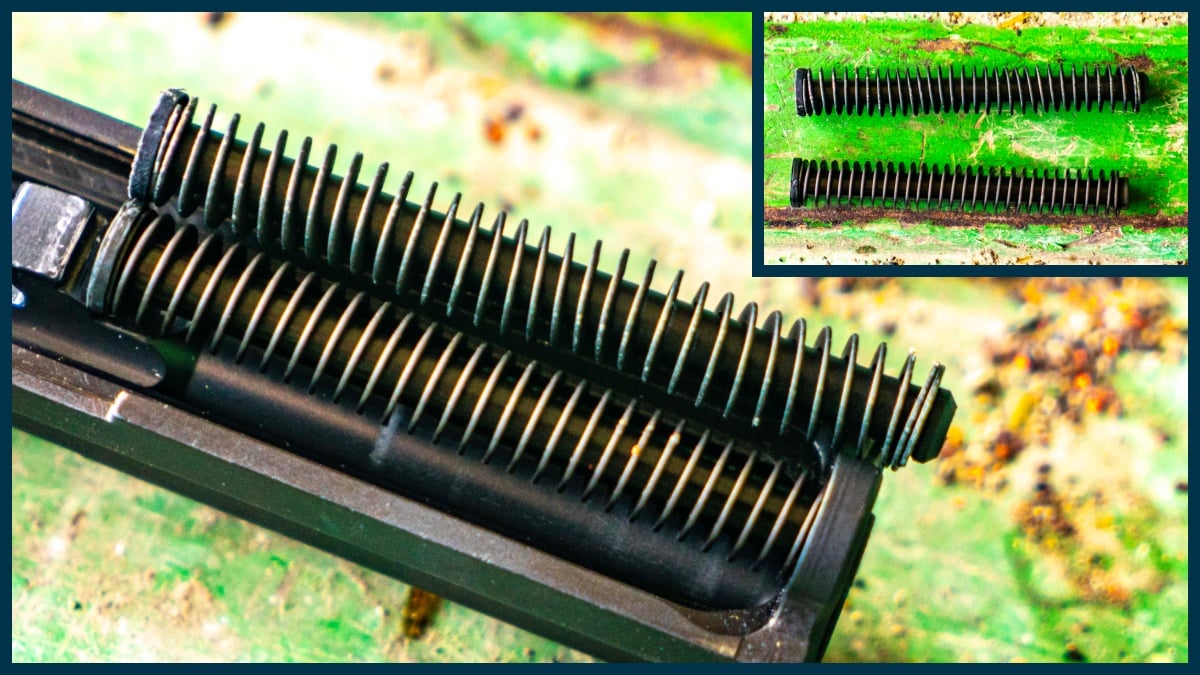
After that, it breaks down into a simple barrel, captured recoil spring on a polymer guide rod, slide, and frame. Here’s a quick look at the basic specs for the FMK 9C1-G2:
Weight (Empty Magazine): 1.52 pounds
Length: 6.8 inches
Barrel Length: 4 inches
Sight Radius: 6 inches
Height: 5.2 inches
Width (Widest Point): 1.2 inches
Width (Slide): 1.1 inches
Capacity: 14+1 (10- and 17-round mags available)
Caliber: 9mm
Trigger Pull: 5.43 pounds
Trigger Travel: 0.37 inches
Trigger Reset: 0.21 inches
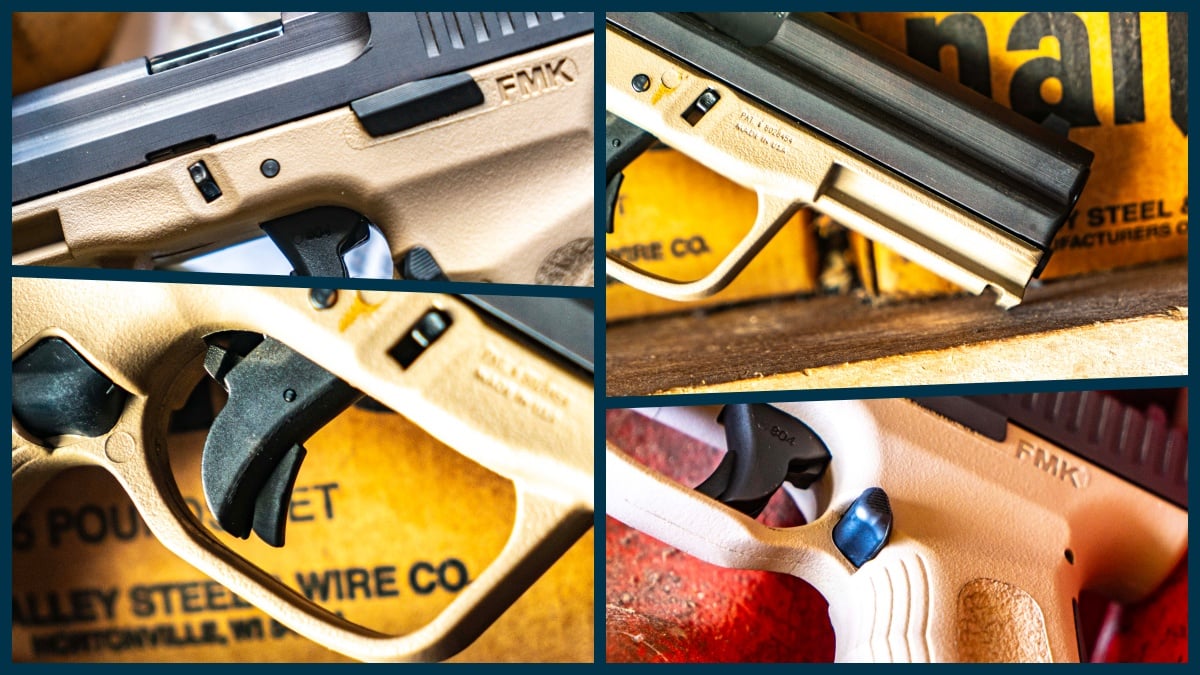
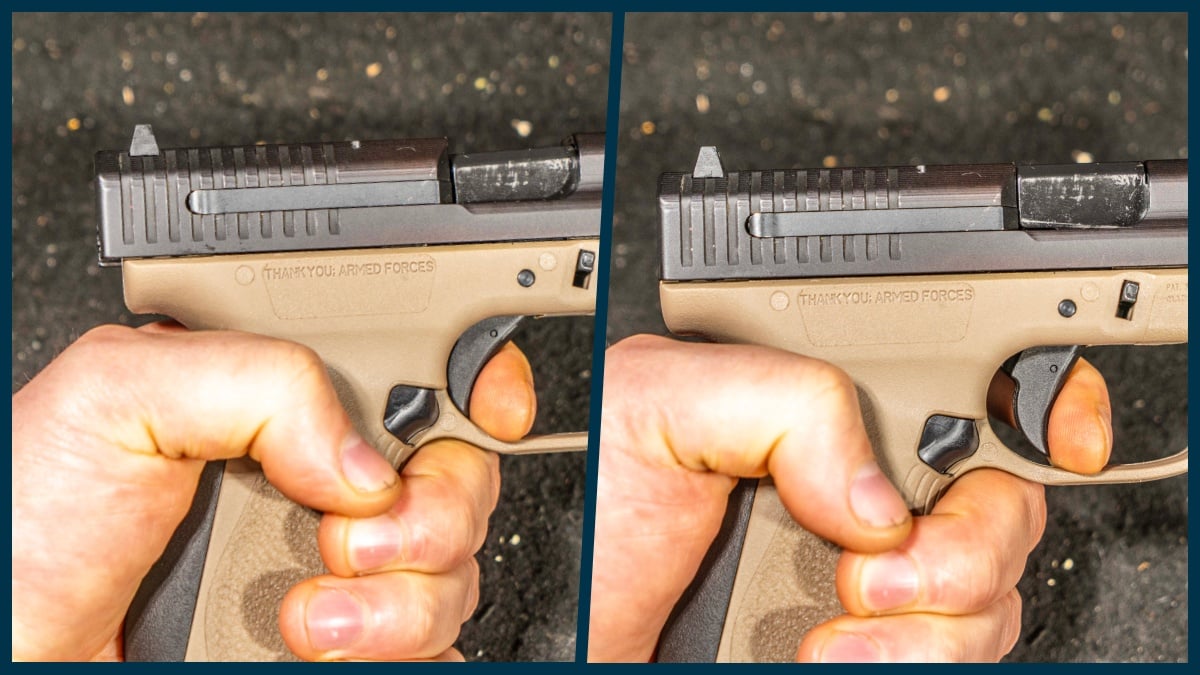
The trigger stages better than the stock Glock trigger I generally encounter, but it is mushier than I would like. That said, it didn’t seem to hurt my overall accuracy. Here’s a closer look at the trigger in action with a peek at how you can stage the slide to stay out of battery when the trigger is pulled.
The non-reversible magazine release is oversized and easy to reach without breaking my grip, and magazines spit out with a bit of springy assistance. I did not have issues accidentally bumping the mag release.
Other features are fairly minimal, with some basic vertical slide serrations at the rear and a single slot up front for lights and lasers.

The most notable difference in the design is how the frame, slide, and recoil spring interact when the trigger is pulled. There is just enough extra friction on the slide when the trigger is pulled all the way back to occasionally keep the slide out of battery. This went away when shooting after a 200-round break-in period and some oiling, but it did cause several failures to go into battery on my first few boxes of ammo.
This design issue feels like a flaw to me. While the forward momentum of the slide is now enough to overcome the friction while shooting, it seems like a bit more strength in the recoil spring would totally eliminate this issue. In fact, a Glock 17 recoil spring fits nearly perfectly in this gun, and it has plenty of force to push it back into battery without issue.
There are, thankfully, a few solutions to this issue beyond grabbing a new recoil spring, which is also an option. FMK covers some of these steps in a helpful video, but here’s a breakdown of how I got past the issue of consistently getting the gun into battery while shooting.
- Make sure you are controlling that muzzle flip and driving the gun while you shoot. This will solve basically every issue I saw, especially after the initial break-in period.
- Break in your gun. I found issues all but vanished after 200 rounds.
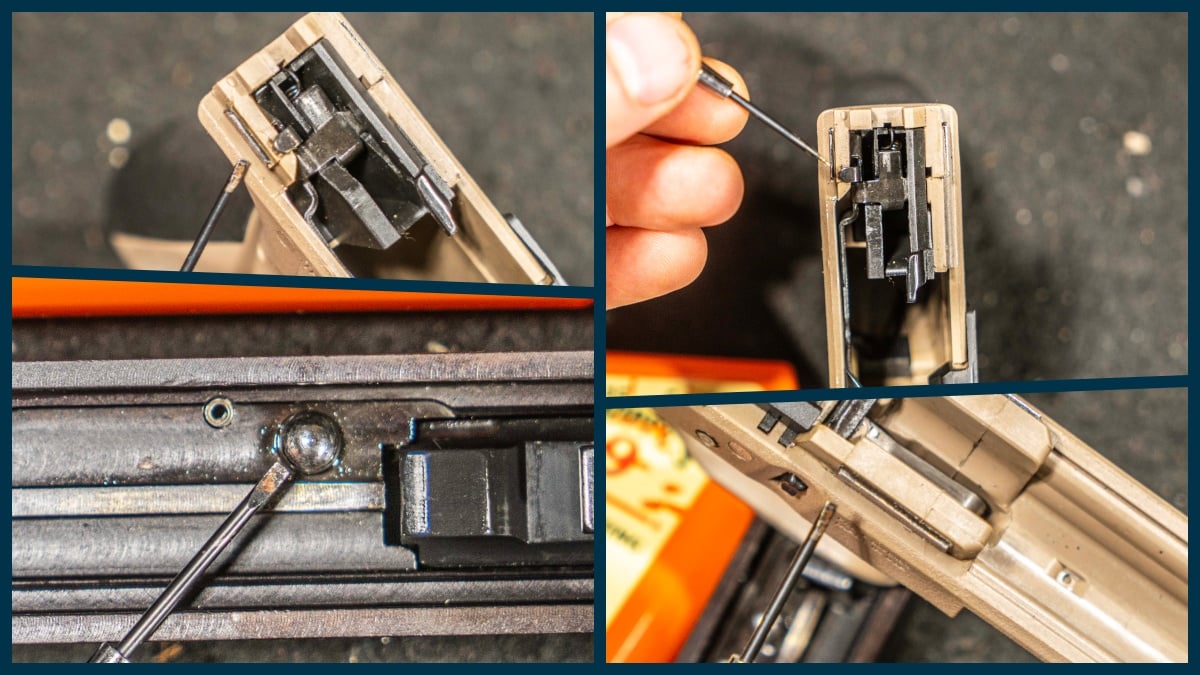
- Oil the right parts. The specific areas that need attention are the slide rails, block (a round, springy bump inside the slide), and the friction point near the rear of the frame by the trigger bar, trigger spring, and sear where the trigger bar contacts the trigger connector.
You can see those oil points below.
Finally, FMK offers a lifetime warranty for the original purchaser of all new 9C1-G2 pistols. That warranty covers any defect in material or workmanship, so don’t panic if you do have any issues. I’m glad I dug into the problem and resolved it with a small amount of work.
Reliability & Accuracy
This review almost didn’t get to the finish line because my first range trip with this gun was less than successful. I had numerous failures to go into battery during my first 200 rounds of testing. These cleared up over another 100 rounds and vanished completely for the next 300 rounds.
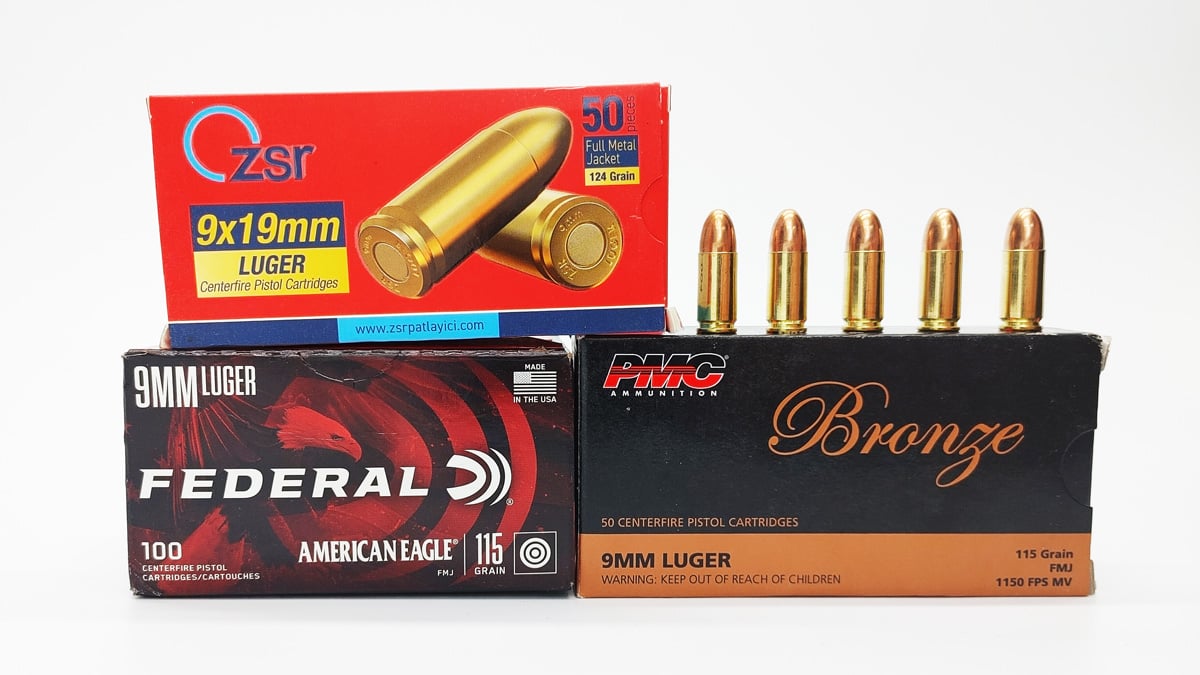
I think that the initial reliability issue is a miss with the design. However, it is a solvable problem, especially if you follow the steps I listed at the end of the specs section above. At this point, the gun has been a reliable fast and slow shooter.
The accuracy was another redeeming quality for me. Here’s what I got on my last range trip with the FMK 9C1-G2.
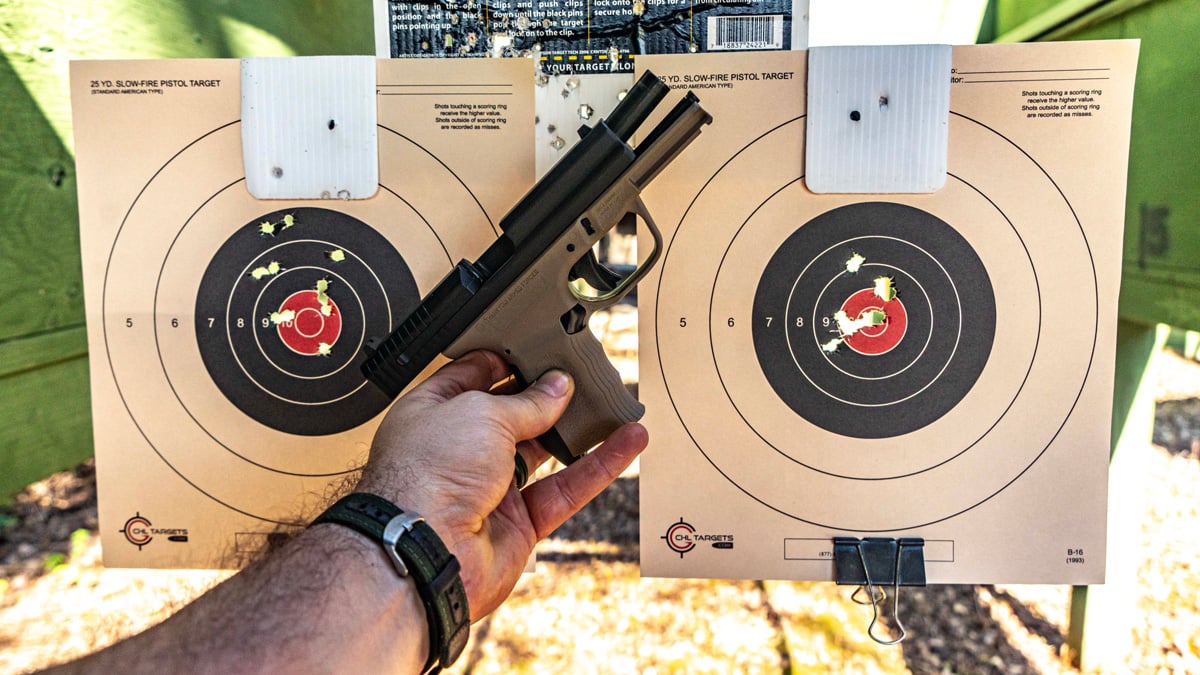
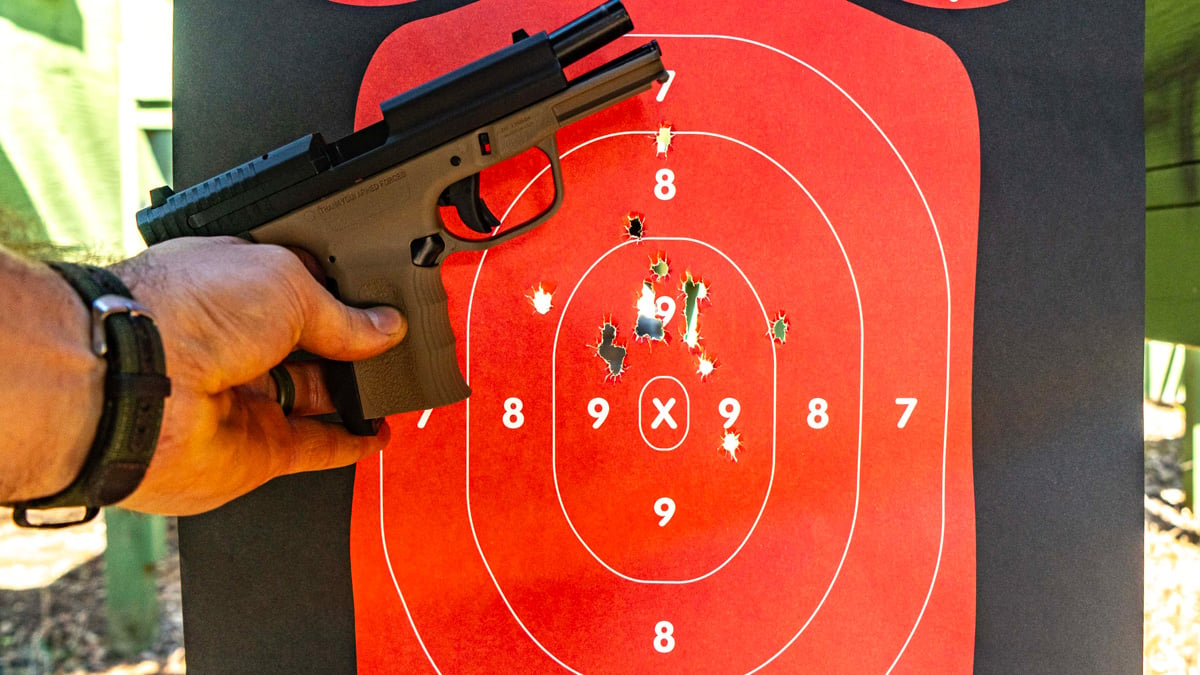
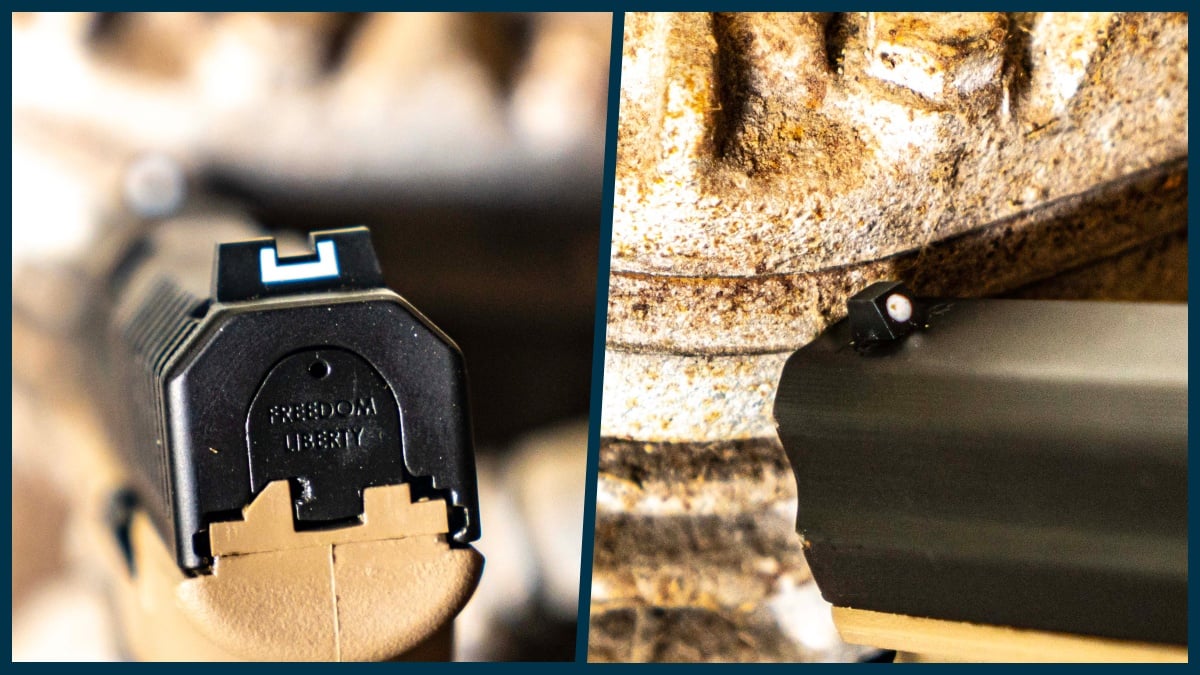
The sights printed high for me, but that is partly because of the traditional Glock-style field-goal sights. Instead of floating the dot at close targets, it helps to cut the dot in half at distances under 35 feet. Regardless, I’m more than fine with those groups above for defensive work at reasonable self-defense ranges.
Pros & Cons

Here are my top pros and cons for this FMK 9C1-G2.
Pros:
- Affordable price
- Reliable with break-in period and maintenance
- Accurate
- Lifetime warranty for original buyer
- Comfortable grip
- Sights are compatible with similar Glock sights
- Lots of color options
- Controls are all easy to reach and use
- Easy to maintain and shoot
Cons:
- Break-in period needed for this one
- Mushy trigger is just OK
- Limited slide texturing and rail space
-
14-round mags are fine, but still less than a Glock 19
Final Thoughts

This is hardly a fancy gun, and the bells and whistles are limited. My biggest issue was the need for a break-in period and some oiling early on in testing to reliably get the gun to go into battery. These issues cleared, and you might not have them at all if you learn how to aggressively control the muzzle flip by driving the gun forward.
Since those hiccups passed, the gun has been nothing but solid on the range. I have actually had it out for some post-test shooting recently, and it is still running like a champ now.
As far as use cases, I see this gun as a bare-bones option for a backup pistol that can fill a need at a very low price point. There are better options if you are willing to spend more, but that’s true of basically all budget firearms. For the money I personally spent, this one is still filling a niche need in my collection, and its shootability is nothing to sneeze at.