Meet the FN M249S
The M249 is designed to be operated by a single person, though under heavy use, it could be served by two for ammo support. The M249 has an interesting operating system, as well as a host of intriguing features.


The gun is fed from a plastic ammunition case that attaches to the bottom of the rifle. Belted ammunition is pulled from the box and fed into the action from left to right; spent cases and the M27 links are spit out as rounds are consumed.

The full-auto military version of the rifle fires from an open bolt, while this semi-automatic M249S fires from a closed bolt. The action is operated by gas pressure tapped from the barrel pushing a healthy piston and operating rod.
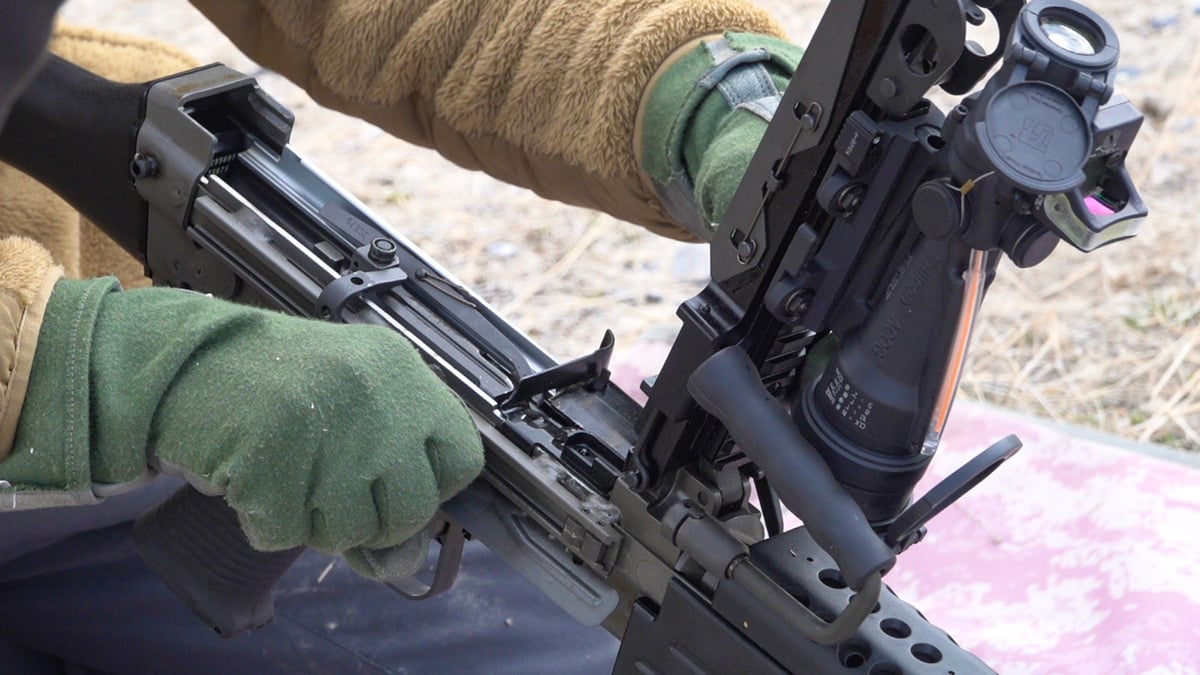
Ammo is loaded by opening the feeding tray on top of the gun and setting the belted ammo into the feeding pawl. With everything accommodated, the tray is closed and locked at the rear. The feeding pawl pulls the belted ammo one round at a time into the gun, and the curious action strips the round from the links as it is chambered.
More Features
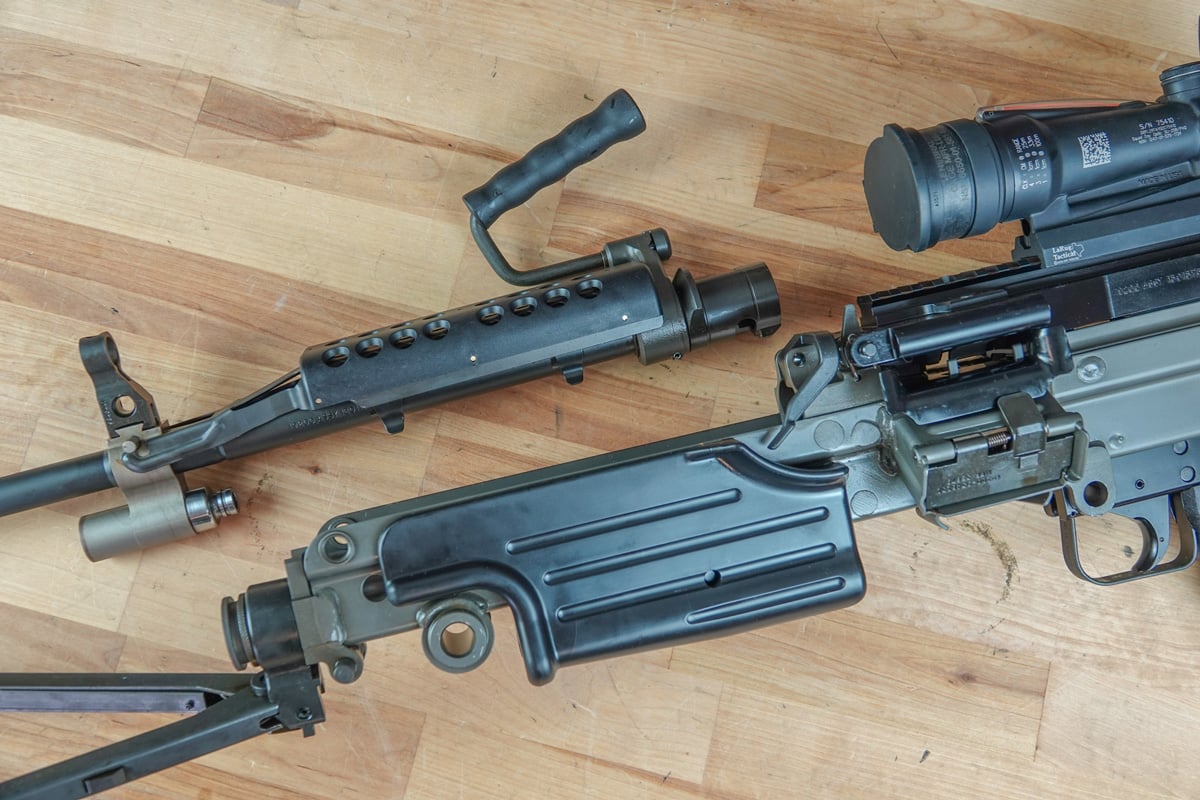
A two-position carry handle mounted to the rear of the barrel also comes in handy while swapping barrels. Changing a hot or compromised barrel is a regular occurrence for machine guns, and it was easily done even by a novice like me.

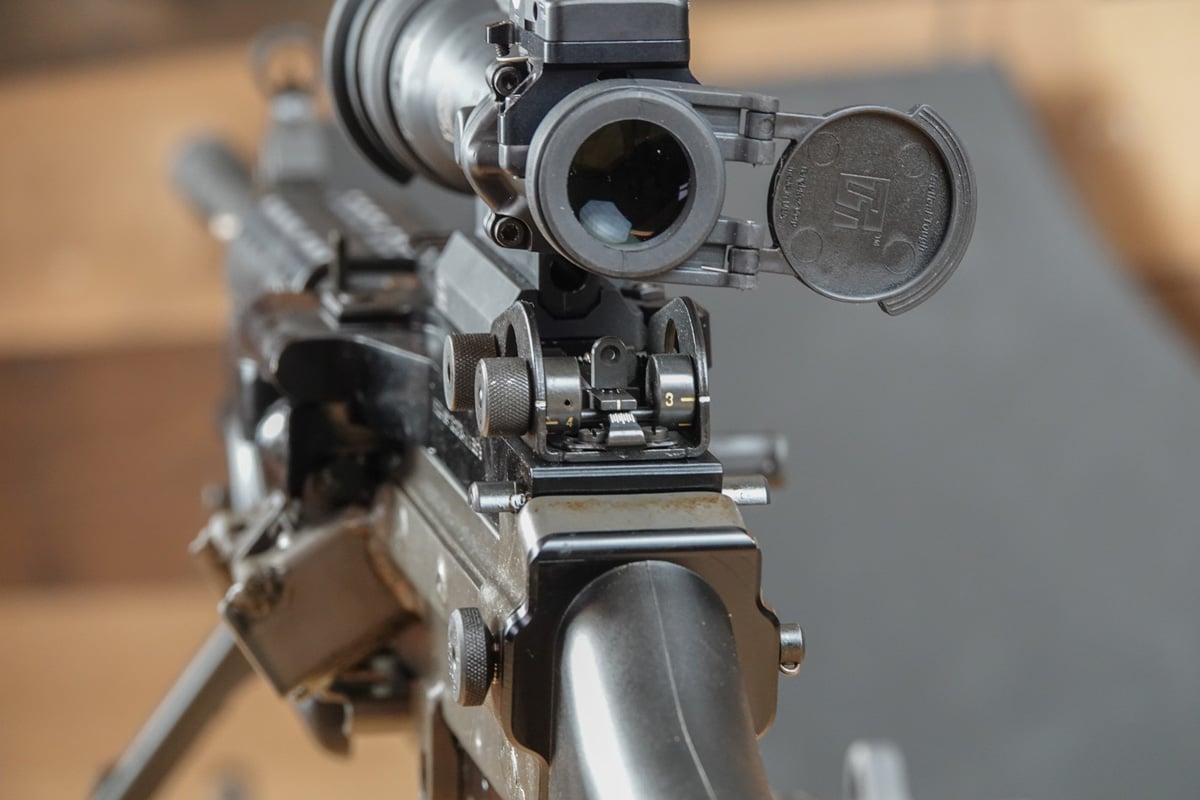
Simple sights, including a hooded pin up front on the gas block complemented by an adjustable rear sight, make directing fire self-explanatory.

As you might imagine, the trigger is long and not impressive for someone coming from a marksmanship mindset. There is a push-push safety just like you learned when you were a kid, and once you’ve committed to pulling the trigger, there is plenty of exercise for your finger with all that curling.
Specs
- Caliber: 5.56x45mm
- Operation: Closed bolt
- Capacity: 200-round belt or 30-round magazine
- Weight: 17.2 pounds
- Barrel Length: 18.5 inches
- Overall Length: 40.75 inches
- Overall Height: 9.5 inches
- Trigger Pull: 8-15.5 pounds
-
Twist Rate: 1:7 RH
Range Prep
Apart from the obvious task of linking a bunch of ammunition together, all we did was mount a Trijicon ACOG. Not exactly a match for the SAWs in military use, it was certainly still good enough to do the trick.
Linking 5.56 ammo is easily done by hand, but I would recommend something faster for the best results. Once linked, the belt is laid in a plastic ammo box that closely resembles shoddy Tupperware. There are other belt housings available, but we only had the plastic box.
Despite it not being fully automatic, I was excited to get behind the M249 and see how this complicated machine worked. The inner workings seemed a bit more complex than the guns I typically handle.

We snapped the plastic can of ammo onto the bottom of the SAW and opened the feed tray. The ammunition belt has two sides. One is obviously black due to the links, while the opposite side has more brass with very little of the link showing.
The belt is loaded into the feed tray with the link side up, or “brass to the grass,” as they say in the Army. With the belt engaged with the feeding mechanism, we firmly closed the feeding tray lid. That was followed by pulling the charging handle to the rear and letting it slam shut.
Shooting the SAW
All that was left to get the SAW ripping was to push the safety into the fire position. The gun is heavy, despite being classified as a light machine gun. It rocks several degrees to either side while resting on the bipod, allowing you to level the gun on uneven ground.

The buttstock rests against your shoulder and has a flip-up guard to prevent it from slipping out of position under fire. As you might imagine, a 17-pound 5.56 rifle doesn’t have much for recoil, but there is a lot of movement. With each shot, the rifle spits out a spent case to the right and a disconnected link out the bottom.
The long trigger pull I mentioned made for a slow reset. Even when I wanted to send out fast strings, it wasn’t as fast as I’d have liked. The typical rate of fire for the full-auto SAW is somewhere between 700 and 850 rounds per minute, but with a long belt of ammo locked in, you could put out a lot of lead even with the semi-auto.
Here's a video of the SAW in action:
Field Notes
They don’t call it a “pig” for nothing. The M249 is heavy and a little awkward. Unsupported shooting would be very unpleasant without significant training and a lifting routine.

The contact points are made from polymer, which is less likely to burn you under sustained fire, but there are plenty of metal pieces if you’re looking to brand yourself a SAW veteran. The controls are simple and easily accessible while shooting.
Despite being over 10 years old, this rifle had never been fired. With plenty of lubrication, the gun seemed to work as designed. We did have a couple of goofs when loading that ended up causing the inevitable “click,” but obviously, that was on us. It would take a great deal of ammo to get this thing to wear out to the point of a malfunction – far more than I would want to buy.


Accuracy is a relative term when it comes to a machine gun, as it's more about the ability to blanket a target area with impacts. It was easier to aim individual rounds with this semi-auto model. I’ve read the automatic version of the M249 shoots as much as 12 MOA, a far cry from what I would call accurate. On the other hand, you could keep this rifle on a 50-percent IPSC plate at 100 yards if you stayed tight on the target.
Pros & Cons
The pros and cons are probably rather obvious at this point. Who but the Department of Defense would pay over $10,000 for a 12-MOA gun that weighs 17 pounds?

This is surely a firearm for above-average gun owners: costly with a narrow purpose. Unless you have money burning holes through your pockets, the M249 is probably not a good value.
The M249 is a great gun if money and ammo costs are no issue and you need a ton of firepower directed in a general area. It's absolutely a riot to shoot, and I’m sure full auto is even more fun. Just don’t count on taking a hike or using it to shoot highly accurate shots.
Last Thoughts
Plenty of folks carried an M249 in training or deployments and likely shot more rounds through the gun in any given trigger pull than I did during this entire review. That is the nature of light machine guns or squad weapons, though.

I can see why the M249 has such an allure. Its looks are intimidating, and for a mechanical nerd, the design is fascinating. It eats 100-round belts for breakfast, lunch, and dinner, so it’s easy to see why you would want a SAW on your team, running on the same ammunition and even the same mags as others in your squad. It's a gun you’ll want to shoot if you ever get the chance.