Luger and the 9mm
The Pistole Parabellum, or simply the Luger, is synonymous with German ingenuity and is a testament to where form meets function within firearms. These guns are beautiful and have a sophisticated elegance that is common for early 1900s semiautomatics. To me, that was the golden age of handguns. The engineering and design were unmatched, and these designs formed the foundation of almost every handgun made today.
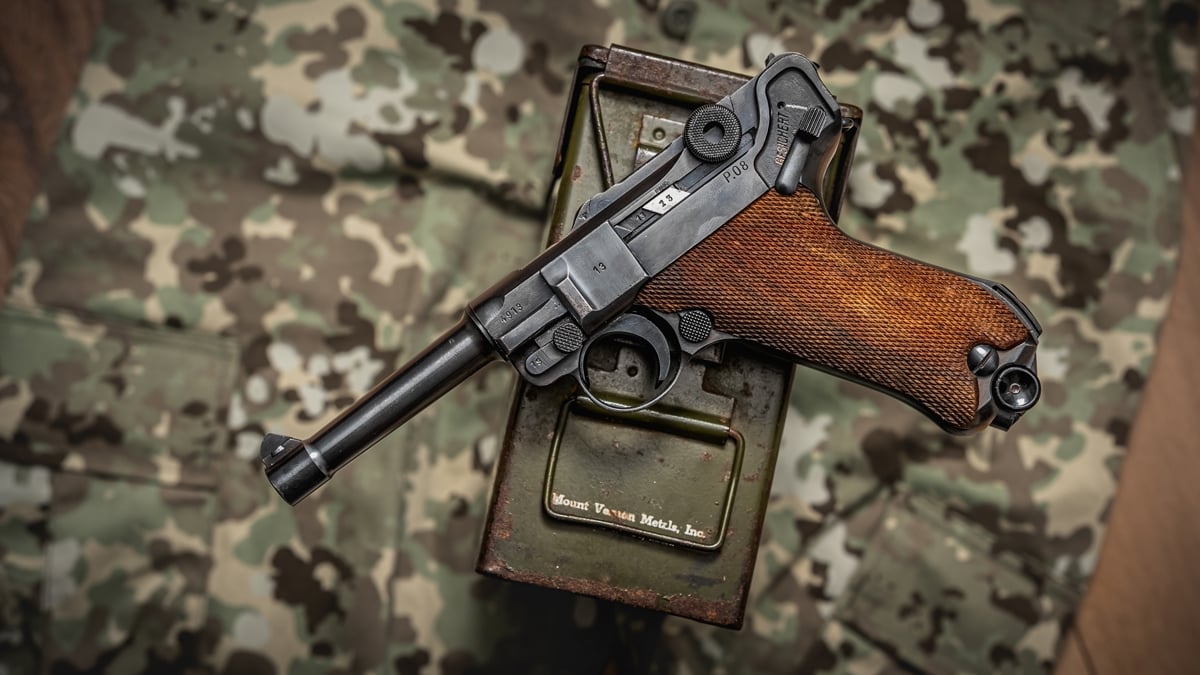
In 1898, Georg Luger designed the P.08 based off the early Borchardt C-93 Pistol – a design as unique as anything I’ve seen. It shares the famed “toggle lock” system of firing, whereby rather than a reciprocating slide, a two-piece arm raises up and backward from recoil and unlocks the breech. With that, the spent casing is ejected, and the arm comes back to rest. Most of the action is on top of the gun, but it has much less mass than an entire steel slide, so recoil is manageable.

From my layman’s perspective, as you pull the trigger, a bar on the left side moves slightly out of the way. The energy is forced into the frame and barrel of the gun, which itself moves rearward. This unlocks the toggle, and the rest of the recoil bends the elbow of the toggle up and back. The distinctive circular bosses located at the joint hit the apex, the cartridge is ejected, and spring pressure brings the whole mechanism back to rest.
I read up on this and performed the function a few times to really understand what was happening. It’s an engineering marvel and ultimately resulted in the gun being replaced by the P38, which was far simpler to manufacture and service.
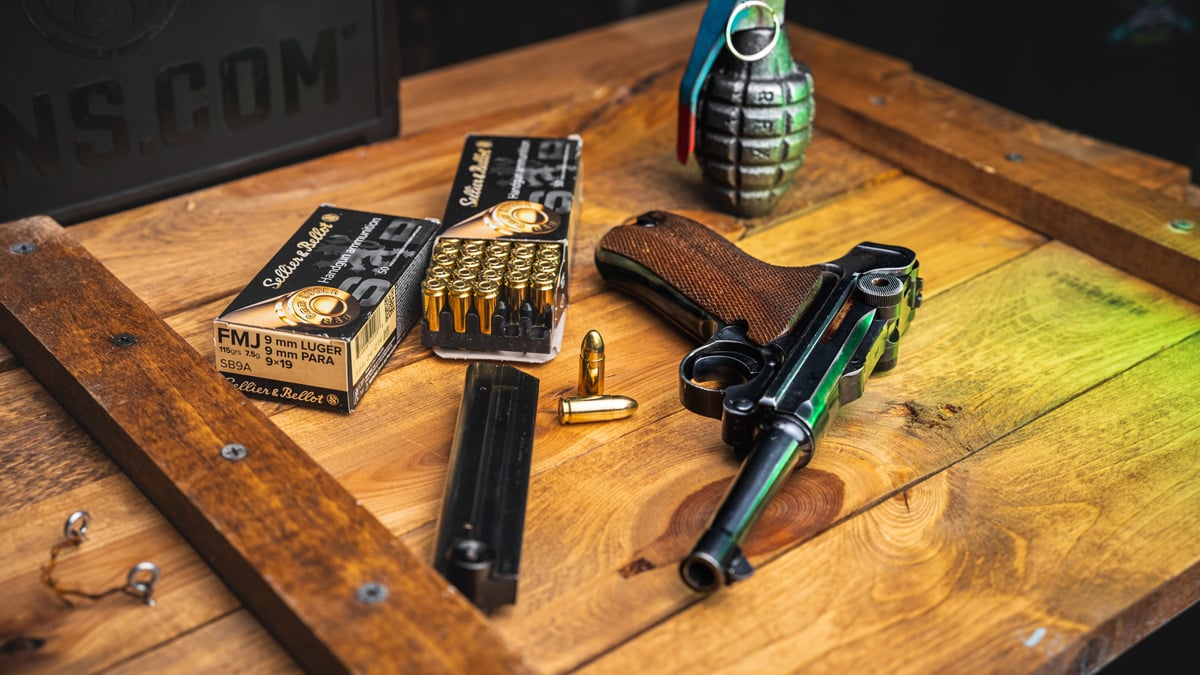
In creating the pistol, Luger also created the cartridge it chambered. Maybe you have heard of it: the 9mm, or 9x19mm Parabellum. Also known as 9mm Luger, it may be the most popular round of all time at this point, though .22 LR may have something to say about that.
Military Service
It’s fascinating to me that we update our phones and apps constantly, but certain guns and cartridges were just so well done they remain mostly unchanged more than 100 years later.
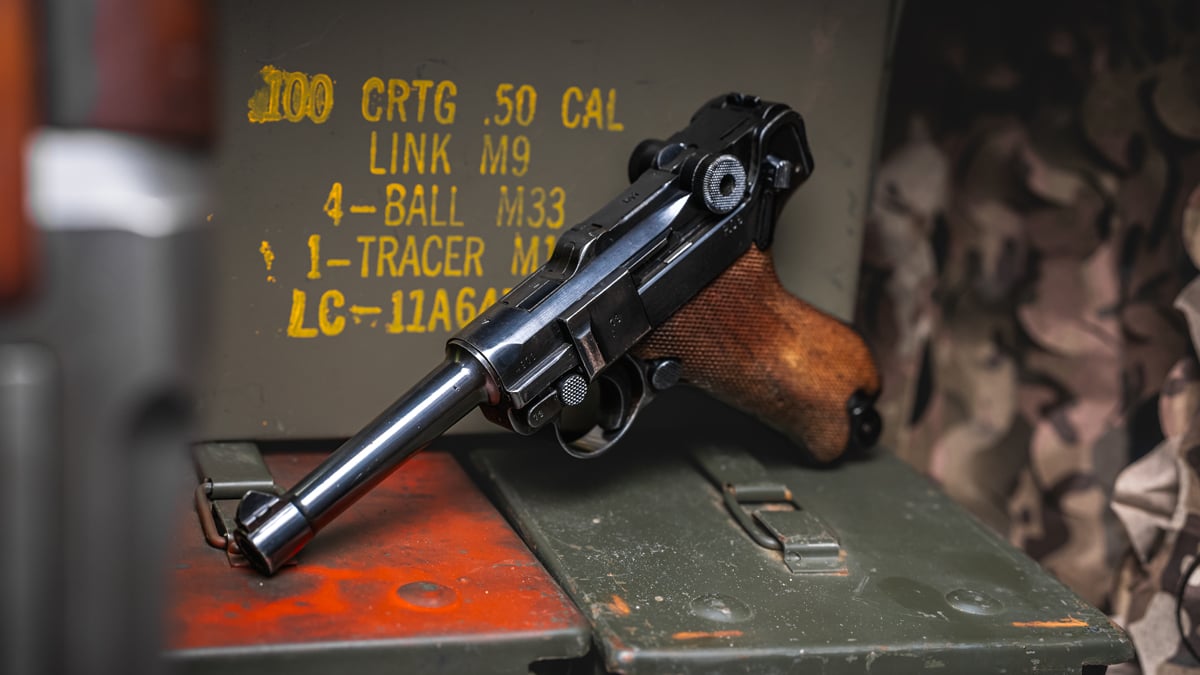
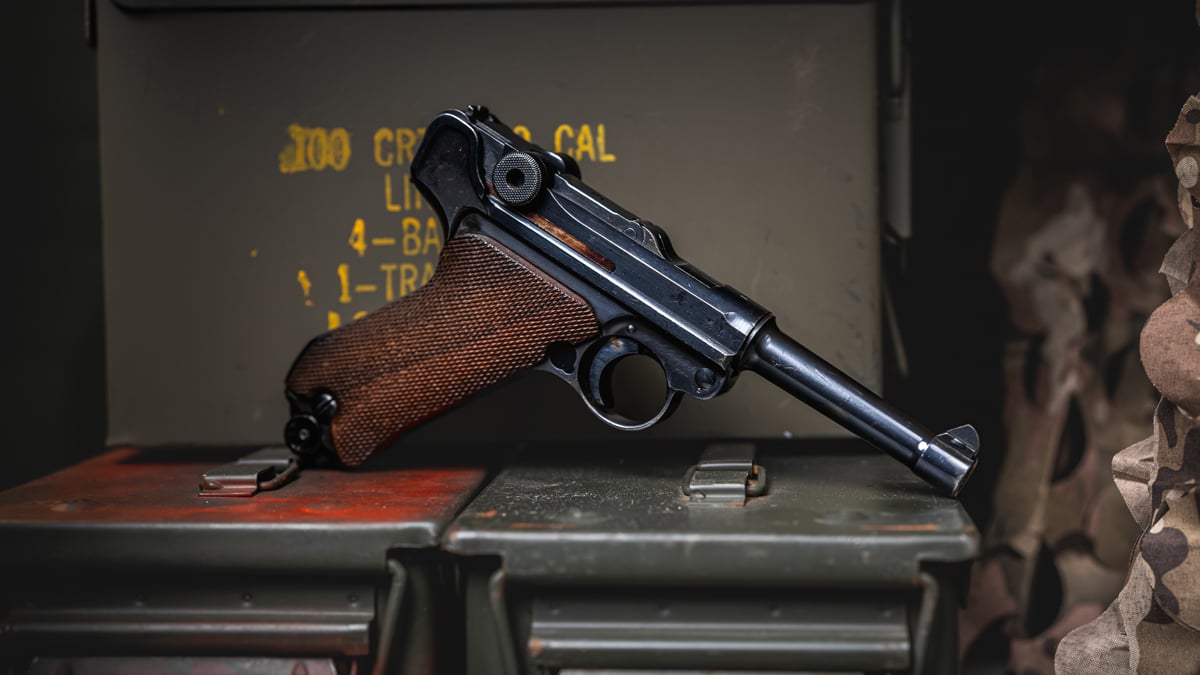
The Luger was part of the United States’ trials for its next service handgun, which we all know was won by the famed 1911. It was put into a brief service before the 1907 trials but was not popular with troops, who preferred their Colt revolvers. Despite the original Luger design being 9mm, two .45 ACP versions did surprisingly well but did not beat the Colt, Browning, or Savage pistols and were not considered satisfactory. Had the trials gone differently, the .45 Luger might be a round we see today.

Interestingly, no one knows the fate of the serial number 1 from the trials, but 2 is in private ownership and is estimated to be valued at over $1 million.
The Luger served all over the world throughout five decades, finally leaving production in 1953. Walther, DWM, Mauser, Waffenfabrik Bern, Erfurt, Krieghoff, and others manufactured these pistols at one time. From what I’ve seen, the Black Widow and the Krieghoffs fetch the highest prices if the parts all match.
Design Nuances
While the original Luger design is well known and immediately recognizable, several versions saw small shifts in the operation. The Swiss version, a 7.65 Parabellum or .30-caliber model, was the official sidearm of Switzerland, also popular for police and the commercial market.
These models, the American Eagle (U.S. market offshoot), and 1904/1096 Navy models all featured a rear grip safety that was removed on more recent designs. Those include the 1908 version for the German Army, designated Pistole Modell 08 – widely known as the P.08.

The Navy models featured a nearly 6-inch barrel and adjustable sights designed for longer distance shooting. The Navy models are distinguished by the Crown M on the receiver and barrel. Similarly, there are Portuguese contract pistols in these configurations, commonly in .30 Luger, and had a crown MP or DWM logo.
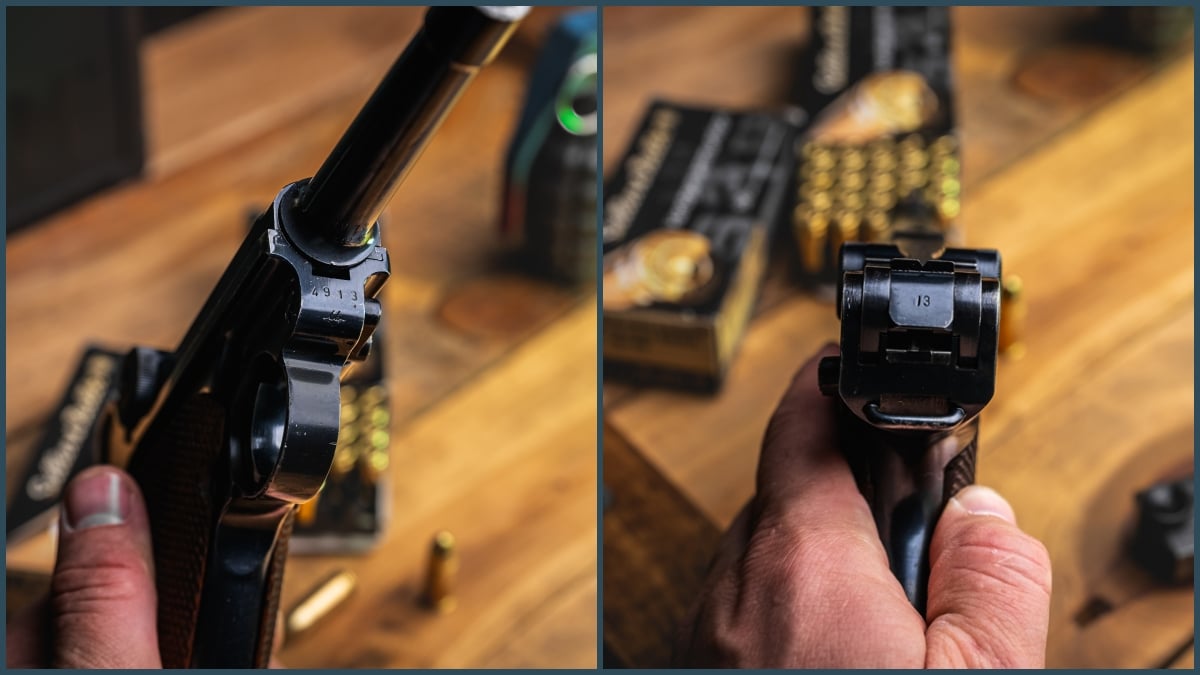
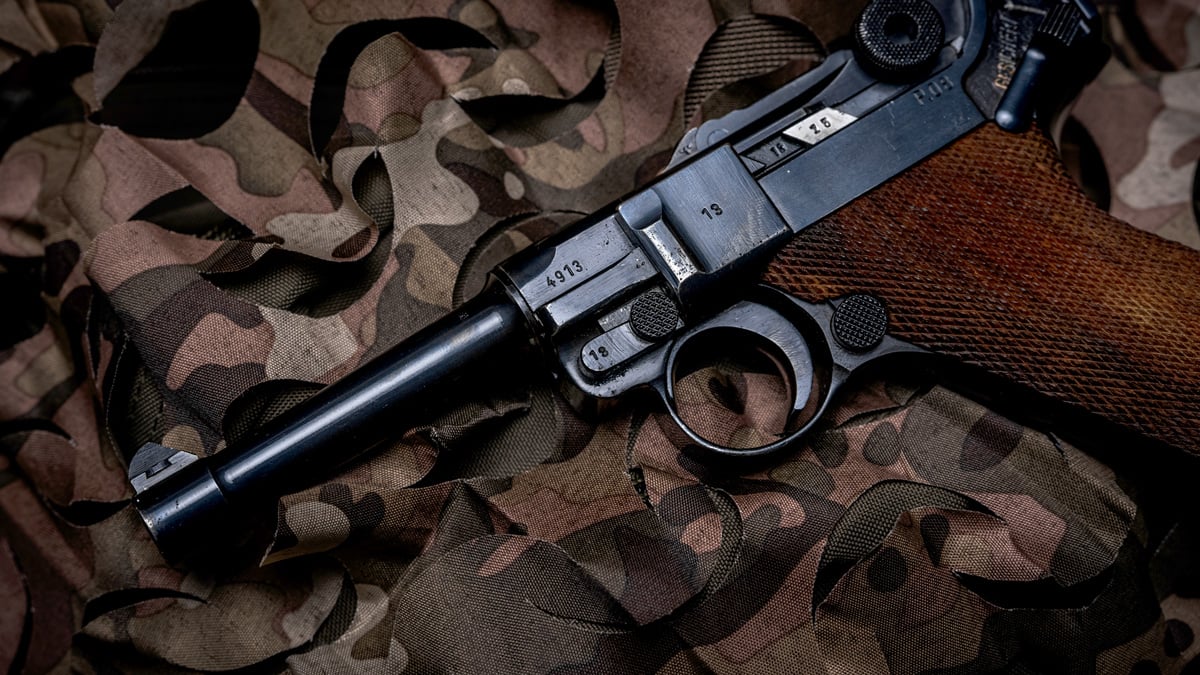
Many parts on a Luger are serialized and are more valuable if they all match. The upper and lower receiver, along with the barrel have a four-digit code and Waffenamt markings. This gun has a 4913 code, matching in those three locations, and just the 13 on all the smaller parts. Like the U.S. arsenal of guns over the wartime period, worn parts were replaced, and pieces may be mismatched. GIs would cobble together guns when plants were seized and grab the pieces needed from available bins.
More Features
One of the most interesting features is the physical safety on the left side of the gun. If you’ve ever driven a German car after an American-made car, you may notice nearly all the controls are different or even on opposite sides. Lugers have a lot of the same features and functionality as the 1911, but executed in entirely different ways.
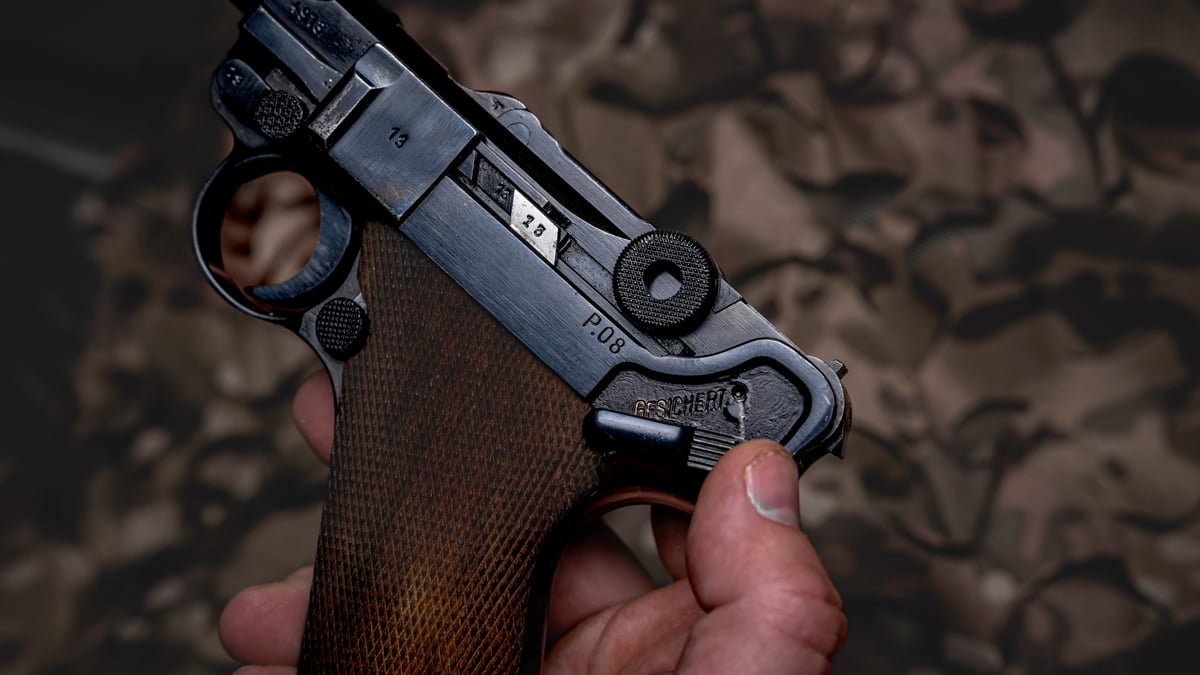
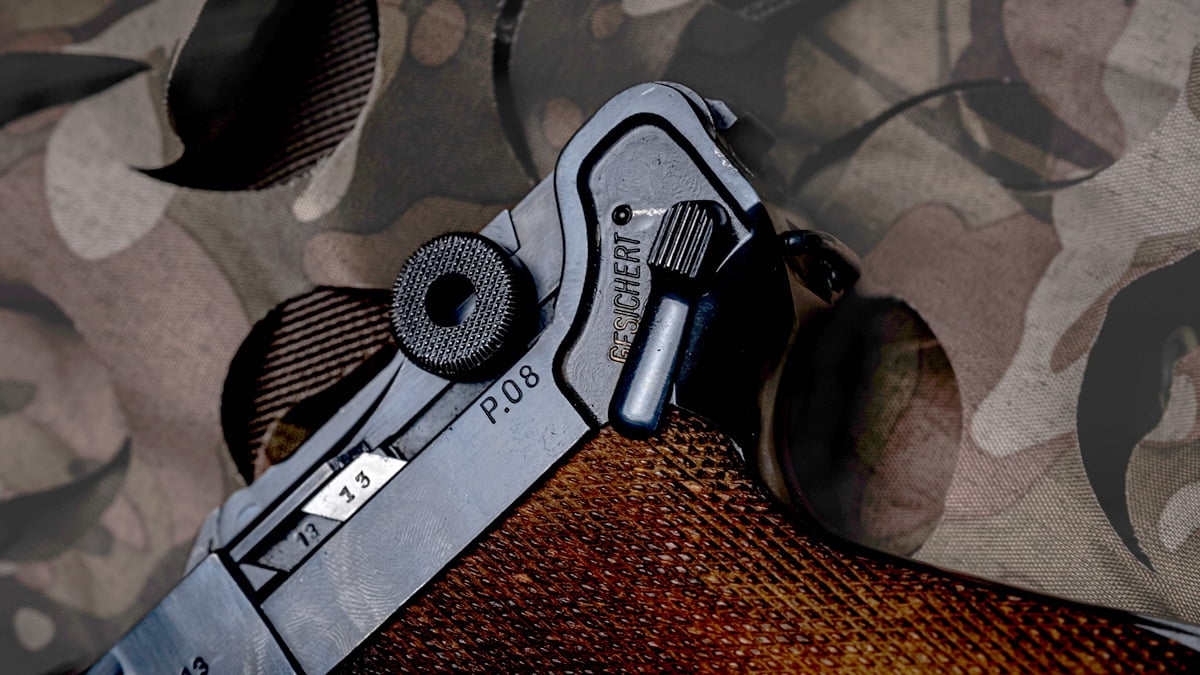
The safety, indicated by the word “Gesichert” being displayed, pops up a safety lever from inside the receiver that physically blocks the sear from pushing out when the trigger is pulled.
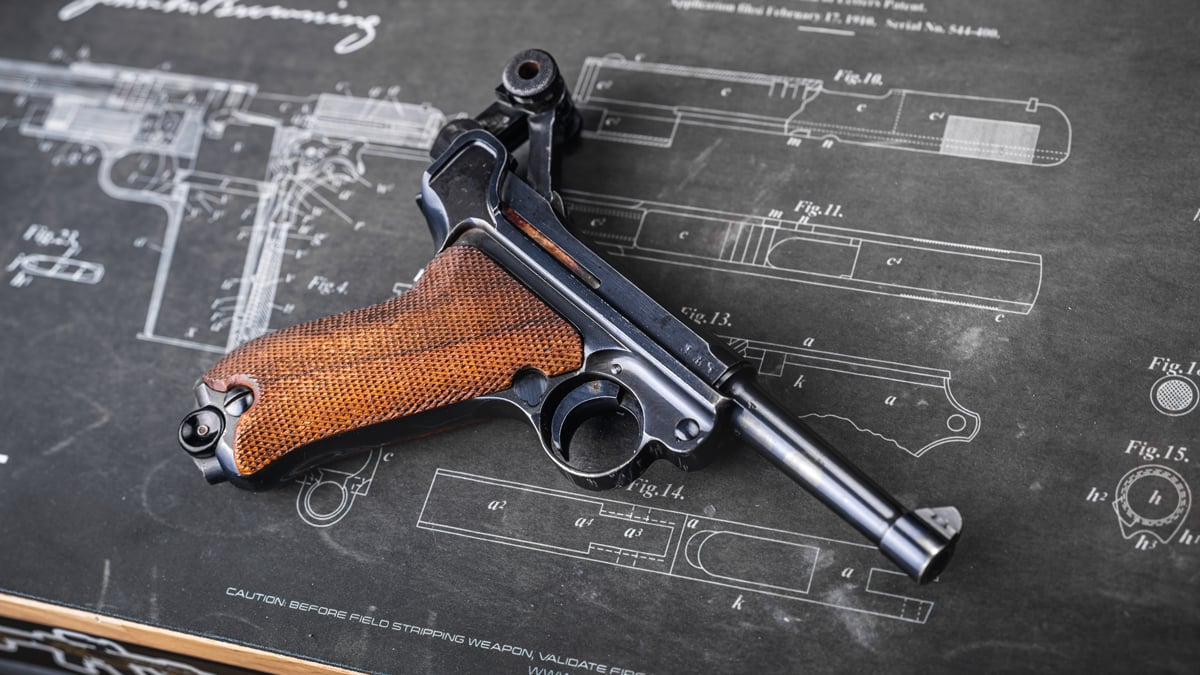
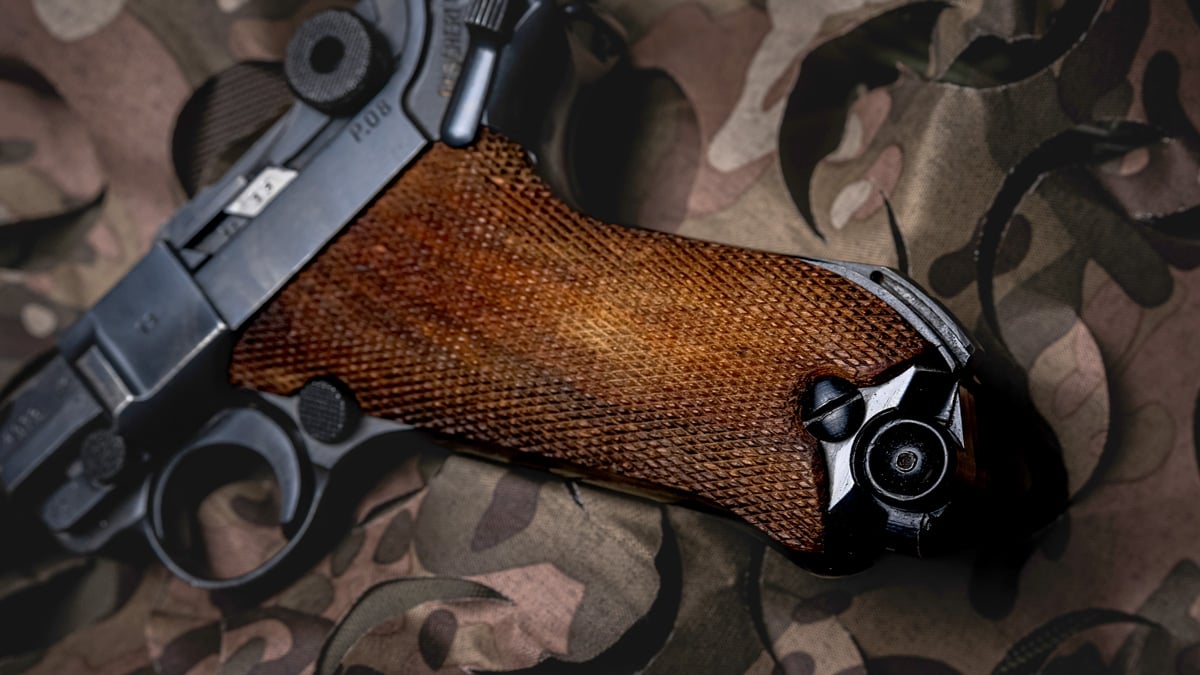
The toggle lock does lock the slide back on the last round. There is no toggle release, so you need to have a fresh round or release the magazine to put it back into battery. The rear of the grip features a groove where a wooden stock can be attached, much like the C96 Mausers.
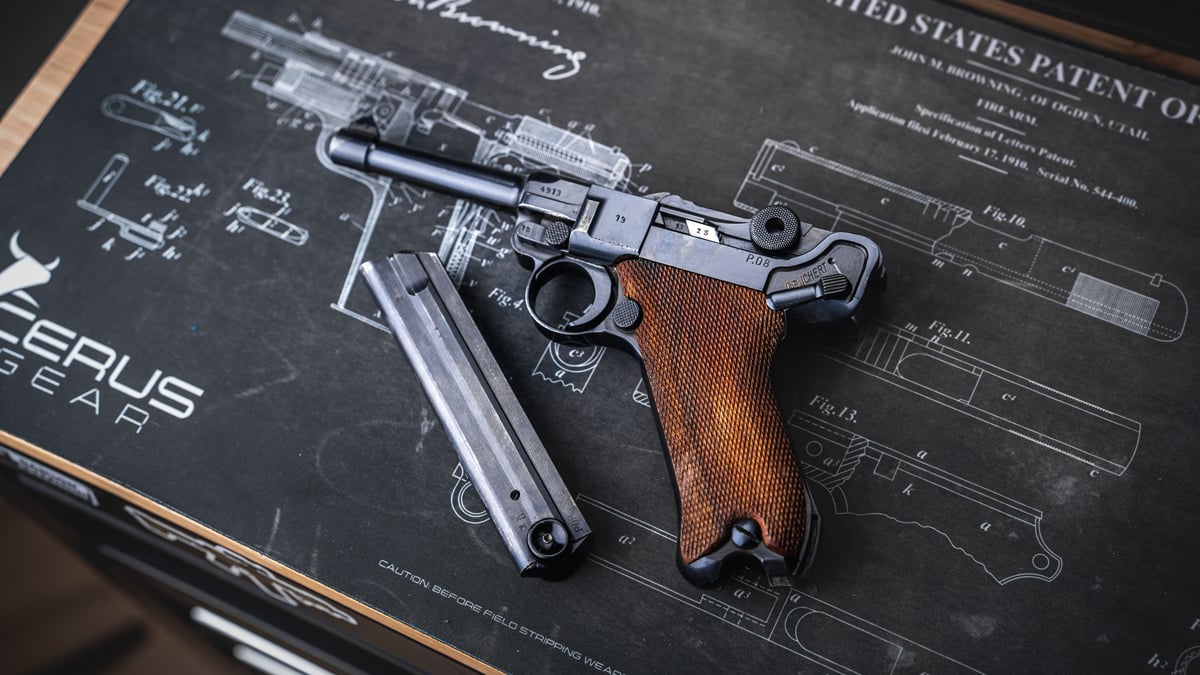
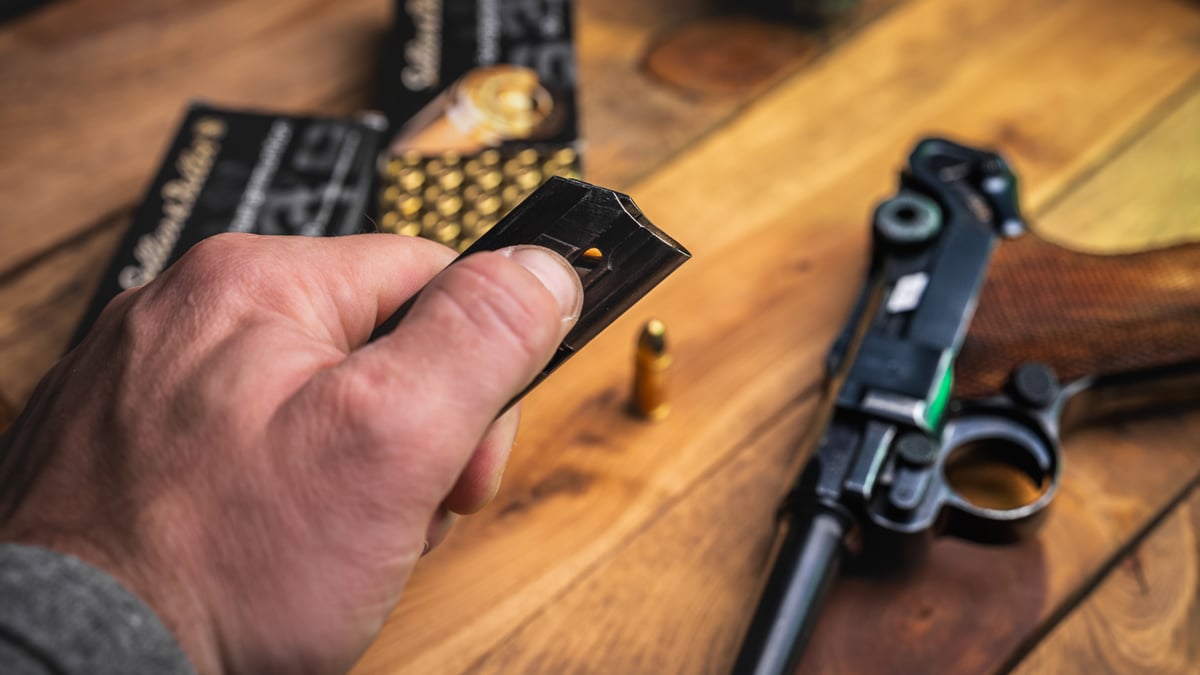
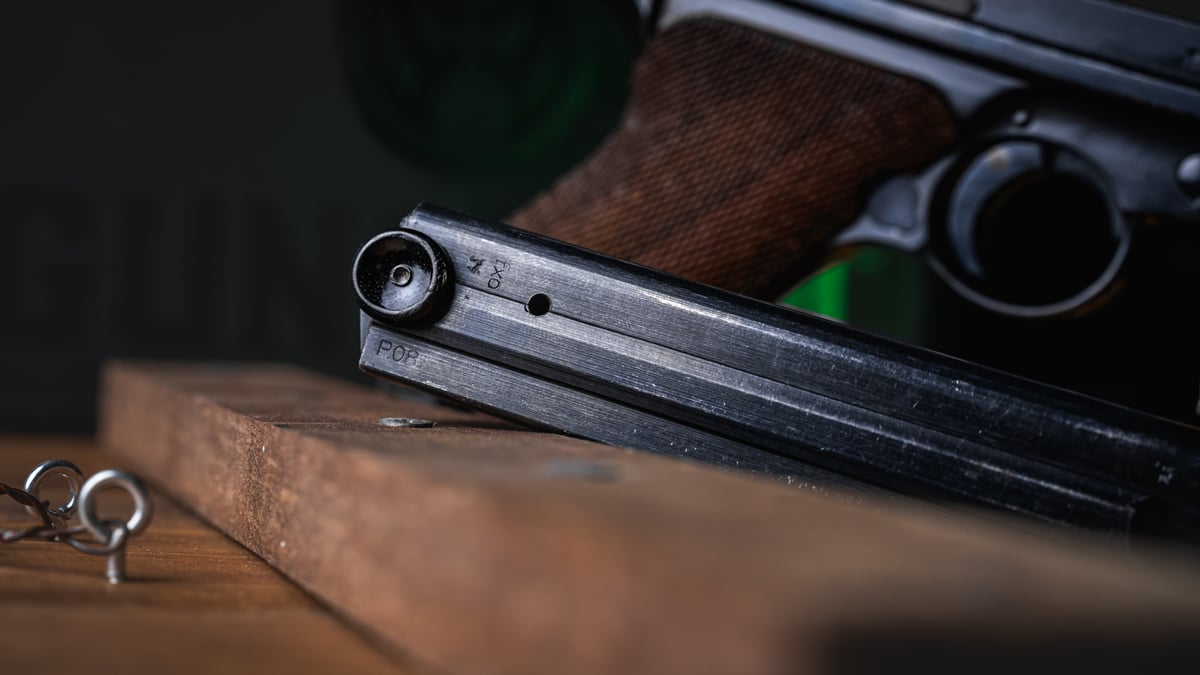
The magazines have circular buttons to help pull them out if stuck. These magazines feature a knob to hold down as you load rounds, which is a design still used by many .22 pistols. Bill Ruger famously loved the Luger, and the Ruger Mark pistols resemble the P.08 in many ways.
SPECS
While the guns vary widely depending on the era, manufacturer, and caliber, for the most part the Luger is a full-sized gun by today’s standards. It fits right in between a Beretta 92, 1911, Glock 17, and any other service handgun dimensions.
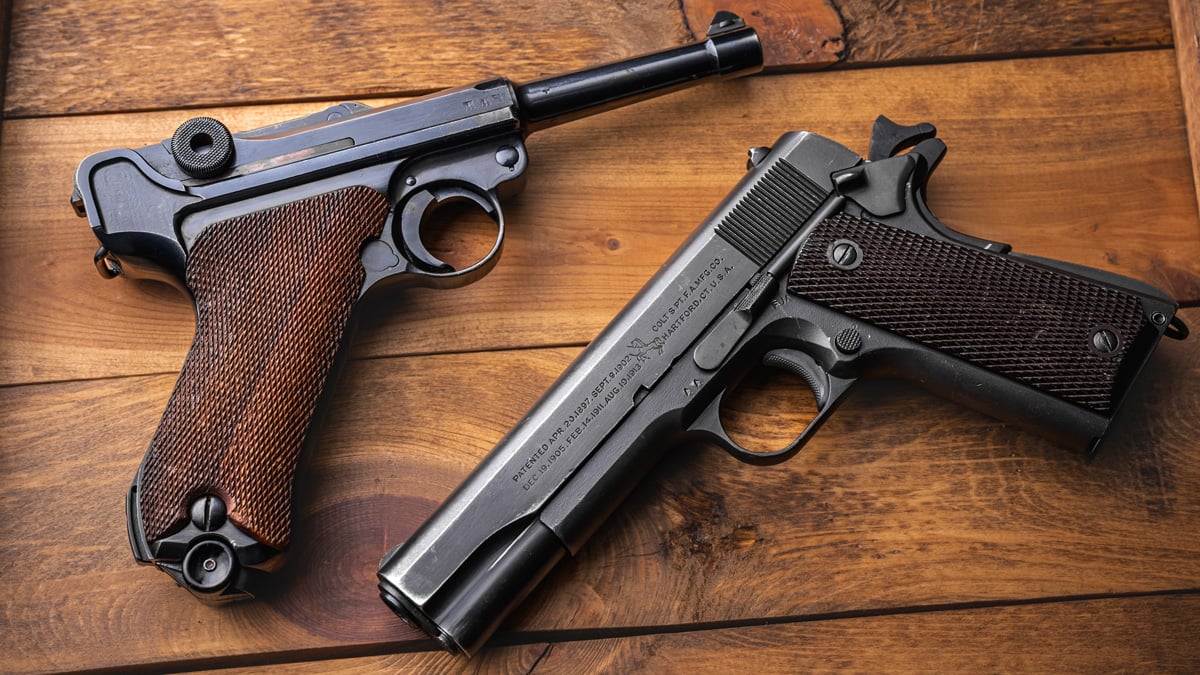
- Height: 6.5 inches
- Weight: 1 pound, 15 ounces
- Length: 8.7 inches
- Width: 1.25 inches at the grip and 1.48 inches at the widest, including safety
- Barrel: 3.9 inches (P.08), 4.7 inches (P.00), 5.9 to 7.9 inches (Navy, Artillery models)
- Capacity: 8 rounds, 9mm or .30
- Trigger Pull: Stated 7-8 pounds but feels lighter
-
Fixed iron sights with detachable magazine and wood grips
A Personal Note
Aside from the Beretta 92 and the 1911, I can clearly remember one of my favorite all-orange cap guns. It was a P.08 replica, known to many simply as the Luger. It is one of the first guns that captured my attention and a model I could name by the look. Until recently, it was on my radar but hadn’t become a must-have in my collection.
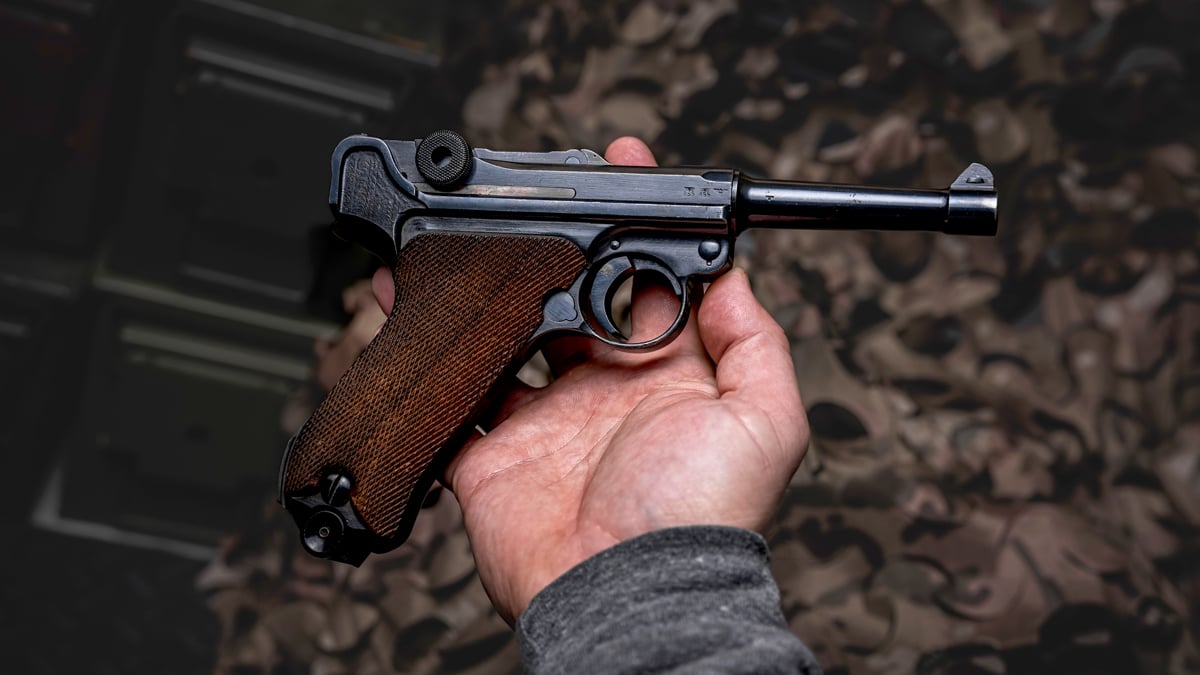
I simply didn’t know that much about Lugers, other than they were the pinnacle of the U.S. bring-backs and many WWII vets had gone to great lengths to capture these weapons. In the outstanding series “Band of Brothers,” Corporal Hoobler famously searches for one. Once he finally obtains his Luger, he is tragically killed by a negligent discharge while carrying it.

When I continued to see these guns pop up on Instagram, and after some not-so-gentle coaxing by a few friends, I really started to dig in. Of course, I knew that Lugers were inherently cool with their German engineering and unique toggle lock mechanism. I started to browse to see what the differences were, and which models and time periods spoke to me. It didn’t take long for a Luger to top my wish list.
A Wartime Prize
Without getting into the details of the different models and versions, the German P.08 design without a grip safety seemed the most classic to me. Around the same time that I started to add various guns to my favorites, a 1941 model popped up in the Certified Used section at Guns.com.
I asked if I could review it – and ultimately purchase it if I liked it. I can tell you already, I’m keeping this gem.

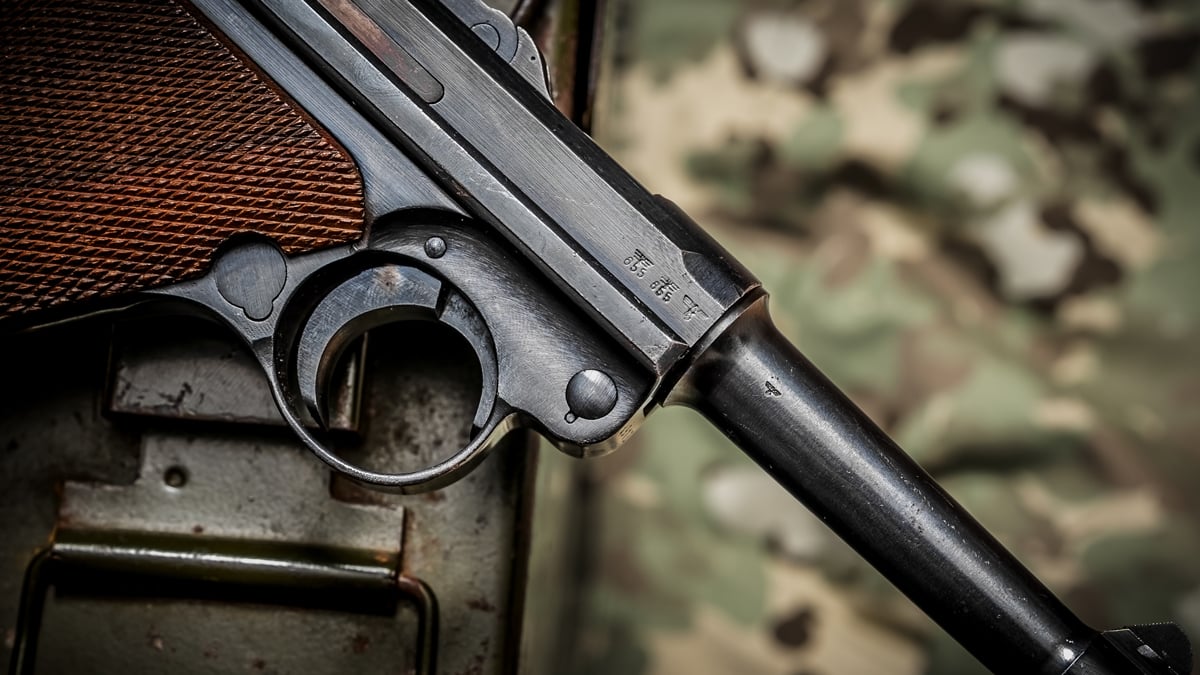
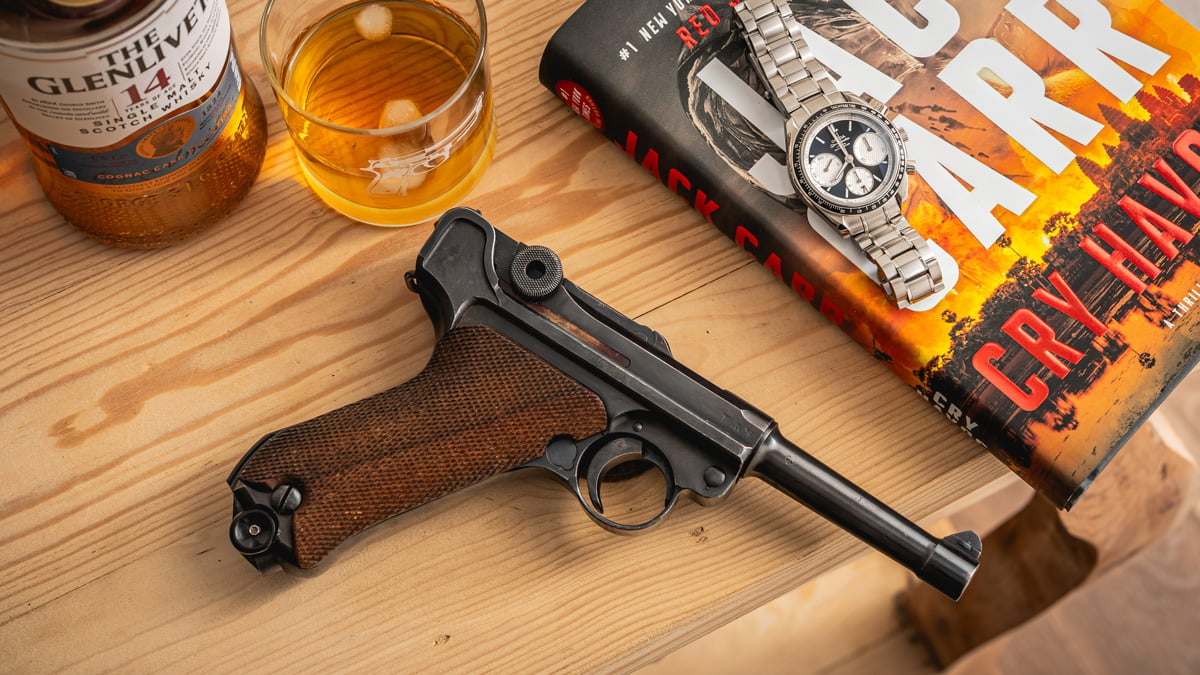
It was most important to me that the gun I collect have a fantastic original bluing but also show some real wear and tear. This one fits the bill and is also completely matching, other than the magazine. I am a sucker for WWII paraphernalia, so the fact that this is a German 1941-issued Luger is awesome. It has deep and clear “Waffenamt” stampings on the receiver and barrel – the German Army Weapons Agency marking of an eagle. This makes it feel like a wartime capture.
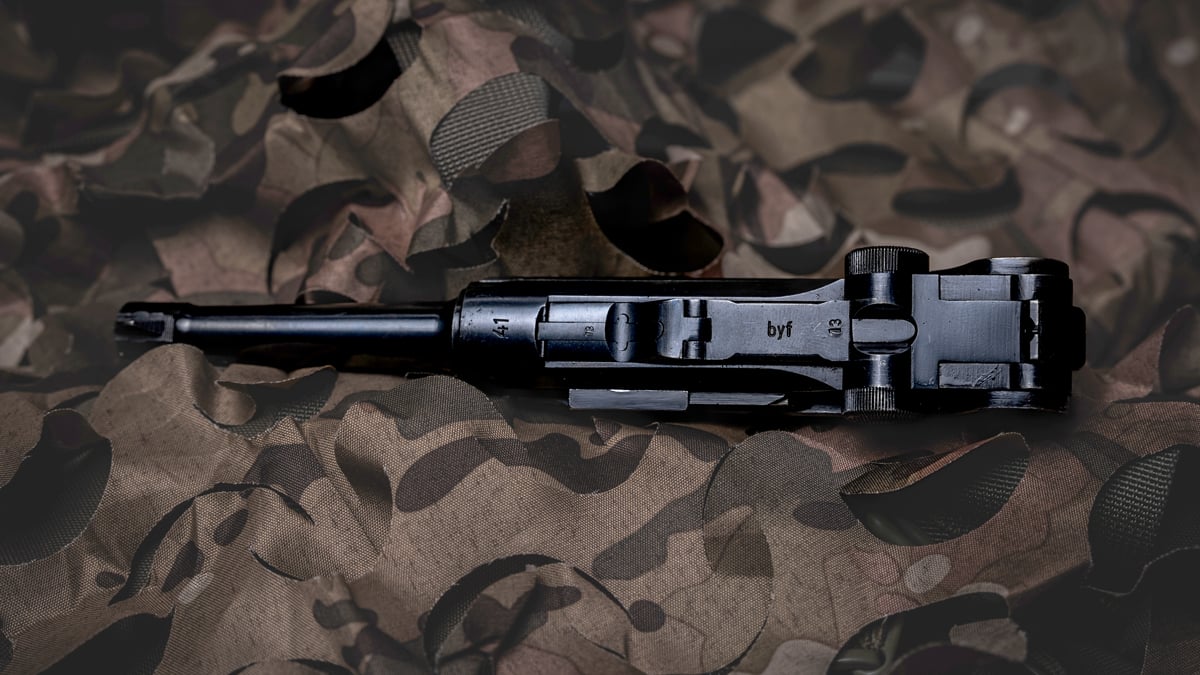
The top of my Luger is marked “byf,” indicating it was manufactured by Mauser, and “41” for its year of manufacture in 1941. It does not appear to have lived the hard life my twice-rebuilt 1943 Colt/Rand 1911 has, but it has character. For being over 80, it’s exquisite.
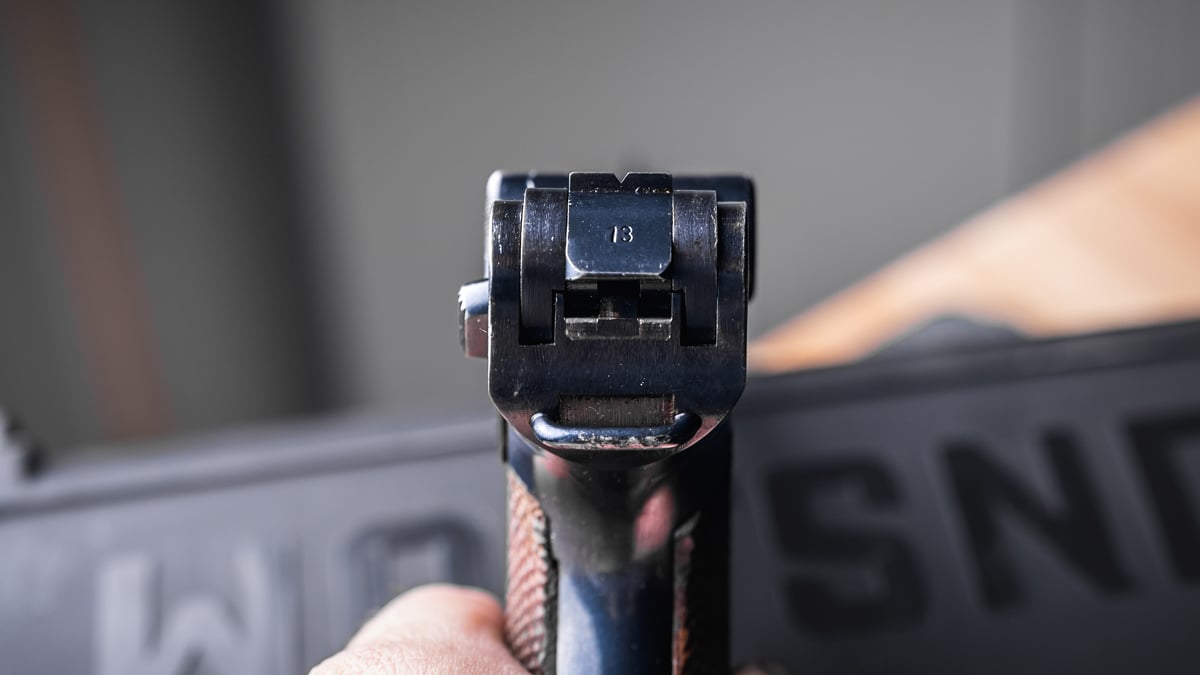
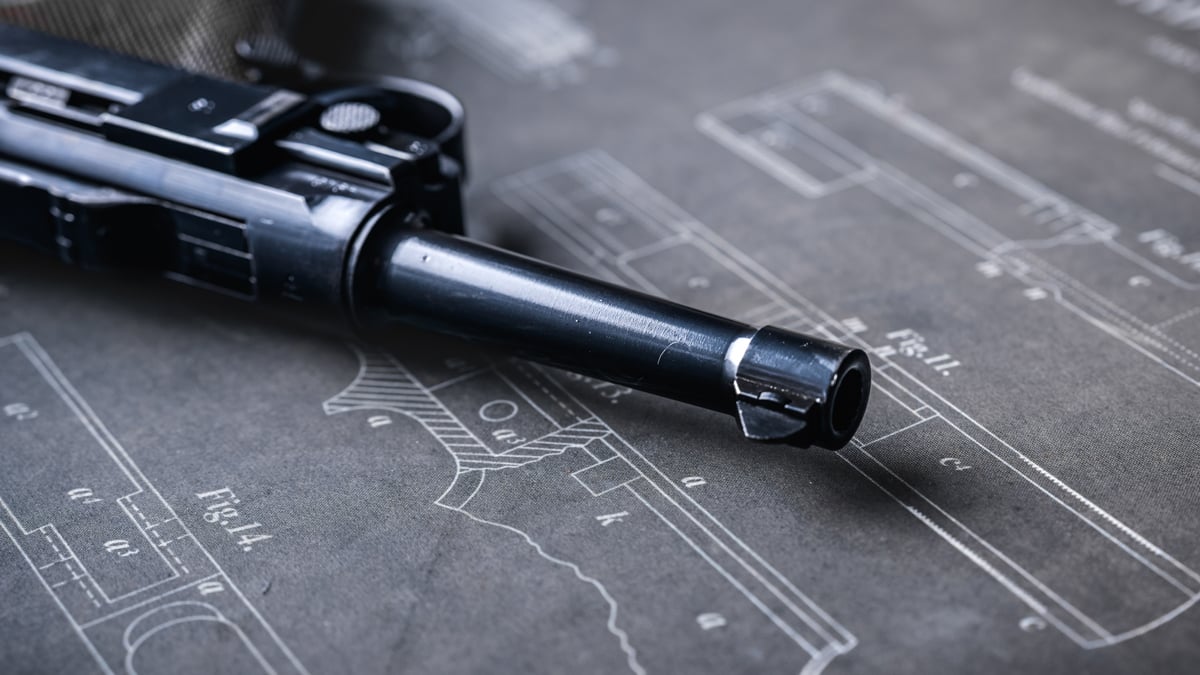
Though there are some machine marks that were common once the war effort ramped up, the slabs are impressively smooth and shiny. All the mechanisms work and there’s no rattle. I have yet to shoot this, but I fully intend to at some point.
Pros & Cons
This gun feels great in hand and in a word, is cool. The overall look may be an acquired taste, but there’s no doubt that it’s a marvel to behold. The functions are unique and historic, and the finishing is impeccable. This is so wildly different from modern handguns, and really anything after the 1920s, that you have to hold one to really appreciate the details.
Pros:
- Iconic
- Engineering marvel
- Toggle lock design
- Incredible bluing
- Historically significant
- Good trigger
- All matching serialized parts
Cons:
- Heavy
- Grip angle is steep
- Sights are very small
- Action and safety are tight
-
Outdated functionality
Conclusion
The P.08 Luger is one of the most important, influential guns of all time. Not only was it one of the first mass-manufactured semi-automatics, but it was also one of the best, and the design birthed the 9mm Luger cartridge that we know and love today.
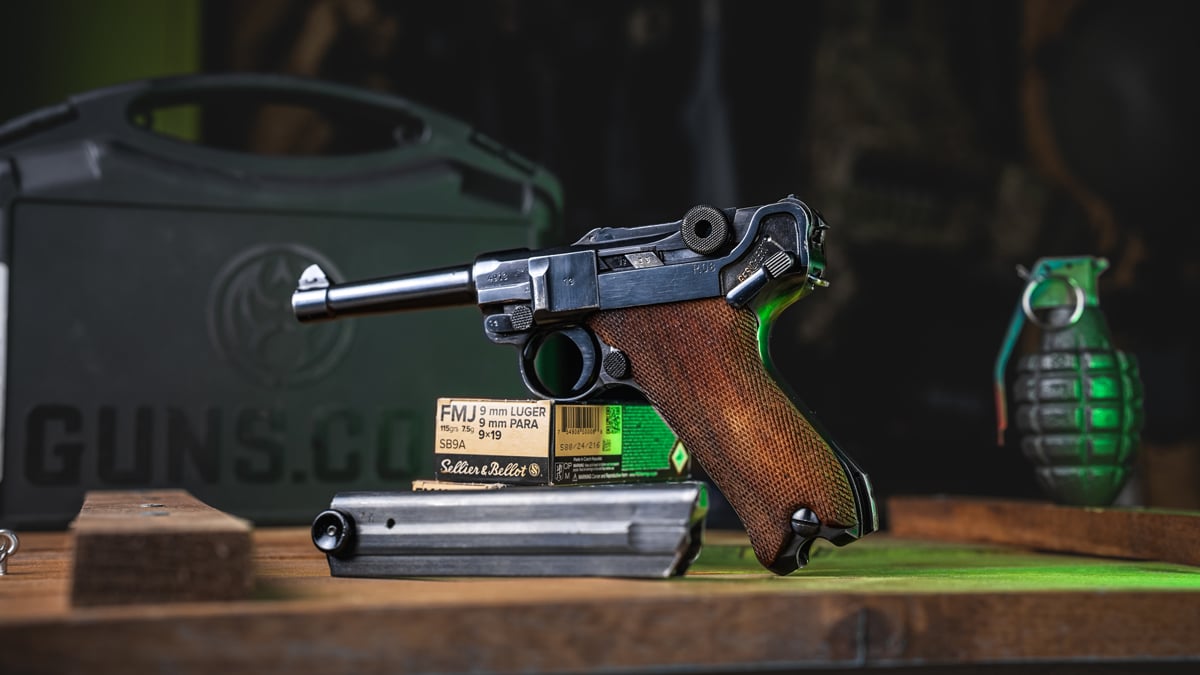
Now that I’ve got my modern defensive guns covered, my attention is firmly on finding cool old guns for my collection. The Luger is in contention for one of the coolest guns of all time, and this model checked all my boxes. It is one of those pieces that puts a smile on your face the second you pick it up and continues to impress the more you explore its nuances.