Video Review
Features
Unlike some of GForce’s offerings, the Jawbone family is manufactured right here in America.
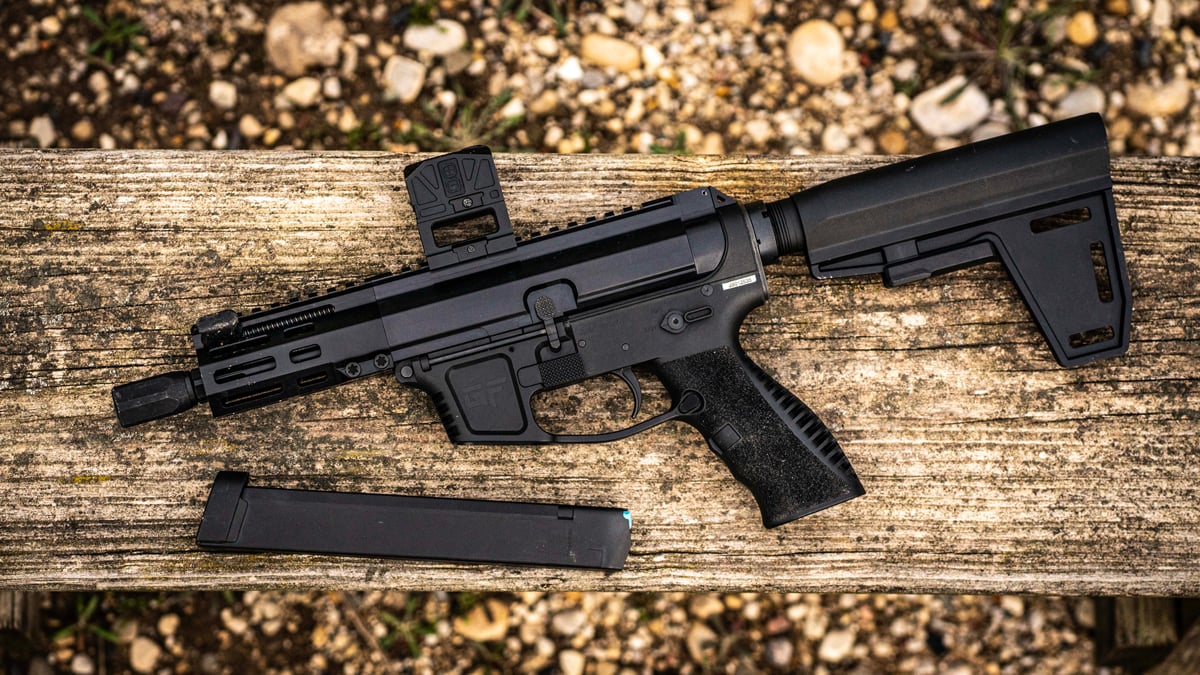
It comes in a variety of color schemes, with options for chamberings in 9mm or .45 ACP. Our 9mm pistol example here sports an adjustable stabilizing fin-style brace and is designed to run on Glock-pattern magazines. It even ships with a 34-round GForce-branded extended magazine, which ran without issue over several reloads during testing.
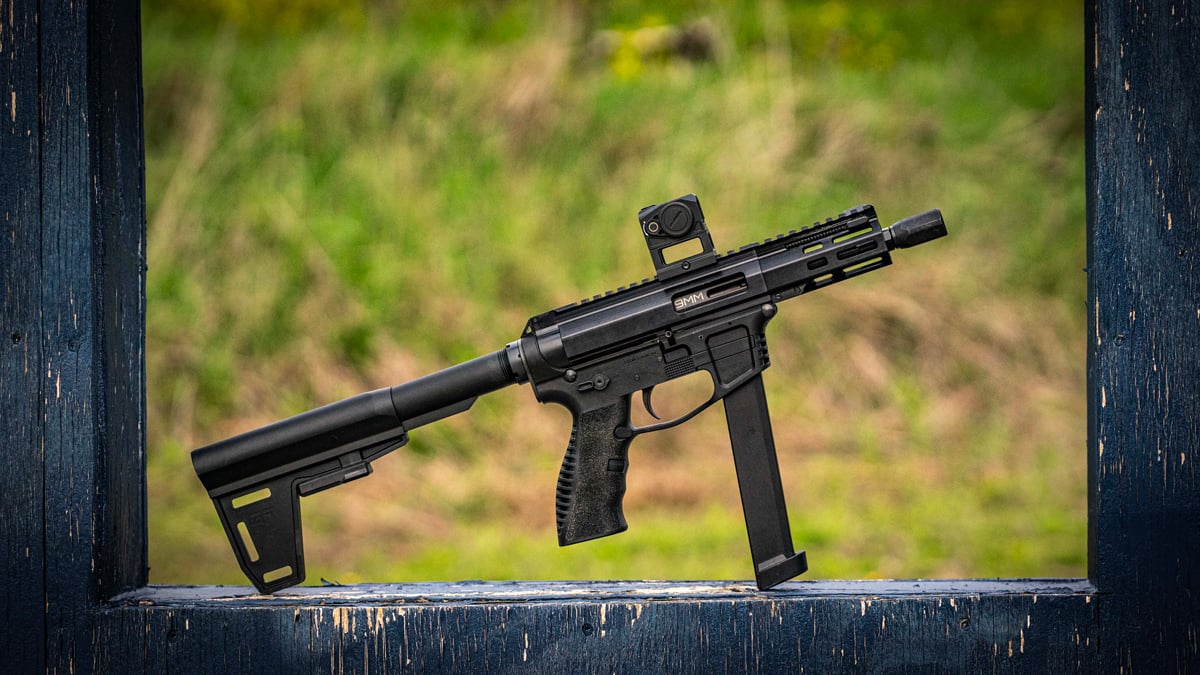
I put several brands of aftermarket Glock-pattern mags through the Jawbone as well, and I have not found one that it won’t feed on yet.
GForce seems to have tossed everything and the kitchen sink at the drawing board while designing the Jawbone. The gun itself is a simple blowback-operated system with a 5-inch barrel that is threaded for muzzle devices with the common 1/2x28 TPI (UNEF).
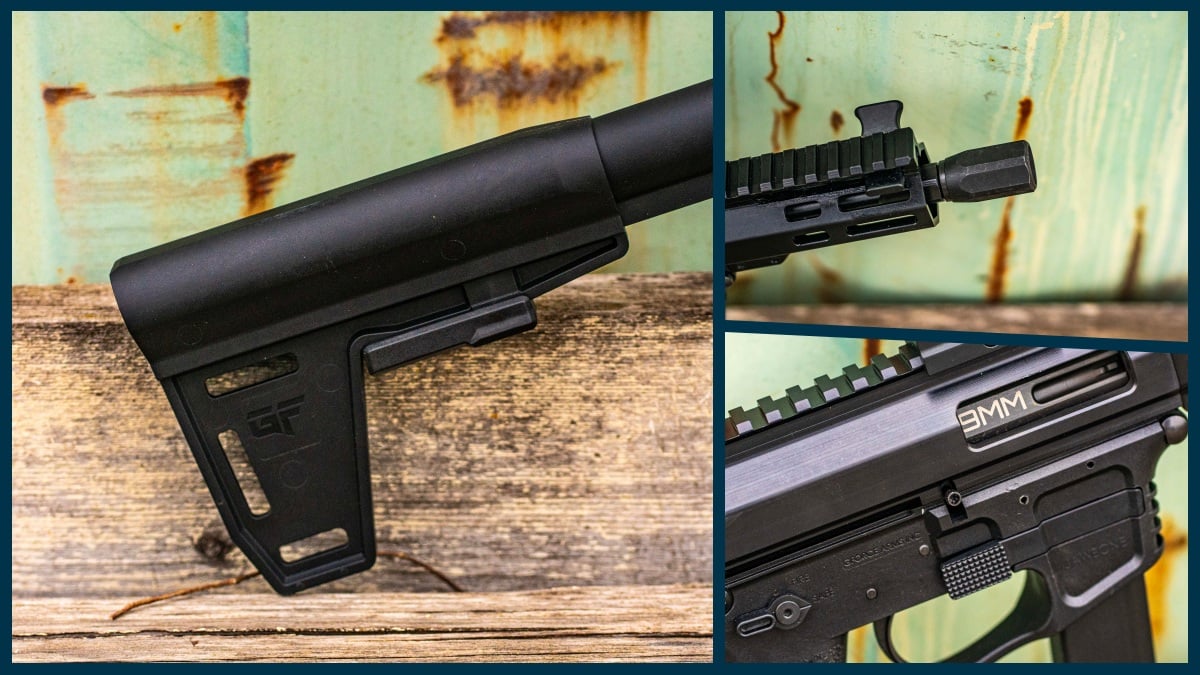
While the controls are similar to an AR-15, GForce tweaked them significantly and added a multitude of extras. There are ambidextrous, oversized magazine release paddles on both sides of the gun. These are very easy to reach and use, but they are also relatively easy to bump when you are first getting used to shooting the Jawbone.
The ambidextrous mag releases are backed by an ambi bolt-lock/release system. This consists of a standard AR-pattern release button on the left side and a unique lock/release lever on the right side, just above the magazine release.
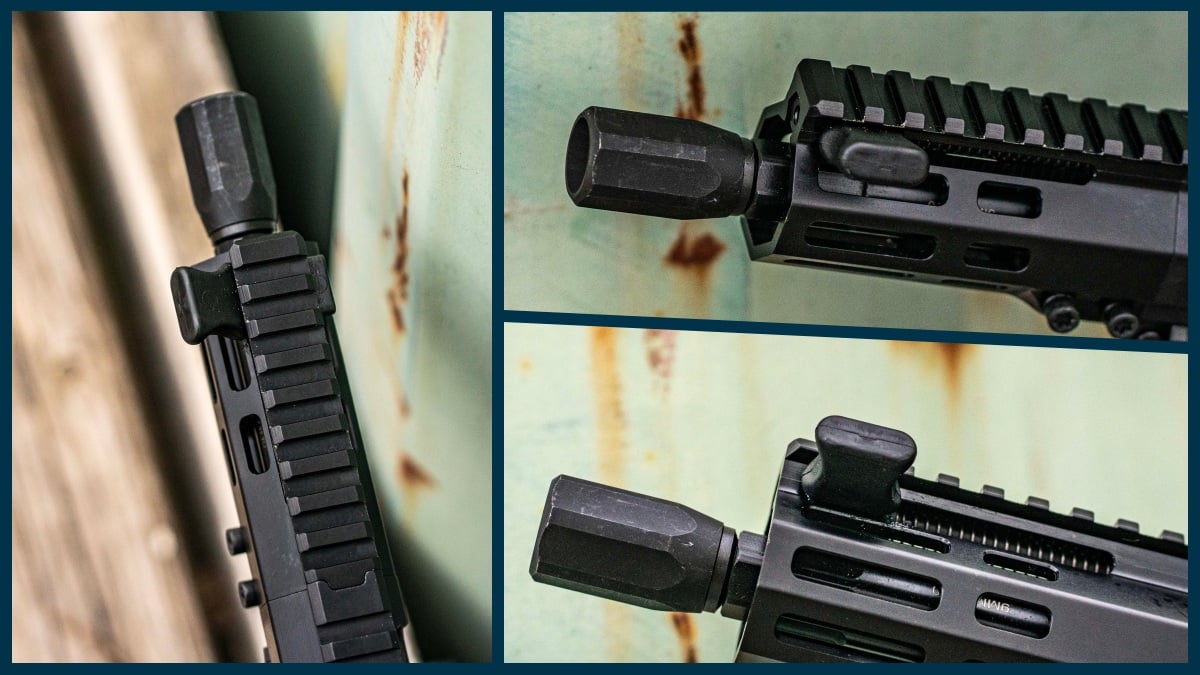
Instead of the common rear T-shaped charging handle found on most AR-ish guns, the Jawbone offers a forward charging handle. This can be swapped to either the left or right side of the gun, but it is rather stiff right out of the box. It loosened up a bit during my 800 rounds of testing, but you still need some decent hand strength to charge the bolt.
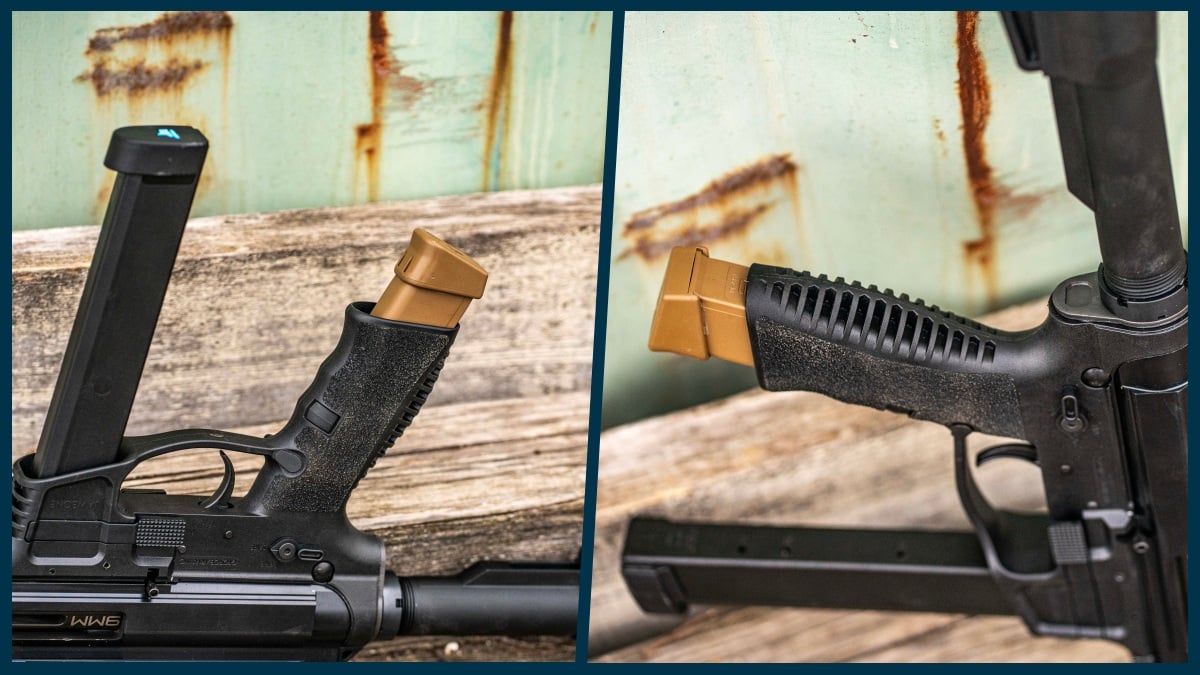
There’s storage for an additional magazine inside the pistol grip. You release the stored magazine using a pistol-like button magazine release at the rear of the trigger guard on the left side. It’s a nice bonus, and I really like the concept. Yet, my rather large hands tended to bump the release tabs located on the grip itself.
It’s hard to complain about extra bonus features on a gun, but the placement of the release tabs on the grip cause me to accidentally drop a few mags during testing. I would simply add some grip tape, a rubber grip sleeve, or a similar solution over the release tabs if this were my personal firearm.
The curved trigger is a single-stage affair that I found easy to run fast and accurately while walking shots up and down my shooting tree at the range. The trigger-pull weight comes to 6.6 pounds on this sample. While a tad clunky, it’s short, resets quickly, and is very easy to use while shooting fast.
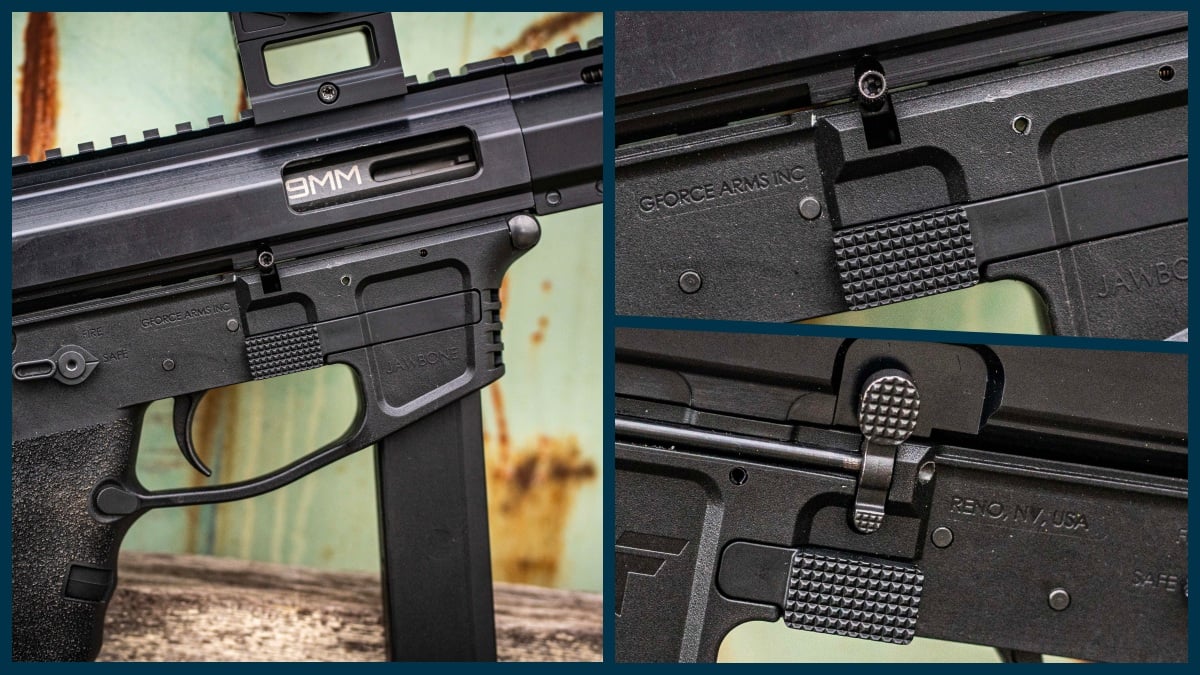
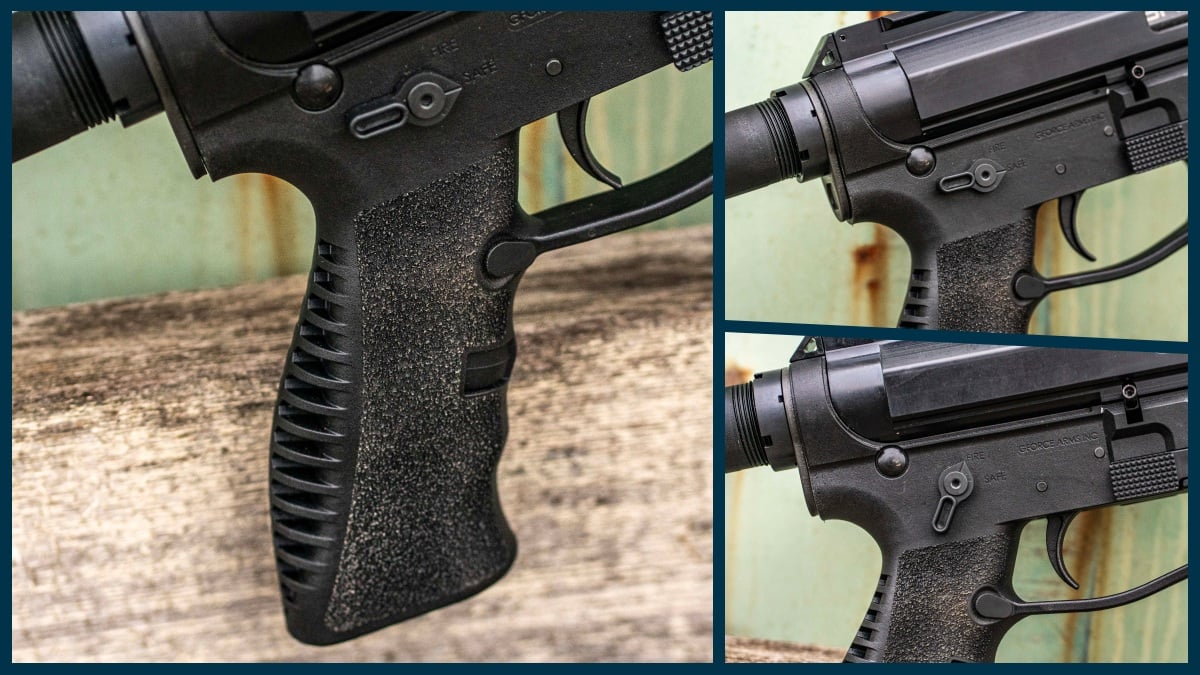
One of my favorite features is the safety. While seemingly a short version of your typical AR-pattern thumb safety, it actually offers a nice 70-degree throw. Some other online reviews put the throw at 50 degrees, but my protractor tool lines up with 70 degrees, which is still a win.
My hat is off to GForce for recognizing that most shooters are going to use this gun predominantly with their right hand. Hence, the right-side safety lever is slightly shorter, which keeps it from knocking up against my shooting-hand knuckles while running the safety.
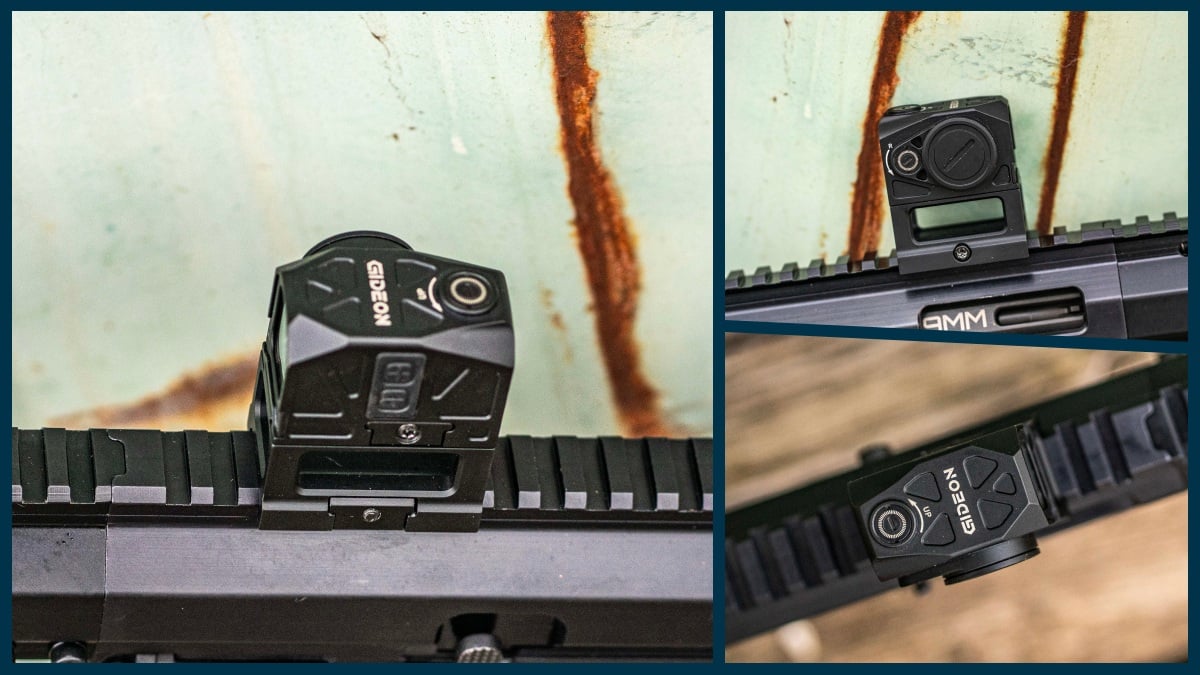
Finally, there are 10.25 inches of Picatinny rail over the top of the receiver and a large muzzle device. The latter is big enough to serve as a default blast device with its conical bore, and there are wrench flats on the sides to make it easy to remove without special tools.
Specifications
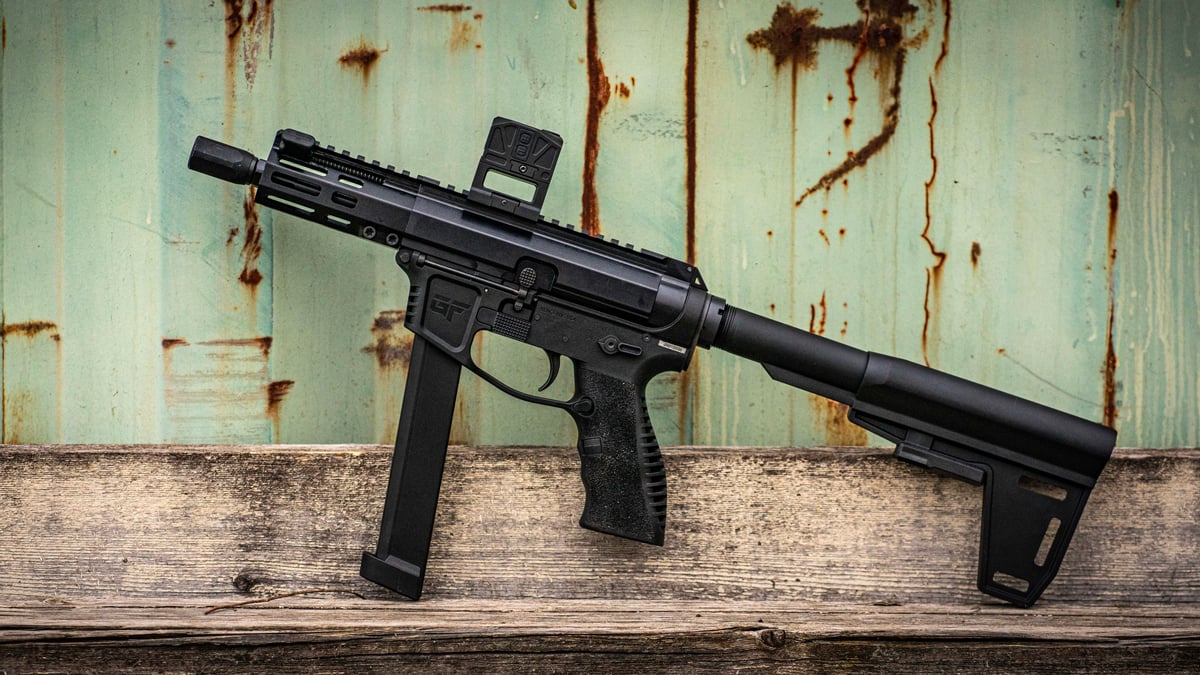
Here are the basic specs for this 9mm GForce Jawbone pistol.
Accuracy & Reliability
Most of the 800 rounds of 9mm ammo I put through this Jawbone were bulk budget FMJ loads. The Jawbone had no issues with this ammo, unlike several other guns, so I used it to burn through a good portion of my stash.
I had no ammunition-related malfunctions on the range. The Jawbone just … runs, which is great.
It’s also plenty accurate for the close-range work the gun was designed to perform. You can see in the video review above that I had no issues walking my way around shooting trees and steel targets at 15 to 25 yards.
Recoil is minimal thanks to the long buffer tube and 9mm chambering. I personally ran this gun faster and more accurately than several more expensive 9mm PCC options I’ve tested this year.
As for true accuracy, here’s what I got at 50 yards during two separate range visits.
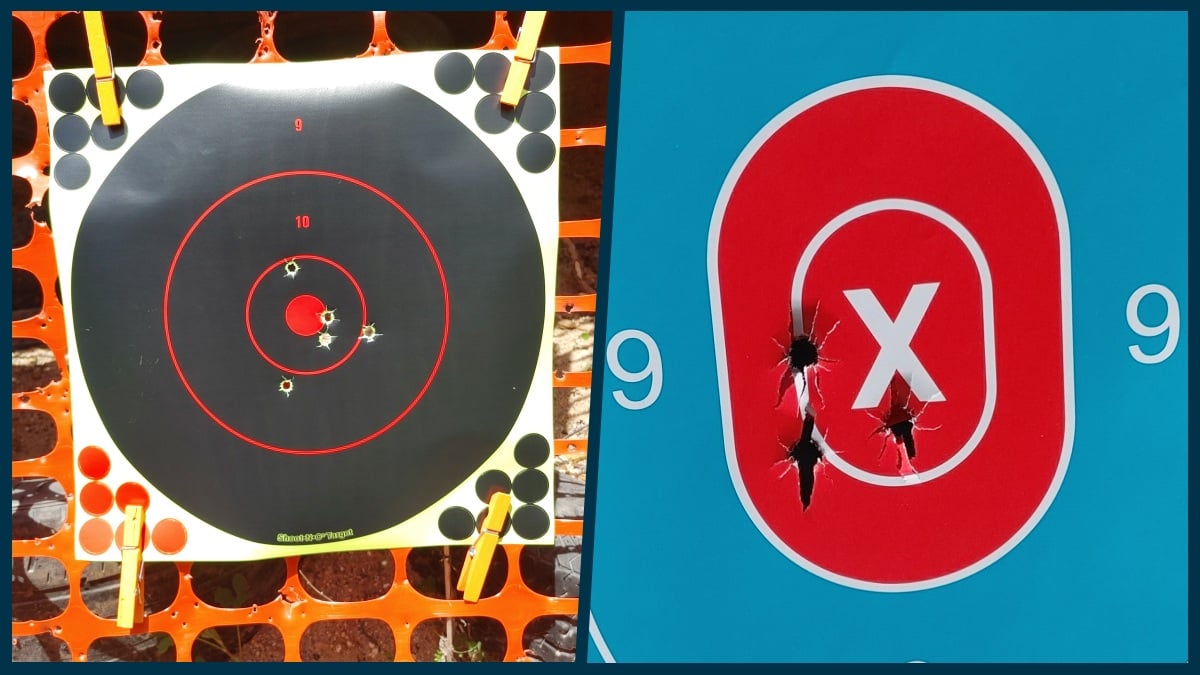
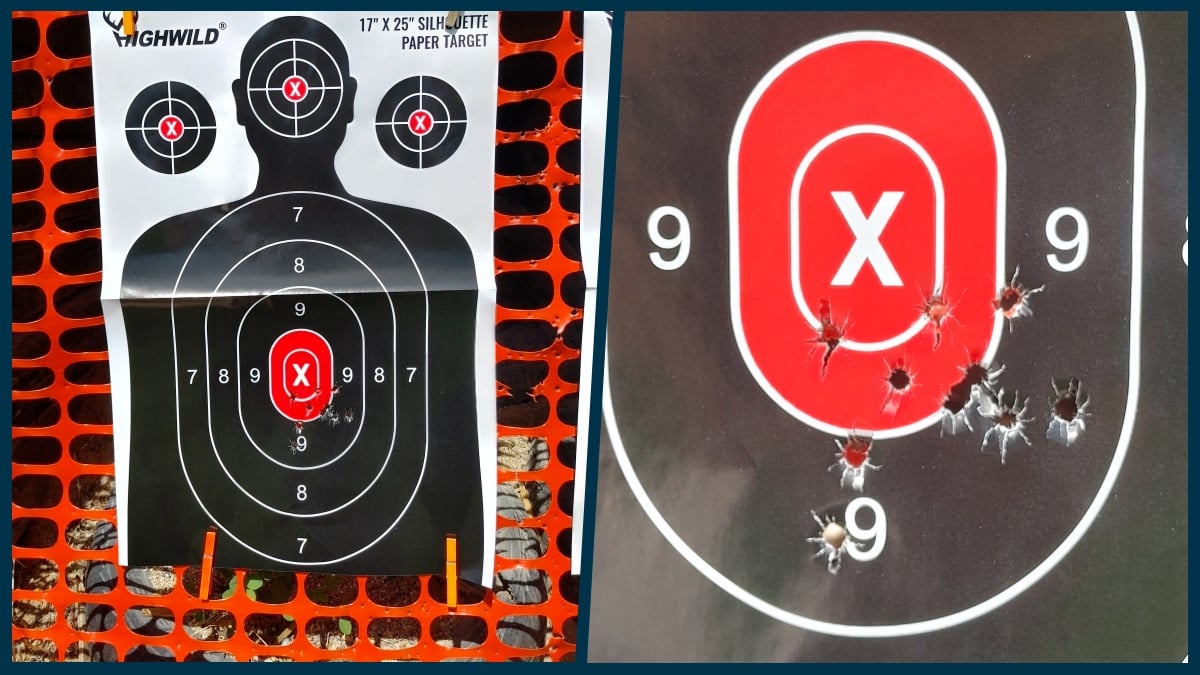
I’ve also reviewed GForce’s 9mm Blade6, which was released at the same time as the Jawbone. While I liked the Blade6 gun enough to buy it with my own money, it is heavier and has a less ergonomic safety. That gun operates on a different blowback design without a buffer tube.
If I didn’t already have a similar pistol-caliber carbine like this Jawbone, I would probably lean toward picking the Jawbone over my personally owned Blade6. Regardless, both budget guns ran with great reliability on the range.
However, the jawbone has a few design quirks. The oversized, ambidextrous magazine releases are very, very easy to use. I would go so far as to suggest that they are too easy to use.
The ambidextrous design of these paddle-shaped releases is such that it would be easy to accidentally hit one if you strapped this gun to your chest with a sling, and the grip magazine release for spare mags has release tabs on the grip itself.
On several occasions, I dropped my spare magazine while running drills. This is easy to solve with some tape or a rubber grip sleeve. Again, it is worth noting that the spare magazine compartment in the grip is basically a bonus. So, I don’t really ding the gun for the issues I had.
The ambidextrous bolt lock/release and short-throw safeties, on the other hand, are great. The designs are simple and easy to use on the fly while reloading, shooting, and clearing out your gun on the range.
Pros & Cons
Final Thoughts
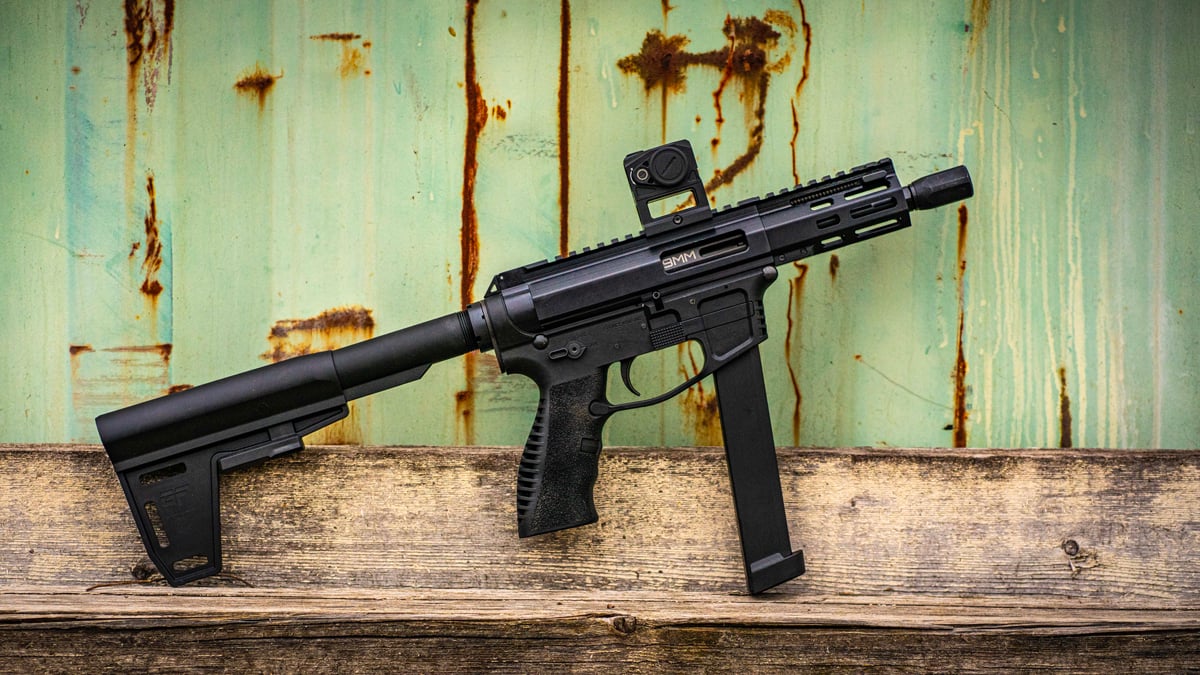
While this is a fairly unrefined gun, it has a lot of features I would only expect to see on more customized options in the realm of pistol-caliber carbines. For the price, the Jawbone is downright a steal in terms of reliability, compactness, shootability, and the ability to run common Glock-pattern 9mm magazines.
If you are looking for an affordable, high-volume plinking PCC, this is a great option. It would also provide decent service for things like home defense or as a backup trunk firearm. The controls are easy to use, but they are a bit too easy to bump for this to be a go-to tactical option.
However, for the money, this is a great place to enter the 9mm PCC game, which is booming right now. Plus, the Jawbone is ready for a suppressor if you want to plink quietly.
Paul Peterson
Managing Editor Paul Peterson is a U.S. Marine Corps veteran and an awarded combat journalist. He's been collecting firearms for over 20 years and enjoys sharing that passion with the broader firearms community through his work with Guns.com.
View All Articles by Paul Peterson