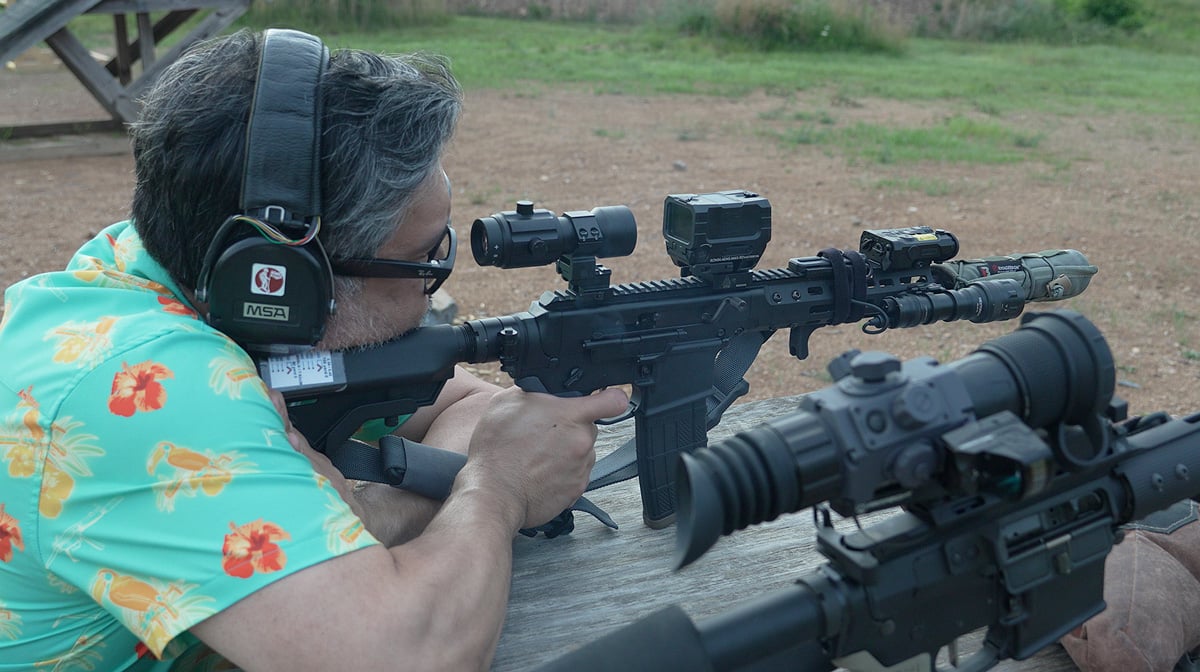
Specs

Before we get into the details, here’s a rundown of the specs for the IRIS-3:
- Dimensions: 3.2x1.97x1.34 inches
- Weight: 6.4 ounces
- Housing Material: 7075 T6 aluminum
- Surface Finish: Hard anodize
- Adjustment per Click: 0.5 MOA
- W&E Travel Range: ±50 MOA
- Storage Temperature: -40℃~70℃
- Working Temperature: -20℃~51℃
- Submersion: IPX8
- Vibration: 1000G
- Laser & Illuminator Type: Dual Laser & IR Illuminator
- White LED Output: N/A
- IR Illuminator Class: Class 1
- IR Illuminator Output: VCSEL 60mW
- IR Pointer Class: Class 1
- IR Pointer Output: 0.7mw
- Visible Laser Class: 3R
-
Visible Laser Output: 5mw
Illuminator
Some people think the laser is the most important feature on a Laser Aiming Module. Actually, it is the illuminator. The laser is used to indicate where your rounds are going. At close ranges like CQB distances, all you usually need is the IR laser to find and shoot your target. It is intuitive, and it doesn’t take advanced electronics to accomplish. Laser technology has been around a while and is established.

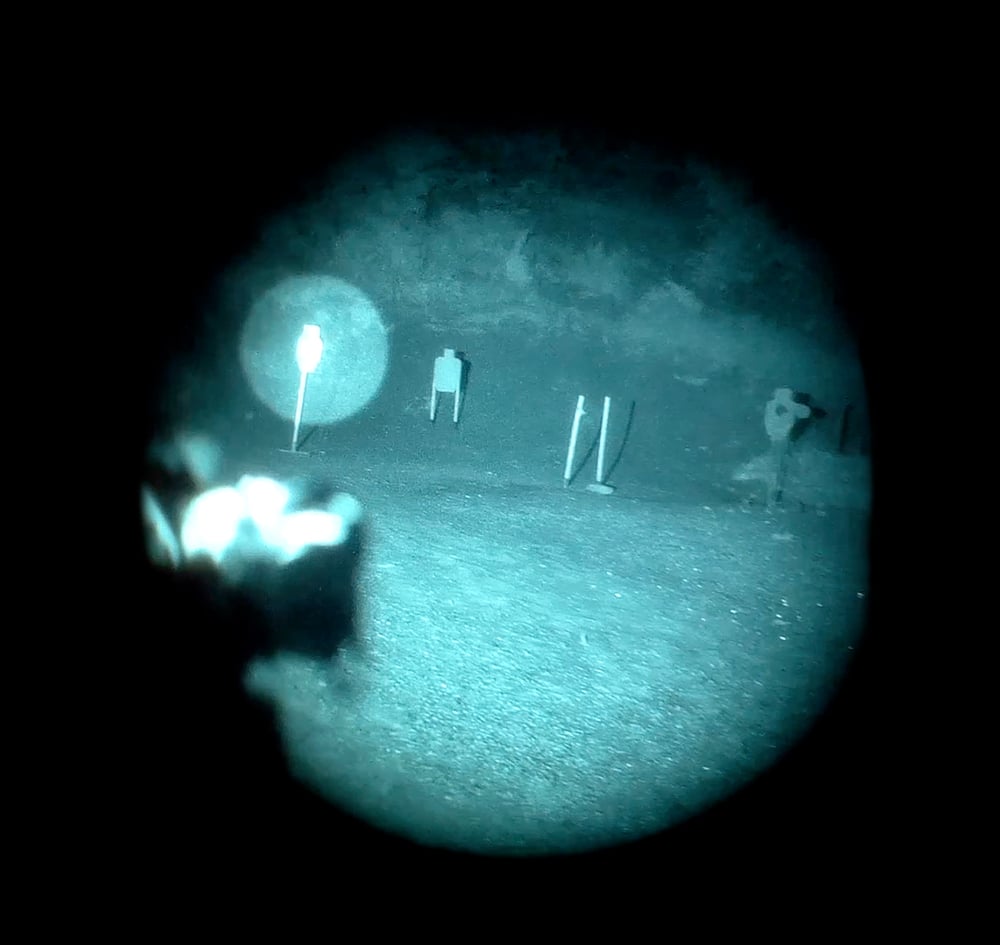
The challenges – and the quality of LAMs – start showing up when you try to engage targets past 50 yards, at your rifle’s most effective ranges. Rifles are meant to shoot things far away, but at long distances, target identification becomes difficult with night vision devices. Supplemental infrared light is almost always needed to “spotlight” the target. This is why LAMs have IR Illuminators. The illuminator is basically an IR flashlight used to see your target.
The military has access to full-power IR illuminators on its LAMs; however, because of FDA regulations, civilian IR illuminators are restricted to low-power units. Until now, this severely limited the effectiveness of civilian laser units.
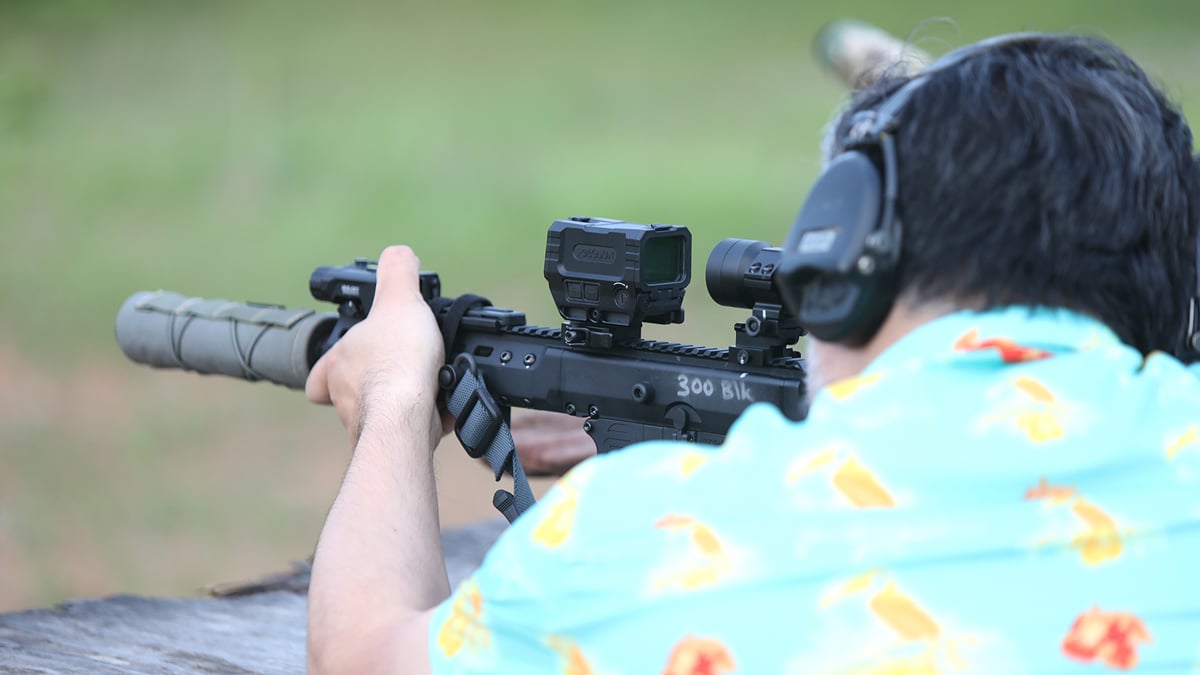
The recent development of VCSEL (Vertical-Cavity Surface-Emitting Laser) IR illuminators has circumvented these regulations, because VSCEL is not regulated as a true laser. With VCSEL, you can have an illuminator that is just as powerful or even more powerful than “full power” military units.
The Holosun IRIS integrates a 60mW VSCEL, which either matches or outshines nearly all past LAM designs. The focus of the illuminator is also easily adjustable on the fly from a flood output to a spotlight setting.
Here's a quick look at the IRIS in action after dark:
Price
At an MSRP of around $1,000, the IRIS is the least expensive reputable full-power LAM on the market. Before the IRIS, one would have to spend two to three times that to purchase even a low-power LAM.
Some “airsoft-quality” units have similar stats and a lower price, but their reliability is questionable. Holosun has established a reputation of producing rugged, reliable products for over 10 years and is the go-to name for affordable, durable firearm optical accessories. The Laserspeed M6TR comes close, but it has not established itself like the Holosun as a bombproof solution.
Weight
The IRIS is the lightest full-power LAM currently available. Weight is an important factor for LAMs because of the position where they are mounted. Typically, lasers are attached in the forward-most position on the handrail. Even small amounts of additional weight at the end of a rifle can through off the balance and make the rifle feel front-heavy.

The IRIS is so light that it is hardly noticeable, which makes a difference when handling a long gun.
Interface
Holosun thought carefully about the user interface. The “fire” button is located on the center line of the unit near the back, so it is easily reached for either right or left-handed shooters. The illumination slider is a simple and intuitive way to control the focus of the illuminator and quickly adjust the beam for close or far targets.

Holosun used a completely new design for the control settings. Most laser units use only one control knob, sometimes with more than 10 settings such as visible laser only, low IR laser only, high IR laser only, low IR laser and illuminator, etc. All these positions only had space for two-letter markings to indicate setting. This could get confusing.

On the IRIS, controls are split into two knobs. One controls power with three settings: off, low, and high. The other dictates the output device: visible laser, IR laser, IR illuminator, IR laser & illuminator. This simplifies the control menu and makes it easier to know the setting.
More Features
In addition to these unique features, the IRIS incorporates all the basics that should be on a quality LAM but aren’t always present. The Picatinny mount is a cross-bolt-style that is simple and robust. The visible laser and IR laser are connected so you can sight in the visible laser during the day, and the settings apply to the IR laser. It also uses the industry standard Crane port so the most popular accessories such as Surefire and Modlite buttons are compatible.

If I had to nitpick, I would say the Crane port is slightly outdated. Newer port protocols such as USB-C have more options for programming, but personally, I don’t use custom programming and prefer the Crane port for its versatility. Also, some people I have talked to want a diffuser for the illuminator so it will work better at CQB distances. I don’t think it is necessary, but you can get an aftermarket add-on.
Pros & Cons