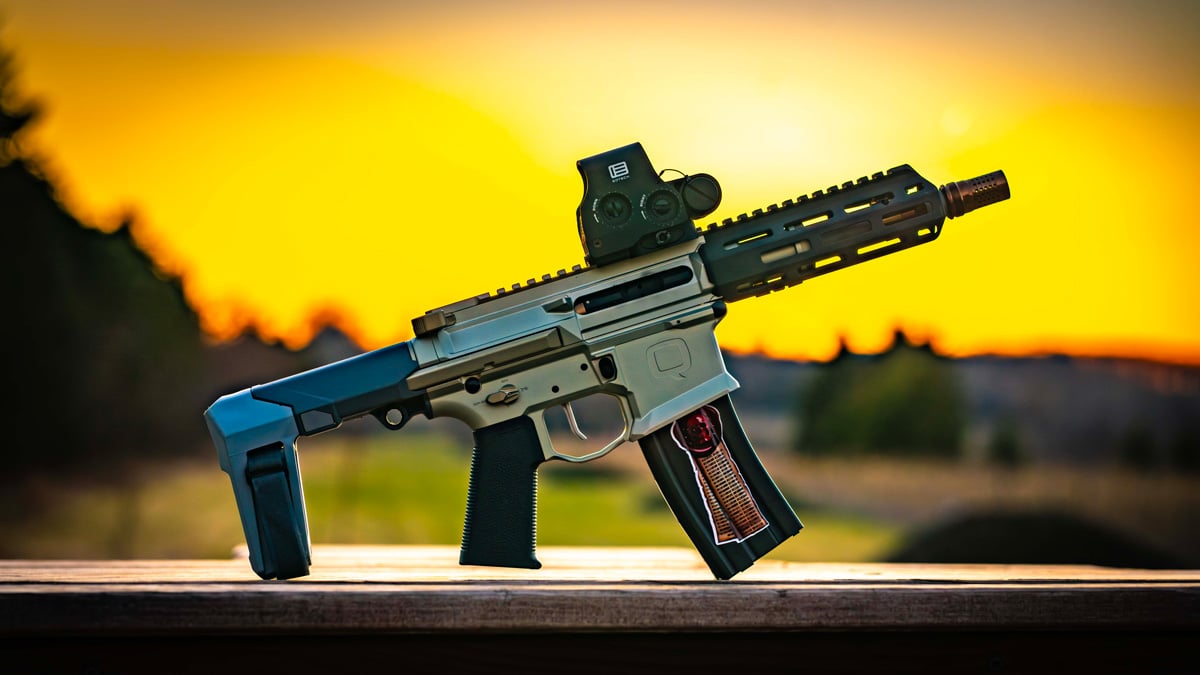
Close-quarters shooting is fast and gritty, but Q’s Honey Badger in .300 Blackout don’t care. 

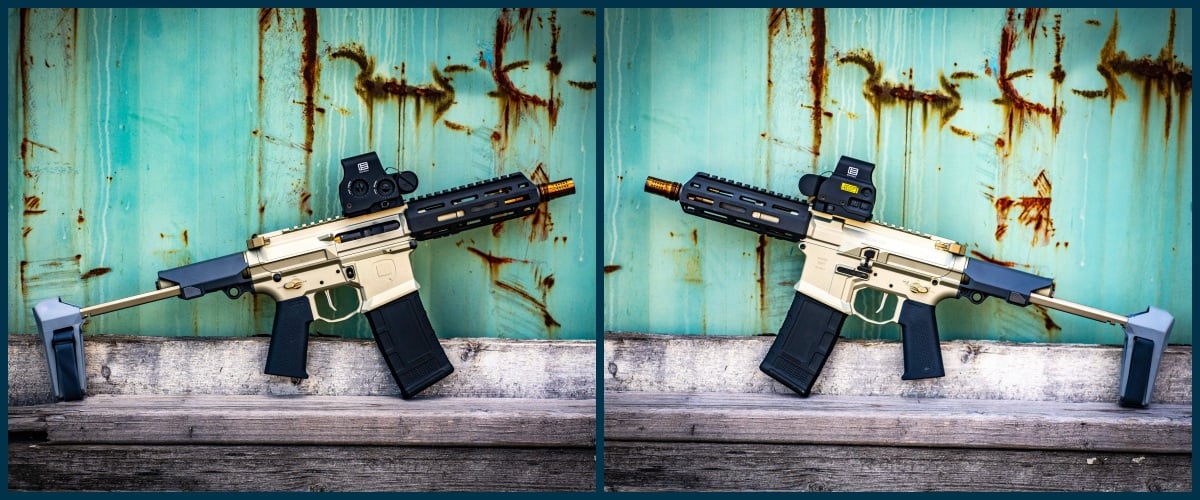
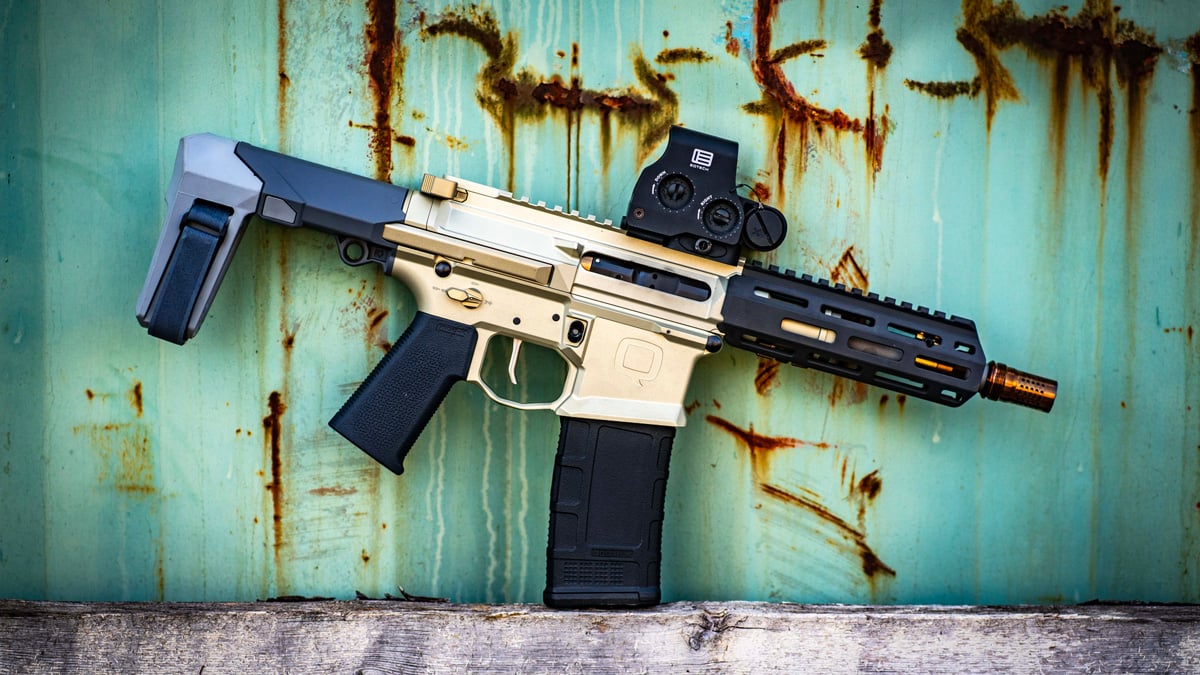
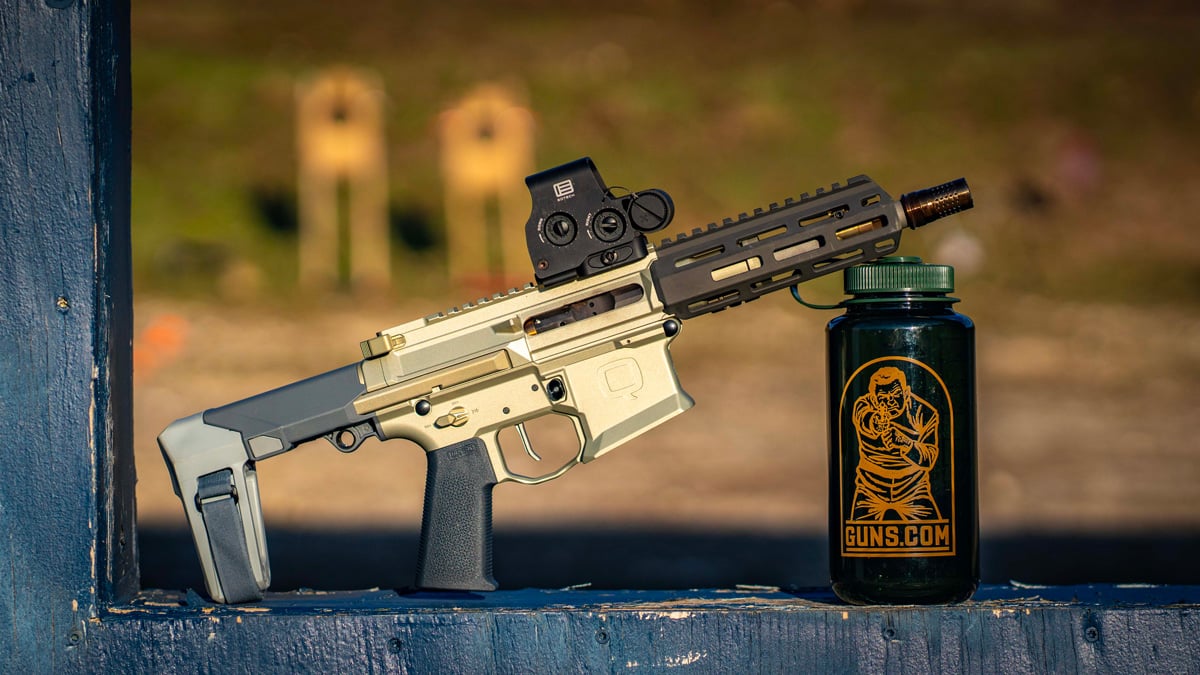
Originally built to replace the iconic suppressed HK MP5-SD, this compact AR platform is made to thrive at close ranges with a suppressor attached. Its short 7-inch barrel, topped with Q’s Cherry Bomb muzzle device, makes it ready to accept a quick-detach suppressor to keep close and long-range disputes quiet.

On top of all that, it has Q’s so-called Literally the Best Trigger Ever Made installed. We put that claim and this entire platform to the test with some hands-on range testing. Here’s how it performed.

Quick Summary: The ultra-compact Honey Badger ran with fantastic reliability and accuracy. Q’s Literally the Best Trigger Ever Made is fast, flat, and light, breaking at 2.8 pounds, and the 7-inch barrel with Cherry Bomb muzzle device makes this a perfect low-recoiling suppressor host.


Table of Contents

Video Review
Origin of the Honey Badger
Features
Specifications
Reliability & Accuracy
Honey Badger vs. Sugar Weasel
Pros & Cons
Final Thoughts

Video Review


Origin of the Honey Badger


Q Honey Badger in .300 Blackout
Q made the Honey Badger with a specific mission in mind: replace the legendary 9mm MP5-SD. (Photo: Seth Rodgers/Guns.com)


Hitting the commercial market in 2017, the Honey Badger line was built to fit the needs of a special military program to replace the beloved 9mm HK MP5-SD. The new design upped the caliber potential with .300 Blackout and 5.56mm options in a similarly compact, suppressor-optimized package with low recoil.

The gun was designed by Kevin Brittingham, who founded Q and launched the Honey Badger just a year later. Brittingham has extensive experience with modern suppressors, and he leveraged that knowledge to make the Honey Badger a close-quarters beast that could take the place of suppressed 9mm submachine guns like the MP5.

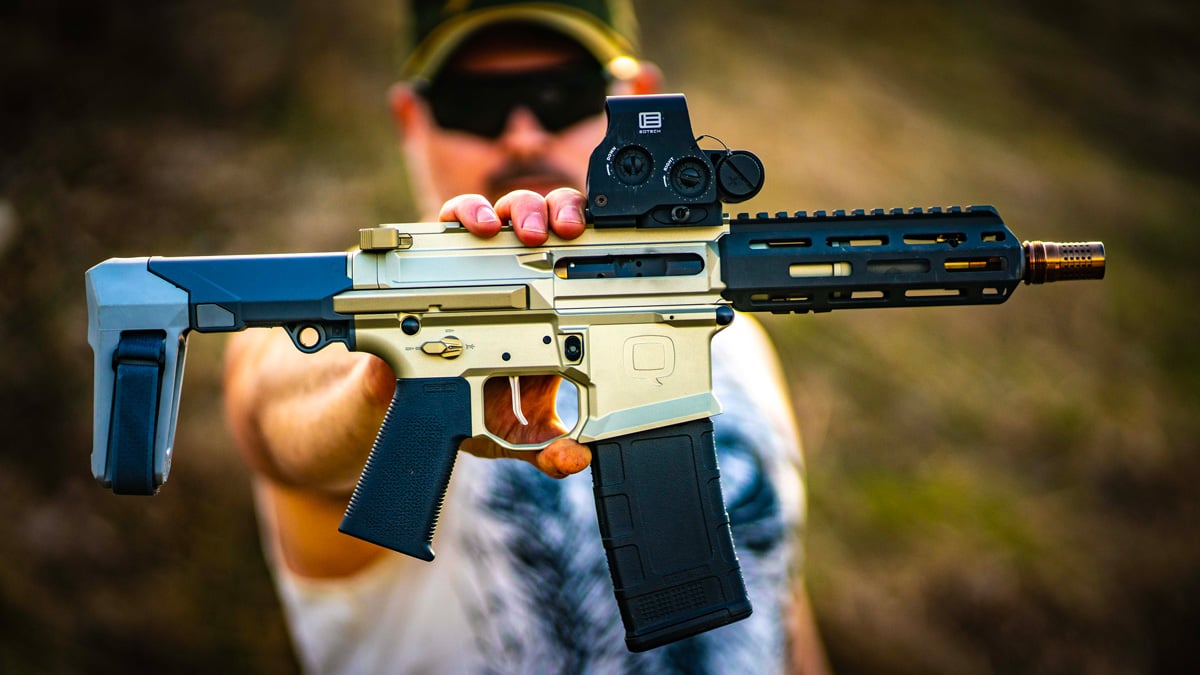
Q also ensured the Honey Badger remained extremely lightweight, weighing in at just 4.6 pounds on my scale. Combined with a collapsed length of only 20.9 inches, this made the Honey Badger a perfect companion for suppressors and close-quarters work.
 

Features
 

Q Honey Badger in .300 Blackout
Q added a bunch of enhancements to the Honey Badger, and it also cut out some of the unnecessary features found on similar AR platforms. (Photo: Paul Peterson/Guns.com)


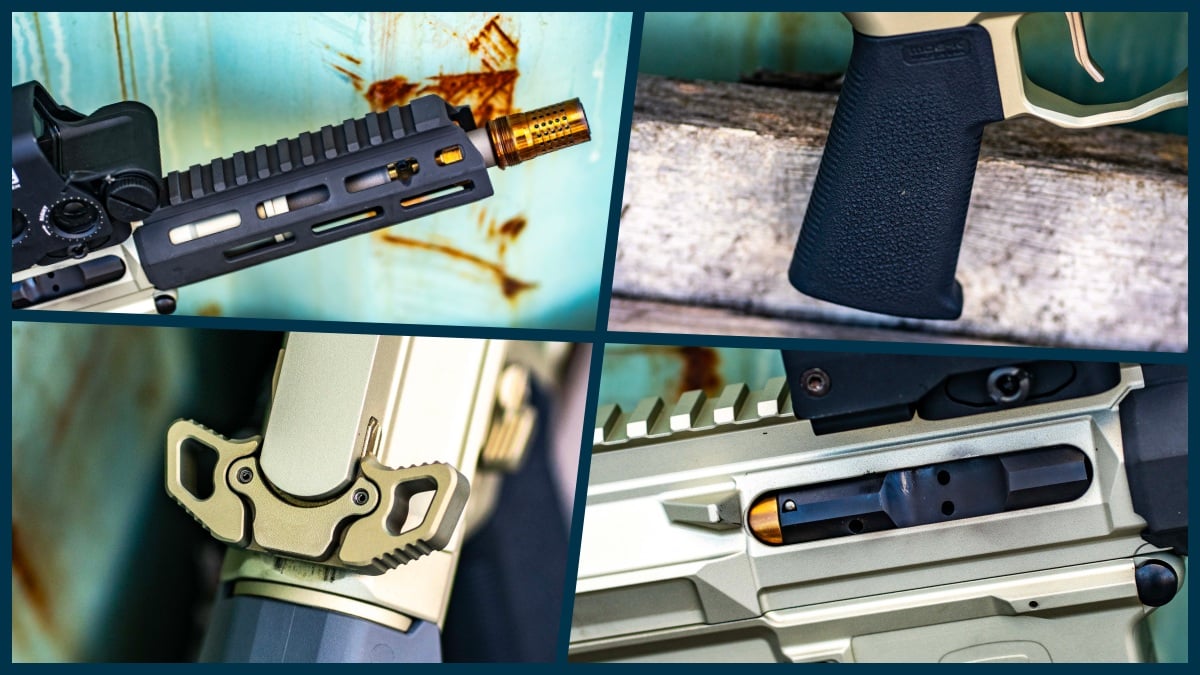
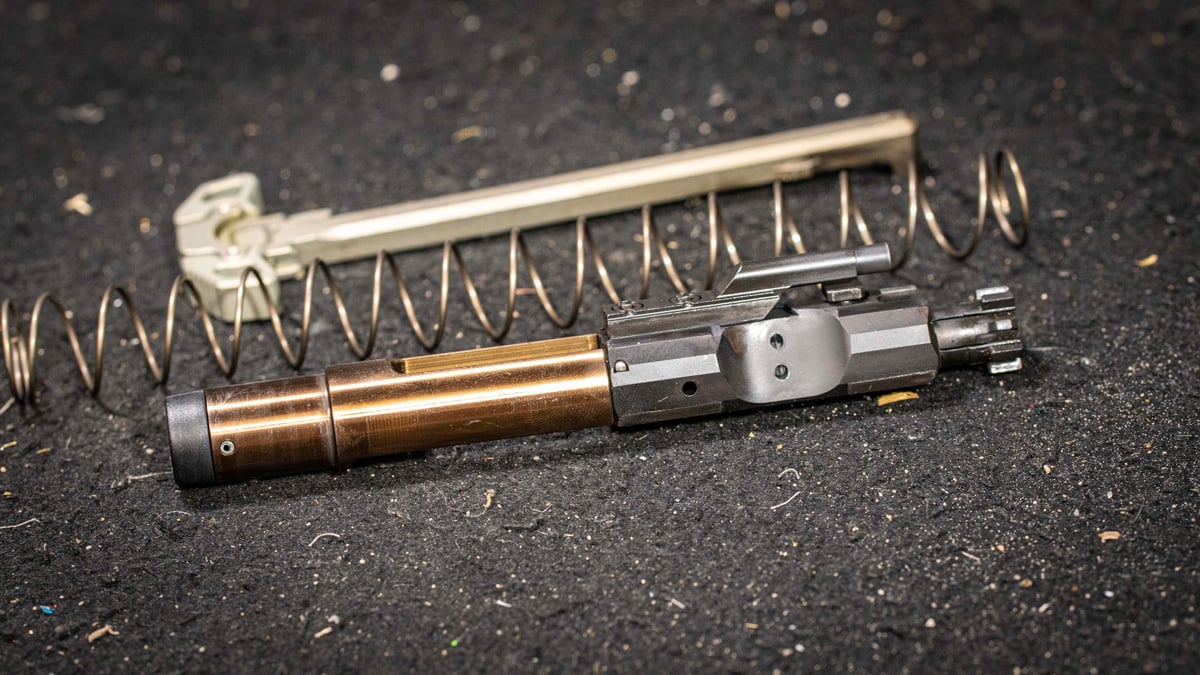
The Honey Badger uses the classic AR-15 direct impingement gas system, but with a twist. It has an adjustable gas block under the M-LOK handguard, and the operating system uses a two-piece bolt carrier group with a short buffer tube. 

That short buffer tube and two-piece bolt carrier group are what keep this gun incredibly compact. Still, recoil is minimal with the .300 BLK chambering, and Q added a bunch of enhancements for faster shooting. 
 

Q Honey Badger in .300 Blackout
This two-piece bolt carrier group connects directly to the buffer spring, instead of a traditional AR-15 buffer weight, and the bolt and spring travel to the rear into a shortened buffer tube. The bolt itself comes apart for easier cleaning. It’s also easier to machine with more precision as two parts. (Photo: Paul Peterson/Guns.com)
Q Honey Badger in .300 Blackout
The design is both ambidextrous and simplified for ease of use. (Photo: Paul Peterson/Guns.com)


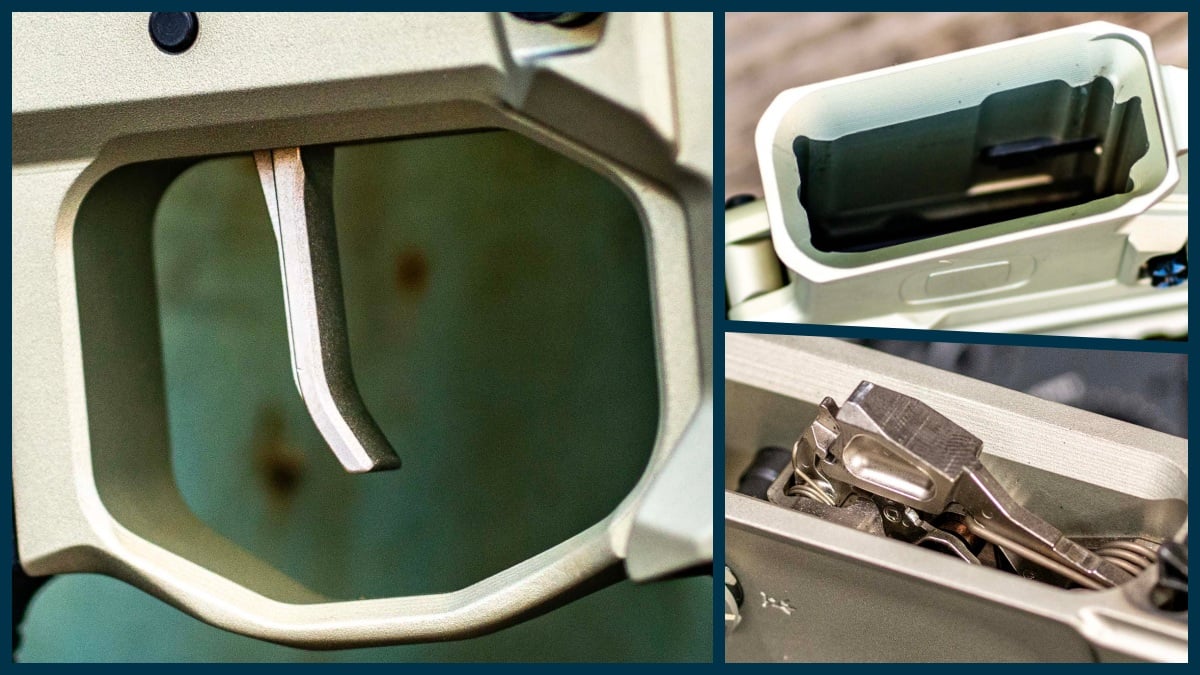
First and foremost, those enhancements include Q’s Literally the Best Trigger Ever Made. This two-stage, cassette-style trigger has a flat face, a crisp break, a short and positive reset, and a pull weight of just 2.8 pounds on my gauge. It’s even compatible with any standard AR/M4 platform should you choose to add that trigger to other guns in your collection.

Is it truly “the best trigger ever” from my experience? Not exactly, but it’s darn close. I’ve shot a lot of nice AR-15s over the years, and this trigger is no joke.
 

Q Honey Badger in .300 Blackout
The Q-brand Literally the Best Trigger Ever Made is flat and one of the best AR triggers I've ever run. The internals of the trigger group help make that magic happen. The magazine well is also flared for easier reloads. (Photo: Paul Peterson/Guns.com)
Q Honey Badger in .300 Blackout
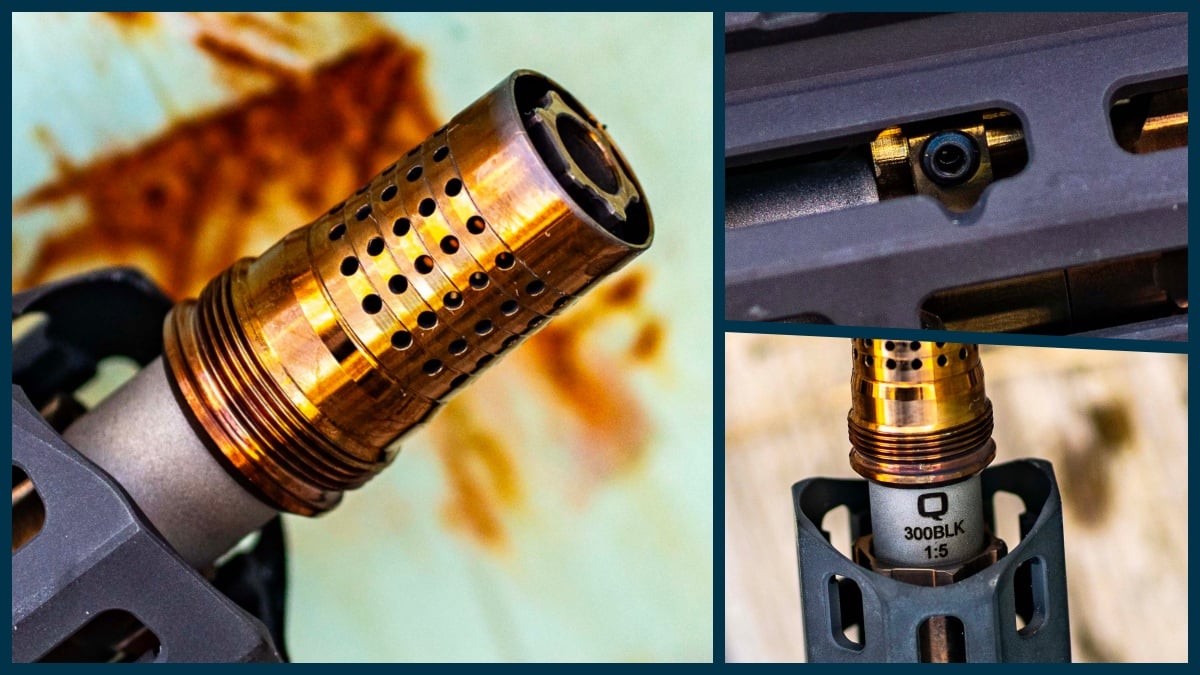
Q's Cherry Bomb muzzle device is threaded and tapered, which helps rapidly align and secure suppressors for quick mounting and unmounting. The adjustable gas port can be accessed via a cut-out in the handguard. (Photo: Paul Peterson/Guns.com)


Another key feature of the Honey Badger is the Cherry Bomb muzzle device, which dissipates gas and reduces muzzle flash. More importantly, the tapered and threaded design is optimal for easily aligning and quickly mounting suppressors.

This gun begs to be suppressed, especially in .300 Blackout, whether you pair it with Q’s Trash Panda, Thunder Chicken, or any of a number of budget-friendly suppressor options fit for .300 BLK. Plus, the 7-inch barrel has a fast 1:5 twist optimized to stabilize heavy .300 BLK bullets and subsonic loads.

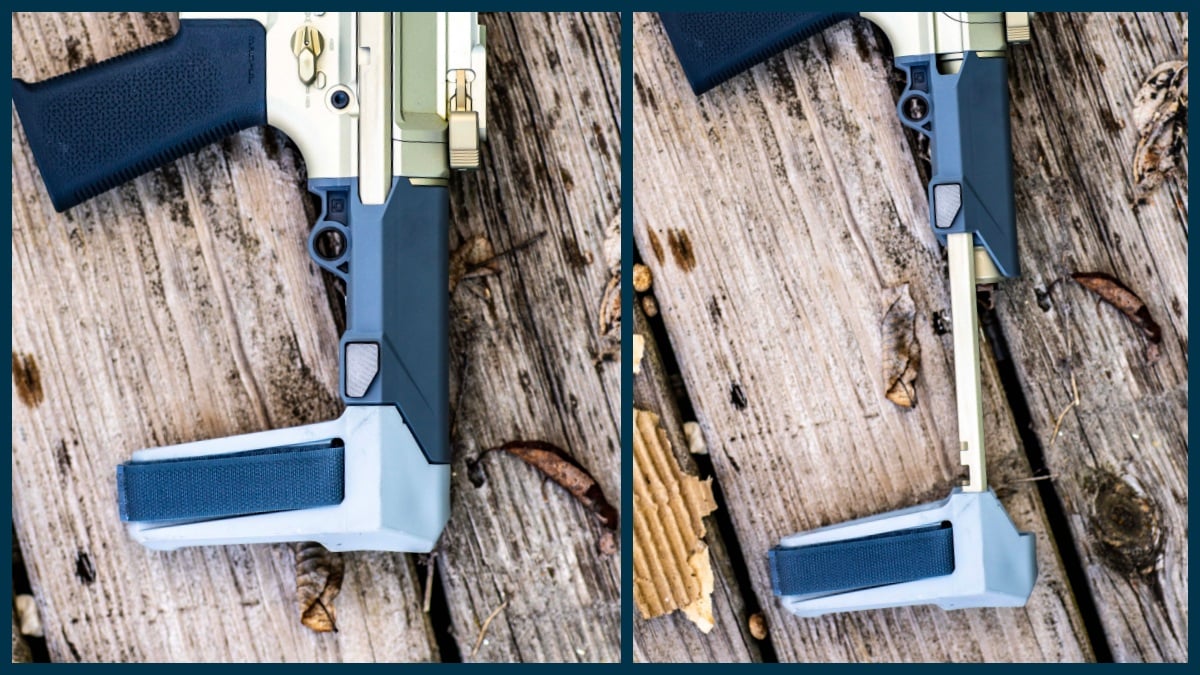
Short and compact are great virtues in a close-quarters gun, but so is simplicity. To that end, Q used its proprietary two-position stock/brace. This opens to only one set position, which makes it ideal for rapid deployment when you don’t want to finagle with multiple lengths and pesky levers. 

Just push the button, rip out the brace or stock, and start shooting.
 

Q Honey Badger in .300 Blackout
Q's proprietary two-position brace is a big selling point for its speed and simplicity. The receiver has cuts to keep the arms of the brace or stock tucked securely to the receiver when it is not extended. (Photo: Paul Peterson/Guns.com)
Q Honey Badger in .300 Blackout
There's a 6-inch handguard with M-LOK, a Magpul pistol grip, a Radion Raptor ambidextrous charging handle, and a minimalist brass deflector near the ejection port. (Photo: Paul Peterson/Guns.com)
Q Honey Badger in .300 Blackout
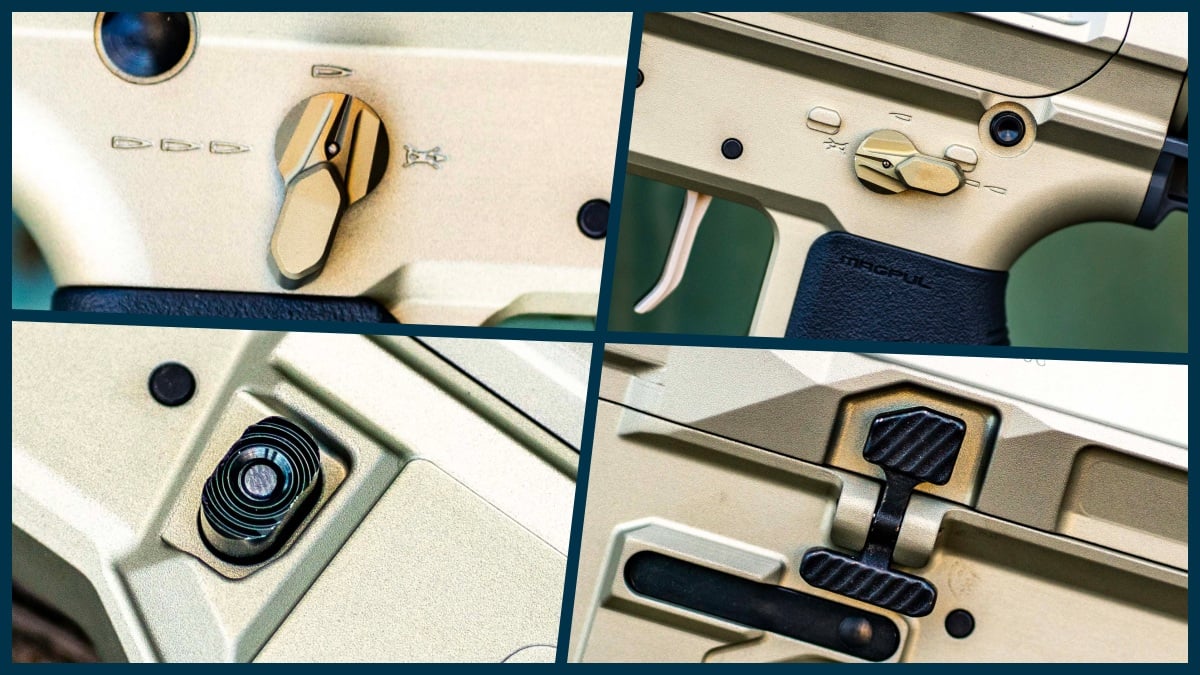
The short ambidextrous safety levers have a 70-degree throw. The magazine release has a raised barrier to prevent accidental bumps, and the bolt catch/release features a broad foot for easier use. (Photo: Paul Peterson/Guns.com)


Q beveled the magazine well on the Honey Badger to aid with rapid reloads, and the Radion Raptor charging handle is ambidextrous and smooth. Similarly, the shortened ambidextrous safety levers are optimized with a 70-degree throw, which I love because it’s faster, feels more natural, and they don’t get jammed on my hand when I have a high grip.
    
There’s a Type III clear hard-coat anodized finish on the upper and lower receiver for extra durability and heat resistance – not to mention good looks. This is not really a simple finish but a chemical process that is more durable and gives the gun its honey color. A Magpul grip rounds out the package.
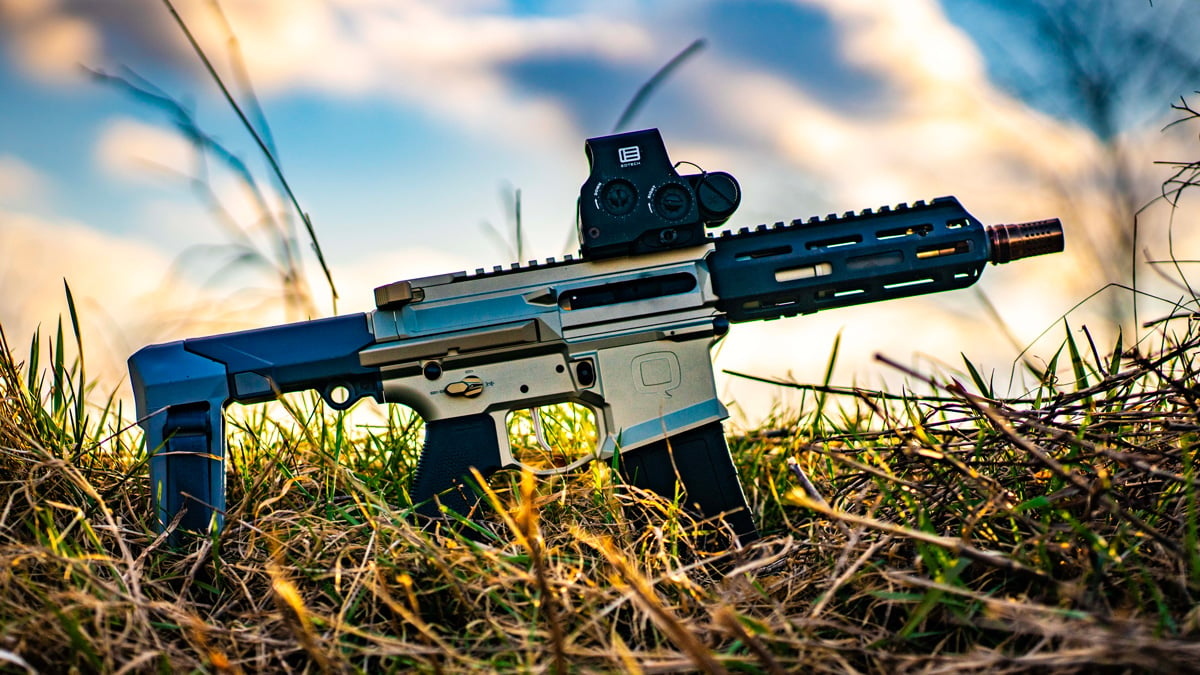
 

Q Honey Badger in .300 Blackout
The unique color on the upper and lower receiver comes from the chemical process used to make the anodized finish. Also, note the lack of an ejection port cover and forward assist on the right side of the rifle. (Photo: Paul Peterson/Guns.com)


Notably, Q removed many somewhat unnecessary AR features, such as the forward assist and ejection port dust cover. The brass deflector is also minimalist, and it worked great in our testing with very predictable ejection patterns.
 

Specifications
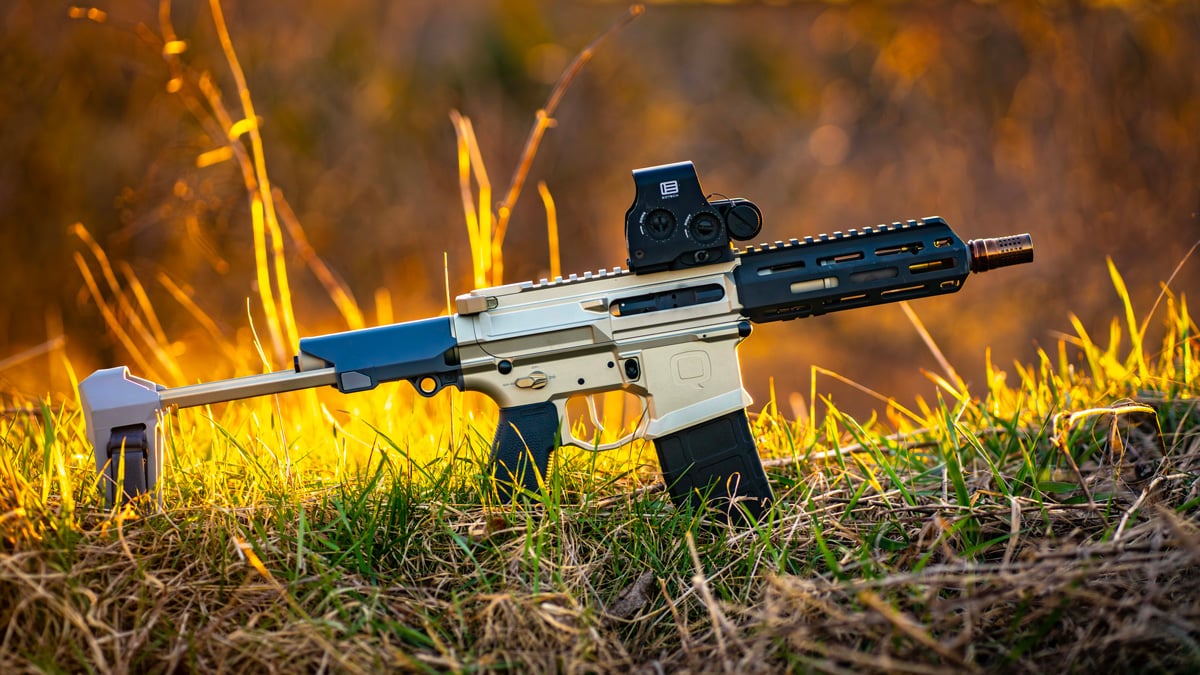
 

Q Honey Badger in .300 Blackout
Even with the brace extended, this Honey Badger is still a very compact PDW. (Photo: Paul Peterson/Guns.com)


Here’s a breakdown of the basic specs for the Q Honey Badger in .300 BLK with a 7-inch barrel and pistol brace.

Specs

Gun Type PDW, AR pistol
Weight 4.6 pounds
Length 20.9 - 25.5 inches, with brace
Barrel Length 7 inches
Length of Pull 13.5 inches
Chambering .300 Blackout
Capacity 30
Trigger Pull 2.8 pounds
Twist Rate 1:5 (fast twist rates better stabilize heavy subsonic bullets)
Suppressor Mount Q Cherry Bomb (direct-thread 1/2x28 or 5/8x24 TPI, depending model)
Finish Chemical clear hard-coat anodize, rather than paint/Cerakote

Reliability & Accuracy


.300 Blackout Ammo
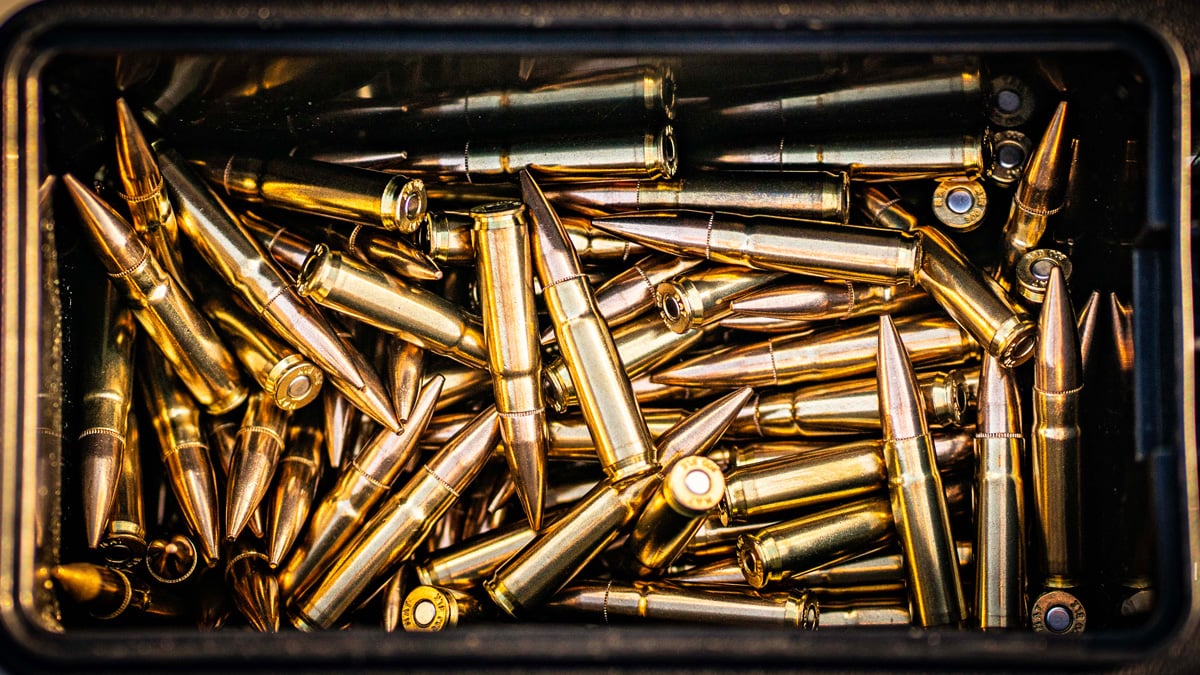
The Q Honey Badger does a great job of stabilizing the heavy and long .300 Blackout bullets. You can also run these rounds in the Honey Badger with most standard AR mags because the .300 BLK was designed to have a similar cartridge size to the 5.56mm NATO. (Photo: Paul Peterson/Guns.com)


I took this gun straight from my local gun shop to the range for testing. That left no time to fiddle with the controls or practice with the Honey Badger. Yet, it felt remarkably familiar and easy to run on the range all the same.

Q’s controls on the Honey Badger will feel familiar but optimized to anyone with experience shooting a standard AR-15. Despite its small size, the recoil is very controllable. Even shooting with poor support is easy without feeling overpowered by the gun.

The short barrel and Cherry Bomb give off some noticeable concussion if you are standing to the sides of the shooter, but I didn’t have an issue as the man behind the trigger.

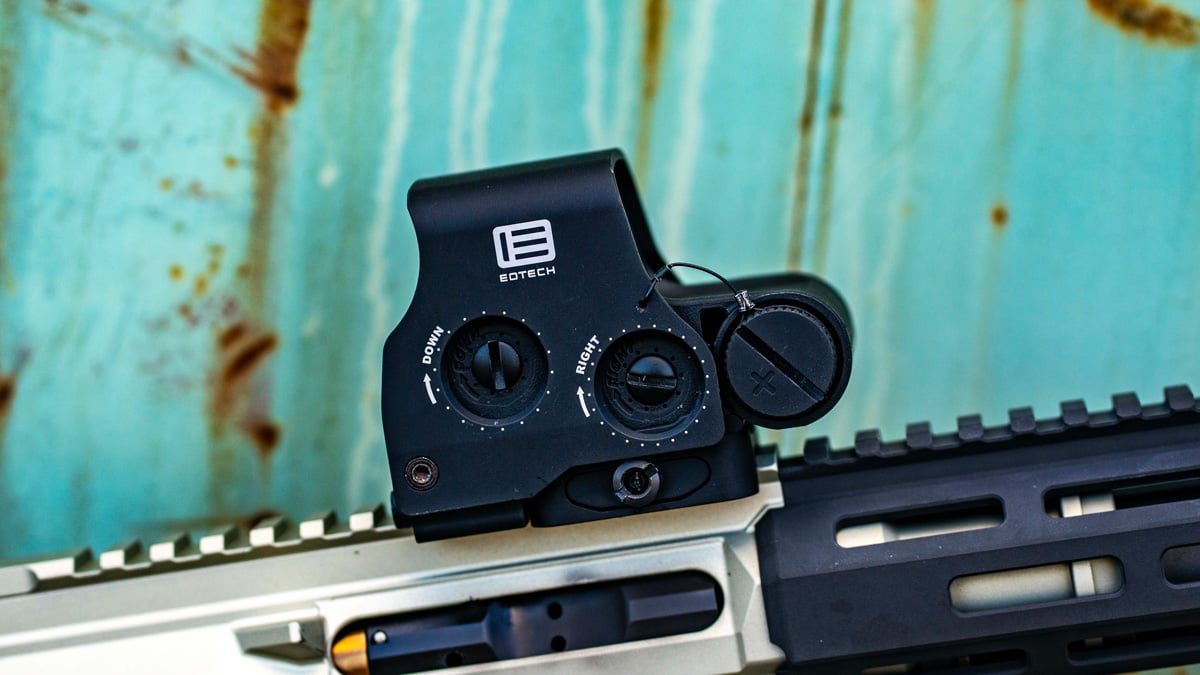
Reliability with cheap bulk 150-grain .300 Blackout FMJ over my first 200 rounds resulted in zero issues. Equally important, the gun was easy to get on target at range with a non-magnified EOTech EXPS3-DCR.
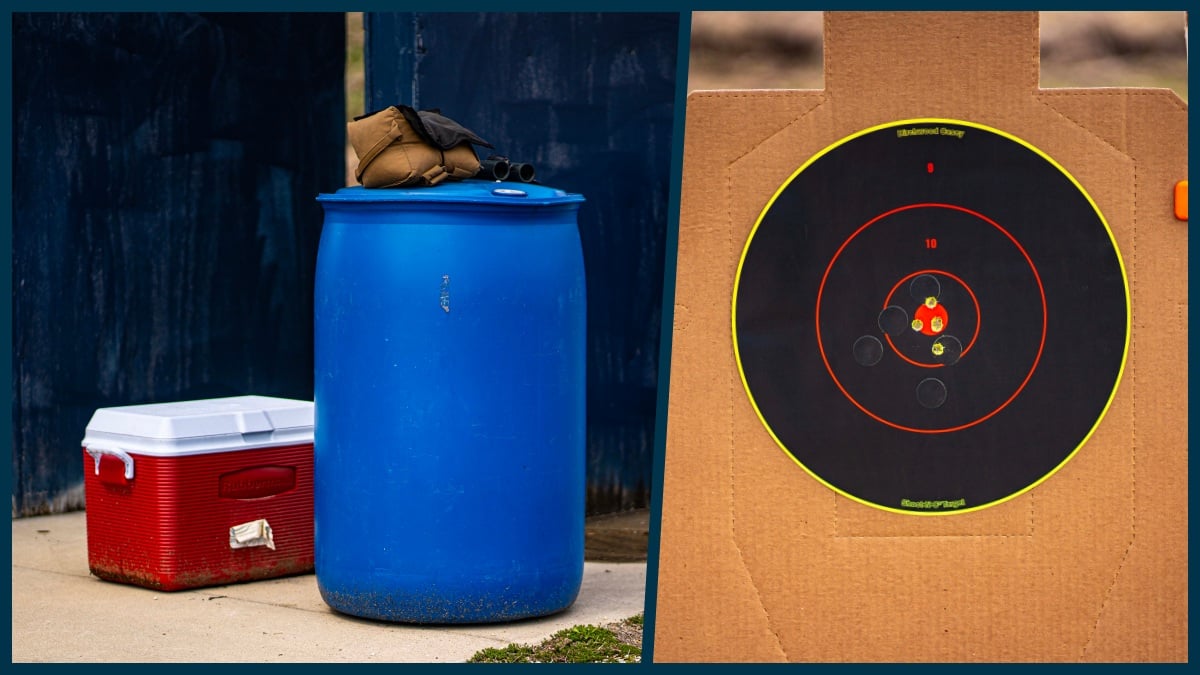
 

Q Honey Badger Target
At 50 yards, I shot this five-shot group with standard 150-grain Federal American Eagle FMJ boat-tail ammo. Two of the shots are in the same hole, which is great considering I had to shoot this target while zeroing off a less-than-optimal, improvised barrel table. (Photo: Paul Peterson/Guns.com)
EOTech EXPS3-DCR
I love this EOTech EXPS3-DCR. It has a Danger-Close Reticle that allows you to engage close-range targets quickly and longer-range targets without guessing your hold on the target. It also sports night-vision reticle options. (Photo: Paul Peterson/Guns.com)


Running this gun at speed is easy with the low recoil and a very, very nice flat trigger. However, it is a small platform, so you might feel a little cramped if you have longer arms.

Unfortunately, I did not have a suppressor with the proper bore diameter ready to run on the Cherry Bomb muzzle device. However, if I could keep this gun, I would absolutely get it rigged up with a suppressor and turn it into a go-to for home defense.

Accurate, reliable, compact, and fast. There isn’t much more you can ask for than that.
 

Honey Badger vs. Sugar Weasel
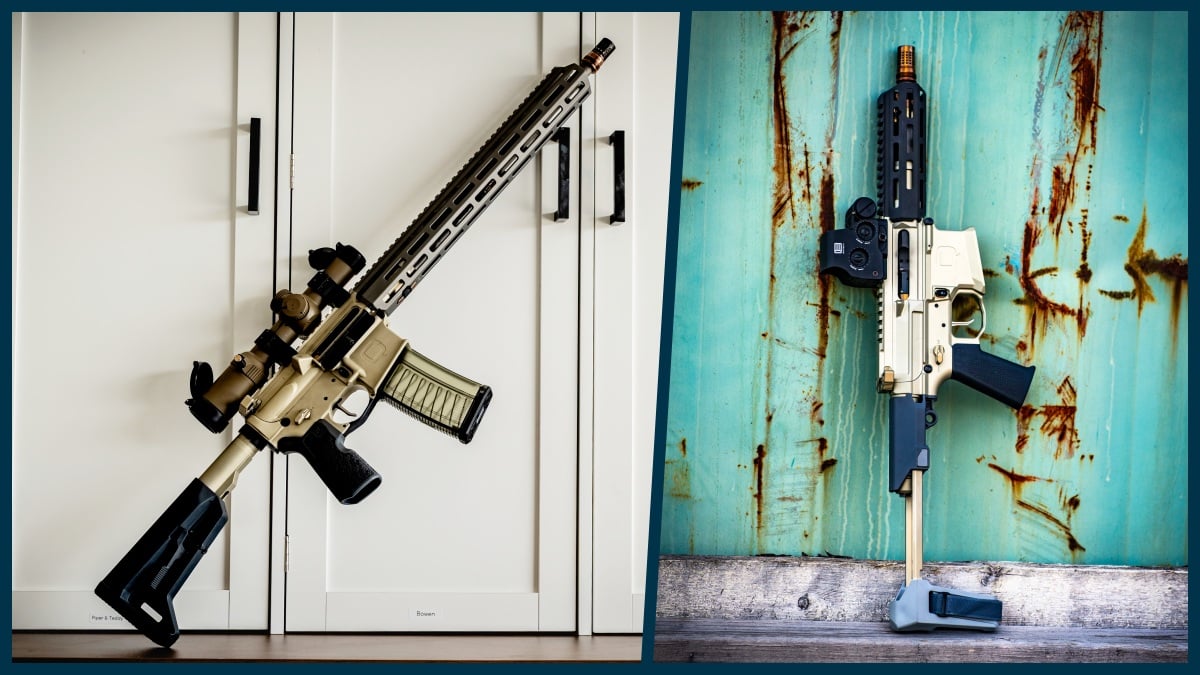
 

Q Sugar Weasel versus Honey Badger
Here we have the Q Sugar Weasel (rifle) next to the Honey Badger (PDW). While similar, there are some key differences. (Photos: Andy Budnik and Paul Peterson/Guns.com)


We also reviewed the Sugar Weasel rifle recently, and it’s a fine full-length rifle platform. It is not, however, a Honey Badger on the outside or the inside.

Unlike the Honey Badger, the Sugar Weasel uses a full-length buffer tube and collapsing stock. The Honey Badger runs an abbreviated buffer tube, with no buffer weight, and a proprietary Q two-position stock or brace. 

NOTE: There is an NFA-regulated Short-Barrel Rifle variant of the Sugar Weasel with fewer bells and whistles than the Honey Badger. It’s also often hard to find in stock, so we’ll stick with the standard Sugar Weasel for comparison purposes.

Here’s a quick comparison of the basic specs for both guns.
Feature Honey Badger Sugar Weasel
Gun Type PDW, AR pistol Rifle
Weight (Unloaded) 4.6 pounds 6.1 pounds
Length 20.9 - 25.5 inches (extended), with brace 31.8 - 35 inches (extended)
Barrel Length 7 inches 16 inches
Chambering .300 BLK or 5.56 NATO 5.56 NATO 
Capacity 30 30
Trigger Two-stage, Q-brand Literally the Best Trigger Ever Made Two-stage, Q-brand Literally the Best Trigger Ever Made
Twist Rate 1:5 (fast twist rates better stabilize heavy subsonic bullets) 1:7
Finish Type III anodized clear coat Type III anodized clear coat

The size also makes the Honey Badger a full-on PDW for personal defense and close-quarters use. The Sugar Weasel is heavier and offers a longer, more traditional rifle profile. This comes down to what they were designed to do. The Honey Badger was made to replace the HK MP5-SD, and the Sugar Weasel was meant to serve as a premium AR-type rifle.

With that said, the Sugar Weasel is significantly more affordable, often coming in at around $800 less than the Honey Badger.

Why Pick the Q Honey Badger? This comes down to what you are trying to do. For me, I would take the Honey Badger, even at the higher cost, because I would add a suppressor and run it as a still-short PDW and home defense gun. The size and design make it better for that role. Besides, I already have several full-size ARs, but there are fewer guns that compete in the same space as the Honey Badger for size and suppressibility. 
 

Pros & Cons

Pros & Cons


The Pros

  • Compact Size: Just 20.9 inches with brace/stock collapsed
  • Fantastic Trigger: Q-brand Literally the Best Trigger Ever Made
  • Reliable & Accurate: Low recoil, with 1:5 twist for heavy subsonic bullets
  • Suppressor Optimized: Featuring Q’s tapered, quick-detach Cherry Bomb
  • Lightweight: Just 4.6 pounds unloaded
  • Ambidextrous Controls: Radion Raptor charging handle, 70-degree safeties
  • Rugged Finish: Type III clear hard-coat anodize
  • Two-Piece BCG: Precision-machined two-part bolt carrier group
  • Q’s Proprietary Stock/Brace: Fast, proprietary two-position design


The Cons

  • Price: More expensive than a base-model AR-15
  • Proprietary Parts: Not all aftermarket AR parts are made for this gun
  • Short Handguard: Less space for accessories, but Q has extended options
  • Small Workspace: 6-inch handguard and 13.5-inch length of pull

Final Thoughts


Q Honey Badger in .300 Blackout
The Q Honey Badger may be small, but it's rugged and mighty. (Photo: Paul Peterson/Guns.com)


This is not a budget AR-15 for plinking at the range. It is a purpose-built, suppressor-optimized package made for close-quarters work. It would be a great option for home defense, some competition shooting, and tactical work. It would not be my go-to option for target shooting at 500 yards.

Q’s Honey Badger is a gun with a mission. If you have a need – or a desire – for the kind of gun that would replace the revered HK MP5-SD, then the Honey Badger would be a great option. It’s accurate, reliable, extremely compact, and offers great features like a wonderful trigger and ambidextrous controls.
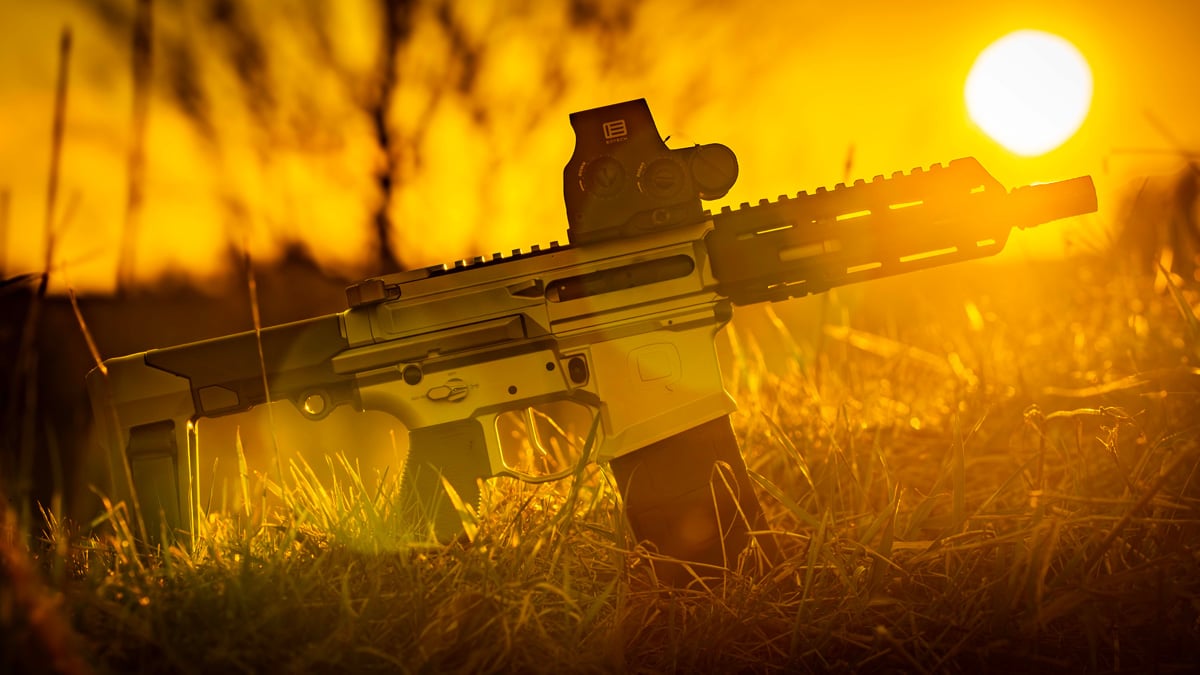
 

Q Honey Badger in .300 AAC
For the record, honey badgers are primarily nocturnal, and this one would thrive after sunset with a night-vision optic to go with this EOTech EXPS3-DCR, which offers night-vision reticle options. (Photo: Paul Peterson/Guns.com)
Paul Peterson - Guns.com Managing Editor

Paul Peterson

Managing Editor Paul Peterson is a U.S. Marine Corps veteran and an awarded combat journalist. He's been collecting firearms for over 20 years and enjoys sharing that passion with the broader firearms community through his work with Guns.com.

View All Articles by Paul Peterson

revolver barrel loading graphic

Loading