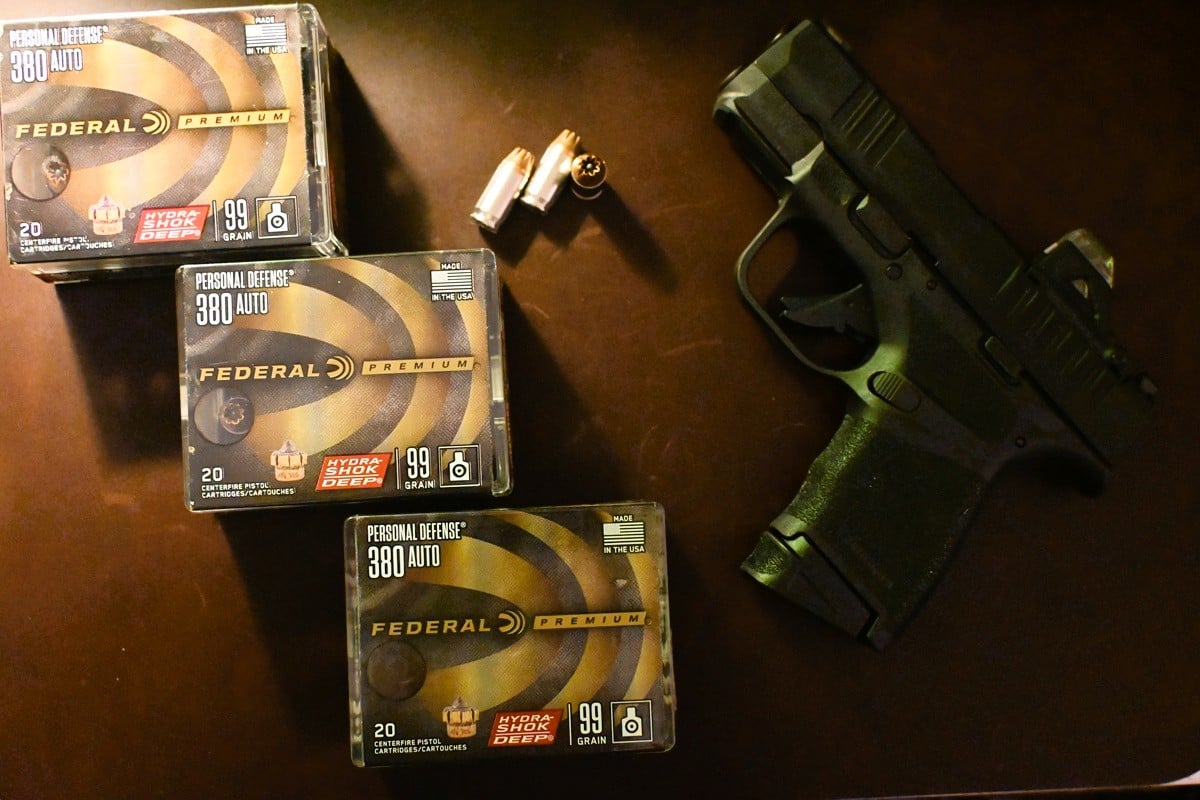
We've been evaluating Springfield Armory's latest Hellcat micro compact semi-auto, now in .380 ACP, and have the full review. 

Quick Summary: The 9mm Hellcat was already good, but the .380 version doubles down on that reputation with the benefit of being easier to shoot. 

Table of Contents

Overview
The Specs
Features
Trigger
Reliability
Accuracy
Pros & Cons
Conclusion

Overview


Springfield debuted the 9mm Croatian-made Hellcat line in September 2019 and has expanded it over the years into the larger Pro series models as well as versions with comps, threaded barrels, and in assorted colors. Boasting an 11+1 capacity with a flush magazine and 13+1 with a gently extended mag while coming in the same size range as the P365, it was an instant hit. Further, it soon proved itself in 20,000 round tests and aced review after review. 

Candidly, this author tested a Hellcat Pro in 2022 and has been carrying it as an EDC piece ever since. 

Now we have the optics-ready Hellcat with all the same features and feel as the original, but in .380 ACP. 

Boom.
 

The new Springfield Armory Hellcat in .380 ACP
Available at launch in classic black Melonite on black polymer, the new Springfield Armory Hellcat in .380 ACP is an 11+1/13+1 striker-fired semi-auto with an overall length of 6 inches with a 3-inch barrel. (All photos: Chris Eger/Guns.com)
The new Springfield Armory Hellcat in .380 ACP
Weight, unloaded, is just 16.1 ounces. Weight, loaded, with the Shield OMSsc optic as shown, is only a bit over 21 ounces. 
The new Springfield Armory Hellcat in .380 ACP
In comparison to the slightly larger Hellcat Pro in 9mm. You see the same family tree on display. 
The new Springfield Armory Hellcat in .380 ACP
The new Hellcat in .380 feels much akin in size to a familiar .380 of years past, the vaunted Walther PPK. Of note, the Hellcat comes with almost twice the magazine capacity and is still lighter when fully loaded. 


For full disclosure, Springfield sent Guns.com this Hellcat .380 for review purposes. All testing was done on this one pistol, which has been under evaluation since August 2025.
 

The Specs
 

  • Overall length: 6 inches
  • Barrel length: 3 inches 
  • Sight radius: 4.97 inches
  • Overall width: 1.06 inches at the widest point over the grip, slide is 0.85 inches.
  • Overall height: 4 inches to the top of the slide with a flush-fit magazine
  • Magazine capacity: 11+1 double-stack OEM flush fit, 13+1 round extended (ships with both)
  • Trigger pull: 5.5 pounds (10-pull average) 
  • Weight, with empty OEM magazine, no optic: 16.1 ounces
  • Weight, loaded/equipped: 21.9 ounces ("heavy" with 13+1 rounds of Federal .380 ACP 99-grain Hydra Shok Deep JHP, Shield OMSsc sight, and Streamlight TLR-7A mounted)
  • MRD Optic Footprint: Direct-milled modified Shield RMSc (J-Point)
     

Features
 

The new Springfield Armory Hellcat in .380 ACP
The standout feature of the Hellcat in 380 is the size. It is a very slim gun, with the slide running 0.85 inches and the widest part of the grip just breaking an inch. Note the loaded chamber indicator. 
The new Springfield Armory Hellcat in .380 ACP
Sans optic and with its flush-fit mag installed, you are looking at a pistol that is right at 4 inches tall, which puts it just under the cutoff for a pocket carry piece. 
The new Springfield Armory Hellcat in .380 ACP
Speaking of magazines, the Hellcat uses stainless steel-bodied mags with rear witness holes and black base pads and followers. 
The new Springfield Armory Hellcat in .380 ACP
You see the 11+1, left, with its pinky extension installed, and the 13+1, right. Note the grip texture extends to the base pads. 
The new Springfield Armory Hellcat in .380 ACP
That allows 12 rounds on tap in one of the most compact .380s on the market. Federal Hydra Shok Deep 99-grain JHP shown. 
The new Springfield Armory Hellcat in .380 ACP
And the ability to EDC with the shorter mag inserted to aid in concealment, with the longer mag easily carried as a backup. 
The new Springfield Armory Hellcat in .380 ACP
The Hellcat .380 has a super short one-slot accessory rail. While it runs just inches long, Streamlight's flush-fit TLR-6 and TLR-7 Sub are made specifically for the 3-inch Hellcat models, as well is the TLR-8 light/laser combo, so there are options out there. 
The new Springfield Armory Hellcat in .380 ACP
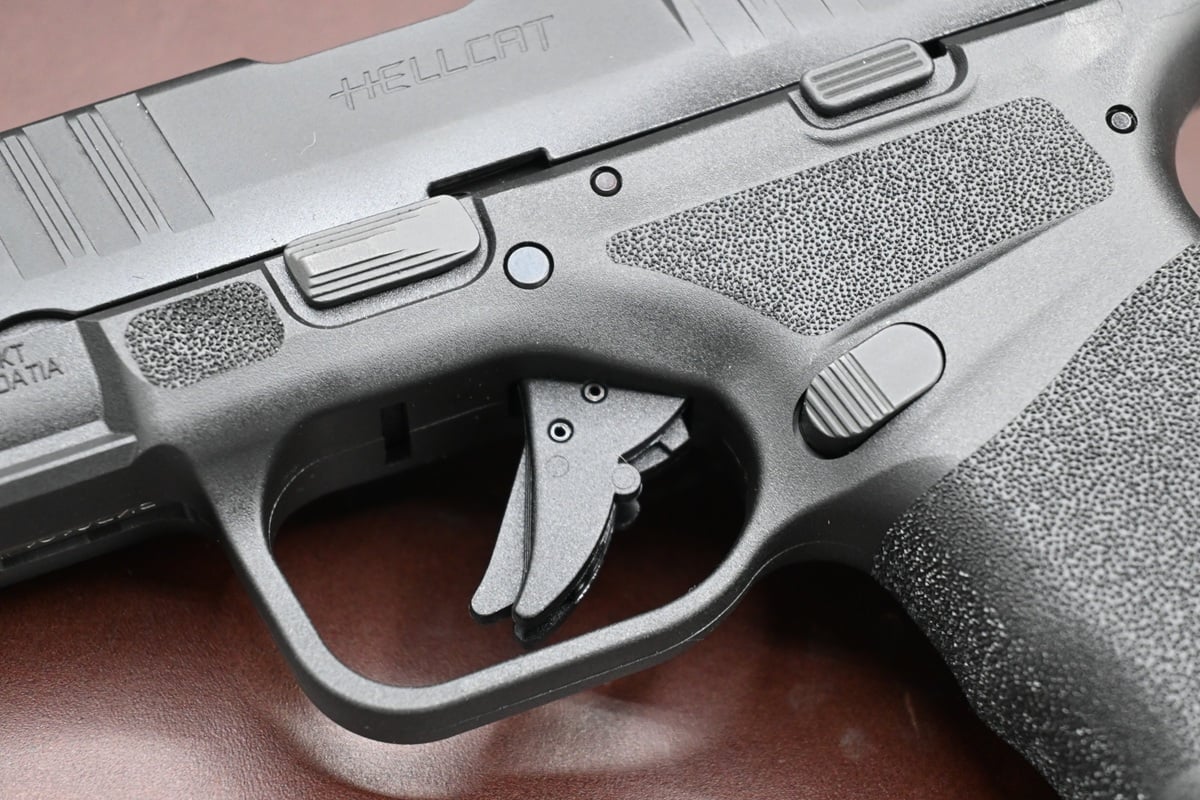
The surface controls are on the left side of the gun for right-handed shooters, including a slide catch, push-button magazine release (which is reversible), and take-down lever that rotates skyward. 
The new Springfield Armory Hellcat in .380 ACP
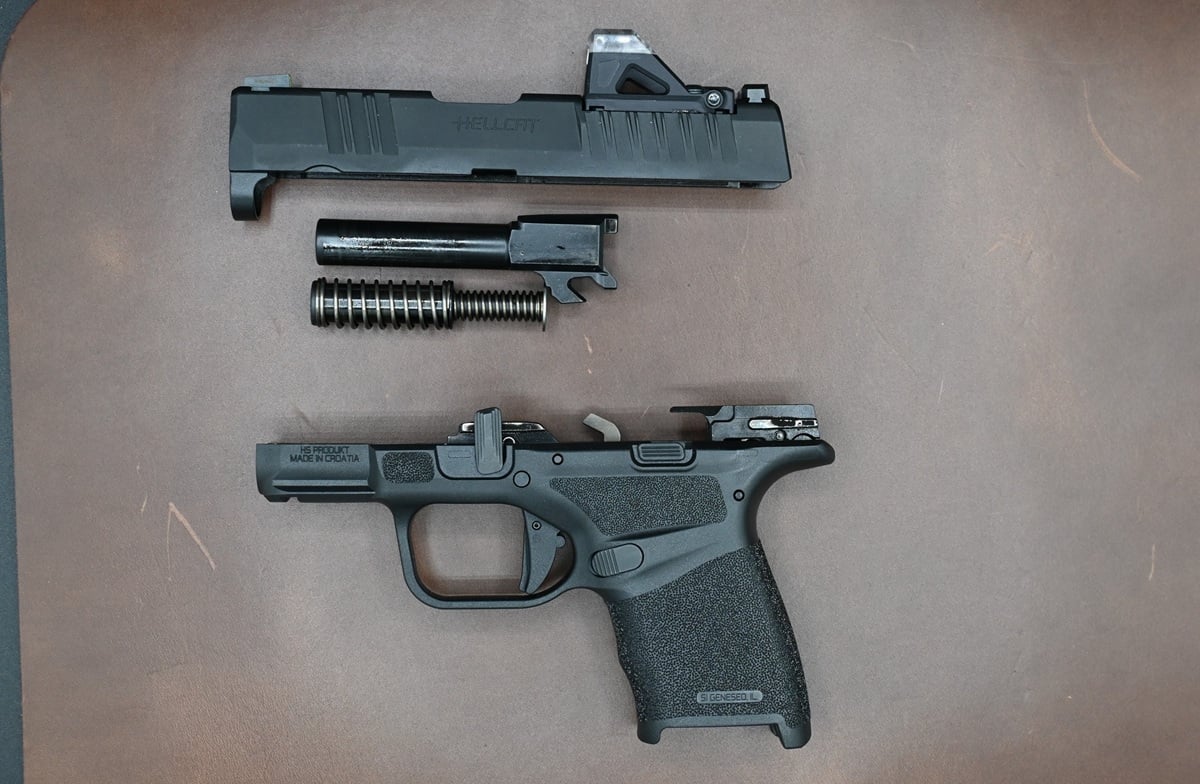
Disassembly on an unloaded Hellcat is simple via said take-down lever. Note the dual spring guiderod assembly. 
The new Springfield Armory Hellcat in .380 ACP
When it comes to ergos, you have textured memory pads forward of the trigger that are instinctual as well as short but usable forward slide serrations. 
The new Springfield Armory Hellcat in .380 ACP
The high beavertail and undercut rear trigger guard allow for a corresponding high grip on the Hellcat, just under the slide. This helps mitigate recoil impulse. 
The new Springfield Armory Hellcat in .380 ACP
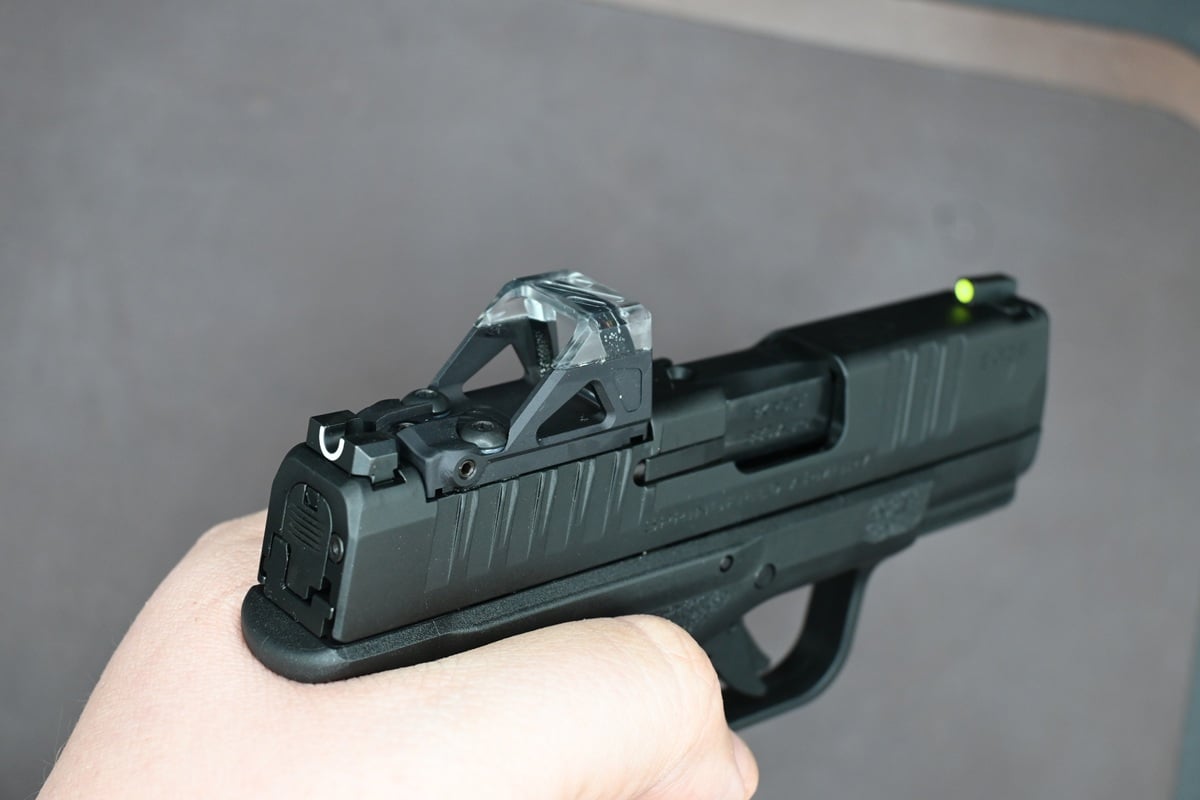
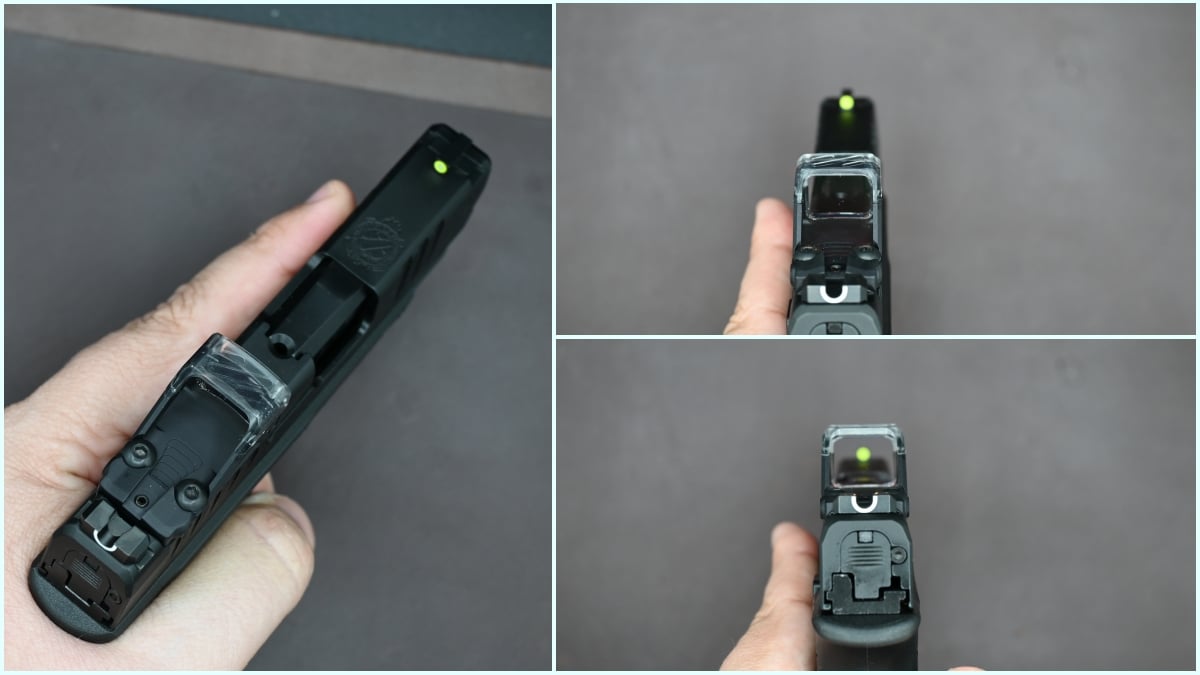
Only one model of the Hellcat .380 is available at launch, but it has excellent dovetail-mounted steel sights with a tritium/luminescent front and a Tactical Rack U-notch rear. It uses the common Shield RMSc optics pattern, and our test gun shipped with a Shield OMSsc sight installed. A compact and sleek design, the OMSc features a translucent panoramic roof over a T6 6082 aluminum body. It runs a 4 MOA dot with automatic adjustments and boasts a 9,000-hour battery life. 
The new Springfield Armory Hellcat in .380 ACP
The pistol ships in a cardboard box that includes a branded double-zipper case with room for the Hellcat and both of its mags. 


Trigger


The trigger on the Hellcat isn't drop-dead amazing. After all, it is a mass-produced striker-fired pistol, but it breaks flatly and predictably after a short take-up. We found it to average 5.5 pounds across 10 pulls, later smoothing up a bit after we passed the 500-round mark. Importantly for those who are safety-conscious, it features a tabbed trigger. Internally, it has a firing pin safety. 
 

Reliability


In the past several weeks, we put about 800 rounds of factory-loaded ammunition through the Hellcat in testing. This was done right from the box with no additional lubrication or preparation. The result, 800:800 with no issues to report other than one or two instances where the pistol did not lock back on an empty chamber. 
 

The new Springfield Armory Hellcat in .380 ACP
The bulk of what we shot came from 10 50-round boxes of Federal white box 95-grain range/target FMJ. A couple of boxes of older black and bronze PMC 95-grain FMJs were also used. 
The new Springfield Armory Hellcat in .380 ACP
For a greener option, we ran a few boxes of Federal's 70-grain indoor range loads featuring lead-free bullets. 
The new Springfield Armory Hellcat in .380 ACP
For defensive use, we ran several boxes of Federal's recently introduced Hydra-Shok Deep load (99 grain JHP at an advertised 975 fps). Hydra-Shok has proven itself for self-defense since 1989, and the updated bullet design keeps the iconic center post design but improves it for better, more consistent expansion. Federal bills it as the first .380 to consistently penetrate beyond the FBI's recommended 12-inch minimum in bare gel and through heavy clothing, making it an ideal load for self-defense. 


One striking thing about the Hellcat in .380 was that we found it to be pleasant to shoot and quick to get back on target. That statement is not common for other blowback 380s, guns which can feel very choppy in the recoil process, often translating to a serious muzzle flip to the user. 


Check this out from my 45-year-old 5'4" wife with small hands. Candidly, she told me the gun is much easier to shoot than her LCP and groups better:


Accuracy


The 4.97-inch sight radius of the Hellcat 380 and decent sights, coupled with the 4 MOA Shield dot, proved more than appropriate when it came to practical accuracy. We had no problems dancing around the center mass of an ICE QT target at 15 yards with self-defense loads. A shout-out for that needs to go to the marginal felt recoil. 
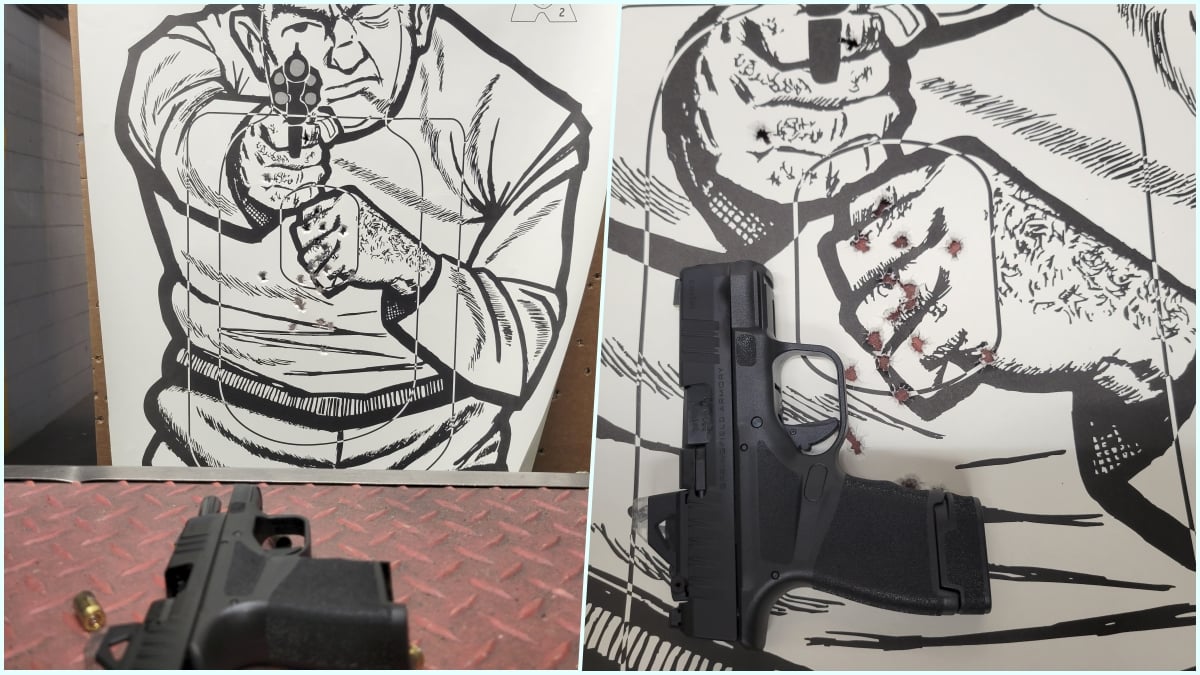
 

The new Springfield Armory Hellcat in .380 ACP
The Hellcat in .380 is more than capable of practical accuracy. 


Pros & Cons

Pros

  • Easy recoiling and controllable, especially for a small .380
  • Micro compact
  • Light/short enough to be a pocket carry option
  • Optics ready
  • Good sights
  • Reliable
  • Good capacity
  • Accessory rail
  • Decent trigger
  • Accurate

Cons

  • Tough to rack
     

Conclusion


The Hellcat was already well-liked on the micro-compact market and has been a solid choice for those looking for an EDC gun that splits the Venn Diagram of being both concealable and practical. The 380 version of the gun doubles down on that while providing a more subtle felt recoil impulse without sacrificing reliability or accuracy. 

When it comes to rocks, the only thing we can find to throw at the gun is the fact that the short slide, coupled with its stout recoil spring, is a bit tough to rack, especially for those with compromised hand strength. On the upside of that, when mounting an optic, it allows more real estate to perform the task. We racked the pistol probably 100 times in testing from the optic and never felt it loosen or observed it shifting point of aim/impact. 

Of course, I have carried a Hellcat Pro for the past few years every day, so I may be a bit biased. But at least I am biased for a good reason. 
 

The new Springfield Armory Hellcat in .380 ACP
The Hellcat in 380 has an MSRP of $653. 
revolver barrel loading graphic

Loading