Overview
Kimber originally started as a rifle brand and pivoted to making M1911-style pistols in 1994, debuting at SHOT '95. Basic math shows that to be at least a 30-year run in the field. Along the way, they learned a thing or two.
With a new state-of-the-art facility in Troy, Alabama at their fingertips, and a couple of generations of hard-earned tribal knowledge in how to make a 1911, the company is now ready to run in the double-stack/wide-body 1911 game – after a warm-up with the slightly downsized KDS9c – and this week introduced the new 2K11.
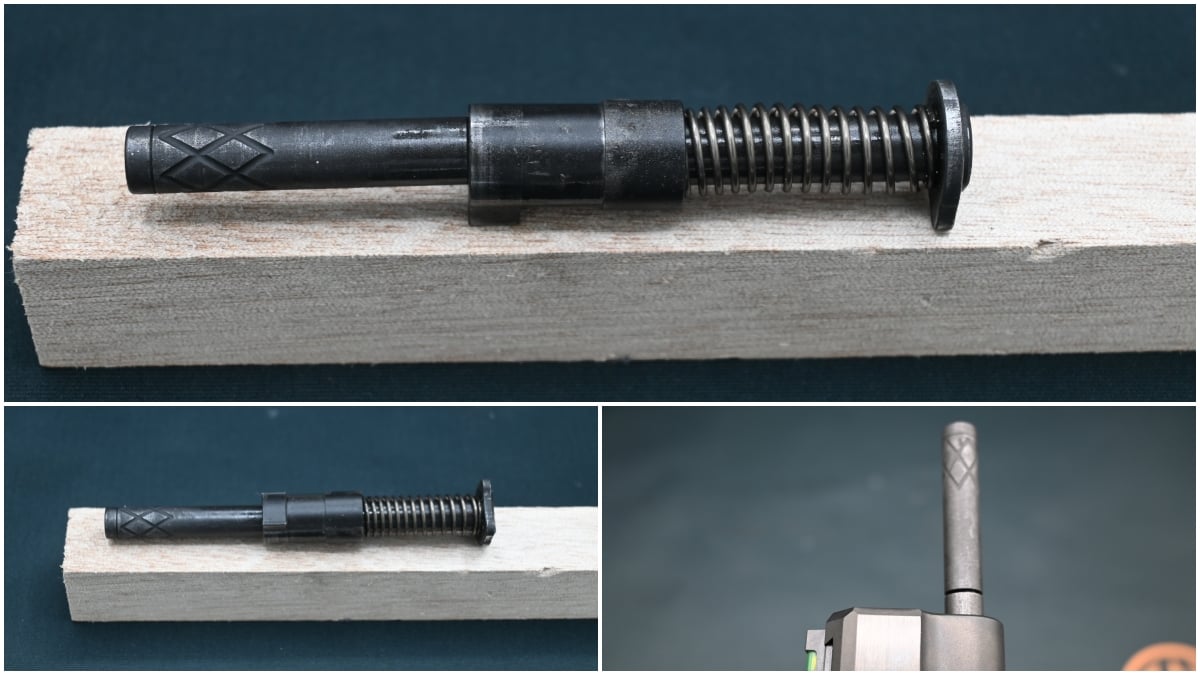
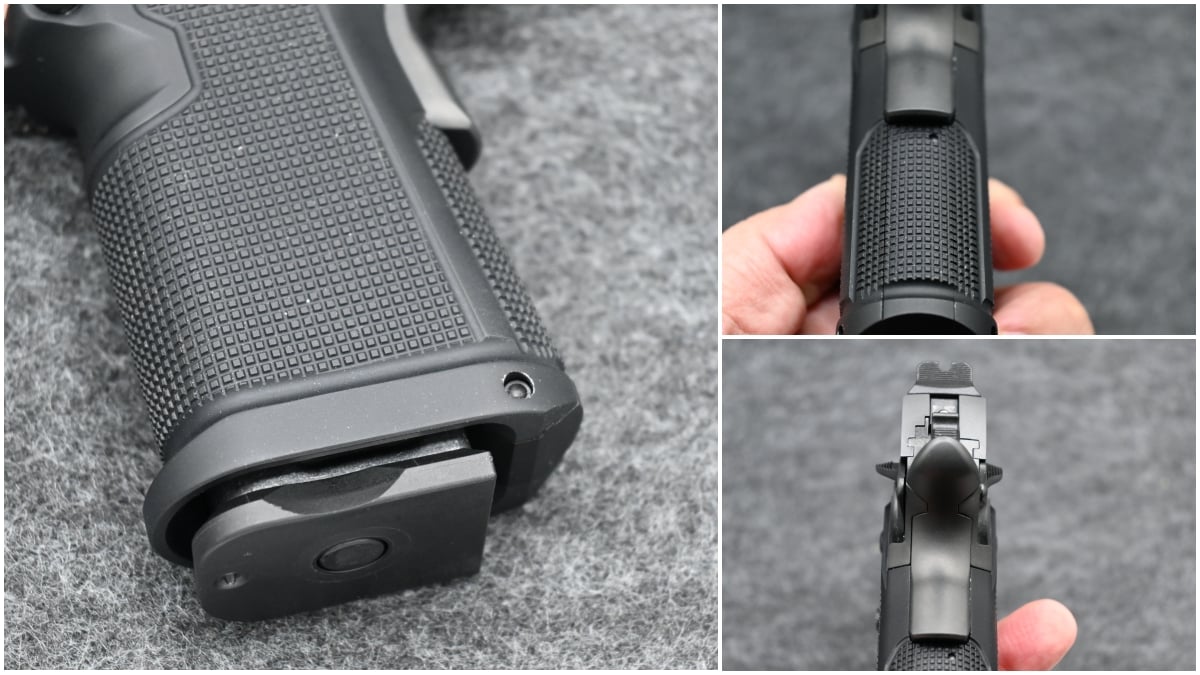
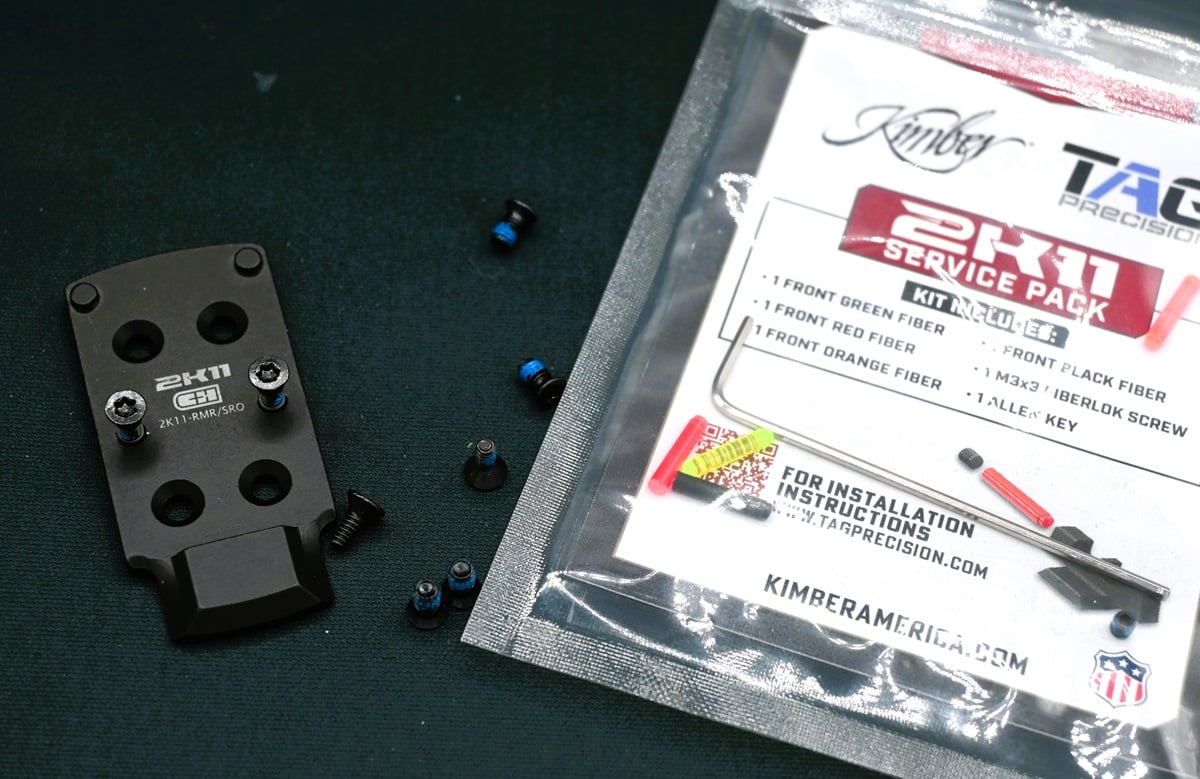
Using an aluminum alloy grip module over an SST steel sub-frame, the slide is made of stainless steel, featuring an external extractor, front and rear slide serrations, and a factory optics cut in the RMR footprint. Running TAG Precision FiberLok 2 front sights with a suppressor-height serrated rear sight, under the hood is a beast of a deep crowned, fluted bull barrel. You've also got a great GT aluminum trigger, ambi safety levers, an innovative tool-less guide rod/spring assembly, and common (2011 pattern) magazine compatibility.
The single-action 2K11 will be released in five full-sized (5-inch barreled) variants between the standard model and target as each will be available in 9mm and .45 ACP with the fifth offering being a Target model in 9mm that will also be optics-included.


The standard black framed 9mm model (Model 3500051) is the entry 2K11, in terms of price, that Kimber has on the schedule, with an MSRP of $1,995. The standard .45 ACP model (3500050) runs $2,125. When it comes to the Target variants, they start at $2,495 for the 9mm (3500053), head to $2,595 on the .45 (3500052) and, for the optics included variant (3500055), tops out at $3,095 but ships with a Trijicon SRO.
For full disclosure, Kimber hosted Guns.com for an event in Alabama in early July where we shot (and shot, and shot, and shot) early production 2K11s on the range. The company later sent Guns.com a standard 9mm version of the pistol for review purposes. All further testing was done on this one gun, which has been under evaluation since early October.
The Specs (Model 3500051, as reviewed)
- Overall length: 8.56 inches
- Barrel length: 5 inches
- Sight radius: 6.8 inches
- Overall width: 1.4 inches at the widest point over grip, slide is 0.91 inches.
- Overall height including standard mag: 5.7 inches
- Magazine capacity: 17+1 rounder flush fit, and 20+1 extended (ships with both)
- Trigger pull: 3.3 pounds (10-pull average), advertised as "3-4 lbs."
- Weight, with empty magazine: 40.9 ounces
- Weight, loaded: 49 ounces (with 17+1 rounds of 124-grain 9mm Speer Gold Dot JHP)
- MRD Optic Footprint: RMR pattern
Features


The 2K11 has the bone structure of a 1911. A nice 1911. Compare it to a Government-sized steel-framed Kimber Rapide.






Trigger
The aluminum GT match-grade skeletonized trigger is superb. With an advertised 3-to-4-pound pull weight, we found ours running towards the lower end of that at 3.3 pounds with a short takeup to the wall and a crisp break. Reset is similarly short and is both audible and tactile.
I'm not sure that I've felt a better trigger on a production 1911. When the test gun arrived at our local FFL for transfer, it was passed around extensively to feel the trigger, with no complaints.
Reliability
We ran an early production 2K11 Target in 9mm right off the table for about 400 rounds at the Kimber event in Alabama in July with no issues, other than the fact that we almost hated to get it dirty.
Meanwhile, our test gun sent in October performed similarly to Kimber's event gun. We ran just over 500 rounds through it throughout four range sessions. This was on a pistol right from the box with no additional lube or treatments. The ammo used was primarily Federal's 115-grain Syntech Range, 147-grain Syntech Training Match, and 150-grain Syntech Action Pistol, along with Blazer 115-grain FMJs. Personal protection loads included Federal Punch 124 and Speer Gold Dot 124 JHPs.
We suffered zero malfunctions on the range. This gun flat-out runs.
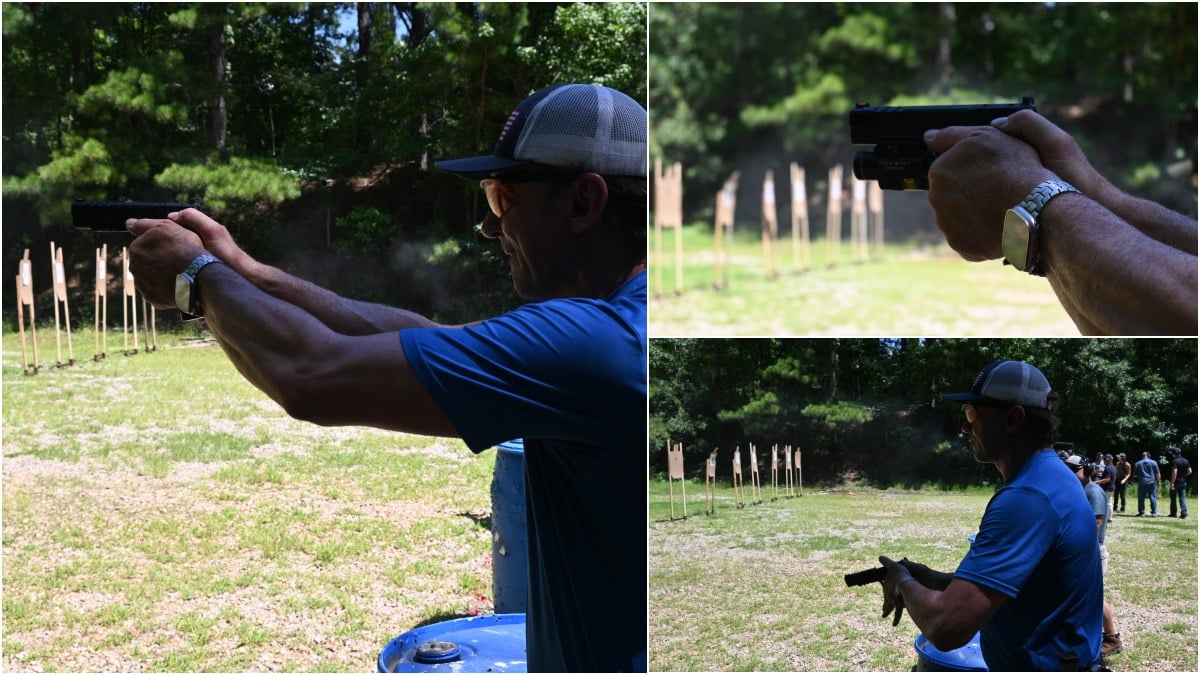
Frank's thoughts on the gun:
Accuracy
Kimber has done the work to figure out how to make the 2K11 both dependable and accurate. You've got the classic 1911 sight radius with decent sights and an optics cut, a light match-grade trigger, comfortable ergonomics, and a match-grade bull barrel with hard lockup.
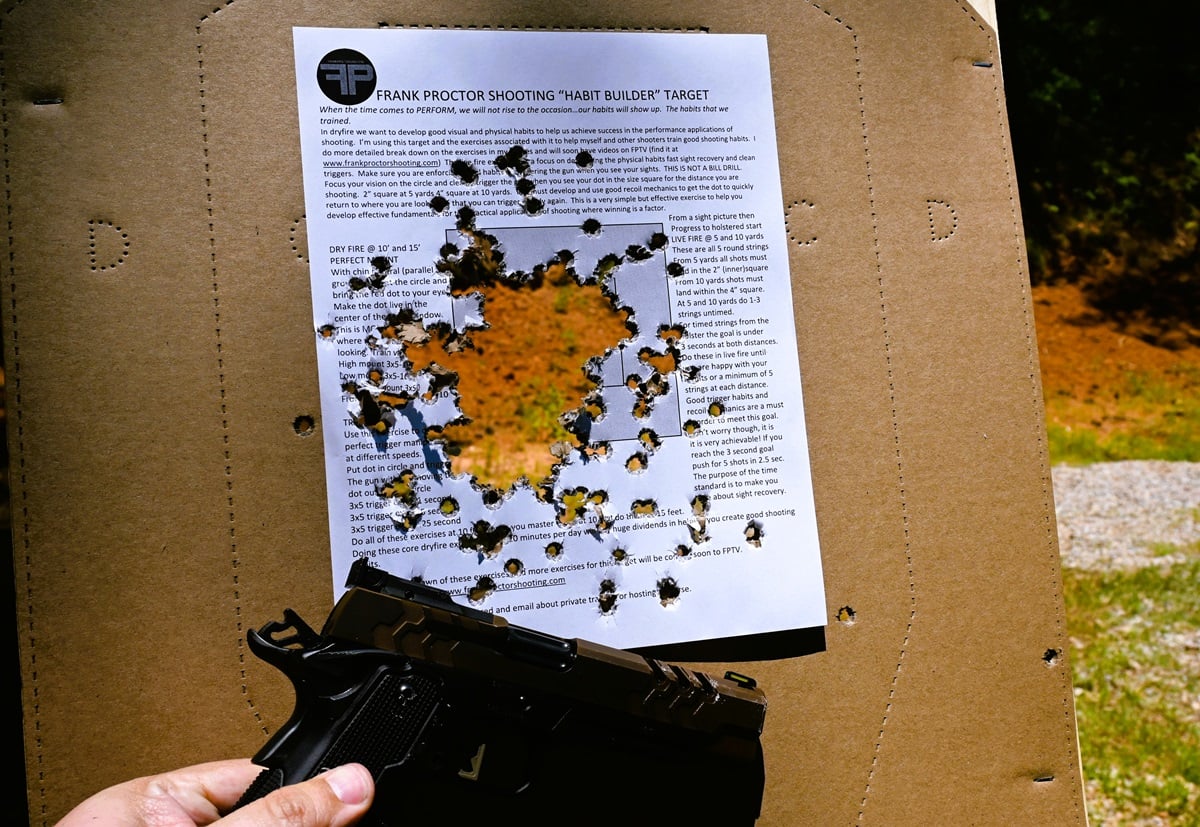

The 2K11 is easy to control and very repeatable, as seen here with 150-grain loads.
Pros & Cons
Pros
- Classic styling with modern features
- Great trigger
- Optics ready
- Common 2011-pattern mags
- Good ergos
- Accurate
- Reliable
Cons
- A bit big to carry (only full-sized models available)
- Somewhat limited holster fits
- Starts at $2K.
Conclusion
The Kimber 2K11 was not on my bingo card for 2024. To be sure, the company has plumbed the depths of double-stack 1911s with their 15/18+1 shot KDS9c, which has gotten rave reviews, so everyone should have seen this coming. You can see a bit of the KDS9c in the 2K11 as well, with the latter clearly meant for more heavy lifting.
Speaking of heavy, the 2K11, being a full-sized 1911, carries like a full-sized 1911, only with a few more ounces to it. On that line of thought, holster fitments may be a little tough due to the railgun aspect of the frame, but there are sure to be some out there. At release, Kimber notes that both Crucial Concealment and Blackpoint Leather are already on board with holster options. With DS 1911s becoming more and more popular, expect more companies to keep working this angle.
For practical shooting and use in home defense, the 2K11 could be formidable.
The sticking point for some will be the $2-$3K entry fee to get into the 2K11 club, which is understandable. However, keep in mind that Staccato P (and remember, the 'P" stands for a polymer frame) starter kits push $3K, and even the more "budget" minded wide-body 1911s such as the Stealth Arms Platypus and Springfield Armory Prodigy run around $1,500-- and nothing against Stealth or Springer, but the 2K11 runs circles around them in my opinion.
Regardless, do yourself a favor if you are looking at double-stack 1911s and feel the lockup and trigger on the 2K11. That could make up your mind fast.