Notable Features

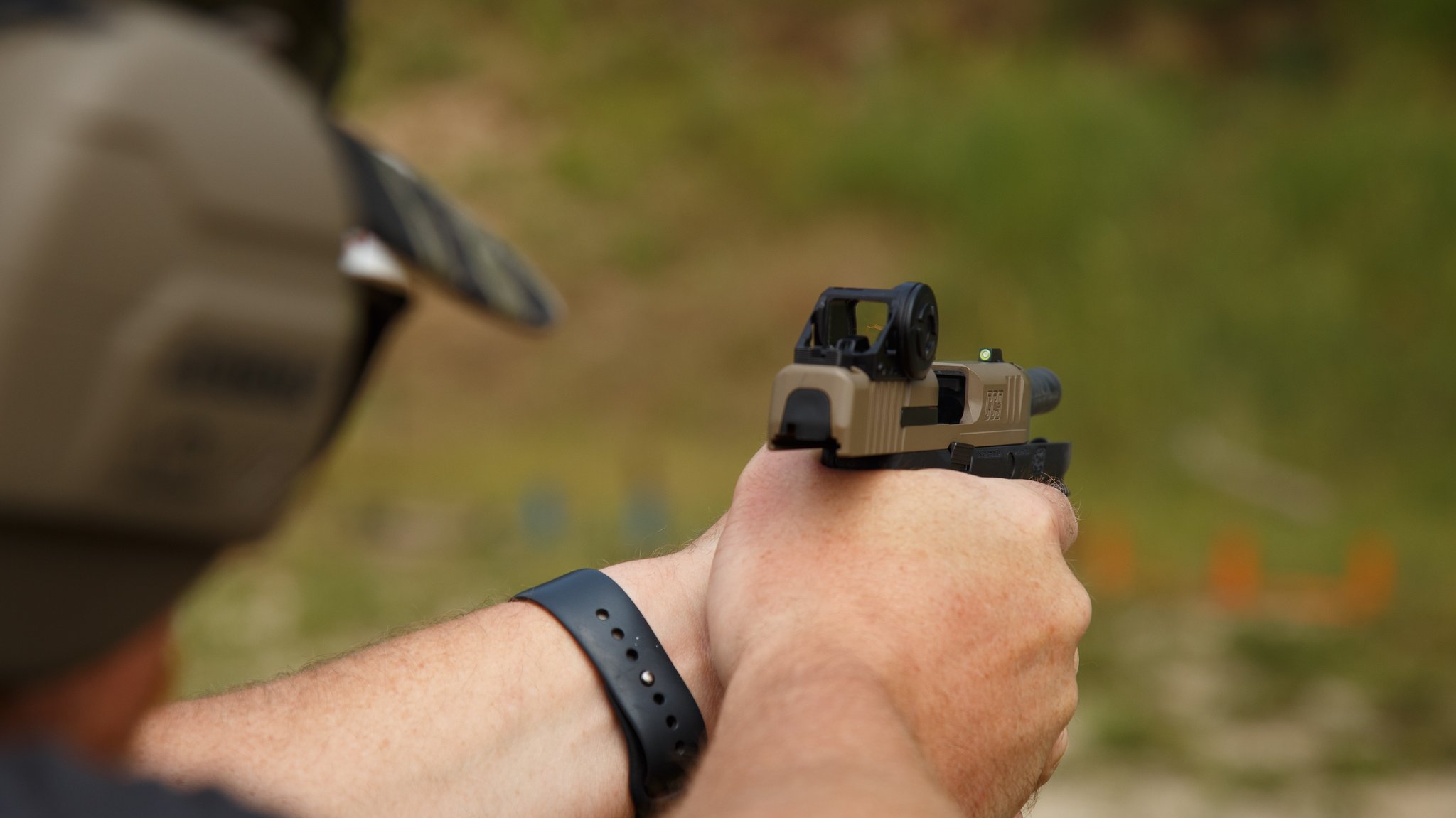
The AMSc was billed as the world’s first micro-compact fully enclosed red dot when it was released, which shouldn’t come as a surprise given Shield Sights’ innovative nature. The UK-based company sets the standard for footprints on micro-compacts, with many manufacturers employing the RMSc footprint. The HK CC9 is no different, but once I mounted the AMSc, I found a few surprises.
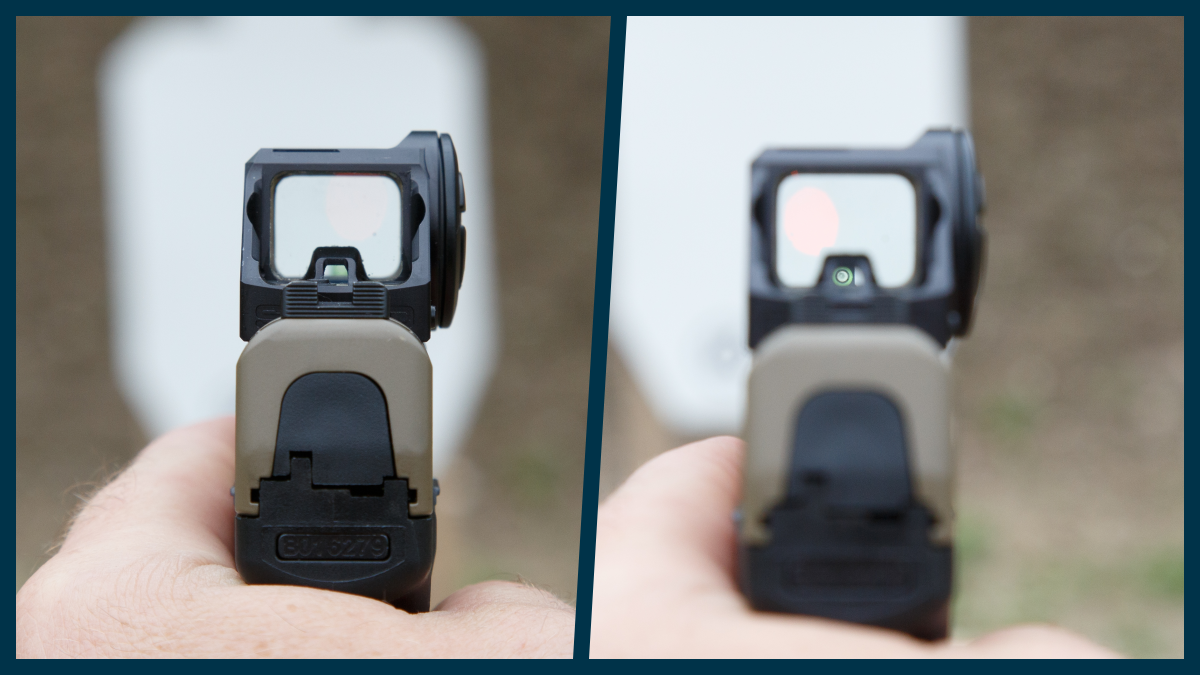
First, unlike a lot of pistol optics I’ve dealt with recently, there are no brightness adjustments or buttons to speak of on this optic. Instead, the AMSc relies on an auto-adjusting red LED that uses no laser. At first, I wasn’t sure if I was going to like this feature, but the more I used it, the more I came to enjoy it. It adjusts quickly. I tested this sitting in my office, switching between the dark wall and the brightness outside.
Whereas traditional optics will sacrifice something one way or another, the AMSc was able to keep up on the fly with a delay of less than one second. It is a versatile optic, able to be picked up by night vision in the lowest setting while still presenting against a bright sky – all on the move.
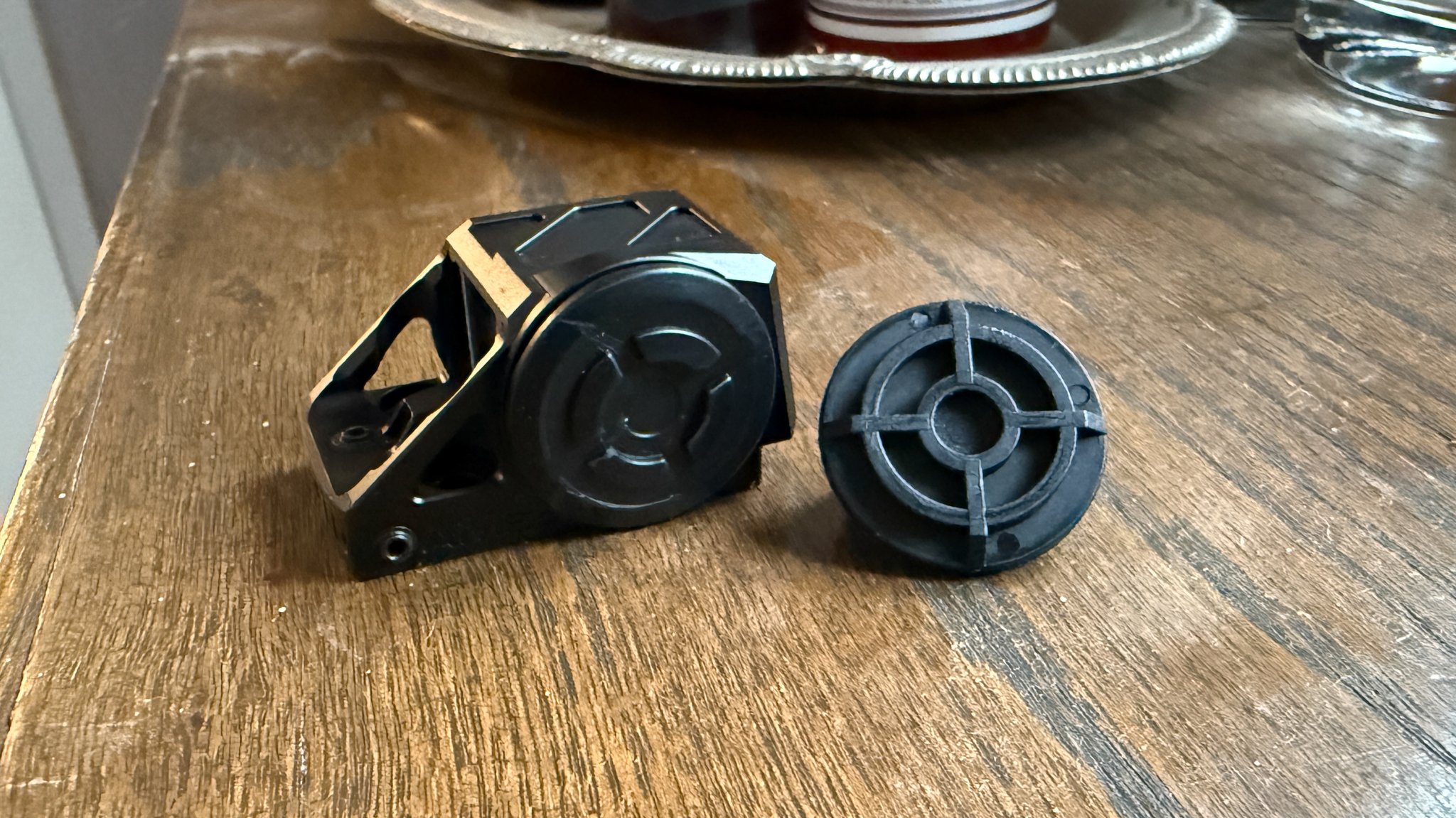
The second thing I noticed right away was that the windage and elevation adjustments were not familiar. Instead of a flathead (or piece of brass) to make the adjustments, you’ll need a small hex wrench, which is provided in the box. This feature ensures that you won’t accidentally bump a dial and knock the optic out of zero, but it also means you can’t adjust zero at the range unless you have the tool on you. For those of us who don’t always remember all our tools when we go to the range, that could potentially be a detriment.

Finally, the optic’s ability to co-witness with the irons on the gun stands out to me. It’s a handy feature that I wish more optics employed. Unfortunately, it wasn’t something I was looking for on the CC9, but more on that in a minute.
Specs
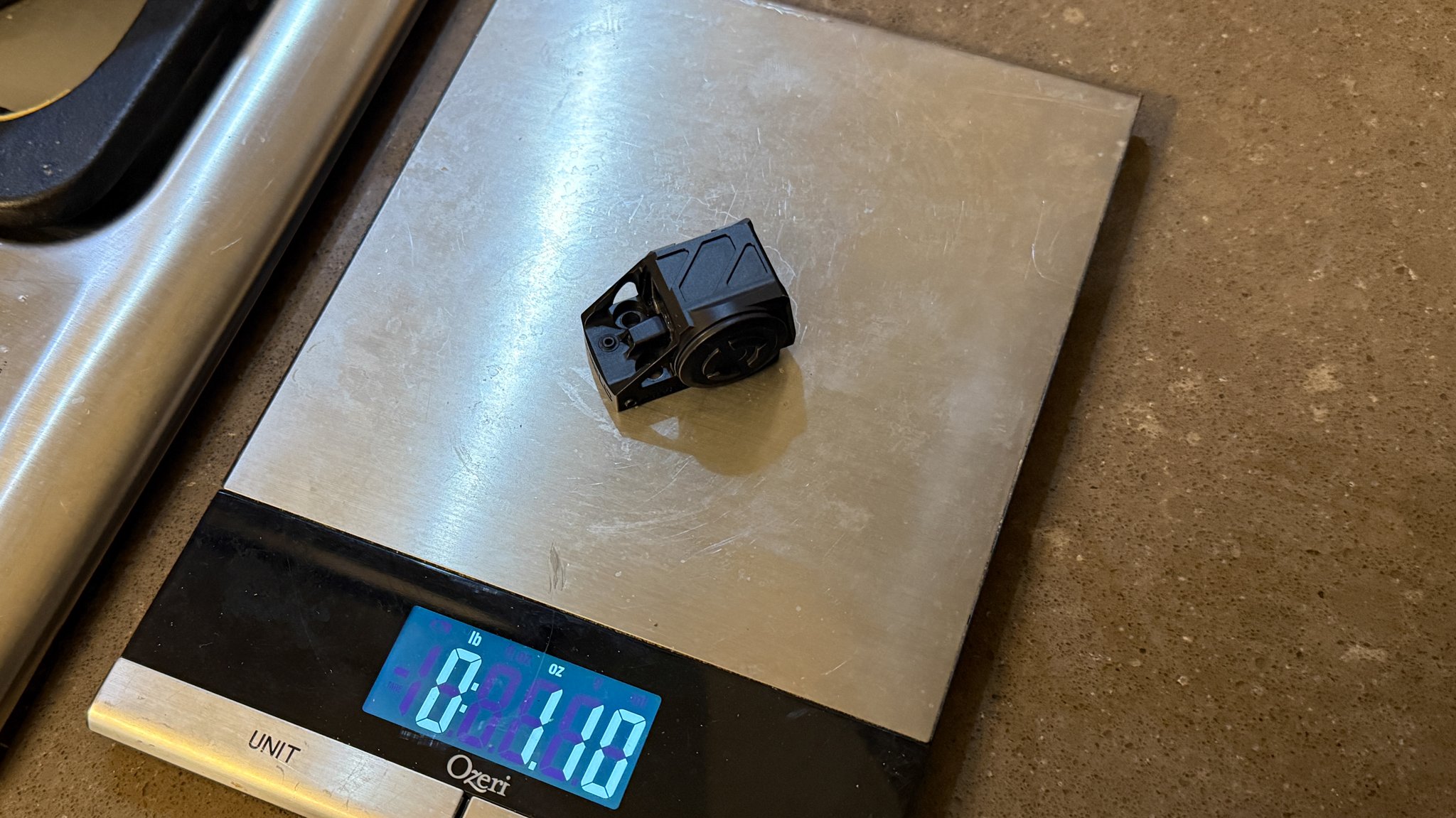
Another noteworthy aspect about this optic is just how small and light it is while still giving ample window size. I love the side-loading battery compartment, because it means I don’t have to dismount the optic to swap out the battery and freshen up. It all adds up to a small, light optic that is user-friendly and ready to go out of the box.
Overall Dimensions: 1.65 x 1.2 x 1 inches
Window Dimensions: 0.73 x 0.6 inches
Red Dot Size: 4 MOA or 8 MOA
Weight: 1.1 ounces (including 2032 battery)
Battery Fitting: Side-mounting battery
Battery Life: 20,000 hours in average daylight
Brightness Adjustment: Automatic
Housing Material: Anodized aluminum (6082 T6)
Footprint: RMSc
Water Immersion: 30 feet for 30 minutes (IP68)
First Shots

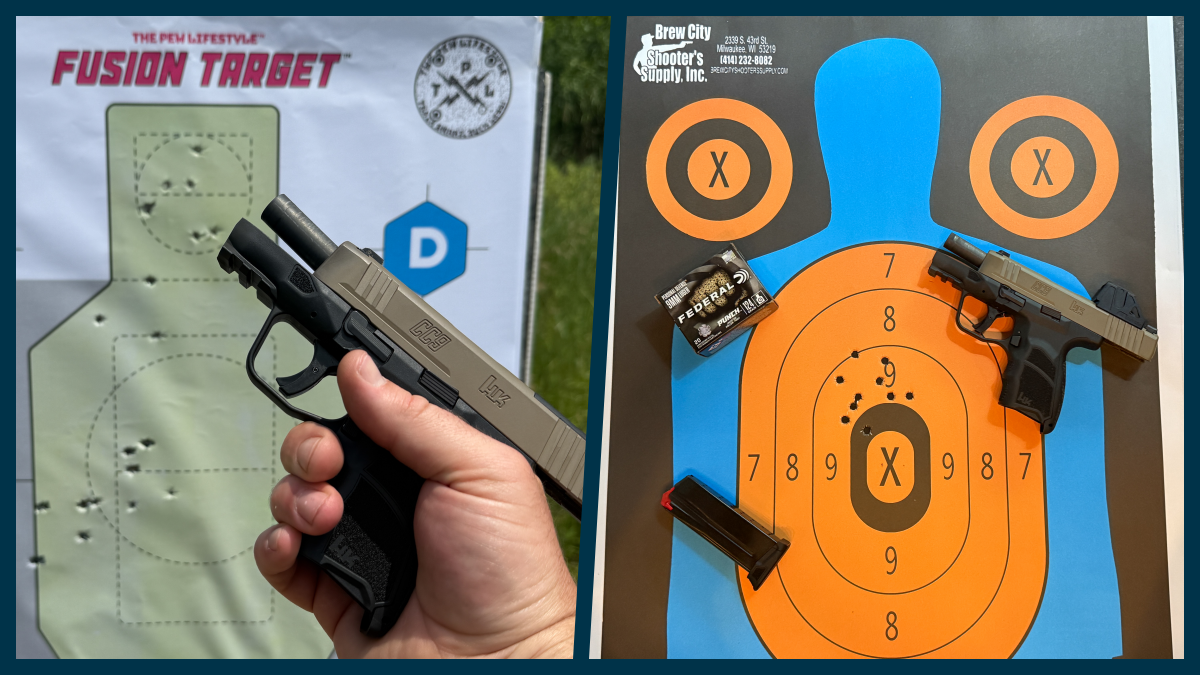
I got this optic to put on top of the HK CC9 I reviewed a few months back. Initially when I shot the CC9, I wasn’t impressed with my results. To be fair, I have an issue with shooting low and left on iron sights with a lot of subcompact and micro-compact guns, so it’s a training scar on me, not the gun. That said, I wasn’t about to write off the gun, either, but it’s also the reason I didn’t find the co-witness terribly helpful in this instance.
Before we talk about getting zeroed, we need to talk about the battery mounting. I love that that the battery mounts on the side of the optic, ensuring that I don’t have to remove the optic to change the battery. My qualm here is that the battery lid seems to only be able to be removed with the proprietary tool included with the optic.
Perhaps a large flathead or small hex wrench could do it, but you won’t have the same success. That means I need to keep track of this small tool and make sure I have it with me when I visit the range. It might a bit of a bugaboo, but I’d rather see this be more universal somehow.
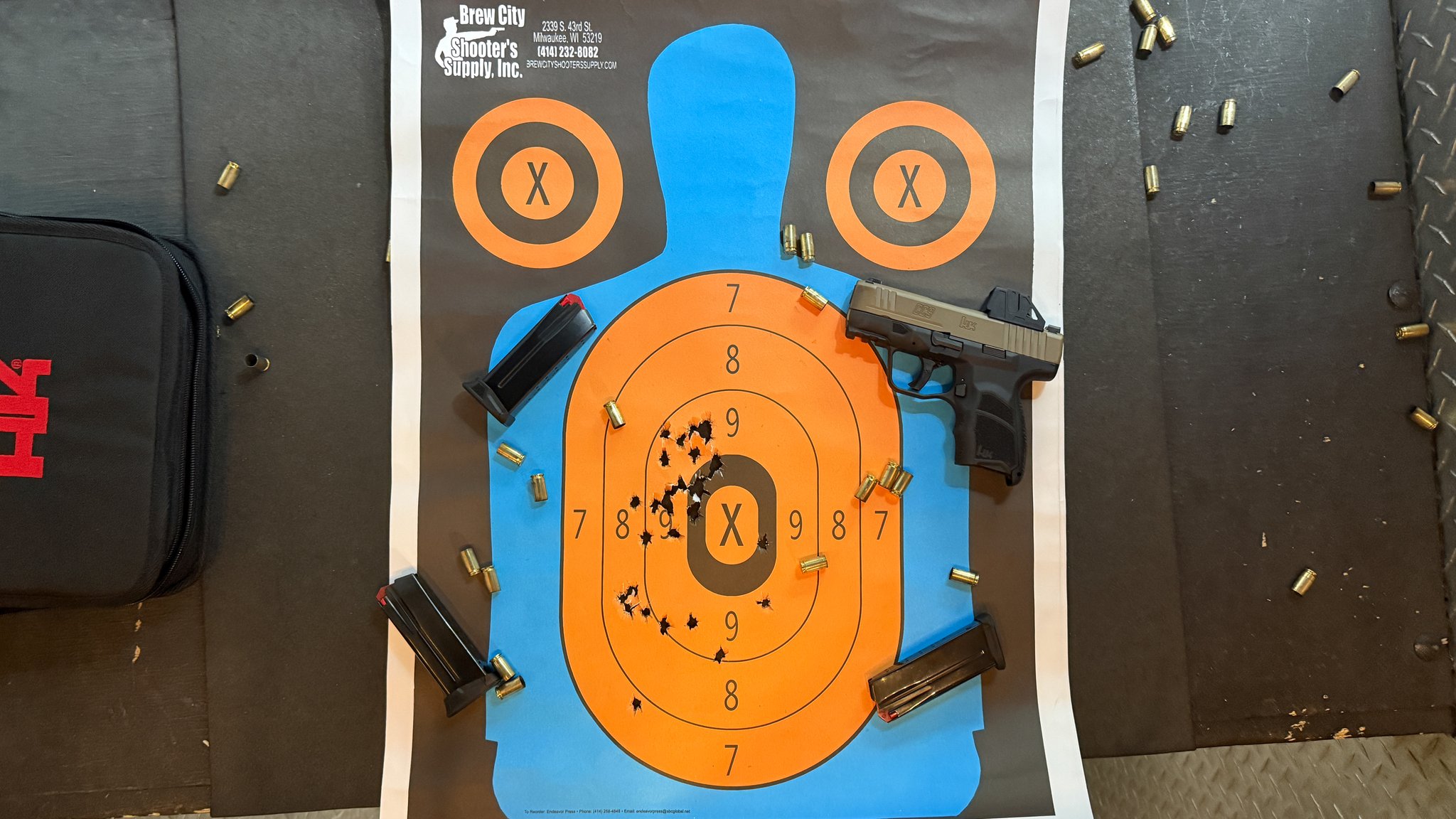
Setting up the optic and testing it on the range was a bit different than usual, given the adjustments I already mentioned. Shield provides a physical dial to help track adjustments to fine-tune your zero. I just dialed it up and to the right a bit, and my issues soon were fixed.
Not only was I more centered after a quick 15-20-minute zero session, but I was also grouping considerably better than I was on the irons. Part of that could be that I have grown accustomed to shooting with red dots, but part of it is this dot and how it draws the eyes inward and focuses them.
Pros & Cons