Specs & Features

Smith & Wesson’s Metal Compacts come in two barrel lengths: 4 inches or 3.6 inches. I opted for the slightly shorter 3.6-inch option because, frankly, if this gun can shoot like the last Metal I tested, it might just make its way into my everyday carry.
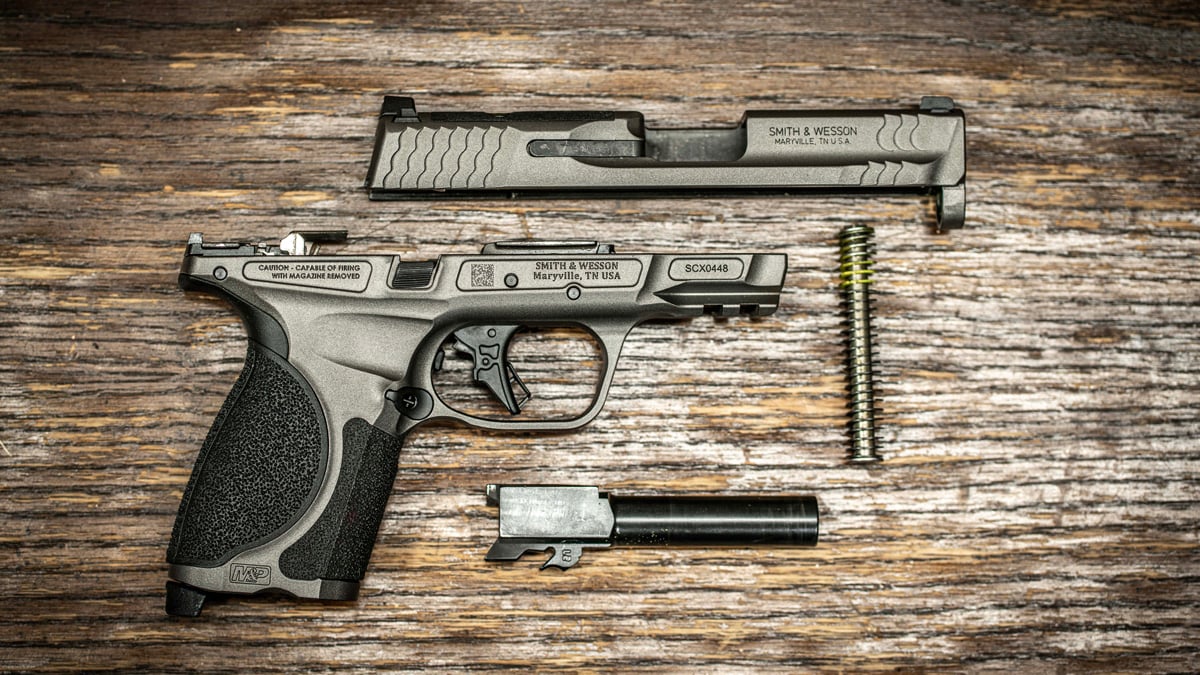
All the company’s Metal pistols host enhanced internals, but it’s the light, crisp, flat-faced trigger that shines brightest for me. My gauge measured this gun’s trigger at a predictable 3.75 pounds.
The take-up is light and springy, which makes it easy to stage the trigger at the wall for accurate shooting. From there, it breaks after a scant 0.08 inches – at least to the best of my ability to even measure it. The reset is a mere 0.2 inches, making this a fast gun to run as well.
The smaller size does impact overall shootability, but I’ll dig more into that in the shooting section below. First, here’s a quick rundown of the basic specs:
Weight: 1.66 pounds (with empty mag)
Length: 6.63 inches
Barrel Length: 3.6 inches (1:10 twist with Armornite finish)
Sight Radius: 5.86 inches
Height: 4.93 inches
Width (Widest Point): 1.4 inches
Slide Width: 1.1 inches
Capacity: 15+1 9mm
Trigger Pull: 3.75 pounds (10-pull average)
Trigger Take-Up: 0.39 inches
Trigger Break: 0.08 inches
Reset Distance: 0.2 inches
As mentioned, the trigger is really quite nice. In fact, it’s definitely one of my favorite factory triggers on a carry gun to date. Here’s a closer look at the trigger in action:
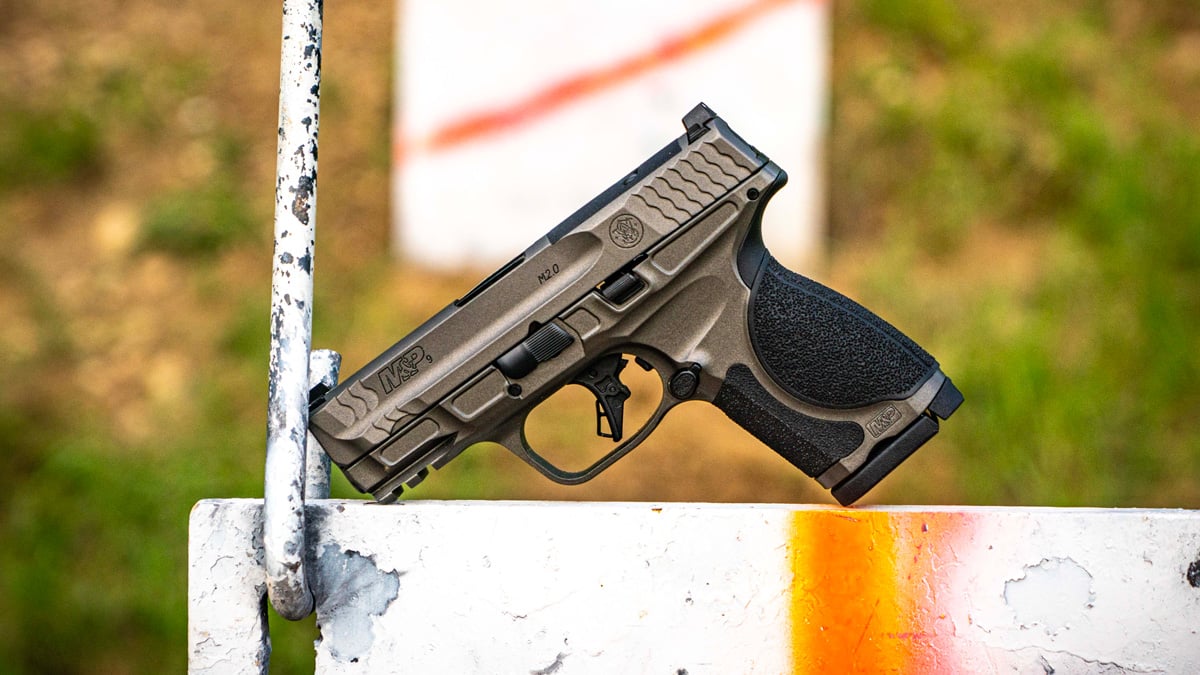
The frame is made from 7075-T6 aluminum and coated in a robust tungsten-gray Cerakote finish. That’s where the Metal gets its unique name over the standard polymer-framed M&P9 line.
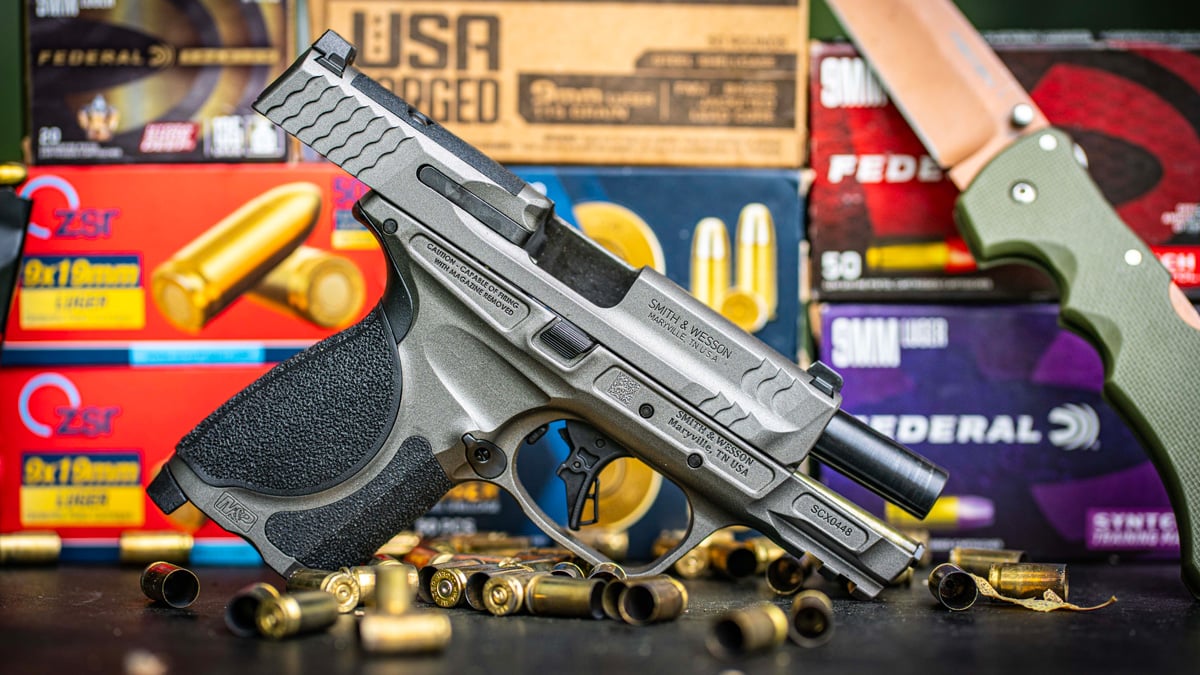
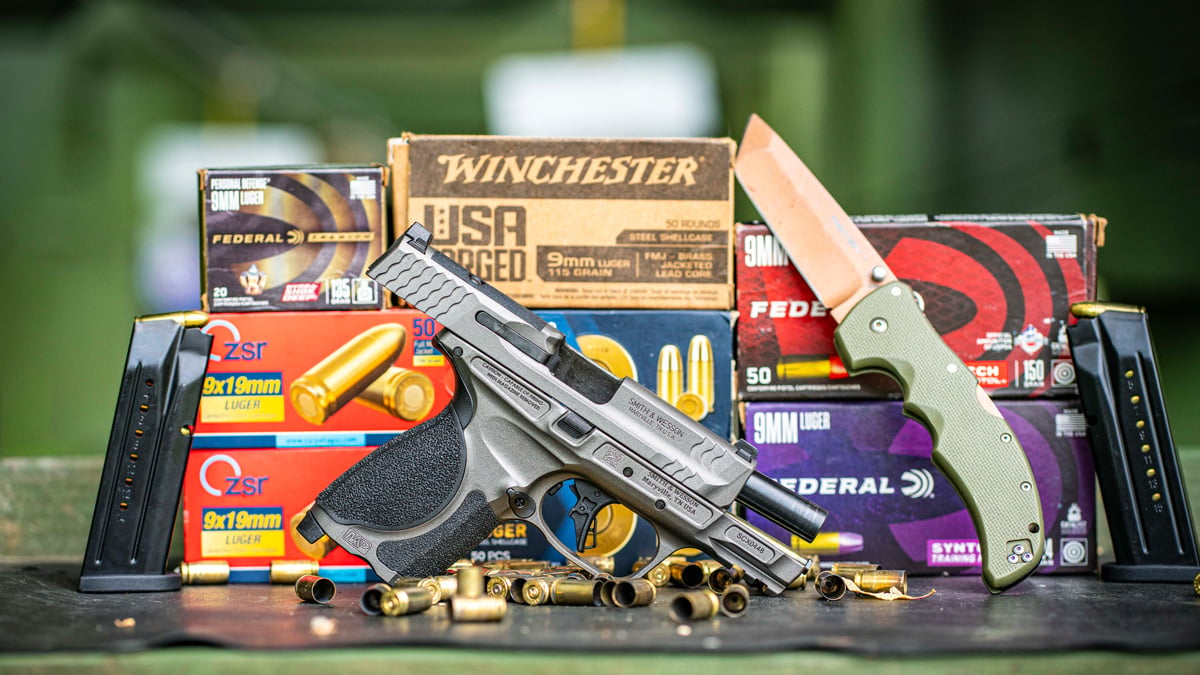
After 600 rounds, that finish still looks brand new on this test gun. The slide is stainless steel and sports the tungsten-gray Cerakote. It’s a handsome gun, but the looks have solid function, too.
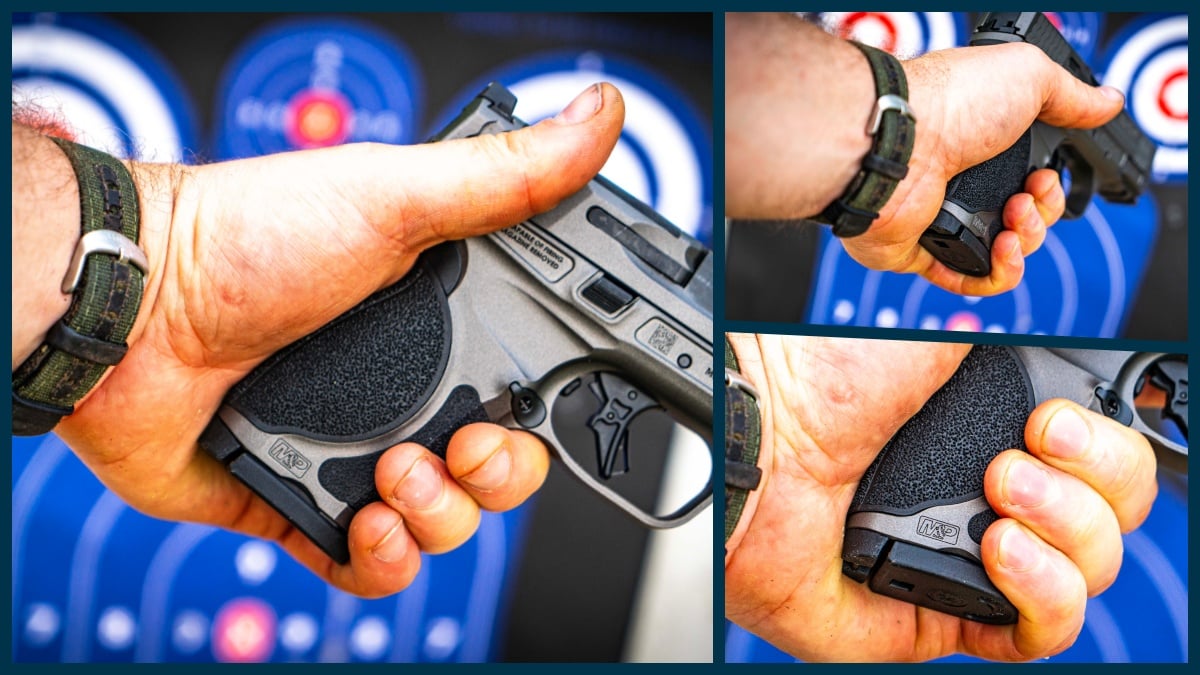
I did most of my testing at a hot, marshy range with rivulets of sweat running down my face. It was swampy to say the least, but the aggressive grip texture, coupled with scalloped front and rear slide serrations, made the gun easy to control and manipulate. The gun ships with four interchangeable palmswell grip inserts to customize the grip for a variety of hand sizes.
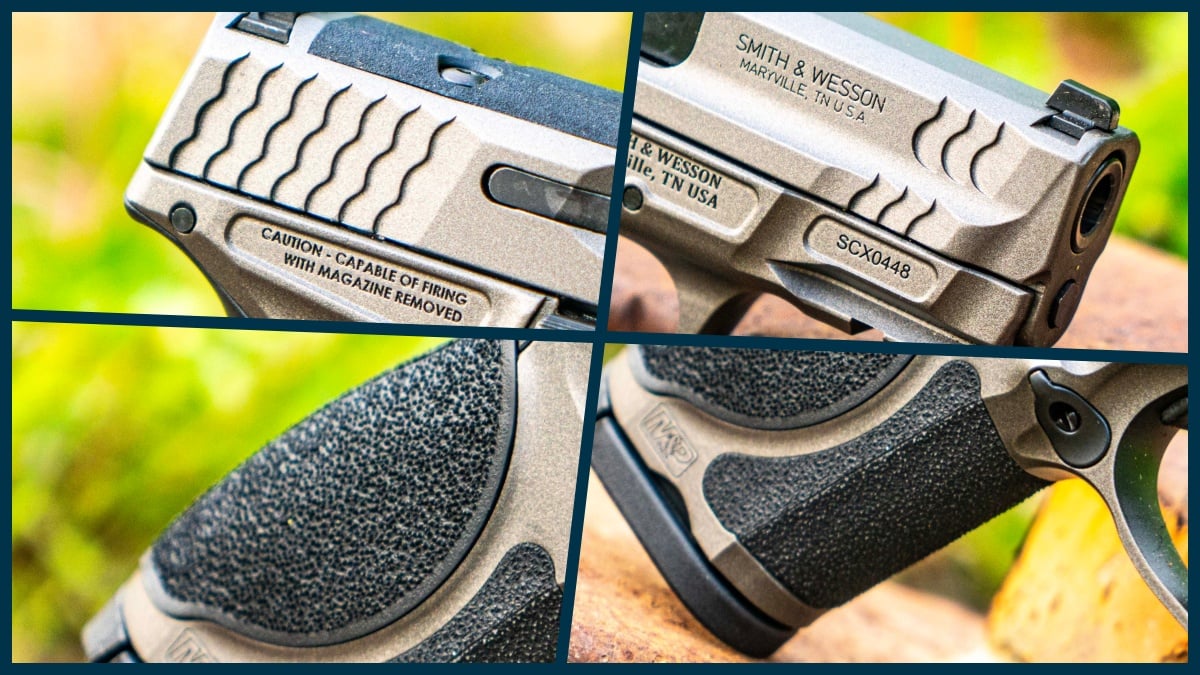
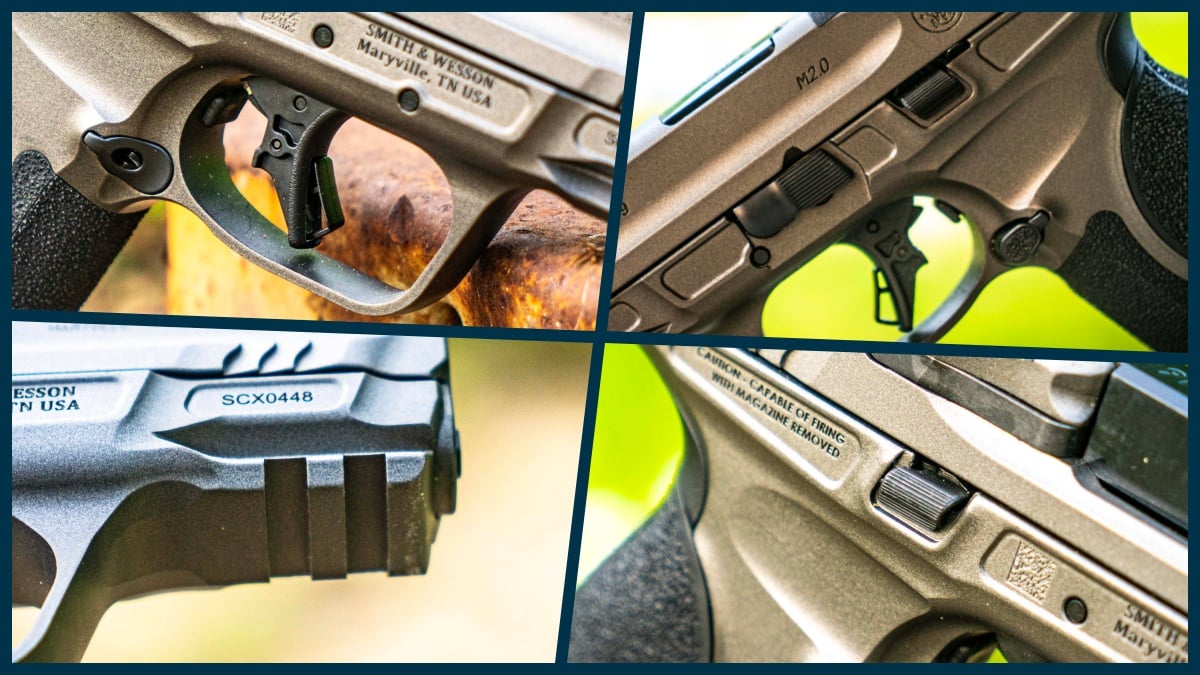
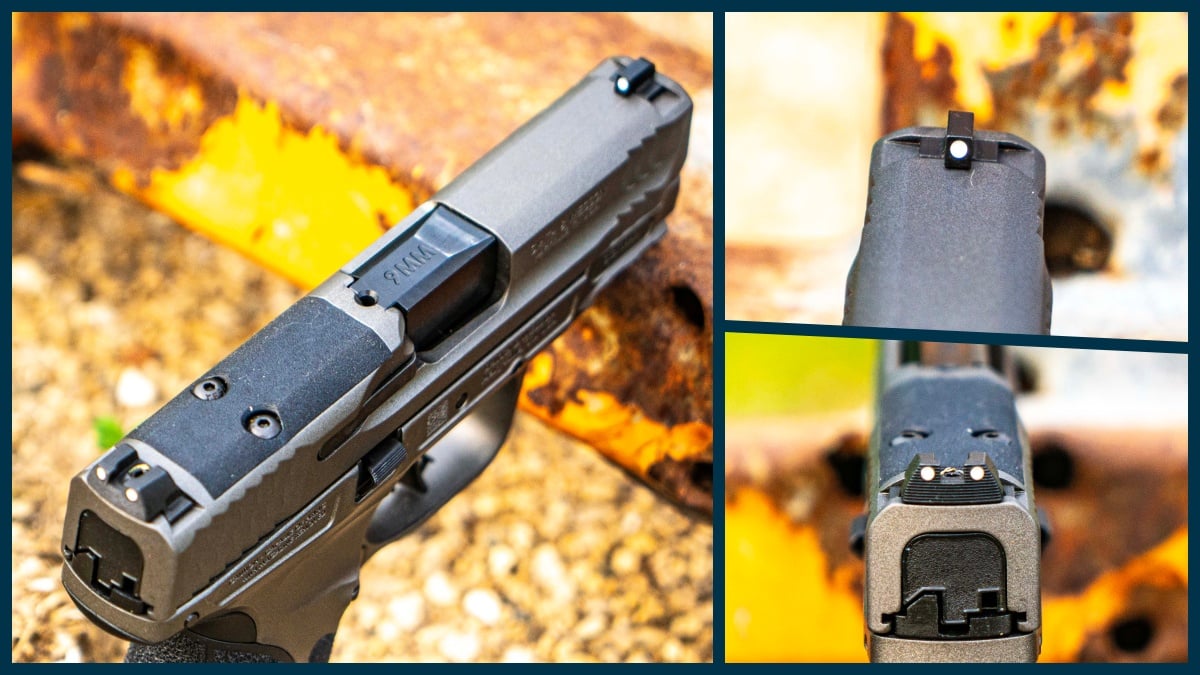
Up top, this optics-ready model sports a cut for C.O.R.E. system plates to allow for multiple optics options. I decided to run this gun with just the three-dot white iron sights, just like I ran my previous full-size Metal pistol. They aren’t night sights, which would have sweetened the deal, but they are metal and perform well on the range even under full sun.
Another boon for shootability is the 18-degree grip angle, which mirrors the grip angle on the beloved 1911. As a shooter, that simply translates into better pointability with faster follow-up shots for me.
Finally, the gun comes with two 15-round magazines. I would love to see three mags shipped with each gun, since that covers most shooters’ needs for training classes and the like. That’s a minor gripe, and two magazines is basically standard across the industry right now. Regardless, they are just OEM M&P9 M2.0 Compact magazines and easy to come by if you want more.
Shooting: Accuracy & Reliability
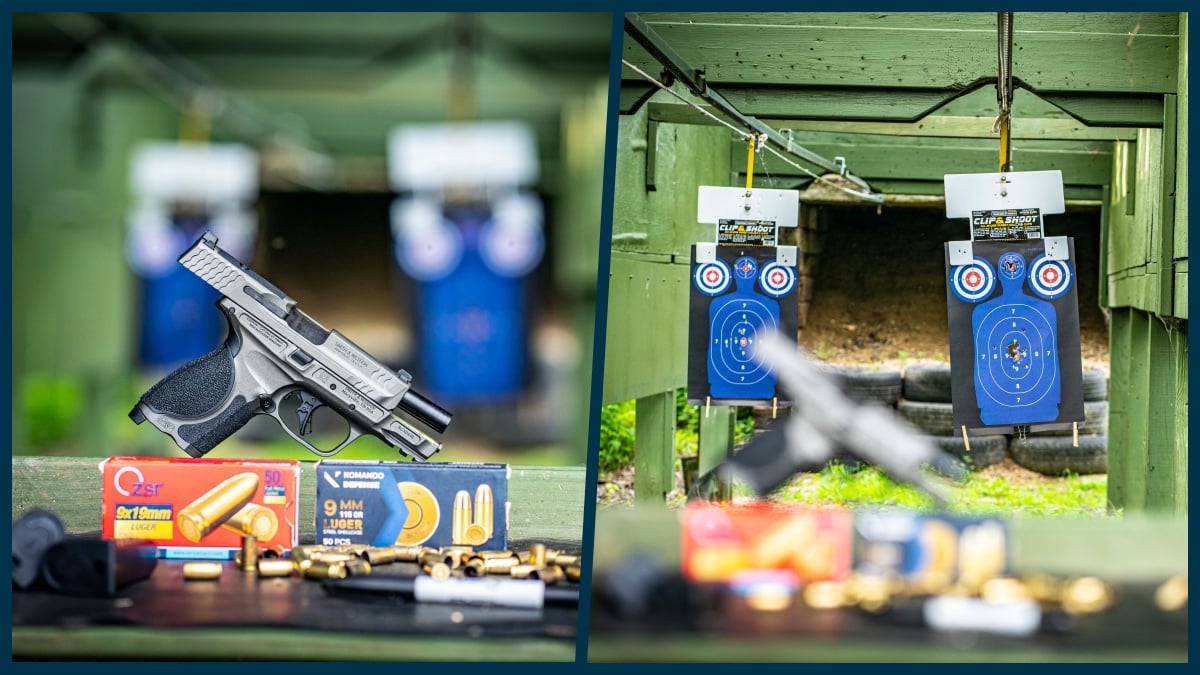
I generally find that I shoot full-size guns significantly better than compact and micro pistols. That proved to be somewhat true of this Metal Compact. I can get all my fingers wrapped around the grip, but my pinky gets a bit cramped at the base.
That shorter grip is good for concealability, but it cuts down a bit on controllability. This led me and other shooters on the range to notice that the Metal Compact is a bit snappier than the full-size option. It’s not bad – better than most, actually – but the felt recoil is noticeably more on the compact model.
Still, I found I was able to shoot some solid groups. Here’s what I got at the end of my first range visit.
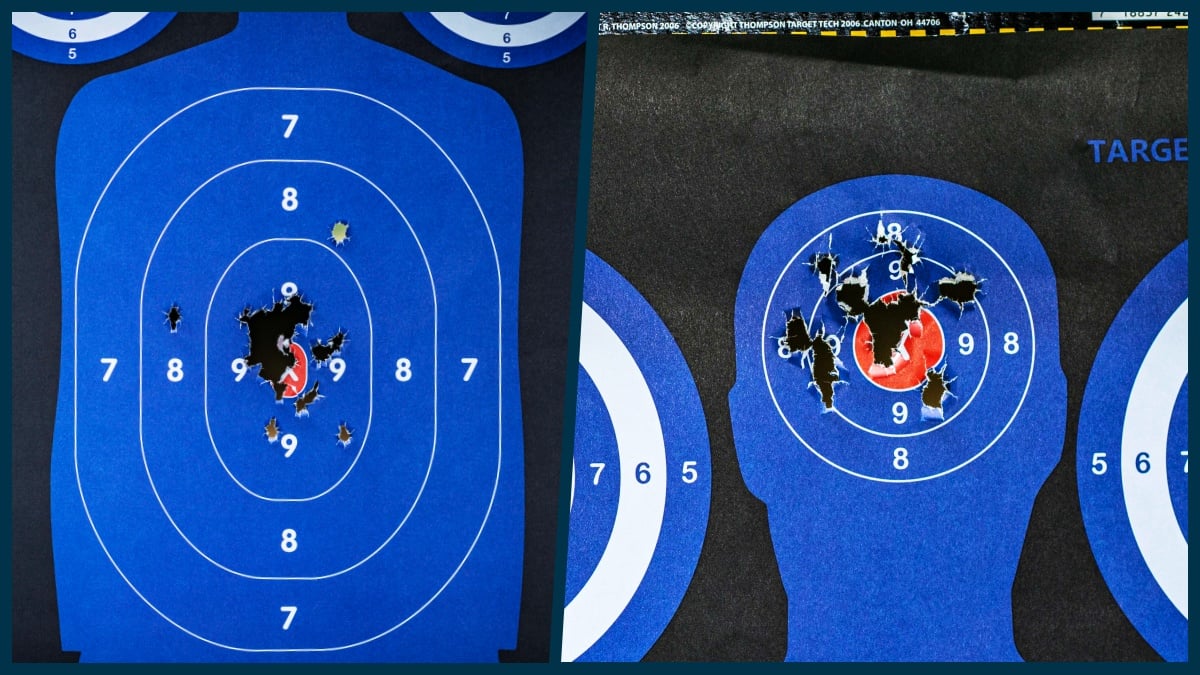
The group on the left at 20 feet came out to 5 inches, even with the two fliers that left the nine ring. The group on the right was shot at a slower pace at 25 feet and came out to 2 inches. Overall, after just one range trip, I’d call that fantastic shooting for a compact pistol given my skill level.
I pushed the target out to 40 feet and put three more mags into it. Here’s how that turned out for me.
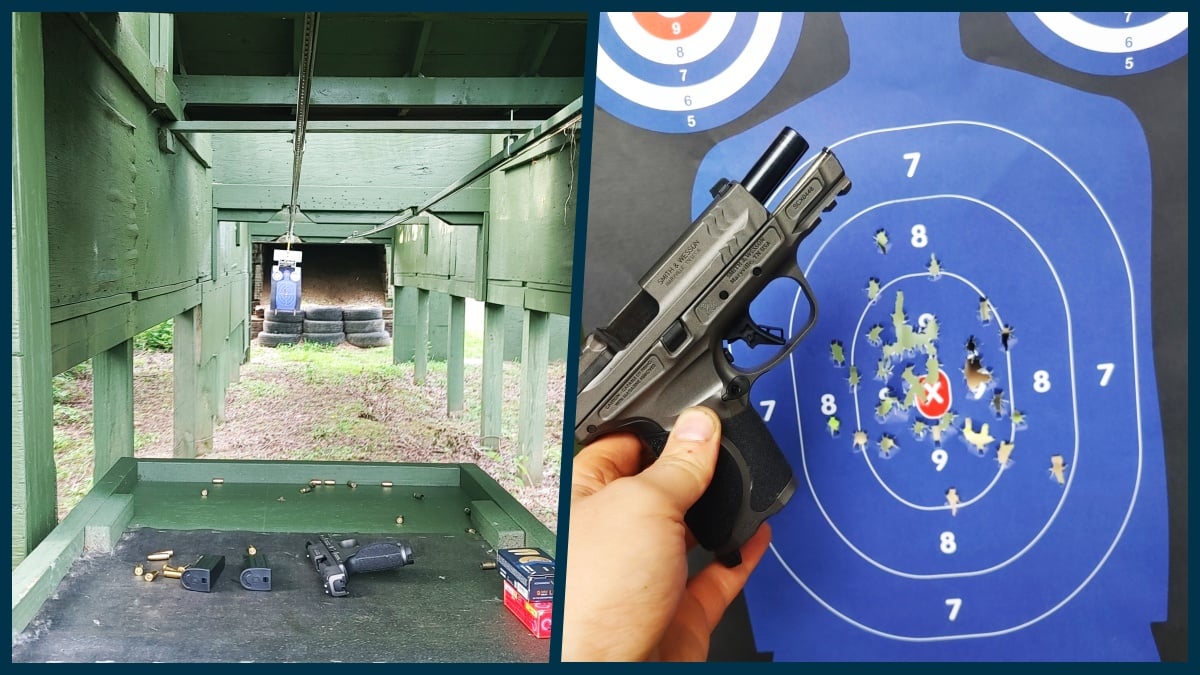
The gun certainly has fantastic shooting chops, but I will say that I shoot the full-size Metal pistols better. Then again, that is almost an obvious thing to say. Overall, even with its compact size, this S&W Metal is a fine shooter.
If I had one complaint about the accuracy, it isn’t even really about the gun. It’s more about how my larger hands hold the pistol. When I took up my normal shooting grip, I found I was printing just a tad higher than I liked for a lot of my early shooting. That, however, is a shooter issue.
After some practice with an instructor, we brought those groups down. I closed out my last range trip with a few drills. That included shooting six randomized 2-inch hexagon targets at 15 feet. I had to break my grip before each shot in the drill. By the end, I was shooting a relatively easy six for six.
My takeaway from all that is simple: the S&W M&P9 M2.0 Metal Compact is a bit harder to control than the full-size version, but you can count on it to shoot accurately and reliably with a bit of practice. I would have no issues carrying this gun every single day as my go-to EDC pistol from a reliability and accuracy perspective.
Ballistic Test
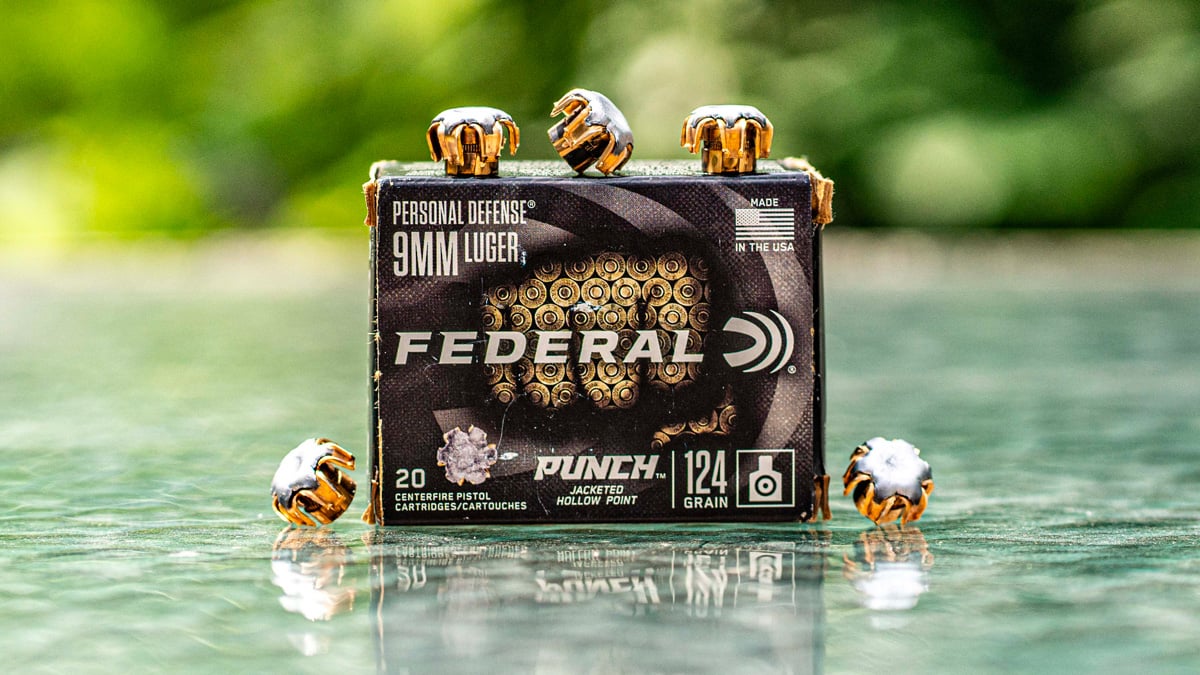
Given the fact that this gun was designed as a concealable self-defense option with a short 3.6-inch barrel, I figured we should do a little testing on self-defense ammo as well. I put five rounds of 124-grain hollow-point Federal Punch into 10-percent FBI ballistic gel from Clear Ballistics at 10 feet.
Here’s how that turned out.
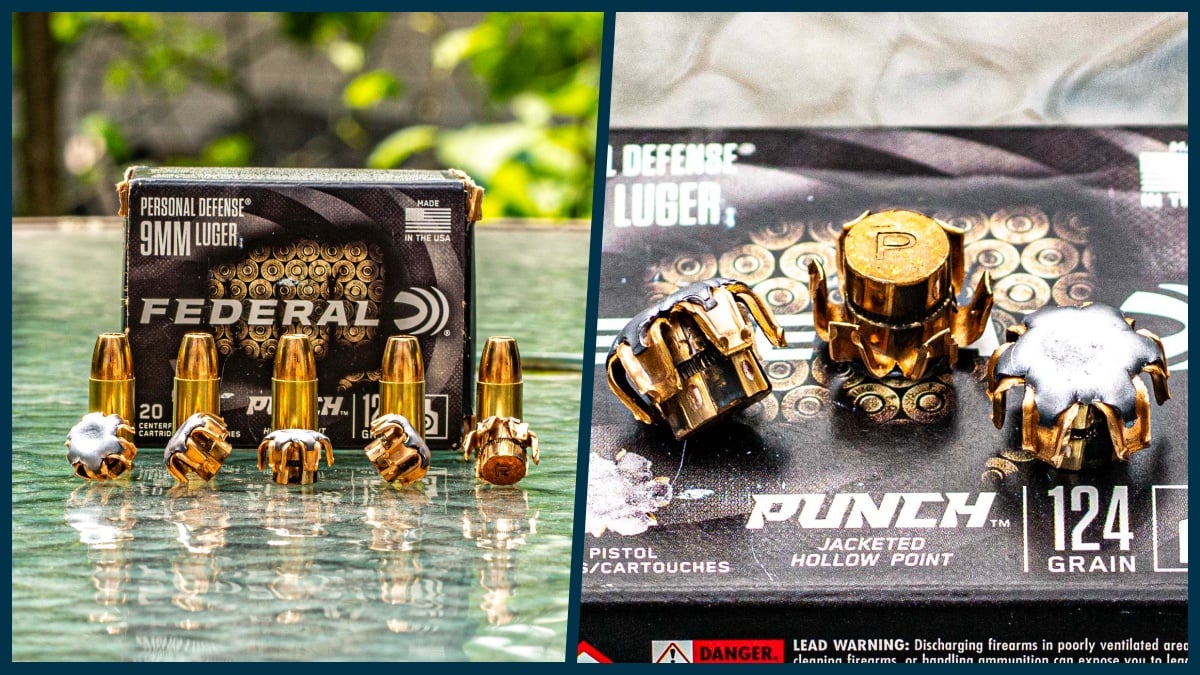
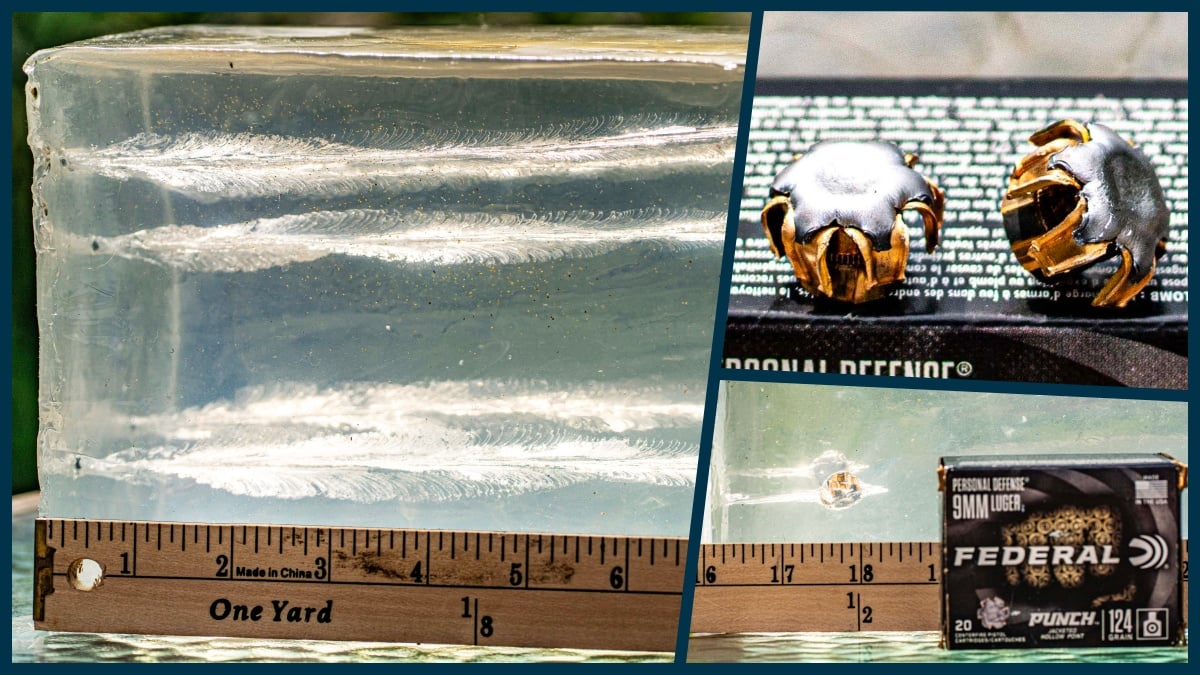
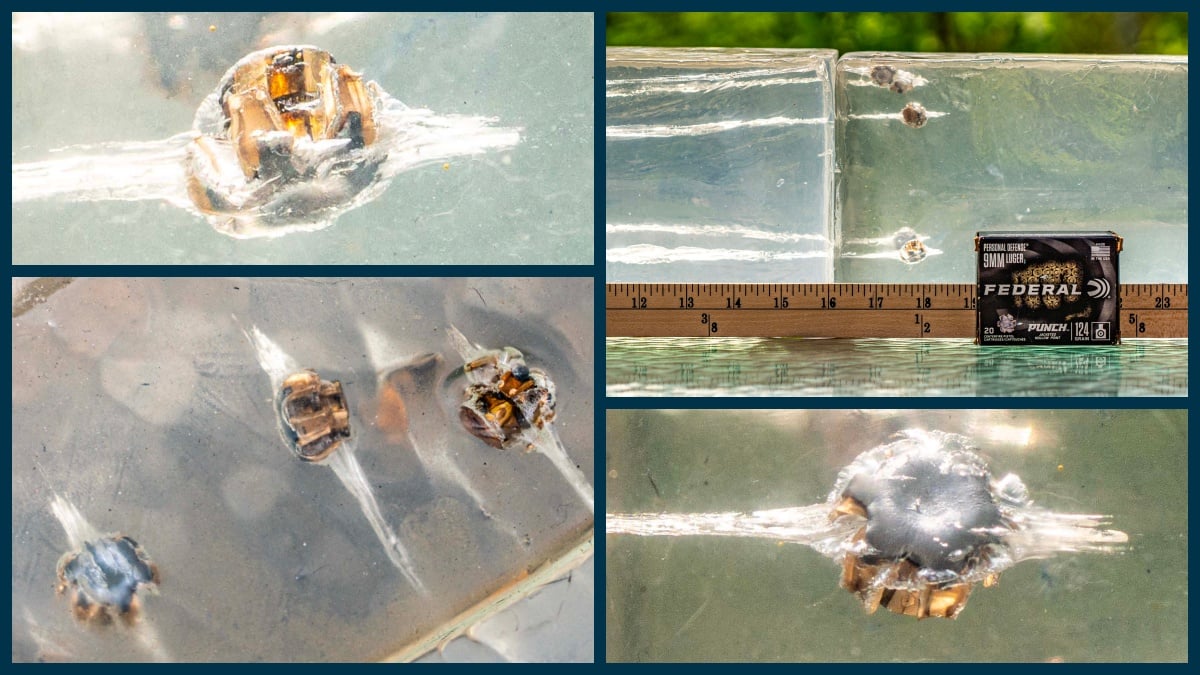
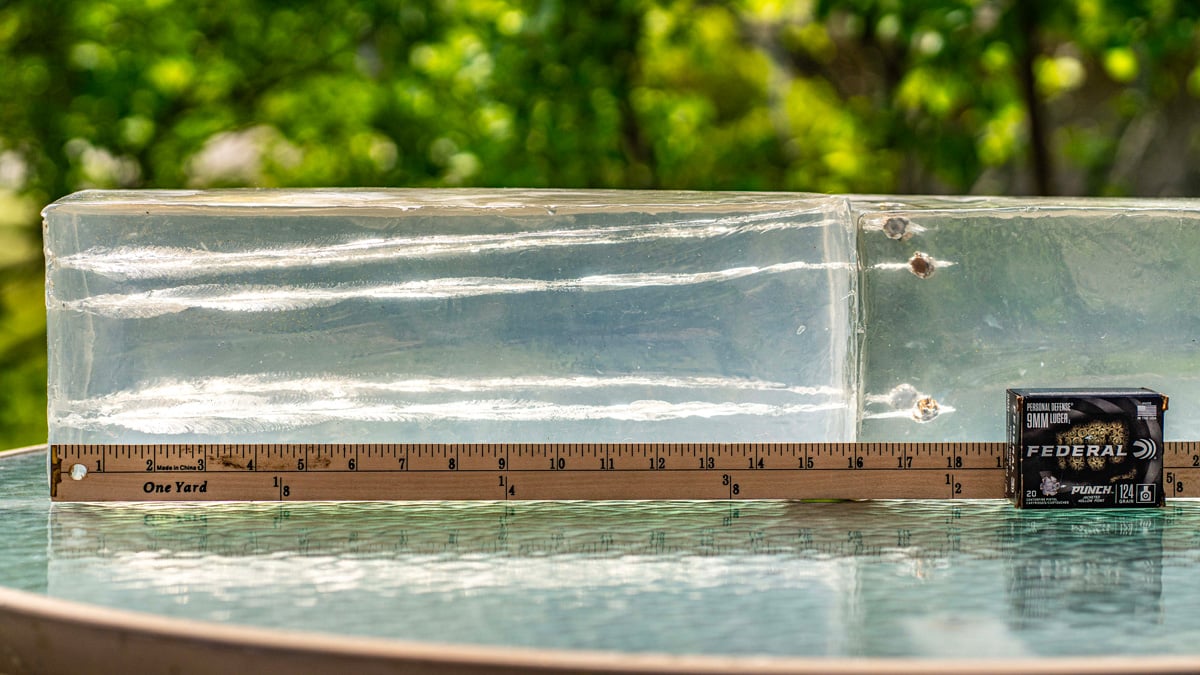
Federal’s Punch line has done well for me in other testing. Better yet, it’s also an affordable self-defense load in a world of pricey 9mm hollow-point ammo. The performance on our ballistic gel was 100 percent for full opening of the hollow-point bullets, with no lost metal fragments in the process.
Pros & Cons
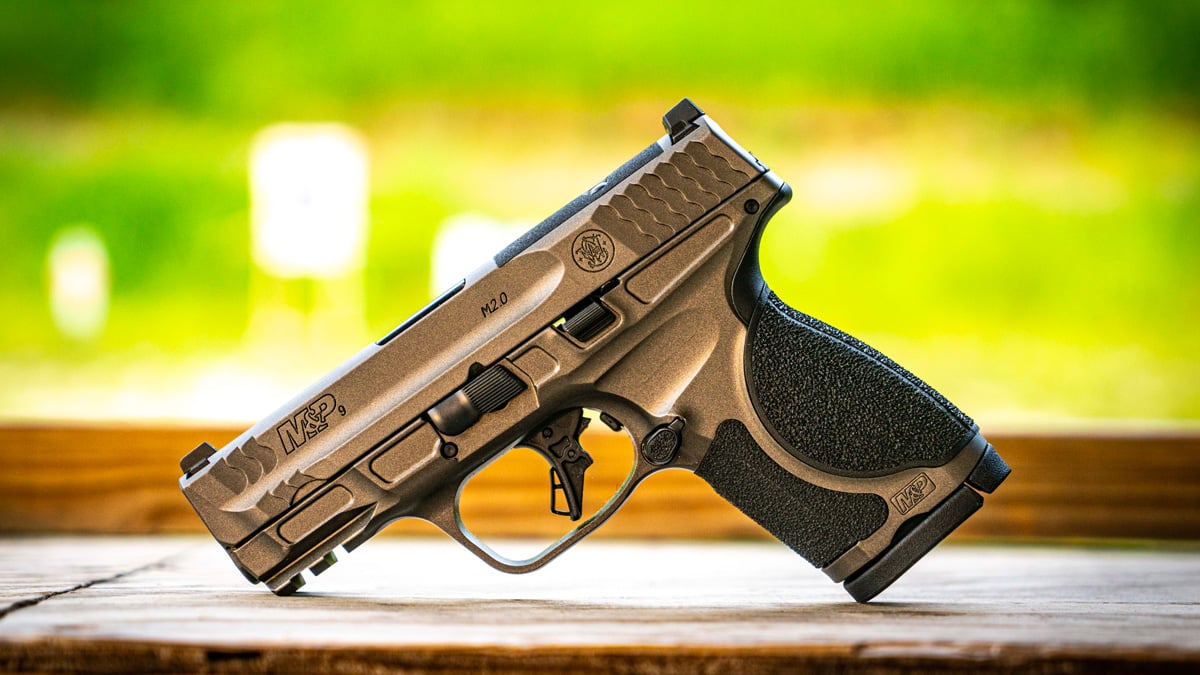
Here’s my short list of the top pros and cons for the Smith & Wesson M&P9 M2.0 Metal Compact:
Pros:
- Very reliable
- Metal slide and frame
- Great accuracy
- Fantastic trigger
- Concealable size
- 18-degree grip angle
- Aggressive grip texture
- Good metal sights
- Nice front and rear slide serrations
- Decent price for a refined all-metal carry gun
- Looks nice, too
Cons:
- Less space for a full grip
- Snappier recoil than the full-size model
-
Does not come with night sights
Final Thoughts
For a factory gun, this M&P9 M2.0 Metal Compact is a winner at the range. Its size makes it a fine choice for concealability. I shot the full-size just a bit better, but this compact gun covers all the wickets I would want in a mid-sized carry gun.
It is highly reliable, accurate, and the enhanced features show in performance. There is something to be said about the more rigid metal frame as well. Some polymer guns have a bit of give to them that I can feel while shooting.
The Metal line from Smith & Wesson just feels more rigid in the hand. I already like the company’s polymer M&P9 pistols. They just point and shoot well for me. But the Metal options are a clear step above the rest.