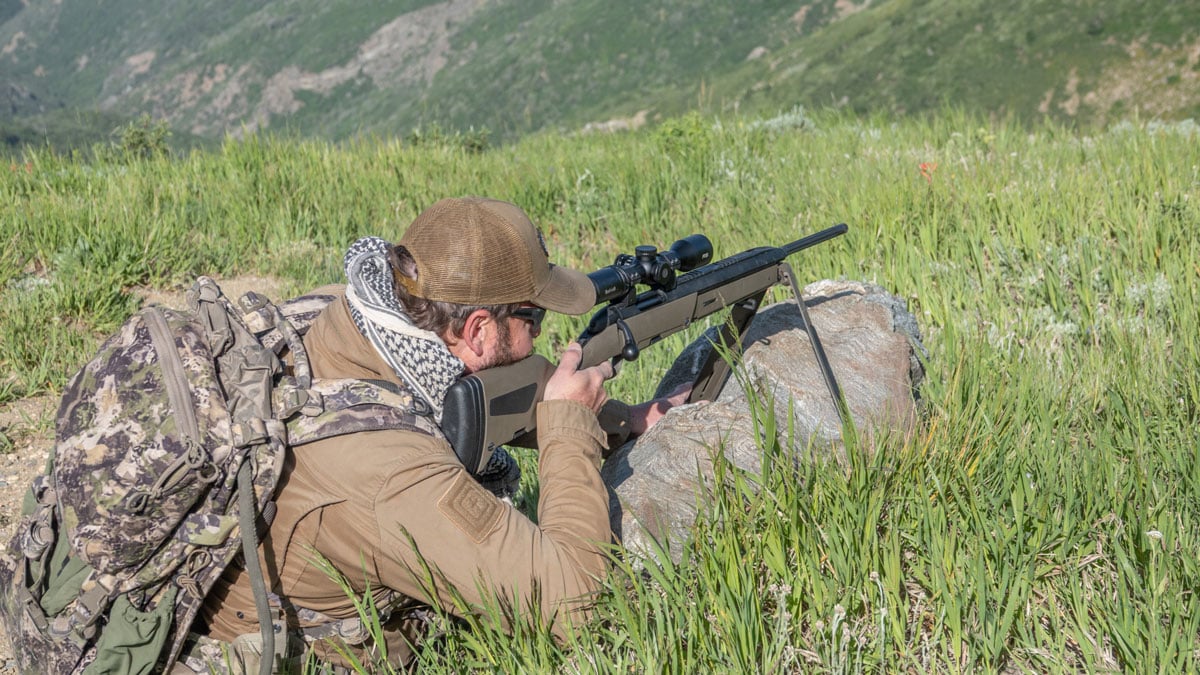
The Steyr Scout
The Steyr Scout rifle has been around for nearly 30 years. In fact, the second-generation Scout II is the go-to rifle. The original Scout that I tested was manufactured at Steyr’s facility in Bessemer, Alabama.

The Steyr Scout bolt-action rifle feeds from proprietary detachable box magazines. Much of its uniquity comes from the polymer stock, which incorporates many extra features. While it is available in various calibers, this model is a 19-inch barreled .308 Winchester.
At the heart of the Steyr Scout is the action. The rotating bolt uses two layers of dual lugs to lock the breech. The extraction is done via a Sako-style claw, and cases are ejected using a spring-plunger to throw cases clear of the action. The tang safety is a bit unusual – it’s a rotating wheel you can easily adjust with your thumb.
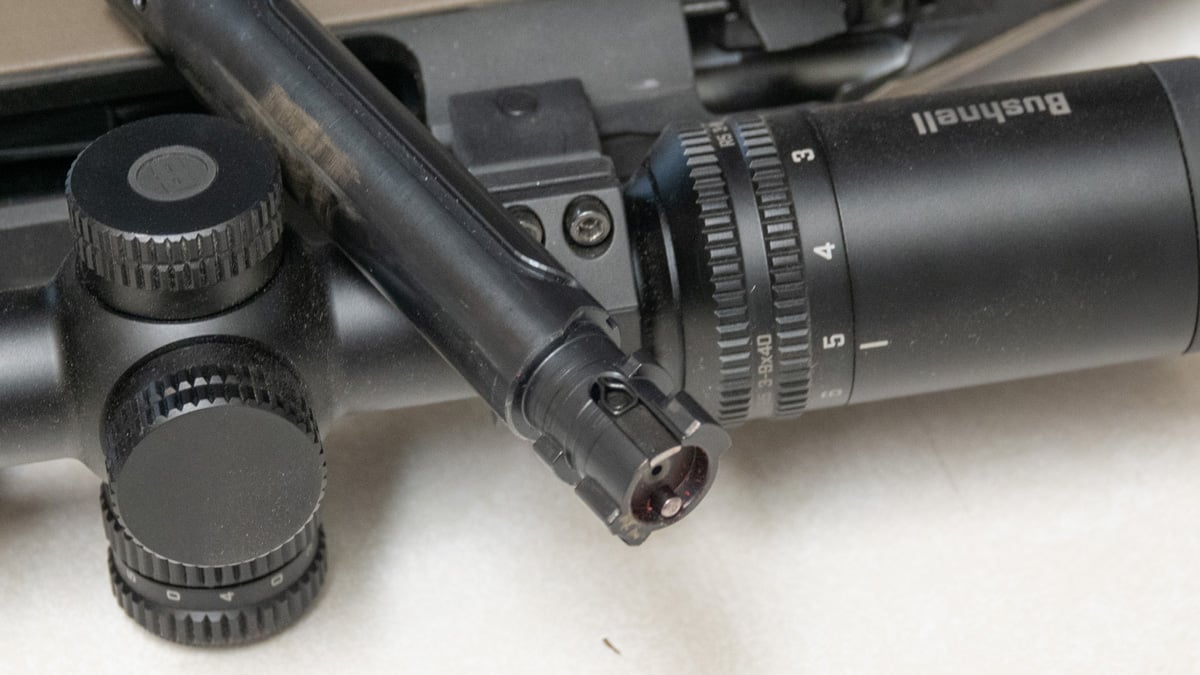
The two-stage trigger appears to be adjustable, though Steyr’s manual is adamant that only Steyr armorers should attempt such a feat. As it sits, the trigger feels great, so I had no reason to mess with it.
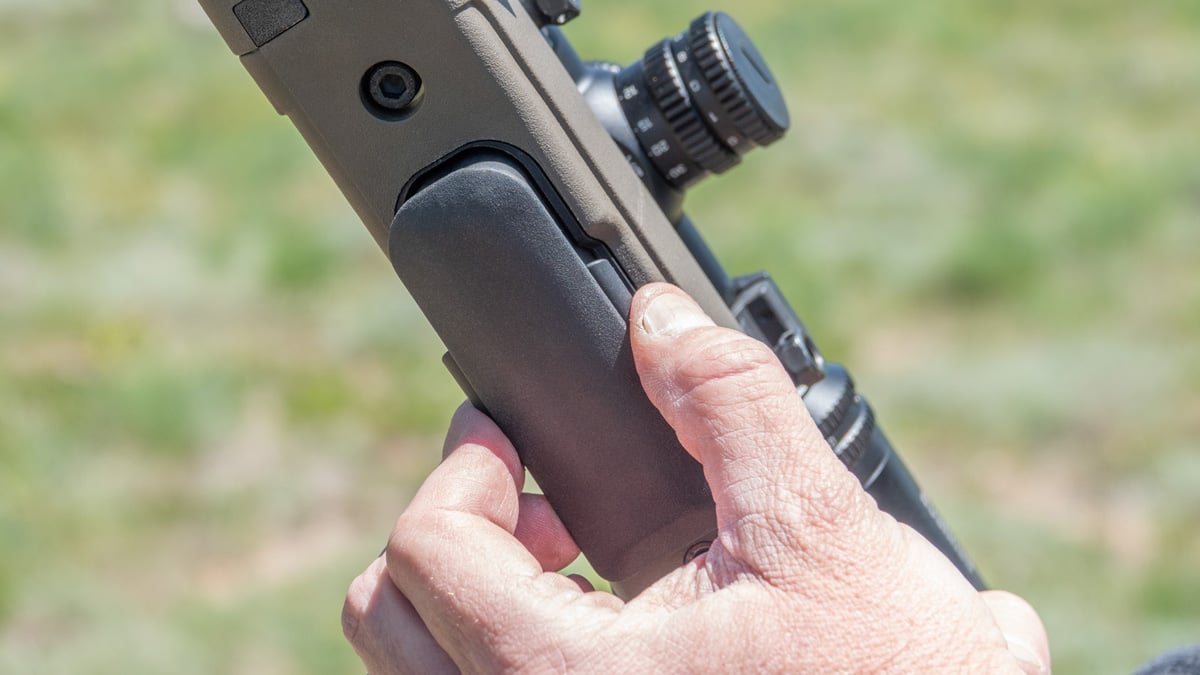
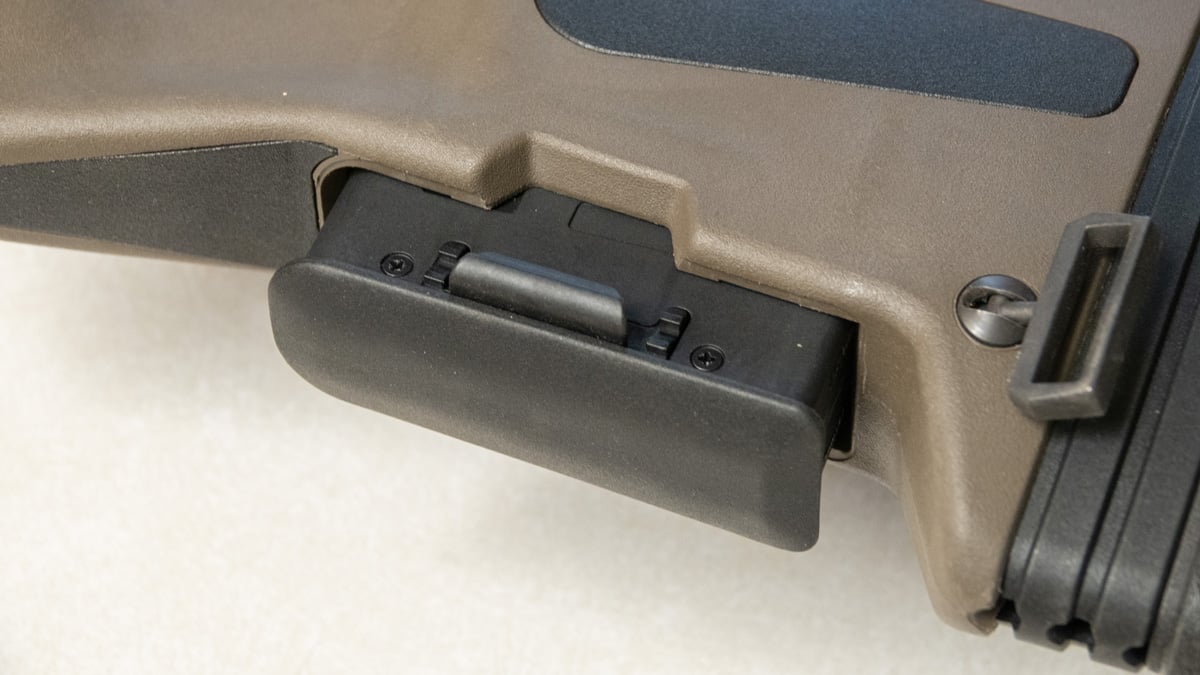
The five-round magazines that feed the Scout are secured with dual spring-loaded claws on each side of the magazine. This results in a perfect thumb-and-index-finger squeeze to pull the magazine from its well. A second magazine is secured in the same fashion in the bottom of the buttstock.
Stock and Sights
The polymer stock is interesting. A hard rubber recoil pad at the back ensures durability, and the traditional grip angle is enhanced with a hollowed-out palm area.
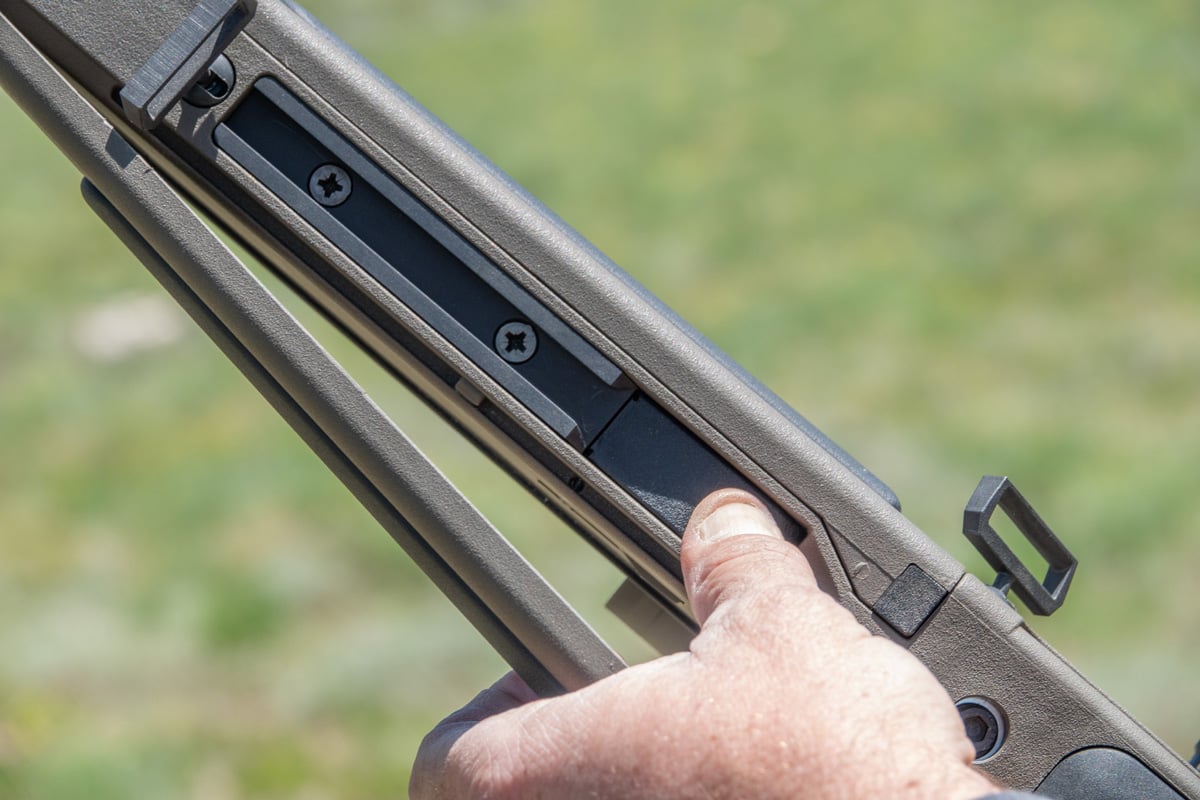
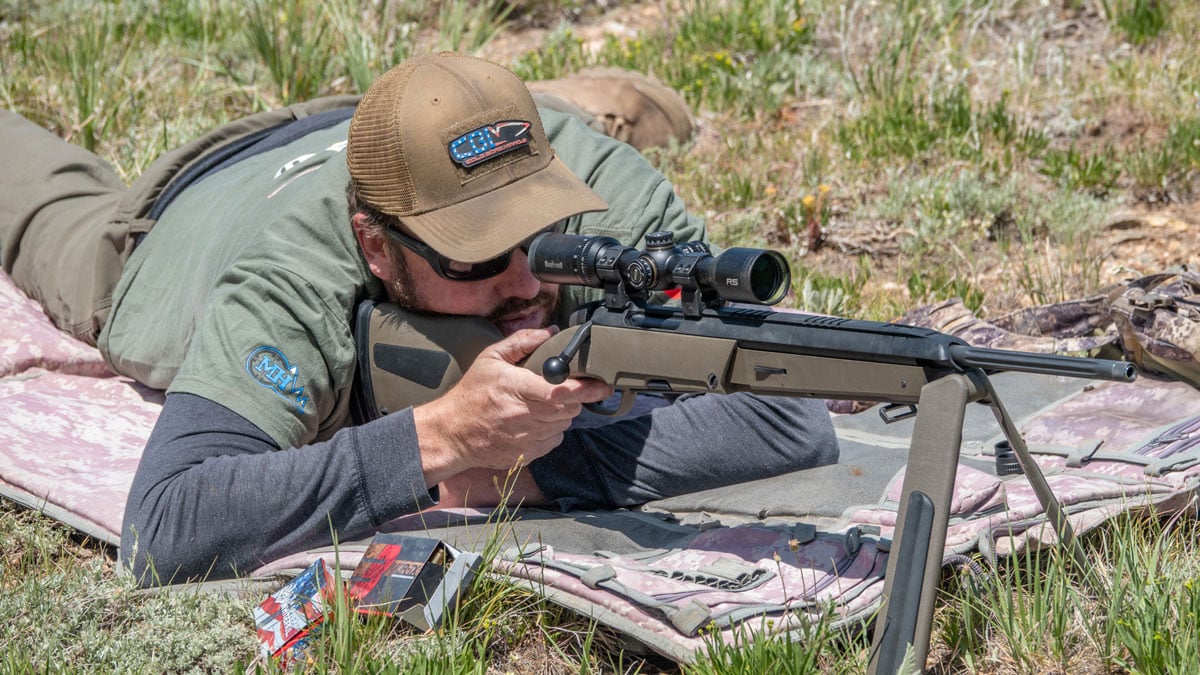
Perhaps the most curious part of the stock is the built-in bipod at the front of the stock. By depressing a centrally located button, both bipod legs can be pulled down. They are secured in position with a snap, preventing them from folding back up inadvertently. The rifle can also be canted on the bipod, as the hub of the two legs has a built-in swivel.
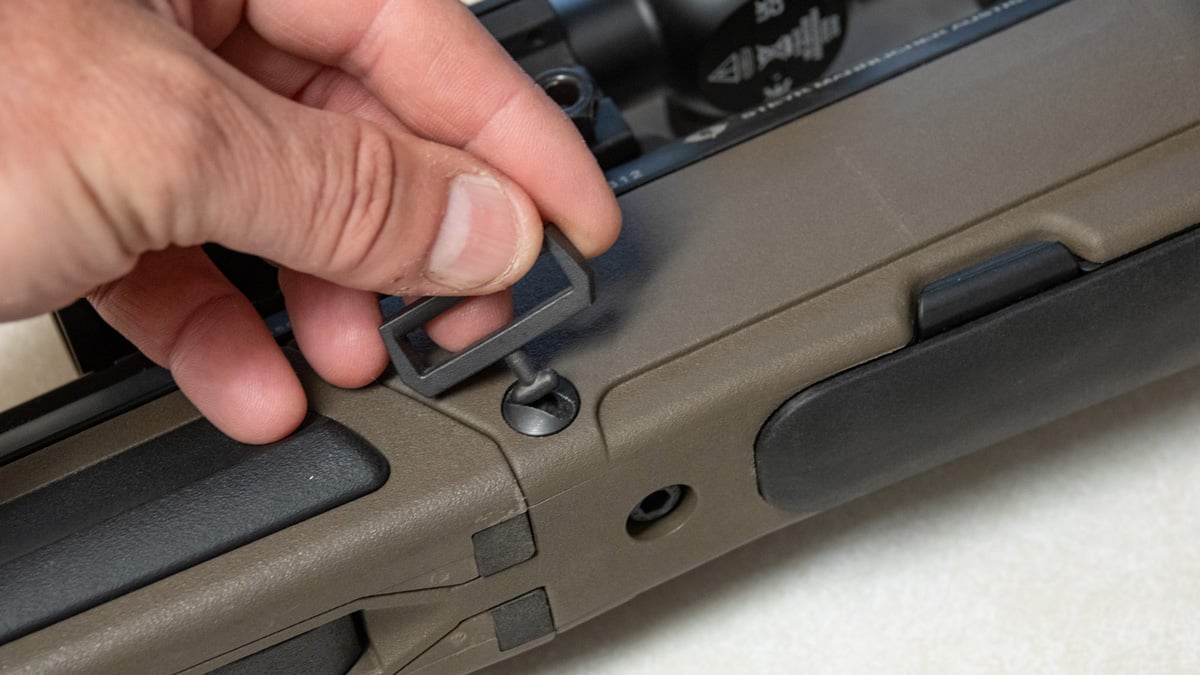
The Scout also has built-in sling mounts that can be removed or relocated to fit your needs. A simple push and twist will remove the sling mounts, and you can move them to one of several sockets on either side of the rifle.
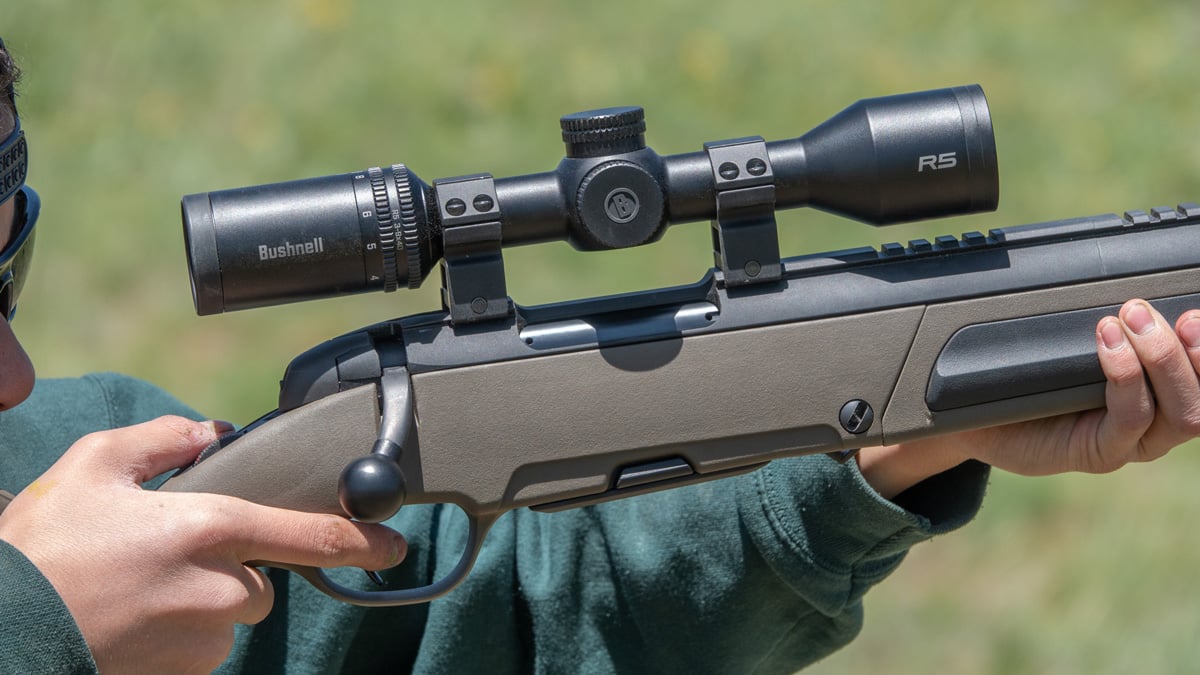
On the top of the rifle, you will find a sight mounting rail. The original Scout has cuts for a standard scope ring location and several options for mounting a scope in the traditional forward scout rifle location. Forward-mounted extended eye relief optics are traditionally used on scout rifles to improve the field of view and awareness.
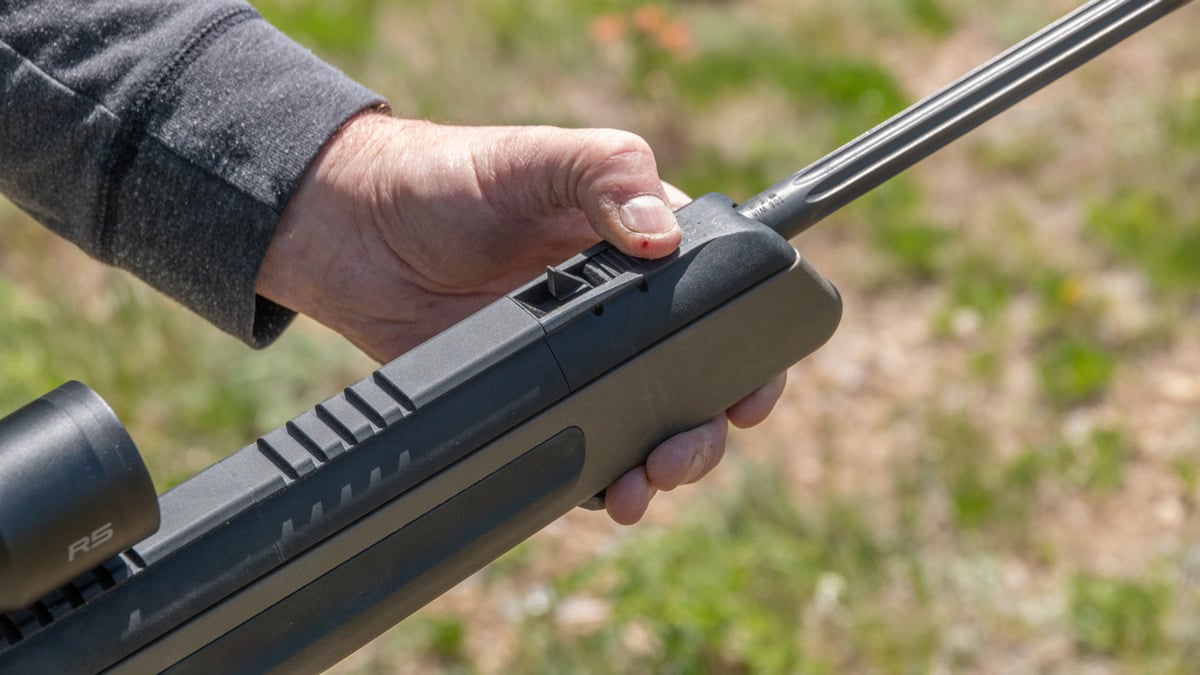
The second-generation Scout has a full-length Picatinny rail that allows you to mount an optic anywhere you choose. If that weren’t enough, the Steyr Scout also features built-in pop-up iron sights with a ghost ring-style rear sight and a simple front post.
Specifications
- Weight: 6.6 pounds
- Length: 38.6 inches
- Barrel: 19 inches, 1:10 or 1:12 twist depending on generation of rifle
- Caliber Options: .308 Win (tested), .223 Rem, .243 Win, 7-08 Rem, 6.5 CM
- Safety: Three-position (fire, safe, safe with locked bolt)
- Finish: Mannox (nitride surface treatment)
- Magazine Capacity: 5 rounds; 2 included (10-round option available)
- Sights: Pop-up built-in sights with Picatinny sight rail
-
Muzzle Threading: Gen I 1/2x20, Gen II 1/2x28
Configuring the Scout
Since I don’t have an extended eye relief scope, I mounted a scope in the traditional fashion – which I would have preferred to do anyway, now that I think about it. Using a pair of Weaver scope rings, I mounted a new Bushnell R5 3-9x40 riflescope. I was surprised how well the Bushnell fit this rifle and matched its capabilities. The illuminated center dot is perfect for shooting targets on the move, like hogs or varmints.
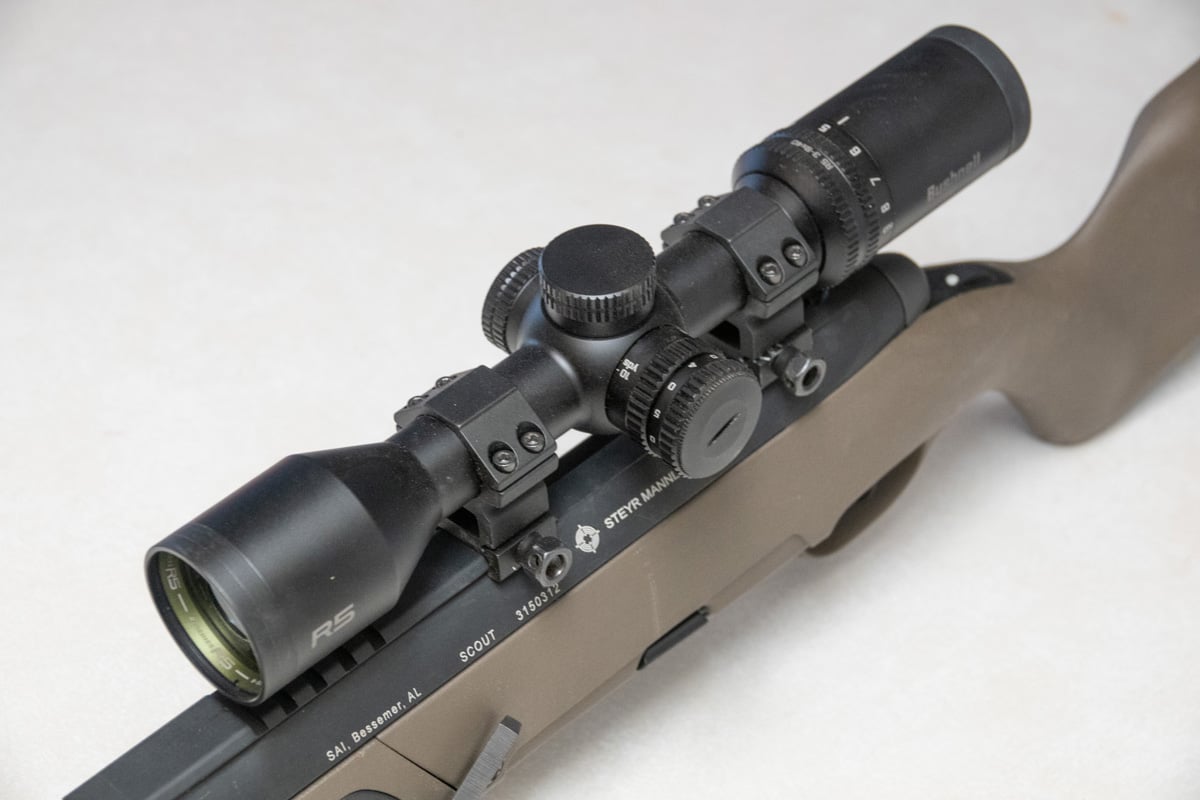
I grabbed a few boxes of ammunition to test: some DTM 175-grain Match, Hornady 150-grain American Whitetail, and some Barnes VOR-TX 130-grain ammunition – a good spread to gauge performance of the rifle. Then it was time to head to the deep Rocky Mountains to country that deserves to be scouted.
Shooting Notes
The Scout handled much better than I expected. The light, short rifle is easy to maneuver with one hand, while the bolt is smooth and rounds feed flawlessly from the magazine.
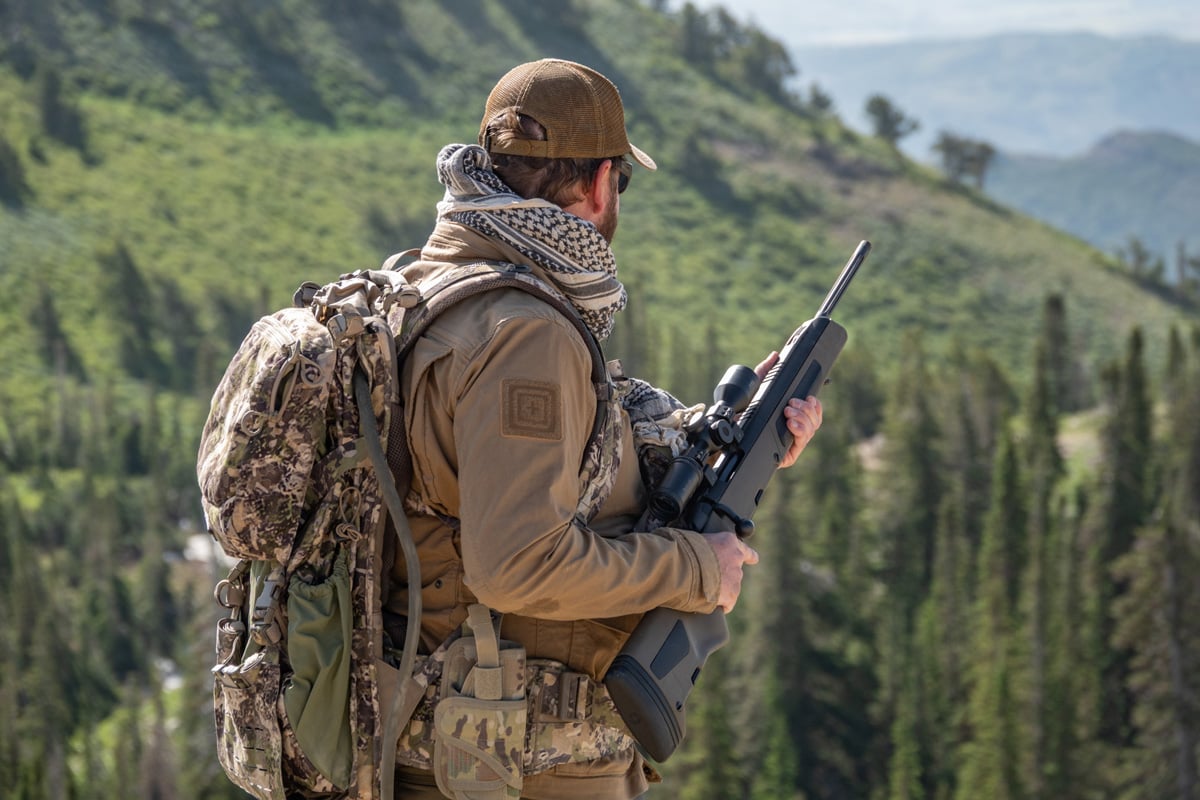
I love a good two-stage trigger, and this one feels great. Everything about operating the rifle is intuitive and pleasant – except for the safety, which was a little odd but not a dealbreaker.
While the design is clever, I’m not a huge fan of the sling mounts and would prefer them off the rifle, to be honest. They are just a touch too rigid and at times get in the way.
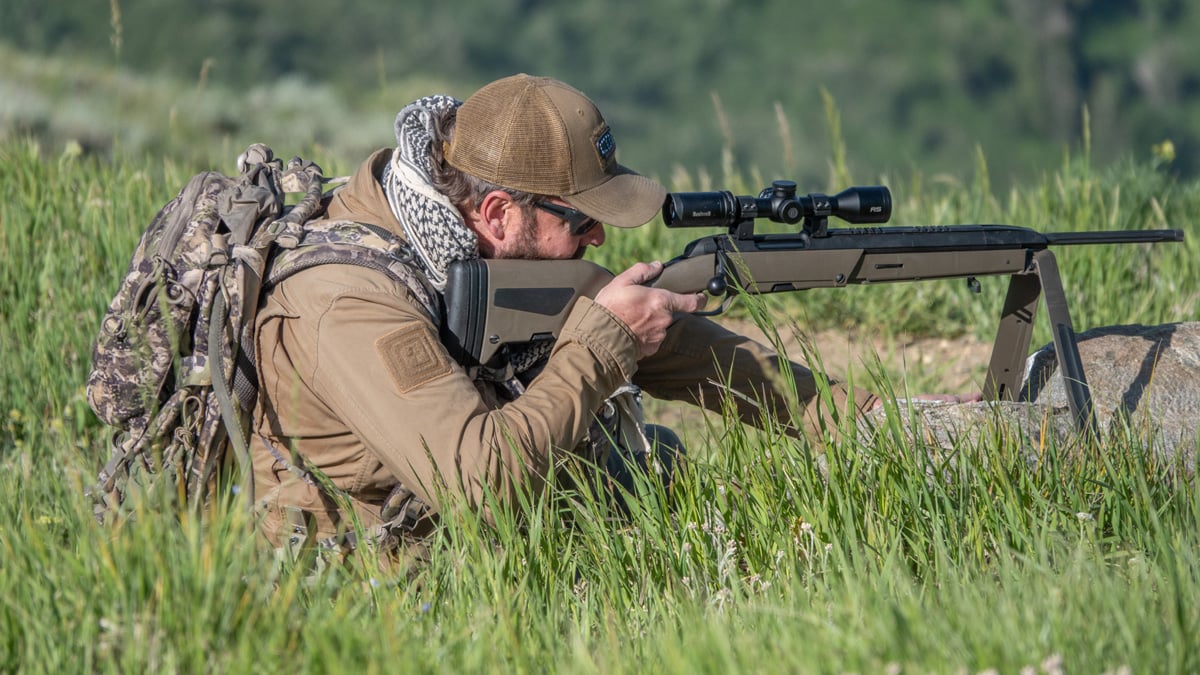
I thought the bipod was going to be cheesy, but in all honesty, it was handy. It’s not as good as a dedicated real bipod, of course, but it works for field shooting. The clean front end of the stock and balanced light weight are just too good to mess up with an additional bipod.
Reliability and Accuracy
Smooth cycling of cartridges made for reliable operation, and the Scout never missed a beat. Everything seemed positive on this rifle, except again for the safety. It is soft and doesn’t have particularly firm clicks in each position, but this was a minor issue.
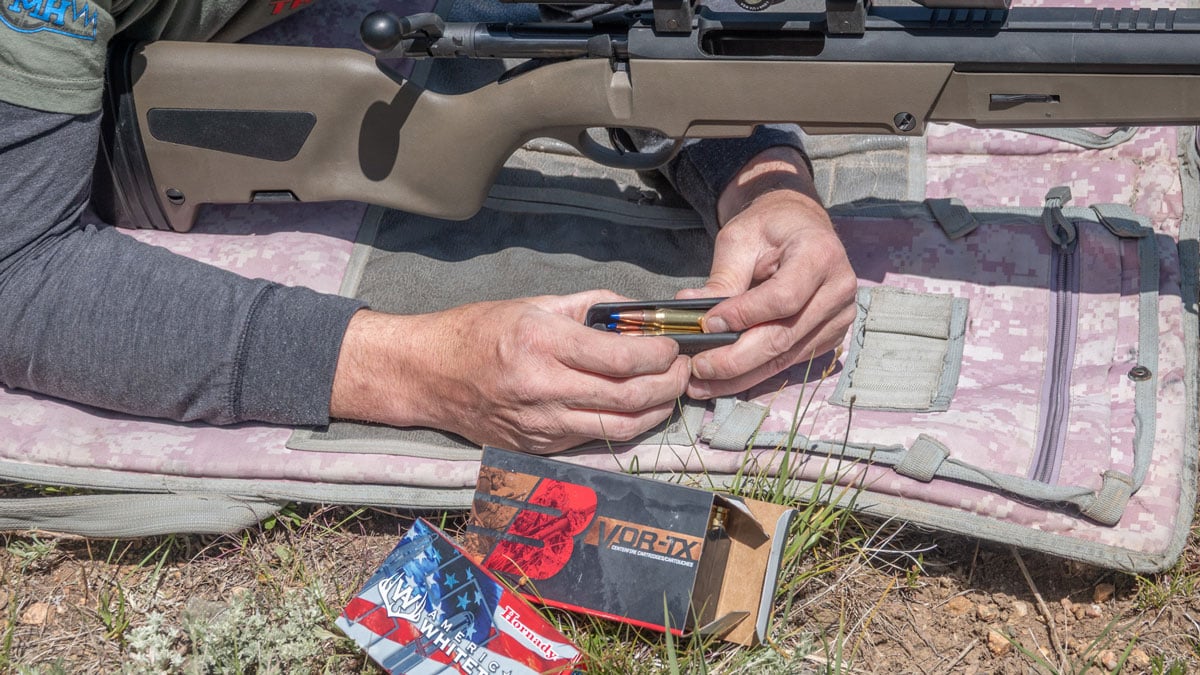
On the other hand, there was very positive engagement with the magazines. The dual claws on each side of the magazine made magazine seating secure and reliable. Same goes for the bipod mechanism; you wouldn’t even know the bipod is there because of its seamless fit.
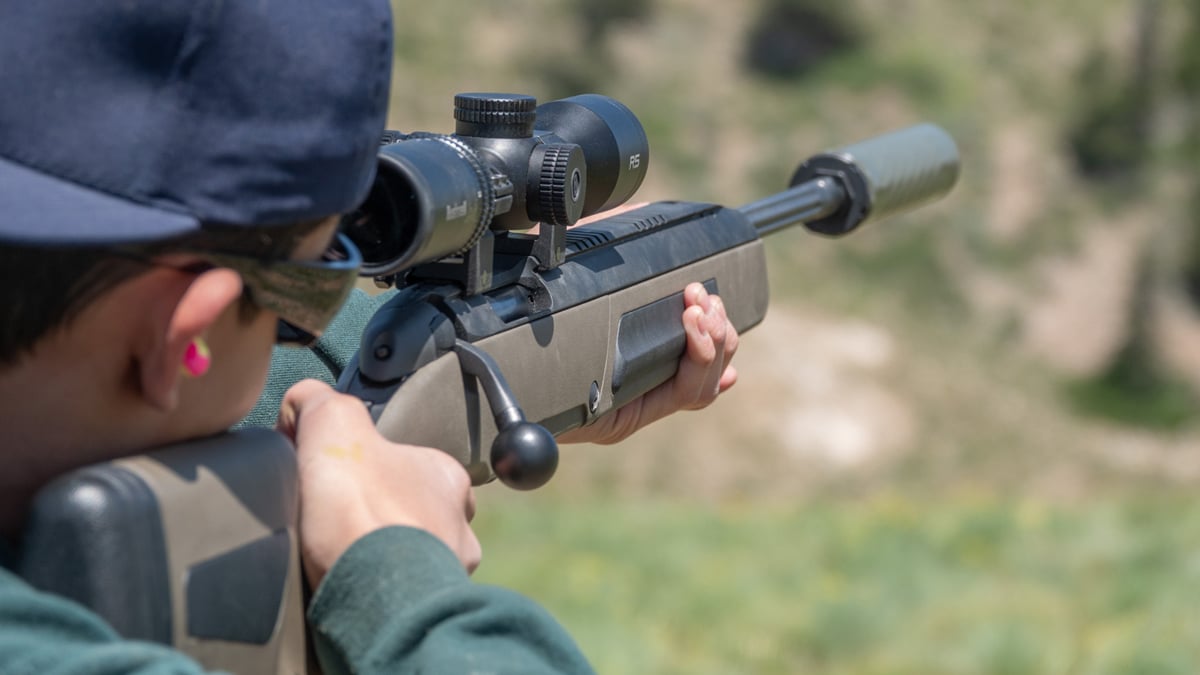
Accuracy from the Steyr Scout was what I expected at 1 MOA from good ammunition. The Scout did particularly well with the Barnes VOR-TX 130-grain ammunition, which would have done a real number on any nearby deer. Being a lightweight rifle and built the way it is, I didn’t think the Scout would be cutting bug holes in my targets, but accuracy was certainly good enough for the kind of shooting I’d expect to do with this rifle.
Pros and Cons
Let’s get the strikes against the Steyr Scout out of the way first. I already mentioned I wasn’t a huge fan of the sling mounts and the safety, but both of those things are easily mitigated.
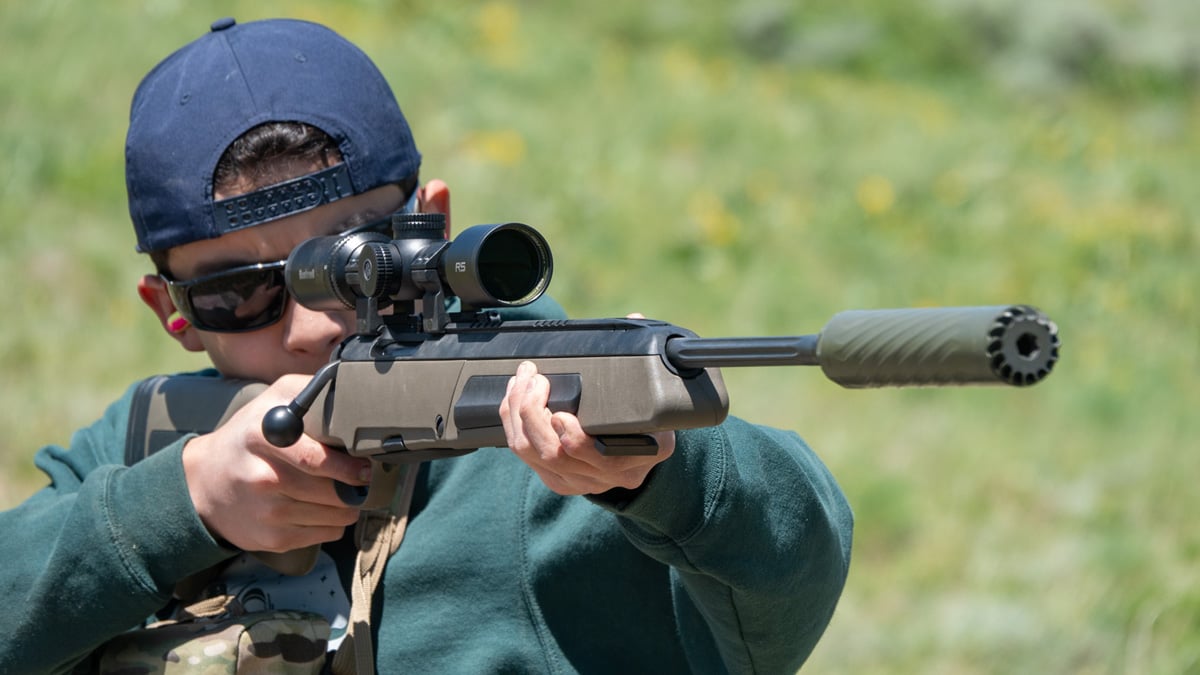
What I couldn’t get over was the muzzle threads. For some reason, the Gen I Scout uses 1/2x20 muzzle threads instead of the standard 1/2x28. It seems Steyr caught enough grief from it and changed it for the Gen II. The threads on this rifle require the use of a thread adapter to install most suppressors or other muzzle devices. This small oversight seems like a stunning miss, considering how much thought Steyr put into this rifle.
On the plus side, I love how clean and smooth the action is on this rifle. The bolt shroud even fills the void behind the handle when closed. The action feels and looks well made, as does the trigger, which I really like.