The Ruger M77
Sturm Ruger introduced the Model 77 in the late 1960s, so by the time today’s subject was manufactured years later, the company surely had it dialed. The original MKI used a tang-mounted safety, and like many other rifle actions, it borrowed a great deal from the Mauser Model 98.
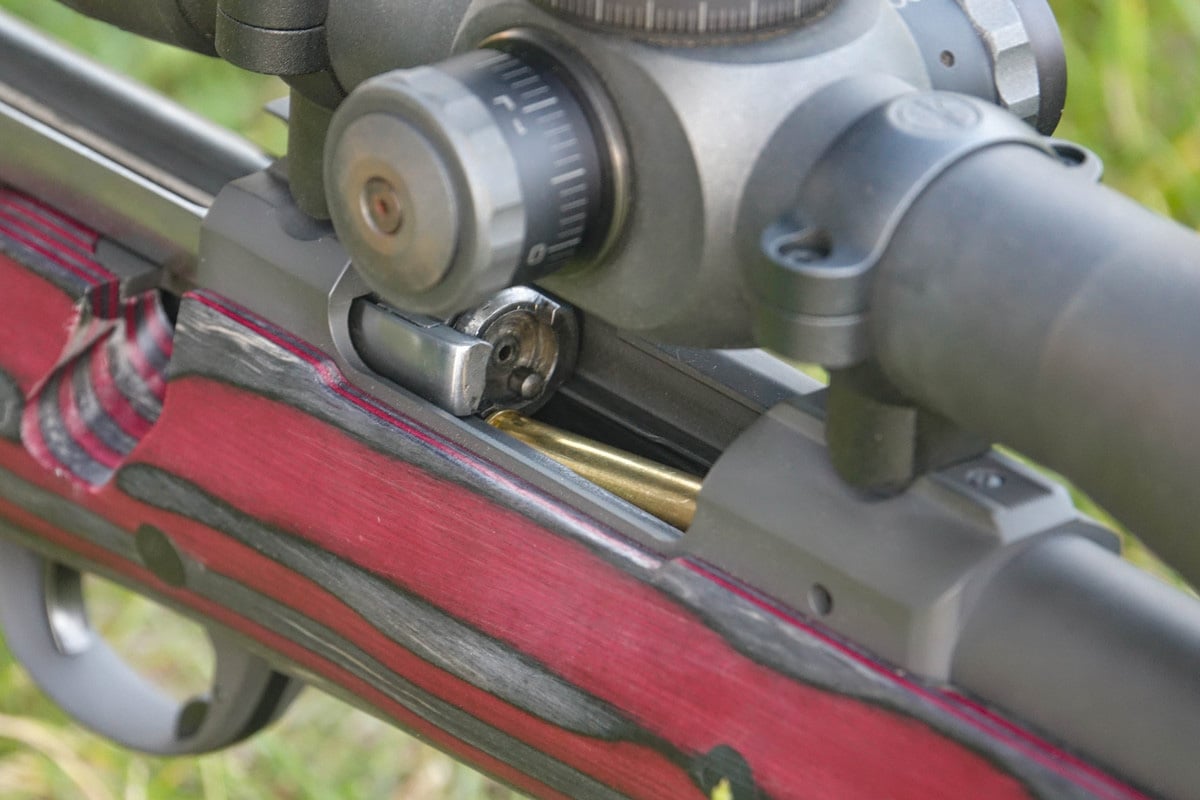
The M77 uses a claw extractor and a two-lug bolt, fed by an internal box magazine. To this day, modern M77s use the original angled action screw that pulls the action down and back into the stock. This curious design has been arguably beneficial as well as irritating for owners and gunsmiths alike.
Modern M77s, which come with the MKII designation, use a bolt-shroud-mounted safety instead the original tang-mounted one. A plethora of models of M77 have been made over the years, in too many calibers to list here. Rest assured, if you want an M77 in a specific caliber, they probably made it at one time. The rifle we are talking about today came with a 26-inch heavy barrel featuring a 1:14 twist. It was blued with a glossy finish and a traditional walnut stock.
Related: Ruger M77 Hawkeye – The No-Nonsense Hunting Rifle
History

My father is a man of few shots, sort of a quality-over-quantity kind of marksman. During many outings with my dad, I don’t remember him ever firing many shots. Sometimes only a single shot was fired, but that was enough to bring home the venison at our house.
The .220 Swift, nearly 100 years old already, was a popular cartridge a generation ago. It gained fame as one of the fastest cartridges around, and it is still a fast cartridge today. This rifle shoots the same .224 caliber bullets you will find in a .223 Remington, but it shoots them much faster.

Shooting Hornady 55-grain hollow-points yielded velocities near 3,900 feet per second, and the Hornady 75-grain ELDM leaves the muzzle at 3,400 fps. Both loads seemed quite mild, with room for additional speed.
I remember a specific occurrence, when as a young man, I learned exactly why Dad shot sparingly. At the same time, I learned a LOT about why he chose the Swift cartridge. It was a rabbit hunt in the dry deserts of Utah, where we would push the brushy draws hoping to drive a rabbit or two up the other side in hopes of claiming one.
Down the Rabbit Hole
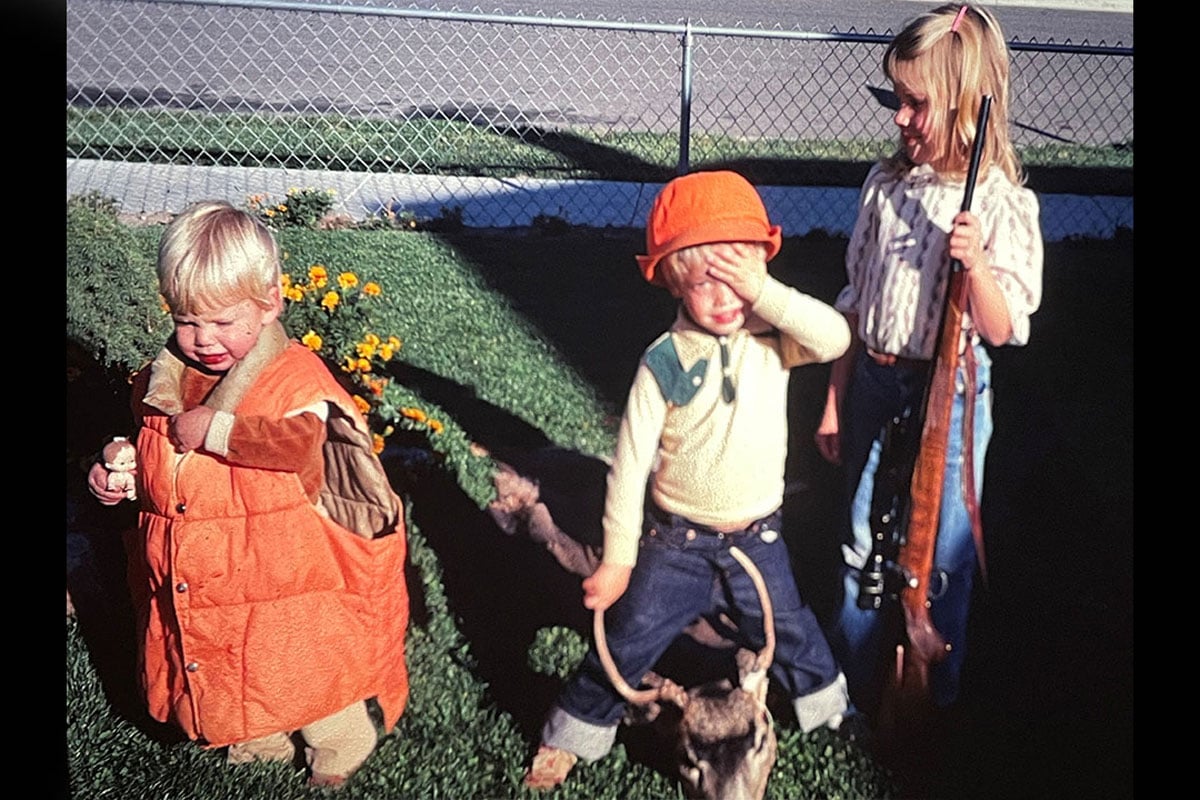
As a youth, it was my responsibility to push through the worst of the terrain to give others a shot. As one of the many jackrabbits ran up the hillside in front of me, I followed him through the brush with my sights. As he cleared the top of the hill before me, I was beginning to press the trigger when the rabbit suddenly disappeared. In its place, there was a cloud of hair drifting on the dry breeze.
In the distance I heard the report of a rifle that surely wasn’t a rimfire. I turned and saw Dad standing way back on the other end of the draw, still looking through the Leupold 3.5-10 scope mounted on the M77.
As I neared the spot where the rabbit disappeared, I was immediately educated on several things. First was the impressive performance of the Swift and its exemplary demonstration of the destructive power of rifle rounds, as well as the entire anatomy of the jackrabbit scattered across the weeds.
That was at least 30-something years ago, and that old Swift became legendary in our family. But with that speed it also has an appetite for barrels, and more recently its blistering speed has consumed its accuracy with bore erosion.
Breathing New Life

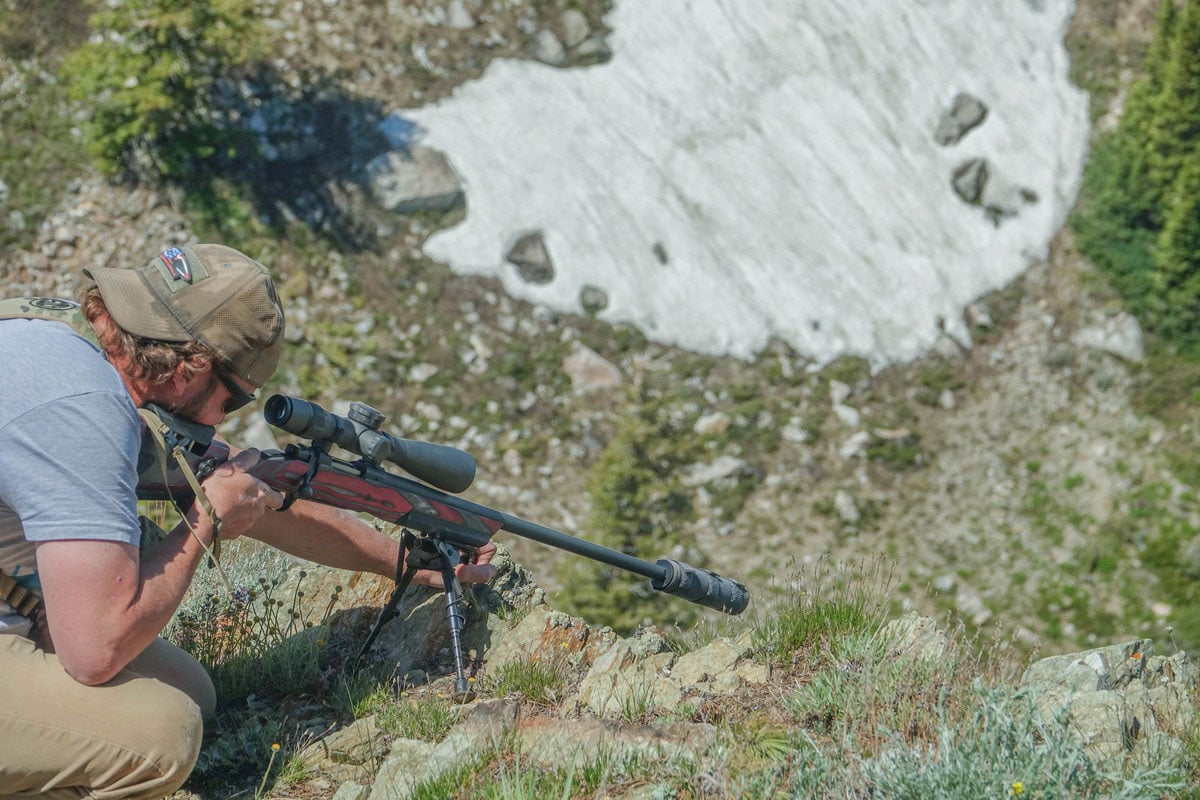
There was no way that I was going to let this gun that I had idolized my whole life disappear into inaccurate mediocrity. I planned to overhaul the old Ruger and build it into a “Super Swift.” Dad doesn’t get out as often, and varmint hunting seems as appealing as ever, so turning his Swift into an even better version of itself would be ideal.
I started with the barrel and ordered a replacement match-grade blank from K&P. It would be finished at the same 26 inches but this time with a 1:8 twist, a significantly more aggressive twist rate for a cartridge like this. My plan was to still shoot the 50 to 55-grain bullets at Mach 3+, but also have the ability to shoot the Hornady 75-grain ELDM bullets for things that are out there farther.
The new barrel would be threaded for suppressors, because this isn’t 1974 anymore, and the old walnut stock would also be swapped out for something that better fit in with the rest of our guns.
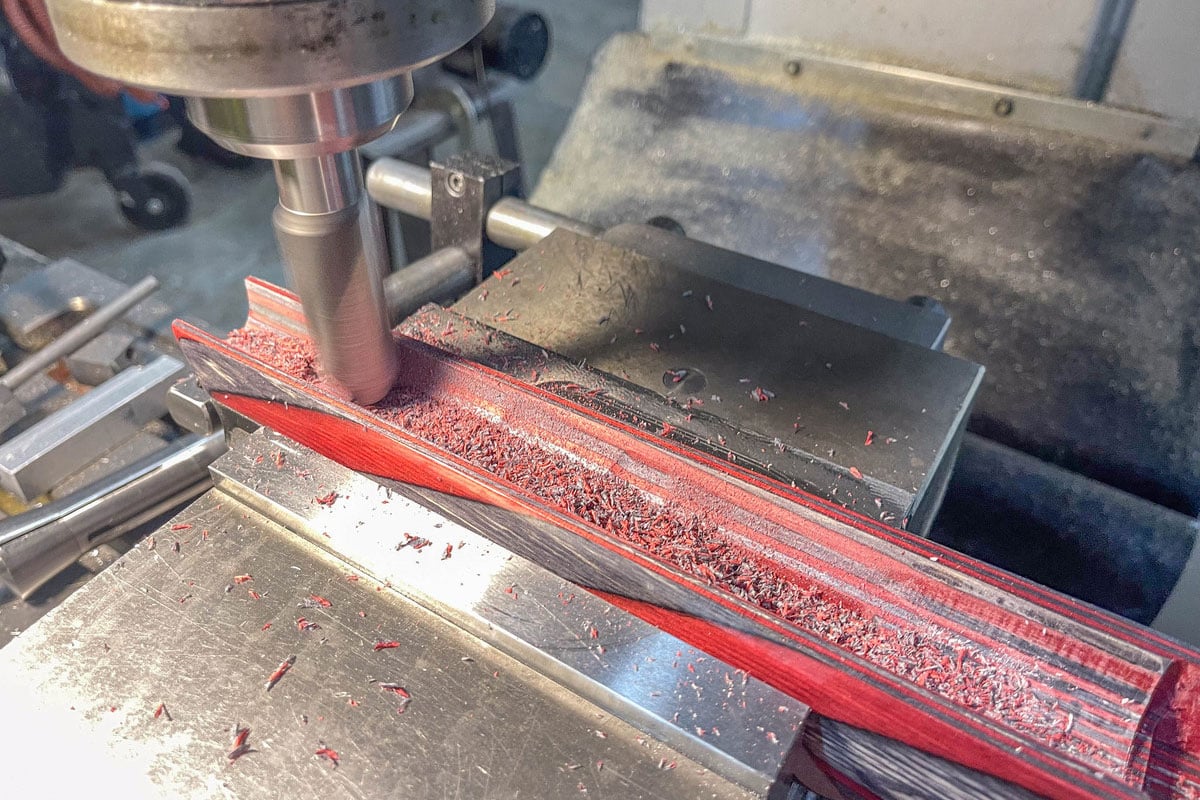
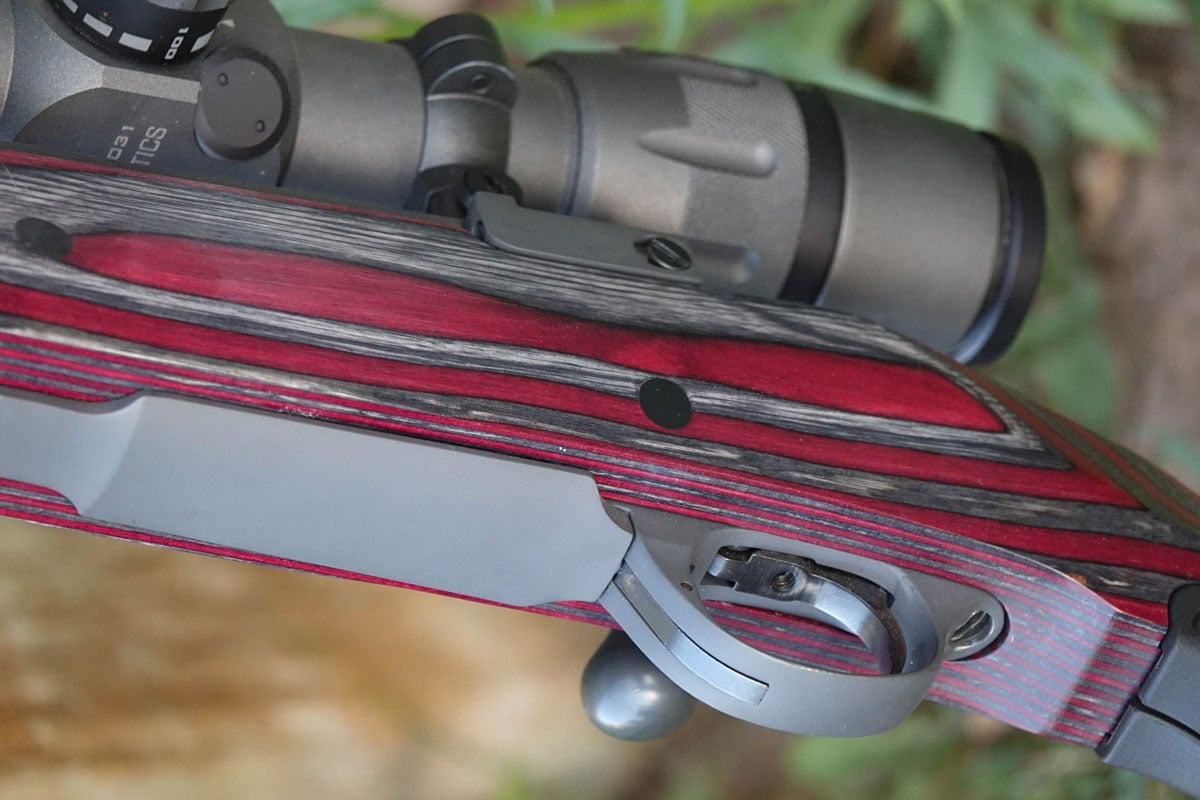
For that, I looked to Boyds Gunstocks and selected a model had Dad would like: the At-One model with adjustable butt and cheek riser, and a vertical-style grip. The new heavy barrel of the rifle would require opening the barrel channel somewhat to make enough room to float it, but despite being a 50-year-old design, the fit was perfect. To ensure consistency I glass-bedded the recoil lug area of the action into the stock, after which it fit so well you almost didn’t need screws.
Finishing Touches
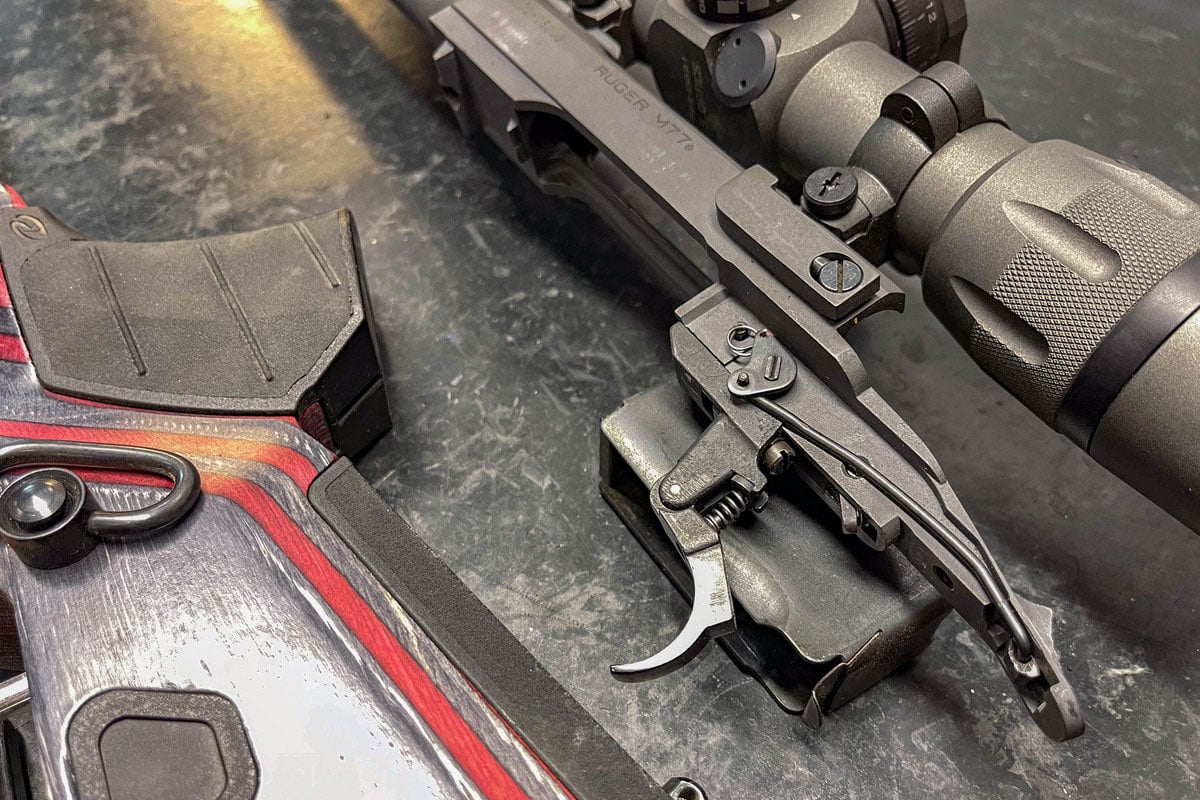
While I had it apart, I completely disassembled the action and bead-blasted the old finish off in preparation for fresh Cerakote. While the trigger was apart, I stone-polished the mating surfaces to improve the trigger, which was already good, but now feels incredible. The stock featured dual front sling studs for bipod mounting, as well as a QD cup at the rear to add a QD sling swivel.
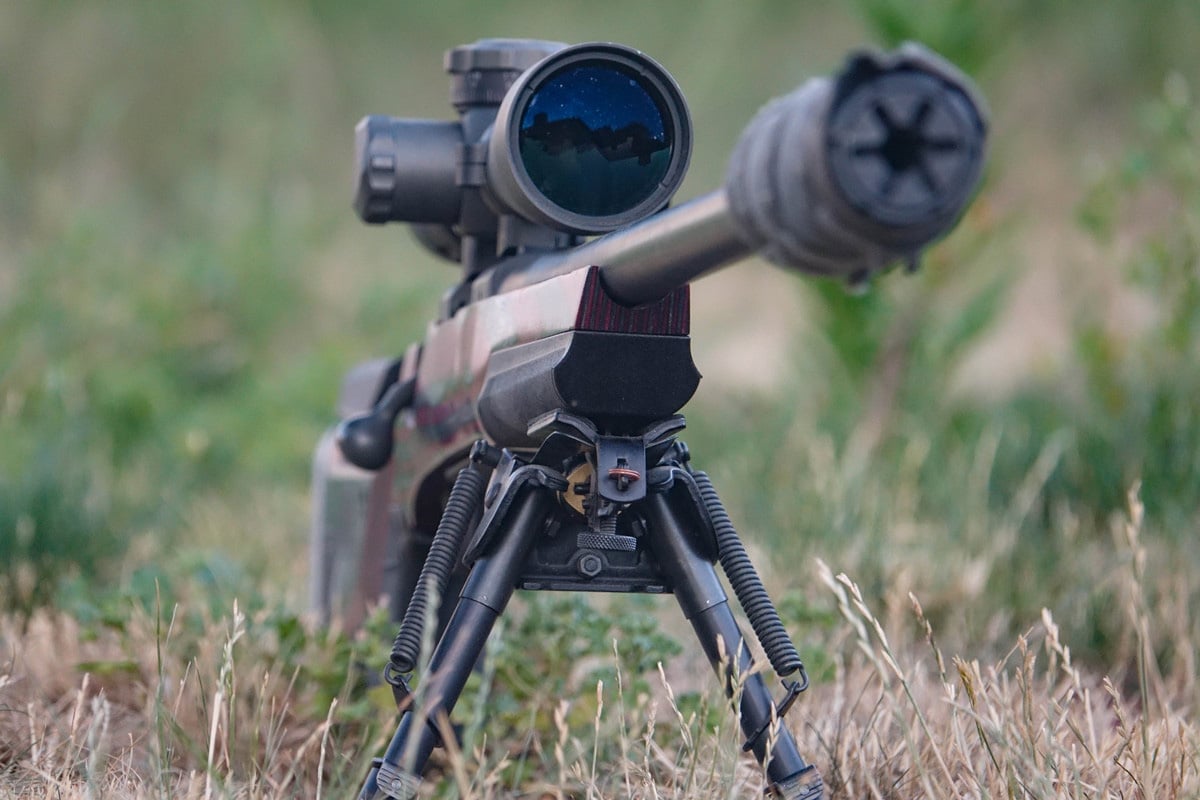
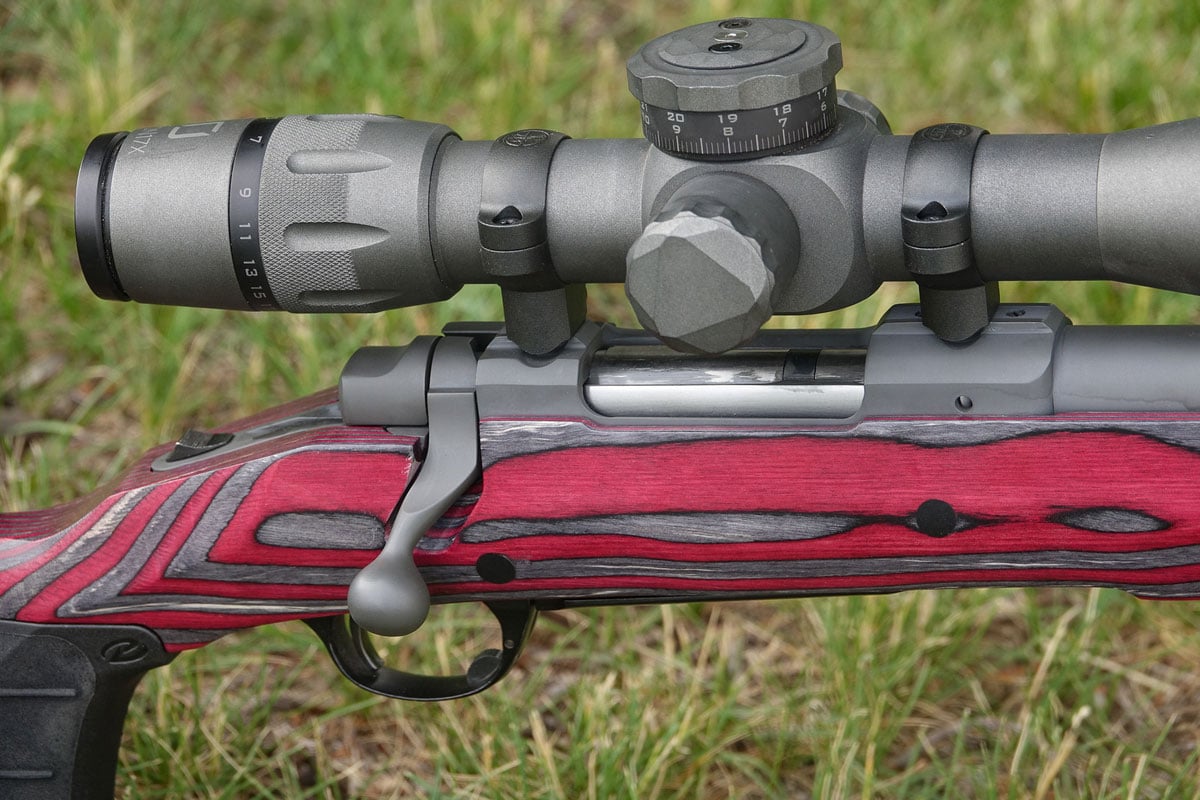
One thing some might call a drawback to the M77 is the scope mounting option. I don’t mind the Ruger scope ring design and mount, but you are limited to using what is offered. Lucky for me, I found a set of Leupold high rings in 34mm to mount the US Optics FDN17X scope to the old MKI, which would make an excellent match to the rifle. The beautiful tungsten Cerakote match made the whole thing look sharp.
Now it was time to get the legendary Swift back out where it belongs, scattering varmints across the countryside.
Swift Vengeance

With the completely rebuilt rifle in hand, as well as some fresh 75-grain handloads, my father, brother, and I headed into the high Rockies to put it to the test. Not only did the rifle shoot the 75-grain bullet very well, but it still craved the 20-year-old hand-loaded 52-grain Match Kings I loaded once upon a time.
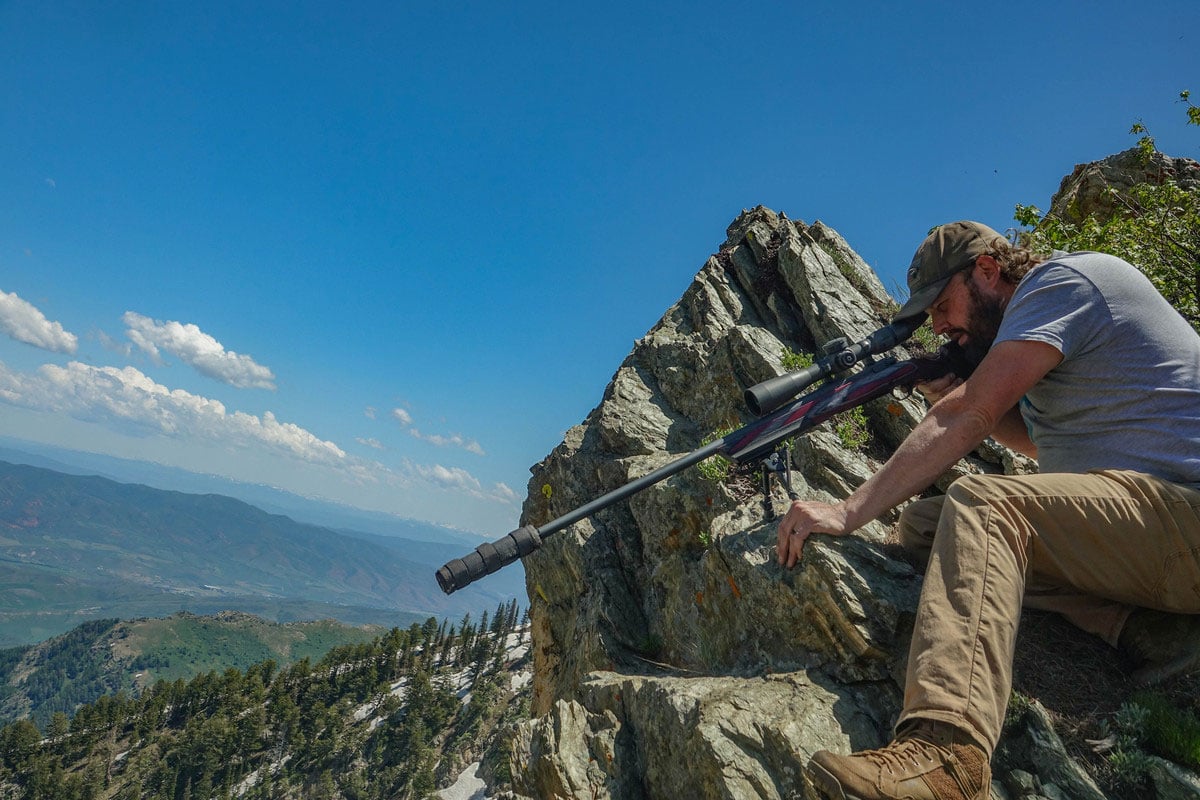
With the rifle zeroed, and after installing a Yankee Hill Machine Nitro N20 suppressor, it was time to exact the Swift vengeance it is so famous for.

We hunt Marmots all spring and summer long, and today would be an exceptional day of chuckin’. The blistering speed of the Swift had returned with incredible accuracy, allowing surgical pinpoint accuracy. We were all stunned at how fast the bullets arrived at their furry little targets, and I can’t help but think that the aggressive 1:8 twist also greatly increases the rotational energy of the bullets, making them even more explosive.
The Results
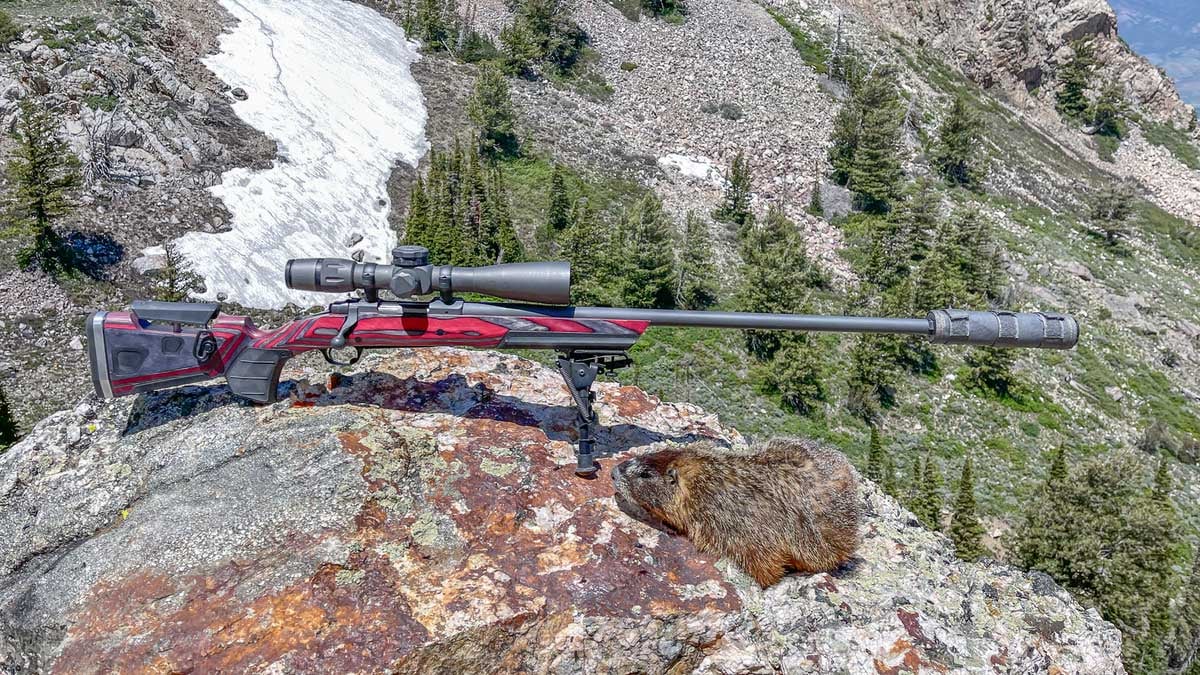
After renovating this old rifle, I am quite confident in the upgrades, and this rifle will surely continue terrorizing varmints for the next generation. The match-grade barrel produces incredible accuracy, and the new twist allows for a much broader selection of bullets. Being threaded for a suppressor will make doubling and tripling up on coyotes a possibility.
The new stock, besides being incredibly handsome, offers a great deal of modularity. Its polymer parts are in all the right places to avoid scratching the wood on the landscape. The new scope vastly increases the rifle’s potential for shooting long-range. We’ve already shot it beyond 1,100 yards, something near impossible with standard .220 Swift rifles. The further distance capability is also enhanced by the improved trigger.
Conclusion

If you have an old Ruger M77 laying around, don’t be afraid to dive deep into a custom build like this. Despite the 50-year-old design, they still make great rifles. I’m glad this project turned out to be such a fantastic result, that even eclipses the legendary performance it had before.
If your old M77 has passed its prime, do yourself a favor and breathe some new life into it. Or grab one of the many Certified Used rifles we have available. It could be a great performer for you as-is or serve as the base of your next project that may become its own legendary family heirloom.