The Circle of Life
I am convinced that there is a certain circle of life that happens in the gun community. While technology advances and brings better capabilities to the table, ideas are recycled.
In the 2010s, 6.5 Creedmoor reigned king of the long-distance rifle cartridges. However, almost 120 years prior to the release of the 6.5 Creedmoor, the Swedes invented the 6.5x55 Swedish cartridge for their Mauser. Of course, it is not the same cartridge as powders are more efficient and casings have higher pressure ratings, but the concept is nothing new.
The Intermediate Cartridge
The idea of the intermediate cartridge came about with the introduction of the 7.62x39mm round in the Soviet Union. This small .30-caliber round allowed for more controlled fire due to lower recoil over full-power rifle cartridges. Additionally, the smaller and lighter cartridges allowed the soldier to carry more ammunition. The Soviet-designed cartridge was being used in detachable box magazines in the AK-47, giving a capacity advantage as well.
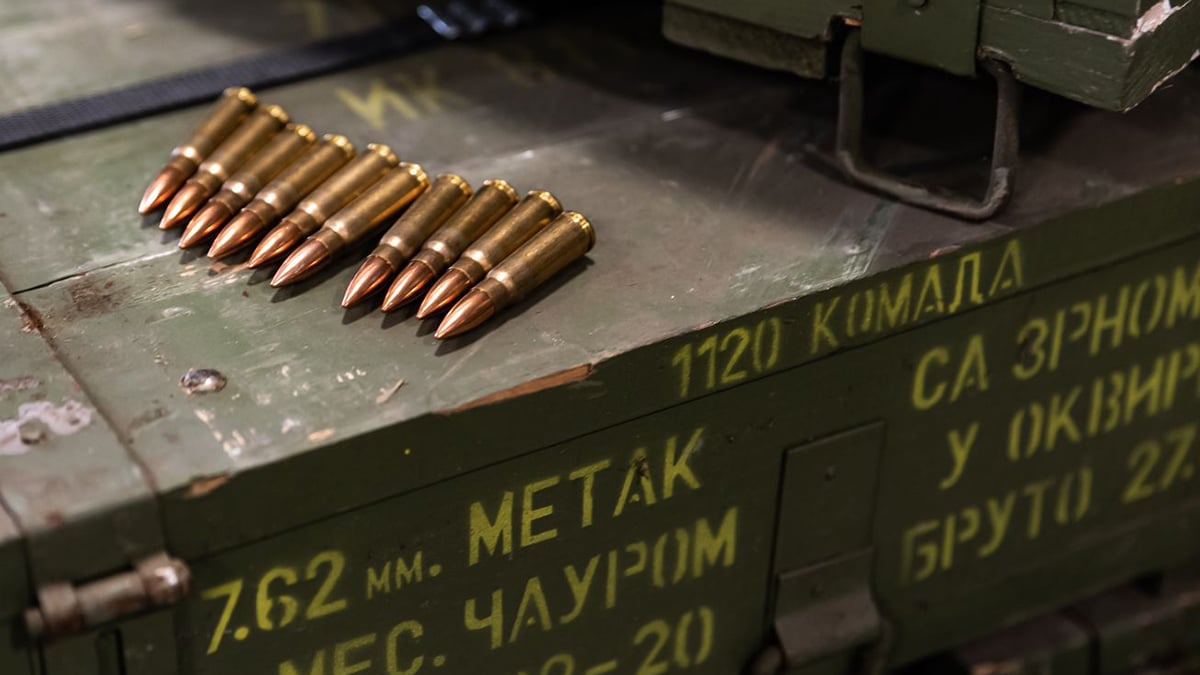
Understanding that full rifle calibers were antiquated, the West quickly gathered to advance its own small arms arsenals. In the 1950s, the United States and Great Britain began searching for a new cartridge and standard-issue rifle.
The Introduction of the FAL
During the search for a new rifle, FN Herstal offered the newly designed FAL to both the United States and Great Britain for licensing and trials. The Belgian company waived its licensing fee as a gesture of gratitude to the Allied nations for the country’s liberation.

The FAL was a light infantry rifle with an adjustable gas system that fed from 20-round detachable box magazines. Originally chambered in 7.92 Kurz, the rifle offered in the early 1950s was chambered in .280 British.
The rifle’s caliber was the direct result of FN understanding the difficult and aging nature of the full rifle cartridge. Controllable on full auto while maintaining accuracy and distance, .280 British distinguished itself well as a capable round.
The United States Alters the FAL
At the same time the FAL’s licensing was offered for free to the United States, Springfield brought forth the M14 chambered in the newly designed T65 (7.62x51mm NATO) cartridge. With several options, the U.S. did something that forever changed the makeup of the FAL.

CENTER: Various .280 ball cartridges, with the orange-cased cartridge being made out of aluminum. (Photo: JamesL85 at English Wikipedia, Public domain, via Wikimedia Commons)
RIGHT: A cartridge lineup showing the 6mm SAW, 6.5 Grendel, 6.8 SPC, 7mm Bench Rest, .280/30 British (fifth from left), 7mm-08, 7mm Second Optimum (Liviano), .276 Pedersen, .308x1.75", and 7.62x51 NATO. (Photo: JamesL85 at English Wikipedia, Public domain, via Wikimedia Commons)
Not wanting a European-designed rifle chambered in a European-designed cartridge, the United States leveraged FN with the promise of adopting the FAL if the company rechambered the rifle to 7.62 NATO. The U.S cited concerns over the bullet being too small to use specialty rounds, such as tracers and explosive tip bullets. Wanting to secure the contract, FN agreed to dump the .280 British chambering in favor of the American cartridge.
This move would also impact the British adoption of a new rifle, as the FAL was competing against the British EM-2, the original rifle that that used the .280 British round. Convinced that the lighter recoiling .280 British cartridge was superior to the American T65, the British initially adopted the EM-2 over the FAL, as they thought an intermediate cartridge was vastly superior to the American T65.
While the British EM-2 is one of the first bullpup military rifles ever adopted, it is not a well-known firearm as it never hit major production. The same can be said for the .280 British round, as there is not much modern experience with the round. However, our friend Ian McCollum over at Forgotten Weapons has a great piece on the round and rifle, making him one of the few folks in the world with content and experience on the concept.
The FAL is Usurped
Ultimately, the United States decided to forgo the offer for the FAL and adopted the M14 as its new standard-issue rifle. The M14 lasted less than 10 years in main service before it was replaced by the M16. Ironically, the M16 used a cartridge even smaller than the .280 British, but there were seemingly no concerns over the alleged inability to use specialty rounds.

Meanwhile, it seemed that the British were also forgoing the FAL after FN decided to alter the caliber to please the Americans. However, Winston Churchill stepped in to save the FAL for the British. He believed it was more important to have rifles in the same caliber as UK allies than to have a ballistically superior caliber. The ease of logistics was deemed more important than the ballistics, so the EM-2 was disowned in favor of the FAL chambered in 7.62 NATO.
70 Years Later
Here we are, 70 years later, and what is the new discussion for service rifles and calibers? The 5.56 has been deemed too light, needing an upgrade to compete against modern technologies and battlefields. This issue was addressed in 2022 when the U.S. Army adopted the XM7 to begin replacing the M4 carbine.
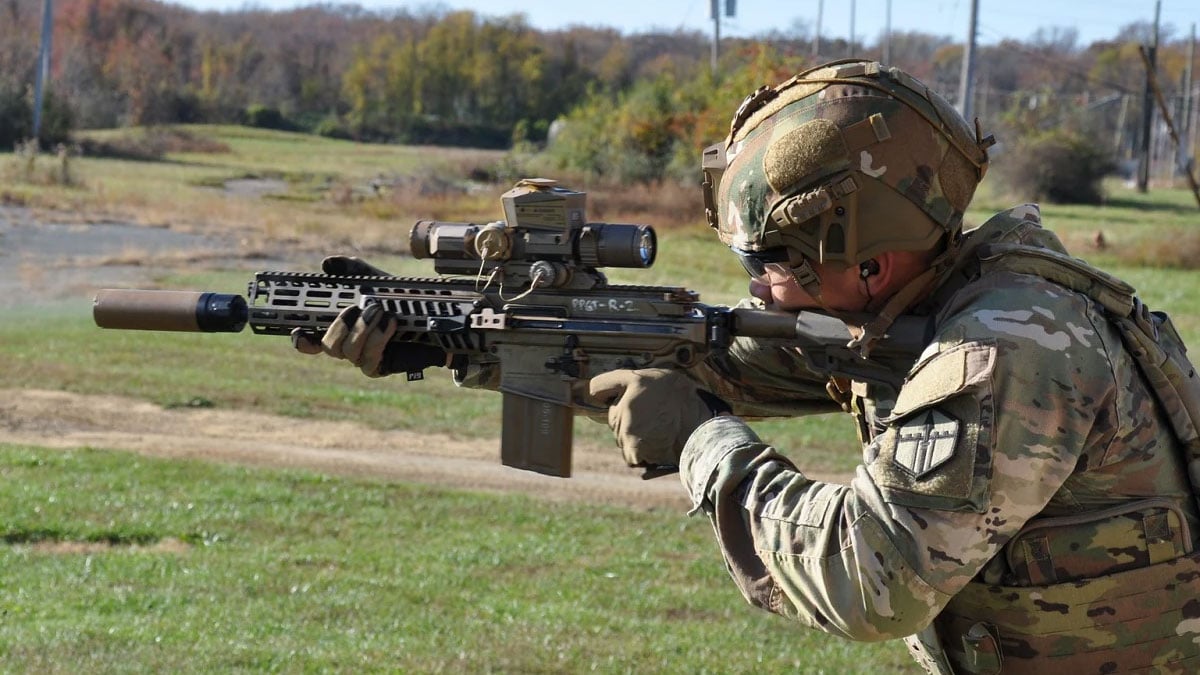
Along with the new rifle, the Army also selected SIG’s .277 Fury round, designated 6.8x51mm, thus returning to a larger caliber. As I said before, it seems to all be cyclical. In the 1950s, the U.S. Army passed on the intermediate .280 British because it was too small and not powerful enough. Ten years later, we would renege and adopt the 5.56 caliber, citing its low recoil and light nature as an advantage. Sixty years later here we are, going back to a bigger rifle caliber.
Related: 12 Interesting Takeaways on SIG’s Next Gen Weapons

The .277 Fury is not quite as large as the 7.62 NATO, but it is bigger than 5.56. Sound familiar? While .277 Fury and .280 British are not the same, I can’t help but make the concept comparison, considering the back-and-forth over the past several decades.
Now the question: will this last? Or will we one day return to a smaller caliber? I suppose only time will tell. Props to the author of Ecclesiastes, because there really is nothing new under the sun.