A Belgian answer to American gun control laws, the FN-made Browning 10/71 was a well-made and reliable gun that was short-lived in production.
John Moses Browning was the Leonardo da Vinci of American gun making. His long relationship with Winchester, Colt, and FN changed the entire industry. The inventor of numerous "pocket pistols" of the 1900s (FN M1899, Colt 1903/1908 Pocket Hammerless, FN 1906 Vest Pocket, FN 1910) as well as the calibers they were chambered in (.25, .32, and .380 ACP), he probably did more for early-20th-century concealed carry than any other man.
One of his longest-lived designs was the well-liked FN Model 1910. A striker-fired, blowback action, single-stack .32 ACP (7+1 capacity) or .380 ACP (6+1 capacity) semi-auto with a 3.16-inch barrel, it remained in production for a solid 73 years, including military and police use in dozens of countries. Many of its traits such as the grip safety were familiar to past Browning designs. Other hallmarks, like its recoil-spring-wrapped barrel, were borrowed by later designs of the period such as the Walther PP/PPK and Makarov PM.
The M1910 proved so popular that FN produced it in a lengthened version (the M1922, which had a 4.46-inch barrel) and eventually managed to import it to the U.S. consumer market via the Browning Arms Company of St. Louis and Montreal starting in the 1950s.

Then came the Gun Control Act of 1968, which, among other restrictions, placed an arbitrary list of requirements on imported firearms into the U.S. to meet a "sporting purposes" test. This included mandatory length and height requirements that left pistols such as the Walther PPK and Browning Model 1955 coming up short.
FN's answer? Stretch the Model 1910, err, Model 1955. This led to what is known as the Model 10 of 1971, or the 10/71.
Using the same features and design of the Model 1910, this new(ish) gun was more tailored to target use with a 4.46-inch barrel (the same length as the Model 1922) with a lengthened slide that gave it a 6-inch sight radius, the addition of adjustable target sights with a high front, and the addition of a large base pad with an extended toe to the standard Model 1910/22 magazine. Large target-style grips with a thumb groove top completed the transformation.
Boom:
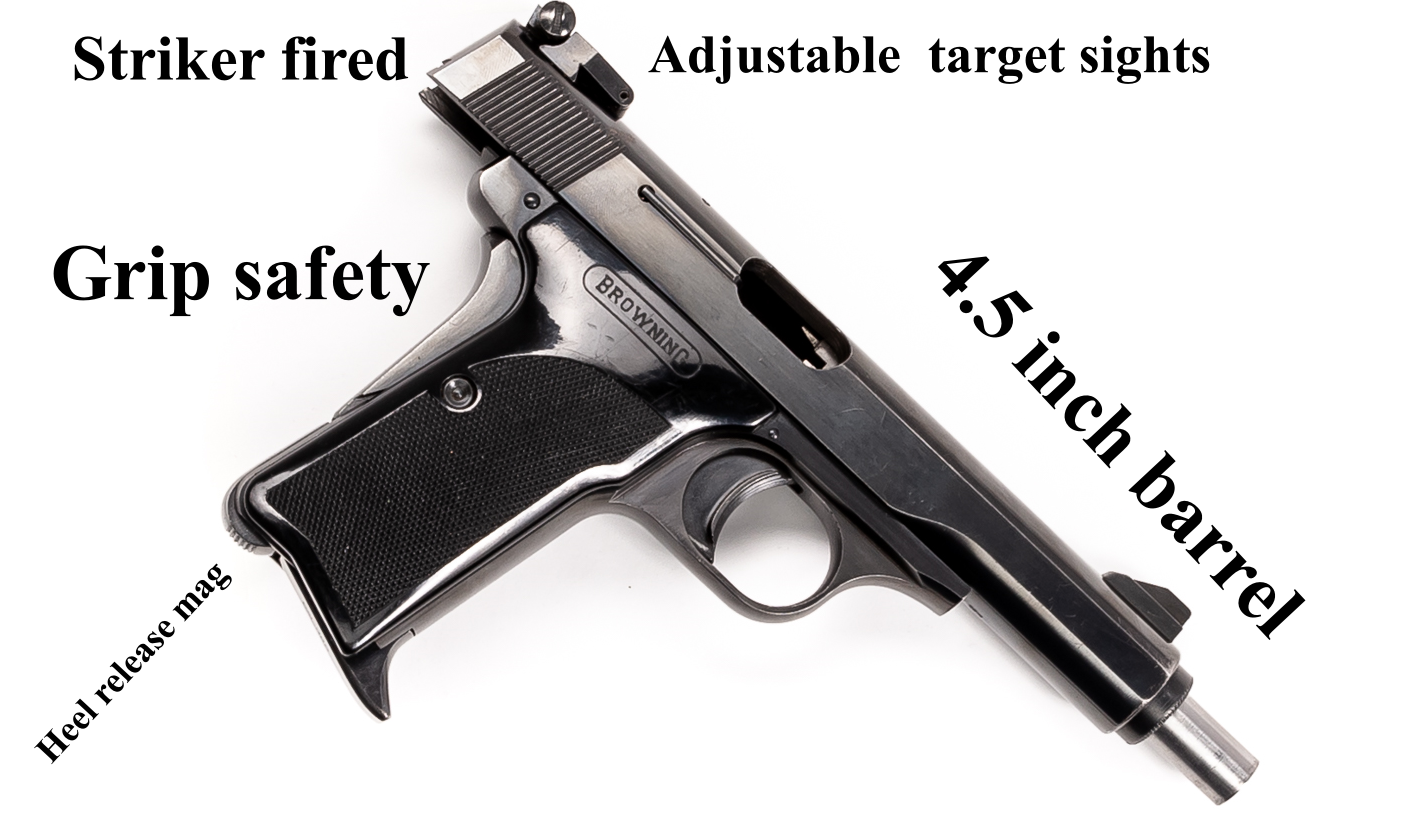
Priced at $89 when introduced in 1971, the pistol was pitched by Browning as "The 3 in 1 Gun" in the respect that it could be used by target shooters as a "paper puncher," a companion for outdoorsmen, and as it's "not too heavy nor too large" it would be great "for the gals."
Browning notes that the 10/71 was only produced from 1971 through 1974. They all have the same serial number convention, using the two years of production as the first two digits of the serial, followed by "N," which they set aside for 380 Auto pistols with adjustable sights. Hence, all 10/71s start either 71N, 72N, 73N, and 74N.
We've seen several of these come through the Guns.com Vault over the years and hold up.
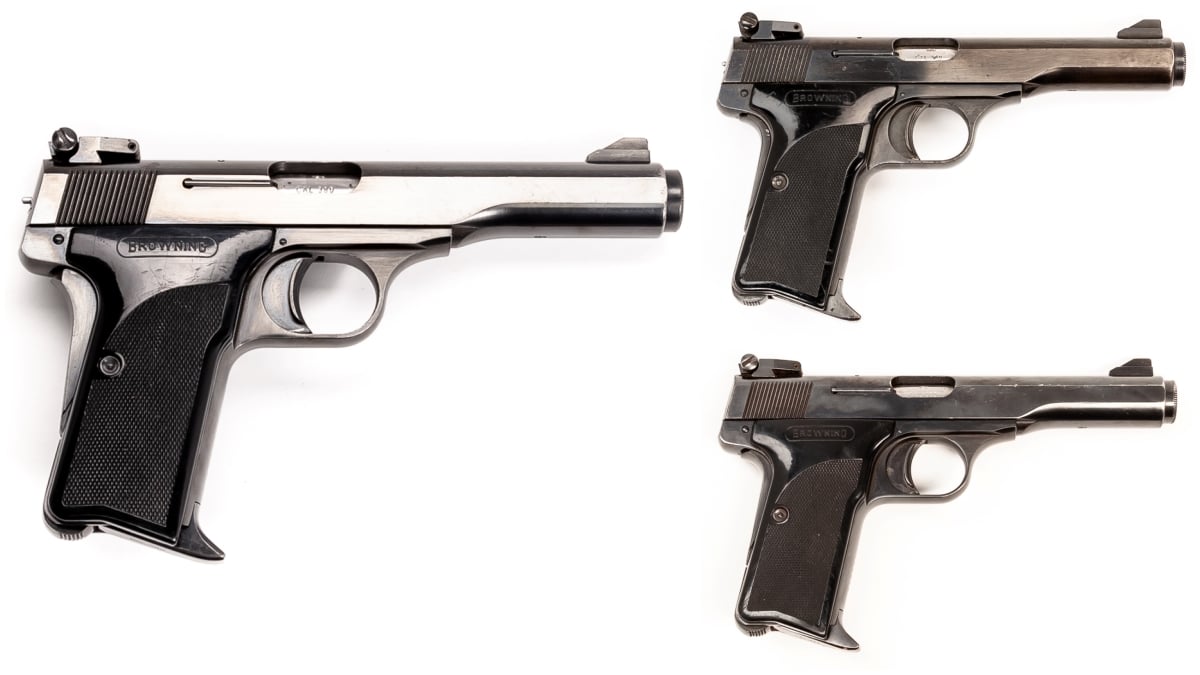
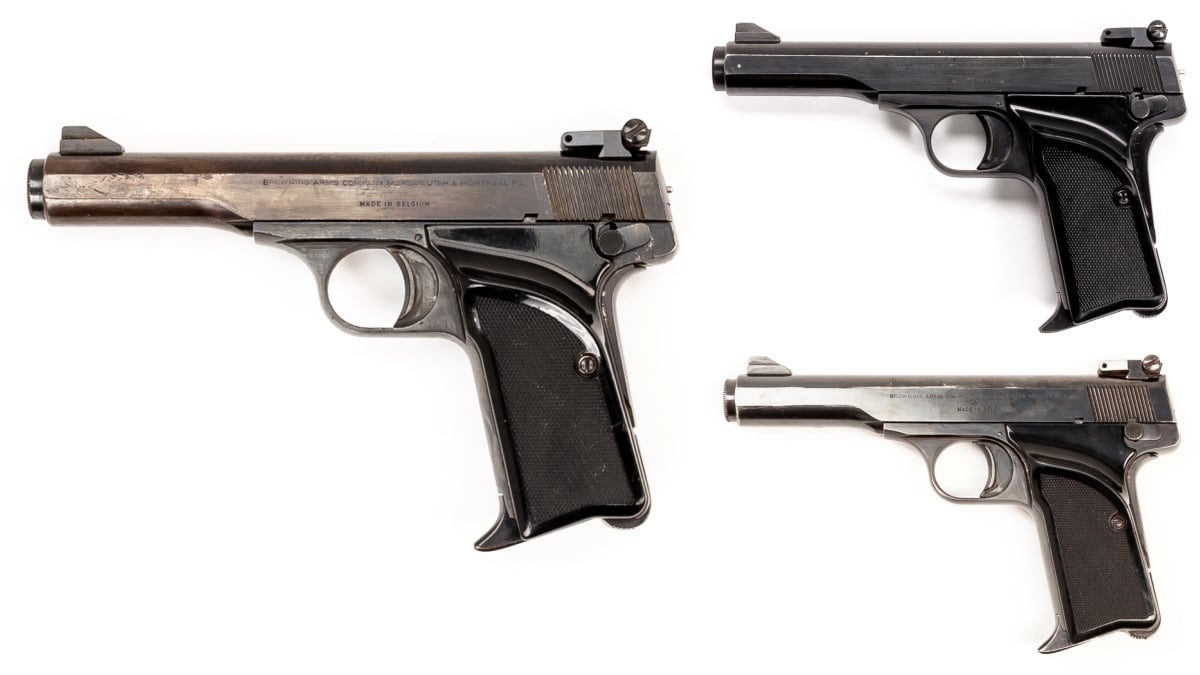
As a neat piece of firearms history and a fairly rare gun compared to the other FN-made .380s, the 10/71 is an easily obtainable classic from the company's golden era of old Belgian production.