The Grip Safety
I believe that if a grip safety was part of the firearm when it was purchased, then it is part of the design and should not be circumvented lightly. Grip safeties should be thought of like any other firearms safety device, such as a crossbolt safety or Glock Safe Action trigger safety. Tamper with it at your own peril.

Grip safeties are not always solely designed to keep the user from pulling the trigger if they don’t have a full firing grip. They are also used as drop safeties to ensure the pistol does not go off when the inertia of an impact slams the firing pin into a round. By disabling the safety for one purpose, you might be inadvertently changing some other aspect of the gun and making it more dangerous.
Personally, I have never had a problem disengaging a grip safety on a properly built gun. I enjoy the added level of protection. For me, it is a completely passive system that I never think about but adds an additional level of security.

On the flip side, if you don’t agree with the philosophy behind the grip safety, i.e. you believe grip safeties are inherently flawed, then don’t purchase a gun with a grip safety. There are legitimate arguments against a grip safety. For example, hand injuries during a fight could make one unable to depress the safety and make the gun inoperable. It’s important that every firearms owner make up their own mind about how and why their guns work for them.
Difficulty with Use
In general, the biggest reason for disabling the grip safety is that some people have difficulty depressing the safety with their normal firing grip. This can be a serious issue. Any firearm that could be used to defend your life should be usable 100 percent of the time. It is never acceptable for the safety to fail.

The first question to ask is if it’s your anatomy or the device that is causing the problem. For example, my mother-in-law has severe arthritis in her hands to the point where she cannot flip a thumb safety off. Therefore, I must look for guns without thumb safeties for her. She greatly benefits from a grip safety.
Related Review: Smith & Wesson M&P Shield EZ .380 – Is My Grandma’s Gun Better Than Yours?

If your situation is similar, ask yourself if this firearm design is truly what you want to use, or should you switch to another setup that more appropriately matches your needs. If you must stick with the grip safety design, then I would seek professional assistance. There are numerous mechanical ways for an experienced gunsmith to pin and deactivate a grip safety. Most of these methods are reversible in case you or the next owner changes their minds.
Timing the Safety
Another problem occurs when you can physically use the grip safety but it does not reliably deactivate. Some argue this is a training issue because the shooter is using an incorrect grip that doesn’t depress the safety fully. I don’t believe this is the correct approach.
A perfect grip should not be required to use a grip safety. As a mechanism designed for the public, any reasonable grip should be sufficient. If only a perfect grip works to disengage the safety, then I would argue the grip safety is incorrectly timed. I have seen grip safeties incorrectly manufactured so it takes too much travel to deactivate the mechanism. This is a manufacturing defect that should be corrected either by the company or a competent gunsmith.
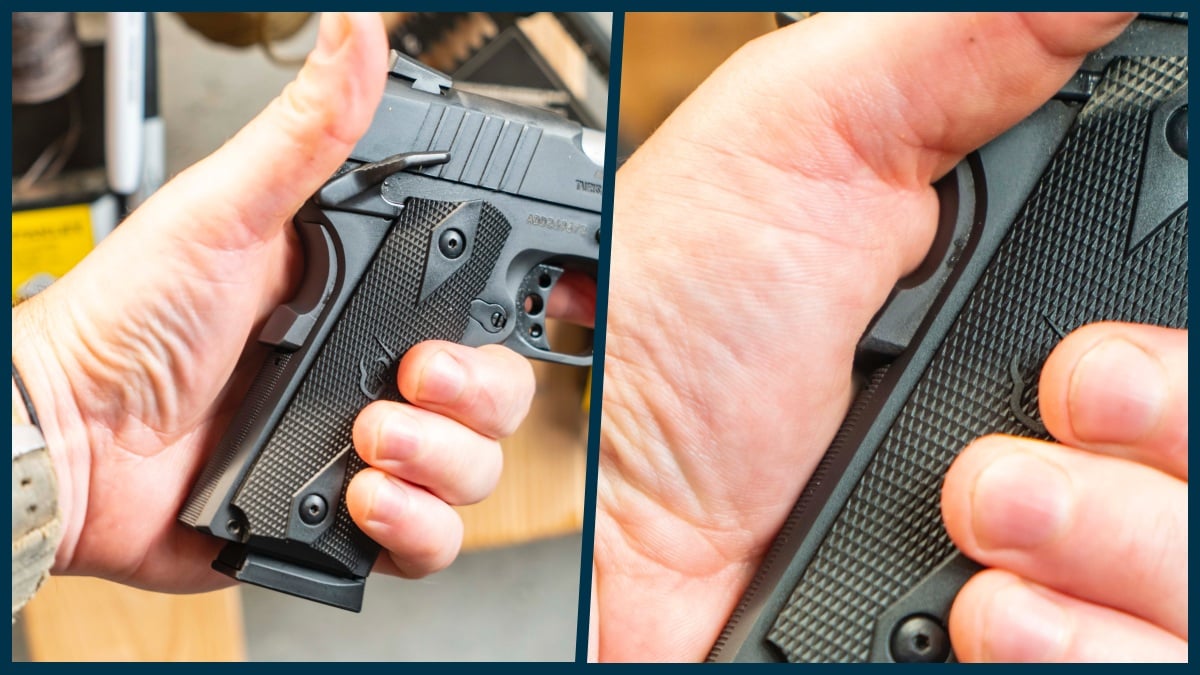
I understand that Staccato’s standard is that the grip safety should disengage – at maximum – at 50 percent of the full travel of the safety. That means you should only have to depress the grip halfway. I’ve seen high-end 1911s need less than 25 percent movement. Because the grip safety on the 1911 platform is a custom-fitted component, if I were having a disengagement problem, I would have the manufacturer or gunsmith reduce the distance it takes to deactivate the safety.
Aftermarket Choices
Other pistol designs offer more plug-and-play options. I’ve owned some budget-oriented pistols that clearly skimped on quality control, and their grip safeties suffered.
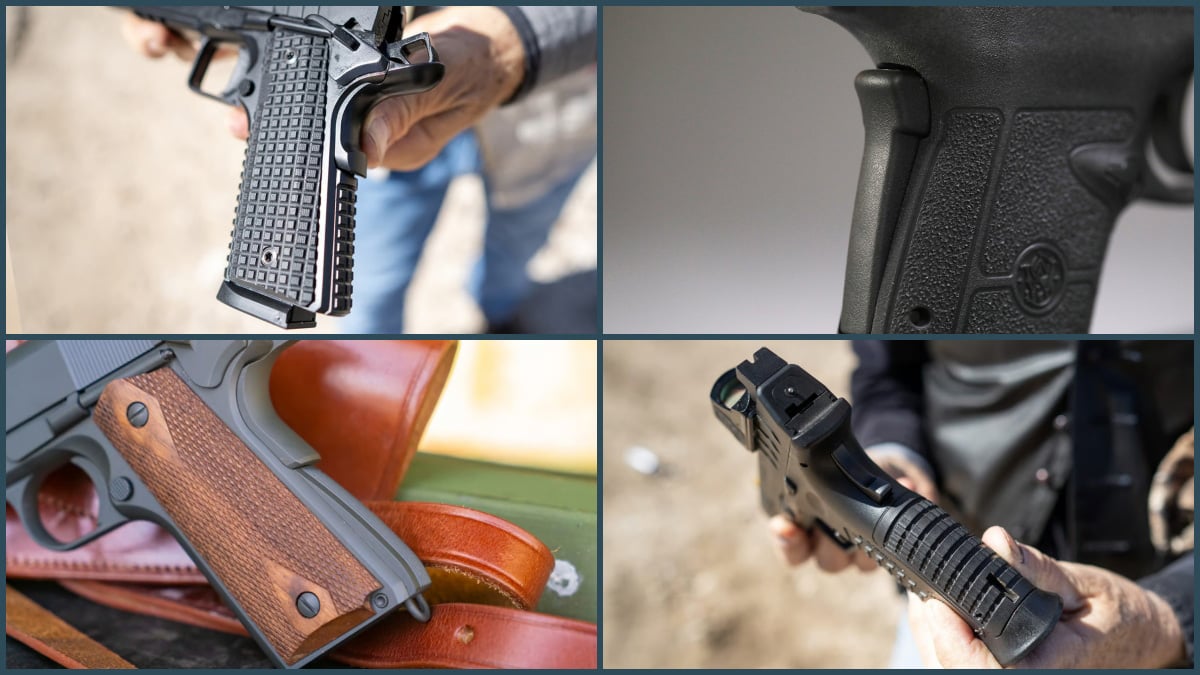
In those cases, I purchased an aftermarket grip safety that extended the contact surface so that I could more reliably use the safety. Because it was user-serviceable, it was a quick, cheap, and easy solution.
What I strongly caution against is using rubber bands or tape to modify your grip safety. I regularly see this ad hoc fix on single-stack or double-stack 1911s. These are not permanent solutions. Adhesive or elastic solutions are prone to fail due to heat, sunlight, and regular wear and tear. If you must pin your grip safety, at least use a mechanical method.
Conclusion
The grip safety is a tried-and-true mechanism that has been used on firearms since the 1880s. It works, but like any component can be incorrectly constructed. Make sure you fully understand how and why it functions before making any modifications.