Thanks to the federally chartered Civilian Marksmanship Program, there’s a fresh new sound to try out at the range for those who fell in love with that classic “ping” of mil-sup M1 Garands.
CMP has been reviving old government M1 rifles for decades, but it crossed the river into new-production Garands this month, with a promise for more variants down the road. The minty-new CMP Garands will be available in .30-06 Springfield and .308 Win.
The move comes a year after CMP partnered with SDS Imports to manufacture an alternative to GI-surplus 1911s. The program brought two “test” M1 Garands by CMP to the Ben Avery Shooting Facility in Arizona back in March, running thousands of rounds through the guns to thoroughly test them before bringing them to the market.
Related: Ode to the M1 Garand – America's Beloved Battle Rifle
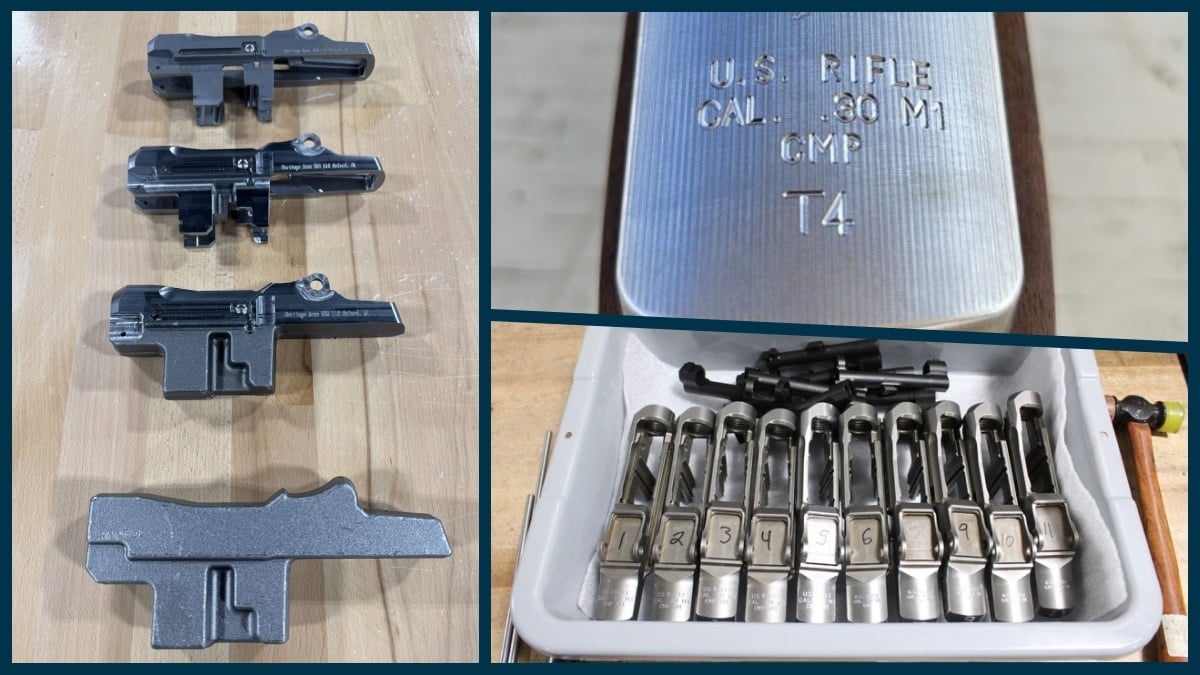
Partnering with Alabama-based Heritage Arms USA, which will provide the forged – yes, forged – receivers, CMP says the project has been in the works for several years now.
In true CMP fashion, the new M1s started with a historical deep dive to ensure they got everything about this peak-Americana battle rifle just right. They turned to samples of well-preserved original receivers as well as original Springfield drawings and specifications for the template of the new Heritage Arms-made parts.

Related: M1 Garand Rifle Review – Does It Hold Up Today?
While the Civilian Marksmanship Program promises surplus stocks are not yet running out, a release by the program makes it clear that the decision to start a new M1 line was a combination of hard-earned expertise and mission-oriented practicality.
“The first and most significant reason is the supply of government surplus rifles and pistols will not last forever,” states CMP’s introductory page detailing the new guns. “Therefore, as an organization that largely resources its many programs and competitions via the sale of these firearms, we need to develop new ways of supplementing the costs associated with our essential and expanding programs.”
CMP stressed that the driving force behind the move was still a matter of broader service for the civically oriented program, stating:
“It should be underscored again that all our sales feed directly into CMP’s federally chartered national mission to promote marksmanship with a focus on youth. A reduction in sales could constrain ventures such as the National Matches, youth programs like the very successful JROTC air rifle series as well as the operation of Talladega Marksmanship Park and its events. It is of the utmost importance that we continue forward through valuable partnerships and through the patronage of our highly regarded supporters. After all, everything we do is for you.”
An additional and worthy bonus of the move is that it does something historic with the M1 Garand design, which is quickly working its way to the ripe age of 100 years old. In service from 1936 to 1957, when it was replaced by the similarly designed M14, the 2-millionth M1 Garand rolled off the factory line in January 1944.
Related: Ping! Garand Rifle Patent Turns 90
Now, the CMP has revived the design with a proper forged receiver, complete with the unique CMP serial number. That marks it as a distinctive yet historical product all on its own. To that end, the program isn’t done tinkering with the M1 design just yet, promising new variants down the road.
Pricing is set at an MSRP of $1,900, plus $40 for shipping and handling, for both the .30-06 and .308 models. You can expect the first 100 serial numbers to be auctioned off for more.
Before you turn up your nose at that price tag, keep in mind these are brand-new forged guns with precision-made barrels. Just a quick peek at some surplus picks shows you can currently expect to pay anywhere from $750 to $1,200 for just a used service-grade rifle. That number will likely be more at your local gun shop. Meanwhile, a collector-grade sample can easily reach upwards of $2,500 or more, depending on its provenance, and that will only go up as surplus stocks dwindle.
Also, for the record, production cost for an M1 Garand at the start of World War II was about $85. That is around $1,962 in today’s dollars, and that does not include anything for standing up new production or an actual profit margin. Prices only came down when massive mass production kicked in to the tune of 2,000,000 guns by 1944, which lowered the cost to around $31.
CMP was kind enough to provide a peek behind the curtain for the whole manufacturing process. Here’s a closer look: