In our series examining the defensive gun batteries of several iconic World War II bombers, we turn next to the often-unsung B-24 Liberator. 

While the B-17 Flying Fortress of the Mighty Eighth Air Force, pulverizing German industrial targets, is iconic in the European war, and the B-29 Superfortress earned its own place in history in the Pacific, the B-24 seems to fall between the cracks. That is despite the Liberator's superior speed, longer range, and heavier bomb load capacity, compared to the B-17. 

Further, the B-24 was the most prolific bomber ever produced, with more than 18,000 delivered – compared to 12,000 B-17s and only 4,000 B-29s. This left the big B-24 as a globe trotter, serving in every theater from North Africa to Europe, as well as India and China to the Pacific Islands. 
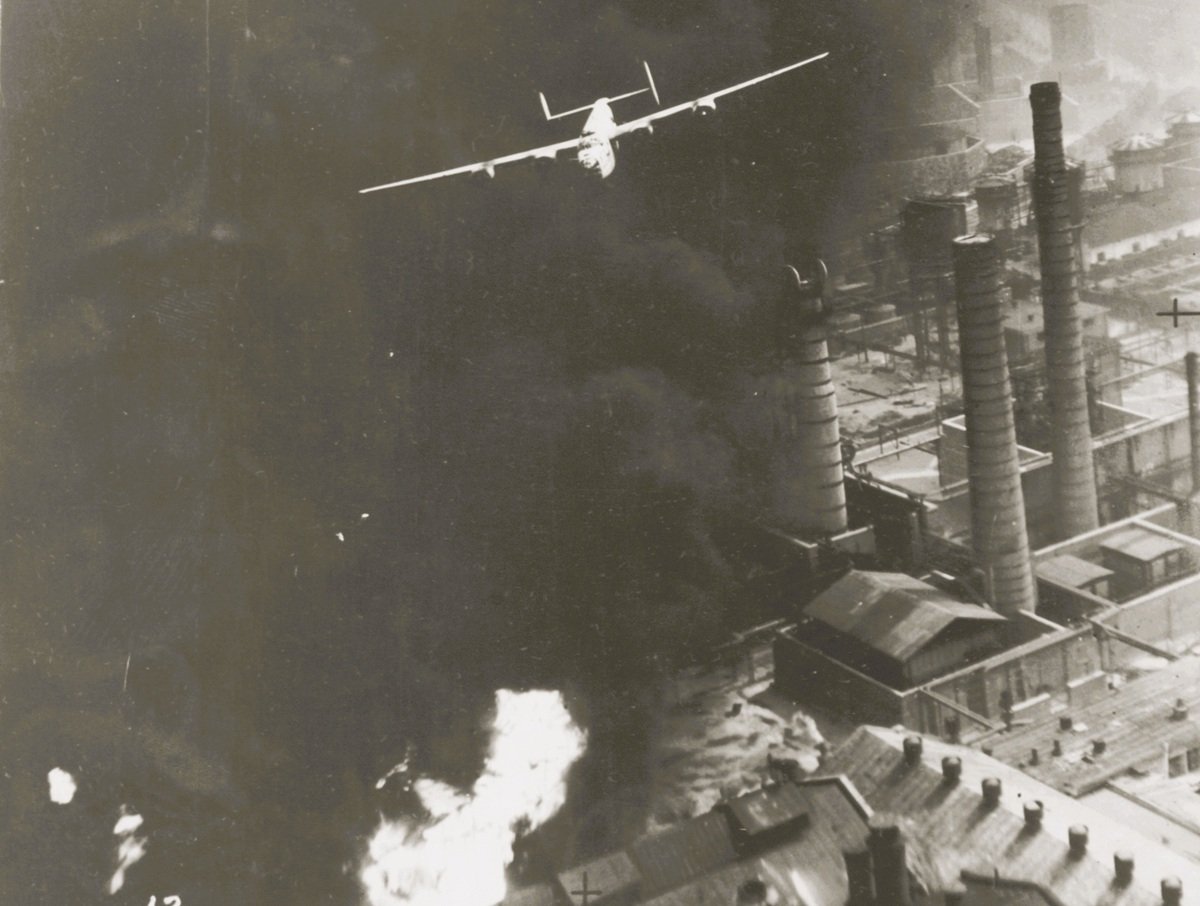
 

Consolidated B-24 Liberator
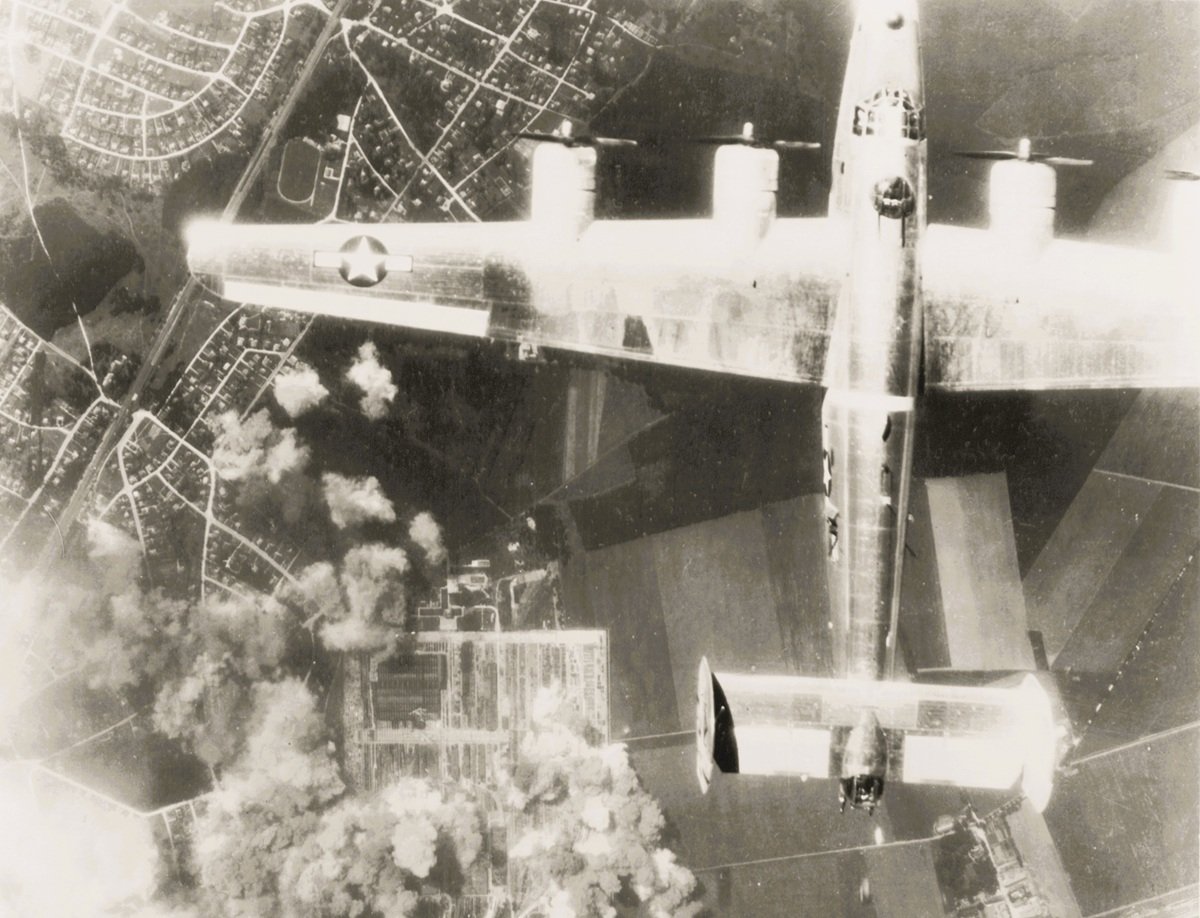
July 1943. "Astra Romana Refinery – This shot gives a vivid idea of how low the Consolidated B-24 flew in bombing the Ploesti Field." (Photo: National Archives.) 
Consolidated B-24 Liberator
A Consolidated B-24 Liberator of the 15th AAF comes off the target after dropping its load of bombs on the Neaubing aircraft factory, near Munich, Germany, on July 19, 1944. (Photo: National Archives.) 
Consolidated B-24 Liberator
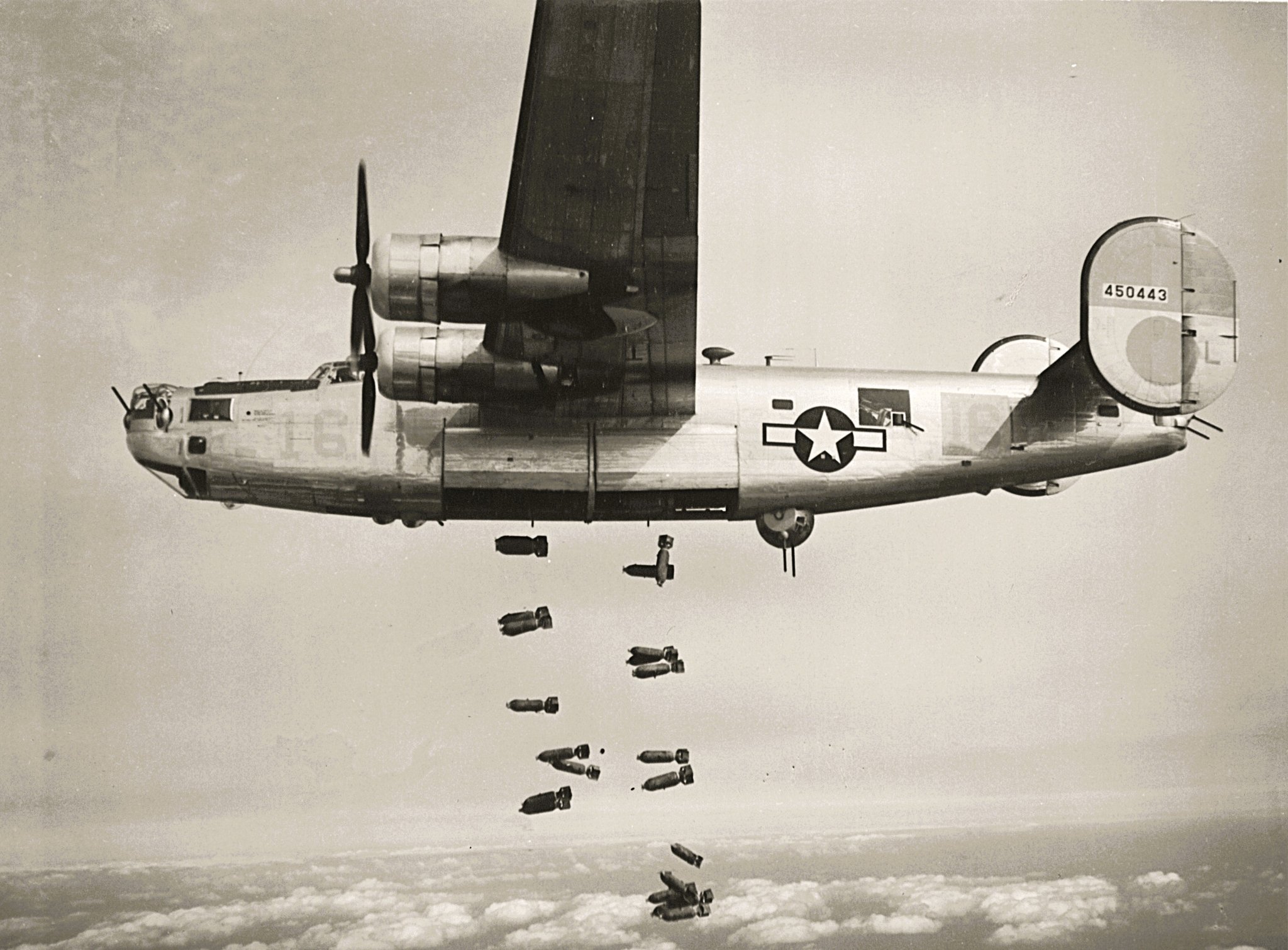
A Consolidated B-24 Liberator Bomber of the 15th AAF releases Its bombs on the rail yards at Muhldorf, Germany, on March 19, 1945. Note the gun arrangement, including nose turret, top turret (hidden by the wing angle), tail guns, ball turret underneath, and waist guns. (Photo: National Archives.) 
Consolidated B-24 Liberator
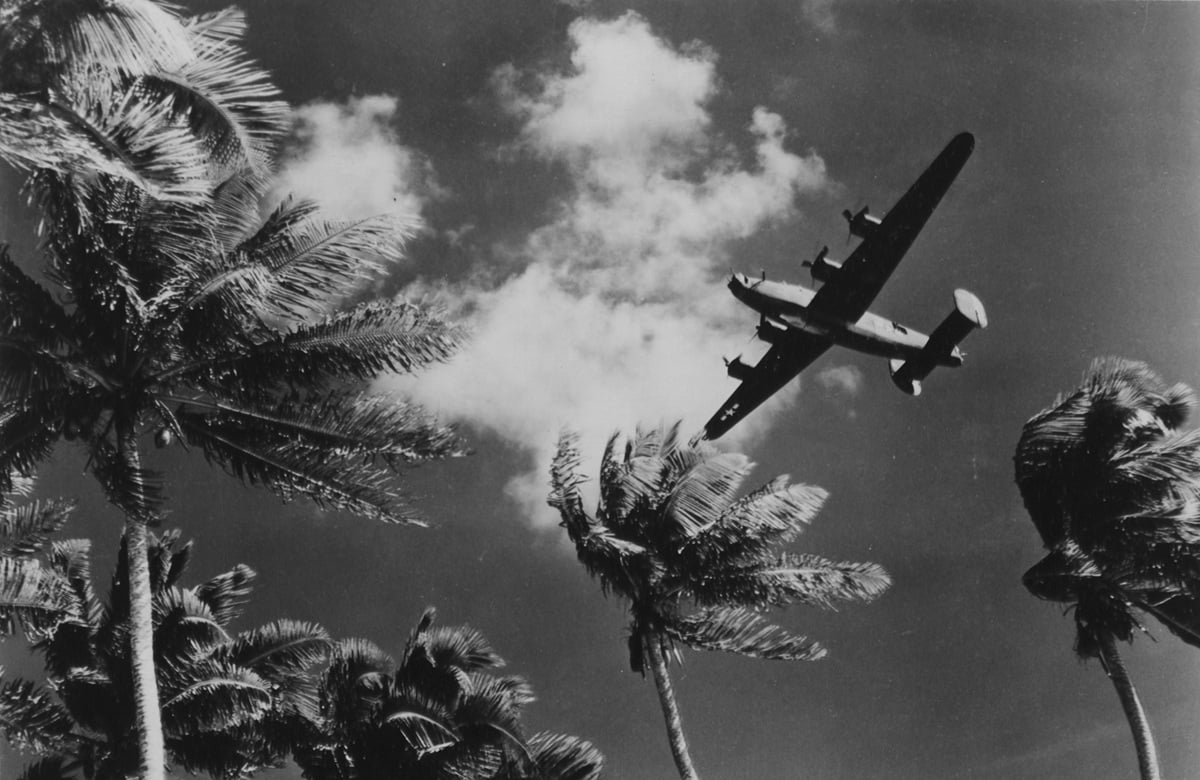
A Consolidated B-24 Liberator bomber, seen through the tropical palms, flies over Makin Island in the Pacific, late 1944. (Photo: National Archives.) 


While the XB-24 prototype, which flew in 1939, only had a handful of .30-06 light machine guns – similar to the old B-18 Bolo – later models during the war, such as the B-24D, B-24H, and B-25J, carried 10 .50-caliber BMGs. These were arranged as two guns in a large chin turret, two in a retractable Sperry ball turret protecting the aircraft's belly, two in the tail gunner's position, two up top in a Bendix dorsal turret, and one flexible waist mount on each side of the fuselage. With weight at a premium, the bomber would carry anywhere from 3,000 to 11,000 total rounds of .50-cal ammunition for its guns, depending on the mission. 

As with the B-17, the B-24's dedicated gunners had been minted in a six-week Flexible Gunnery school, beginning their training with shotguns and kites, then stepping up the difficulty from there. 
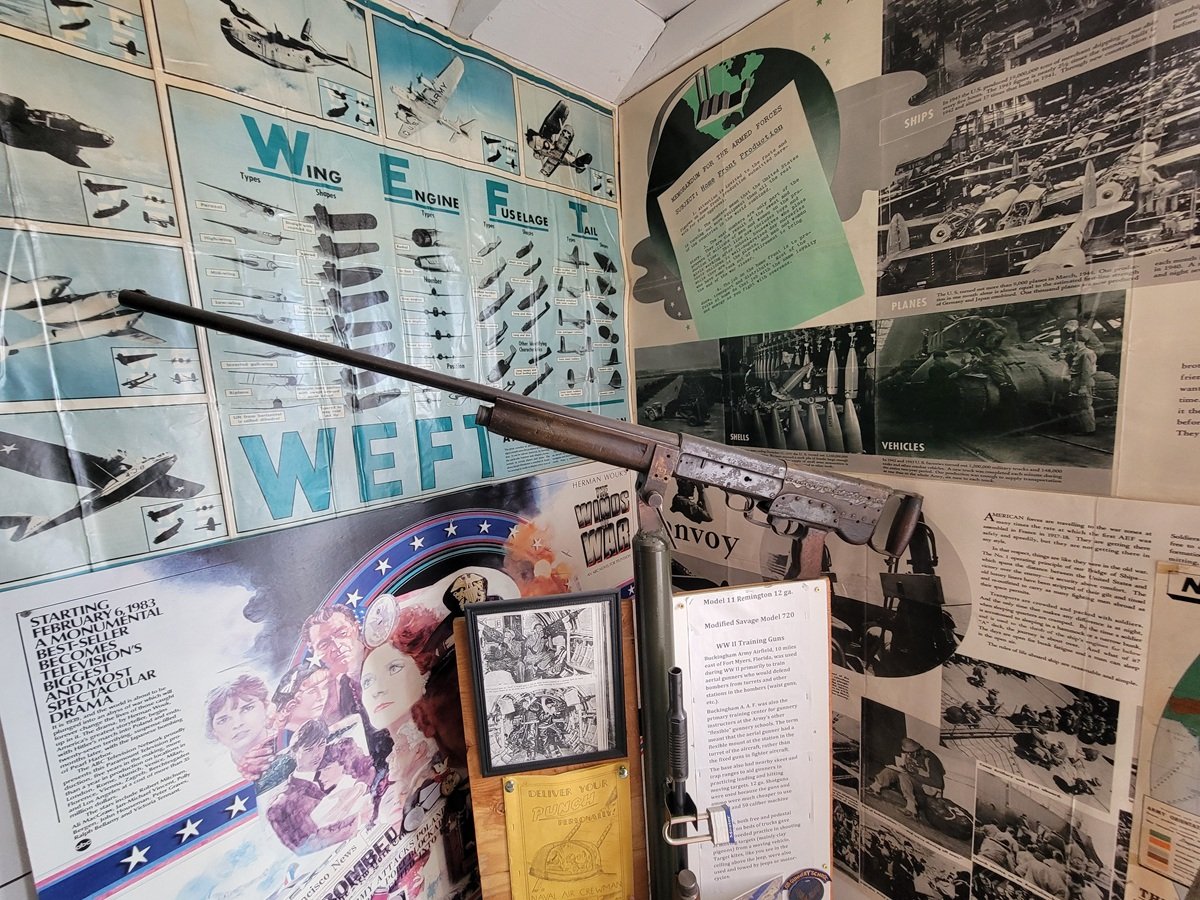
 

Remington Model 11 training shotgun
A Remington Model 11 semi-auto pump modified during WWII into a USAAF gunnery school training gun on display at the Miracle of America Museum in Polson, Montana. These 12 gauges, mocked up as machine guns, were used to shoot down target kites towed by jeeps and motorcycles in the first couple of weeks of training. Those with the "eye" went on to train on .50 cals. (Photo: Chris Eger/Guns.com)


Like the B-17, the B-24 was "breezy," and open to the environment, rather than using a pressurized cabin as on the high-flying B-29. This meant the gunners, along with the rest of the crew, had to wear thick leather flying suits accompanied by built-in electric heaters to combat the -30°F temperatures found at altitude. Add some flak vests, oxygen masks, and helmets, and you get the idea. 
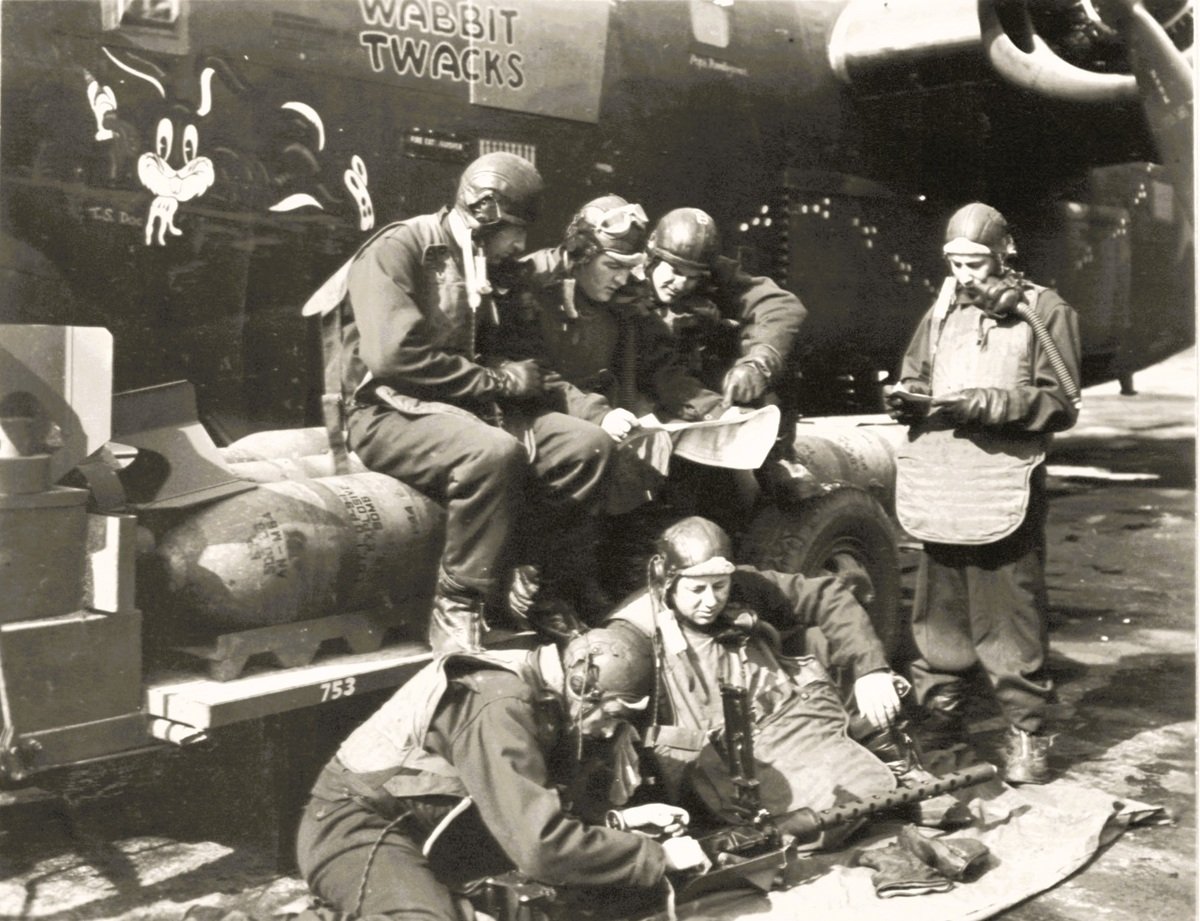
 

Consolidated B-24 Liberator
Official caption, April 1944, England: "All dressed up in the latest style electric-heated flying suits, armored vests and helmets, six members of the crew of the Liberator (Consolidated B-24) 'Wabbit Twacks' sit on a nest of 500-pound 'Easter Eggs' as they plan to visit Germany for an unhappy holiday."  (Photo: National Archives)
Consolidated B-24 Liberator
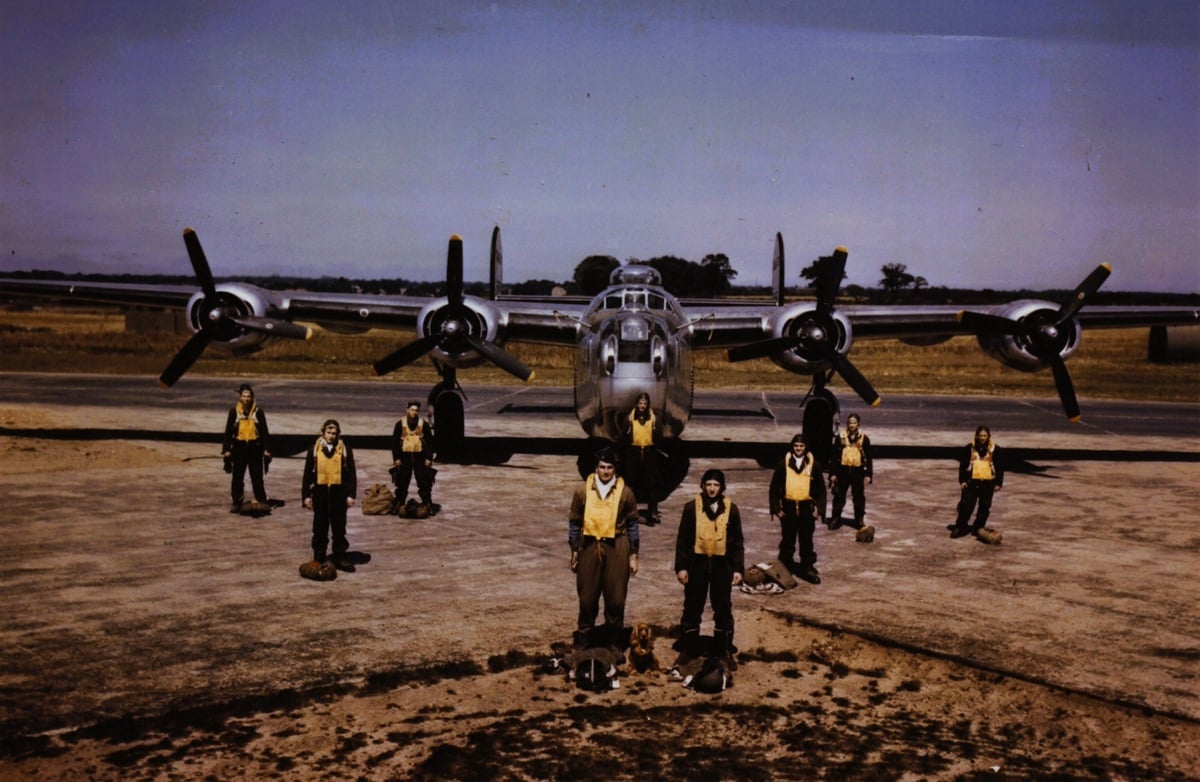
Crew of a Consolidated B-24 of the 8th Air Force at a base "Somewhere in England," circa 1944. (Photo: National Archives)


While the dedicated nose, belly, and tail gunners had their guns as their principal duties, the B-24's flight engineer doubled as the top turret gunner, while the radio operator and the plane's armorer moonlighted to staff the guns in the bomber's waist. Other crew members were cross-trained in case gunners went down with wounds. For instance, the navigator and bombardier were both usually qualified nose turret gunners. 
 

Consolidated B-24 Liberator waist gunner
Official caption, June 1944, South Pacific: "The tales of two-gun heroes that have blazed down the pages of annals of the west have nothing on Sgt. Elwin H. Comstock of Brattleboro, Vermont, a radio-operator gunner aboard one of the Consolidated B-24s of the 13th Air Force in the Southwest Pacific. He is shown here with the two guns he manned while on a mission over a little island off the east coast of New Guinea. Sgt. Comstock's buddy on the starboard waist gun was hit severely in the leg by a shell from an attacking Zero; he tried valiantly to keep on his guns but soon collapsed. After applying a tourniquet to his buddy's leg, Comstock, standing in the middle of the plane, seized the two guns and fired in both directions at the Zeros, which were boring in. He was credited with one kill." (Photo: National Archives)
Consolidated B-24 Liberator tail gunner
The B-24 typically had a large, powered Emerson turret in the tail, which was arguably superior to the narrow tail gun arrangement on the B-17. (Photos: National Archives)
Consolidated B-24 Liberator nose gunner
Right: Sgt. Robert F. Hahn, Rochester, New York, nose turret gunner on a 15th AAF Consolidated B-24 Liberator bomber, examines a hole made by a 20mm shell from a German fighter. (Photo: National Archives). The cylindrical Emerson A-15 nose turret and its similar Con model were common to the B-24J. (Photo: Chris Eger/Guns.com)


In all, B-24 gunners claimed over 4,000 enemy aircraft shot down during the war. 

We would like to thank the Pima Air & Space Museum outside of Tucson, Arizona, home to the circa-1944 B-24J shown in the above video. If you are ever in the area, please carve out some time to visit some of the aircraft on display and find out more about the brave aviators who flew them.

Video by Ben Philippi.

revolver barrel loading graphic

Loading