Shooting 2 Miles?
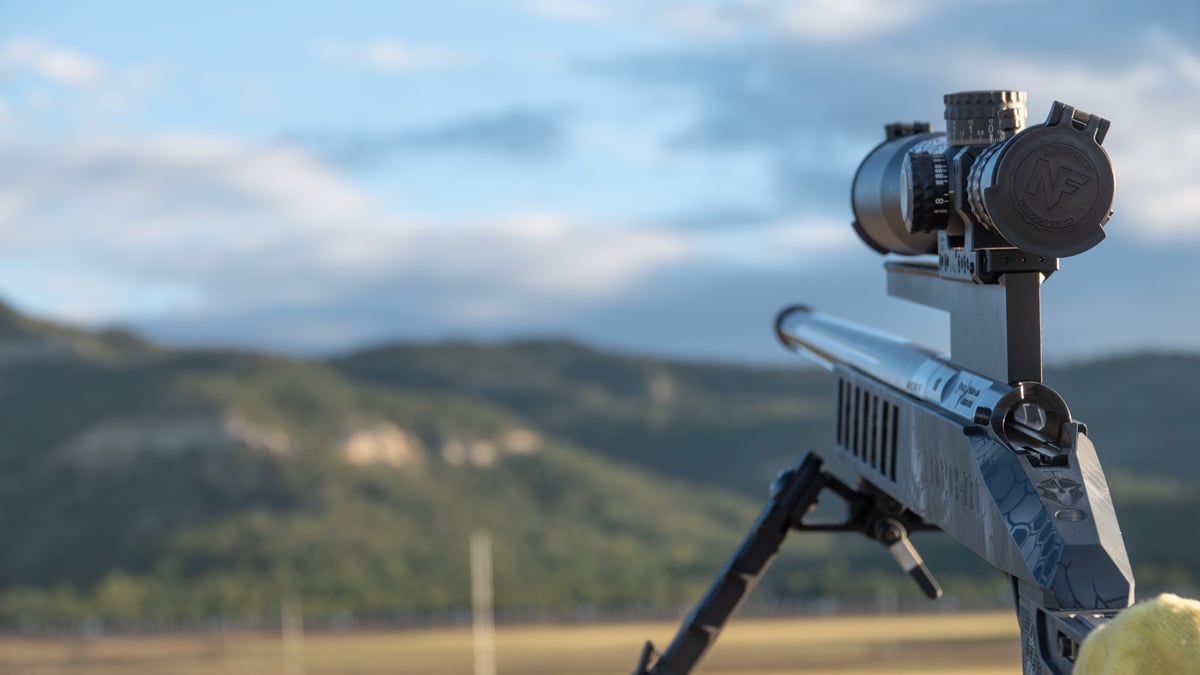
Can this even be done? What could you possibly hit from two miles away? Is this even a practical sport?
These are all questions you might be asking, and you aren’t alone. Before we get too deep, let’s get some context on what is happening in this event.
Targets
Yes, the targets are big. To a typical shooter, they might seem ridiculously large, but when you push these targets out across a desert canyon 3,000-4,000 yards away, they become quite small. Small enough, in fact, that when seen through the scope, they measure around 1-2 MOA.
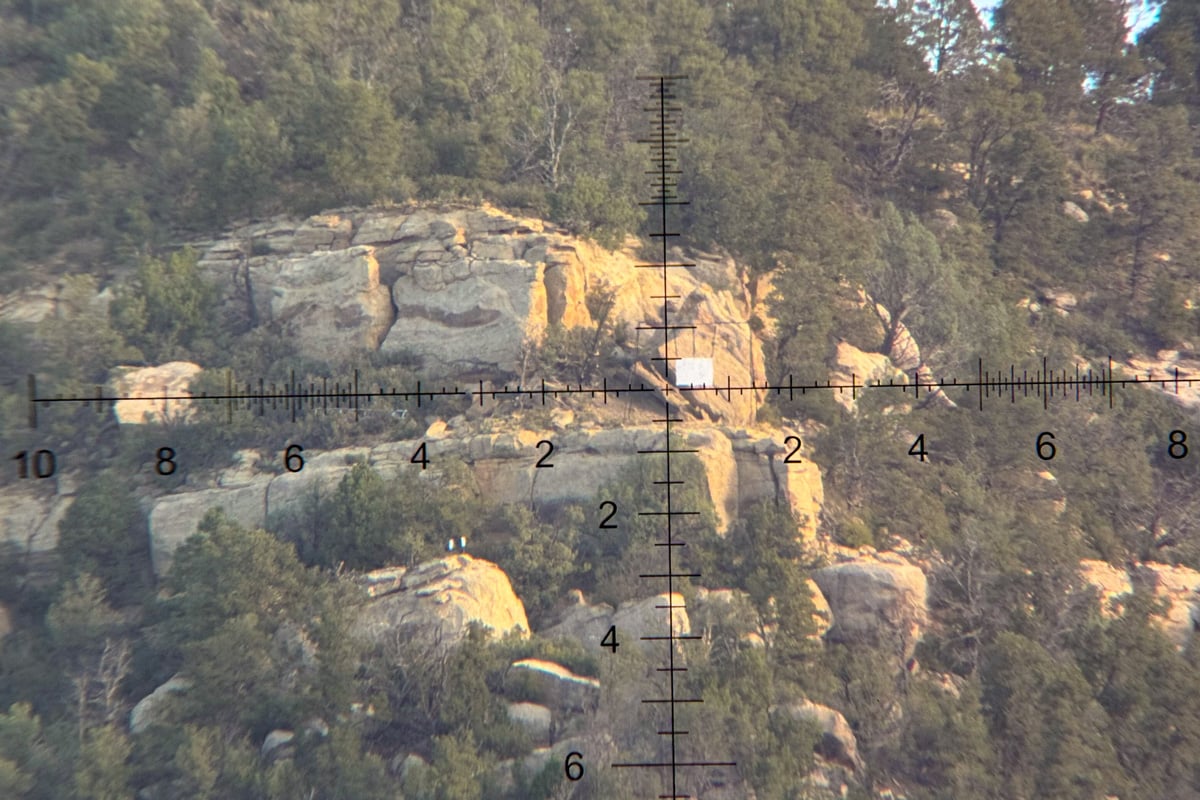
For comparison, a typical paper target you shoot at the range is likely 20 or more MOA in size. So, essentially, ELR shooters are shooting at just a tiny portion of a typical target – like one of the squares on the target you might use to zero your rifle.
Chronographs use Doppler radar to get exact muzzle velocity for every shot. That way, if a shot lands lower than expected but is correlated with a low muzzle velocity, the shooter knows immediately. This prevents making unnecessary corrections.

PRS shooters are aiming at targets of comparable size, but shooting 1-MOA targets is much easier when it’s done at distances of 1,000 yards or less. Wind is the name of the game in ELR, and there can be many different layers of wind to deal with at distances like these.
Rifles
Big rifles are used to engage these big targets. Most of these rifles shoot large cartridges like .375 CheyTac and .416 Hellfire. Many are custom cartridges and chamberings, and they are all built to be heavy – not just because of the cartridge size, but because a heavy rifle makes a more stable launch platform.


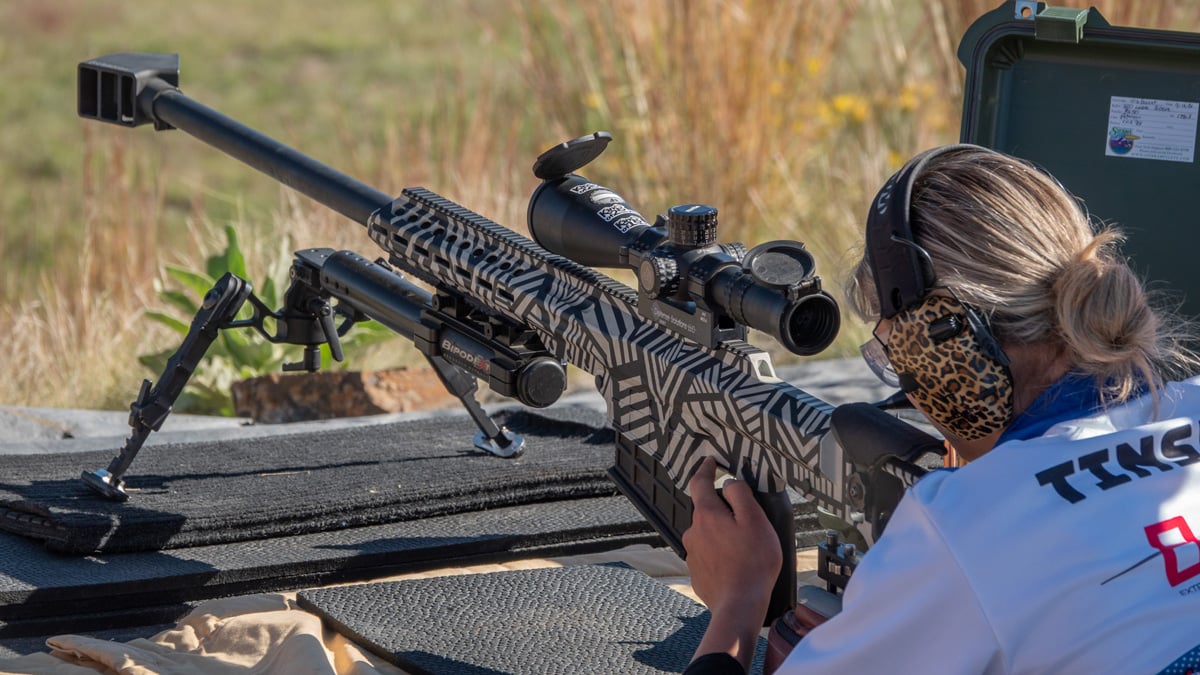
Heavy barrels with incredibly thick profiles add weight and stability. Most of the barrels I saw came from companies like K&P Precision and used aggressive twist rates. This is due to the long, highly efficient bullets that are typically used. These are CNC lathe-turned solid copper bullets that are exceptionally uniform.


Most guns don’t use an ejector; spent cases are pulled from the action by hand. Expensive, carefully prepared brass is too valuable to be tossed into the dirt or gravel. Every rifle I saw at this event used a large muzzle brake to help keep the rifle as stable as possible.
Optics and Mounting
You can imagine that only the best optics are used to see such distant targets. High-end optics from big names like Nightforce and Zero Compromise complemented every rifle.
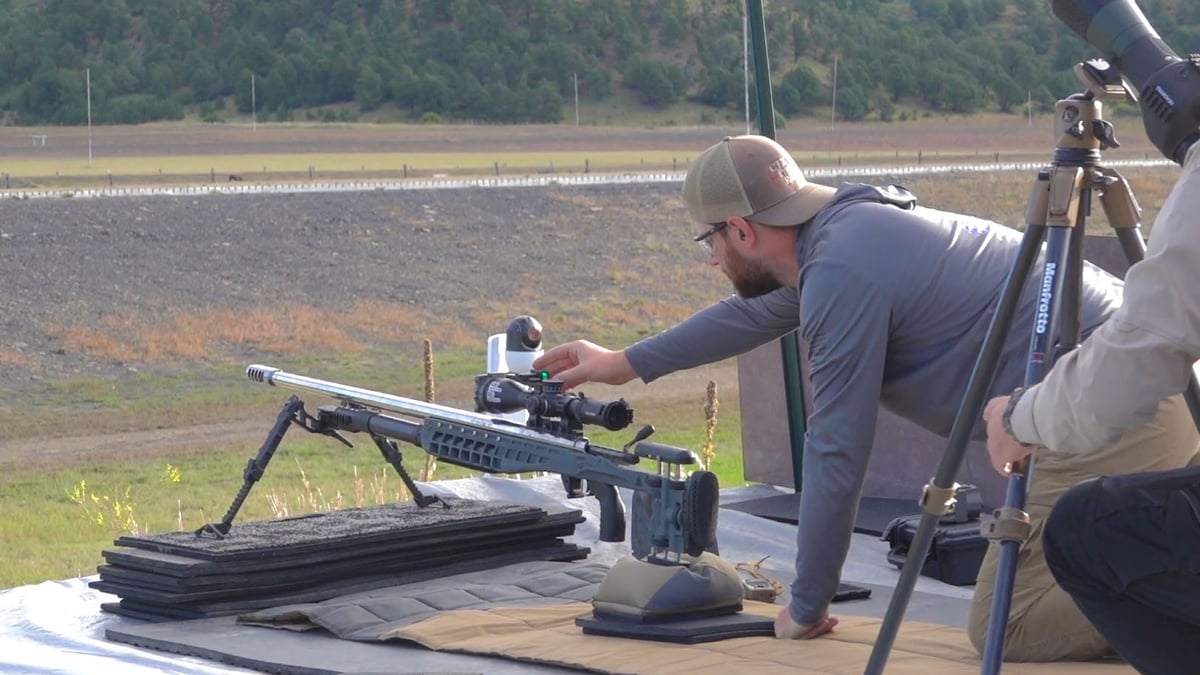
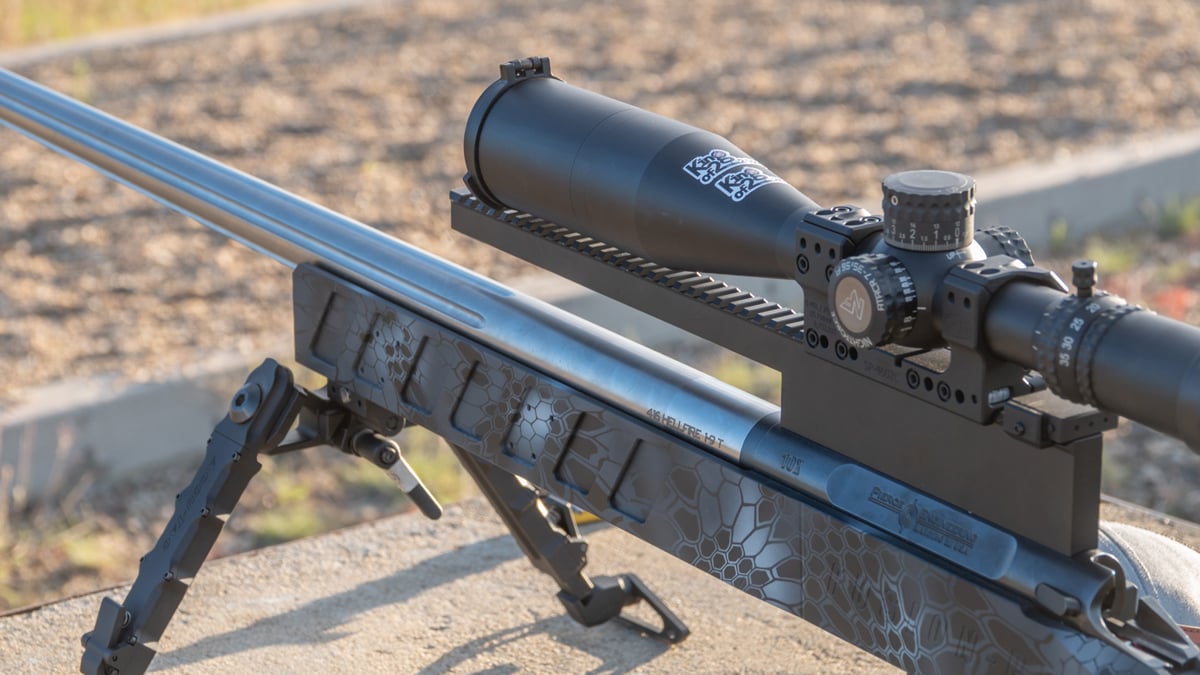
Just as important as the scope itself were the mounting and offset solutions. Heavily canted scope mounts allow shooters to aim dead on targets even at these extended ranges. Using optical offset prisms of various types allows you to shoot and test your rifle as close as 100 yards, while still being able to make hits 2 miles away.
For example, I looked through one of the rifles with dual prisms to inspect a deer crossing the range, perhaps half a mile away. But when I pointed the rifle at the deer, I could only see the dirt halfway between the deer and me. To see him, I had to look at the ridge behind him.
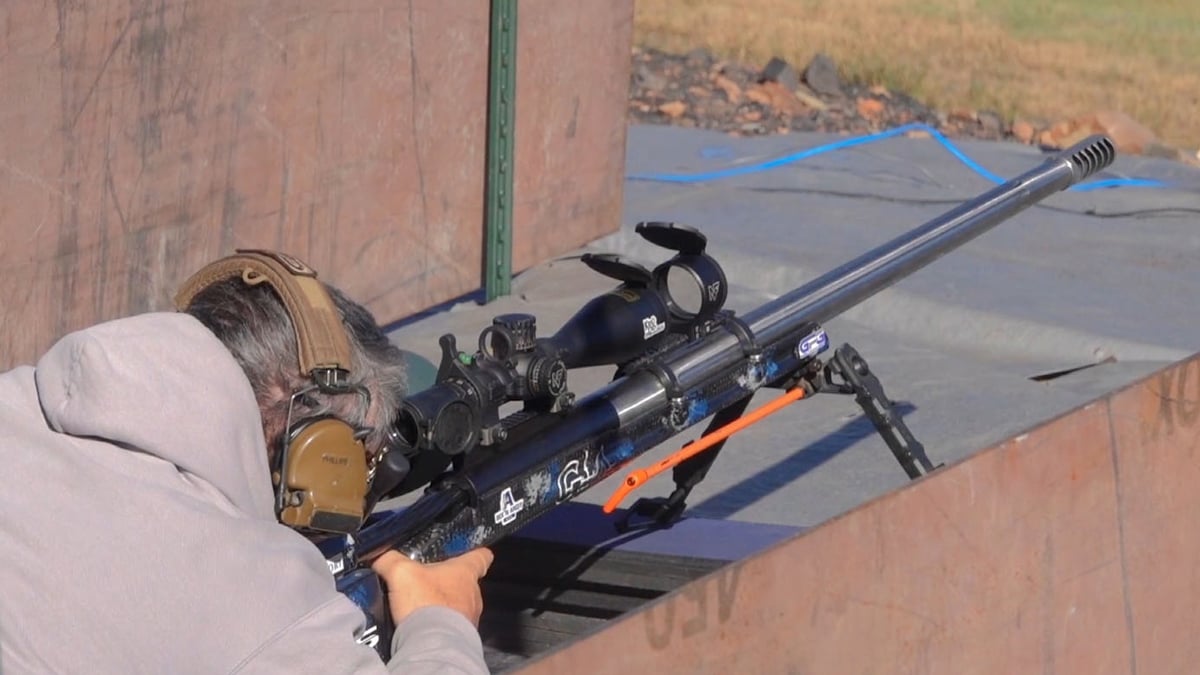

Nearly every rifle used a prism, which sits in front of the riflescope. It works by essentially bending the line of sight as seen through the scope – and bending it an exact amount. This allows you to add or remove large amounts of optical offset. Prisms can even be stacked to multiply the effect.
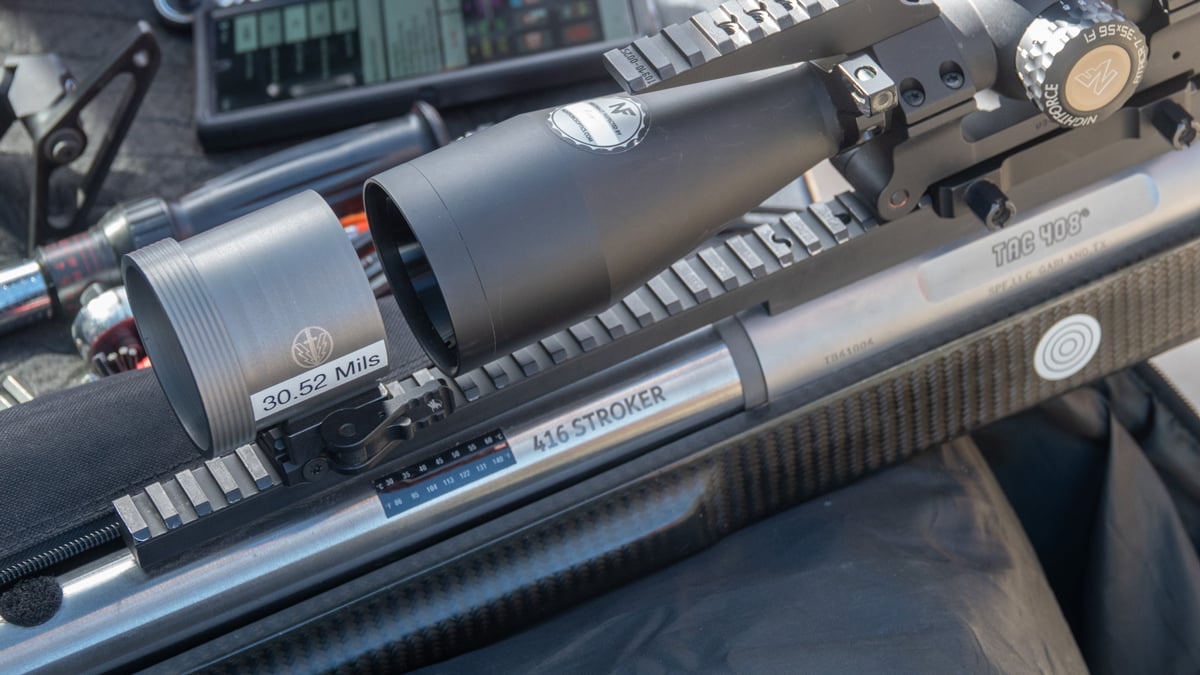
Precise optics paired with robust mounting systems are required, and the repeatable adjustment of both mechanical and optical offsets is paramount to being able to make these hits.
Ancillary Equipment
Aside from the gun itself, it is necessary to have a collection of support items. Large bipods are used to hold up these heavy guns. Nearly every gun used Accu-Tac bipod extenders to allow the rifle’s balance point to be moved to the rear. This makes the gun more stable, and it recoils straight into the shooter for maximum control.

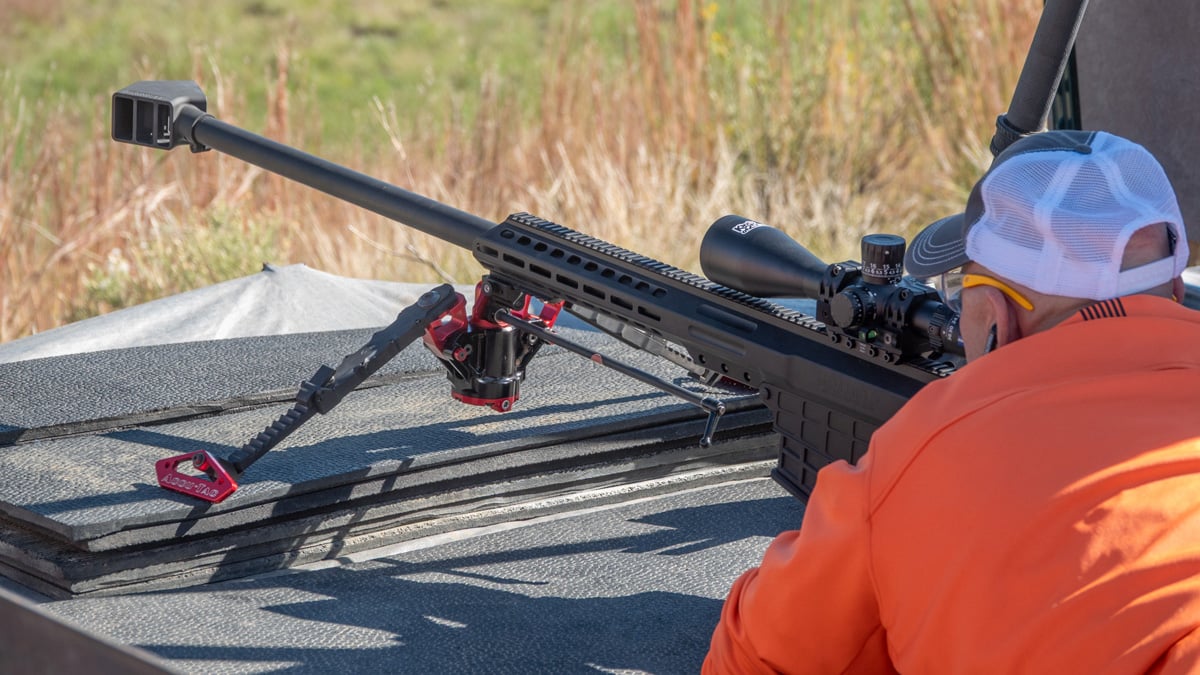
Rear bags and inflatable cushions are used to make micro-adjustments in the way the gun is held on target. Stability is another important part of this type of shooting.
Taking the Shot
Shooting a target 2 miles away takes a few seconds. Depending on the target, there was often enough time to reload and have a brief discussion with the spotter before the bullet hit the target. After each shot, the people sitting behind spotting scopes would finish their conversation and, at about the same time, all turn to their scopes to watch for impact.
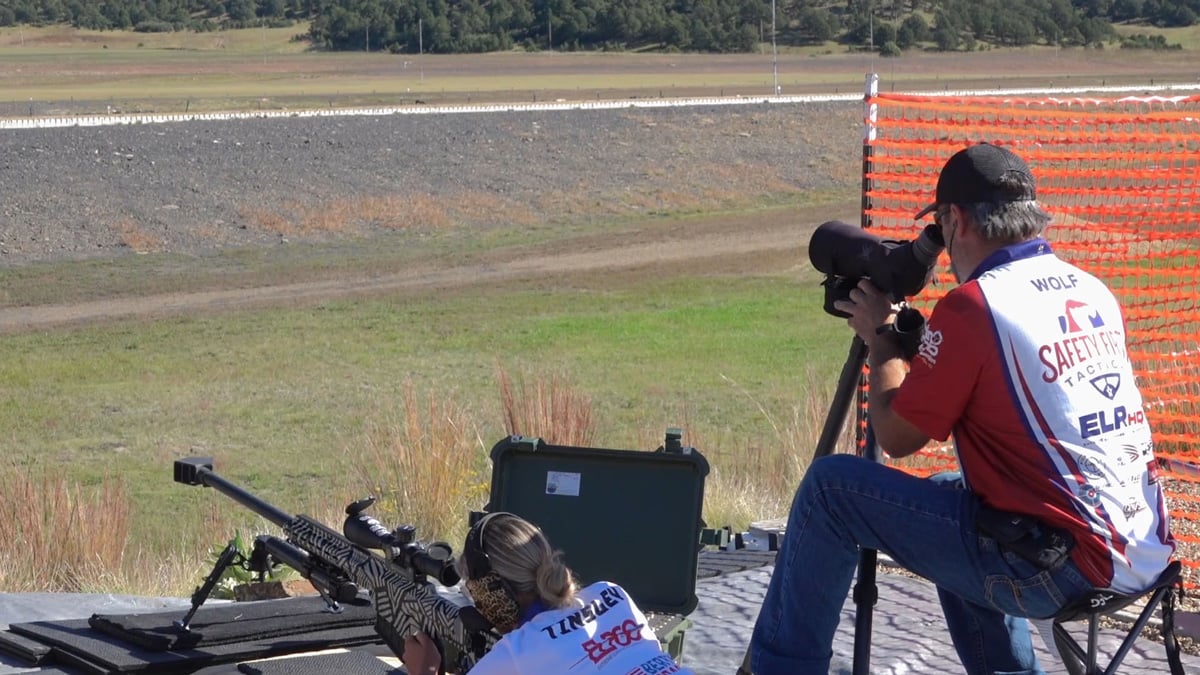
Spotters use large spotting scopes and binoculars to watch conditions, keeping an eye on the boiling mirage downrange and watching it shift. Being able to evaluate the shift shot to shot and suggest the corrective action for the shooter is a true skill in its own right.
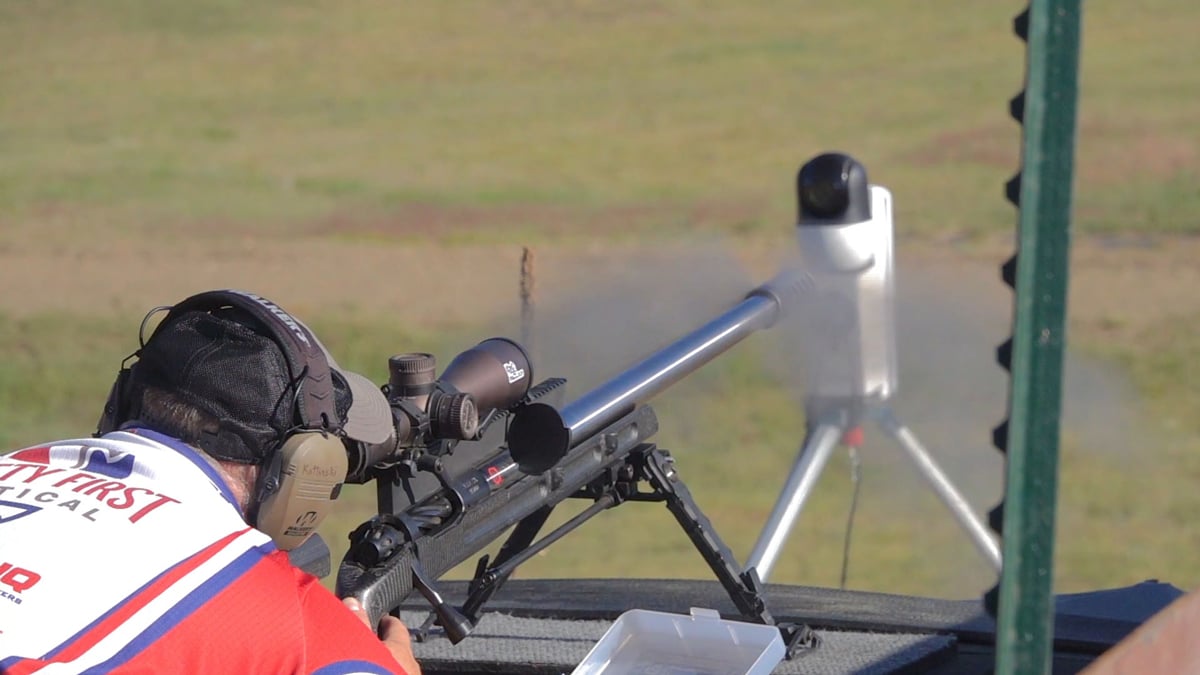
This is all done under a time limit while everyone else watches with excitement. This is also why both the shooter and spotter are awarded at the end of the match. Impacts can also be watched by target cameras set up downrange to give a clear view of each hit or miss.
Loading
Every rifle I witnessed was manually loaded, although some had magazines. There are several reasons for this. Even the guns with magazines replaced the mag with a single-shot dummy mag. Cartridges are loaded carefully by hand, and many wouldn’t likely fit in a magazine anyway, as the long bullets are handloaded beyond magazine lengths.
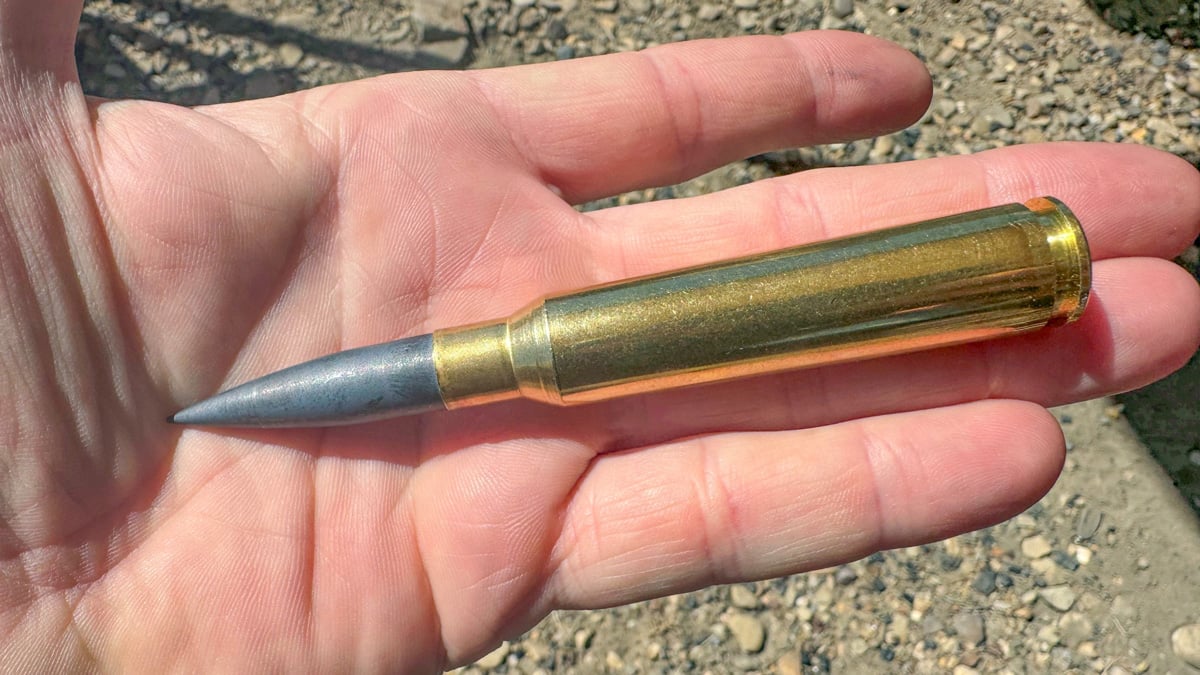

Cartridges are typically loaded right before pulling the trigger, resulting in a quick closing of the bolt. Shortly thereafter, you hear the report of the rifle. This is done to prevent the cartridge from “baking” in a warm chamber. As the cartridge heats up, the chemical reaction of burning powder is accelerated, which could result in a slightly faster shot than the previous one. At this range, any change could cause variations of feet when the bullet impacts.
Conclusion
At the end of the day, ELR shooting is similar to other long-range shooting practices. The wind is likely to beat you. Of course, ELR involves big, often expensive, hardware. Much of it is impressive, and it’s easy to get up to your neck in all the gadgets and tweaks. Additionally, loading your ammunition and everything involved can be an obsession itself.
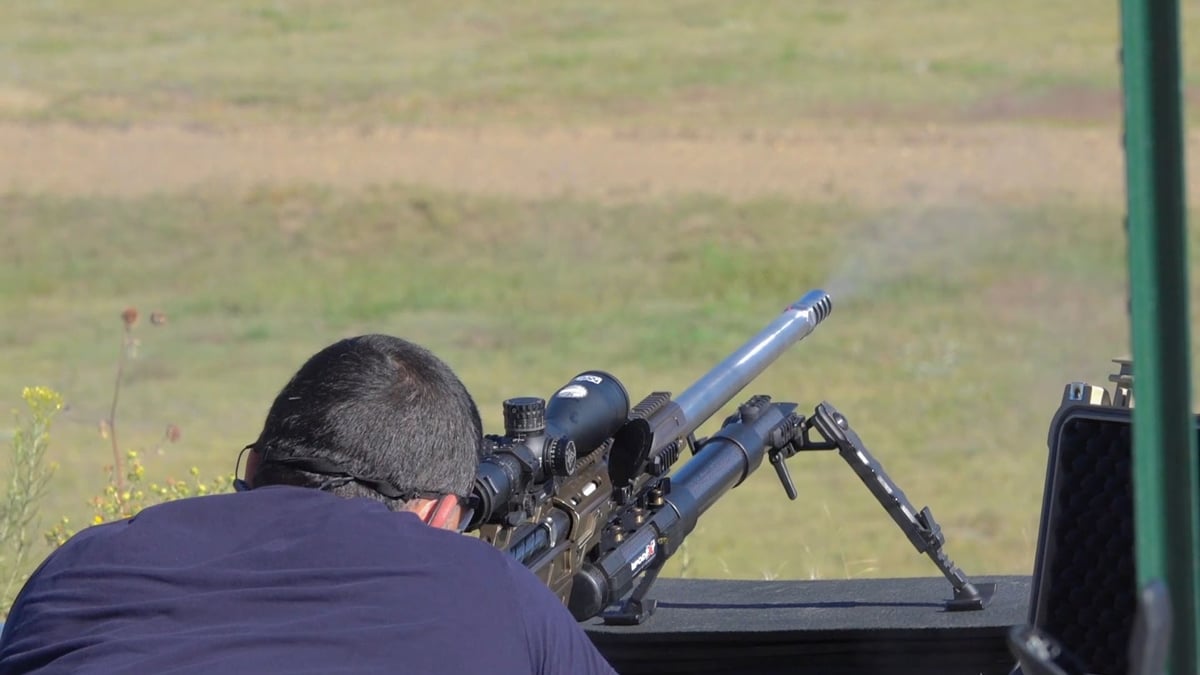
The guns of KO2M are impressive. All the precision and consistency needed for accuracy are scaled up to match the incredible distances. If you get the chance, get out and watch or even participate in one of these competitions. It will open your eyes to both the science of shooting and the human hunger to push limits.