Don't let anyone tell you that a revolver is too slow. Besides blisteringly fast Single-Action shooters and the iconic Jerry Miculek, there's the M39 cannon.
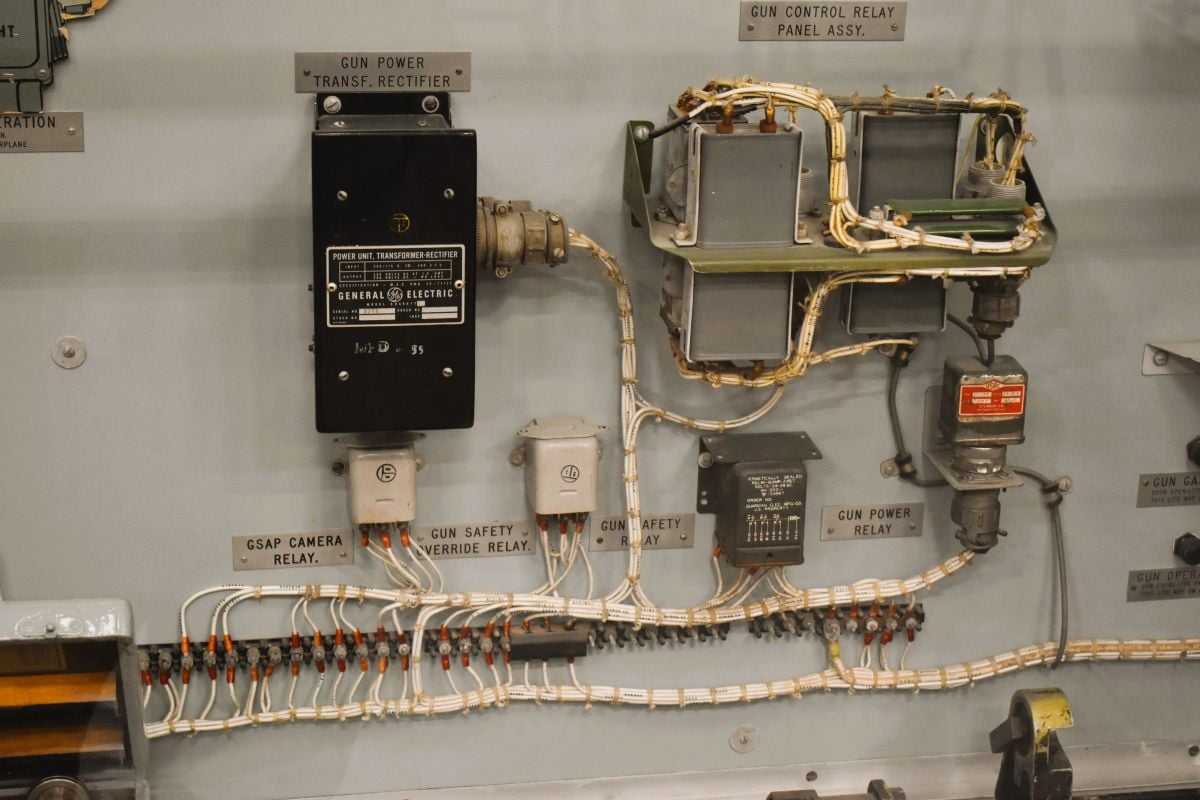
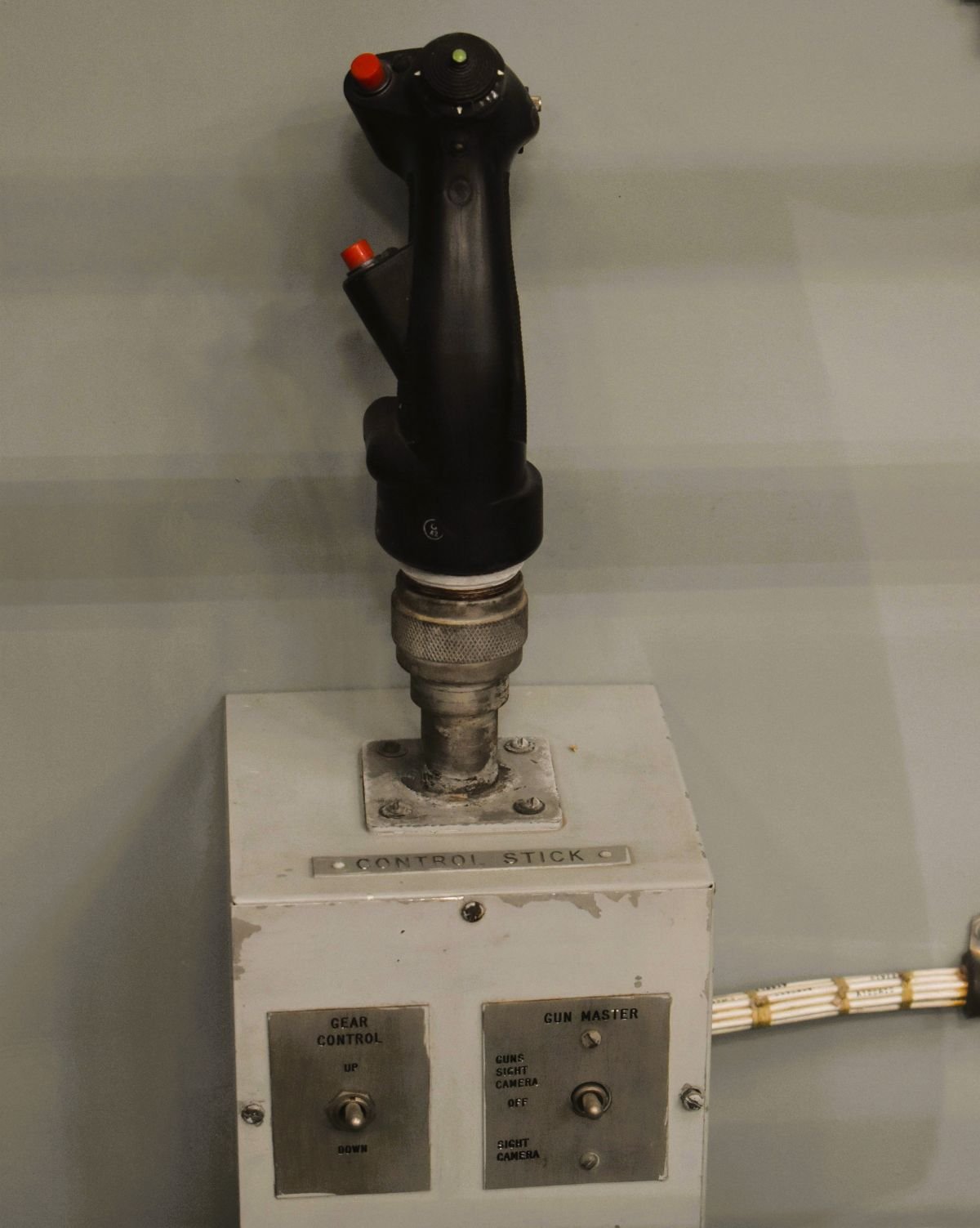
We stumbled upon a great static training layout for the gun system of an F-101 Voodoo fighter at the Pima Air & Space Museum in Arizona while visiting the amazing facility. That gun? The M39 autocannon.
The system.
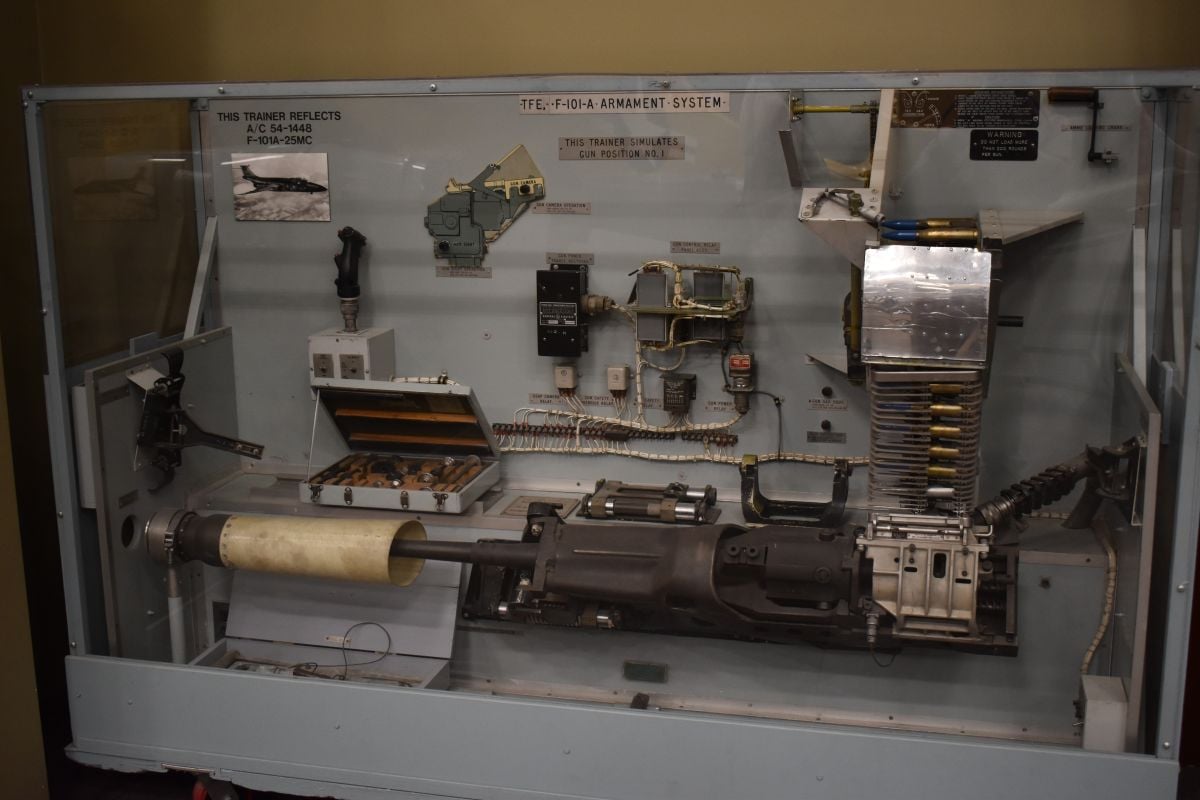
It had a single barrel with a five-chamber cylinder that revolved at the six o'clock position parallel to the bore. Think S&W J-Frame on steroids with rounds that were more the size of a Red Bull can rather than .38 Specials.
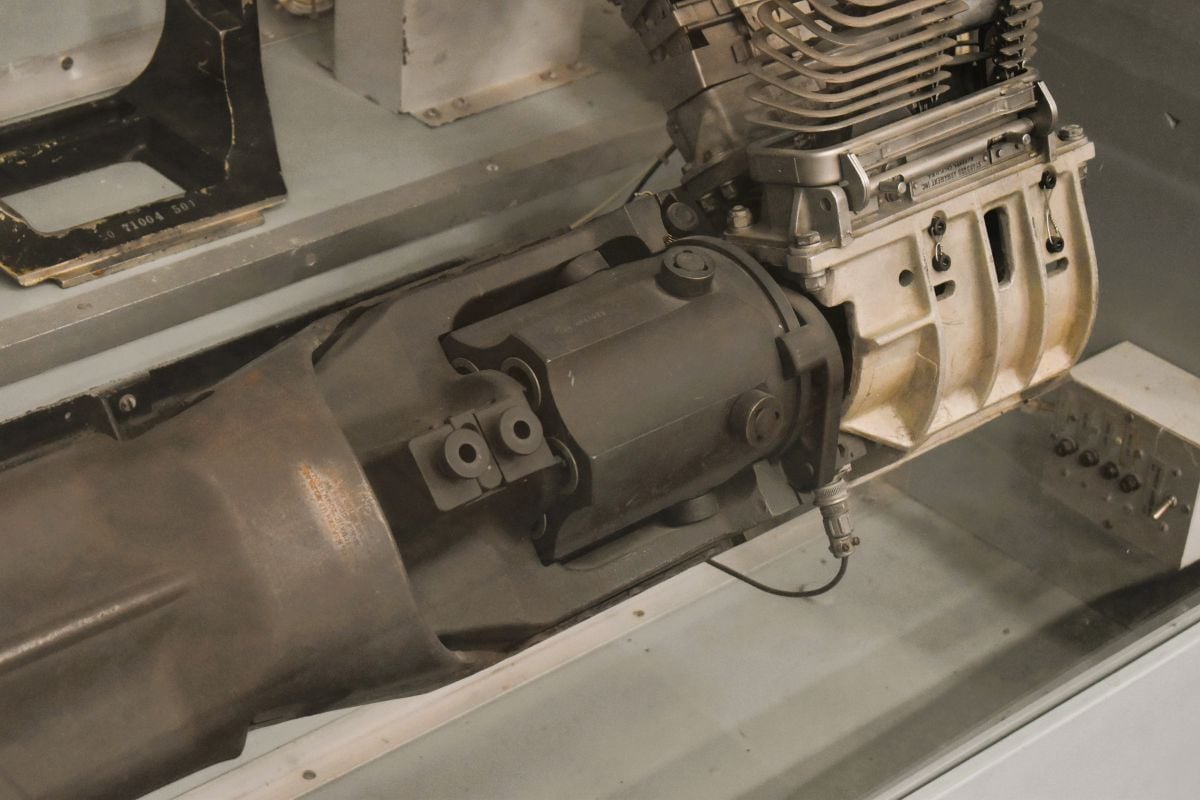
Gas-operated with a piston that ejected the spent casing from one of the cylinder's chambers while a spring-loaded rammer slid a new cartridge into an open chamber on each right-hand rotation, the gun was capable of firing 1,500 rounds per minute.
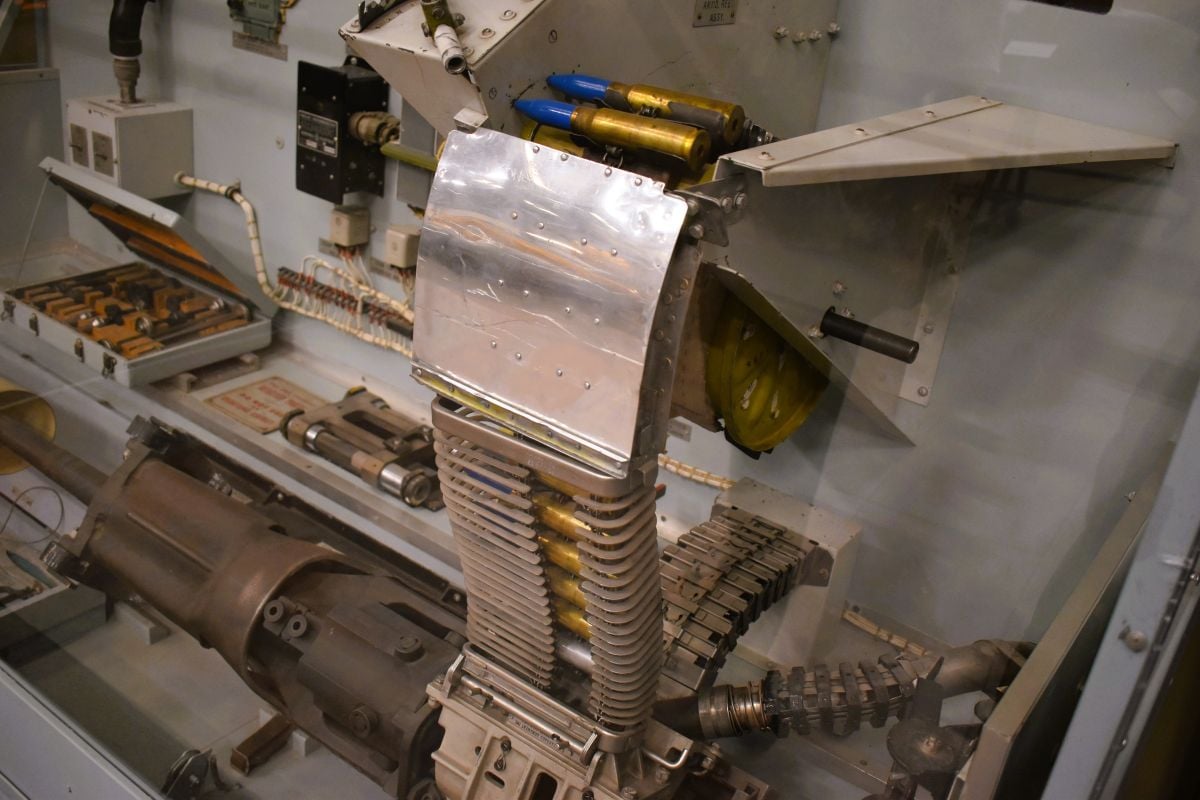
Backstory
The M39 had its roots in an experimental German Mauser 20mm MG213C revolving cannon design following World War II. To the victors go the spoils, boys!. A captured gun (No. V6/10) was rebuilt by the U.S. Naval Gun Factory in 1946 and a second, third, and fourth rebuild, all with evolving modifications, became the experimental U.S. T74 cannon.
These images of the MG213 and T74 via Chinn.
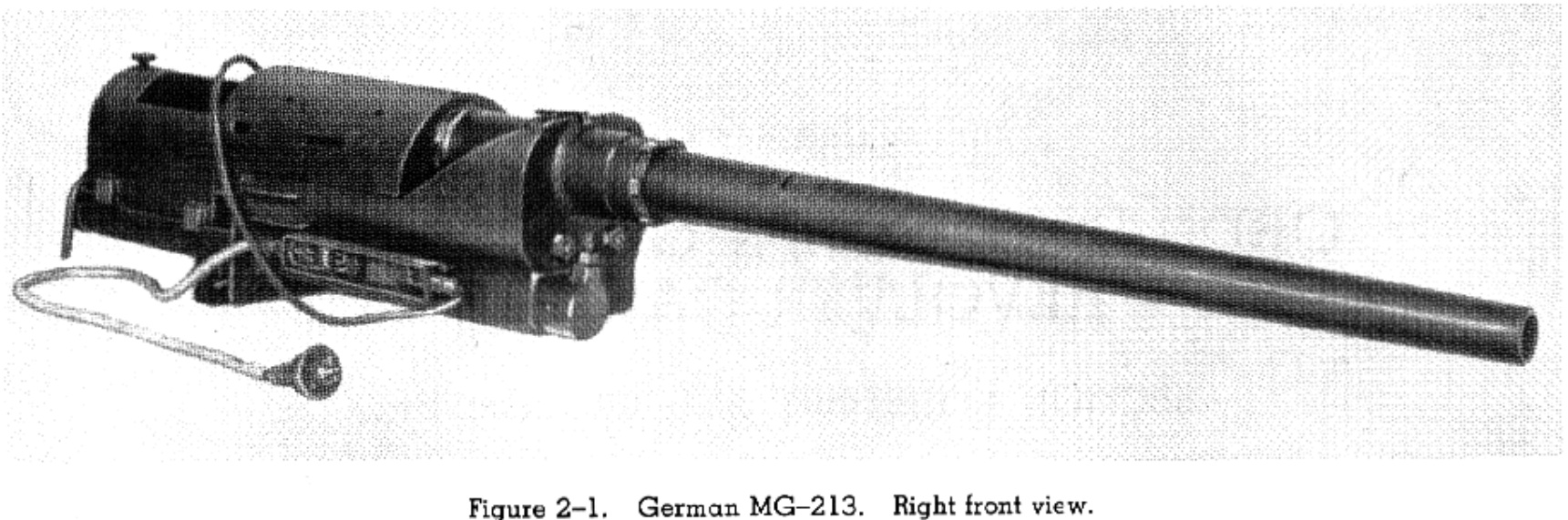
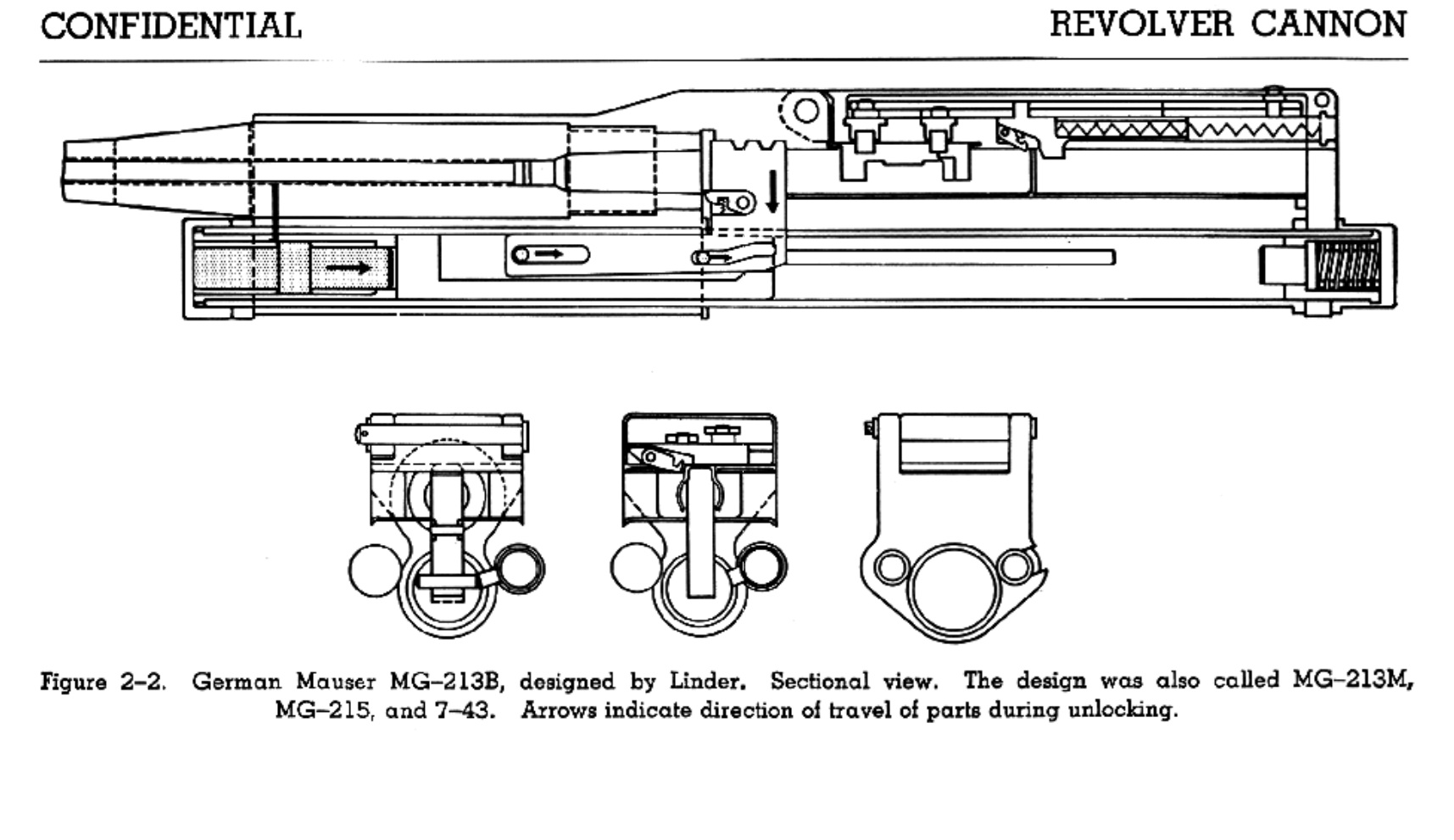
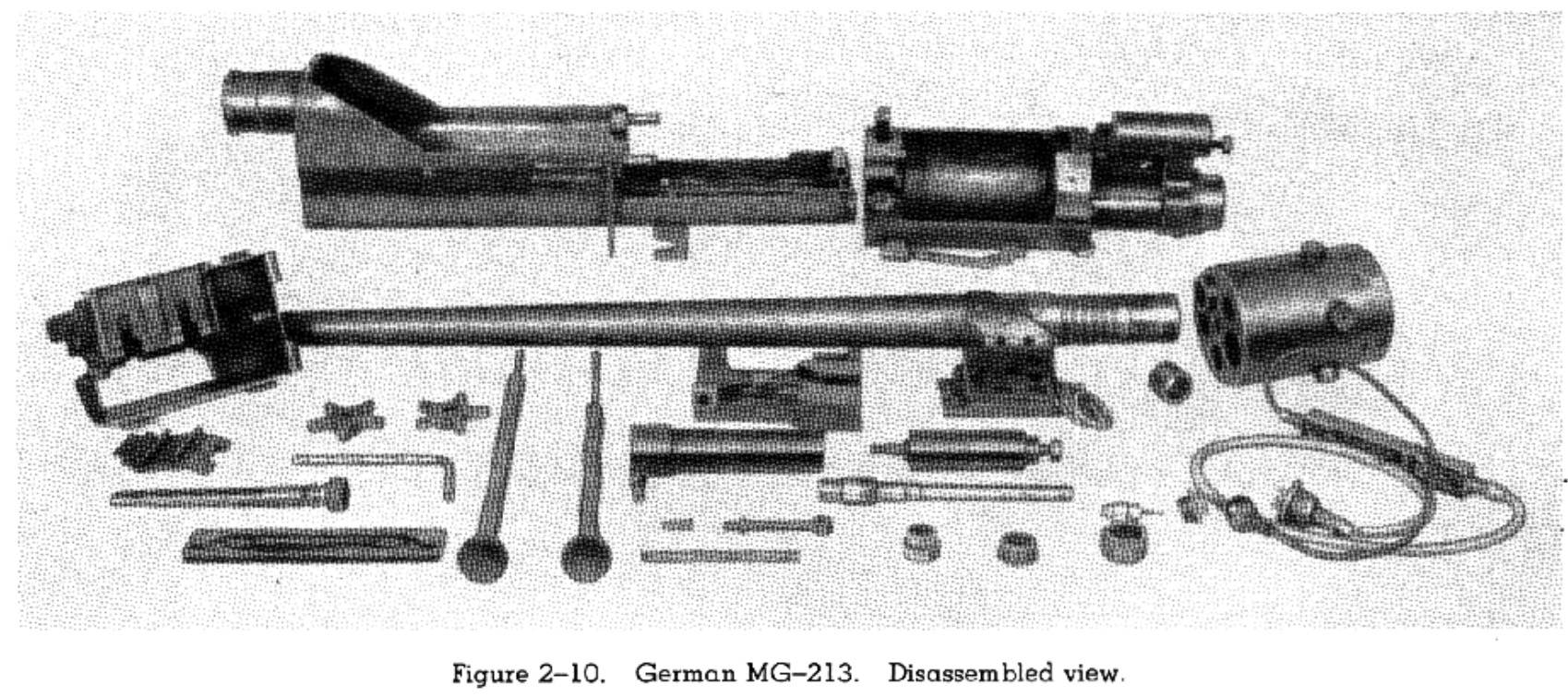
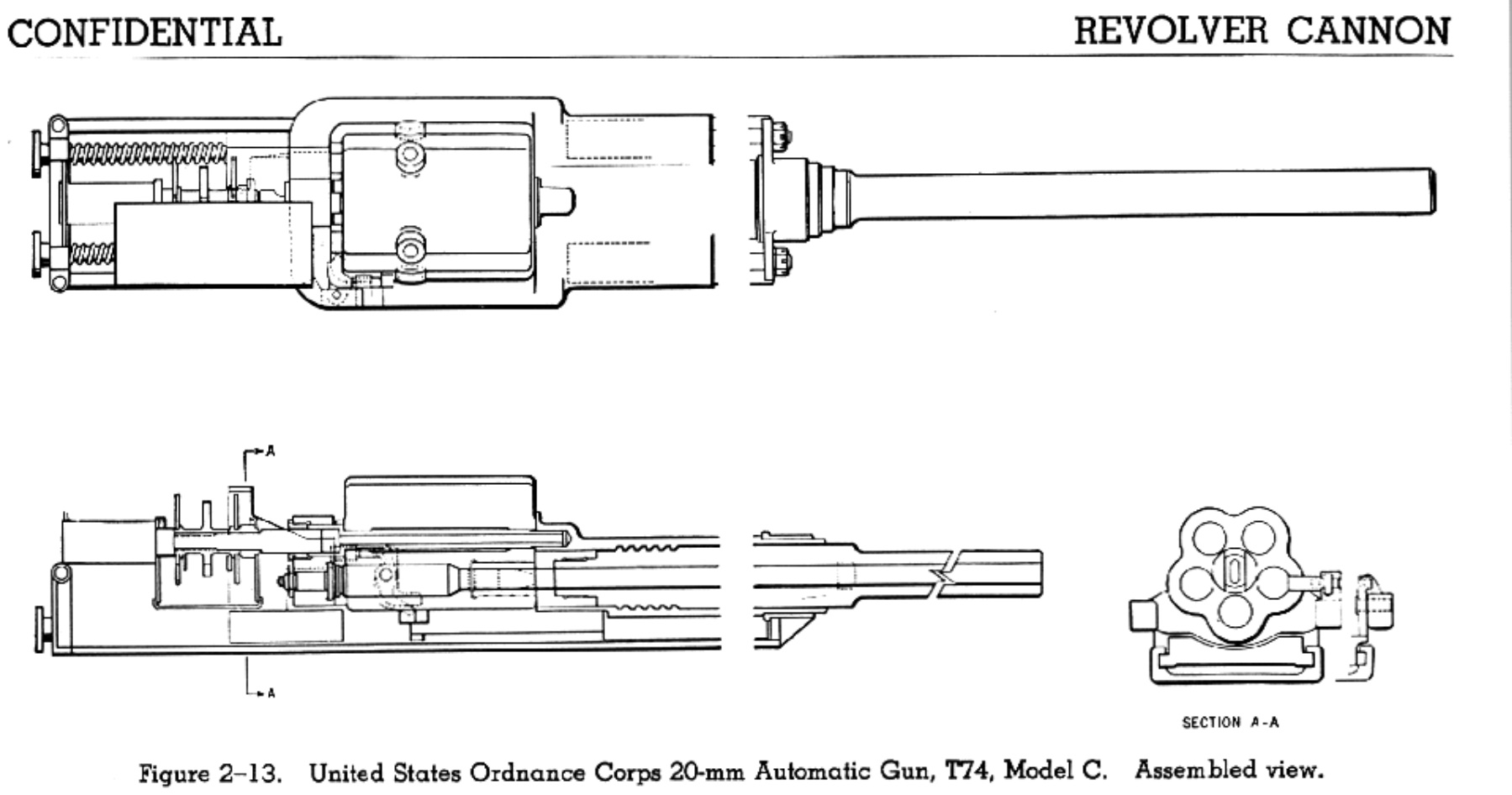
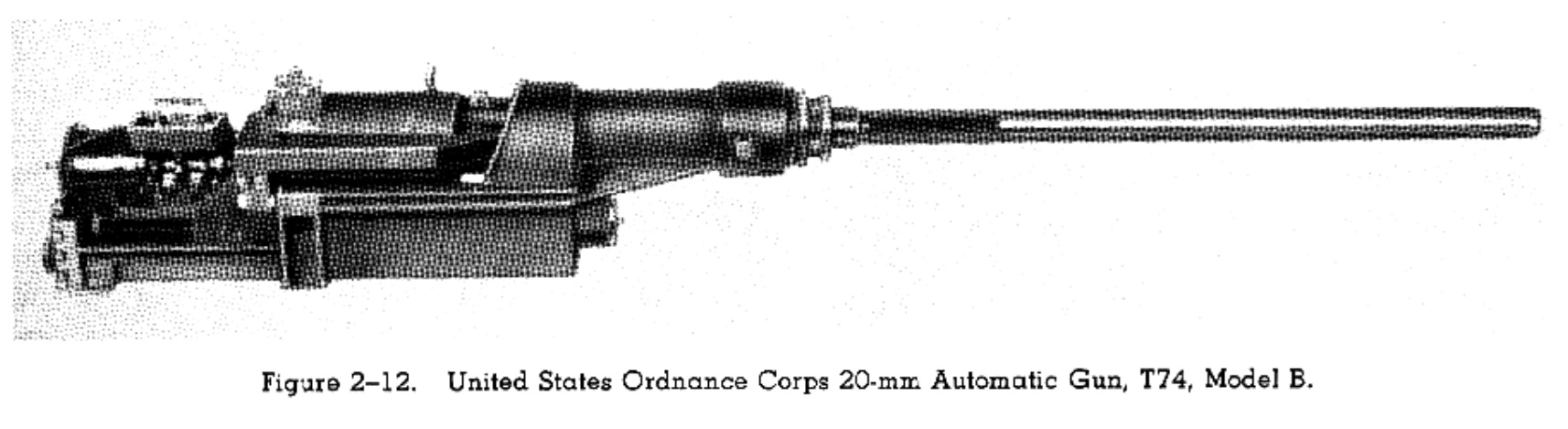
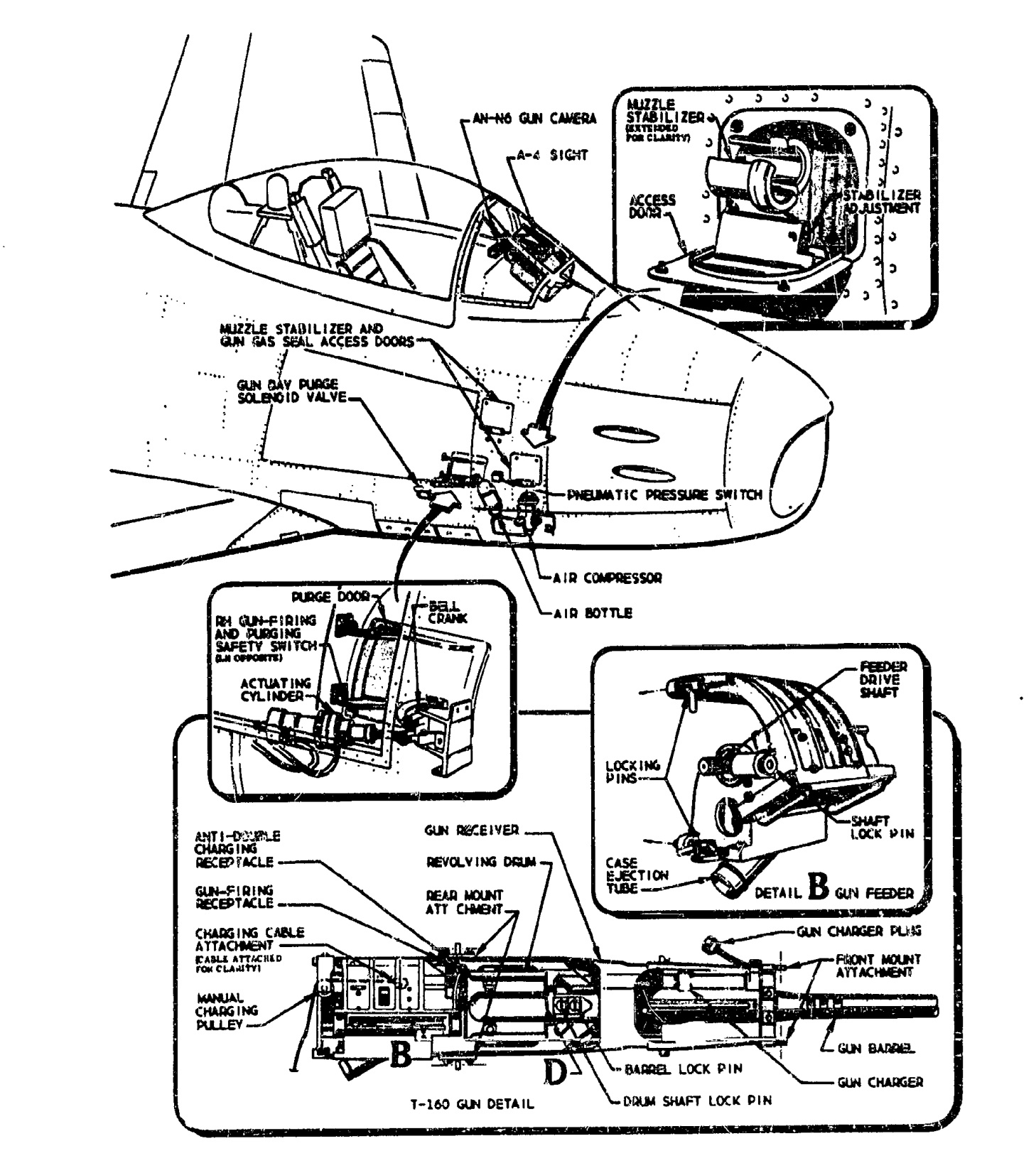
The American M39 first flew in combat during the latter part of the Korean War as the T160 gun system in the "GunVal" program, which saw four such guns installed in modified F-86F Sabres. The guns had 460 rounds of ammunition, enough for about 4.5 seconds of fire. Each gun weighed 162 pounds.
The system, as installed on a Gun Evaluation (GunVal) F-86F-2, in 1952:
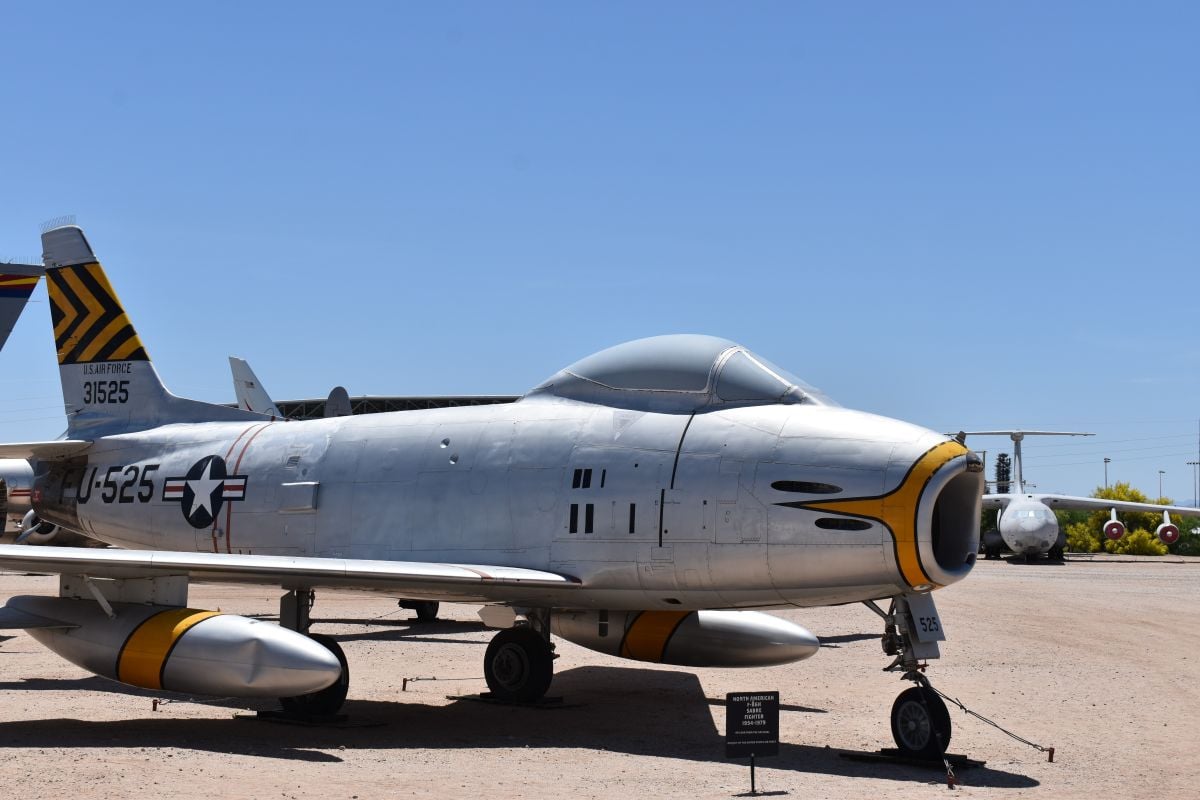
Vetted in combat, the guns were then first installed in production fighters starting in 1954 with the improved F-86H, which carried four M39s with 600 rounds of ammunition.
Ultimately, more than 35,000 M39s would be produced, and it was the standard gun not only for the F-86H but also the F-100 Super Sabre, F-101A/C Voodoo, and F-5/E Freedom Fighter/Tiger fighters, as well as the B-57B bomber.
While made by several companies over the course of two decades, the primary vendor for production was Pontiac. Yes, the car company.
While replaced in U.S. service with the six-barreled M61 Vulcan Gatling Gun, which fires the same ammunition up to four times faster while offering more longevity (M39s had to have their single barrel replaced after just 4,000 rounds), the old cannon is still in use with a few remaining F-5E operators, such as Brazil, South Korea, and Thailand.
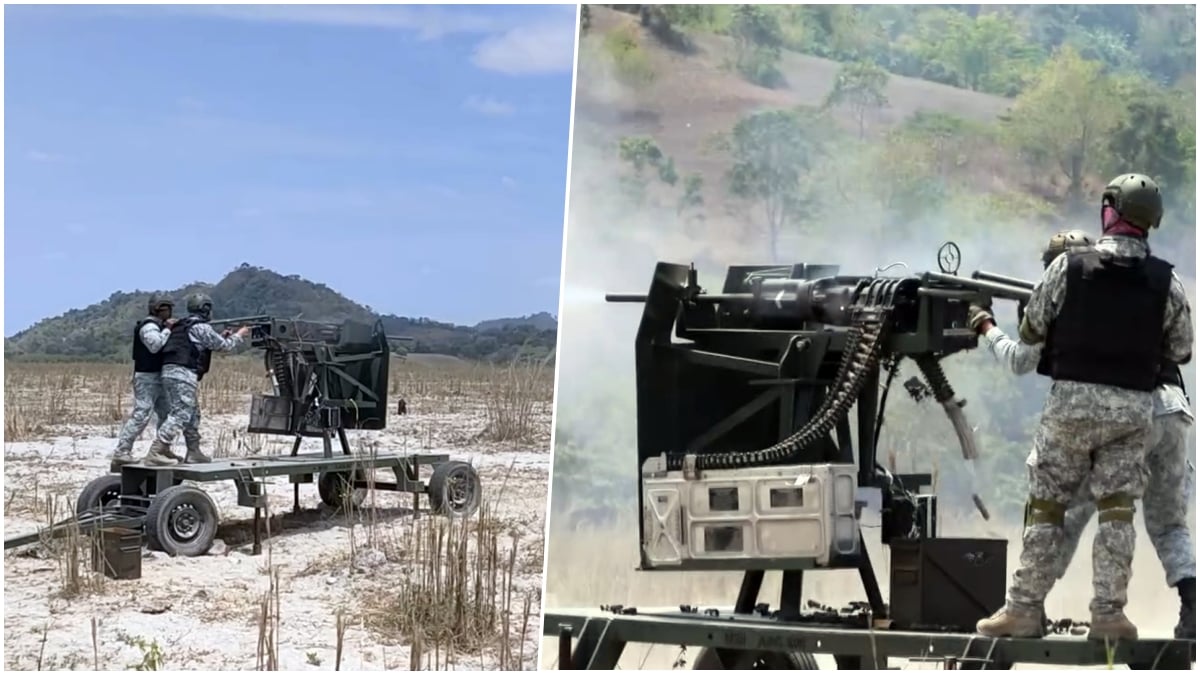
Plus, the Philippine Air Force has recycled M39s out of old F-5s for use as towed ground support weapons, which is just awesome.


Chris Eger
Chris Eger is an NRA-certified firearms instructor in multiple disciplines with a background in law enforcement and as a security contractor to the federal government. He has been writing badly since 2006 and has a number of poorly-received books in print.
View All Articles by Chris Eger