History
The AR-15 is the brainchild of Eugene Stoner, but the design was also influenced by the work of L. James Sullivan, Bob Fremont, and Melvin Johnson. The AR design dates to 1956, only 11 years the conclusion of WWII. Production began in the late 1950s, with its official military adoption coming in 1962.

The AR-15 was the widespread adoption of the intermediate cartridge firearm, with the idea that the AR-15 (M-16 in its military configuration) would be the jack of all trades for the user. The AR-15 was designed around the .223 Remington/5.56 NATO cartridge, giving it excellent range, accuracy, and making the ammunition lighter-recoiling and lighter to carry. This was in response to the widespread adoption of the AKM (AK-47) platform, which, alongside the SKS, established the dominance of the intermediate cartridge.

Originally, the AR-15 was developed under the ArmaLite brand, leading to the AR – ArmaLite Rifle – designation. ArmaLite sold the patent and rights to Colt in the late 1950s, and the AR-15 is still in production today, not only by Colt, but by countless other companies. It is estimated that there are more than 25 million ARs in the United States, a stark contrast to the less than 300,000 that were in circulation prior to the 1994 assault weapons ban.
What qualifies as an AR-15?
Countless AR-15 manufacturers across the United States produce the design in rifle and large-format pistol configurations. There are a lot of AR-style firearms; however, in order for something to be considered a traditional AR-15, it must have a .223/5.56-chambered barrel with a direct gas-impingement system. The other basic design feature is a buffer system with a standard AR-15-style bolt carrier group that feeds from a detachable box magazine.
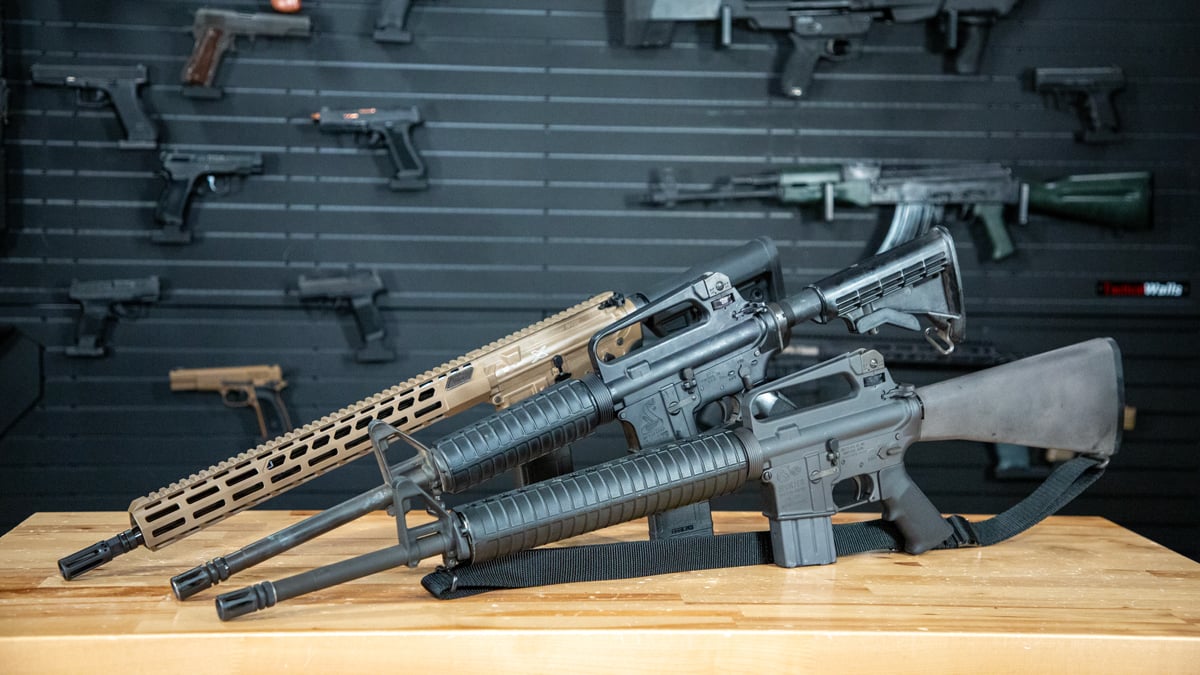
The direct-impingement gas system is one of the most basic qualifiers for the AR-15. A gas block and tube direct gas into the receiver, exerting force onto a key on the bolt carrier group that drives the entire BCG back. The spent casing is ejected as the spring in the buffer tube pushes the BCG back into battery, picking up the next cartridge from the magazine.
Because the system directly vents gas into the upper receiver and BCG, it requires more frequent cleaning than a short or long-stroke gas piston operation.
Upper Receiver
The AR-15 is composed of an upper and lower receiver. The upper receiver houses the barrel, handguard, gas system, dust cover, charging handle, BCG, and forward assist. Older upper receiver designs feature a fixed carry handle and front sight post, paired with a polymer drop-in handguard.

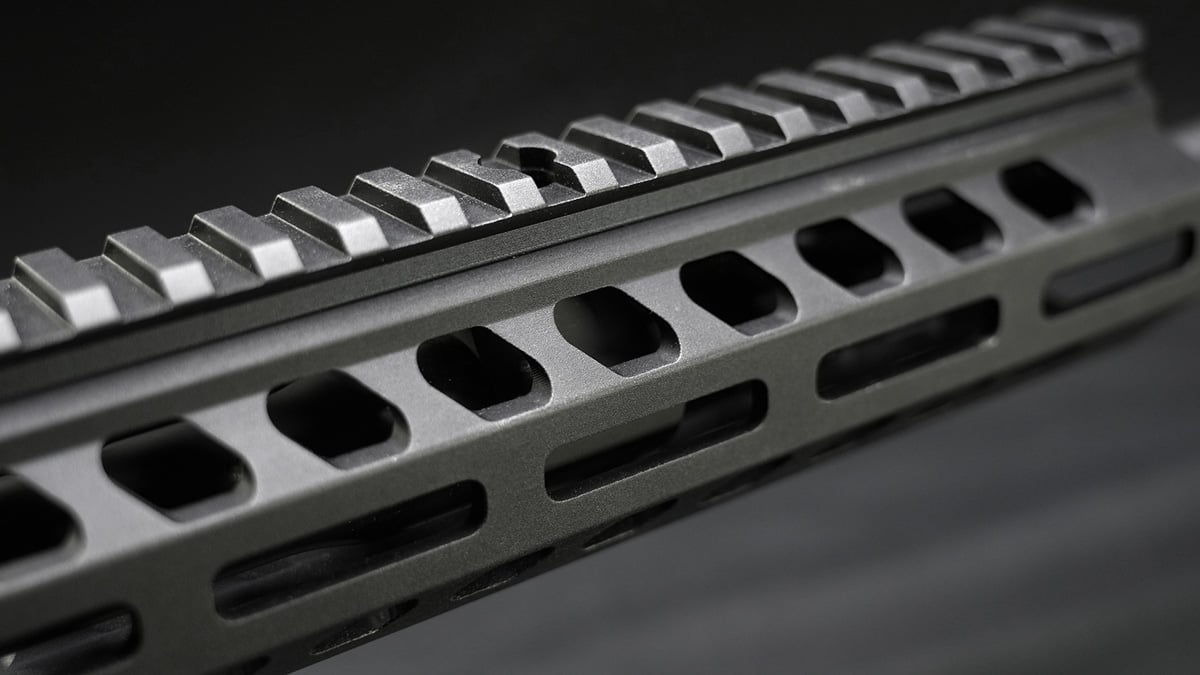
Over the years, the upper receiver has been upgraded to a free-float handguard with more modern attachment styles like Picatinny rail or M-LOK slots.
Bolt Carrier Group (BCG)
The bolt carrier group for the AR-15 is one of the most prominent parts. The radial bolt head comes from the 1941 Johnson rifle designed by Melvin Johnson. The tip of the BCG features the gas key that lines up with the gas tube, allowing the gas-driven operation of the bolt.
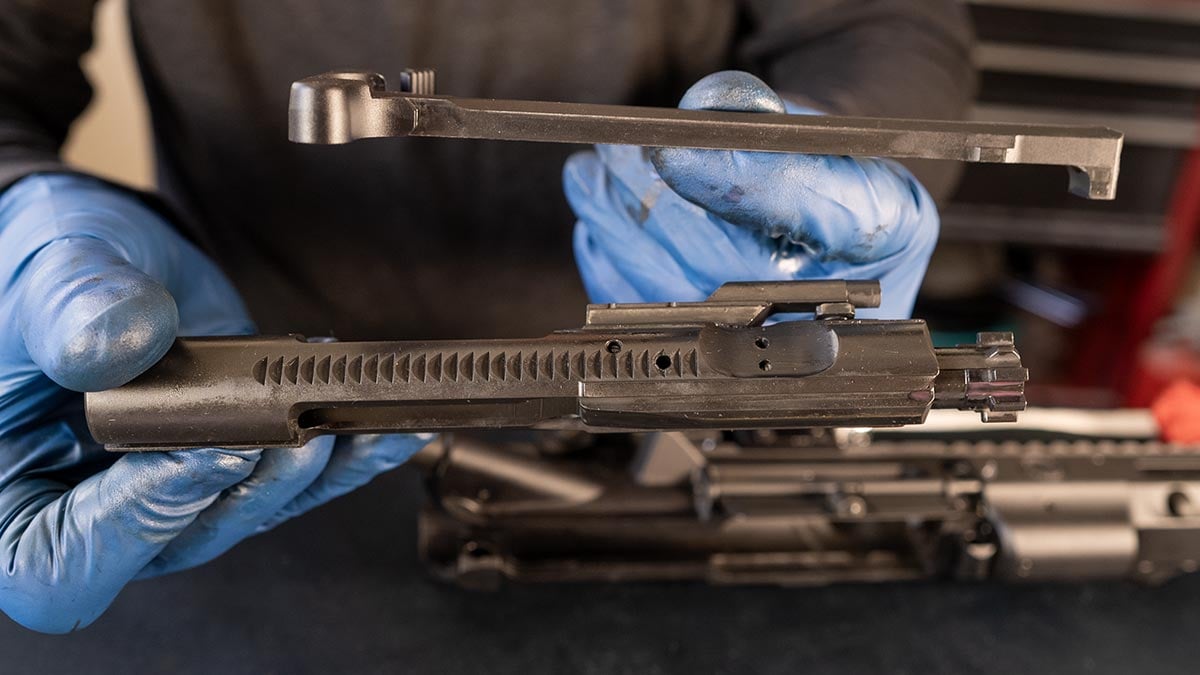
Teeth on the right side of the BCG are meant to align with the forward assist. This allows the forward assist to gain leverage on the BCG, pressing it into battery if it fails to go into battery on its own.

The inclusion of the forward assist is controversial. Eugene Stoner did not want it in the original design, but it was required for the U.S. Army contract. Stoner believed that if the bolt did not go into battery, there was a reason, and forcing it into battery was not the answer. Regardless, the forward assist is still a prominent design feature.
Barrel length
The original AR-15 was designed with a 20-inch barrel in mind. In fact, the .223 Remington/5.56 NATO cartridge was designed for a 20-inch barrel and performs best in that length, traveling at velocities above 3,000 fps.

Most modern AR-15s use a 16-inch barrel, the shortest you can go before a rifle must be registered as an SBR. Over the past decade, a plethora of shorter barrels have been built as large-format pistols, with lengths as short as 5 inches. It’s important to remember that the .223 Remington/5.56 NATO cartridge is a velocity-dependent round, and the shorter the barrel, the worse its performance will be.
Barrels typically feature a 1/2x28 thread pitch for anyone looking for suppressors or different muzzle devices, and most stock AR-15 still use the effective A2-style birdcage. In fact, companies like Griffin Armament and B&T make suppressor adapters that simply slide over the A2-style birdcage.
Barrel profile
There are many different profiles for AR-15 barrels. The original AR-15 featured a pencil barrel, which matched the lightweight nature of the design as Stoner intended.

A bulk-style HBAR barrel was introduced with the M16A2, with a thick and heavy profile for durability. The introduction of the M203 grenade launcher led to “203-cut” barrels, with a mixture of pencil and HBAR sections for the mounting brackets of the M203.
Ultimately, there is no real standard, and many companies balance durability and heat dissipation with weight and weight reduction.
Twist rate
The twist rate of the barrel describes the number of revolutions that the rifling spins the bullet over a certain number of inches. For example, a 1:14 twist rate spins the cartridge one full revolution every 14 inches, a relatively slow twist rate. A 1:7 twist doubles that rotation, making a full rotation in 7 inches. Smaller, lighter rounds do not require a fast twist rate, while heavier rounds require more stabilization.
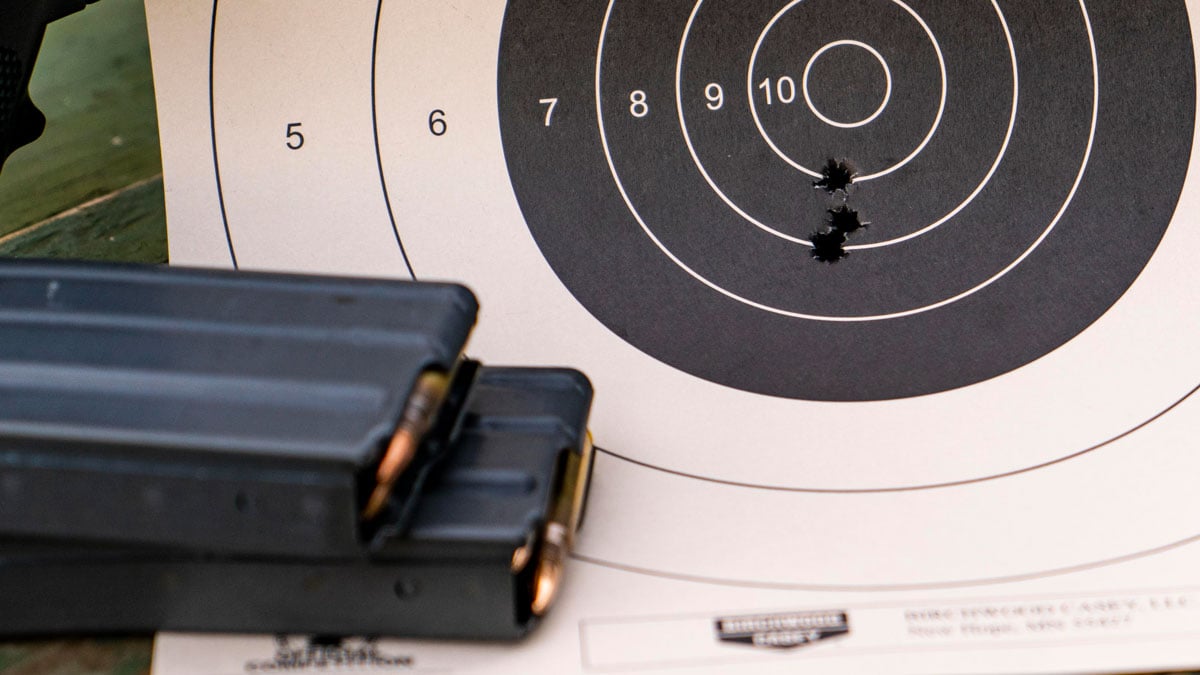
The original AR-15 had a 1:14 twist rate, which was changed to a 1:12 rate for military contracts. This was perfect for standard-issue 55-grain ammunition. Modern ARs feature 1:7 to 1:9 twist rates that are more ideal for the heavier 62 to 77-grain projectiles common today.
Gas System Lengths
One of the most important relationships on an AR-15 is the gas system length in relation to the barrel length. The barrel must extend far enough past the gas block that the bullet stays in the barrel long enough to push gas down the gas tube.


At the same time, the barrel should not extend too far past the gas tube. The longer the bullet stays in the barrel past the tube, the more energy it bleeds, also increasing force on the upper receiver and BCG, which leads to increased wear. The bullet’s stay in the barrel beyond the gas block is termed “dwell time.” There is a Goldilocks zone for dwell time for each length of gas system and barrel:
The rule of thumb: the longer the gas system, the lighter the recoil and the less wear on the system. The shorter the gas system, the more violent the recoil and more internal wear on parts.
Lower Receiver
The lower receiver is the serialized firearm component of the AR-15 design. The lower receiver houses the fire control group, the magazine well, the pistol grip, and the buffer tube and spring.
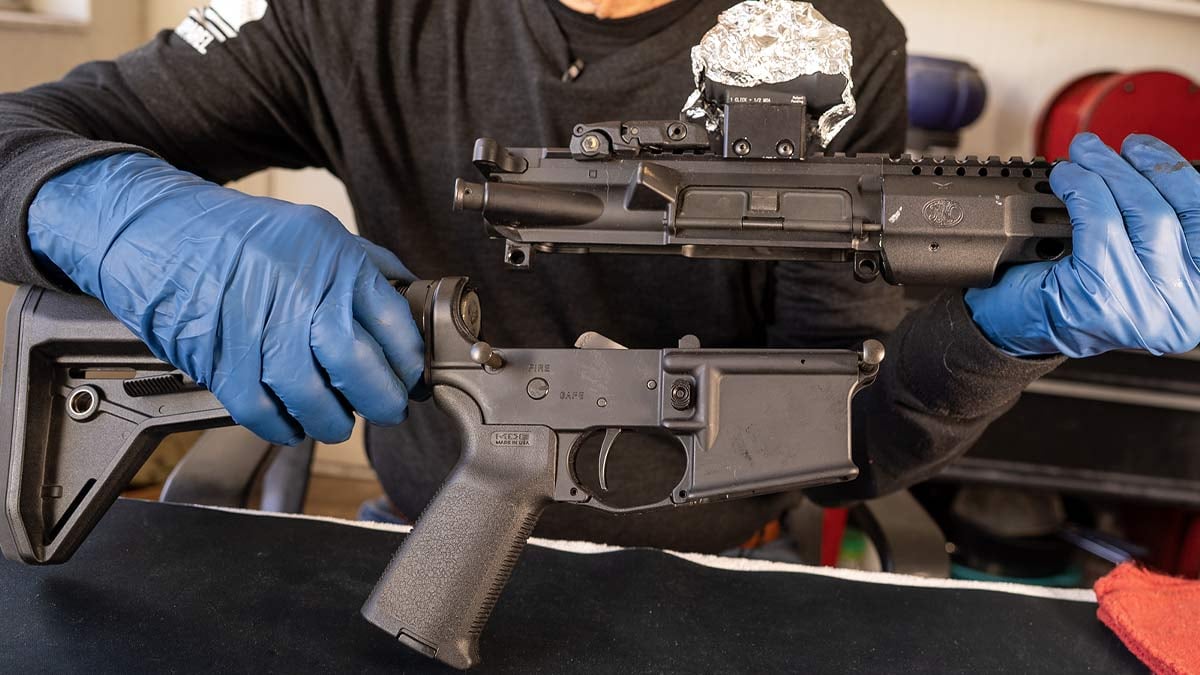

The upper and lower receiver are held together by two captivated push pins in the front and rear of the receiver, making it easy to disassemble for cleaning and maintenance.
Controls
The standard AR-15 features a left-mounted safety selector that’s easily actuated by a right-handed shooter’s thumb. The left side of the receiver also features a bolt-hold/bolt-release. The right side of the receiver features a push-button magazine release with ridges around it to prevent an accidental actuation.


More modern AR-15s have ambidextrous controls, with a safety, bolt hold/release, and magazine release on both sides of the receiver. This eases the burden for left-handed shooters and allows easier off-handed operation.
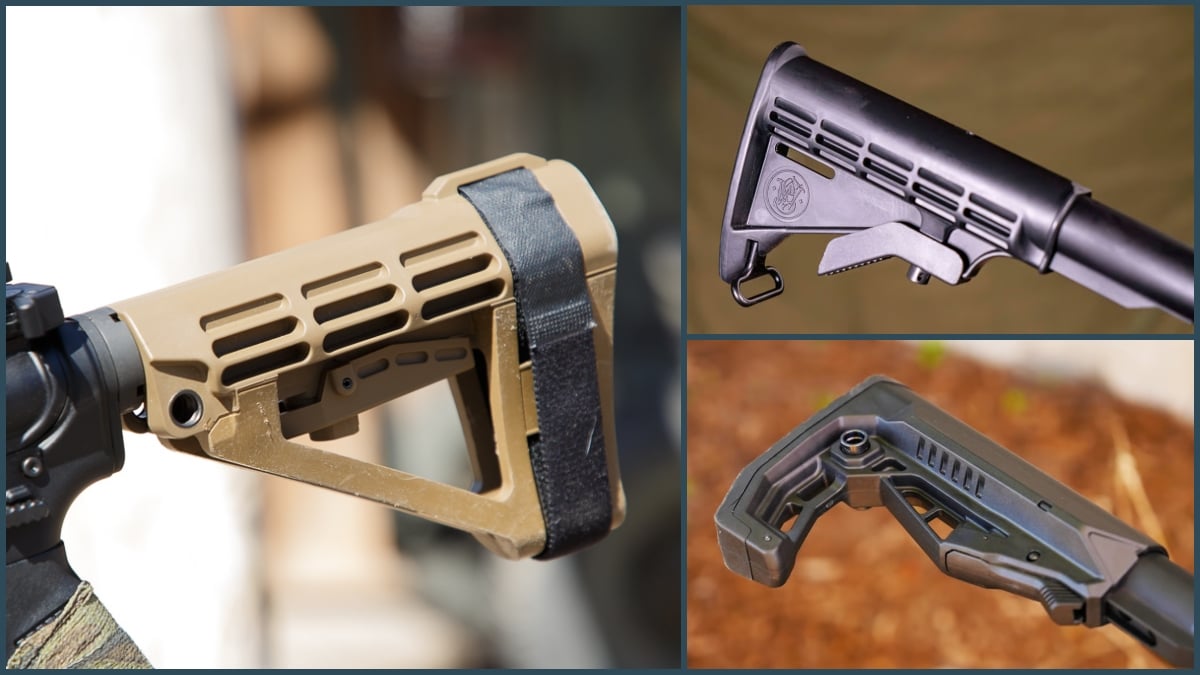
The lower receiver also features the buttstock. The original AR-15 had a fixed buttstock, while more modern versions feature a retractable stock. The buttstock covers the buffer tube, which houses the spring for the gas-operated action. The buffer tube can be customized with different buffer weights and springs to help with reliability, or silent buffer systems that aid suppression.
The trigger is simple. The trigger and hammer assembly is held in by two push pins. Trigger customization is endless, with countless triggers on the market of all different shapes and weights. The pistol grip is also customizable, with most standard builds featuring an A2-style grip.

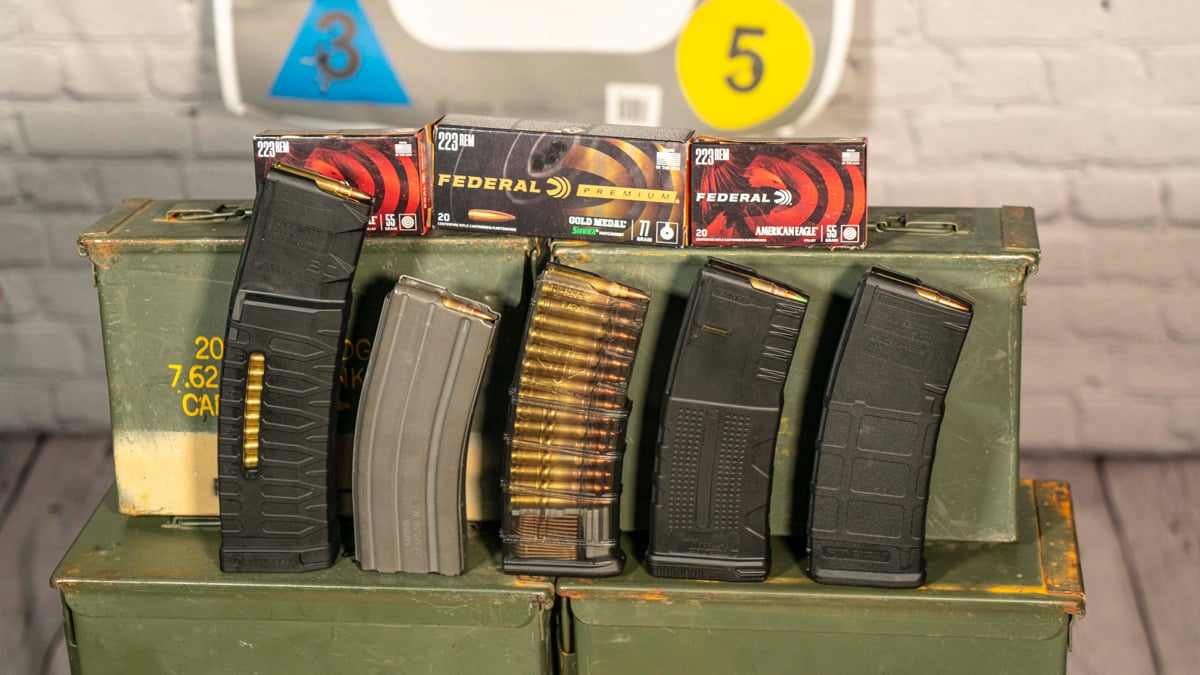
The magazine well is designed to accept the STANAG-pattern magazine, one of the most popular on the market. The AR-15-pattern magazine has a standard capacity of 30 rounds, with options for high or lower capacities.
Summary
Whether you are new to the AR platform or are shopping for your 20th AR-15, a basic breakdown of the popular platform can help you get to know the gun better. The AR-15 is an incredible design that is lightweight, modular, and lends itself well to the constant modernization of black rifle shooting. There’s a reason why the AR-15 is a popular choice for everything from home defense to hunting, and everyone should have at least one in their collection.