
Deep in the heart of Utah in the high desert settlement of Gunnison lies a factory that produces some of the best backcountry hunting rifles in the world. While the surroundings may be quaint and rustic, the work going on here is anything but.
Christensen Arms has been innovating firearms since the 1980s and recently invited us to tour their facility to find out how and why they do what they do.
Table of Contents
Who is Christensen Arms?
Forging Ahead
Begin with the Barrel
The Tech on the Stock
Building Through Bedding the Barrel
On the Proof Range
On the Testing Range
Shooting in the Mountains
Conclusion
Who is Christensen Arms?
At its core, Christensen Arms seeks to bring innovative new products to the hunting community, and more specifically, backcountry hunters. Christensen was the first manufacturer to offer a carbon-fiber barrel.
It wasn’t an easy path to forge, but that's nothing new for the Christensen family. Starting the company in this countryside couldn’t have been easy. They began by setting up companies in both the prosthetics industry and the aerospace industry, before finally reaching the firearms industry. Now, all three businesses sit next to each other on N. Cemetery Road in Gunnison, Utah. The family history is reflected in the company logo, with the wings on the side of the ram representing Christensen's aerospace ties.
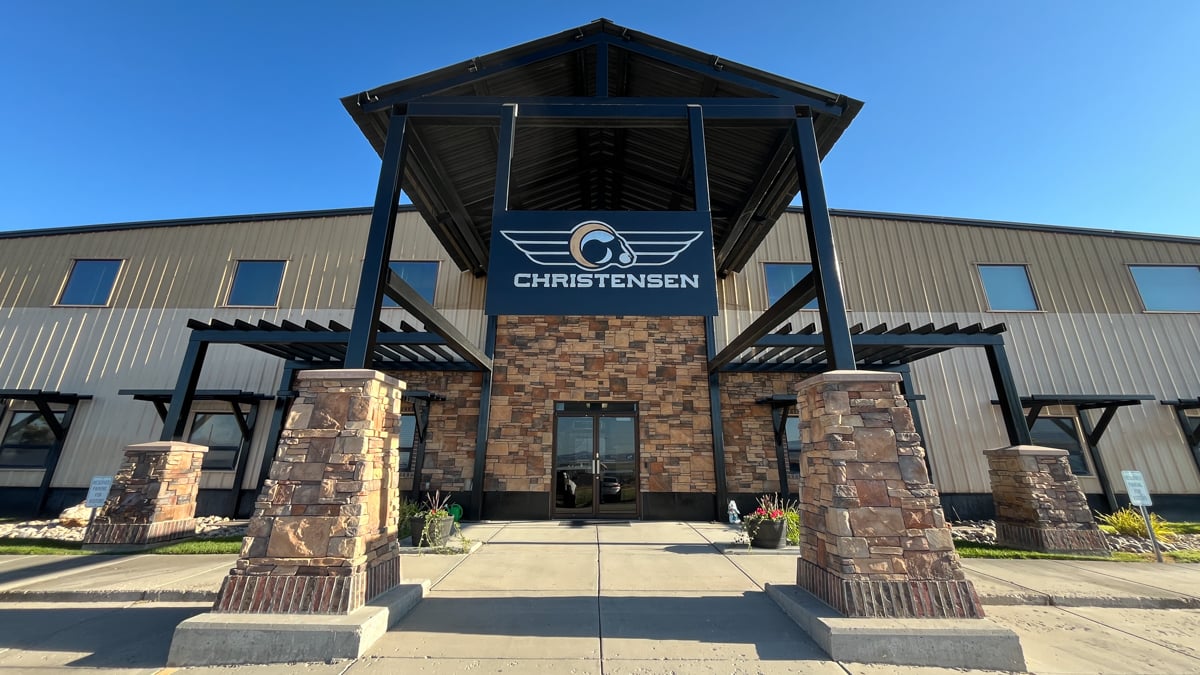
Bringing the capital and convincing people to set up shop in this remote area must have taken some convincing. Perhaps more impressive than the products themselves is the fact that this company was able to establish itself within such a small community. The city of Gunnison measured just 3,509 people at the 2020 census, yet the manufacturing prowess here is comparable to any custom rifle maker.
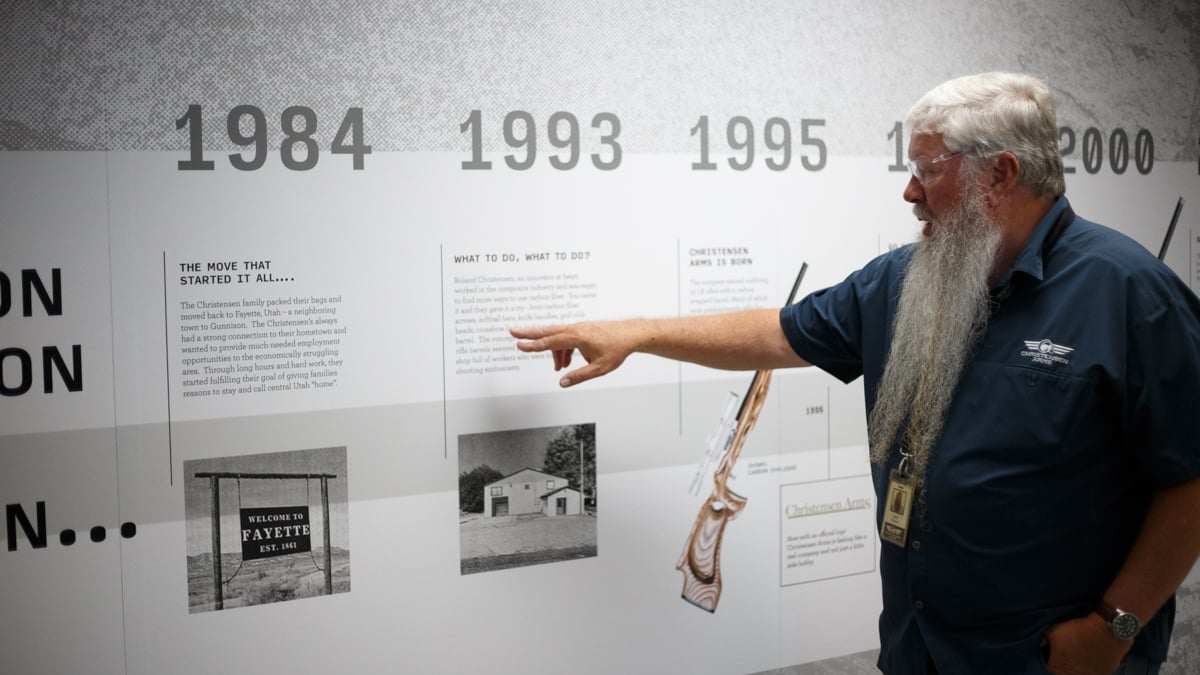

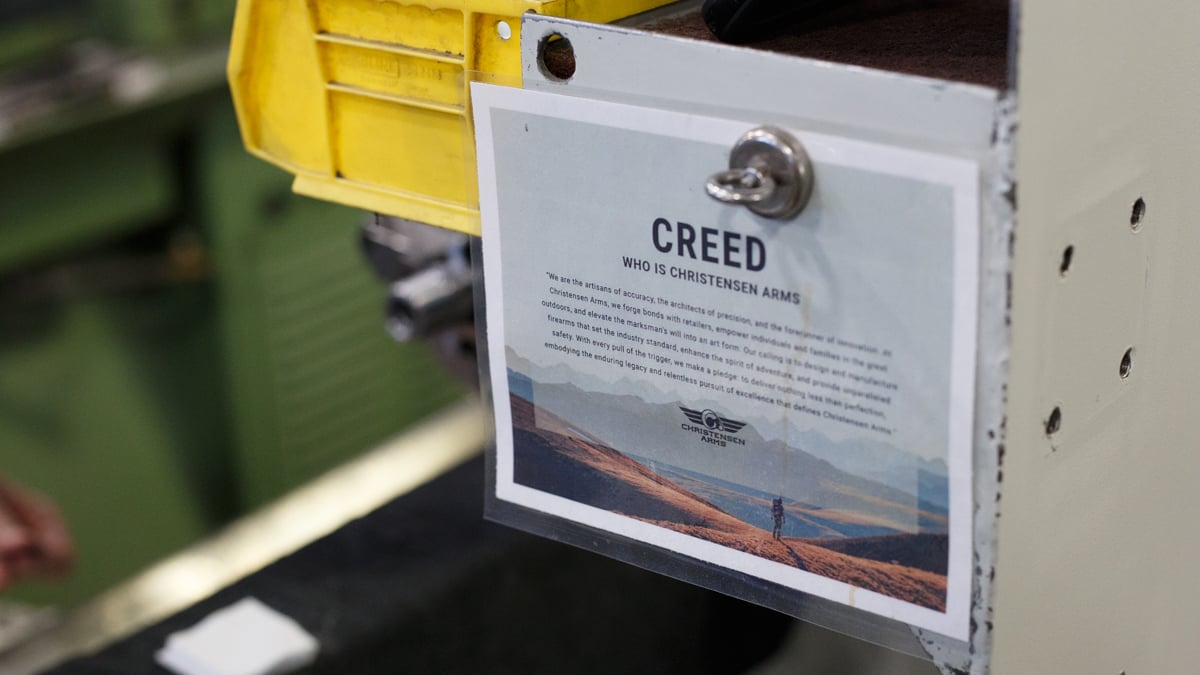
One of the Christensen family’s goals for establishing the company in central Utah was to provide meaningful employment so that people who grew up in Gunnison would stick around their hometown. This commitment to the community makes the whole operation that much more special, fostering a sense of pride that you don’t find in every factory. It starts with the company creed, but it extends to the individual level.
Most of the employees are avid hunters and shooters, which directly contributes to the performance of the guns. They all want to deliver that perfect shot and depend on the gun to help them do that, so no one wants to see a gun that isn’t perfect leave the factory. Given the generous employee discount, that rifle they’re working on very well could be their own – another reason to take ownership of their work.
Forging Ahead
While the company built its reputation on using advanced materials to cut weight in the barrel, it didn’t stop there. Christensen has proven that carbon fiber can be applied to an AR platform, which earned them several awards. The company also has crafted some of the finest 1911s in the world using Damascus steel.
Now, the future points back to the origins of the company: making the lightest, most rigid backcountry hunting rifle in the world. To achieve this, the company has leaned into its history with carbon fiber to come up with a new solution for making lighter stocks.

Flash Forged Technology (FFT) is the latest jump forward for a company already known for light rifles. This is how Christensen can make sub-5-pound rifles. While company engineers keep their tech secrets close to the chest, the process essentially layers carbon fiber in a way that uses less foam under the shell, while maintaining the rigidity needed for a backcountry hunt.
To show us some of these advanced materials up close and provide a better understanding of the company creed, they took us through building our very own Christensen Arms Ridgeline FFT.
Begin with the Barrel
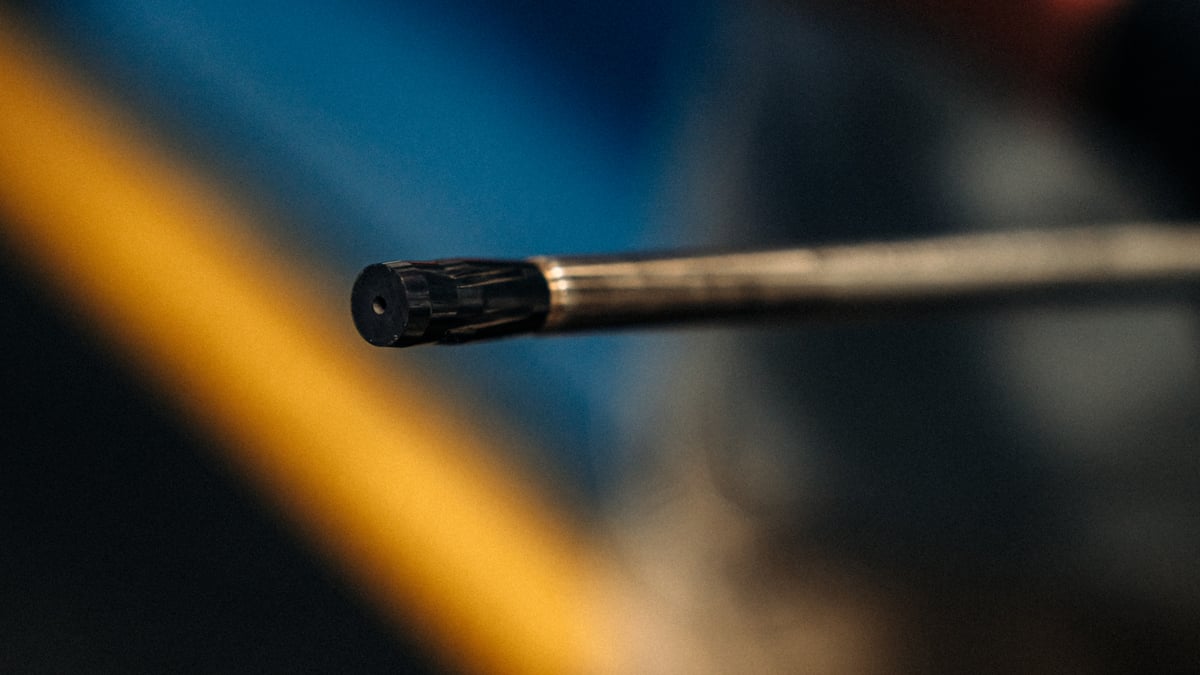
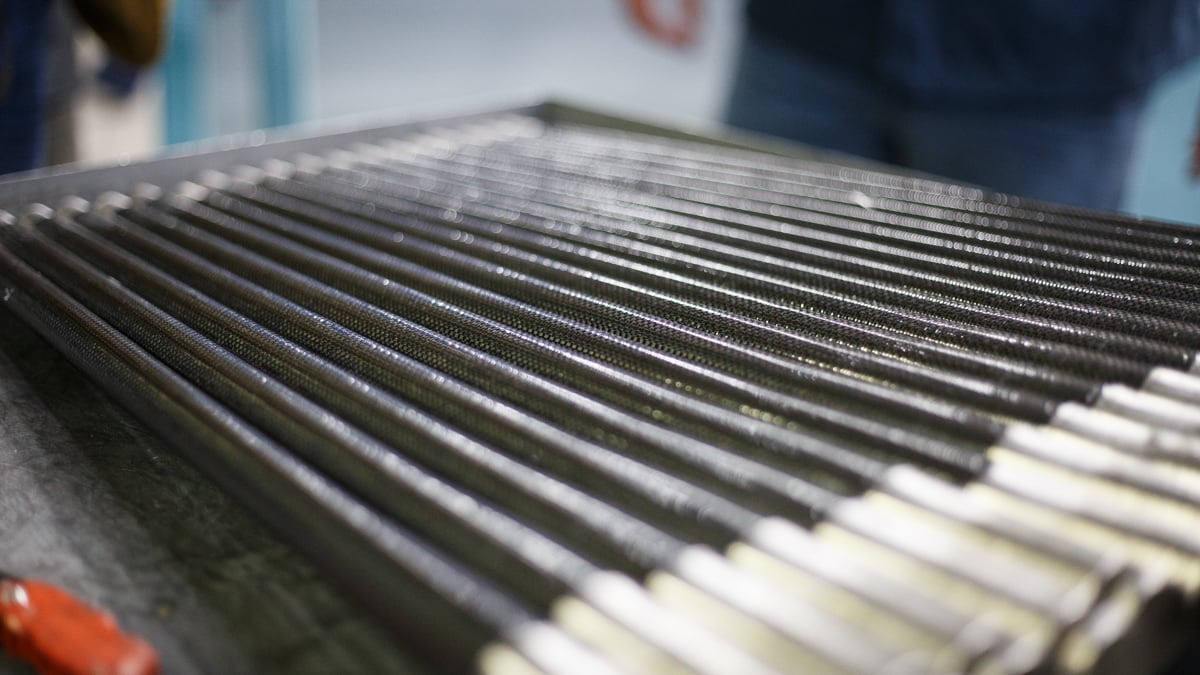
Although we didn’t run CNC machines or cut bar stock, we did start with the barrel manufacturing. The barrel is where the company rose to prominence, and the button-rifled barrels have a few unique aspects. The most obvious, after seeing it come out of the CNC machine, is some unique cuts near the breech end of the barrel.

Again, what exactly these are and how they function involves some tech secrets, but the idea is that these are needed for heat dissipation. The stainless steel of the barrel heats faster than the carbon-fiber wrapping, and these special cuts help compensate for this difference while keeping the barrel integrity.
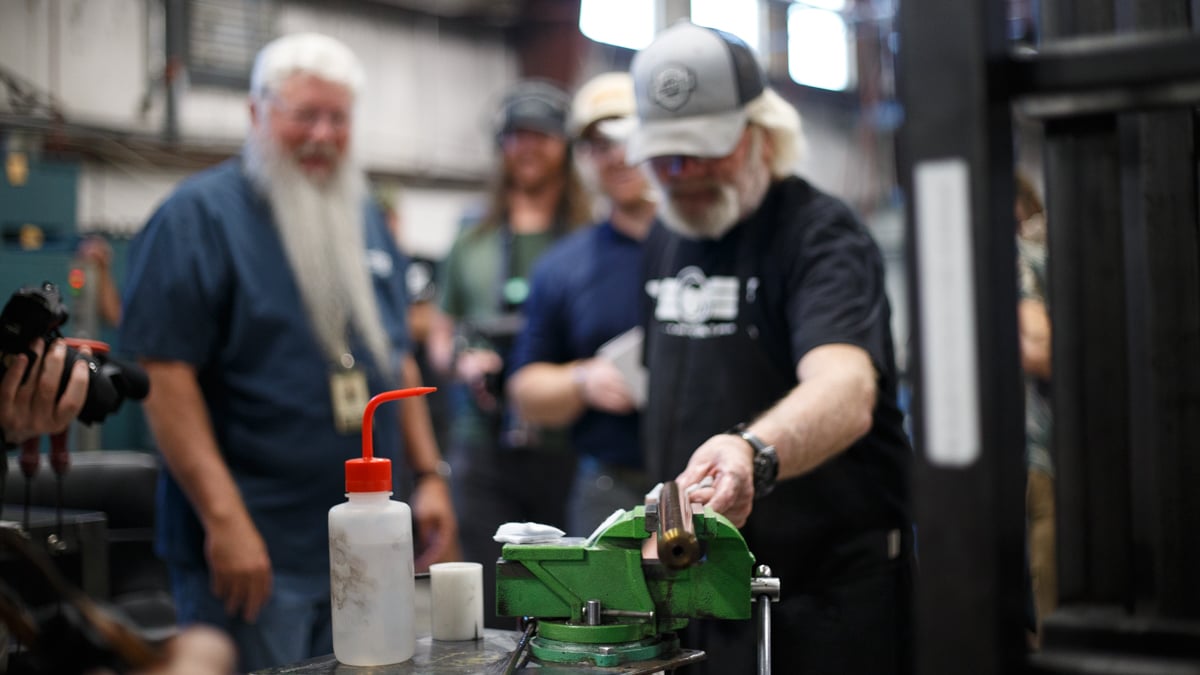
Notably, every barrel is hand-lapped, which isn’t common among firearms manufacturers, especially bigger brands. (Christensen may not be selling millions of guns a year, but over 10,000 rifles have left the floor every year for the past several.) A small detail like this is the same reason the employees take pride in their work and customers are so satisfied. Christensen Arms doesn’t do this because it saves money or is necessarily efficient – they do it because they view it as the right thing to do.
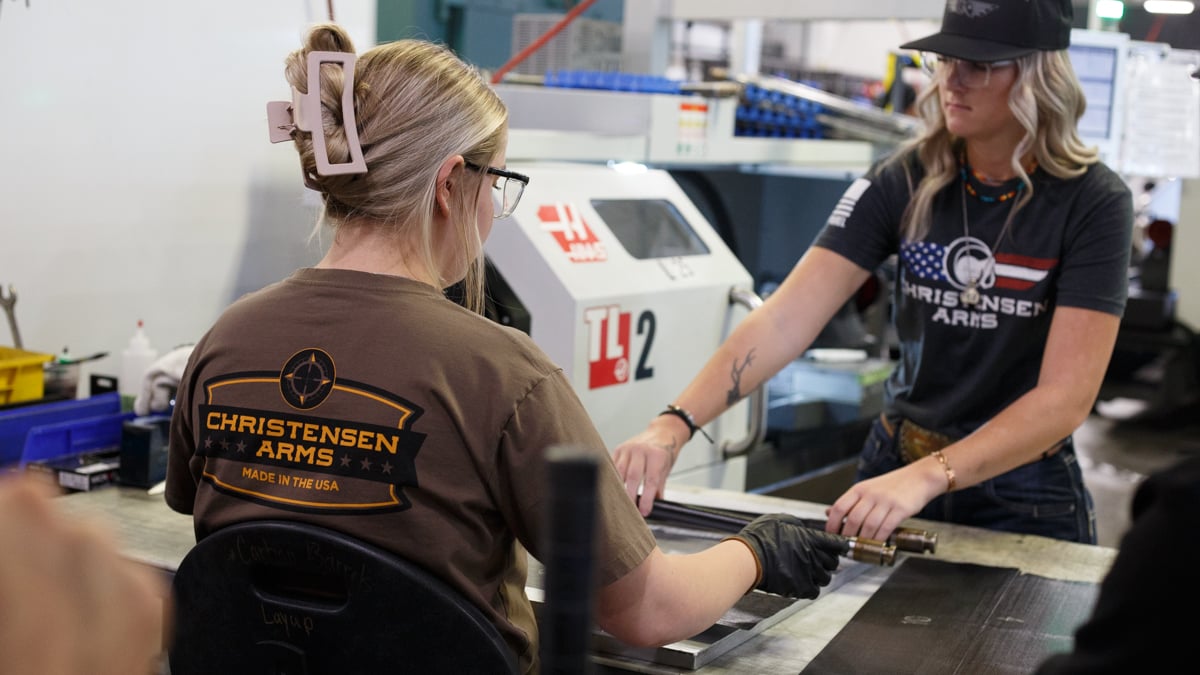
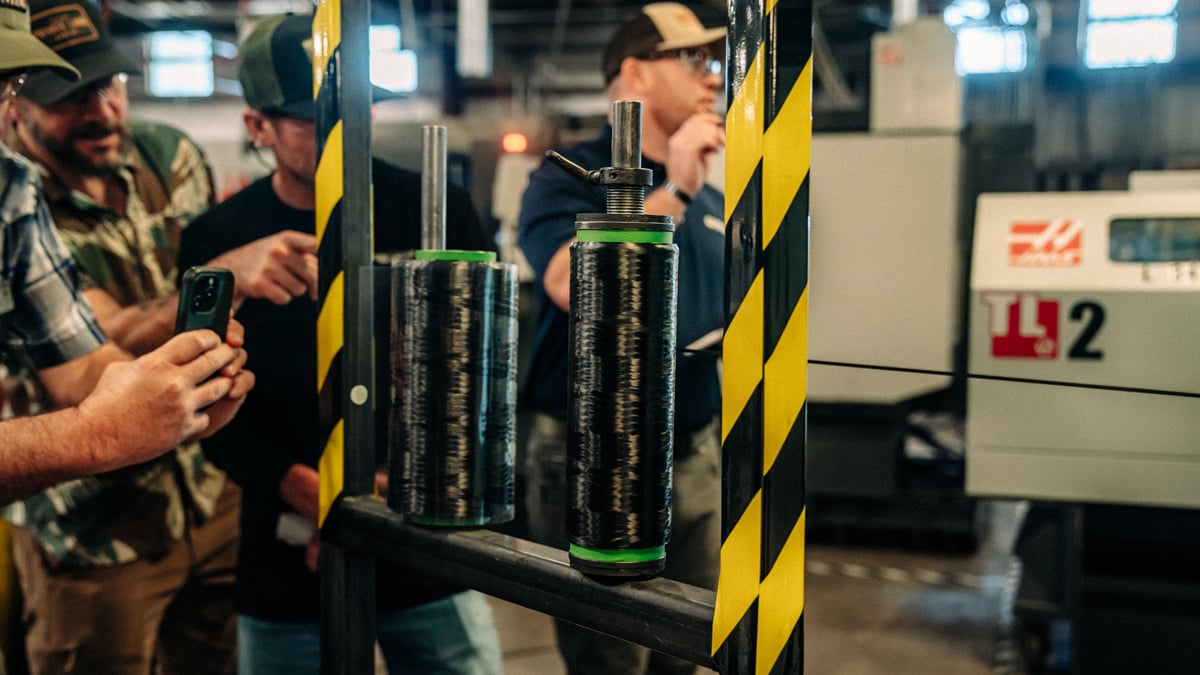
After the barrel is hand-lapped, it dries and then finds it way over to a station where it’s wrapped in carbon. Christensen Arms has been building carbon-fiber barrels since originating the process in 1984. Again, without explaining any of the fine details, imagine two spools of carbon both getting slowly tied around the barrel, then being heat-treated. This process happens over and over until the barrel is the proper dimension.
The two women working the carbon-wrapping station were indicative of the types of folks you see on the factory floor – young and energetic, one of them an elk hunting guide. It’s clear the Christensen family dream is alive and well.
Taking a Look at the Tech on the Stock
After seeing how these groundbreaking barrels were produced, we moved on to see how some of the stocks are built. Company reps were even more tight-lipped about the Flash Forged Technology used in making their innovative stocks than they were about but the barrels, but we got a peek at the process.
While it wasn’t a step-by-step look, we got the gist of it. Looking around, you won’t see any giant forge, like the one S&W has stamping out revolver frames.

This makes for an incredibly light rifle, with a Ridgeline FFT clocking in a starting weight of just 5.3 pounds (plus you can lose half a pound if you opt for the Titanium version). That is an incredibly light rifle, which is where the major appeal lies for backcountry hunters.
Christensen told us it took years and millions of dollars to develop this technology. They were adamant that the FFT couldn’t sacrifice anything in terms of precision, strength, or durability. The rifle and its new stock had to live up to the company’s legendary standards, and so far, customers haven’t had much to complain about.
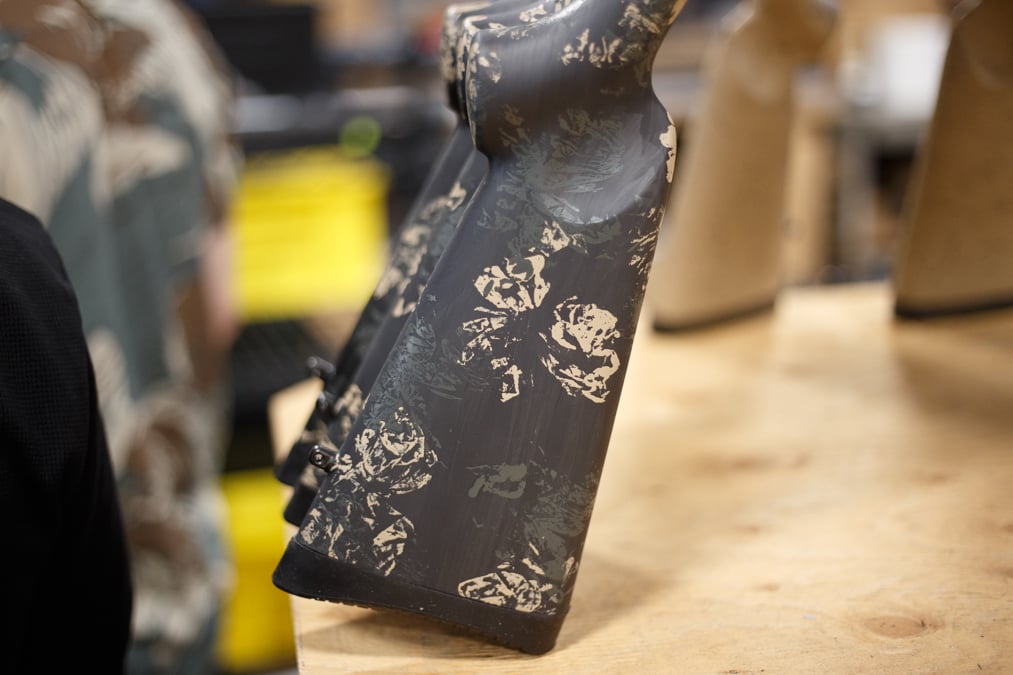

Another area of note is the design of the stock with its unique camouflage design. It looks good and has a bit of texture, and interestingly, a robot applies the finish. It was a first for the author to see a Cerakote robot add a paint with a texture like this. The company also partners with companies like Sitka and Scheels to offer some styles for customers who want name-brand camo patterns. Christensen’s in-house camo isn’t a hyper-realistic pattern, but the gun doesn’t seem like it will stick out in the field or woods, either.
Building Through Bedding the Barrel
After touring the factory floor, we set to building our rifles. The first step was to marry the barrel to the receiver. After torquing the two together, we added the muzzle brake and straightened everything out. We would later take the brake off, since I’m planning on shooting this suppressed, but our hosts still wanted to show how the rifle would traditionally be assembled.


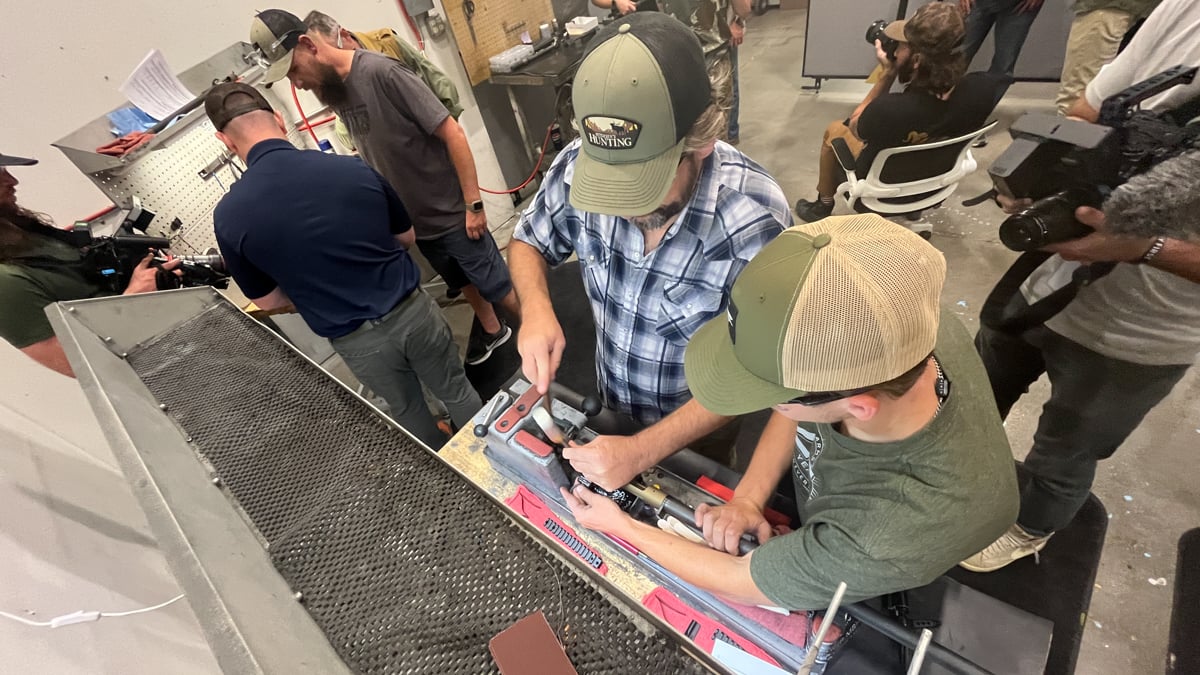
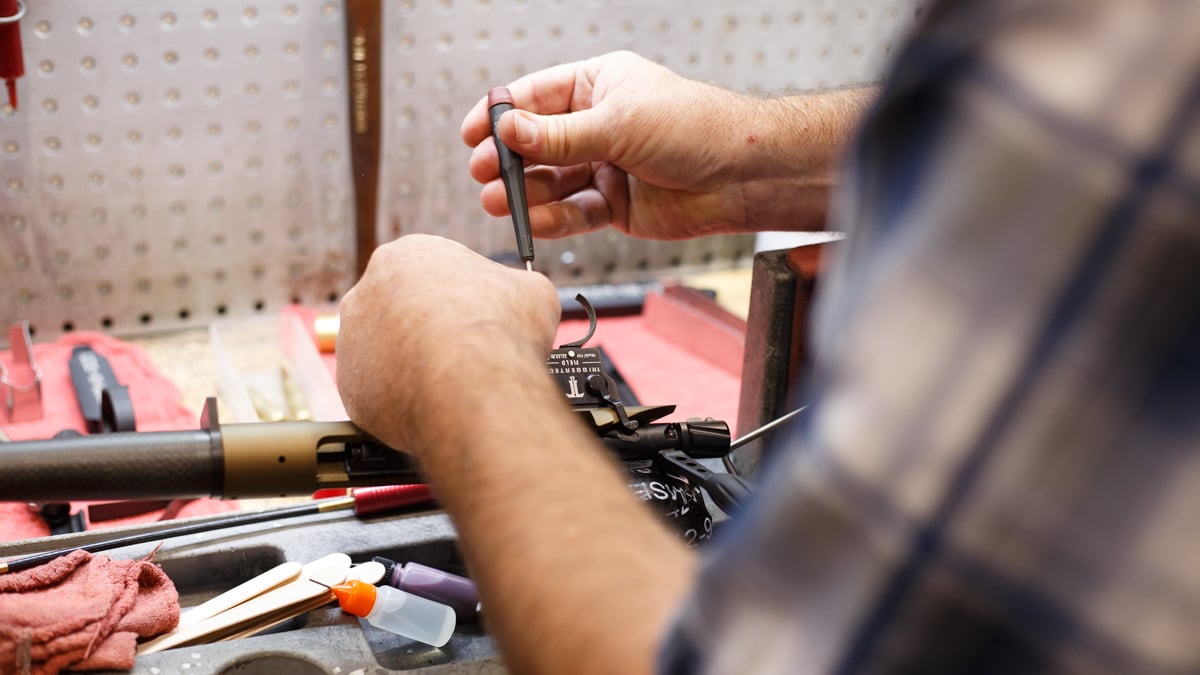
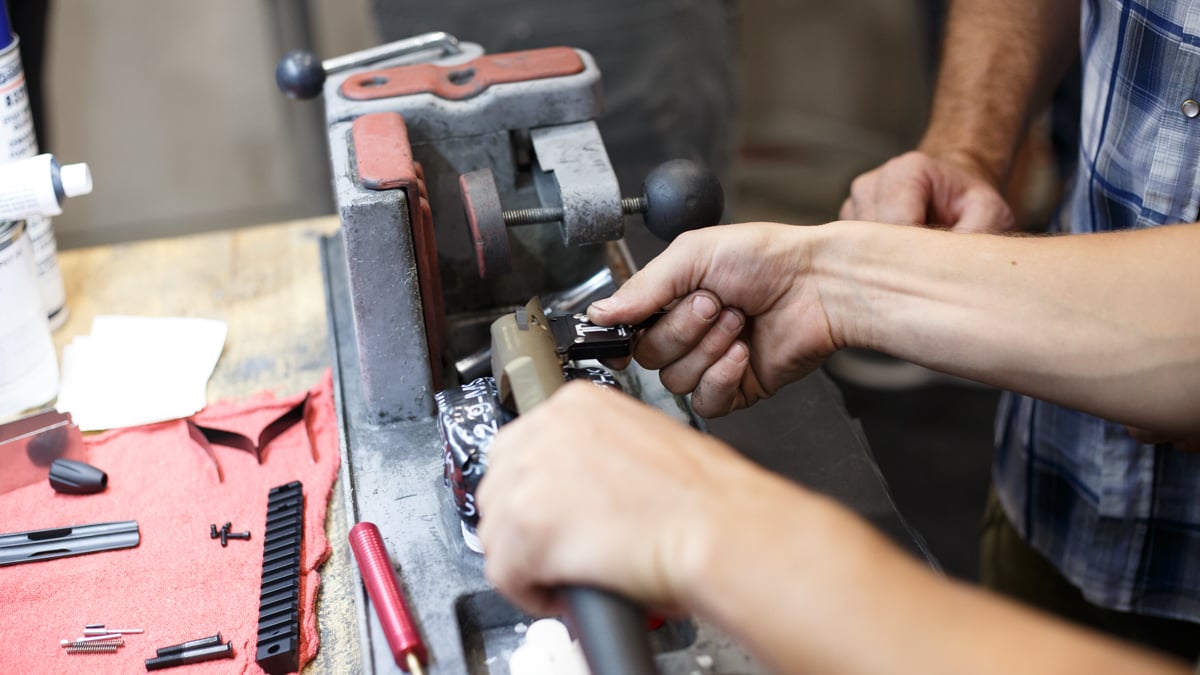

With the rifle and the action joined, we took the barrel over to be laser-engraved with the caliber, company name, and the new owner’s name – a nice custom feature Christensen added for the writers.
Back to the bench, and with some carefully held pins and springs and several whacks of the hammer, we had ourselves an assembled bolt. All Ridgeline FFTs have a two-lug spiral-fluted bolt. We finished by bedding the barrel and action, which involved taking a rather nasty black glue and applying it to the plastic support piece halfway down the stock. After hammering in a few more pins, this baby was ready for testing.
On the Proof Range
Rifles are sent to the proof range before hitting the final test range for accuracy testing. At the proof range, every single rifle is shot with a proof load. Our tour guide, Christensen Arms Brand Ambassador Jeff Bradley, made sure we understood the significance of this.

While many rifle makers might fire one in every five or 10 rifles with a proof load, Christensen fires a proof round through every rifle to make sure they all meet the same consistent standard. Because the brand is focused on backcountry hunters, who are known for mixing up their own special blends in reloading, Christensen views this as essential. It’s just another small detail from a company that makes sure all the details are covered.
On the Testing Range
After the proof range came the accuracy testing range. The Ridgeline FFT comes with a sub-MOA accuracy guarantee, and this is where the gunsmiths make sure that is true. I was able to post just under 1 MOA while being the last shooter at the end of the day.

I don’t claim to be a precision shooter, but the writer in front of me was, and he was able to achieve .3 MOA with his rifle. He jokingly referred to it as being chambered in the “Lord’s caliber” of .300 Win Mag – perhaps he was onto something.
Shooting in the Mountains
The next day, we got to take our newly constructed rifles and head to the range to shoot. While the accommodations of the range were modest – a couple of small shoot houses – the layout of steel targets on the side of the mountain was a beautiful sight. We could shoot to a mile if anyone dared, but most targets were nicely displayed between the 100- and 1,000-yard markers. On some targets, a hit would set off flashing lights. Within 20 minutes or so, guys were ringing steel at 1,000 yards.

The Ridgeline FFT is a unique rifle that weighs next to nothing compared to traditional rifles. What makes it unique, though, is that for a rifle so light, the felt recoil isn’t terrible at all. When my rifle finally arrived back home at the shop, the guy behind the counter told me, “You’re going to want to keep that muzzle brake on there; a rifle this light is sure to pack a punch,” but that’s just not the case. Perhaps some magic lies within the layers of carbon in the FFT.
I only started hunting a handful of years ago. My longest shot on a deer is probably 120 yards. My longest shot ever was inside 300 yards, so it was a bit intimidating to step up to the line with all these precision shooters and lifetime hunters. Still, I felt welcomed and with a Scythe Ti suppressor supplied by Silencer Company on the end, the shooting was immediately enjoyable.

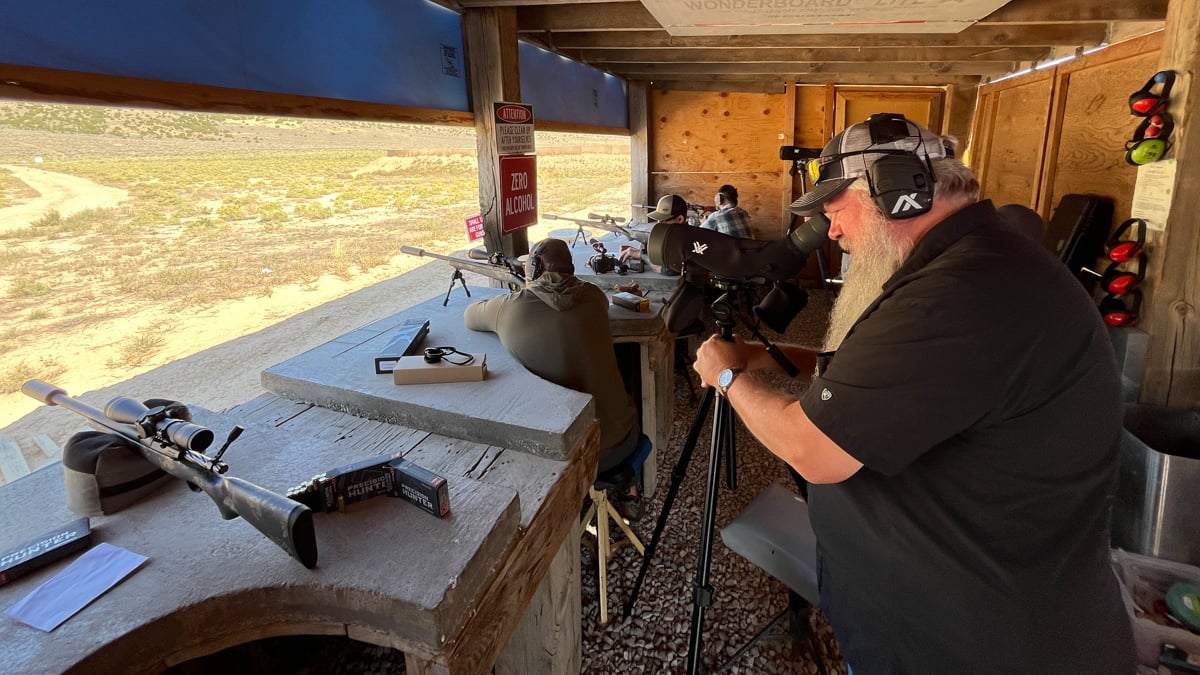
After getting on target at 100 and making some minor adjustments, I started stretching out. The provided Leupold Mark 5 HD made glassing targets easy, and shortly after getting zeroed, I smoked a coyote at 300 yards. Just before our noon call time, when the wind started to gust and the mirage picked up, I was able to hit a target at 600 yards. While some may scoff at that, I was proud of how far I had come in such a short amount of time. The rifle and optic no doubt played a huge part in getting me there.
Conclusion
It was great to see such a small community come together to form this unique and innovative firearms company. You can tell Christensen’s people are passionate about the details of their job, the products they build, and the customers they serve.
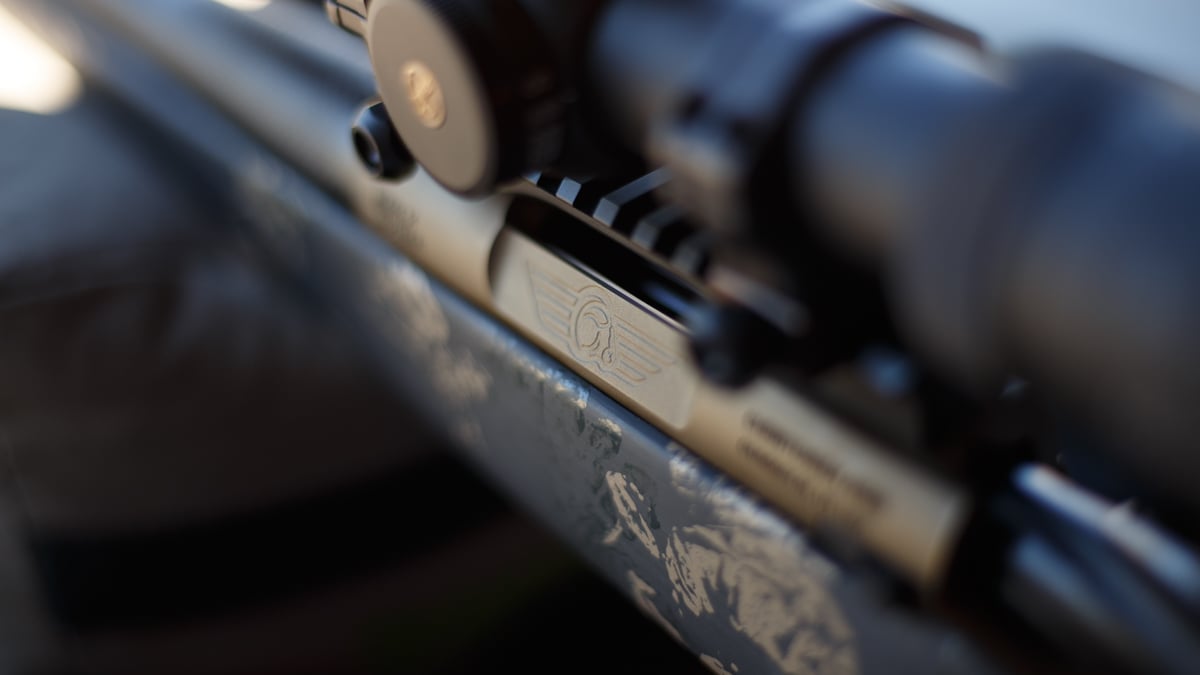
I plan to take this Ridgeline FFT into the woods this fall and hopefully lure a deer closer than 600 yards. But hitting that 600-yard shot got me amped and wanting to do it again. Who knows? Maybe I’ll use this Ridgeline FFT to scratch that itch and start doing some precision competitions one day. It’s certainly capable of far more than my current skills, but I’m going to love growing with it.