Video
The Metrics
The definition, for our purposes at least, is right in the name. These are shorter, carbine-length long guns built around chamberings typically associated with handguns. Most, but certainly not all, are semi-automatic and dropbox magazine fed. Common chamberings include 9mm, .40 SW, .45 ACP, and 10mm.
Throw me under the bus if you must, but lever-action carbines are darn fast-cycling and in comparable – but often considerably more potent – handgun rounds. Think .357 Magnum/.38 Special, .45 Colt, .44 Magnum/Special, and the like. With that broader definition of a PCC, hunting with one becomes not a rarity, but rather, a reasonable reality.
Hunting

Plenty of hunters have carried afield the early Ruger Deerfield or Deerstalker, Marlin Camp Carbines, Henry Big Boys, Marlin 1894s, and Winchester 1892s. We just haven’t always thought of these compact, fast-running, short-barreled firearms as specifically PCCs. But now, with an expanded awareness of the many uses of these wieldy weapons, we’d be remiss to ignore the hunting market.
Before getting ahead of ourselves, though, hunting with a PCC is definitely not ideal in most situations. However, where both legal and feasible, definite benefits exist, including low recoil and rapid follow-up shots. Further, the compact maneuverable lengths make the platform ideal in tight quarters like blinds and dense terrain, while also being easily carried in trucks and UTVs. Prior to lining up a PCC hunt, though, we must discuss regulations.
Hunting Legality

Legality is the elephant in this room. Some pistol chamberings, including .380 ACP and 9mm, are not legal for deer hunting in a good number of states. Others, like the 10mm or .44 Magnum, are far superior options and widely allowable.
The same applies to related pistol rounds. Some states allow them for small game, big game, and even turkeys or furbearers, but many do not. The world of invasive species like wild hogs is generally much more open in terms of firearms and chamberings allowed and offer some of the more enjoyable – and high volume – PCC hunting.
Some states list minimum casing length sizes for rifles – and naturally, carbines – while some areas use a round’s foot-pounds of energy to govern the game that can be hunted. Some areas also see magazine capacity restrictions, which in turn can limit the use of some PCCs. The bottom line involves doing research on locality restrictions as well as the effectiveness and range of a given chambering.
Range Limitations
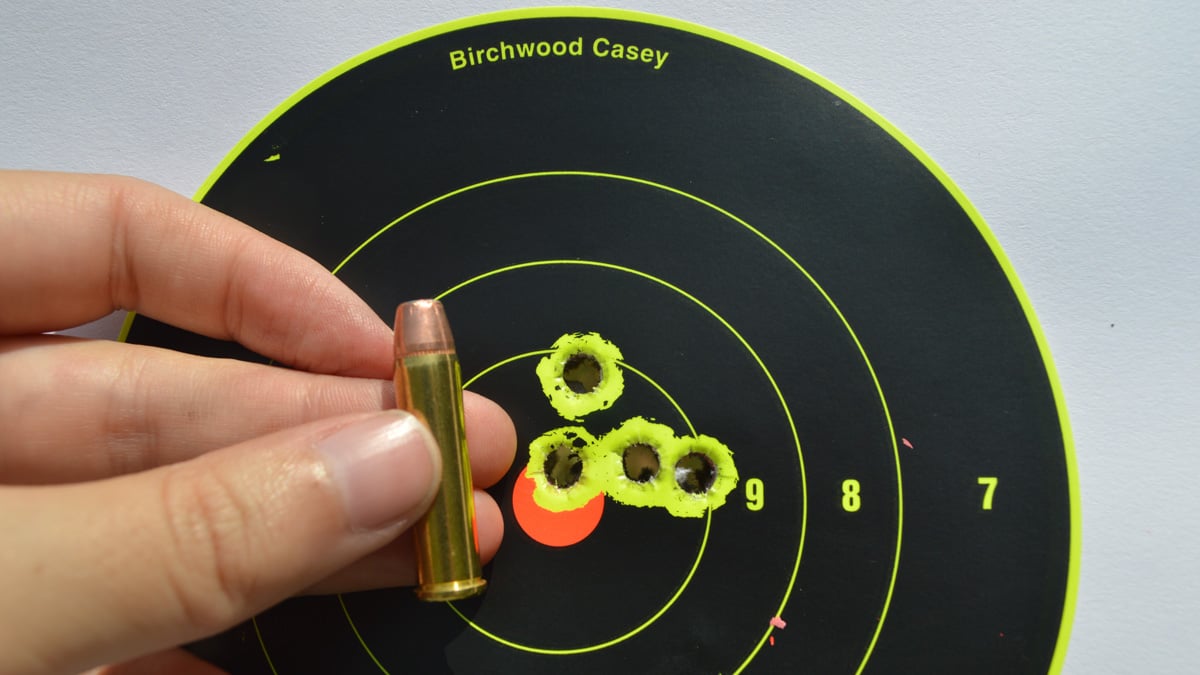
Effective range is a major limiting factor for most PCCs. Handgun rounds simply don’t have the ballistics or downrange energy and power to harvest cleanly and ethically at extended distances. For hunters, knowing that effective range not for hitting the target, but harvesting quickly and cleanly, is paramount.
For some guns and chamberings, that might be 25-50 yards; for others, 100 or even 150 yards. If we include more powerful chamberings like the .460 S&W or .500 S&W on a gun like Bighorn Armory’s lever actions, taking down larger game becomes practical. So much depends upon the game pursued, bullet selection, and most importantly, the chambering itself.
Even more vermin have fallen to PCCs at close range. Hogs have proven themselves an ideal target for such guns, where closer-range, quick shots are common.
Ideal PCC Use
Once a hunter is aware of the limitations and restrictions, a PCC can make a darn handy companion. Beyond hunting, PCCs are surprisingly useful around the home and ranch. Given their packable size, a PCC is likely to be at the ready, prepared to handle nuisance animals or threats.
Most shooters see far superior accuracy and range with a shoulder-mounted PCC than they would with a pistol or handgun. While not all handguns can handle +P ammunition, most every PCC can, affording another bump in capability.
PCC Ammo

In fact, as PCCs grow in popularity, ammunition companies are beginning to build ammo specifically for carbine-length barrels – with the caveat not to shoot it in handguns due to souped-up loads.
Federal Premium is active in this market, offering Syntech PCC for semi-autos and Hammer Down for lever-action carbines, both maximizing the load for the longer barrels of carbines when compared to those same chamberings in pistol loads.
The ‘Whys’

Odds are, good buyers considering a PCC already own a handgun in one of those chamberings. That means stockpiling one round really pays off. The mix of guns allows for both semi-auto pistols, lever action rifles, and revolvers. Prices run the board, so PCCs can be budget- accessible, premium high-end, or anything in between. One of the grandest draws is the low recoil of the platforms. Take a handgun round and put it into a heavier rifle, you’ll get not only increased round performance, but also lower perceived kick.
Further, almost all PCCs are ready to accept an optic, whether drilled and tapped or already dressed with a rail as well as useable iron sights. Even left-handed shooters are likely to be more comfortable with many PCC designs. Guns like the Henry Homesteader and Ruger PC Carbine use reversible, ambidextrous-friendly charging handles and other controls. Features like optics-readiness, threaded barrels, high-capacity magazines and mag tubes, customizable stocks, and takedown variants all add to the appeal of the PCC to a wide range of shooters.
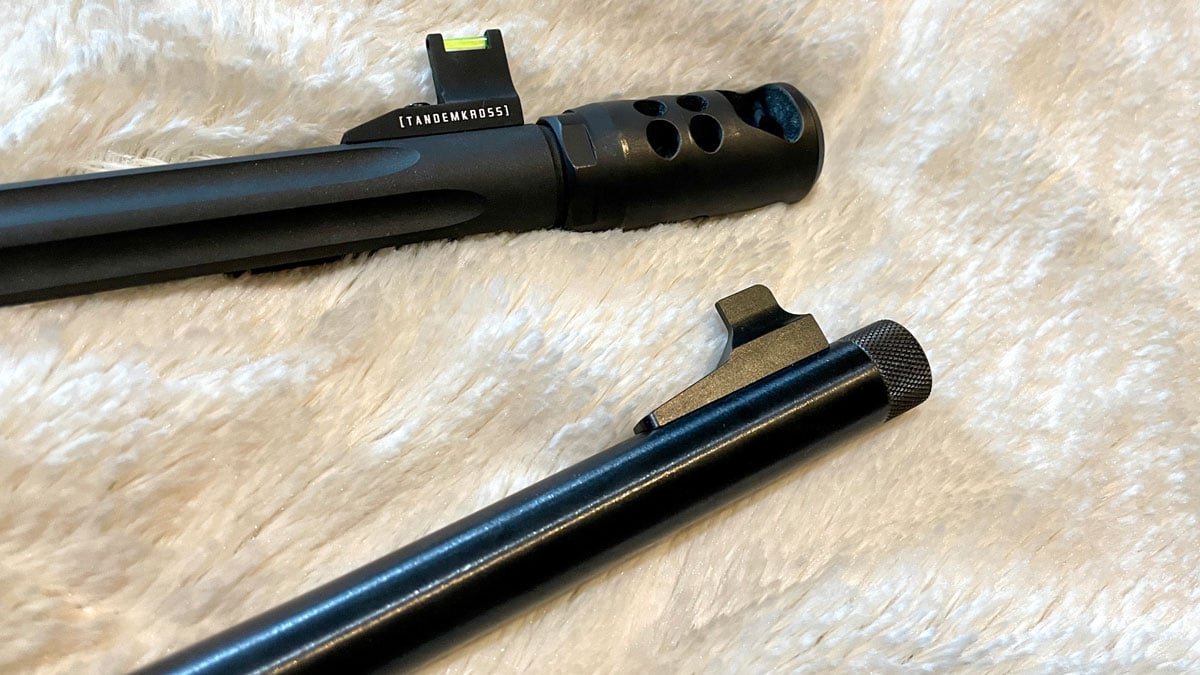
PCCs open the door for so many varied uses, and shooters can find a platform familiar to them, be it a blowback semi-automatic like the Henry Homesteader, Ruger Carbine, or Hi Point Carbine; one of many dozens of AR-style PCC builds, or a lever action from Henry, Ruger, Winchester, Bighorn Armory, Chiappa, Rossi, and more.
Related: Why Buy a Pistol Caliber Carbine [PCC]?
Final Thoughts
Pairing a carbine and handgun in the same chambering has much of the same allure today as it did in the old West. Far more reasons exist to buy a PCC – no matter how you define the term –than not.
There is, however, one final downside we neglected to mention. Whether preparing to hunt, or more likely, just plain enjoying range time, PCCs are so enjoyable to shoot that it’s easy to burn through an entire year’s supply of ammo in a few hours.
At the end of the day, that’s the kind of enjoyment we’re all after.