1898 Krag Features & History

I always wondered where the strange name of this rifle came from. As it turns out, it came from Norway, which is a pretty cool place if you like guns and hunting. The U.S. adopted the design for the Krag-Jorgensen rifle in 1892. The design was also in use in Northern Europe and eventually made its way to far-off locales like Rhodesia and Asia.
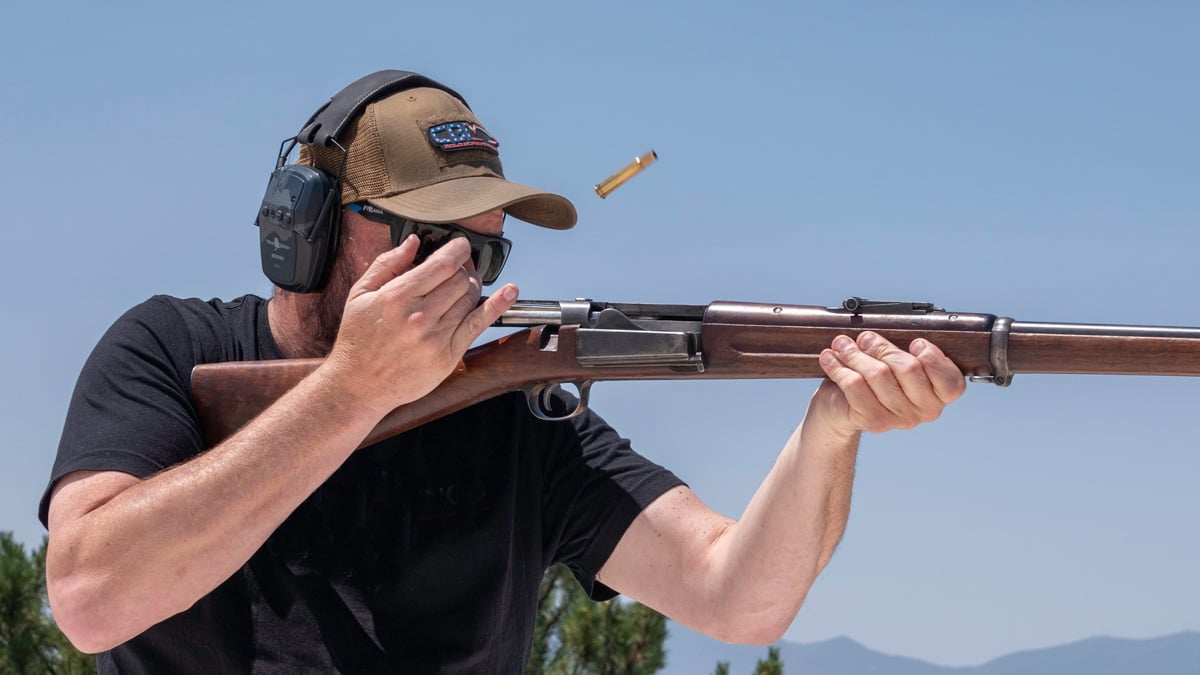
This U.S. Model 1898 was manufactured by Springfield Armory just after the turn of the last century in 1902. Despite its age, this old gun still feels fantastic. The bolt-action design is famously smooth and feels better than many modern rifles. It is also interesting, hosting a bolt design that is much different from our common modern examples today.
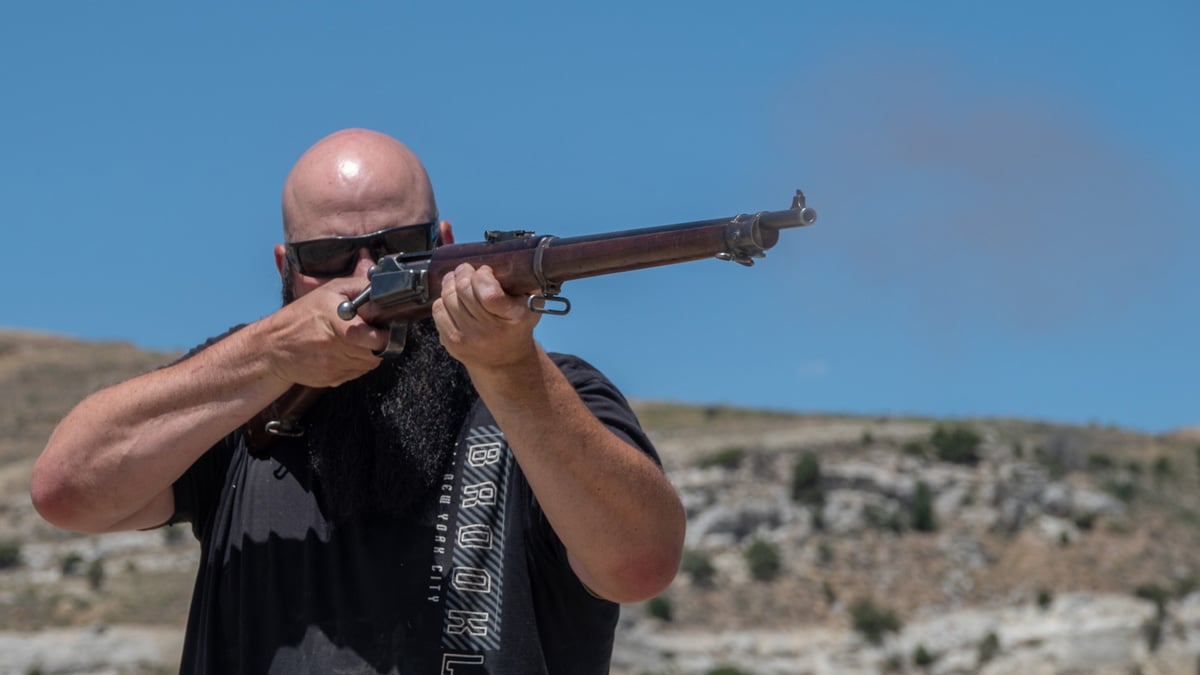
Notably, America’s early Krag rifles also represented the first official general-issue bolt-action guns used by the United States military. The guns came into circulation right as the world was also unlocking the power of higher-pressure smokeless powder – as opposed to traditional black powder.
As a result, the Krag rifles also went on to become America’s first battle rifles to use smokeless powder shortly before the arrival of the famed Springfield Model 1903.
Related: Springfield M1903 Rifle – American Classic Ahead of Its Time
There is a single bolt lug that rotates down, engaging the receiver in the 6 o'clock position, but there is another at the rear of the bolt body that also engages the receiver at the 3 o'clock position. A spring-claw extractor runs the length of the bolt on top, and the ejector pops up from where magazine followers typically reside.
On top, there is a bolt-shroud safety, which is very similar to the Springfield Model 1903 that replaced the Krag rifle. There is also a magazine disconnect switch that we will get to in a moment.
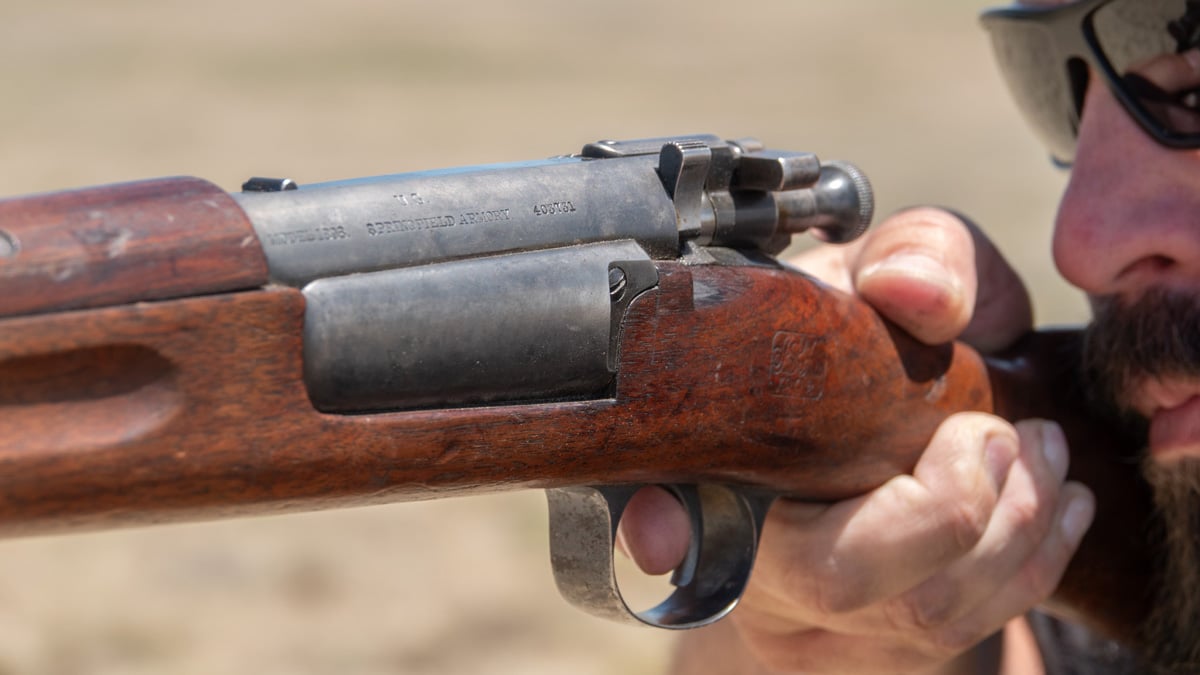
The large and obtrusive magazine stands out on the right side of the rifle. It is a spring-loaded door and follower that hinges open to allow cartridges to be loaded from the side of the rifle.
The long 30-inch barrel is partially covered by the walnut stock that extends almost all the way to the muzzle. There are three sling-mounting rings placed along the underside of the stock, which seemed normal in those days. Also typical for the time, there was a ramped, adjustable rear notch sight with a very thin front blade sight.
Now, let’s dig into how soldiers fed this rifle in the field.
How to Feed the .30-40 Krag

Krag cartridges come from a time when it was simply the caliber and powder charge that named the cartridge. The original Krag fired a .30-caliber bullet with 40 grains of powder, a step up over the .30-30's smaller 30 grains of powder. I load mine with 150-grain round-nose bullets, though you can use spitzer-type bullets in the Krag due to its interesting magazine.
The magazine feeds in an almost rotary design, circling from the bottom right up to the left side of the action, where the bolt pushes them into the chamber. With the magazine folded open, the cartridges are dropped into the loading gate. The spring follower folds out of the way during this process, but as soon as the gate is closed, the follower pushes up to five cartridges into a line.

During the loading process, the fresh cartridges are presented on the left side of the bolt to be pushed into battery. The magazine disconnect switch allowed the rifleman to operate the bolt without feeding these cartridges from the magazine.
This was used to load cartridges one at a time by dropping them in from the top of the action without exhausting the already loaded magazine. That way, with the flip of a switch, a soldier could rapidly shoot the five rounds from the magazine when the need arose.
Shooting a Relic
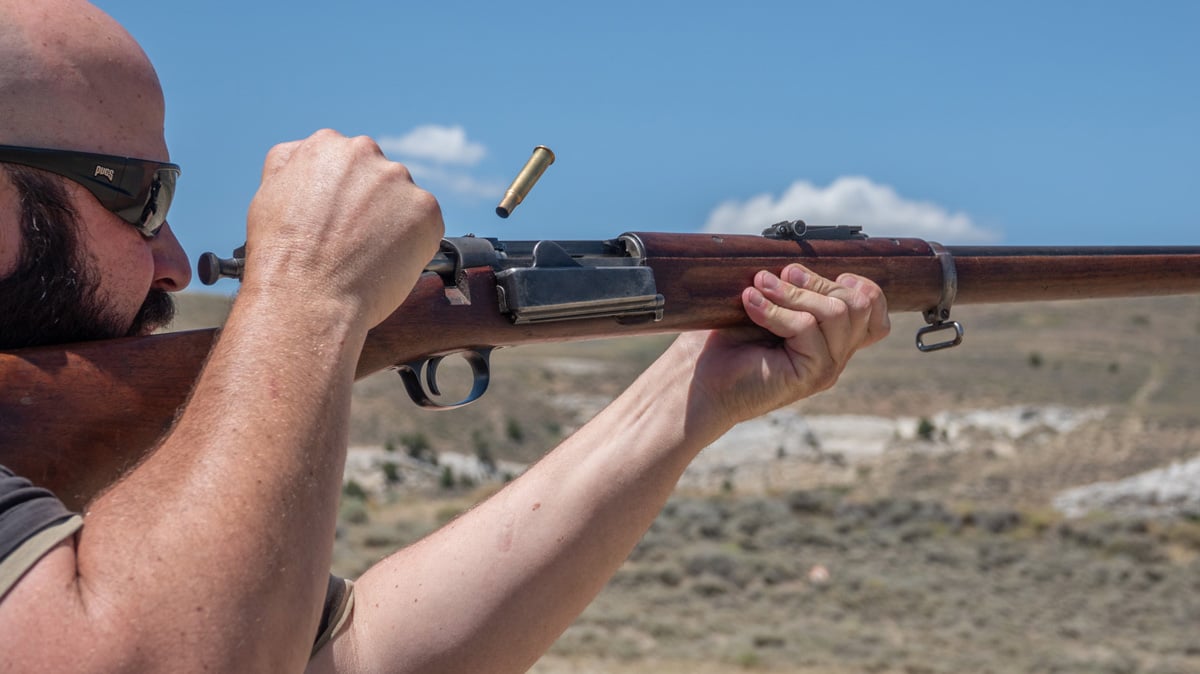
There is something interesting about shooting firearms from another epoch. I imagine the Americans who shot these rifles appreciated the smooth bolt and feeding the same way I do now. Taking up the first stage of the trigger, I imagine the countless shots taken by Krag rifles over the last century.
We shot this rifle under more comfortable conditions for simple recreation and fun. With a box of hand-loaded Krag ammunition, we ventured into the desert. The desolate open country of the West was likely where many of these 1898 rifles were used.
With targets set up, I loaded a few cartridges into the magazine. As I focused on the fine sights of the rifle, I was surprised at how precise they were. After firing a few rounds and adjusting the sights accordingly, I shot a three-shot group on paper at 100 yards. To my surprise, the group measured around 2 inches, which is pretty impressive considering this is a 123-year-old rifle.

We took turns shooting at different distances and going through the loading process. As this rifle churned through its ammunition, it gave me a great appreciation for the manufacturing quality of the past. I couldn't help but think of how some of our modern firearms couldn't survive a decade or more in tough conditions, and yet this rifle performs as well today as it did 120 years ago.
It should come as no surprise when a simple bolt-action rifle performs flawlessly. But I was very impressed with how this old rifle still delivered a perfect performance even at its advanced age. Every little spring and part functioned as designed, resulting in flawless feeding and extraction every time.
There is a sense of satisfaction that comes from hearing the smooth, buttery action as it chambers cartridges, followed shortly after by the report of the shot echoing across the landscape.
Conclusion