Why America Needed a New Rifle

The turn of the 20th century saw massive advances in military firearms technology, and the United States found itself slightly behind the curve. The late 1800s saw the short service of several rifle designs as the U.S. transitioned from the black powder .45-70 trapdoor Springfield Model 1873 to its first bolt-action rifle, the Krag-Jorgensen, chambered in the new smokeless .30-40 Krag.
Unfortunately, the Spanish-American War would see a massive disadvantage for the American troops armed with Springfield-built Krag rifles. The rifle’s slow, single-loading side-gate magazine was significantly slower than the Spanish Mauser’s stripper-clip system.
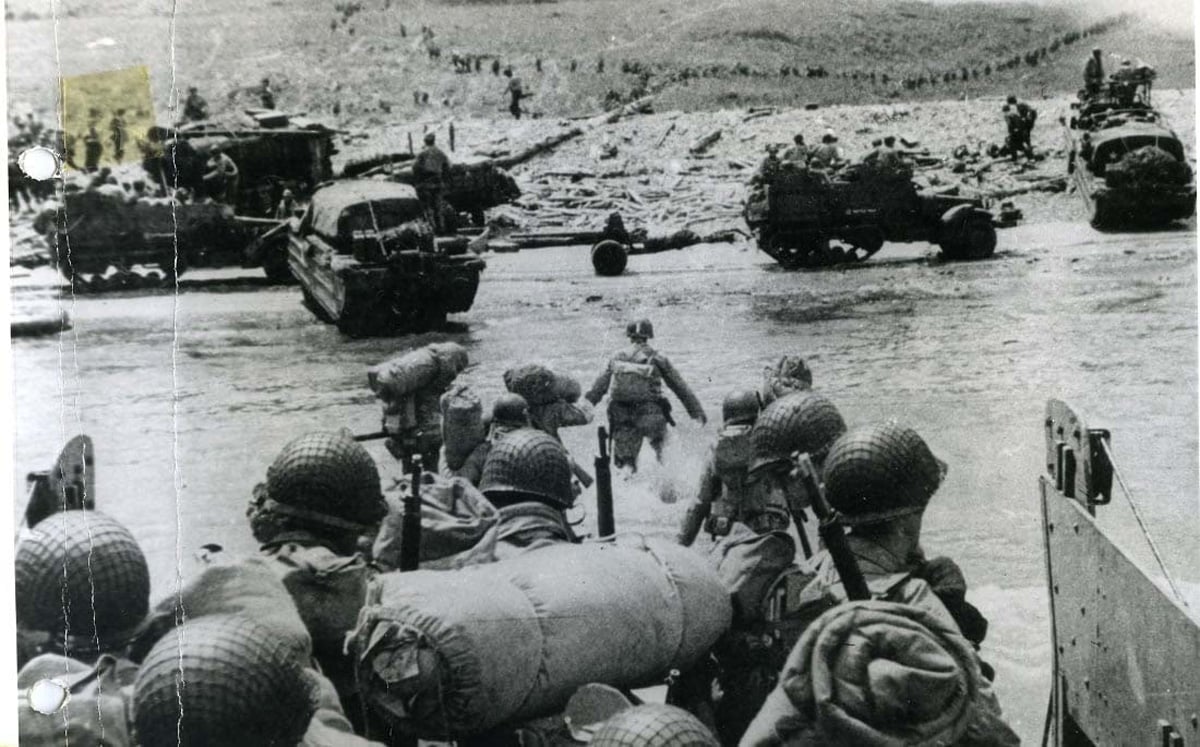

With almost every nation adopting some version of the Mauser, the United States would not be the odd one out. After holding trials for a new rifle, the U.S. War Department selected Springfield for a new rifle contract in 1903, thanks to its own rendition of the famed Mauser.
This rifle would be designated the U.S. Model of 1903, with Springfield as the primary manufacturer and Rock Island supplementing output.
Related: From Muskets to M16s – How the ‘Modern Flintlock’ Defines 2A Today
Along with the rifle, the United States adopted its first rimless cartridge, the .30-03 (.30 caliber, adopted in 1903). While that caliber may sound odd, it is only because it was short-lived and quickly replaced in 1906 with the famed .30-06 (.30 caliber, adopted in 1906). The .30-03 was a blunt round-nose bullet that had a muzzle velocity of 2,300 fps.
With new information on more efficient high-velocity bullet shapes, the .30-06 was topped with a spitzer (German for “pointed”) bullet, which achieved velocities of around 2,800 fps.
Design: Specs & Features

The U.S. Model of 1903 is truly an American Mauser. In fact, in 1904, the U.S. Army was concerned enough about patent infringement that it paid out $200,000 (almost $8 million today) to the Mauser company for its 1903 design.
That feared “infringement” had to do with several key features of the rifle. The 1903’s action was a cock-on-open Mauser design. This same bolt design is still present on most bolt-action rifles in production today. The M1903 also featured a stripper-clip bridge, feeding from five-round stripper clips, which was also a Mauser patent.
Additionally, the three-position safety wing at the rear of the bolt was nearly the same as that of the Mauser Gewehr 98 rifle’s safety.
Related: M1903 – The Aught Six with Staying Power

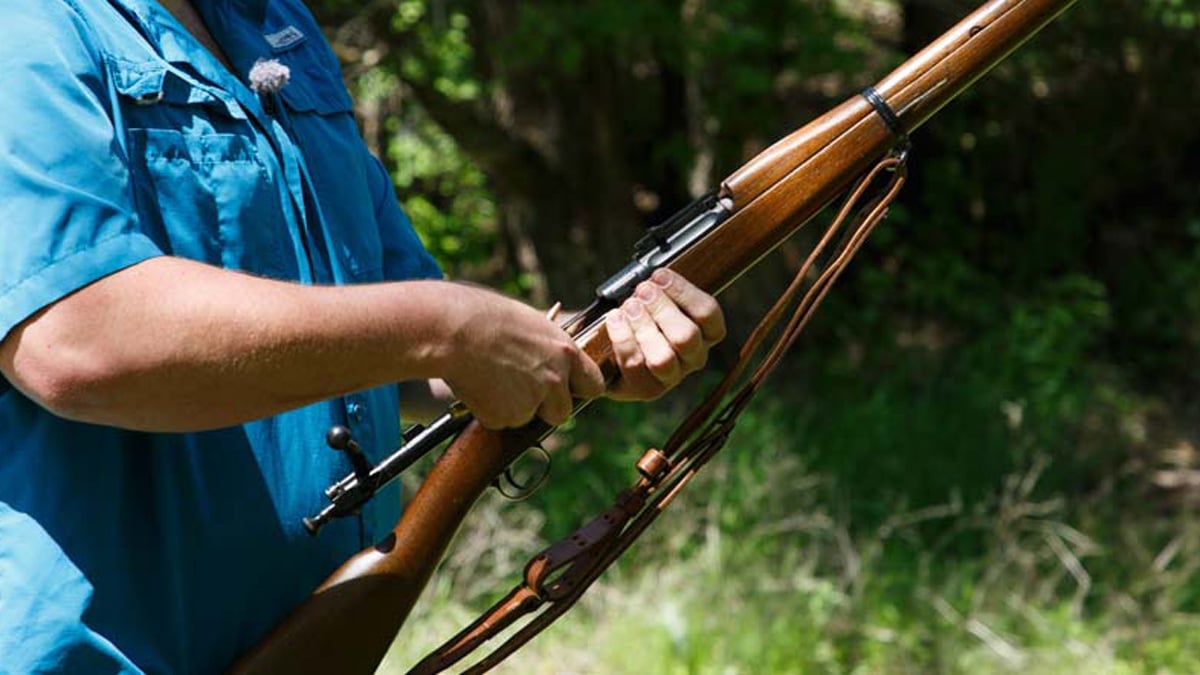

While there were many similarities to the Mauser rifle, there were also some very unique features that belonged specifically to the M1903. One was the magazine cutoff, a design that seems foreign to the modern shooter.
However, at the time, the common tactic was to fire in unison while standing in a line at the command of an officer or non-commissioned officer. Each soldier would have a fully loaded magazine, but the cutoff allowed them to load single cartridges when given the order to make ready. This kept the gun’s internal five-round magazine ready in reserve.

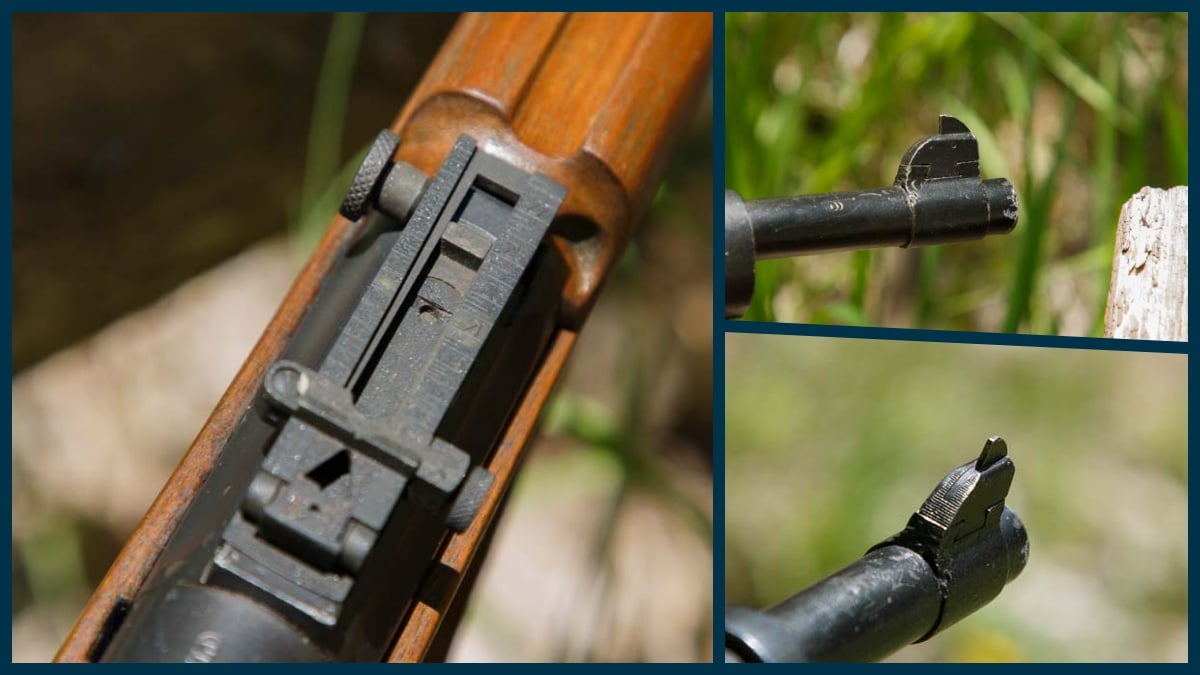
The U.S. Model of 1903 also included a forward-mounted rear sight ladder that worked in tandem with a front sight blade. This sighting system was outclassed by the U.S. Model of 1917, which also saw service in WWI, and the later M1903A3 (1942) was retrofitted with a rear aperture sight welded to the rear of the receiver.
The M1903 served for an incredibly long time, with reports of it seeing action as late as Vietnam. Technically, you could make the argument that the rifle is still in service, as it is commonly found in armories for drill and ceremony purposes.
Dangerous History?

When Springfield first began production of the new 1903 design, their old-school skilled labor force did not use temperature gauges when heat treating the steel receiver. Instead, they determined the temperature based on the color of the steel under heat.
This is important because if steel is overheated, it becomes brittle. Unfortunately, sunny days made it more difficult to determine the color of the steel, which led to many potentially over-treated rifles.
Sadly, there were several receiver failures, which led to serious injuries for unfortunate troops who were issued the new rifles. This sparked an investigation in 1916, during which Springfield decided to double heat treat the rifles. It was also determined that rifles with serial numbers below 800,000 for Springfield and 285,000 for Rock Island were unsafe.
Related: Keystone Mini 1903-A3 Springfield Review – Childhood Dream Gun
These rifles were not pulled from inventory. Rather, they were set aside until they could be submitted for a refit. Some rifles were factory refurbished, some were destroyed, some were issued out, and some made their way out of the military altogether.

Some still believe these low-serial rifles are unsafe. While there may be some valid concerns, in reality, only 60 cases of bad receivers were reported out of more than a million rifles. This 199,000-numbered Springfield rifle never got refurbished, is in its original condition, and has survived the test of time.
As the end user, it is just something to take into consideration as you explore the world of M1903 rifles.
Ahead of Its Time

President Theodore Roosevelt had a hand in influencing the Model 1903. During his presidency, the rifle was adopted and entered service.
Roosevelt was good friends with the Maxim family, and he was a big supporter of the new “silencer” concept. Hiram Percy Maxim had developed an invention, patented as the silencer, in an effort to limit hearing loss in the age before modern hearing protection.
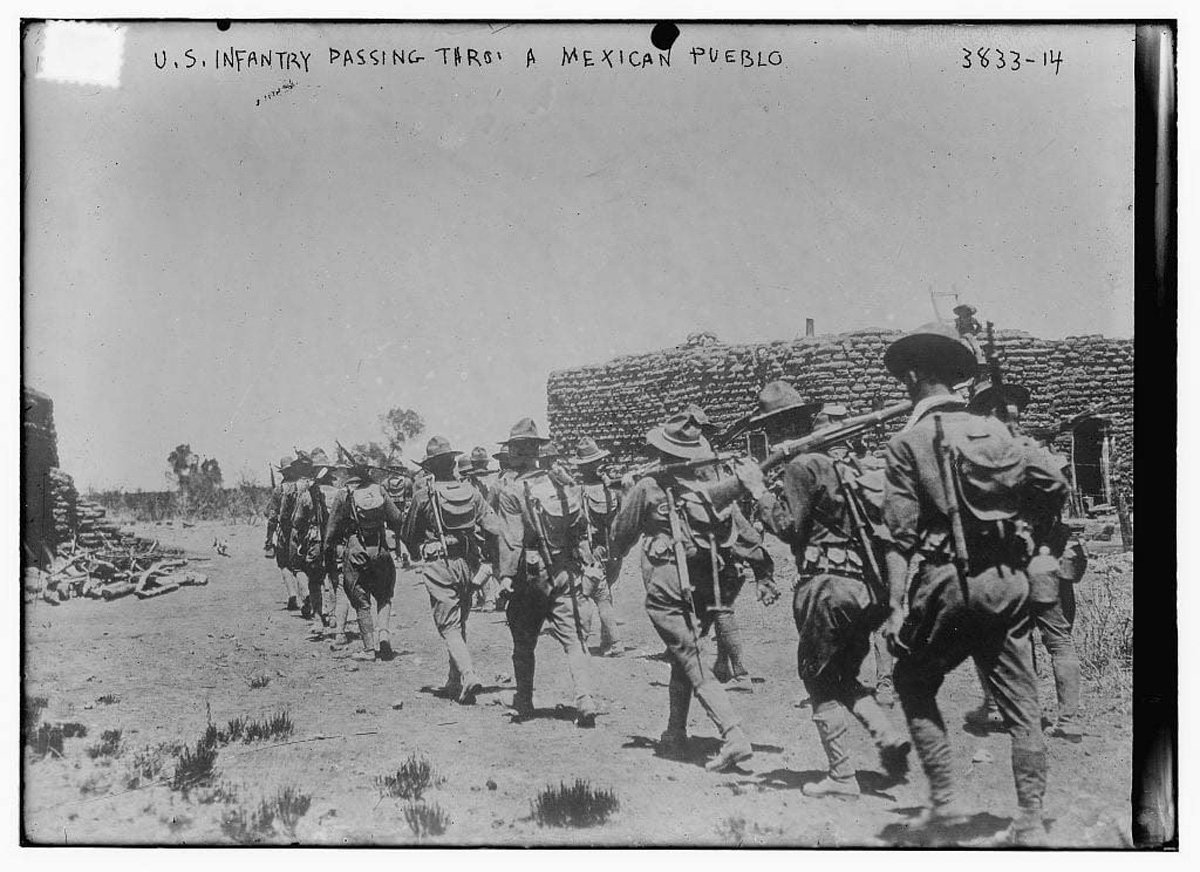
In 1910, a batch of M1903s was issued to training depots for the U.S. Army for new recruits to complete their marksman qualifications. There is even some evidence that at least a few of these suppressed models made it to troops serving in the Pancho Villa Expedition in 1916. Unfortunately, the suppressor idea was ditched a few years later, as the suppressor did not allow for the attachment of a bayonet.
Related: 100 Years of Legendary American Service Rifles
Another forward-thinking advancement of the 1903 rifle came from the firearms inventor John Pedersen in 1917. His new Pedersen device was a semi-automatic insert that would replace the bolt with a simple blowback operation that fed from 40-round magazines. Chambered for .30-18 (7.65 Longue), this round fit perfectly in the 1903 barrel and transformed the bolt-action rifle into a semi-automatic rifle.
Sadly, the device arrived near the end of WWI and was never widely adopted. However, there were almost 102,000 Springfield rifles that were modified with the Pedersen device, which at least marks it as a moderately successful concept that just arrived a bit too late.
Final Thoughts
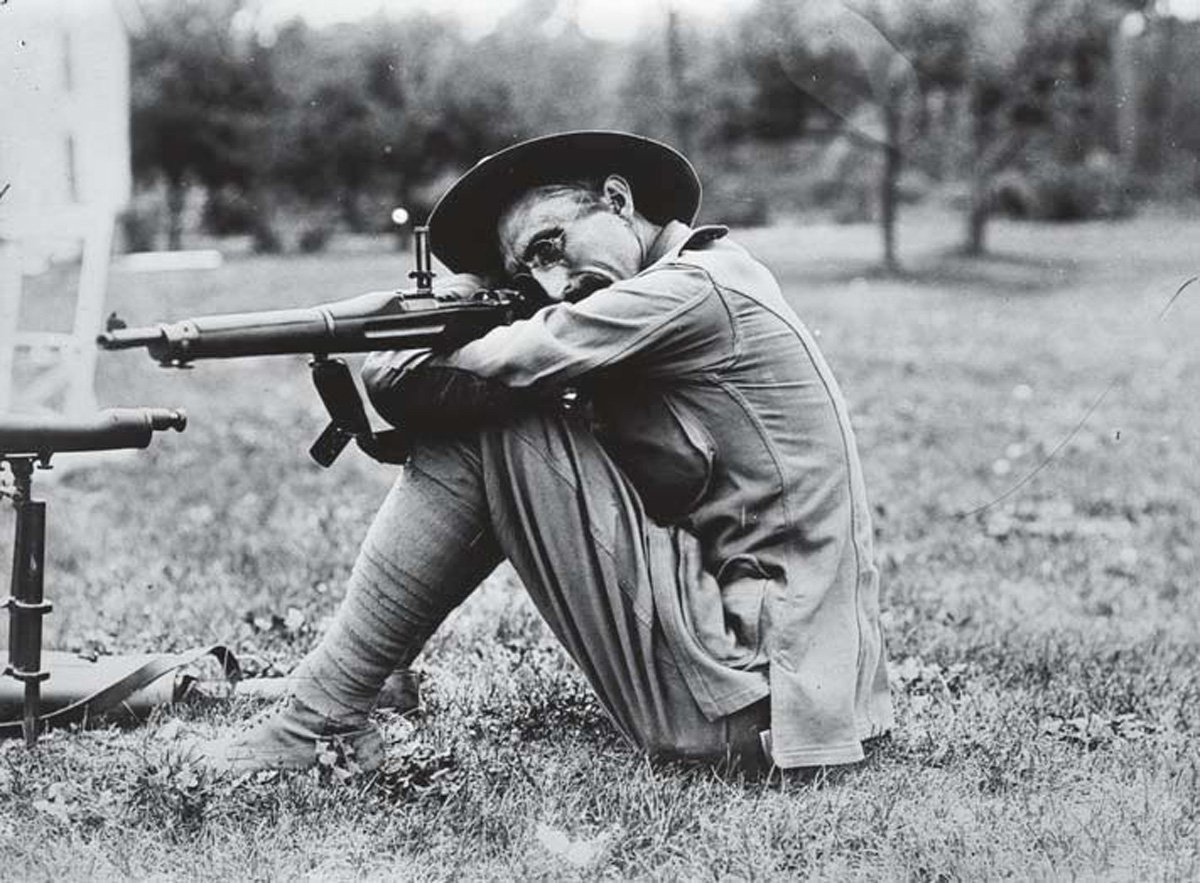
The U.S. Model of 1903 is a special rifle in American military history. While it can easily be forgotten or set to the wayside in favor of things like the M1 Garand or M16, the rifle was one of the more forward-thinking designs to ever enter U.S. service, given its unique timing.
My 1903 was built in 1906 and is one of my favorite rifles in my collection.
Unmolested by refits and refurbs, the 119-year-old rifle is still in its original configuration and shoots like a dream. It’s just one of the many treasures I’ve found in the Guns.com certified-used inventory.